If you are sourcing goods from China and need to understand the true shipping cost from China to Angola, you have probably already discovered that reliable, transparent pricing is frustratingly hard to find. Most online rate guides are either outdated by a year or more, omit Angola-specific costs that can add $500 to $2,000+ to your final bill, or skip critical import requirements like the CNCA certificate — a mandatory document without which your cargo simply cannot clear Angolan customs.
This guide solves that problem. Below, we break down every component of your shipping cost — from FCL and LCL sea freight rates by port pair to air freight, DDP door-to-door pricing, Angola import duties, CNCA certificate fees, and the hidden surcharges that catch first-time importers off guard. You will walk away with a clear, actionable picture of what it actually costs to ship from China to Angola in mid-2026, plus proven strategies to reduce your total landed cost. For a broader overview of our Angola services — including transit times and door-to-door options — visit our dedicated Shipping From China to Angola landing page.
Sea Freight Costs from China to Angola
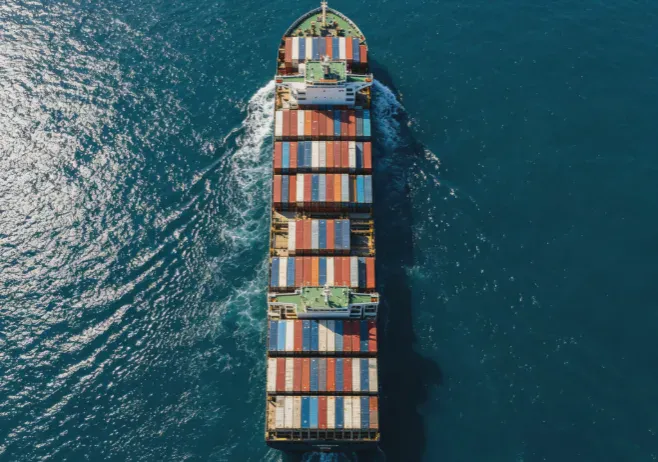
Sea freight is the backbone of China-Angola trade, carrying the vast majority of construction materials, machinery, vehicles, electronics, and consumer goods that flow between the two countries. Understanding your sea freight cost from China to Angola starts with two decisions: which ports you are shipping between, and whether you need a full container (FCL) or will share space (LCL).
FCL (Full Container Load) Rates by Port Pair
The table below shows current mid-2026 market rates for container shipping cost from China to Angola, broken down by origin port and container size. These are port-to-port ocean freight base rates (before surcharges). Rates fluctuate weekly based on carrier capacity, fuel costs, and seasonal demand, so treat these as a realistic planning range rather than a fixed quote.
| Origin Port (China) | Destination Port | 20ft Container (USD) | 40ft Container (USD) |
|---|---|---|---|
| Shenzhen (Yantian / Shekou) | Luanda | $2,200 – $3,200 | $3,200 – $4,800 |
| Shanghai | Luanda | $2,100 – $3,100 | $3,100 – $4,700 |
| Guangzhou (Nansha) | Luanda | $2,200 – $3,300 | $3,200 – $4,900 |
| Ningbo | Luanda | $2,200 – $3,200 | $3,300 – $5,000 |
| Qingdao | Luanda | $2,300 – $3,400 | $3,500 – $5,200 |
| Tianjin | Luanda | $2,400 – $3,500 | $3,500 – $5,300 |
| Shenzhen | Lobito | $2,300 – $3,400 | $3,400 – $5,100 |
| Shanghai | Lobito | $2,200 – $3,300 | $3,300 – $5,000 |
Rates reflect mid-2026 market conditions. Source: carrier rate sheets, forwarder spot quotes, and industry data. Last updated: June 2026.
Why do rates differ between ports? Shenzhen and Shanghai generally offer the most competitive pricing because they sit on major Asia-Africa trunk routes with the highest sailing frequency and carrier competition — COSCO, CMA CGM, Maersk, MSC, and Hapag-Lloyd all operate regular services from these hubs. Northern ports like Qingdao and Tianjin are slightly more expensive ($100–$300 extra per container) due to feeder vessel costs to reach the main trunk lines. Among destination ports, Luanda handles roughly 80% of Angola's containerized imports and has the most frequent calls, while Lobito serves the central and southern regions with fewer sailings and marginally higher rates.
A critical note on Peak Season Surcharges (PSS): As of mid-2026, major carriers on the Far East–West Africa lane are applying PSS that directly impact your freight bill:
- CMA CGM: $200/TEU effective July 1, 2026 (reduced from $575/TEU earlier in the year
- Hapag-Lloyd: $500–$600/TEU for Asia to Southwest Africa shipments
These surcharges are applied per container on top of the base freight rate. When requesting a quote, always ask whether PSS is already included or will be added separately.
LCL (Less than Container Load) Rates
If your shipment is under approximately 15 cubic meters (CBM), sharing a container through LCL shipping is usually the more cost-effective option. Here is the current pricing landscape for LCL shipping cost China to Angola:
| Cargo Type | Rate (USD) | Notes |
|---|---|---|
| Light cargo (volume-based) | $120 – $180 / CBM | Standard consumer goods, furniture, textiles |
| Heavy cargo (weight-based) | $180 – $250 / ton | Dense goods like tiles, metal products, machinery parts |
| Minimum charge | 1 CBM or 1 ton | Applies even if your shipment is smaller |
LCL rates to Angola are on the higher end compared to other West African destinations — for comparison, see our sea shipping cost guide for Nigeria which typically runs $30–$50/CBM lower — due to the relatively smaller volume of consolidated cargo on this lane and the cost of deconsolidation at Luanda's congested port. Expect the total LCL door-to-port cost to land between $150 and $250 per CBM once origin charges (pickup, export clearance, documentation) are factored in.
Sea Freight Transit Times
How long your cargo spends at sea depends on whether you book a direct sailing or a transshipment route.
| Route Type | Transit Time (Port-to-Port) | Door-to-Door (DDP) |
|---|---|---|
| Direct (e.g., COSCO Shenzhen → Luanda) | 30 – 37 days | 45 – 52 days |
| Transshipment (via Singapore / Durban / Tanger Med) | 38 – 50 days | 50 – 60 days |
Direct services like COSCO's Africa Express route from Shenzhen offer the fastest transit at around 32–35 days. Transshipment routes are more common from northern Chinese ports and add 7–15 days depending on the transshipment hub and connection waiting time. For importers sourcing goods for multiple African markets, we also provide dedicated Shipping From China To South Africa and Shipping From China To Nigeria services with competitive transit times on their respective corridors.
Air Freight Costs from China to Angola
For time-sensitive cargo — urgent spare parts, high-value electronics, pharmaceuticals, or seasonal restocking — air freight offers a significantly faster alternative. Understanding the air freight cost from China to Angola per kilogram helps you decide whether the speed premium is worth it. For a dedicated breakdown of air cargo options, see our air shipping from China to Angola guide.
Air Freight Rates by Weight Tier
Air freight pricing is heavily volume-dependent. The more you ship, the lower your per-kilogram rate. The table below shows current mid-2026 market rates for the main China-Angola air corridor.
| Weight Bracket | Standard Air Freight (USD/kg) | Express Air Freight (USD/kg) |
|---|---|---|
| 45 – 99 kg | $6.50 – $8.00 | $10.00 – $12.00 |
| 100 – 299 kg | $5.50 – $7.00 | $9.00 – $11.00 |
| 300 – 499 kg | $4.80 – $6.50 | $8.50 – $10.00 |
| 500 – 999 kg | $4.50 – $6.00 | $8.00 – $9.50 |
| 1,000+ kg | $4.00 – $5.50 | $7.50 – $9.00 |
Main airport pairs: PVG (Shanghai) / CAN (Guangzhou) / SZX (Shenzhen) → LAD (Luanda Quatro de Fevereiro Airport).
Air Freight Transit Times
| Service Level | Transit Time (Door-to-Door) |
|---|---|
| Standard air freight | 5 – 9 days |
| Express / courier | 3 – 5 days |
Unlike sea freight, air freight transit is measured in days, not weeks — but that speed comes at a roughly 5–10× cost premium per kilogram. A useful rule of thumb: if the value of your cargo exceeds approximately $30–$40 per kg, the inventory holding cost saved by air freight often justifies the higher shipping cost. For low-value, high-volume goods like construction materials or bulk furniture, sea freight remains the clear economic winner.
Door-to-Door & DDP Shipping
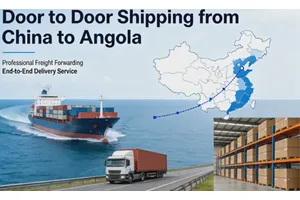
For many importers — especially first-time buyers and businesses without an established customs broker in Angola — door to door shipping from China to Angola under DDP (Delivered Duty Paid) terms is the most practical option. We cover the full door-to-door process in detail in our door to door shipping from China to Angola guide. DDP means your freight forwarder handles everything: picking up goods from your Chinese supplier, managing export customs, booking ocean or air freight, clearing Angolan import customs, paying all duties and taxes, and delivering to your final address in Luanda or elsewhere.
What DDP Covers — Line by Line
A typical DDP shipping from China to Angola quote bundles the following cost components:
| Cost Component | What It Covers | Typical Cost |
|---|---|---|
| Origin pickup & trucking | Supplier → Chinese port/warehouse | $150 – $400 |
| Export customs clearance | China export declaration, documentation | $80 – $150 |
| Ocean freight (LCL or FCL) | Port-to-port sea transport | See Section 2 rates |
| CNCA certificate | Mandatory cargo tracking document | $160 – $265 |
| Cargo insurance | Cover against loss/damage (0.2–0.3% of cargo value) | Variable |
| Angola import customs clearance | AGT declaration, broker fee, inspection | $250 – $500 |
| Angola import duty & VAT | CIF value × duty rate + 14% VAT | Variable |
| Destination port handling | THC, documentation, release fees at Luanda | $200 – $400 |
| Last-mile delivery | Luanda port → final address | $200 – $600 |
| Forwarder service fee | Coordination, account management | $100 – $300 |
DDP Pricing Estimates
| Mode | DDP Rate | Best For |
|---|---|---|
| LCL DDP (sea) | ~$300 – $380 / CBM | Small shipments, mixed goods, first-time importers |
| FCL DDP (sea) | Base FCL freight + $500 – $800 | Full container loads, bulk cargo |
| Air freight DDP | $10 – $14 / kg | Urgent, high-value shipments |
DDP vs. FOB vs. CIF: Which Incoterm Should You Choose?
| Incoterm | Who Arranges Main Carriage? | Who Pays Angola Import Duty? | Best For |
|---|---|---|---|
| EXW (Ex Works) | Buyer handles everything from factory gate | Buyer | Experienced importers with own logistics network |
| FOB (Free on Board) | Buyer books ocean freight; supplier delivers to Chinese port | Buyer | Importers with preferred forwarder & Angola customs broker |
| CIF (Cost, Insurance & Freight) | Supplier/seller arranges freight to Luanda | Buyer | Buyers who want the supplier to manage freight but handle Angola customs themselves |
| DDP (Delivered Duty Paid) | Forwarder handles everything end-to-end | Seller/Forwarder (included in DDP price) | First-time importers, SMEs without Angola customs expertise, e-commerce sellers |
Our recommendation: If you lack a registered Angolan tax ID (NIF) or an established customs broker in Luanda, DDP is almost always the safer and more predictable choice. For a deeper comparison of these trade terms, see our DDP vs FOB guide which walks through real-world cost scenarios for each option. The upfront premium is offset by the elimination of surprise charges, demurrage fees from customs delays, and the administrative burden of coordinating multiple parties across two very different regulatory environments.
FCL vs. LCL: Choosing the Right Mode for Your Cargo
One of the most common questions we hear from importers researching the cheapest shipping from China to Angola is: "At what volume does a full container become cheaper than sharing one?" The answer has a clear number — but it also depends on secondary factors beyond just volume.
The Break-Even Point: When FCL Becomes Cheaper
The table below compares the total cost of LCL versus FCL at various shipment volumes, using mid-2026 rates from Shenzhen to Luanda.
| Shipment Volume (CBM) | LCL Cost (at $160/CBM) | 20ft FCL Cost (at $2,700 avg.) | Cheaper Option |
|---|---|---|---|
| 3 CBM | $480 | $2,700 | LCL |
| 5 CBM | $800 | $2,700 | LCL |
| 8 CBM | $1,280 | $2,700 | LCL |
| 12 CBM | $1,920 | $2,700 | LCL |
| 15 CBM | $2,400 | $2,700 | Near break-even |
| 18 CBM | $2,880 | $2,700 | FCL |
| 22 CBM | $3,520 | $2,700 | FCL |
Note: LCL rates shown are approximate all-in costs to Luanda port. FCL rates are port-to-port base freight; add ~$500–$800 for destination charges to get a true landed comparison.
The ~15 CBM tipping point is a useful planning benchmark, but it is not the whole story. At 12–15 CBM, FCL starts becoming competitive when you factor in that FCL shipments clear Angolan customs faster (one container, one inspection vs. multiple consignees' cargo being examined), involve less handling (reducing damage risk), and give you exclusive control over packing and container utilization.
Key Factors Beyond Volume
- Urgency: LCL shipments typically take 5–10 days longer due to consolidation wait time at origin and deconsolidation at Luanda. If your inventory timeline is tight, FCL is faster.
- Cargo sensitivity: Fragile or high-value goods benefit from FCL — less handling means lower damage risk.
- Customs complexity: Angolan customs at Luanda process FCL shipments more efficiently than LCL, where a single problematic consignment in your shared container can delay the entire unit.
Consolidation: The Hybrid Strategy
If you source from multiple suppliers across different Chinese cities — say, electronics from Shenzhen, furniture from Foshan, and hardware from Ningbo — you can use a freight forwarder's China-side warehouse to consolidate all purchases into one container. This turns what would be 3 separate LCL shipments into a single FCL, often saving 20–40% on total freight cost while also simplifying your Angola-side clearance.
Angola Import Requirements: CNCA Certificate, Customs & Documents
This section is where most generic "shipping to Africa" guides fall short. Angola has specific import requirements that are stricter and more rigorously enforced than those of many neighboring countries. Getting these wrong does not just delay your cargo — it can result in fines exceeding $5,000, forced re-export, or outright cargo seizure.
CNCA Certificate: Angola's Mandatory Cargo Tracking Document
The CNCA (Conselho Nacional de Carregadores de Angola), also known as the ARCCLA certificate, is a mandatory electronic cargo tracking document required for every commercial sea freight shipment entering Angola. Think of it as Angola's version of the ECTN/BESC required by other African nations — but with stricter enforcement and harsher penalties for non-compliance.
Key facts at a glance:
| Detail | Information |
|---|---|
| Mandatory for | All commercial sea freight to Angola (FCL, LCL, breakbulk, vehicles) |
| Responsible party | Shipper / exporter (usually arranged by your forwarder) |
| Application deadline | Before vessel departure from China |
| Validation deadline | At least 5 working days before vessel arrival at Luanda |
| Where the number appears | Must be marked on the Bill of Lading |
| Original required? | Yes — customs requires the original hard copy (white copy) |
| CNCA fee (20ft) | ~$160 – $210 |
| CNCA fee (40ft) | ~$210 – $265 |
| Penalty for missing CNCA | Fines of $5,000+, cargo detention, potential re-export |
Application process (6 steps):
- Prepare documents: Application form, B/L draft, commercial invoice, packing list, freight invoice, and the Angolan consignee's DU (Import License) and NIF (tax ID number).
- Submit to authorized CNCA agent: Your freight forwarder or a specialized CNCA service provider submits the package.
- Receive payment notice: The agent reviews documents, assigns a reference number, and issues a fee invoice.
- Pay the fee: Once payment is confirmed, the agent prepares a draft CNCA certificate.
- Verify the draft: Review every detail carefully — no amendments are possible after issuance. Pay special attention to matching the commercial invoice value with the DU file amount.
- Receive final CNCA & mark B/L: The agent issues the original certificate (white copy for customs, blue copy for the carrier) and provides the CNCA number to be added to your Bill of Lading.
Most common mistakes that cause CNCA rejection:
- Commercial invoice value exceeds the DU import license value
- Consignee name does not match the DU file exactly
- Applying after the vessel has already departed
- Missing the consignee's Angolan NIF (tax identification number)
Required Shipping Documents Checklist
| Document | Issued By | Original Required? | Notes |
|---|---|---|---|
| Commercial Invoice | Supplier / Exporter | Yes | Must include HS codes; Portuguese or English |
| Packing List | Supplier / Exporter | Yes | Must detail weight, dimensions, and contents per package |
| Bill of Lading (B/L) | Shipping Line | Yes | Must display CNCA number |
| Certificate of Origin | CCPIT / CIQ | Yes | Form F enables preferential China-Angola tariff rates |
| CNCA Certificate | Authorized CNCA Agent | Yes (original) | White copy → customs; blue copy → carrier |
| Import License (DU) | Angola Ministry of Commerce | Yes | Must be obtained by the Angolan consignee before shipment |
| IANOR Certificate | IANOR (Angolan standards body) | If applicable | Required for electronics and certain regulated products |
Angola Import Duties & Taxes
Angola applies duties on the CIF (Cost, Insurance & Freight) value of imported goods. The table below shows approximate duty rates for common import categories:
| Product Category | Approximate Import Duty | VAT | Example HS Chapters |
|---|---|---|---|
| Construction materials (cement, tiles, steel) | 5% – 20% | 14% | 68, 69, 72, 73 |
| Machinery & industrial equipment | 5% – 15% | 14% | 84, 85 |
| Furniture & home goods | 20% – 30% | 14% | 94 |
| Electronics & electrical goods | 10% – 20% | 14% | 85 |
| Vehicles & auto parts | 10% – 30% | 14% | 87 |
| Textiles & clothing | 20% – 35% | 14% | 61, 62, 63 |
| Food & beverages | 10% – 30% | 14% | 16–22 |
How duties are calculated: (CIF Value × Duty Rate) + [(CIF Value + Duty) × 14% VAT] + Customs service fees. For example, a shipment of machinery with a CIF value of $10,000 at a 10% duty rate would incur approximately $1,000 in duty + $1,540 in VAT + $100–$200 in service fees = ~$2,640–$2,740 in total import charges.
Important: These are indicative rates. Angola's AGT (Administração Geral Tributária) applies the final assessment at the port. Using a forwarder with a dedicated Luanda clearance team can significantly reduce the risk of misclassification and overpayment.
7 Proven Strategies to Reduce Your China-Angola Shipping Costs
Getting the best shipping cost from China to Angola is not just about finding the lowest freight quote — it is about optimizing your entire logistics approach. Here are seven strategies our team has refined over a decade of managing China-Africa shipments.
1. Ship During the Dry Season (May–October)
Luanda's port experiences 30–50% higher congestion during Angola's rainy season (November through April), when heavy rains slow cargo handling and increase vessel waiting times. Shipping during the dry season (May to October) typically yields 10–15% lower freight rates and significantly faster clearance. Also avoid the pre-Chinese New Year rush (January) and the pre-Christmas peak (September–October), when carrier space tightens and PSS charges spike.
2. Consolidate Shipments from Multiple Suppliers
Instead of shipping three separate LCL consignments from three different suppliers, have your forwarder collect and consolidate them at a China warehouse into a single FCL container. This strategy typically saves 20–40% versus shipping the same goods as separate LCL shipments, and it also simplifies your Angola customs clearance (one container, one set of documents, one inspection).
3. Choose the Right Incoterm for Your Situation
First-time importers without a registered Angolan business entity or local customs broker should strongly consider DDP — the forwarder handles everything, and you get a single all-in price. Experienced importers with an established Angolan customs broker and NIF may save 10–15% by using FOB or CIF and managing the Angola side themselves, but the administrative complexity is substantially higher.
4. Optimize Container Loading
A standard 20ft container holds approximately 28–30 CBM, and a 40ft container holds 58–62 CBM. For context on how container pricing works on comparable African routes, see our 20ft and 40ft shipping cost breakdown for Nigeria. Maximizing your container utilization — through proper palletization, disassembly of bulky items, and mixing heavy and light cargo — can reduce your per-unit freight cost by 10–20%. Even if you are shipping LCL, well-packed cargo (compact, stackable, properly palletized) often qualifies for lower volume-based rates.
5. Compare Freight Forwarders on More Than Price
When evaluating a freight forwarder China to Angola, the cheapest quote rarely delivers the lowest total landed cost. Look for:
- Direct carrier contracts: Forwarders with allocated space from COSCO, CMA CGM, or Maersk offer better rates and guaranteed loading — spot-market buyers risk rolled bookings during peak periods.
- Local Luanda clearance team: A forwarder with its own staff on the ground at Luanda port can resolve customs issues in hours rather than days.
- CNCA handling: Ensure CNCA application is included in the service (some forwarders charge it separately as an add-on).
- FIATA / IATA certification: Internationally recognized credentials indicate a professionally managed operation. For a deeper analysis of what sets great logistics partners apart, see our breakdown of the strategic role of freight forwarders in modern supply chains.
6. Start Documentation Early
The single most avoidable cause of Angola shipping delays is late or incorrect documentation. Apply for your CNCA certificate as soon as you receive the B/L draft — ideally before the vessel departs China. Ensure your Angolan consignee renews their DU import license before it expires. And triple-check that all names, values, and HS codes are consistent across every document — discrepancies trigger automatic customs holds at Luanda.
7. Build a Long-Term Forwarder Relationship
One-off spot-market shipping is almost always more expensive than working with a dedicated forwarder. Regular shippers benefit from priority space allocation during peak seasons, negotiated rate discounts of 5–15%, and a dedicated account manager who understands your specific cargo profile, preferred carriers, and Angola-side delivery requirements. Consistency builds trust — and trust translates directly into cost savings and fewer logistics headaches.
FAQs
How much does it cost to ship a 20ft container from China to Angola?
Expect to pay $2,100–$3,500 for port-to-port ocean freight on a 20ft container (mid-2026 range), depending on the origin port and season. Add approximately $1,000–$2,000 for destination charges at Luanda (THC, CNCA certificate, customs clearance, import duties, and last-mile delivery) to arrive at your total landed cost.
How much does it cost to ship a 40ft container from China to Angola?
Port-to-port 40ft container rates range from $2,600–$5,000. A 40ft container typically costs only 40–60% more than a 20ft while offering roughly double the capacity, making it significantly more cost-effective per cubic meter for larger shipments.
How long does sea freight from China to Angola take?
Direct sailings from Shenzhen or Shanghai to Luanda take 30–37 days port-to-port. Transshipment routes via Singapore, Durban, or Tanger Med take 38–50 days. Full door-to-door DDP service (including customs clearance and final delivery) typically takes 45–55 days for direct routes and 50–60 days for transshipment routes.
What is the cheapest way to ship from China to Angola?
For shipments over ~15 CBM, FCL (full container load) sea freight is almost always the cheapest option. For smaller volumes, LCL sea freight is more cost-effective. Air freight costs 5–10× more per kilogram than sea freight but can be the smarter choice for high-value, time-sensitive goods where inventory holding costs or production downtime outweigh the shipping premium.
What documents do I need to import goods from China to Angola?
The standard document set includes: Commercial Invoice (with HS codes), Packing List, Bill of Lading (marked with CNCA number), Certificate of Origin, CNCA Certificate (original), Import License (DU) from the Angola Ministry of Commerce, and any product-specific certifications (e.g., IANOR for electronics). The consignee must also hold a valid Angolan tax ID (NIF).
Which Chinese port offers the cheapest shipping to Angola?
Shenzhen and Shanghai generally offer the most competitive rates due to their position on major Asia-Africa trunk routes with the highest carrier competition and sailing frequency. Guangzhou and Ningbo are close behind (typically $50–$150 more). Northern ports like Qingdao and Tianjin are usually $100–$300 more expensive per container due to additional feeder vessel costs.