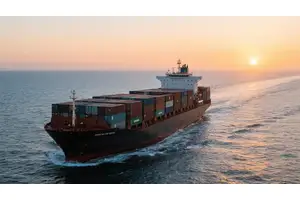
A 40ft high cube leaves Shanghai for Dubai almost every day of the week — stamped steel body panels from a factory in Jiading, electronics from Kunshan, machinery from Wuxi, textiles from Shaoxing. They roll into Yangshan Deep-Water Port, cross the South China Sea and the Strait of Malacca, and arrive at Jebel Ali about three weeks later. It is one of the most heavily travelled trade corridors on earth: China is the UAE's largest trading partner, and Shanghai — the world's busiest container port — is the single biggest origin point for that cargo.
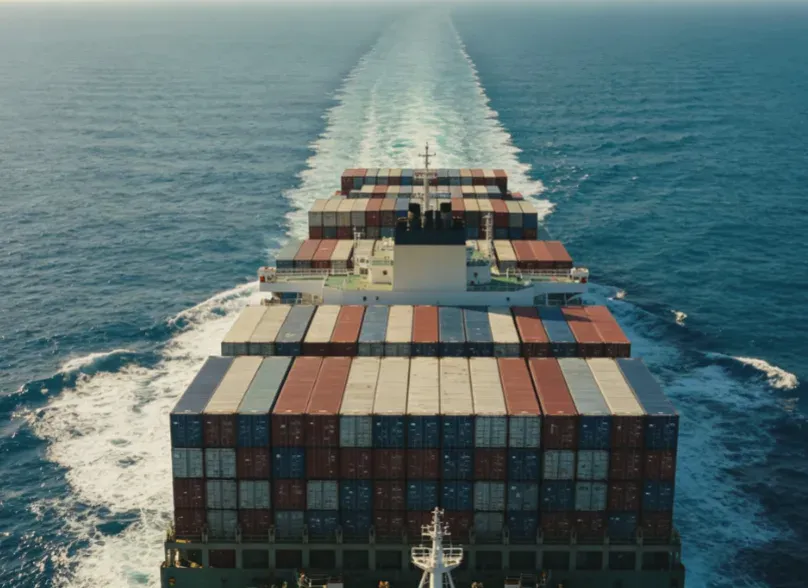
Shipping from Shanghai to UAE is therefore not an exotic lane. It is a mature, high-frequency market with direct weekly sailings, competitive rates, and well-established customs procedures on both ends. But "mature" does not mean "simple." The difference between a smooth, fairly-priced shipment and one that bleeds money usually comes down to a handful of decisions: which Shanghai terminal, which container type, direct or transshipment sailing, and whether you have someone on the UAE side who knows the duty and VAT math.
This guide covers the real 2026 costs for sea, air, and door-to-door shipping from Shanghai to the UAE, transit times by routing, the customs and tax process at Jebel Ali, and two complete real shipments we handled out of Shanghai this year — with their full cost breakdowns. The numbers below come from actual bookings we have made on this lane out of our Shanghai operation, not from a reprinted rate sheet.
Why Shanghai Is the Natural Origin for UAE-Bound Cargo
Before looking at prices, it helps to understand what makes Shanghai different from Shenzhen or Ningbo as an origin. Three things matter:
- The hinterland. Shanghai sits at the mouth of the Yangtze River Delta, the manufacturing heart of eastern China. Suppliers in Jiangsu (auto parts, textiles, electronics), Zhejiang (hardware, tools, furniture), and Anhui (machinery, chemicals) can truck goods to Shanghai in hours. If your supplier is anywhere from Nanjing to Ningbo, Shanghai is almost always the lowest-cost export point — no cross-region trucking needed.
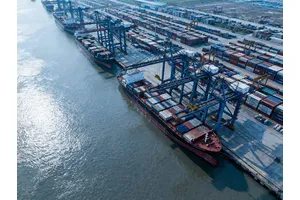
- The port itself. Cargo loads at Yangshan Deep-Water Port, the world's busiest container port, connected to the mainland by the 32 km Donghai Bridge, or at the Waigaoqiao terminal complex on the Yangtze. Yangshan handles the largest vessels and the deepest drafts; Waigaoqiao is closer to the city and convenient for factory-direct containers from nearby districts. Your forwarder should recommend the terminal based on where the factory is and which carrier's berth is involved.
- Sailing frequency. Shanghai has more direct departures to Jebel Ali than any other Chinese port. Carriers like MSC, Maersk, CMA CGM, and COSCO run multiple weekly services on the Gulf loop, which means more choice of sailing dates — and more leverage when space gets tight in peak season.
Geographically, the voyage runs south through the South China Sea, past Singapore through the Strait of Malacca, across the Indian Ocean, and into the Arabian Gulf — roughly 6,000 nautical miles. Depending on the service, your container either sails direct or transships once at Singapore or Colombo. Direct is faster; transshipment can be cheaper but adds a few days. Both are common on this lane, which is why transit quotes vary. Our shipping from China to UAE overview page covers the broader lane picture, and our sea freight services page explains how FCL and LCL bookings work in practice.
Sea Freight from Shanghai to UAE: FCL & LCL Costs
Ocean freight is the backbone of this corridor. Here are the realistic 2026 rate ranges for full container loads from Shanghai to Jebel Ali — the rates we have been booking at this year (port-to-port, excluding destination charges):
| Container Type | Capacity | Rate Range (USD) | Notes |
|---|---|---|---|
| 20ft FCL | 28 CBM | $1,050 – $1,350 | Best for dense cargo up to ~28 CBM |
| 40ft FCL | 56 CBM | $1,900 – $2,350 | ~1.5–1.8× the 20ft rate, not double |
| 40ft High Cube | 68 CBM | ~$150 – $300 over 40ft | Best value for light, voluminous cargo |
For context, China-wide averages to the UAE run $950–$1,450 for a 20ft and $1,750–$2,500 for a 40ft; Shanghai sits comfortably in the middle, usually a shade above Shenzhen and a shade below Qingdao. The 40ft is almost always the better per-cubic-meter deal — at roughly $37/CBM against $42/CBM for a 20ft — which is why we tell clients with 20–25 CBM of light cargo to price a 40ft before committing to a 20ft.
LCL from Shanghai: When You Don't Have a Full Container
If your shipment is under about 15 CBM, LCL (Less than Container Load) is the economical choice — you pay for the space your cargo occupies inside a shared container:
| Origin | Destination | LCL Rate (USD/CBM) | Minimum | Transit Time |
|---|---|---|---|---|
| Shanghai | Jebel Ali | $75 – $115 | 1 CBM | 20 – 28 days |
| Shenzhen | Jebel Ali | $80 – $120 | 1 CBM | 20 – 28 days |
| Ningbo | Jebel Ali | $75 – $110 | 1 CBM | 20 – 28 days |
A 5 CBM LCL shipment from Shanghai typically costs in the $380 range (about $76/CBM), while 10 CBM drops to around $62/CBM — consolidation discounts kick in as volume grows. The trade-off: LCL adds a consolidation step on the Shanghai side and deconsolidation at a bonded warehouse in the UAE, which stretches the door-to-door timeline by several days versus FCL. Above 15 CBM, always get an FCL quote first — the math almost always favors the full container, and you eliminate the risk of your goods being mishandled during co-loading.
Transit Times by Routing
| Routing | Shanghai → Jebel Ali | Notes |
|---|---|---|
| Direct sailing | 18 – 24 days | Most common on the Gulf loop; fastest option |
| Via Singapore transshipment | 19 – 25 days | The classic alternative; can be cheaper, ~1 day longer |
| Via Colombo transshipment | 20 – 26 days | Sometimes better space availability |
| LCL (any routing) | 20 – 28 days | Includes consolidation/deconsolidation buffer |
Expect port-to-port transit of 18–25 days for most Shanghai→Jebel Ali bookings. The real door-to-door number — including discharge, UAE customs clearance (usually 1–2 days, occasionally longer if randomly inspected), and trucking — lands around 25–30 days. Our sea shipping from China to UAE guide covers the FCL/LCL picture in more depth, and shipping time from China to UAE breaks down every mode's timeline.
When Rates Move
Watch the calendar: Chinese New Year (late January/February) triggers a pre-holiday booking surge, Ramadan shifts consumer demand and port rhythms in the UAE, Golden Week (October) tightens Chinese capacity, and Q4 is peak season worldwide with carriers applying Peak Season Surcharges (PSS), typically August through October. If you can, book your annual volumes in Q1 — we consistently find more schedule flexibility and better space allocation in the first quarter.
Air Freight from Shanghai to UAE
When three weeks at sea is too long, air freight from Shanghai Pudong International Airport (PVG) to Dubai International (DXB) or Al Maktoum International (DWC) gets your cargo there in days:
| Origin Airport | Destination | General Cargo Rate (USD/kg) | Min. Chargeable Weight | Transit Time |
|---|---|---|---|---|
| Shanghai (PVG) | DXB / DWC | $3.10 – $5.30 | 45 kg | 3 – 5 days |
| Guangzhou (CAN) | DXB / DWC | $2.90 – $5.00 | 45 kg | 3 – 5 days |
| Shenzhen (SZX) | DXB / DWC | $3.00 – $5.20 | 45 kg | 3 – 5 days |
| Beijing (PEK) | DXB / DWC | $3.40 – $5.60 | 45 kg | 4 – 6 days |
A few realities to budget around:
- Chargeable weight is the bigger of actual vs volumetric weight (L × W × H in cm ÷ 6,000). A 100 kg shipment that occupies 1.5 CBM bills at 250 kg. Packaging that reduces volume is direct profit.
- Express courier (FedEx, DHL, UPS) from Shanghai runs 3–6 days at roughly $32–$39/kg — fast and door-to-door, but strictly for parcels, samples, and urgent e-commerce orders under ~150 kg.
- Air freight makes sense for high-value, time-sensitive, or perishable cargo, and for keeping retail stock moving while a sea shipment is in transit. For the detailed air lane breakdown — airlines, hubs, and cost levers — see our air shipping from China to UAE guide, and our air freight services page for booking options.
Door to Door & DDP from Shanghai to UAE
Most first-time importers from Shanghai choose door-to-door service under DDP (Delivered Duty Paid) terms: the forwarder collects from the factory, exports, ships, clears UAE customs, prepays the 5% duty and 5% VAT, and delivers to a specific address — one contract, one price, no TRN tax registration required on your side. If you have UAE representation and want to control the tax reclaim yourself, DDU/DAP (duties unpaid) delivers the same way but bills you the import taxes at delivery.
What a 20ft Door-to-Door Shipment Actually Costs
Here is a worked example of a 20ft FCL from Shanghai to Jebel Ali, delivered in Dubai, based on the cost structure we quote on this lane (2026):
| Cost Item | USD Estimate |
|---|---|
| Ocean Freight (Shanghai → Jebel Ali) | $1,150 |
| Origin Charges (export clearance, terminal handling, docs) | $150 |
| Destination Charges (discharge, terminal handling) | $220 |
| Bunker Adjustment Factor (fuel surcharge) | $70 |
| Insurance (optional, 0.15–0.3% of cargo value) | $30 |
| Trucking in UAE (Jebel Ali → Dubai) | $150 |
| Total Estimated Cost | $1,770 |
For comparison, full door-to-door rates we have quoted this year on other China–UAE port pairs run $2,150 (20ft) and $3,650 (40ft) for Guangzhou→Dubai city delivery, and $2,350 (20ft) / $3,850 (40ft) for Ningbo→Abu Dhabi factory delivery — the premium over port-to-port covers UAE customs brokerage, duty/VAT prepayment, and final-mile trucking. The lesson: a door-to-door quote runs roughly 30–60% above the headline ocean rate, and that gap is normal — it is the price of not touching a single document yourself. For the full trade-term comparison, our DDP vs FOB article walks through when each Incoterm wins, and our door-to-door shipping page details how the service chain is run.
The Surcharges That Hide Inside "Cheap" Quotes
When comparing forwarder quotes, ask what's included. The standard surcharge stack on this lane:
| Surcharge | Typical Range (USD) |
|---|---|
| Port Handling Charge (origin & destination) | $90 – $220 |
| Documentation Fee | $45 – $95 |
| Bunker Adjustment Factor (BAF) | $180 – $350 |
| Currency Adjustment Factor (CAF) | 1% – 3% of freight |
| Security Surcharge (ISPS, war risk) | $15 – $45 |
A quote that excludes these is not cheaper — it is incomplete. Our door to door shipping from China to UAE article shows exactly how all-in pricing is built on this lane.
UAE Ports & the Last Mile
Your container arrives at one of the UAE's commercial ports, and the choice of arrival port changes the inland picture:
- Jebel Ali (Dubai) — the largest port in the Middle East and the regional transshipment hub. It hosts JAFZA (Jebel Ali Free Zone), where goods can be imported duty-free for re-export or bonded storage. The overwhelming majority of China-origin containers land here.
- Khalifa Port (Abu Dhabi) — the capital's modern deep-water port, growing fast in container throughput; the natural choice if your final destination is Abu Dhabi or Al Ain.
- Port Rashid (Dubai) — the older city port, mostly cruise and secondary cargo now.
- Sharjah — smaller volumes, mainly for northern emirate destinations.
From Jebel Ali, the last mile is short by regional standards — the Emirates are compact and the roads are excellent:
| Destination from Jebel Ali | Trucking Time |
|---|---|
| Dubai (Al Quoz, Jebel Ali Industrial Area) | ~40 minutes |
| Sharjah | ~1 hour |
| Ajman | ~1 hour |
| Abu Dhabi | ~1.5 – 2 hours |
| Al Ain | ~1.5 – 2 hours |
| Ras Al Khaimah | ~2 hours |
That short, fast last mile is one of the reasons door-to-door service works so well for UAE-bound cargo — there is no multi-day inland leg like you get in Brazil or India. Clear customs at Jebel Ali in the morning, and your goods can be on a shelf in Al Quoz by afternoon. Our tracking platform keeps that final leg visible right down to delivery confirmation.
UAE Customs: Duties, VAT & Documents
UAE import rules are straightforward compared to most markets — but the 5% duty and 5% VAT math catches importers who price their goods without it.
Duty Rates by Product Category
Customs duty is charged on the CIF value (Cost + Insurance + Freight) under the GCC common external tariff:
| Product Category | Typical HS Codes | Customs Duty |
|---|---|---|
| General Merchandise (electronics, machinery, consumer goods) | 84, 85, 90 | 5% |
| Textiles & Apparel | 61, 62 | 5% |
| Food Items | 16, 19, 21 | 5% |
| Pharmaceuticals | 30 | 0% (exempt) |
| Alcoholic Beverages | 22 | 50% |
| Tobacco & Related Products | 24 | 100% |
Most goods from China fall in the 5% band. Get your HS codes right before departure — misclassification is the most common cause of customs holds at Jebel Ali, and a wrong declaration can trigger penalties.
The VAT Math: Worked Example
The UAE has applied a 5% Value-Added Tax since 2018, calculated on the CIF value plus the customs duty:
| Calculation Step | Amount (USD) |
|---|---|
| CIF Value (goods + insurance + freight) | $10,000.00 |
| Customs Duty (5%) | + $500.00 |
| Dutiable Value for VAT | $10,500.00 |
| VAT (5%) | + $525.00 |
| Total Import Tax Due | $1,025.00 |
This tax is settled at clearance. If you are VAT-registered in the UAE, you can usually reclaim the import VAT — one more reason established importers sometimes prefer to clear in their own name rather than via DDP. If you are not registered, DDP handles the whole payment invisibly inside your all-in price.
Documents for Clearing at Jebel Ali
| Document | Notes |
|---|---|
| Bill of Lading (B/L) | Original or telex release; issued at Shanghai |
| Commercial Invoice | Value and description; must match the B/L |
| Packing List | Itemized weights and counts |
| Certificate of Origin (COO) | Confirms Chinese origin; required for duty assessment |
| Import Permits / Licenses | Only for regulated goods (food, chemicals, medical devices) |
| Importer TRN | UAE tax registration number (needed for VAT; DDP uses the forwarder's) |
Clearing is done electronically through Dubai Customs' online portal (Mirsal 2). Random physical inspections happen — one of the real shipments below was held two days for one — but with correct documents they are routine, not adversarial. Our customs clearance service page explains the process on the China side; the UAE side is handled by our local brokers and free-zone partners.
Real Shipments: Two Shanghai–UAE Containers
Theory is cheap; invoices are not. Here are two real containers we moved from Shanghai to the UAE this year, with their actual cost structures.
Case 1: Auto Body Parts — 1×40HQ from Jiading to Al Quoz
A Dubai-based auto parts distributor (Al Quoz industrial area) importing stamped steel body panels — hoods, fenders, front reinforcement — for Toyota, Nissan, and Ford models popular in the Gulf market:
| Detail | Value |
|---|---|
| Commodity | Auto body parts (steel racks, wooden crates) |
| HS Code | 8708 (parts and accessories of motor vehicles) |
| Volume / Weight | ~58 CBM / ~9,200 kg |
| Container | 1×40HQ |
| Route | Factory (Jiading) → Yangshan → Jebel Ali (via Singapore) |
| Ocean transit | 19 days |
| Door-to-door total | 27 days |
| Cost Item | Amount (USD) |
|---|---|
| Ocean freight (1×40HQ, Shanghai → Jebel Ali) | $1,800 – $2,200 |
| Container stuffing & dunnage | $250 |
| Truck pickup (factory → Shanghai terminal) | $280 |
| Export customs clearance (China) | $120 |
| Documentation (B/L, COO) | $80 |
| Ocean surcharges (BAF, LSS) | $350 – $450 |
| Import clearance & inspection (Dubai) | $350 |
| Terminal handling (Jebel Ali) | $200 |
| Truck delivery (Jebel Ali → Al Quoz) | $180 |
| Total estimated cost | $3,610 – $4,130 |
Two hiccups worth knowing about: the manufacturer's first packing list understated two crate items by 12 units (caught in pre-clearance document review, corrected before filing — no penalty), and Dubai Customs randomly selected the container for physical inspection, adding two days. The importer still landed the parts at 30–35% below local distributor pricing — which is the whole point of importing direct. For the full narrative and photos, our shipping auto parts from China to UAE case study has the details.
Case 2: Seamless Steel Pipes — 1×40OT from Shanghai to Jebel Ali
An oil & gas equipment supplier in Dubai importing API 5L seamless steel pipes from a mill in Jiangsu — 11.8-meter lengths that physically cannot fit through a standard container door:
| Detail | Value |
|---|---|
| Commodity | Seamless steel pipes (API 5L, 5.8–11.8 m lengths) |
| HS Code | 7304 (seamless steel pipes) |
| Weight | ~26,800 kg |
| Container | 1×40OT (Open Top) |
| Route | Jiangsu mill (180 km trucking) → Shanghai → Jebel Ali |
| Ocean transit | ~18 days |
| Door-to-door total | ~25 days |
| Cost Item | Amount (USD) |
|---|---|
| Trucking (Jiangsu mill → Shanghai container yard) | $350 |
| Container loading & crane hire | $450 |
| Export customs clearance (China) | $130 |
| Ocean freight (1×40OT, Shanghai → Jebel Ali) | $2,850 |
| OT equipment surcharge (vs. standard 40HQ) | $400 |
| B/L documentation & handling | $85 |
| Import customs clearance (UAE) | $300 |
| Port handling charges (Jebel Ali) | $380 |
| Inland delivery (Jebel Ali → Dubai warehouse) | $250 |
| Cargo insurance (0.3% of declared value) | $210 |
| Total | ~$5,405 |
The instructive part is the equipment premium: the open-top container cost ~$850 more than a standard 40HQ would have ($400 OT surcharge + $450 crane loading) — and it was the only safe way to ship 11.8-meter pipes without cutting them. When your cargo dictates the container type, the equipment decision is a cost decision. Loading took three hours with four workers and a crane; pipes were layered on wooden dunnage, wedged and lashed to stop rolling at sea, and the tarpaulin was rope-lashed at 1-meter intervals. They arrived rust-free. The full case — including why a 40HQ was physically impossible — is documented in our shipping seamless steel pipes from China to UAE case study.
What Both Cases Teach
- Document review before departure saves real money. Both shipments had document wrinkles; both were caught on the Shanghai side before they became demurrage on the Dubai side.
- Build buffer for random inspection. Dubai Customs physical checks are routine, not punitive — plan 2–3 days of clearance slack.
- Equipment availability is a peak-season risk. 40HQ containers were tight in early Q3 at Shanghai; specialty equipment like 40OT should be booked two weeks ahead.
- Insure the shipment. At 0.15–0.3% of cargo value, marine cargo insurance is the cheapest risk management you will buy on this lane. See our shipping container insurance guide for how to price it.
How to Choose a Shanghai–UAE Forwarder
Five things separate a partner who will handle your Shanghai→UAE cargo well from one who will leave you with surprises:
- Real Shanghai terminal capability. Can they operate at both Yangshan and Waigaoqiao, and do they have warehouse/consolidation space in the Yangtze River Delta? If your supplier is in Jiangsu or Zhejiang, origin flexibility is worth money.
- UAE customs and free-zone fluency. Jebel Ali, JAFZA, Khalifa — do they know the difference, the duty math, and the random-inspection reality? UAE clearance is fast when done right and slow when done by someone learning on your shipment.
- Direct carrier contracts. Forwarders with direct contracts to MSC, Maersk, CMA CGM, COSCO, and ONE get better space — the thing that matters most in Q3/Q4 when equipment runs short.
- All-in, itemized quoting. You should see freight, surcharges, origin/destination charges, duties, and delivery as line items — not a per-kg number with a tail of "local charges to be advised."
- Tracking and a human. Real-time milestones plus a dedicated account manager who answers when the vessel is off Singapore.
This is where DTFU Logistics earns its place on your shortlist. We are a FIATA- and IATA-certified forwarder established in Shenzhen in 2014, serving 120+ countries, with our own consolidation warehouse in Shanghai, direct carrier contracts, 24/7 tracking, and dedicated account managers who work this lane weekly. If your cargo is going to an Amazon fulfillment center rather than a single address, our Amazon FBA service applies the same Shanghai→UAE chain with FBA labeling and appointment compliance, and our warehouse services cover staging, inspection, and repacking before export. For a look at the Dubai market specifically — including air options and city delivery — our shipping cost from China to Dubai guide rounds out the picture.
FAQs
How long does it take to ship from Shanghai to UAE by sea?
Port-to-port transit from Shanghai to Jebel Ali is 18–25 days for FCL (direct sailings 18–24 days; via Singapore or Colombo slightly longer). Door-to-door, including UAE customs clearance and trucking, typically runs 25–30 days. LCL takes 20–28 days port-to-port due to consolidation and deconsolidation steps.
How much does it cost to ship a container from Shanghai to UAE?
A 20ft FCL from Shanghai to Jebel Ali runs $1,050–$1,350, a 40ft FCL $1,900–$2,350, and a 40HQ roughly $150–$300 more than a 40ft. These are port-to-port rates; full door-to-door DDP adds clearance, duty/VAT prepayment, and delivery.
How much is LCL shipping from Shanghai to Dubai?
LCL from Shanghai to Jebel Ali runs $75–$115 per CBM with a 1 CBM minimum. A typical 5 CBM shipment costs around $380 (about $76/CBM); larger volumes get better per-CBM rates.
What is the fastest way to ship from Shanghai to UAE?
Air freight from Shanghai Pudong (PVG) to Dubai (DXB/DWC) takes 3–5 days at $3.10–$5.30/kg for shipments of 45 kg and up. Express courier (FedEx, DHL, UPS) delivers in 3–6 days for smaller parcels at roughly $32–$39/kg.
What are UAE import duties and taxes for goods from China?
Most goods pay a 5% customs duty on the CIF value (GCC common external tariff; tobacco 100%, alcohol 50%, pharmaceuticals 0%), plus 5% VAT calculated on (CIF + duty). On a $10,000 CIF shipment: $500 duty + $525 VAT = $1,025 total import tax.
What documents do I need to ship from Shanghai to UAE?
A Bill of Lading, Commercial Invoice, Packing List, and Certificate of Origin cover most shipments. Regulated goods (food, chemicals, medical devices) need additional import permits. All values and weights must match across documents — discrepancies are the main cause of customs holds.
When is the cheapest time to ship from Shanghai to UAE?
Q1 (January–March) generally offers the best rates and most schedule flexibility. Rates and space tighten around Chinese New Year (late Jan/Feb), Golden Week (October), Ramadan, and the Q4 peak season, when carriers apply Peak Season Surcharges (typically August–October).
Conclusion
Shipping from Shanghai to UAE is a high-frequency lane with real competitive rates — 20ft containers from $1,050, LCL from $75/CBM, air freight in under a week, and a short, fast last mile once your cargo clears at Jebel Ali. The costs are predictable when you understand the structure: ocean freight plus the surcharge stack, 5% duty plus 5% VAT on top of CIF, and a modest premium if you want the whole chain handled under DDP.
The two real shipments above show what good execution looks like: documents verified before the container leaves Shanghai, equipment chosen for the cargo, buffer built for the occasional random inspection, and insurance carried for the voyage. Whether you ship a 40HQ of auto parts or a 40OT of steel pipe, the same playbook applies.
If you are ready to move your next shipment out of Shanghai, contact DTFU Logistics for a free all-inclusive quote — and let our Shanghai and Dubai teams handle it from the factory gate to your door in the UAE.