Customer: Confidential (UAE-based Oil & Gas Equipment Supplier, Dubai)
Route: Port of Shanghai, China → Port of Jebel Ali, United Arab Emirates
Mode: Sea Freight — 1×40OT (Open Top Container) FCL
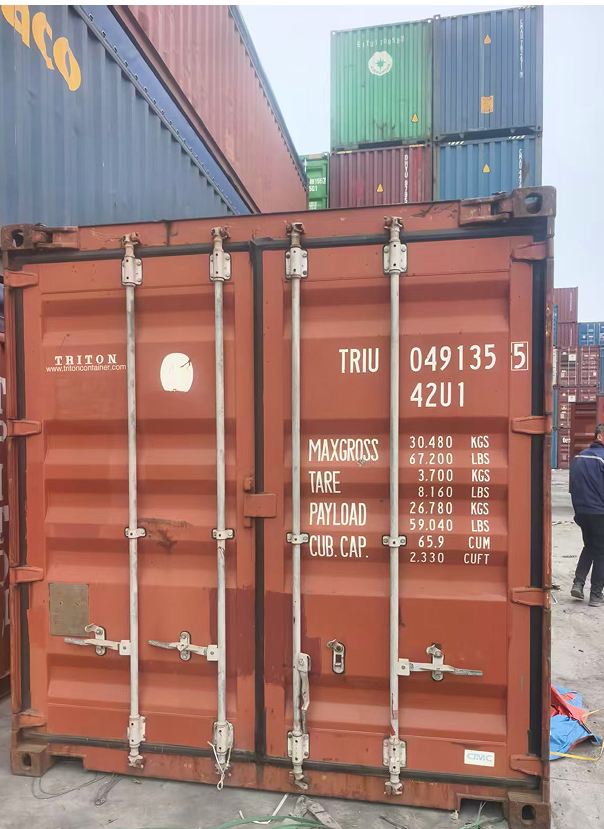
Customer Background
Our customer is an established oil and gas equipment supplier based in Dubai, UAE. They supply industrial piping materials, valves, and fittings to construction and energy companies across the UAE and the broader Middle East region. Their clients include EPC contractors, desalination plant operators, and oilfield service companies active in Abu Dhabi, Sharjah, and the Northern Emirates.
The customer had secured a supply contract for seamless steel pipes manufactured in China. The pipes were produced at a mill in Jiangsu Province, near Shanghai. The customer needed a reliable freight forwarding partner to handle the ocean shipping from Shanghai to Jebel Ali, including the specialized container equipment required for this type of cargo. They approached DTFU Logistics based on our experience handling steel products and oversized cargo on the China-Middle East lane.
Cargo Information
| Item | Details |
|---|---|
| Cargo | Seamless steel pipes (API 5L grade, various diameters) |
| Container | 1 × 40OT (Open Top) |
| Total Weight | ~26,800 kg |
| Pipe Lengths | 5.8–11.8 meters per piece |
| Origin | Shanghai, China (mill in Jiangsu Province, trucked to port) |
| Destination | Jebel Ali, Dubai, UAE |
| Incoterm | FOB Shanghai |
The seamless steel pipes were manufactured to API 5L specification, commonly used in the oil and gas industry for pipeline transportation systems. The lengths ranged from 5.8 to 11.8 meters, with varying diameters. The total shipment weight was approximately 26.8 metric tons — close to the maximum payload capacity of a 40-foot container on this trade lane.
Why This Shipping Method
Choosing the right container type was the critical decision for this shipment. Here is why we recommended a 1×40OT (Open Top) container instead of a standard 40HQ or other alternatives:
Why Not a Standard 40HQ?
A standard 40HQ container has an internal door opening height of approximately 2.58 meters and a door width of about 2.34 meters. Steel pipes longer than 6 meters cannot physically enter a standard container through the door opening — they would hit the top or sides of the door frame. Our longest pipes were 11.8 meters, making a standard container impossible without cutting the pipes, which the customer understandably did not want.
Why Open Top (OT) Over Flat Rack?
We considered both Open Top (OT) and Flat Rack (FR) containers. The 40OT was chosen because:
- Overhead loading: The OT container has a removable tarpaulin cover and end beam, allowing pipes to be loaded from above using a crane. This is the standard method for loading long cylindrical cargo.
- Protection from elements: Unlike a flat rack, the OT retains a roof cover (tarpaulin), providing weather protection during ocean transit — important for steel cargo that can rust.
- Better lashing points: OT containers have reinforced lashing rings on the floor and side posts, making it easier to secure round cargo like pipes.
- Cost consideration: OT is more expensive than a standard 40HQ but generally more economical than a flat rack for this type of cargo.
Why Not LCL or Breakbulk?
At 26.8 tons and a full container load, LCL was not practical. Breakbulk shipping (loading pipes directly into the vessel's hold) was considered but ruled out due to longer transit times and more complex handling at both ports.
Shipping Process
Step 1: Equipment Booking & Container Preparation
The first challenge was securing a 40OT container in Shanghai. Open Top containers are specialty equipment and are less commonly available than standard dry vans. We booked the container two weeks in advance to ensure availability. The container was pre-inspected at the depot — we checked the tarpaulin condition, cross-beam functionality, and floor integrity to ensure it could handle the heavy pipe load.
Step 2: Factory Pickup & Trucking to Shanghai Port
The pipes were loaded onto flatbed trucks at the mill in Jiangsu and transported to the container yard at Shanghai Port. The distance was approximately 180 km. Since the pipes were already in manageable lengths (up to 11.8 meters), no special shipping permits were needed for road transport within Jiangsu and Shanghai.
Step 3: Container Loading (Crane Operation)
This was the most distinctive part of the process. Since the OT container has no fixed roof, loading was done from above:
- The tarpaulin and removable roof beams were taken off at the container yard.
- A forklift with pipe handling attachments and a mobile crane were used to lift the pipes and lower them vertically into the open container.
- Pipes were arranged in layers with wooden dunnage between each layer to distribute weight and prevent metal-to-metal contact.
- The longest pipes (11.8 m) were loaded first at the bottom, with shorter pieces on top.
- Once all pipes were inside, the load was lashed and secured using steel straps and wooden chocks to prevent shifting during transit.
Step 4: Tarpaulin Installation & Container Sealing
After loading was complete, the removable roof beams were reinstalled and the heavy-duty tarpaulin was stretched over the top and secured. The container doors were closed and sealed. Unlike a standard container, the OT's roof seal is not watertight — the tarpaulin provides weather resistance but some ventilation is normal.
Step 5: Export Customs Clearance (China)
Export customs clearance was handled at Shanghai port. The documentation included: - Commercial invoice and packing list - Bill of lading - Certificate of origin (China) - Mill test certificates for the steel pipes (required for API 5L grade verification)
China customs clearance for carbon steel pipe exports is generally straightforward. The cargo was classified under HS code 7304 (seamless steel pipes). No export restrictions applied.
Step 6: Main Carriage (Sea Freight)
The container was loaded onto a vessel at Shanghai bound for Jebel Ali. The sailing route went via the South China Sea, through the Strait of Malacca, across the Indian Ocean, and into the Arabian Gulf. Total transit time was approximately 18 days.
Step 7: Import Customs Clearance (UAE) & Delivery
Upon arrival at Jebel Ali, our local customs broker handled the import clearance. UAE customs procedures are efficient at Jebel Ali Free Zone (JAFZA), and the documentation was processed without issues. After clearance, the pipes were delivered to the customer's warehouse in Dubai.
Challenges Encountered
1. Open Top Container Availability
40OT containers are specialty equipment. In Shanghai, availability can be limited, especially during peak shipping seasons. Our initial container booking was delayed by two days as the depot needed time to reposition an OT container from Ningbo.
2. Loading Complexity
Unlike standard container loading, the OT process requires a crane and experienced operators. The pipes needed to be carefully positioned to maintain weight balance and prevent damage. Steel pipes, being round and heavy, are inherently prone to rolling during lifting.
3. Weight Distribution
At 26.8 tons, the cargo was approaching the maximum payload of the 40OT container. Proper weight distribution was essential — too much weight concentrated in one area could damage the container floor or cause instability during ocean transport.
4. Tarpaulin Security
The OT tarpaulin must be properly tensioned and secured. During the ocean voyage, high winds and salt spray can damage a poorly secured cover, potentially exposing the steel cargo to seawater.
How We Solved Them
Container Availability
We booked the 40OT container two weeks before the planned loading date, giving the depot time to source and reposition the equipment. We also identified a backup container from a second depot in Shanghai as a contingency. This proactive booking ensured the container was ready when needed.
Loading Solution
Our warehouse operations team coordinated with the crane operator to develop a loading sequence that maximized space and maintained balance:
- The heaviest and longest pipes were loaded first as the base layer.
- Wooden dunnage (10 cm × 10 cm timbers) was placed between each layer to create separation and prevent pipe-on-pipe contact.
- Steel wedges and wooden chocks were hammered in on both sides of each pipe to prevent rolling.
- The load was lashed with steel straps at multiple points along the length of the container.
The entire loading process took approximately 3 hours with a team of 4 workers plus the crane operator.
Weight Distribution
The loading plan was calculated in advance based on the pipe dimensions and weights provided by the mill. We distributed the pipes evenly across the container floor, keeping the center of gravity low and centered. The final weight distribution was verified during loading.
Tarpaulin Security
We used additional rope lashings over the tarpaulin at 1-meter intervals to ensure it stayed tight during the voyage. The condition of the tarpaulin was noted in the container survey report before departure.
Final Timeline
| Phase | Date | Duration |
|---|---|---|
| Container booking & depot preparation | Day –14 | Advance booking |
| Pipe pickup from Jiangsu mill | Day 1 | 1 day |
| Trucking to Shanghai container yard | Day 1 | 1 day |
| Container loading (crane operation) | Day 2 | 1 day (~3 hours loading) |
| Export customs clearance (China) | Day 3 | 1 day |
| Container delivery to Shanghai port terminal | Day 4 | 1 day |
| Vessel departure from Shanghai | Day 5 | — |
| Sea transit (Shanghai → Jebel Ali) | Day 5–23 | ~18 days |
| Arrival at Jebel Ali port | Day 23 | — |
| Import customs clearance (UAE) | Day 23–25 | 2 days |
| Cargo delivery to Dubai warehouse | Day 25 | 1 day |
| Total (from pickup to delivery) | Day 1 → Day 25 | ~25 days |
Final Cost
| Cost Item | Amount (USD) |
|---|---|
| Trucking (Jiangsu mill → Shanghai container yard) | $350 |
| Container loading & crane hire at yard | $450 |
| Export customs clearance (China) | $130 |
| Ocean freight (1×40OT, Shanghai → Jebel Ali) | $2,850 |
| OT equipment surcharge (vs. standard 40HQ) | $400 |
| B/L documentation & handling fee | $85 |
| Import customs clearance (UAE) | $300 |
| Port handling charges (Jebel Ali) | $380 |
| Inland delivery (Jebel Ali → Dubai warehouse) | $250 |
| Cargo insurance (0.3% of declared value) | $210 |
| Total | ~$5,405 |
Note: The ocean freight for a 40OT is higher than a standard 40HQ due to the specialty equipment surcharge and limited availability. The crane loading fee at origin is an additional cost that would not apply to a standard container. Import duties in the UAE vary by HS code and are excluded from this breakdown.
Customer Review
"Shipping steel pipes from China has always been a bit tricky because of the length — standard containers just don't work. DTFU recommended the Open Top container, and it was the right call. The loading went smoothly, and the pipes arrived in perfect condition — no rust, no damage, no shifting during transit. The communication throughout the process was excellent. We knew where our cargo was at every stage. This was our first time working with DTFU, and we will definitely use them again for future steel shipments."
— Procurement Manager, Dubai Oil & Gas Equipment Supplier
Lessons Learned
-
Open Top containers are the standard solution for long steel products. For pipes, profiles, and tubes that exceed standard container door dimensions, the 40OT is cost-effective and widely available when booked in advance.
-
Advanced equipment booking is essential for specialty containers. Open Top containers are not stocked in large numbers at every depot. Booking two weeks ahead prevented delays and ensured the right equipment was available.
-
Crane loading adds cost but is necessary for safety. While the crane and rigging fee added $450 to the total cost, it was the only safe and practical way to load 11.8-meter steel pipes. Attempting any alternative method would have risked cargo damage or worker injury.
-
Proper lashing prevents pipe movement at sea. Round cargo like steel pipes is inherently unstable during ocean transport. Using wooden dunnage between layers, steel wedges, and multiple lashing points is essential to prevent shifting that could damage the container or the cargo.
-
The total cost premium over a standard 40HQ is meaningful but justified. The OT equipment surcharge (+$400) and crane loading (+$450) added roughly $850 compared to a standard container. However, there was no practical alternative — the cargo physically could not fit in a standard 40HQ.
Ready to ship steel products, pipes, or oversized cargo from China to the UAE or other destinations? Contact DTFU Logistics for a tailored shipping solution.