Route: Shanghai, China → Dubai, United Arab Emirates
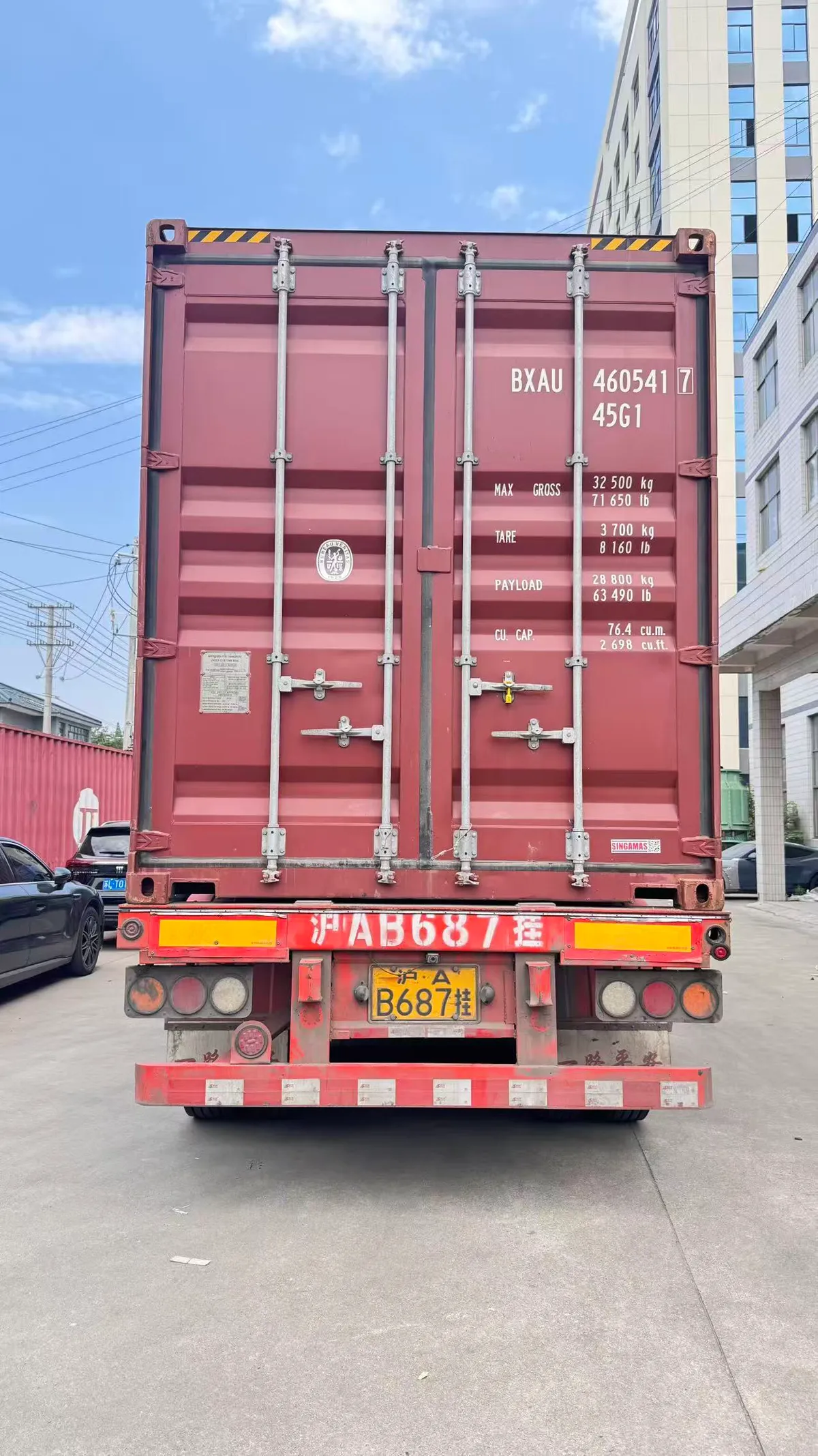
Shipment Type: 1×40HQ Full Container Load (FCL)
Customer Background
The customer is a mid-sized auto body repair shop and parts distributor based in Dubai's Al Quoz industrial area. With over a decade of experience in the UAE automotive aftermarket, they supply replacement body panels—hoods, fenders, bumpers, and structural reinforcement parts—to collision repair centers across Dubai, Sharjah, and Abu Dhabi.
They had previously sourced parts from local distributors, but margins were tight. Looking to cut costs and gain more control over inventory, they decided to import directly from manufacturers in China. This was their first time handling a full container shipment on their own, so they needed a freight partner who could guide them through the entire process—from factory pickup in Shanghai to final delivery at their warehouse in Dubai.
Cargo Information
| Item | Description |
|---|---|
| Commodity | Auto body parts (hoods, fenders, front reinforcement body panels) |
| Packaging | Steel racks and wooden crates, strapped and shrink-wrapped |
| Total Volume | Approx. 58 CBM |
| Total Weight | Approx. 9,200 kg |
| Container | 1×40HQ (High Cube) |
The cargo consisted mainly of stamped steel body panels for popular Japanese and American car models commonly found in the UAE market—Toyota, Nissan, and Ford. Each part was packed by the manufacturer on custom steel racks to prevent bending or scratching during transit.
Why This Shipping Method
For this type of cargo, a full container load (FCL) was the clear choice. Several factors drove the decision:
- Volume efficiency. At nearly 58 CBM, the shipment would have occupied most of a 40HQ container anyway. LCL would have meant splitting the cargo across multiple pallets, higher per-unit handling costs, and more risk of damage.
- Damage prevention. Auto parts—especially stamped metal panels—are easily dented or scratched. With FCL, the container was loaded once at the factory and not opened again until it reached Dubai. That eliminated the repeated handling that comes with LCL consolidation.
- Cost predictability. A flat all-in rate for the container made budgeting straightforward. No surprise warehouse fees or consolidation charges.
- Faster transit. With FCL, the container could roll directly onto the vessel without waiting for co-loading, which often adds days with LCL shipments.
Shipping Process
Step 1: Cargo Preparation & Pickup
The manufacturer in Shanghai's Jiading district completed production about a week ahead of the vessel's estimated departure. DTF Logistics coordinated a truck to collect the cargo directly from the factory. The parts had already been packed onto steel racks and crates, so loading was straightforward.
Step 2: Container Loading & Stuffing
The empty 40HQ container was dropped at the factory on a Monday morning. Loading took about 4 hours—the team used a forklift to place the heavier racks at the front of the container, then filled in gaps with smaller crates. Dunnage bags and extra strapping were used to prevent shifting during transit.
Step 3: Export Customs Clearance
The shipping documents (commercial invoice, packing list, bill of lading draft) were submitted to Chinese customs. The cargo was classified under HS code 8708 (parts and accessories of motor vehicles). Customs clearance was processed smoothly and the container was released within 24 hours.
Step 4: Vessel Loading & Ocean Transit
The container was gated into Shanghai's Yangshan Deep-Water Port and loaded onto a vessel bound for Jebel Ali Port, Dubai. The ocean transit took 19 days, with a brief transshipment stop at Singapore.
Step 5: Arrival & Import Clearance in Dubai
Once the vessel docked at Jebel Ali, the container was discharged and moved to the customs examination area. The customer's local clearing agent submitted the required documentation—bill of lading, certificate of origin, commercial invoice, and packing list—through Dubai Customs' online portal.
Step 6: Final Delivery
After customs clearance, the container was trucked to the customer's warehouse in Al Quoz, about a 40-minute drive from Jebel Ali. The cargo was unloaded and inspected. All parts arrived in good condition.
Challenges Encountered
The shipment went smoothly overall, but a couple of minor issues came up:
-
Incomplete packing list. The manufacturer's initial packing list did not include the correct quantities for two smaller crate items, which caused a brief delay during the export customs document review. The discrepancy was minor—only 12 units out of nearly 400—but it required a revised document to be submitted.
-
Container availability. It was peak shipping season (early Q3), and 40HQ containers were in tight supply at the Shanghai terminal. We had to book the container about 5 days earlier than originally planned to secure one, which meant the factory had to adjust their production schedule slightly.
-
UAE import inspection hold. Dubai Customs randomly selected the container for a physical inspection. This added about 2 days to the clearance process.
How We Solved Them
-
For the packing list issue: Our operations team caught the discrepancy during the pre-clearance document check. We contacted the manufacturer immediately to issue a corrected packing list, and submitted the revised version to Chinese customs before the official filing deadline. No penalty was incurred.
-
For the container shortage: We flagged the availability risk to the customer as soon as we saw the booking confirmation showing limited equipment. By giving the factory a 5-day heads-up, they were able to move production of the affected items forward. The container was picked up, stuffed, and returned to the terminal with plenty of time to spare.
-
For the import inspection: We coordinated with the customer's local clearing agent to ensure all paperwork was in order. The inspection was straightforward—the customs officer opened the container, verified the cargo against the declaration, and released it within 48 hours. No fines or additional duties were assessed.
Final Timeline
| Milestone | Date | Days |
|---|---|---|
| Factory pickup & container stuffing | Mar 3 | Day 0 |
| Container gated in at Shanghai terminal | Mar 5 | Day 2 |
| Vessel departure from Shanghai | Mar 7 | Day 4 |
| Transit (incl. Singapore transshipment) | Mar 7–26 | 19 days |
| Arrival at Jebel Ali Port | Mar 26 | Day 23 |
| Customs clearance & physical inspection | Mar 26–29 | +3 days |
| Delivery to Al Quoz warehouse | Mar 30 | Day 27 |
Total door-to-door transit time: 27 days.
Final Cost
(Note: Actual costs vary based on fuel prices, seasonality, and specific service requirements. The figures below are approximate for this shipment.)
| Item | Cost (Approx.) |
|---|---|
| Ocean freight (1×40HQ, Shanghai → Jebel Ali) | $1,800 – $2,200 |
| Container stuffing & dunnage materials | $250 |
| Truck pickup (factory → Shanghai terminal) | $280 |
| Export customs clearance (China) | $120 |
| Documentation fees (B/L, COO) | $80 |
| Ocean freight surcharges (BAF, LSS, etc.) | $350 – $450 |
| Import customs clearance & inspection (Dubai) | $350 |
| Terminal handling charges (Jebel Ali) | $200 |
| Truck delivery (Jebel Ali → Al Quoz) | $180 |
| Total estimated cost | $3,610 – $4,130 |
The customer noted that even with the import fees, importing directly from China cost them roughly 30–35% less than buying the same parts through local UAE distributors.
Customer Review
"This was our first time importing a full container, and honestly I was a bit nervous about it. But DTFU made the process very straightforward. They kept us updated at every stage—when the container was loaded, when it left Shanghai, and when it arrived at Jebel Ali. The one hiccup with customs in Dubai was handled quickly. The parts arrived clean and undamaged, and we saved a lot compared to local pricing. We'll definitely be doing this again."
— Ahmed R., Operations Manager, Dubai Auto Spares
Lessons Learned
- Double-check packing lists before submission. A small quantity error on the manufacturer's end caused unnecessary back-and-forth. Having our team review documents before filing prevented a more serious delay, but it's something we now flag even earlier in the process.
- Book containers ahead during peak season. Q3 is consistently tight for equipment availability in Shanghai. For future shipments, we recommend reserving containers 2–3 weeks in advance rather than the typical 1–2 weeks.
- Build buffer time for random inspections. Physical inspection at Jebel Ali is not uncommon. Planning for an extra 2–3 days in the clearance timeline helps avoid downstream delivery pressure.
- Steel rack packaging is worth the investment. The manufacturer's decision to use custom steel racks (instead of standard wooden crates) for the hoods and fenders paid off—there was zero damage reported, which is uncommon for sheet metal parts moving on a 19-day ocean voyage.
For your next shipmentfrom China to the UAE or anywhere worldwide, contact DTFU Logistics for a competitive quote and end-to-end shipping support.