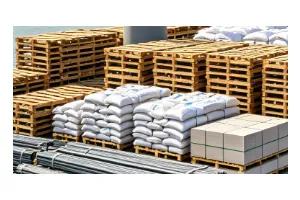
If you're sourcing battery energy storage hardware from Chinese manufacturers, you've probably already discovered a hard truth: shipping energy storage systems from China is nothing like shipping ordinary cargo. An energy storage cabinet isn't just a heavy metal box — it's a Class 9 dangerous good packed with lithium-ion cells, often weighing 30 tons or more, and worth six to seven figures per unit. Get one detail wrong and your shipment doesn't just get delayed — it gets rejected at the port gate, and you're paying demurrage while your project timeline burns.
We've handled hundreds of ESS exports from factories across China to project sites in over 30 countries. This guide covers every practical decision — UN classification, document preparation, shipping mode selection, port strategy, and cost control — all drawn from real shipments, not theory.
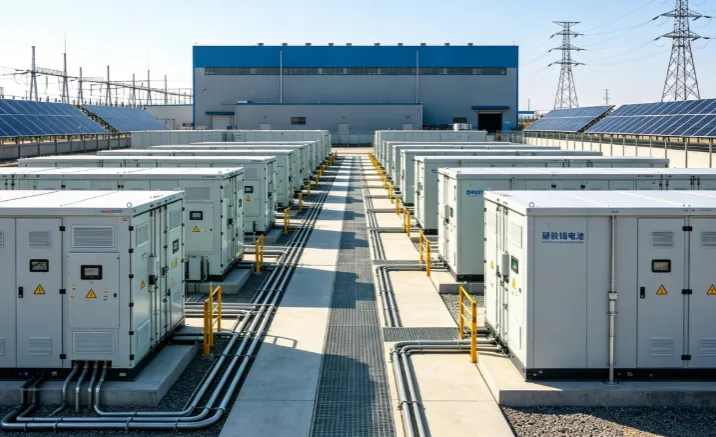
Energy Storage System Types & UN Classifications: Know What You're Shipping
Before you book a single container, you need to answer two questions: what exactly are you shipping, and which UN number applies to it. Get the UN classification wrong and your transport identification report becomes worthless — carriers will reject the booking outright.
The Four ESS Product Categories
Not all energy storage shipments are created equal. The product category determines your shipping mode, cost structure, and documentation package.
| Product Category | Typical Weight | Capacity Range | Primary Shipping Mode |
|---|---|---|---|
| Grid-Scale Containerized BESS | 30–45 metric tons | 3–5 MWh per unit | Breakbulk / Heavy-lift vessel / Flat rack |
| C&I Energy Storage Cabinets | 2–15 metric tons | 100–500 kWh | FCL (20HQ/40HQ) / Flat rack |
| Residential Battery Systems | 30–300 kg | 5–20 kWh | LCL sea freight / Air freight / Rail |
| Portable Power Stations | 5–30 kg | 0.5–3 kWh | Air freight / Express courier |
Here's what this means in practice. Last year we shipped 20 C&I energy storage cabinets — each 6.2 m long, 12.8 tons — from Dongguan to a solar farm in Texas using standard 40HQ containers with custom steel cradles. That same month, we quoted a grid-scale containerized BESS project out of Ningbo: 48 units at 43 tons each. Those required a chartered heavy-lift vessel with deck stowage, crane coordination at both ends, and eight weeks' lead time for carrier DG acceptance — a fundamentally different logistics operation.
UN Classification: The Decision That Determines Everything
Every lithium battery energy storage shipment from China falls under one of three UN numbers under the IMDG Code:
UN 3536 — Lithium batteries installed in a cargo transport unit. Applies when the container is the ESS — batteries, BMS, PCS, and HVAC integrated into an ISO-container form factor. Must be stowed on deck, never below. This limits which vessels and carriers accept your booking.
UN 3480 — Lithium-ion batteries shipped standalone. The most strictly regulated category. Applies to individual battery modules or racks not installed inside equipment. Highest DG surcharges, tightest carrier scrutiny.
UN 3481 — Lithium-ion batteries contained in or packed with equipment. Covers most C&I cabinets where batteries are pre-installed in a steel enclosure with Battery Management System. More vessel options and lower surcharges than UN3480.
Real-world tip: Factories often default to UN3480 for C&I cabinets. In many cases these qualify as UN3481 — but you need written confirmation from a CNAS-accredited lab on your transport identification report. The switch saves $150–$300 per container in DG surcharges.
Key Terminology
- HS 8507.60 — Lithium-ion accumulators (primary code for battery modules)
- HS 8504.40 — Static converters (for PCS/inverter units shipped separately)
- BESS — Battery Energy Storage System | CESS — Containerized Energy Storage System
- BMS — Battery Management System (prevents overcharge, over-discharge, thermal runaway)
- PCS — Power Conversion System (DC battery power → grid-compatible AC)
2026 DG & Battery Regulations: IMDG Code, EU Rules & Compliance Deadlines
The regulatory landscape for shipping lithium battery energy storage from China shifted significantly in 2026. If your last ESS shipment was in 2024 or early 2025, several rules have changed — and non-compliance now carries real financial consequences.
Three Regulatory Changes That Took Effect in 2026
1. IMDG Code Amendment 42-24 (Mandatory January 1, 2026)
The International Maritime Dangerous Goods Code tightened documentation requirements. Key impact for ESS shippers: carriers now require your State of Charge to be documented with a timestamped test record taken immediately before container stuffing — not days earlier at the factory.
2. IATA DGR 67th Edition (Effective January 1, 2026)
The 30% SOC limit for lithium batteries under PI 966 is now mandatory. Batteries exceeding 100 Wh — virtually all ESS modules — are prohibited on passenger aircraft. Air freight is now limited to prototypes under 800 kg and portable power stations. Budget $8–$15/kg for DG air cargo.
3. EU Battery Regulation (2023/1542) — Phased Deadlines
| Deadline | Requirement | Who It Affects |
|---|---|---|
| Mid-2026 (now active) | Verified carbon footprint declaration must physically accompany industrial batteries >2 kWh | All BESS and C&I ESS shipments entering the EU |
| August 18, 2026 | Expanded battery labels showing chemistry, weight, capacity, manufacturer, manufacturing date, and hazardous substances >0.1% | All batteries placed on the EU market — labels must be applied before goods leave China |
| February 18, 2027 | Digital Battery Passport accessible via QR code (~90 data points) | Industrial batteries >2 kWh, EV batteries, LMT batteries |
The carbon footprint declaration is catching importers off guard — we've seen shipments held at Yantian this quarter because it was missing. The declaration must be verified by an accredited body and physically included with your Bill of Lading and DG documents. For a broader look at logistics options across the continent, see our shipping from China to Europe hub page.
Destination Certification Requirements at a Glance
| Market | Primary Certifications | Typical Timeline | Notes |
|---|---|---|---|
| USA | UL 9540 + UL 9540A + UL 1973 + FCC | 3–6 months | UL 9540A (thermal runaway propagation test) is the bottleneck — book lab time early |
| EU | CE (LVD+EMC) + EN IEC 62619 | 4–8 weeks | Requires an EU Authorized Representative with a physical EU address |
| Australia | CEC listing + RCM + AS/NZS 5139 | 2–4 months | Biosecurity: all wood packaging must be ISPM 15 certified and fumigated |
| Saudi Arabia | SASO + IEC 62619 + SABER platform | 4–8 weeks | SABER registration must be completed before shipping; post-arrival certification is not accepted |
| India | BIS IS 16270:2023 | 2–4 months | Requires a local Indian representative for BIS application |
What Non-Compliance Actually Costs
A recent case: an e-bike importer shipped 25 units via air freight from Shenzhen to Frankfurt. SOC was at 45% — above the new mandatory 30% limit. The shipment was rejected at the cargo terminal. Total damage: $4,755 in terminal storage, re-testing, and re-booking fees, plus an estimated $12,000 in lost pre-orders during the two-week delay. For an ESS shipment worth $500,000+, the math gets terrifying fast.
The takeaway: every compliance problem that can stop your shipment is detectable before loading. After the vessel sails, fix costs multiply by 10× to 50×.
Pre-Shipment Documentation: UN38.3, MSDS, DG Packaging & SOC Requirements
This is where most first-time ESS importers hit the wall. The document package for a lithium battery energy storage shipment is substantially thicker than for general cargo — and every document must be internally consistent.
The Complete Document Package
| Document | Issuing Authority | Validity | Procurement Time |
|---|---|---|---|
| UN38.3 Test Report | CNAS-accredited laboratory | Indefinite (if design unchanged) | 2–4 weeks |
| MSDS/SDS (16 sections) | Manufacturer or third-party lab | Updated with product revisions | 1–3 days |
| Transport Identification Report (Dangerous Goods Classification Report) | Accredited testing institute | Current calendar year | 3–5 working days |
| DG Packing Certificate (CIQ Dangerous Goods Packaging Conformity Certificate) | China Customs (CIQ) | 1 year (sea) / 3 months (air) | 1–2 weeks |
| CSC Container Safety Certificate | Classification society (CCS/DNV/BV) | Per inspection cycle | Product-dependent |
| SOC Test Record | Shipper | Per shipment | Immediately before stuffing |
State of Charge: The #1 Reason Shipments Get Rejected
Chinese ports enforce SOC limits strictly, and limits vary by port:
| Port | SOC Limit | Special Considerations |
|---|---|---|
| Shenzhen (Yantian/Shekou) | 20%–50% | Largest DG container capacity; most carrier DG contracts |
| Shanghai | 20%–50% | Nangang terminal now handles breakbulk ESS (first shipment 2026) |
| Ningbo | 20%–50% | COSCO heavy-lift vessel hub for grid-scale BESS |
| Xiamen | ≤30% | Tightest SOC limit, but offers a 3-day MSA green channel |
| Qingdao | 20%–50% | Strong Japan/Korea transshipment and North America direct routes |
| Taicang | 20%–50% | Breakbulk consolidation hub; inland waterway transfer capability |
Here's what happens when SOC exceeds the limit: MSA flags your declaration, your container is pulled, and you either pay a contractor for on-site discharge (slow, expensive, risks cell integrity) or return the unit to the factory (slower, costlier). Either way: daily port storage fees.
Practical tip: Take timestamped photos of SOC readings with the container number and date visible in one frame. These photos are your evidence if MSA challenges your declaration — we've seen them save clients from multi-day delays.
Packaging and Labeling Requirements
For UN3536 containerized BESS, the container is the packaging — it must meet UN certification standards. For UN3480/UN3481 shipments: short-circuit protection on all terminals (non-conductive caps, separators), crush-resistant outer packaging rated for 3-meter stack test, and four-sided container labels: Class 9 DG diamond (250×250 mm), UN number (≥65 mm), lithium battery handling label, and the new-for-2026 SOC declaration label.
How to Ship Energy Storage Systems: Sea Freight, Air Freight, Rail & Door-to-Door Options
Choosing the right transport mode for your ESS shipment is not just about comparing transit times. It's about matching the mode to your product's UN classification, weight, dimensions, and destination infrastructure.
Shipping Method Comparison
| Mode | Door-to-Door Transit | Relative Cost | Best For | Critical Constraint |
|---|---|---|---|---|
| Sea FCL (Flat Rack / SOC / Open Top) | 25–40 days | $$ | C&I cabinets, 5–20 unit batches | UN3536 requires on-deck stowage |
| Breakbulk / Heavy-Lift Vessel | 30–45 days | $$$$ | Grid-scale projects, 10+ units at 40+ tons each | Requires specialized port handling at both ends |
| Sea LCL | 30–40 days | $ | Residential battery pallets, small volumes | DG LCL consolidation options are limited |
| Air Freight | 3–7 days | $$$$$ | Prototypes, samples, emergency replacements under 800 kg | SOC ≤30% mandatory; >100 Wh prohibited on passenger aircraft |
| China-Europe Railway | 15–20 days | $$$ | C&I cabinets to Europe, moderate urgency | Only serves Europe; DG approval adds 3–5 days to booking |
| Multimodal (Sea-Air / Sea-Rail) | 20–30 days | $$$ | Cost-time balance for mid-size shipments | Requires experienced coordinator for mode transitions |
Making the Right Choice: Four Real-World Scenarios
Scenario 1: US Solar EPC — 12 C&I cabinets (12 tons each) to California.
Use sea FCL with 40HQ containers and custom steel cradles. Book through Yantian or Shanghai — both run weekly DG sailings to LA/Long Beach (26–30 days). For a detailed breakdown of ocean freight options on this lane, see our guide on sea shipping from China to USA. Under DDP, budget $4,500–$6,500 per container all-in depending on spot rates.
Scenario 2: Middle East Utility — 40 grid-scale BESS units (43 tons each) to Saudi Arabia.
This is a breakbulk / heavy-lift vessel job. Work with a forwarder holding direct contracts with COSCO Specialized Carriers or Chipolbrok. COSCO delivered 2,386 units of 45-ton BESS from Qinzhou to Jeddah and Dammam across 13 voyages — the route is proven. Allow 30–45 days door-to-door.
Scenario 3: Prototype Testing — 2 residential battery units (80 kg each) to Munich in 10 days.
Air freight is your only option. Book through an IATA DGR-certified forwarder. SOC must be ≤30%, documented, with UN-certified packaging. Budget $8–$12/kg. Get written carrier acceptance before the units leave the factory.
Scenario 4: European Distributor — 8 C&I cabinets to Poland, faster than sea.
The China-Europe Railway (Chengdu/Xi'an → Malaszewicze) delivers in 15–20 days — half of sea transit at ~50% of air cost. Downside: DG rail approval adds 3–5 days to booking, and DG rail capacity is tighter than ocean.
Door-to-Door: When DDP Makes Sense
For first-time ESS importers, DDP (Delivered Duty Paid) removes the steepest part of the learning curve. Your forwarder handles the entire chain — factory pickup, export customs, ocean freight, import clearance, duties, VAT, and final trucking — with one quote, one contact, one responsible party.
DDP costs 10–20% more at the destination leg (the forwarder builds in a risk premium).
Choosing a China Export Port for ESS: SOC Limits, DG Handling & Shipping Routes
Your choice of departure port directly affects your booking timeline, DG approval speed, and available shipping routes. Not all Chinese ports handle ESS cargo equally well.
Port-by-Port Comparison
| Port | SOC Limit | DG Infrastructure | Best For | Key Advantage |
|---|---|---|---|---|
| Shenzhen (Yantian/Shekou) | 20%–50% | ★★★★★ | All ESS types, most carriers | Highest frequency of DG sailings; widest carrier choice |
| Shanghai | 20%–50% | ★★★★★ | Grid-scale, breakbulk, oversized | Nangang terminal breakbulk ESS capability; deep-water access |
| Ningbo | 20%–50% | ★★★★☆ | Grid-scale BESS, heavy-lift | COSCO Specialized Carriers hub |
| Xiamen | ≤30% | ★★★★☆ | Time-sensitive shipments | 3-day MSA green channel — fastest DG approval in China |
| Qingdao | 20%–50% | ★★★★☆ | North America, Japan/Korea routes | Strong transpacific schedule |
| Taicang | 20%–50% | ★★★☆☆ | Ultra-heavy units, breakbulk | Inland waterway transfer; specialized heavy-lift berths |
| Qinzhou (Beibu Gulf) | 20%–50% | ★★★☆☆ | Middle East, Southeast Asia | Proven track record — 2,386 BESS units shipped for Saudi project |
Port Selection Strategy
- Speed priority → Xiamen's 3-day green channel (vs. 5–7 days elsewhere). Trade-off: ≤30% SOC cap.
- Grid-scale units >35 tons → Shanghai (Nangang) or Taicang — crane capacity, breakbulk berths, project cargo experience.
- Middle East destination → Qinzhou (Beibu Gulf) — closer to southern China battery factories, proven Saudi route, less congestion.
- Default for C&I / residential → Shenzhen (Yantian) — most mature DG infrastructure, all major carriers (COSCO, Maersk, CMA CGM, Evergreen, MSC, ZIM) run regular DG sailings.
Destination Country Requirements: Certifications, Duties & Customs for ESS Imports
The regulatory finish line isn't the Chinese export port — it's your destination country's customs clearance. Each major market has its own certification stack, duty structure, and clearance process.
United States
Certifications: UL 9540 (system-level), UL 9540A (thermal runaway propagation — book 3–4 months ahead), UL 1973 (module), FCC. Section 301 tariffs may apply to HS 8507.60 — confirm your HS code with a US customs broker pre-shipment. For a complete overview of sea and air options on this lane, see our dedicated shipping from China to USA page. The US Coast Guard requires advance DG notification; your carrier files it, but confirm before vessel departure.
European Union
Certifications: CE (LVD+EMC) + EN IEC 62619. You must appoint an EU Authorized Representative with a physical EU address. The carbon footprint declaration is now active for industrial batteries >2 kWh — shipments arriving without it face customs holds. VAT ranges 17%–27% by member state; under DDP your forwarder handles it. For importers distributing across the EU, we also provide dedicated shipping from China to Germany and shipping from China to Netherlands services covering key European entry ports.
Middle East (Saudi Arabia / UAE)
Saudi Arabia requires SABER platform registration with SASO Certificate of Conformity uploaded before vessel arrival — post-arrival certification is rejected. The market is booming (12.5 GWh grid-side project), but plan for climate-controlled storage at the destination port in summer (50°C+ ambient). For project cargo and heavy-lift shipments to the Kingdom, refer to our shipping from China to Saudi Arabia guide.
Australia
CEC listing + RCM + AS/NZS 5139. Strict biosecurity rules: all wood packaging must be ISPM 15 certified and fumigated. For a broader look at logistics options, see our shipping from China to Australia overview. For remote site delivery, confirm your forwarder has last-mile DG trucking — the nearest DG-qualified depot might be 800 km away.
What It Costs to Ship Energy Storage Systems: Freight Rates, DG Surcharges & Saving Strategies
Let's talk numbers — not abstract percentages, but what actually shows up on your invoice.
Cost Composition for a Typical ESS Sea Freight Shipment
| Cost Component | Typical Share | What Drives It |
|---|---|---|
| Base ocean freight | 40–50% | Route, season, container type, carrier |
| BAF (Bunker Adjustment Factor) | 5–10% | Fuel prices, adjusted quarterly |
| DG surcharge | 5–10% | UN classification, carrier policy ($150–$400/container). |
| Port charges (THC + documentation + VGM) | 8–12% | Port-specific fee schedules |
| MSA declaration fee | 1–2% | Fixed government charge |
| Customs brokerage | 2–3% | Broker fee + documentation processing |
| Factory-to-port trucking | 10–15% | DG-rated trucks cost 30–50% more than standard trucks |
| Cargo insurance | 2–5% | 0.3%–0.8% of cargo value for DG Class 9 (vs. 0.1%–0.2% for general cargo) |
| Destination leg (for DDP) | 10–20% | Import customs, duty, VAT, last-mile DG delivery |
Three Realistic Cost Scenarios (Mid-2026 Planning Estimates)
| Scenario | Route | Mode | Budget (DDP) |
|---|---|---|---|
| 1× C&I cabinet (13 t, UN3481) to California | Shenzhen → LA | Sea FCL 40HQ | $5,000–$7,500 |
| 20× grid-scale BESS (43 t each, UN3536) to Rotterdam | Shanghai → Rotterdam | Breakbulk charter | $250,000–$380,000 total |
| 5 pallets residential LiFePO4 (250 kg each) to Sydney | Ningbo → Sydney | Sea LCL | $2,500–$4,500 |
Actual rates fluctuate with spot market conditions. Use these figures for initial budgeting, not as fixed quotes.
Five Practical Cost-Saving Tactics
- Get UN classification right. Switching from UN3480 to UN3481 where justified saves $150–$300 per container in DG surcharges.
- Consolidate into FCL. Combining multiple units into full containers cuts per-unit freight by 20–40% vs. LCL.
- Lock SOC at 20–30%. Satisfies every port's limits and may qualify for reduced carrier DG surcharges.
- Book early, contract long. ESS demand is growing 200%+ annually. Peak season (Aug–Oct) spot rates spike 40–60%. Negotiate a 6–12 month contract.
- Avoid unnecessary OOG classification. Over-engineered shipping frames can push dimensions into Out of Gauge territory — surcharges of $800–$2,000 per container. A few centimeters shaved off can save thousands.
Managing Risk & Insuring Your ESS Shipment: Cargo Insurance, Safety & Forwarder Selection
Shipping lithium batteries internationally carries risks that standard cargo doesn't. The good news is that these risks are well understood and highly manageable — if you address them before loading.
The Risks That Matter
Thermal runaway is the headline risk — a single cell cascading through a module, generating 800°C+ and flammable gases. Proper BMS design and SOC management make it extremely unlikely during transport, but the consequences are severe enough that carriers and insurers take it seriously.
More common risks: vibration-induced cell damage from rough seas, SOC drift on extended routes (35+ days), last-mile DG trucking accidents, and documentation discrepancies triggering customs holds.
Cargo Insurance: What You Need to Know
Standard cargo insurance under Institute Cargo Clauses C covers major casualties — vessel sinking, fire, collision. It does not cover theft, water damage, rough handling, or thermal runaway.
For ESS shipments, you need Institute Cargo Clauses A (All Risks) with an explicit DG extension that covers lithium battery-related incidents, including thermal runaway. Expect to pay:
| Cargo Type | Insurance Rate (% of declared value) |
|---|---|
| General cargo (textiles, furniture, machinery) | 0.1%–0.2% |
| DG Class 9 — UN3481 (batteries in equipment) | 0.3%–0.5% |
| DG Class 9 — UN3480 (standalone batteries) | 0.5%–0.8% |
| DG Class 9 — UN3536 (containerized BESS) | 0.4%–0.7% |
For a $500,000 C&I cabinet shipment, insurance costs $1,500–$2,500. That's a rounding error compared to what you lose if an uninsured unit is damaged in transit.
Critical reminder: Before your container is sealed, photograph everything — SOC readings with the container number visible, crate labels, lashing points, foam cushioning placement, and the sealed container door with the seal number. These photos are your primary evidence in an insurance claim. We've seen claims denied because the shipper couldn't prove the SOC was within limits at the time of stuffing.
On-the-Ground Safety Protocols
Verify your forwarder implements these measures:
- Container loading: Independent steel strapping for each unit, foam cushioning between units, terminal caps checked before door seal.
- Road transport: DG-certified trucks with lithium battery fire extinguishers, 80 km/h speed limit, no unsecured overnight parking.
- Destination warehouse: DG-rated facility with temperature monitoring, Class D fire suppression, segregated storage.
- Last-mile delivery: Wing van truck (side-opening) for heavy cabinets — enables forklift access and protects from weather.
Choosing an ESS Freight Forwarder: Six Things to Verify
- IMDG/IATA DGR certified staff — ask for certification numbers.
- Active DG contracts with major carriers — COSCO, Maersk, CMA CGM at minimum.
- UN3536 containerized BESS experience — ask: "How many UN3536 shipments in the last 12 months?"
- Dual-country customs capability — Chinese export + destination import, especially for DDP.
- DG insurance covering thermal runaway — get the policy wording, read the exclusions.
- Real-time tracking with DG status visibility — temperature, alerts, location — without emailing for updates.
Red flags: Verbal promises without written confirmation; inability to explain port SOC limits; quotes significantly below market; no experience with your destination market's certifications.
For importers seeking a freight forwarder with verified DG credentials, FIATA and IATA dual certification, direct carrier contracts across all major Chinese ports, and ESS delivery experience spanning 30+ countries, DTFU Logistics provides end-to-end door-to-door shipping — from factory SOC verification through destination customs clearance and project site delivery.
Frequently Asked Questions
What is the cheapest way to ship energy storage systems from China?
Sea LCL consolidation is cheapest per-unit but only works for residential battery systems (under 300 kg). For C&I and grid-scale, sea FCL offers the best cost-reliability balance. A 40HQ from Shenzhen to LA runs $4,500–$6,500 all-in under DDP for a single C&I cabinet.
How long does it take to ship an energy storage system from China?
| Destination | Sea Freight (Door-to-Door) | Air Freight |
|---|---|---|
| USA (West Coast) | 26–30 days | 3–5 days |
| USA (East Coast) | 35–40 days | 5–7 days |
| Northern Europe | 30–35 days | 4–6 days |
| Middle East | 18–25 days | 4–6 days |
| Australia | 20–25 days | 3–5 days |
Add 5–7 working days for MSA DG approval at most ports (3 days at Xiamen).
What UN classification applies to my containerized BESS — UN3536 or UN3480?
BESS built into an ISO container with permanently installed batteries = UN3536 (on-deck stowage required). Standalone battery modules shipped for on-site assembly = UN3480 (stricter acceptance, higher surcharges). When unsure, get a written determination from a CNAS-accredited lab.
What documents do I need to ship lithium battery energy storage from China?
Non-negotiable minimum: UN38.3 test report (CNAS lab), MSDS/SDS, Transport Identification Report (current year), DG Packing Certificate (China Customs), CSC certificate (containerized BESS), and timestamped SOC test record. EU-bound industrial batteries >2 kWh: add verified carbon footprint declaration.
Can I ship energy storage systems by air freight from China?
Only for prototypes and small units. Since January 2026: SOC ≤30% mandatory, >100 Wh banned from passenger aircraft, 800 kg typical weight cap. Budget $8–$15/kg. For commercial ESS volumes, sea freight is the realistic option.
Is DDP or FOB better for first-time energy storage importers?
DDP — your forwarder handles the entire chain with single-point accountability. FOB appears cheaper on the supplier invoice but shifts import clearance risk to you. Once you've established destination broker relationships, FOB/CIF offer better cost control.