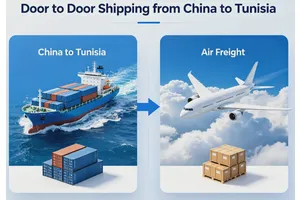
The shipping cost from China to Tunisia is rarely what it first appears to be. A Tunisian importer recently showed me a clean-looking freight rate of $2,300 for a 20ft container from Shanghai — yet a month later his final invoice was nearly 40% higher once destination charges, customs clearance fees, import duty, and 19% VAT were added. This gap between "the rate" and "the real bill" is the most common reason buyers blow their logistics budget.
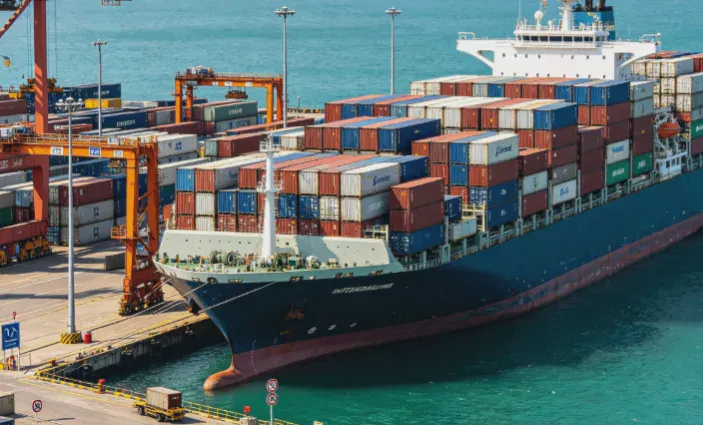
In this 2026 guide, we cut through the confusion. You will get current reference rates for sea freight (FCL and LCL), air freight per kilogram, and all-in door-to-door DDP pricing. You will learn exactly how Tunisia's customs duties and VAT are calculated, and you will see a full worked example that turns any quote into a true landed cost. Backed by DTFU Logistics — a FIATA- and IATA-certified forwarder with a dedicated shipping from China to Tunisia service and a network covering over 120 countries since 2014 — this guide gives you the numbers and the framework to negotiate with confidence.
What Determines the Shipping Cost from China to Tunisia?
No two shipments to Tunisia are priced identically. Before you compare quotes, understand the levers that move the price up or down.
- Transport Mode: The choice between sea freight and air freight is the biggest single factor. Ocean rates are quoted per container or per cubic meter; air rates are quoted per kilogram. Express couriers sit at the top of the cost curve.
- Cargo Weight and Volume: Carriers charge on the greater of actual weight or volumetric weight. For air freight, the standard formula is Length (cm) × Width (cm) × Height (cm) ÷ 6000. A light, bulky shipment pays for the space it occupies, not its physical mass.
- Origin Port in China: Rates differ between Shenzhen, Guangzhou, Shanghai, Ningbo, Qingdao, Tianjin, and other Chinese ports based on sailing frequency and how carriers position equipment.
- Destination Port in Tunisia: The Port of Radès, Tunisia's principal container terminal under the OMMP port authority, receives the overwhelming majority of imports. Sfax, Bizerte, and Sousse handle regional and project cargo.
- Route and Transshipment: Few vessels sail direct from China to Tunisia. Most cargo transits a Mediterranean hub such as Malta, Gioia Tauro, Valencia, or Algeciras before a feeder delivers it to Radès. The hub choice affects both cost and schedule reliability.
- Season and Surcharges: Ocean rates spike ahead of the Chinese Golden Week and the year-end holiday rush. Fuel surcharges (BAF), peak-season surcharges, and currency movements all move the final figure.
A freight quote is only one line of your total cost. The complete picture also includes origin terminal handling charges, documentation fees, destination handling, customs brokerage, import duty, VAT, and inland delivery — which is why the sections below build up the total step by step.
Sea Freight Cost from China to Tunisia: FCL Container Rates
For the majority of importers moving machinery, textiles, furniture, building materials, or wholesale goods, sea freight is the most economical option. If your cargo fills most of a container, book a Full Container Load (FCL) and pay a single price for the whole box.
FCL Rates for 20ft and 40ft Containers from China
The table below summarizes indicative 2026 FCL rates from China's major export ports to Radès. Prices are all-in port-to-port references and move with the market.
| Origin Port (China) | 20ft Container (USD) | 40ft Container (USD) | Typical Transit |
|---|---|---|---|
| Shenzhen / Yantian | $2,600 – $3,800 | $3,400 – $5,000 | 25 – 35 days |
| Guangzhou | $2,600 – $3,800 | $3,400 – $5,000 | 25 – 35 days |
| Shanghai | $2,700 – $3,900 | $3,500 – $5,200 | 27 – 37 days |
| Ningbo | $2,750 – $3,900 | $3,500 – $5,200 | 27 – 37 days |
| Qingdao | $2,900 – $4,200 | $3,700 – $5,600 | 30 – 40 days |
| Tianjin / Dalian | $2,950 – $4,300 | $3,800 – $5,800 | 30 – 42 days |
Our Industry Insights "Don't compare ocean rates on the headline number alone. Two forwarders can quote the same 'freight rate' while one quietly builds in higher Destination Terminal Handling Charges (DTHC), document fees, or container demurrage. At DTFU Logistics we always present an itemized, all-in FCL quotation before you book — so the number you approve is the number you pay, and we lock space through our direct contracts with major carriers."
Rates above are port-to-port. For door-to-door or DDP pricing that includes Tunisia import clearance, see Section on DDP below. A 40ft High Cube (40HQ) is usually priced near the 40ft GP rate and suits light, bulky cargo such as furniture or apparel. For a deeper look at ocean schedules, port rotations, and the fees that move rates on this lane, see our dedicated guide to the sea shipping cost from China to Tunisia.
Fees Beyond the Ocean Freight Rate
Whatever origin port you choose, plan for these recurring extras:
- Origin Charges: Terminal handling (THC), booking, documentation, and seal fees at the Chinese port.
- Destination Charges: DTHC, delivery order, and handling at Radès.
- Demurrage and Detention (D&D): Free time is limited; if customs or trucking slips, D&D climbs fast — confirm the window before sailing.
LCL Shipping Cost from China to Tunisia: Per-CBM Rates
If your shipment is smaller than roughly half a container, Less than Container Load (LCL) lets you pay only for the space you use. Your cargo is consolidated with other importers' boxes in China and deconsolidated at Radès.
- Reference LCL Rate: approximately $70 – $150 per cubic meter (CBM), with a minimum charge usually equal to 1 CBM.
- Transit: slightly longer than FCL because of consolidation and deconsolidation — budget 30 to 45 days door-to-port.
LCL is ideal for first-time importers, e-commerce sellers testing a market, and buyers with mixed or seasonal SKUs. The trade-offs are more cargo handling and a higher per-unit cost than a full container.
Real-Life Scenario "A Tunisian retailer importing home decor started with 6 CBM of LCL every two months. As volume grew toward 10–12 CBM, the LCL price approached roughly 70–80% of a 20ft FCL rate. We moved them to FCL and their per-unit ocean cost dropped by about 30% while transit became more predictable. Rule of thumb: when your LCL quote reaches 70–80% of a 20ft container, upgrade to FCL."
Keep LCL cartons export-grade and clearly labeled — consolidated boxes are handled several times, and clear outer markings prevent misrouting at deconsolidation.
Air Freight Rates from China to Tunisia per kg
When delivery speed is the priority, air freight is the answer. Electronics, spare parts, fashion samples, and high-value goods reach Tunis-Carthage International Airport in days rather than weeks, protecting you from stock-outs and production stoppages.
Current Market Rates
Air rates are quoted per kilogram on the greater of actual or volumetric weight, and they fall as your weight bracket rises.
| Weight Bracket | Air Freight Rate (USD/kg) | Transit Time |
|---|---|---|
| 45 – 100 kg | $5.00 – $9.00 / kg | 4 – 7 days |
| 100 – 300 kg | $4.50 – $8.00 / kg | 4 – 7 days |
| 300+ kg | $4.00 – $7.00 / kg | 3 – 6 days |
| Express Courier (DHL/UPS/FedEx) | $9.00 – $16.00 / kg | 2 – 5 days |
Air freight from Guangzhou, Shenzhen, Shanghai, or Beijing to Tunis typically flies via a European or Middle Eastern hub. Rates include surcharges that vary with fuel prices and seasonal belly-space demand. For more detail on weight brackets, carriers, and transit options, read our full breakdown of air shipping from China to Tunisia.
When Air Freight Is Worth the Premium
The higher per-kg price can be the cheaper decision overall. If a product's stock-out cost, lost sales, or production-line downtime exceeds the air freight difference, the speed pays for itself. For parcels under roughly 20 kg, express couriers are often the most practical path: the high per-kg rate is offset by avoiding the minimum flat fees and paperwork of standard freight.
Door-to-Door and DDP Shipping Cost from China to Tunisia
Many Tunisian importers — especially first-timers and e-commerce sellers — prefer a single, predictable price that covers everything. That is exactly what door-to-door shipping under DDP (Delivered Duty Paid) provides.
What Does Door-to-Door DDP Include?
DDP is an Incoterm under which the freight forwarder assumes responsibility for the entire journey: picking up cargo at the supplier's factory in China, export customs clearance, international transport, import customs clearance in Tunisia, payment of import duty and VAT, and final delivery to the consignee's warehouse or address.
| Step | What Happens |
|---|---|
| 1. Pickup | Cargo collected from the Chinese supplier |
| 2. Export clearance | China customs processed by the forwarder |
| 3. International transport | Sea or air freight to Tunisia |
| 4. Import clearance | Tunisia customs, duty, and VAT handled |
| 5. Final delivery | Trucked to your door or warehouse |
The buyer receives one all-in quote and no surprise invoices from Tunisian customs brokers. Because Tunisia applies no de minimis threshold — even small commercial shipments face formal clearance and taxes — this convenience matters more here than in most markets. We walk through the complete journey — pickup in China, both customs clearances, tax payment, and last-mile delivery — in our dedicated guide to door-to-door shipping from China to Tunisia.
- DDP Sea Freight: roughly $4.50 – $8.00 per kg-equivalent, or a flat rate per CBM plus duty and VAT, depending on commodity.
- DDP Air Freight: typically $7.00 – $12.00 per kg all-in for consolidated cargo, more for express.
Our Industry Insights "Always ask what 'door' means in a DDP quote — ground-floor delivery or upstairs, tail-lift for pallets, appointment windows, and whether any storage is included. Tunisia's import regime also requires certain regulated categories to carry an import license or specific certificates. A forwarder with real on-the-ground experience in Radès will confirm your HS classification before sailing, not after an inspection holds your cargo."
Sea Freight vs Air Freight from China to Tunisia: Cost and Time Compared
Choosing between ocean and air is really a cost-versus-time decision. The table below summarizes the trade-offs so you can match the mode to your cargo and deadline.
| Shipping Mode | Cost Level | Transit Time | Best For |
|---|---|---|---|
| FCL Sea Freight | Lowest per unit | 25 – 40 days | Full containers, bulk cargo |
| LCL Sea Freight | Low | 30 – 45 days | Small to mid shipments |
| Air Freight | High | 3 – 7 days | Urgent, high-value, light cargo |
| Express Courier | Highest | 2 – 5 days | Small parcels, documents |
| Door-to-Door DDP | All-in, mode-dependent | 30 – 50 days (sea) | First-time importers, e-commerce |
Transit windows are not guarantees: peak-season congestion at Radès can add days, a missed Mediterranean feeder connection pushes cargo to the next sailing, and customs inspections add time when documents are imperfect. Many importers run a hybrid strategy — sea freight for steady bulk volume and a smaller air freight allocation for urgent replenishment.
Tunisia Import Duties and Taxes: The Hidden Part of Your Shipping Cost
This is the section most generic freight guides skip — and the reason budgets explode. Two features of Tunisia's import regime matter enormously to your shipping cost from China to Tunisia.
- VAT of 19%: Tunisia applies a standard value-added tax (VAT) rate of 19% on most imported goods. It is calculated on the CIF value of the goods plus applicable customs duty, so it compounds on top of your freight and insurance costs.
- No De Minimis Threshold ($0): Unlike the EU or the United States, Tunisia has no low-value import exemption. Every commercial import is subject to formal customs clearance, duty assessment, and VAT. There is no "under $100, skip it" shortcut — factor clearance and tax into even small shipments.
Customs duty is assessed by HS Code classification. Rates typically range from roughly 0% to over 30% depending on the product: machinery, components, and raw materials generally attract low duties, while textiles, clothing, and some consumer goods that Tunisia also manufactures domestically carry higher protective duties. Certain regulated goods additionally require an import license.
Essential documents for Tunisia clearance include the Commercial Invoice, Packing List, Bill of Lading (sea) or Air Waybill (air), and a Certificate of Origin, which may qualify your goods for preferential tariff treatment. Product-specific certificates (for example, laboratory or conformity documents) apply to regulated categories.
Worked Example: Calculating the Real Landed Cost
Let's turn the theory into numbers. Suppose you import $25,000 worth of machinery spare parts in a 20ft container via sea freight, cleared and delivered to your warehouse in the greater Tunis area.
| Cost Component | Amount (USD) | Notes |
|---|---|---|
| Ocean freight (Shanghai → Radès, 20ft) | $2,900 | Port-to-port reference |
| Origin charges (THC, docs, booking) | $300 | Varies by Chinese port |
| Destination charges at Radès | $350 | DTHC, delivery order, handling |
| Customs brokerage and clearance | $250 | Professional clearing in Tunisia |
| CIF value for tax base | $3,800 | Freight + origin + destination |
| Customs duty (assume ~10%) | $380 | Depends on HS Code |
| VAT 19% on (CIF + duty) | $794 | 19% × ($3,800 + $380) |
| Inland trucking to warehouse | $400 | Radès to Tunis area |
| Total landed cost | $5,374 | vs. the $2,900 'freight rate' |
The headline ocean rate was $2,900, yet the true landed cost is roughly $5,374 — taxes and destination handling nearly doubled the bill. Any comparison between forwarders, or between FOB and DDP terms, should be made on this total, never on the ocean freight line alone.
To replicate this for your own shipment, ask each forwarder for an itemized, all-in quotation and confirm: (1) whether the price includes destination charges, (2) whether duty and VAT are included or quoted separately, (3) the free-time window for demurrage, (4) the carrier and transshipment hub, and (5) the exact scope of final delivery.
How to Get the Best Shipping Rate from China to Tunisia
You now have the framework — here is how to use it to save money and avoid the classic mistakes.
Insider Cost-Saving Tips
- Plan around the peaks: avoid shipping in the two weeks before Chinese Golden Week and the pre-holiday rush; off-peak sailing can save hundreds of dollars per container.
- Optimize packaging: compress volume and weight to reduce both FCL surcharges and LCL/air charges based on volumetric weight.
- Declare accurately: correct HS codes and values prevent duty reassessments, fines, and customs holds that rack up storage charges.
- Consolidate strategically: time your LCL to reach the 70–80% FCL threshold, then upgrade.
- Lock rates with a partner: forwarders with direct carrier contracts can hold space and shield you from sudden peak-season surges.
Choosing the Right Freight Forwarder for Tunisia
Because Tunisia's import regime is more restrictive than many markets, the forwarder you choose matters as much as the price. Look for verified FIATA/IATA credentials, proven Tunisia customs experience, transparent itemized quotes, direct contracts with shipping lines and airlines, and a dedicated account manager who answers quickly. An experienced partner is the difference between a smooth clearance and a container sitting on demurrage at Radès. If your supply chain extends beyond Tunisia into neighboring North African markets, the same account can also cover shipping from China to Algeria and shipping from China to Morocco, so you keep a single forwarder across the region.
That is exactly the standard DTFU Logistics was built on. Since 2014 we have helped importers move cargo from ports across China — Shenzhen, Guangzhou, Shanghai, Ningbo, Qingdao, and more — to destinations in over 120 countries. With FIATA and IATA certification, direct carrier agreements, real-time shipment tracking, and dedicated 24/7 customer support, we turn a complex China-to-Tunisia shipment into a single, transparent, all-in solution — sea, air, or door-to-door DDP. Contact us for a free 2026 quotation tailored to your cargo.
FAQs
How much does it cost to ship a 20ft container from China to Tunisia?
Indicatively $2,600 – $4,300 port-to-port depending on the Chinese origin port and season. Add destination handling, customs brokerage, duty, VAT, and inland delivery to reach the true landed cost.
How long does sea freight take from China to Tunisia?
Roughly 25 to 40 days port-to-port via a Mediterranean transshipment hub. Add a few days for consolidation if you ship LCL, and watch for peak-season congestion at Radès.
What is the VAT rate on imports to Tunisia?
The standard VAT rate is 19%, assessed on the CIF value plus customs duty. Tunisia also has no de minimis threshold, so even small commercial shipments are taxed.
What documents do I need for Tunisia customs clearance?
A Commercial Invoice, Packing List, Bill of Lading or Air Waybill, and Certificate of Origin. Regulated products may require import licenses or additional certificates.
What is the difference between DDP and FOB for Tunisia shipments?
Under FOB you arrange international freight and Tunisia import clearance yourself. Under DDP the forwarder handles everything, including duty and VAT, for one all-in price — usually the smarter choice for first-time importers.
Planning your import from China to Tunisia? Start from the true landed cost — not the headline freight rate — and work with a partner who itemizes every line. DTFU Logistics provides transparent, all-in sea freight, air freight, and door-to-door DDP quotations from China to Tunisia, backed by FIATA/IATA certification and dedicated support. Request your free 2026 quote today and ship with confidence.