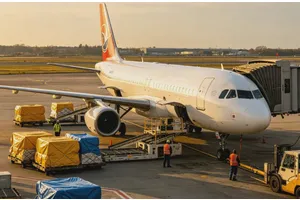
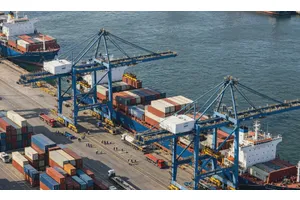
Shipping cost from China to New Zealand has three layers, and only the first one shows up on a freight quote. The ocean layer is the cheapest part of the story: $800–$1,800 for a 20ft container, $80–150 per CBM for LCL, with port-to-port transit of 12–22 days from Shenzhen, Shanghai, or Ningbo. The second layer is the tax: 15% GST calculated on your CIF value plus duty, and duty that is usually zero under the China–New Zealand Free Trade Agreement. The third layer is the one that catches everyone: MPI biosecurity. New Zealand's Ministry for Primary Industries runs some of the strictest border biosecurity on earth, and an ISPM-15 violation or an inspection hold can add weeks and hundreds of dollars to a shipment that was perfectly priced on paper.
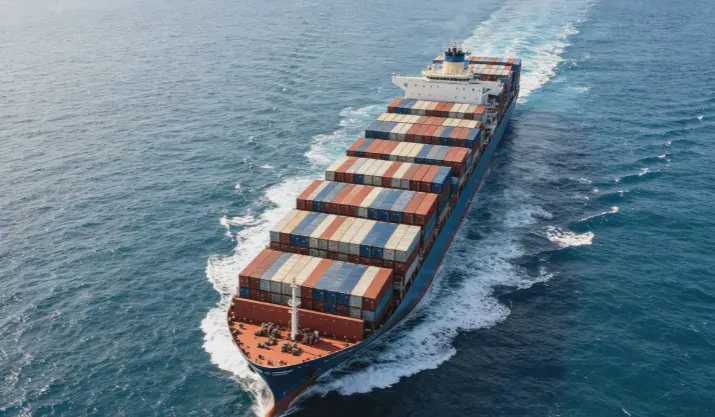
This guide breaks down all three layers with the 2026 numbers DTFU actually books on this lane — including the biosecurity costs and rules most rate tables never mention.
Shipping Cost from China to New Zealand: The Three Layers That Make Up Your Total
A complete quote shows you all three layers in one place, not just the ocean line. Here is how they add up on this lane in 2026:
| Cost Layer | What It Is | Typical 2026 Level |
|---|---|---|
| Ocean freight | Port-to-port FCL/LCL | 20ft $800–$1,800; LCL $80–150/CBM |
| Duty + GST | 0% duty (FTA) + 15% GST on CIF | 15% of (CIF + duty) |
| Biosecurity & clearance | MPI levies, inspection, ATF, brokerage, port charges | NZ$400–1,500 per shipment depending on risk profile |
Of the three, the biosecurity line varies most, which is why the best forwarder on this lane fronts it up before you book. The full rules and costs are in the section below — but the headline is simple: preparation in China decides whether this layer costs a few hundred dollars or well over a thousand.
Sea Freight Cost from China to New Zealand: FCL and LCL Rates (2026)
| Shipping Option | 2026 Rate | Transit Time |
|---|---|---|
| 20ft container (FCL, port-to-port) | $800–$1,800 | 12–18 days |
| 40ft / 40HQ container (FCL, port-to-port) | $1,800–$3,200 | 14–20 days |
| LCL sea freight (USD) | $80–$150 per CBM | 15–22 days |
| LCL sea freight (NZD, DDP all-in) | NZ$450–700 per CBM | 22–40 days door-to-door |
| FCL (NZD, DDP all-in) | From ~NZ$2,500 | 22–40 days door-to-door |
| Air freight | NZ$8–14 per kg | 5–10 days |
| Express courier | NZ$18–28 per kg | 3–5 days |
The USD lines are port-to-port ocean rates and exclude the destination side. The NZD lines are all-in door-to-door numbers from our door to door shipping from China to New Zealand service, and they include clearance, GST handling, and delivery — which is exactly why they look so much larger. Note the currency split: the ocean rate is quoted in USD, while the destination side is billed in NZD; how customs converts your invoice is covered in the NZD settlement section below. The mechanics of the ocean leg itself — FCL booking, documentation, and the port-to-port baseline — are covered in our sea freight from China overview.
Seasonality on this lane is milder than on the trans-Pacific routes but still real: the Q4 pre-holiday rush and the weeks around Chinese New Year tighten capacity and add 10–20% to ocean rates, while the Q1–Q2 window is typically the cheapest booking period. Because the transit is short — two to three weeks at sea rather than five — the lane tolerates less inventory buffering, which is why the air option earns its premium during the peak: a missed Q4 sailing means an empty shelf in Auckland for a month. The full port-to-port baseline by origin gateway is in our sea shipping cost from China to New Zealand guide.
Auckland, Tauranga, or Lyttelton: How Port Choice Changes Your Landed Cost
| Port | Island / Region | Transit from China | Landed-Cost Logic |
|---|---|---|---|
| Auckland | North Island — the main gateway | 12–18 days | ~1.5M TEU throughput; densest population and the default for North Island cargo |
| Tauranga | North Island — Bay of Plenty | 14–20 days | Strong for forestry/agri exports; increasingly used for imports into the central North Island |
| Lyttelton | South Island — Christchurch | 18–22 days | The South Island gateway; avoids the Auckland–South Island trucking/ferry leg |
| Wellington | North Island — capital | 16–20 days | Smaller volumes; useful for lower North Island distribution |
The routing rule on this lane: match the port to the island. Cargo destined for Christchurch, Dunedin, or Queenstown should discharge at Lyttelton, not Auckland — the overland leg from Auckland to the South Island involves a long truck haul plus the Cook Strait ferry, which adds days and NZ$1,500–3,000 in inland cost per container. North Island cargo — Auckland, Hamilton, Tauranga, Wellington — discharges at Auckland or Tauranga with short final legs. A forwarder that quotes "to New Zealand" without asking which island is quoting you a port, not a delivery.
The port choice also interacts with biosecurity and congestion. Auckland handles the majority of container imports and, like every major gateway, sees berth bunching in the peak; Tauranga has grown as an import alternative with strong road links to the central North Island. Lyttelton's advantage for South Island cargo goes beyond distance — discharging there keeps the container out of the Cook Strait leg entirely, which matters for time-sensitive or high-value loads. Whichever port you choose, the container must still clear MPI before inland movement, so the biosecurity preparation described below applies identically across all four gateways.
MPI Biosecurity Clearance: What It Costs and How to Avoid the Hold
New Zealand's Ministry for Primary Industries (MPI) screens all incoming cargo for soil, insects, seeds, plant and animal material, and untreated wood — and it enforces the rules with an intensity that surprises importers from almost anywhere else. The practical cost points:
| Risk Category | What MPI Does | Typical Cost / Time Impact |
|---|---|---|
| ISPM-15-compliant pallets/crates | Standard screening | Levy only (tens of NZD); no delay |
| Untreated or unmarked wood | Hold for inspection; fumigation or return | NZ$300–1,000+ and 5–10 working days |
| Food, plant products, animal-derived goods | Inspection + possible lab testing | Days added; destruction if non-compliant |
| FCL containers | Must be unpacked at an MPI-approved Transitional Facility (ATF) | ATF handling fee; 1–2 days unless inspected |
| General risk-flagged cargo | Physical inspection | 5–10 working days + storage |
Three rules matter more than the rest. First, ISPM-15 is non-negotiable: every wood pallet or crate must carry the IPPC mark proving heat treatment, and "the supplier said it was fine" is not a defence MPI accepts. Second, FCL containers must be unpacked at an ATF — an MPI-approved transitional facility — unless your own warehouse holds that approval; the ATF handling fee is a line item most quotes omit. Third, product descriptions are screened before the ship arrives: a vague description like "assorted goods" or a mismatch between invoice and packing list raises the risk rating and pulls the container into inspection. None of this is negotiable, and all of it is manageable if the forwarder pre-checks the wood packaging and the product list in China.
Operational insight: on this lane, the most common cause of a held shipment is not customs — it is biosecurity, and it is almost always the wood. That is why every DTFU container on this lane gets a packaging audit in China before the container seals: pallets verified ISPM-15, crates inspected for the IPPC stamp, and any doubt resolved by swapping to compliant packaging. The audit costs an hour; the alternative costs a week and a fumigation invoice.
To put the layer in dollar terms, consider two identical 20ft shipments of furniture arriving in Auckland in the same week. Shipment A arrives with ISPM-15 pallets and clean descriptions: MPI processes it in the standard queue, the ATF unpacking runs a day, and the biosecurity cost totals a few hundred dollars. Shipment B arrives with one unmarked plywood pallet and a vague invoice line: MPI holds the container, samples the packaging, and the decision, fumigation, and storage add up to roughly NZ$900–1,400 and nine days before release — plus the demurrage the terminal charged while the container sat. Same freight, same GST, radically different landed cost, decided entirely by preparation in China.
GST and Duty from China to New Zealand: A Worked Example
New Zealand charges 15% GST on imports, calculated on the customs value plus international freight, insurance, and any duty:
| Line Item | Amount |
|---|---|
| Customs value of goods | NZ$20,000 |
| International freight + insurance | NZ$3,000 |
| GST taxable value | NZ$23,000 |
| Import duty (0% under China–NZ FTA) | NZ$0 |
| GST at 15% | NZ$3,450 |
Two features of the system matter for budgeting. First, the China–New Zealand Free Trade Agreement zeroes the duty on most Chinese-origin goods — furniture, building materials, hardware, and machinery parts are common candidates — but only when the supplier provides a valid Certificate of Origin. Without it, the standard tariff applies and your GST base grows by the duty amount. Second, zero duty does not mean zero cost: GST applies regardless, and customs adds its own levies. For commercial shipments valued over NZD 1,000, the importer must also hold a Customs Client Code — the registration that lets customs process your declarations; without it, the shipment cannot be cleared commercially. The full mechanics of the declaration sit in our customs clearance from China guide.
The low-value edge case is worth knowing even if it does not apply to you: shipments under NZD 1,000 generally do not attract GST at the border, and overseas platforms selling more than NZD 60,000 per year into New Zealand must register and collect GST themselves. For commercial container traffic, neither rule applies — the full GST and duty structure above is the planning number.
Air Freight Cost from China to New Zealand: Rates by Weight Tier
When the inventory clock is short, air freight from Shanghai (PVG), Shenzhen (SZX), or Guangzhou (CAN) reaches Auckland in 5–10 days door-to-door at NZ$8–14 per kg:
| Weight Bracket | NZD per kg | Transit |
|---|---|---|
| 45–100 kg | $12.00–$14.00 | 5–8 days |
| 100–300 kg | $10.00–$12.50 | 5–9 days |
| 300–1,000 kg | $9.00–$11.00 | 6–9 days |
| 1,000+ kg | $8.00–$10.00 | 6–10 days |
Air cargo faces the same MPI rules as sea freight — biosecurity screening applies at the airport, and wood packaging must still be ISPM-15 compliant. Express courier (DHL, FedEx, UPS) compresses delivery to 3–5 days for parcels up to ~50 kg. The carrier and routing detail for air sits in our air shipping from China to New Zealand guide; the practical rule is that air earns its premium when the alternative is a stockout in a market where Auckland shelves empty fast. For mid-weight, mid-urgency cargo, sea-air routing through Hong Kong or Singapore lands in 8–12 days at a cost between the two extremes — a compromise worth pricing when a 22-day sea transit is too slow and a 6-day air transit is too rich.
How to Cut Shipping Cost from China to New Zealand
Five habits cut the landed number on this lane more reliably than haggling over the ocean rate:
- Fix the biosecurity layer before booking. An ISPM-15 packaging audit in China costs an hour and eliminates the NZ$300–1,000+ inspection-and-fumigation scenario. This is the highest-ROI step on the entire lane.
- Match the port to the island. South Island cargo via Lyttelton; North Island via Auckland or Tauranga. The wrong gateway quietly adds NZ$1,500–3,000 in inland transport.
- Get the Certificate of Origin from your supplier. Under the China–NZ FTA it zeroes the duty on most goods — and it must be issued at shipment time, not retroactively.
- Compare LCL against FCL at the break-even. Around 13–15 CBM, a 20ft container beats LCL on cost per unit and removes the deconsolidation wait.
- Book outside the Q4 and Chinese New Year peaks. The Q1–Q2 window carries lower rates and looser capacity, and the short transit means you need less buffer inventory.
For importers running multiple Oceania markets, consolidating regionally — one China consolidation point serving New Zealand and Australia together — further cuts per-unit inland cost; our China to Oceania network is built for exactly that pattern, with the same MPI-compliant packing standards applied across both destinations.
Door-to-Door and DDP Costs: When the All-In Price Wins
For first-time importers, door-to-door DDP is usually the cheapest way to learn this lane, because it packages the layers you cannot see: pickup in China, ocean freight, MPI compliance, GST payment, and delivery. The all-in numbers — LCL at NZ$450–700 per CBM, FCL from about NZ$2,500 — include the biosecurity handling and the GST, which is why they are higher than the USD port-to-port lines and why they do not grow surprises.
Operational insight: we consistently tell importers to compare total landed cost, not the ocean rate. A "freight only" quote from China to Auckland leaves NZ$500+ in destination charges outside the number — port fees, brokerage, GST, MPI levies, and last-mile delivery — all of which a DDP quote carries inside it. The DDP number looks bigger up front and lands smaller at the end, which is why the importers who run this lane for years tend to stop comparing freight rates and start comparing landed costs. If you already have a New Zealand customs broker and want to control the GST credit yourself, the DDP vs FOB comparison lays out when FOB with local brokerage beats DDP.
NZD Settlement: How Currency and Customs Valuation Affect Your Budget
The New Zealand side of the cost ledger is entirely NZD-denominated: port charges, brokerage, MPI levies, GST, and inland trucking are all billed in New Zealand dollars. One quirk matters for budgeting: New Zealand Customs converts your USD invoice using its own fortnightly exchange rate, not the daily bank rate, and the two can differ by 1–3%. Add the natural movement between the day your supplier invoices you and the day customs assesses, and a 5% buffer between your USD budget and the NZD cost is the prudent planning number. For regular importers, the practical answer is a New Zealand entity or a freight forwarder that settles the NZD side for you and invoices in your home currency — which is what a DDP arrangement does, and why it removes the FX surprise from your P&L.
FAQs
1. How much does it cost to ship a 20ft container from China to New Zealand?
$800–$1,800 port-to-port, depending on origin port and season. All-in door-to-door runs from about NZ$2,500 once clearance, GST, and delivery are included.
2. What is the LCL shipping cost from China to New Zealand?
$80–150 per CBM port-to-port in USD, or NZ$450–700 per CBM all-in door-to-door.
3. How much does air freight from China to New Zealand cost?
NZ$8–14 per kg depending on the weight bracket, with 5–10 day door-to-door transit. Express courier runs NZ$18–28 per kg in 3–5 days.
4. How long does shipping from China to New Zealand take?
Sea freight takes 12–22 days port-to-port and 22–40 days door-to-door; air freight takes 5–10 days; express takes 3–5 days. MPI inspections add 5–10 working days when triggered.
5. What is the cheapest way to ship from China to New Zealand?
For volumes above ~2 CBM, LCL sea freight is cheapest; above ~15 CBM a full container wins on cost per unit. For small parcels under ~20 kg, courier or postal options beat sea freight's fixed clearance costs.
Get a China–New Zealand Quote That Includes the Biosecurity Layer
Send your cargo details — commodity, weight, volume, packaging type (wood or not), and the destination city — and DTFU Logistics will quote the lane with all three layers visible: the ocean rate, the GST and duty math on your HS code, and the MPI biosecurity plan including the packaging audit and ATF arrangement. We discharge at Auckland, Tauranga, or Lyttelton to match your delivery address, verify ISPM-15 compliance before the container seals in China, and track every shipment until the biosecurity release and final delivery.