If you import from China, you have probably asked yourself one question: how much will door to door shipping from China to New Zealand actually cost — and will the quote cover everything, or will surprise GST and biosecurity fees land later? New Zealand sits far from China's major ports, and its strict customs and biosecurity rules make this one of the more demanding lanes to manage.
This guide breaks down the full picture: realistic door-to-door DDP rates, transit times by city, the difference between DDP, DAP and port-to-port terms, how New Zealand's 15% GST and the China–New Zealand Free Trade Agreement affect your landed cost, and how to clear MPI biosecurity without delays. By the end, you will know exactly what to ask any freight forwarder before you ship.
What Is Door-to-Door Shipping from China to New Zealand?
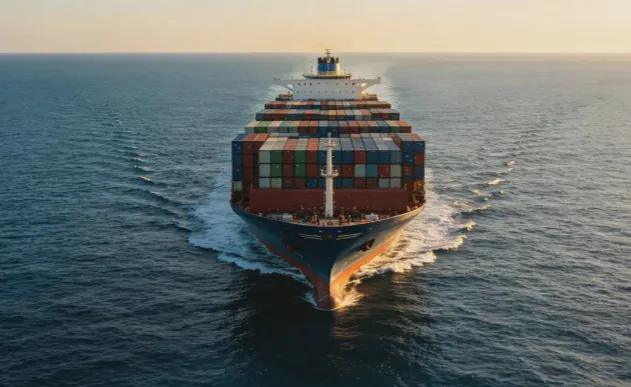
Door-to-door shipping (often sold as DDP shipping) is a full-service freight solution where a single logistics partner handles every stage of the journey: factory pickup in China, export customs clearance, international ocean or air freight, New Zealand import clearance, payment of duties and taxes, and final delivery to the recipient's address.
In simple terms, the forwarder acts as your local importer of record and delivers the goods to your door — you simply wait to receive them.
A few terms worth getting right before you talk to any forwarder:
- Door-to-Door Service — all-inclusive transport from supplier to final destination.
- DDP (Delivered Duty Paid) — the forwarder pays all duties, GST and clearance up to the destination.
- DDU / DAP (Delivered Duty Unpaid / Delivered at Place) — goods are delivered, but the buyer still pays import duties, GST and clearance.
- Incoterms 2020 — the international rules defining who pays for what at each step of the move.
Door-to-door suits three groups especially well: B2B importers and wholesalers who want predictable landed costs; e-commerce sellers (Amazon FBA, Shopify) who need reliable first-mile-to-door performance; and SMEs without a dedicated logistics team who want one partner to handle everything from the factory gate to the customer.
Door to Door Shipping Cost from China to New Zealand
The most common question is price, so let's answer it directly. Door-to-door DDP rates bundle many costs into one figure, so they are higher than the "freight only" numbers you see online — but they remove every surprise at the destination.
Below are realistic all-in door-to-door DDP ranges. These estimates include freight, New Zealand customs clearance, 15% GST handling and final delivery:
| Service | Typical All-In DDP Cost | Best For |
|---|---|---|
| Sea Freight LCL (per CBM) | NZ$450–700 / CBM | Small shipments, 1–15 CBM |
| Sea Freight FCL (20ft) | NZ$2,500–4,500 / container | Bulk, heavy or full-container cargo |
| Sea Freight FCL (40ft / 40HQ) | NZ$4,000–7,000 / container | High-volume, low-density cargo |
| Air Freight (per kg) | NZ$8–14 / kg | Urgent or high-value goods |
| Express Courier (per kg) | NZ$12–20 / kg | Samples, small parcels |
So what actually goes into that number? The door-to-door cost is the sum of:
- Origin pickup and China export clearance
- Ocean or air freight
- New Zealand import clearance and customs brokerage
- GST (15%) and any applicable import duty
- MPI biosecurity levies and inspection (if any)
- Final delivery to the door, including South Island or rural surcharges
In practice, LCL sea freight is the cheapest option for small volumes, while a full 40HQ container offers the lowest cost per unit for high-volume importers. As a rule of thumb, once your shipment passes roughly 15 CBM, a full container usually beats LCL. For a container-by-container ocean cost breakdown, see our sea shipping cost from China to New Zealand guide.
Our Industry Insight: We always tell importers to compare the total landed cost, not the base ocean rate. A low "freight only" quote can hide NZ$500+ in destination charges — port fees, brokerage, GST, MPI levies and last-mile delivery. A genuine DDP door-to-door quote already includes all of these, which is why it looks higher up front but is usually the safer, more predictable option.
How Long Does Door to Door Shipping from China to New Zealand Take?
Transit time depends on your mode and your final destination city. Here is a realistic door-to-door benchmark:
| Destination | Sea Freight Door-to-Door | Air Freight Door-to-Door |
|---|---|---|
| Auckland | 22–30 days | 5–8 days |
| Tauranga | 24–32 days | 5–8 days |
| Wellington | 26–35 days | 6–9 days |
| Christchurch | 28–40 days | 6–10 days |
A typical sea freight door-to-door timeline breaks down like this:
- Pickup and consolidation in China: 3–5 days
- Export customs clearance and port handling: 2–3 days
- Ocean transit (e.g., Shanghai / Ningbo / Shenzhen to Auckland or Tauranga): 16–30 days
- New Zealand customs and MPI clearance: 3–5 days
- Final delivery: 2–4 days
The biggest variable is MPI biosecurity. If your cargo is selected for inspection, add 5–10 working days. Deliveries to the South Island also add a few days compared with Auckland.
Sea Freight vs Air Freight Door to Door: How to Choose
Your choice of sea freight or air freight comes down to four factors: cargo value, volume, urgency and budget.
| Factor | Sea Freight (LCL/FCL) | Air Freight |
|---|---|---|
| Cost | Lowest per kg / CBM | 4–6× higher |
| Transit | 22–40 days | 5–10 days |
| Cargo fit | Bulk, furniture, machinery | Electronics, urgent, high-value |
| Compliance notes | ISPM 15 wood packaging | UN38.3 for lithium batteries |
The three main door-to-door service types:
- Sea Freight LCL (Less than Container Load) — pay only for the space you use, by cubic meter; best for 1–15 CBM.
- Sea Freight FCL (Full Container Load) — a 20GP or 40HQ container for your cargo alone; best for large or fragile loads and multi-supplier consolidation.
- Air Freight — charged on chargeable weight (the higher of gross or volumetric); the go-to for urgent restocking and high-value items.
For more on air lead times and chargeable weight, read our air shipping from China to New Zealand guide.
As a simple decision rule: if your goods are heavy, bulky or low-value, sea freight almost always wins on cost; if they are light, valuable or time-sensitive, air freight wins on speed.
Real-Life Scenario: A New Zealand e-commerce seller sourcing home goods from southern China came to us on pure air freight because their seasonal launch was close. By shifting the bulk of the shipment onto our sea freight LCL line and flying only the first, most urgent cartons, they kept the launch on time and cut total freight spend by nearly a quarter.
DDP vs DAP vs Port-to-Port: Which Shipping Term Should You Use?
Understanding your Incoterm is the difference between a predictable delivered price and an unexpected bill at the port.
| Term | Who handles NZ clearance & duties? | What you receive |
|---|---|---|
| DDP (Delivered Duty Paid) | Forwarder pays all | Door delivery, all-inclusive |
| DAP / DDU (Duty Unpaid) | Buyer pays duties, GST & clearance | Door delivery, taxes excluded |
| Port-to-Port (EXW / FOB / CIF) | Buyer arranges destination | Cargo to port only |
DDP is the most convenient: one partner, one invoice, no surprises. It is ideal for first-time importers and e-commerce sellers who want a single predictable price.
That said, DDP is not automatically available for every commodity or consignee. Whether you can import under DDP depends on the importer-of-record structure, GST registration and product compliance. If you already have an established New Zealand customs broker, combining FOB ocean freight with local brokerage can sometimes give you better cost control. We break down the trade-offs in our DDP vs FOB guide.
New Zealand Customs Clearance, GST & Import Duties
New Zealand charges a 15% GST on imported goods, calculated on the customs value plus freight, insurance and duty:
GST = 15% × (Customs Value + International Freight + Insurance + Import Duty)
Here is a worked example:
| Component | Amount |
|---|---|
| Customs value | NZ$20,000 |
| Freight & insurance | NZ$3,000 |
| Import duty | NZ$0 |
| GST taxable value | NZ$23,000 |
| GST at 15% | NZ$3,450 |
Three things importers often miss:
- China–New Zealand Free Trade Agreement — many Chinese-origin goods qualify for zero or reduced duty with a Certificate of Origin. Furniture, building materials, hardware and machinery parts are common candidates.
- Zero duty does not mean zero cost. Even at 0% duty, you still pay GST, customs levies, MPI levies and brokerage.
- Low-value goods. Shipments under NZ$1,000 generally do not attract GST at the border — but if an overseas platform sells more than NZ$60,000 into New Zealand in a year, it must register and collect GST itself.
Before your cargo ships, make sure your documentation checklist is complete: a commercial invoice, packing list, bill of lading (or airway bill), certificate of origin, and a fumigation or treatment certificate for any wooden packaging. Always write specific, accurate product descriptions — "aluminium fence panels", not "parts" — because vague descriptions are a leading cause of clearance delays.
MPI Biosecurity & New Zealand Import Compliance
New Zealand's Ministry for Primary Industries (MPI) enforces some of the strictest biosecurity rules in the world. Cargo is screened for soil, insects, seeds, plant or animal material and untreated wood.
The rules that matter most:
- ISPM 15 — all wooden packaging (pallets, crates) must be heat-treated or fumigated and carry the IPPC mark. Unmarked wood will be detained, returned or destroyed at your cost.
- High-risk cargo — wooden products, used machinery, outdoor furniture, food and natural-fibre goods face extra scrutiny.
- Transitional Facility (ATF) — an FCL container arriving in New Zealand must be unpacked at an MPI-approved transitional facility, unless your warehouse is approved or you use a third-party facility.
Our Industry Insight: The single most common cause of a New Zealand shipment being held is biosecurity, not customs. We proactively check wood packaging compliance and product descriptions before the cargo leaves China, which saves days at the port and avoids re-export or destruction fees that can quickly erase a shipment's entire profit margin.
The Door-to-Door Shipping Process (Step by Step)
A well-run door-to-door shipment follows a clear sequence:
- Supplier pickup in China
- Delivery to a consolidation warehouse
- Inspection, measurement and labeling
- Export customs clearance in China
- Ocean or air freight booking and transit
- New Zealand import clearance
- GST and duty payment
- MPI biosecurity release
- Final delivery to the door
DTFU ships from all major Chinese ports — Shenzhen, Guangzhou, Shanghai, Ningbo and Qingdao — and delivers to every major New Zealand city, from Auckland and Hamilton to Wellington, Christchurch and Dunedin. For e-commerce, we handle Amazon FBA first-mile and Alibaba-sourced cargo with the same door-to-door care. If you also move goods across the Tasman, we offer the same door to door shipping from China to Australia service as part of our wider shipping from China to Oceania coverage.
Why Choose DTFU Logistics for Door-to-Door Shipping to New Zealand
Choosing the right freight forwarder is what turns a complicated lane into a routine one. DTFU Logistics is a China-based forwarder founded in 2014, holding both FIATA and IATA accreditations — a combination few China-to-New Zealand providers can match.
What that means for your shipment:
- Certified expertise — FIATA and IATA dual accreditation, with a dedicated account manager for every client.
- Direct carrier contracts — we sign directly with shipping lines and airlines, securing space and competitive rates even in peak season.
- Transparent all-in quotes — no hidden destination fees.
- 24/7 tracking — a live platform keeps you updated at every milestone.
- Cargo insurance — comprehensive coverage options to protect your goods.
Real-Life Scenario: A Christchurch-based importer of aluminium building materials was juggling a forwarder, a broker and a separate trucking company on every order. Moving to our door-to-door DDP service collapsed those three vendors into one, cut their per-container landed cost by roughly 12%, and removed the MPI delays they had grown used to.
FAQs
How much does door-to-door shipping from China to New Zealand cost?
Sea freight LCL typically runs NZ$450–700 per CBM, air freight NZ$8–14 per kg, and FCL containers from about NZ$2,500, all-in under DDP.
How long does door-to-door shipping take?
Sea freight takes 22–40 days door-to-door; air freight 5–10 days, depending on the destination city.
What is the difference between DDP and DAP?
Under DDP the forwarder pays all duties, GST and clearance; under DAP the buyer pays those destination charges.
How is New Zealand GST calculated?
GST is 15% of the customs value plus freight, insurance and any duty.
Ready to get a transparent door-to-door quote for your next shipment to New Zealand? Contact DTFU Logistics today for shipping from China to New Zealand and our team will map out the fastest, most cost-effective route for your cargo.