Are you struggling with unpredictable transit delays, hidden freight costs, or complex customs clearance when importing goods? Whether you're an Amazon FBA seller, a procurement manager, or a small business owner, mastering Shipping from China to New Zealand via air freight is critical to maintaining a healthy supply chain and protecting your profit margins.
At DTFU International Logistics, we handle thousands of shipments across the Asia-Pacific region annually. In our 10+ years of experience, we've seen importers lose thousands of dollars simply by choosing the wrong airport or failing to provide a valid fumigation certificate. In this guide, we break down the exact costs, transit times, and strategic advice you need to streamline your imports, eliminate unexpected fees, and get your cargo delivered on time.
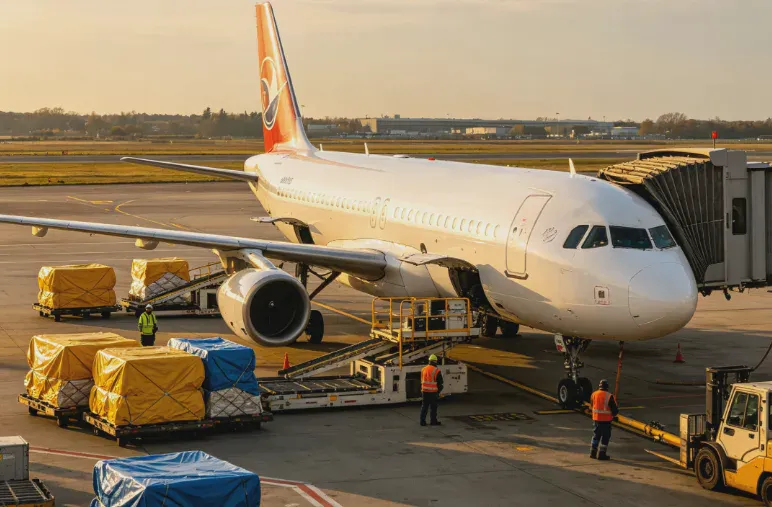
Major Airports and Air Cargo Hubs in China and New Zealand
Choosing the right departure and arrival hubs can shave days off your transit time and significantly reduce inland trucking costs.
Top Departure Airports in China for Air Freight
China's vast infrastructure means you have multiple options, but the best choice depends on your supplier's location.
- Shenzhen Bao'an International Airport (SZX): The premier hub for electronics, e-commerce goods, and high-tech components from the Pearl River Delta.
- Guangzhou Baiyun International Airport (CAN): Ideal for apparel, textiles, and general manufacturing goods from southern China.
- Shanghai Pudong International Airport (PVG): China's largest air freight hub, perfect for heavy machinery, automotive parts, and goods sourced from the Yangtze River Delta.
- Hong Kong International Airport (HKG): Often preferred for shipments requiring fewer export restrictions and faster customs processing, especially for battery-operated items.
Main Arrival Airports in New Zealand for International Cargo
New Zealand's air freight network is highly centralized, with the majority of international cargo entering through two main hubs.
- Auckland Airport (AKL): The primary gateway, handling over 80% of New Zealand's international air cargo. It offers the fastest processing times and the most direct connections to major cities. Local Tip: Be aware of traffic congestion in the Auckland Transport Area (ATA). Delivering from AKL airport to nearby warehouses in Mangere or East Tamaki is fast, but crossing the Harbour Bridge to the North Shore during rush hour can add unexpected trucking delays and costs.
- Christchurch Airport (CHC): The main hub for the South Island, ideal if your final delivery destination is in the southern region, saving you significant domestic trucking costs or avoiding the expensive inter-island ferry transfer from Wellington to Picton.
Air Freight Services: Options and Solutions
Not all air freight is created equal. Selecting the right service level depends entirely on your urgency and budget.
Express Air Shipping vs. Standard Air Freight
When you need goods immediately, express shipping is the answer, but standard air freight offers a more balanced approach for regular inventory.
- Express Air Shipping (Courier): Services like DHL, FedEx, and UPS. Best for small parcels (under 150 kg), urgent samples, or high-value documents. Transit times are typically 2-4 days, offering true door-to-door tracking.
- Standard Air Freight: Best for larger commercial shipments (over 150 kg). Cargo is loaded onto commercial passenger airlines or dedicated freighters. Air freight from China is more cost-effective but requires a freight forwarder and separate customs clearance.
Door-to-Door, Airport-to-Airport, and Consolidation Services
Understanding your service scope ensures you aren't hit with unexpected destination fees.
- Door-to-Door (D2D): The most hands-off solution. Your forwarder handles everything from supplier pickup in China to final delivery at your New Zealand warehouse, including customs. Note that Door-to-Door is a delivery scope, which can include DAP, DDU, or DDP terms.
- Airport-to-Airport (A2A): You are responsible for getting the goods to the origin airport and picking them up from the destination airport. Ideal for experienced importers with local logistics partners.
- Consolidation Services: If you are sourcing from multiple Chinese suppliers, a forwarder like DTFU International Logistics can combine your smaller shipments into one larger Master Air Waybill (MAWB), drastically reducing your per-kilogram rate.
Step-by-Step Guide to the Air Shipping Process
Navigating international logistics doesn't have to be overwhelming if you follow a structured process.
Booking and Documentation Requirements
Accurate paperwork is the foundation of a smooth shipment. A single error can lead to costly customs holds.
- Commercial Invoice: Must detail the exact value, description, and HS codes of the goods.
- Packing List: A precise breakdown of weights, dimensions, and box counts.
- Air Waybill (AWB): The non-negotiable receipt issued by the airline.
- Certificate of Origin (COO): Crucial for claiming preferential tariff rates under the China-New Zealand Free Trade Agreement (FTA).
Cargo Handling, Packaging, and Labeling Guidelines
Air freight is charged by either actual weight or volumetric weight, making efficient packaging essential.
- Use heavy-duty, double-walled corrugated boxes.
- Palletize goods if possible to prevent damage during transit, ensuring the pallets meet ISPM-15 standards.
- Clearly label all cartons with the destination address, handling instructions (e.g., "Fragile"), and the AWB number.
Customs Clearance Procedures in China and New Zealand
Customs clearance compliance is where many inexperienced importers face delays and hidden fees. In our operations, 60% of delays at Auckland Airport are caused by incorrect paperwork or biosecurity holds.
- Export Clearance (China): Your supplier or forwarder must declare the goods to Chinese Customs. Ensure your supplier has the necessary export licenses, or use a forwarder's export agent.
- Import Clearance (New Zealand): Managed by the New Zealand Customs Service and the Ministry for Primary Industries (MPI). MPI is extremely strict about biosecurity; any wood packaging must be properly fumigated and accompanied by a valid certificate. You will need a Client Code if importing goods valued over NZD 1,000.
Air Shipping Costs and How to Calculate Freight Rates
Understanding the cost structure protects you from predatory pricing and hidden surcharges.
Factors Influencing Air Freight Charges
Your final invoice is determined by a combination of market conditions and specific cargo details.
- Chargeable Weight: Airlines charge based on the actual weight or the volumetric weight (Length x Width x Height / 6000), whichever is greater.
- Fuel Surcharges (FSC) and Security Surcharges (SSC): These fluctuate weekly based on global oil prices and airline policies.
- Seasonality: Rates spike during peak seasons (e.g., before Chinese New Year, Black Friday, and Christmas).
Typical Air Shipping Rates from China to New Zealand
Note: The following table provides estimated standard air freight rates. Actual costs fluctuate based on market demand and specific carrier routings.
| Weight Bracket | Estimated Rate (USD per KG) | Best Service Type |
|---|---|---|
| 0 - 45 kg | $8.00 - $12.00 | Express Courier (DHL/FedEx) |
| 45 - 100 kg | $6.50 - $9.00 | Express or Standard Air |
| 100 - 300 kg | $5.00 - $7.50 | Standard Air Freight |
| 300 - 500 kg | $4.50 - $6.50 | Standard Air Freight |
| 500+ kg | $4.00 - $5.50 | Standard Air / Consolidation |
Tips for Reducing Your Air Freight Costs
- Optimize Packaging: Reduce empty space in your boxes to minimize volumetric weight charges.
- Consolidate Shipments: Combine orders from multiple suppliers to push your cargo into a cheaper weight bracket.
- Ship Off-Peak: Avoid shipping in late November or the weeks immediately preceding Chinese New Year.
- Partner with DTFU: We leverage our airline volume contracts to secure lower rates than you could negotiate directly.
Transit Times and Delivery Schedules for Air Shipments
Time is money. Knowing exactly when your cargo will arrive allows you to manage inventory effectively.
How Long Does Air Shipping Take from China to New Zealand?
Transit times vary significantly based on the service level chosen.
| Service Level | Estimated Transit Time | Ideal Use Case |
|---|---|---|
| Express Courier | 2 - 4 Days | Urgent samples, documents, high-value small parcels |
| Direct Air Freight | 3 - 5 Days | High-priority commercial inventory |
| Indirect/Deferred Air | 6 - 9 Days | Cost-sensitive commercial cargo |
Fastest Routes and Schedule Optimization
Direct flights from hubs like PVG or CAN to AKL are the fastest but most expensive. Deferred routes (e.g., routing through Singapore or Sydney) take a few days longer but offer substantial cost savings. Your forwarder should analyze your urgency versus budget to select the optimal routing.
Expert Tips for Specific Cargo Types
Over the years, we've found that certain commodities require specialized handling strategies to ensure safe and compliant transit from China to New Zealand.
1. Electronics and Battery-Powered Goods (E-bikes, Power Banks)
Shipping lithium-ion batteries directly from mainland China (PVG/CAN) is notoriously difficult due to strict DG (Dangerous Goods) airline restrictions.
- Our Experience: We almost exclusively route battery-operated electronics through Hong Kong (HKG). HKG has streamlined DG protocols, reducing the chance of rejection at the terminal. You must provide a valid MSDS (Material Safety Data Sheet) and a UN38.3 test report before booking.
2. Amazon FBA Inventory
Shipping to Amazon's New Zealand fulfillment centers requires strict adherence to their inbound delivery guidelines.
- Our Experience: Amazon will reject shipments that are improperly labeled or not palletized to their specific height and wrap standards. We handle the palletization at our Auckland warehouse and manage the CARP (Carrier Appointment Request Portal) bookings to ensure a seamless drop-off without detention fees.
3. Apparel, Textiles, and Bulky Goods
Clothing is incredibly light but takes up significant space, meaning you will almost always be billed on volumetric weight rather than actual weight.
- Our Experience: To combat high volume charges, we utilize vacuum-sealing and compression techniques at our consolidation warehouses in Shenzhen and Guangzhou. By squeezing the air out of the cartons, we frequently reduce the cubic volume by 20-30%, translating to massive savings on your final air freight bill.
Common Challenges and How to Avoid Delays
Proactive management is the key to a seamless supply chain.
Dealing with Customs Issues and Import Restrictions
New Zealand has stringent biosecurity laws overseen by the MPI, and non-compliance is heavily penalized.
- The Problem: Cargo held by MPI for inspection due to untreated wood packaging (e.g., solid wood crates without an ISPM-15 stamp) or restricted agricultural goods. We frequently see clients facing unplanned storage fees (Bodegaje) when this happens.
- The Solution: Always verify that your Chinese supplier provides a valid fumigation certificate for any wooden pallets before the goods leave the factory. Check the MPI's Import Health Standards (IHS) database before importing any plant, animal, or food products. Local Insight: If MPI finds even a trace of soil or insect contamination during an inspection, your cargo will be diverted to an ATF (Approved Transitional Facility) for cleaning or destruction. This can add $300-$500 NZD and 3-5 days to your transit time.
Managing Cargo Damage and Insurance for Air Freight
Airlines have limited liability, which rarely covers the full value of your goods. Under the Montreal Convention, liability is typically capped at around 22 Special Drawing Rights (SDR) per kilogram (approximately $28 USD).
- The Problem: If a 100 kg shipment worth $10,000 is lost in transit, the airline's maximum payout is only about $2,800. You absorb the $7,200 loss.
- The Solution: Always purchase comprehensive Cargo Insurance Services (often called "All-Risk" coverage). For a fraction of the commercial value (usually 0.3% to 0.5% of the CIF value), you guarantee full compensation in the event of theft, damage, or loss.
Choosing a Reliable Freight Forwarder for China–New Zealand Air Shipping
Your freight forwarder is your operational partner on the ground in both China and New Zealand.
When selecting a partner, look for:
- Local Expertise: Do they have established offices or strong agency networks in major Chinese export hubs and Auckland?
- Transparent Pricing: Do they provide all-inclusive quotes, or do they hide destination terminal handling charges (THC) and customs fees?
- Communication: Do they offer real-time tracking and dedicated account managers who respond quickly?
At DTFU International Logistics, we pride ourselves on offering end-to-end transparency. We don't just quote rates; we design logistics solutions tailored to your specific product lines and delivery deadlines, ensuring your supply chain remains a competitive advantage, not a liability.
FAQs
1. Do I need to pay customs duties on goods imported from China to New Zealand?
Thanks to the China-New Zealand Free Trade Agreement, many goods are exempt from import tariffs. However, you are still required to pay the 15% Goods and Services Tax (GST) on the total value of the cargo (including freight and insurance) if the value exceeds NZD 1,000.
2. What is volumetric weight, and why does it matter?
Airlines charge based on the amount of space your cargo takes up, not just its physical weight. If you ship light, bulky items (like pillows), you will be charged based on the volumetric weight (L x W x H / 6000) rather than the actual scale weight.
3. Can I ship batteries or electronics via air freight to New Zealand?
Yes, but they are classified as Dangerous Goods (DG). They require specialized packaging, specific DG declarations, and must be flown on approved airlines. Shipping via Hong Kong (HKG) is often the most efficient route for battery-powered electronics.
4. How long does air shipping from China to New Zealand take?
Transit times depend on your chosen service. Express courier services (like DHL or FedEx) take about 2 to 4 days door-to-door. Standard air freight typically takes 3 to 5 days on direct flights, or 6 to 9 days if routed through transit hubs.
5. How much does air freight cost from China to New Zealand?
While rates fluctuate based on market demand and fuel surcharges, standard air freight generally ranges from $4.00 to $9.00 USD per kg for shipments over 45 kg. Heavier shipments receive better per-kg rates. Express shipping for small parcels (under 45 kg) usually costs between $8.00 and $12.00 USD per kg.
6. What documents do I need for New Zealand customs clearance?
To clear customs smoothly, you must provide a Commercial Invoice, a detailed Packing List, an Air Waybill (AWB), and a Certificate of Origin (COO) to claim tariff exemptions under the China-NZ Free Trade Agreement. Crucially, if you use wooden pallets or crates, you must also provide a valid fumigation certificate to comply with MPI biosecurity rules.