Are you looking to optimize your sea shipping cost from China to Somalia but unsure where to start? Navigating the complexities of international freight, including factors like FCL vs. LCL, port charges, and hidden fees, can be challenging. In this comprehensive guide, we break down everything you need to know about sea shipping costs, detailed routes, and practical tips to save money on your shipments from China to Somalia. Jump in to make your logistics planning smarter and more cost-effective!
Key Trade Routes and Major Ports
Shipping between China and Somalia is a critical aspect of the global supply chain, especially for businesses looking to access the East African market. The most common sea freight route starts from major Chinese export ports and ends at Somalia’s main seaports, often involving transshipment at intermediary hubs.
Major Origin Ports in China
- Shanghai Port: As the world’s largest container port, Shanghai offers frequent sailings and competitive rates for shipments to Africa.
- Shenzhen (Yantian/Shekou/Chiwan): A strategic export hub in southern China, ideal for electronics, machinery, and consumer goods.
- Ningbo Port: Known for high efficiency and robust connections to international routes.
- Qingdao, Guangzhou, Xiamen: These ports also handle a significant volume of cargo bound for Africa, offering alternatives based on cargo origin and shipping schedules.
Major Destination Ports in Somalia
- Port of Mogadishu (Mogadishu Seaport): The largest and busiest port in Somalia, handling the majority of containerized and bulk cargo.
- Port of Berbera: Located in Somaliland, this port is gaining regional importance thanks to recent infrastructure investments.
- Kismayo Port: Serves the southern part of Somalia, suitable for select cargo types.
Typical Trade Route Overview
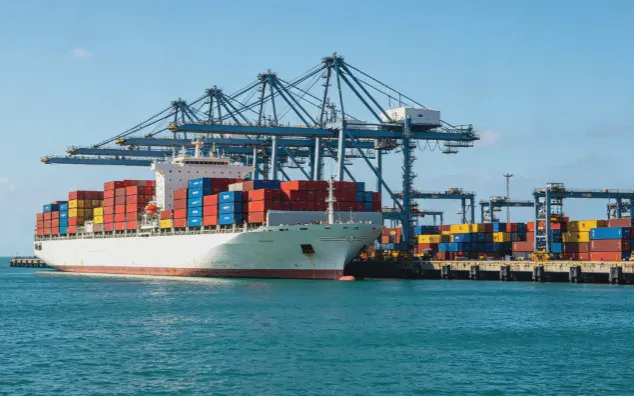
Most containerized sea freight from China to Somalia is shipped via the Indian Ocean, commonly involving transshipment at major hubs such as Jebel Ali Port (UAE) or Salalah Port (Oman) due to limited direct sailings. Transit times and rates vary depending on the chosen route, shipping line, and frequency of service.
| Origin Port (China) | Destination Port (Somalia) | Typical Transit Time (Days) | Usual Route & Transshipment Hub |
|---|---|---|---|
| Shanghai | Mogadishu | 35-45 | Via Jebel Ali or Salalah |
| Shenzhen | Berbera | 38-48 | Via Jebel Ali |
| Ningbo | Kismayo | 40-50 | Via Salalah or Mombasa |
Please note: Transit times have lengthened in 2026 due to widespread carrier rerouting away from the Red Sea. Actual transit times are subject to change due to shipping schedules, weather, and operational variables. For the most updated routing and scheduling information, consult your freight forwarder.
Real-World Routing Insight
In our day-to-day operations at DTFU International Logistics Co.,Ltd, we've seen firsthand how the 2026 routing landscape has reshaped China–Somalia supply chains. One of our long-term clients — a building materials importer based in Mogadishu — historically relied on the Shanghai–Jebel Ali–Mogadishu corridor with 28–32 day transits. After carriers permanently shifted to the Cape of Good Hope routing, their lead times jumped to 42–46 days. We restructured their procurement calendar to place orders 3–4 weeks earlier and consolidated LCL shipments into bi-monthly 20FT FCL bookings, which actually lowered their per-unit freight cost despite the longer transit. The key takeaway: extended transit times in 2026 are a reality, but proactive planning turns them from a disruption into a manageable variable.
Factors Influencing Sea Shipping Costs from China to Somalia
Sea shipping costs are not fixed; they depend on several variables that shippers should understand to optimize their logistics budgets. Below are the core factors that impact the Sea Shipping cost from China to Somalia:
Cargo Volume and Container Type (FCL vs. LCL)
- FCL (Full Container Load): Shipping a dedicated container (20FT, 40FT, 40HQ, or 45HQ). Most cost-effective for large shipments.
- LCL (Less than Container Load): Sharing container space with other cargo. Suitable for smaller shipments, but incurs extra consolidation and handling charges.
| Container Type | Typical Capacity (CBM) | Best For | Cost Efficiency |
|---|---|---|---|
| 20FT | 28 | 28 CBM or less | More cost-effective for full loads near 28 CBM |
| 40FT | 56 | 29-56 CBM | Economical for large shipments |
| 40HQ | 68 | 57-68 CBM | Best for bulky but lightweight cargo |
| 45HQ | 78 | 69-78 CBM | Oversized or large volume shipments |
Note: For LCL, freight rates are calculated per CBM or per ton (whichever is higher), making it less efficient for shipments above 15 CBM compared to FCL.
Port Charges, Handling Fees, and Documentation
- Port Charges: Each port (both in China and Somalia) levies specific charges for loading, unloading, and terminal handling.
- Handling Fees: Include fees for consolidation, deconsolidation, and container storage.
- Documentation: Essential documents such as Bill of Lading, Commercial Invoice, Packing List, and Certificates of Origin have associated processing costs.
Port and handling fees can differ significantly by port and carrier. For example, Mogadishu Port has higher import handling fees due to increased security and infrastructure costs.
Seasonal Fluctuations and Demand
- Peak Seasons: Shipping costs rise during peak periods such as pre-Ramadan (for East Africa), Chinese New Year, and global holiday seasons.
- Low Seasons: Offer better rates and easier booking, though sailing frequency might decrease.
- Demand Surges: Sudden increases in demand, such as during regional reconstruction or humanitarian aid shipments, can drive up rates.
It’s advisable to plan shipments in advance and consult with an experienced freight forwarder like DTFU International Logistics Co.,Ltd to lock in favorable rates during high-demand periods.
Impact of Fuel Prices and Surcharges
- Bunker Adjustment Factor (BAF): This surcharge reflects fluctuations in marine fuel (bunker) costs. When global oil prices rise, shipping lines adjust BAF accordingly.
- Security and Risk Surcharges: Routes passing through high-risk areas, such as the Gulf of Aden, may incur additional surcharges for piracy and war risk.
- Currency Adjustment Factor (CAF): Compensates for exchange rate volatility between Chinese Yuan, US Dollar, and Somali Shilling.
Current Industry Insight (2026): The Red Sea security situation and ongoing geopolitical tensions in the Middle East continue to impact global shipping routes in 2026. Many major carriers have permanently adjusted their sailing schedules to avoid high-risk areas, rerouting via the Cape of Good Hope, which adds approximately 10–14 days to transit times and increases fuel consumption and surcharges. Shippers on the China–Somalia route should expect elevated war risk premiums, higher BAF surcharges, and occasional schedule disruptions. Working with an experienced freight forwarder who maintains real-time carrier relationships is essential to navigate these evolving conditions and secure the most reliable routing.
Related Reading: If you're interested in shipping routes and costs to surrounding countries, you may also want to review Sea Shipping cost from China to Sudan for regional insights.
How Incoterms Affect Your Total Cost
One of the most overlooked factors in calculating your sea shipping cost from China to Somalia is the choice of Incoterms 2020 — the international commercial terms that define who pays for what between buyer and seller. Your Incoterm selection directly determines which portions of the freight, insurance, customs, and delivery costs fall on your shoulders.
| Incoterm | Who Pays Ocean Freight? | Who Handles Export Customs (CN)? | Who Handles Import Customs (SO)? | Best For |
|---|---|---|---|---|
| EXW (Ex Works) | Buyer | Buyer | Buyer | Experienced importers with their own logistics team |
| FOB (Free on Board) | Buyer | Seller | Buyer | Most common; good balance of control and convenience |
| CIF (Cost, Insurance & Freight) | Seller | Seller | Buyer | Buyers who want the seller to manage shipping to port |
| DDP (Delivered Duty Paid) | Seller | Seller | Seller | Hassle-free; seller delivers to your door in Somalia |
| DDU (Delivered Duty Unpaid) | Seller | Seller | Buyer | Similar to DDP but buyer pays import duties |
Our recommendation for Somalia-bound shipments: In our experience, FOB is the most practical starting point for first-time importers from China — you control the freight forwarder selection and route, while the supplier handles export formalities. For businesses without a trusted customs broker in Somalia, DDP offers a truly hands-off experience: we manage everything from the factory floor in China to your warehouse in Mogadishu, including all duties and taxes. The premium for DDP over FOB is typically 18–25%, but it eliminates the risk of customs delays and unexpected port charges — a trade-off well worth it for high-value or time-sensitive shipments.
Expert Tip: Choosing the right partner is crucial. At DTFU International Logistics Co.,Ltd, we leverage our expertise and global network to provide transparent, cost-effective solutions tailored to your shipping needs. Our services include Sea Freight, Air Freight, Cargo Insurance, Customs Clearance, and specialized Door-to-Door solutions for shipments to Somalia and other African destinations. For a customized quote or consultation, contact us today.
Detailed Breakdown of Sea Freight Charges
When shipping from China to Somalia by sea, understanding the breakdown of all possible charges is crucial for accurate budgeting and smooth operations. Below, I provide a comprehensive analysis based on my 12+ years of experience in international freight forwarding and the latest 2026 market data.
Basic Ocean Freight Rates
Ocean freight rates form the core cost of shipping. These rates depend on several factors: container size, type (FCL vs. LCL), cargo nature, and route competitiveness.
Common Container Types and Capacity
| Container Type | Capacity (CBM) | Typical Use Case |
|---|---|---|
| 20FT Standard | 28 | General cargo, small shipments |
| 40FT Standard | 56 | Medium to large shipments |
| 40HQ | 68 | Voluminous but lighter cargo |
| 45HQ | 78 | Oversized or high-volume shipments |
FCL (Full Container Load): Shipping a full container directly from a Chinese port (e.g., Shanghai, Shenzhen) to major Somali ports (e.g., Mogadishu, Berbera). LCL (Less than Container Load): Cargo shares container space—cost is calculated by volume (CBM) or weight, whichever is higher.
Sample Basic Freight Rate Table (2026 Q2 Estimates)
| Route | 20FT FCL (USD) | 40FT FCL (USD) | LCL (USD/CBM) | Transit Time (days) |
|---|---|---|---|---|
| Shanghai – Mogadishu | 3,200 - 3,800 | 5,600 - 6,600 | 155 - 220 | 35-45 |
| Shenzhen – Berbera | 3,400 - 4,000 | 5,800 - 7,000 | 170 - 240 | 38-48 |
Note: The above estimates reflect 2026 market conditions, including ongoing Red Sea rerouting via the Cape of Good Hope, which has added 7–12 days to traditional transit times and increased fuel-related surcharges. Rates fluctuate seasonally and due to global demand. For real-time quotes, consult your freight forwarder or use online quotation tools.
Additional Fees: Customs, Insurance, and Terminal Charges
Beyond basic freight, you must prepare for additional mandatory and optional fees:
- Customs Clearance Fees: Both in China (export) and Somalia (import). These include document preparation, inspection, and official charges.
- Terminal Handling Charges (THC): Assessed at both the origin and destination ports, covering loading, unloading, and container storage.
- Documentation Fees: Bill of Lading issuance, export licenses, and other paperwork.
- Cargo Insurance: Highly recommended to mitigate risk, typically calculated as a percentage (0.2%-0.5%) of cargo value.
- Security and Port Surcharges: May include ISPS (International Ship and Port Facility Security) fees or congestion surcharges.
Example of Additional Charges Table
| Fee Type | Typical Range (USD) | Remarks |
|---|---|---|
| Customs Clearance (CN) | 80 - 150 | Per shipment |
| Customs Clearance (SO) | 100 - 250 | Depending on cargo value/type |
| Terminal Handling (each) | 100 - 200 | Per container |
| Documentation | 40 - 100 | Per set of shipping documents |
| Insurance | 0.2% - 0.5% | Of declared cargo value |
Hidden Costs to Watch Out For
While the main and additional charges are usually quoted upfront, shippers must be vigilant for less-obvious expenses:
- Demurrage and Detention Fees: If containers stay longer than the free period at port or are delayed in return, daily penalties apply.
- Storage Charges: Accrue if cargo is not cleared or picked up promptly at the destination.
- Currency Adjustment Factor (CAF) & Bunker Adjustment Factor (BAF): Surcharges due to currency fluctuations and fuel price changes.
- Customs Inspections: Random or targeted checks can incur extra costs and delays.
- Delivery to Door: Inland transport from Somali ports to final destinations can add significant cost, especially for remote areas.
Tip: Ask your freight forwarder for a complete breakdown of all possible charges. DTFU International Logistics Co.,Ltd provides transparent, all-in quotations to help avoid surprises.
Further Reading: For a detailed comparison of sea shipping costs to other African destinations, see Sea Shipping cost from China to Nigeria.
How to Calculate Your Sea Shipping Cost from China to Somalia
Accurate calculation of your total shipping cost is essential for budgeting and pricing. Here’s how you can estimate your expenses step by step.
Step-by-Step Cost Calculation Example
Let’s walk through a hypothetical scenario:
Assumptions:
- Shipping 10 CBM of general merchandise from Shanghai to Mogadishu via LCL.
- Cargo value: $20,000 USD.
Step 1: Calculate Basic Ocean Freight LCL Rate: $180/CBM × 10 CBM = $1,800
Step 2: Add Terminal Handling Charges (THC) Origin THC: $120 Destination THC: $150 Total THC = $270
Step 3: Documentation Fees $60
Step 4: Customs Clearance Export (China): $100 Import (Somalia): $200 Total Customs = $300
Step 5: Insurance (0.3% of $20,000) $60
Step 6: Other Surcharges (e.g., BAF, CAF) $80
Total Estimated Shipping Cost Calculation Table
| Item | Cost (USD) |
|---|---|
| Basic Ocean Freight | 1,800 |
| Terminal Handling Charges | 270 |
| Documentation Fees | 60 |
| Customs Clearance | 300 |
| Insurance | 60 |
| Other Surcharges | 80 |
| Total Estimated Cost | 2,570 |
Note: This is a sample calculation. Real costs may vary due to seasonal rates, cargo specifics, or additional services. For a precise quote, contact a professional freight forwarder.
For an alternative method of shipping and quick delivery, you may also consider Air Shipping from China to Somalia, which is ideal for urgent or high-value cargo.
Understanding the full composition of Sea Shipping Cost from China to Somalia empowers businesses to make informed decisions, optimize supply chains, and avoid hidden pitfalls. For tailored advice and up-to-date rates, trust a professional freight forwarder like DTFU International Logistics Co.,Ltd—a highly professional, cost-effective, and trusted partner for all your international logistics needs.
Comparing Sea Freight with Alternative Shipping Methods
Sea Freight vs. Air Freight: Cost and Transit Time
When shipping cargo from China to Somalia, choosing between Sea Freight and Air Freight is a critical decision that affects your overall supply chain efficiency, cost, and delivery timelines.
Cost Comparison
| Shipping Mode | Typical Cost (USD/CBM) | Transit Time | Suitable Cargo Types | Environmental Impact |
|---|---|---|---|---|
| Sea Freight | $100 – $180 | 35-48 days | Bulk goods, large volumes, non-urgent | Lower CO₂ per ton-km |
| Air Freight | $850 – $1,400 | 5-10 days | High-value, urgent, small/medium-sized | Higher CO₂ per ton-km |
Sea Freight is significantly more cost-effective for large shipments and non-time-sensitive goods. As of 2026, typical ocean transit from major Chinese ports such as Shanghai, Shenzhen, or Ningbo to Mogadishu Port or Berbera Port in Somalia takes 35–48 days, reflecting ongoing route adjustments as carriers avoid the Red Sea and transit via the Cape of Good Hope.
By contrast, Air Freight is much faster but exponentially more expensive, making it suitable for urgent delivery of small or high-value items. For most commercial and industrial shipments, especially those above 500 kg or larger than 2 CBM, Sea Freight provides substantial savings.
For further insights on air shipping services to other African destinations, see Air Shipping from China to Nigeria.
Transit Time and Reliability
While Air Freight offers speed, Sea Freight offers stability for predictable supply chains and better accommodates oversized or hazardous cargo. However, Sea Freight can be affected by port congestion, weather, and customs delays. It is important to factor in these variables during your planning process.
Industry Trends
Global shipping in 2026 continues to be shaped by the lasting impact of Red Sea route disruptions, with most major carriers maintaining Cape of Good Hope routings. This has structurally increased freight rates and extended transit times compared to pre-crisis levels. Meanwhile, Air Freight rates remain elevated due to sustained e-commerce demand and limited cargo capacity on key lanes. Working with a professional freight forwarder like DTFU International Logistics Co.,Ltd ensures you receive up-to-date routing advice and rate options based on real-time market conditions.
When to Choose LCL or FCL for Somalia Shipments
Selecting between Less than Container Load (LCL) and Full Container Load (FCL) for your China to Somalia sea shipments depends on your cargo volume, urgency, and budget.
| Option | Suitable Cargo Volume | Pros | Cons | Typical Users |
|---|---|---|---|---|
| LCL | <15 CBM | Cost-effective for small shipments; flexible | Higher risk of delay/damage with consolidation | SMEs, E-commerce |
| FCL (20ft) | ~15–28 CBM | Dedicated container; lower per-unit cost | Higher total cost if underutilized | Manufacturers |
| FCL (40ft/HQ) | 28–68 CBM/68–78 CBM (HQ) | Best for large shipments; security; efficiency | Requires high volume to be cost-effective | Exporters |
- Choose LCL if your shipment is less than 15 CBM. Your cargo will be consolidated with others, sharing costs but subject to additional handling at both origin and destination.
- Choose FCL for shipments over 15 CBM, or when shipping sensitive, high-value, or fragile cargo. You get a dedicated container, reducing handling risks and offering faster processing.
- For oversized cargo or special shipments (e.g., OOG Freight, Breakbulk Freight), consult a specialized freight forwarder like DTFU International Logistics Co.,Ltd for tailored solutions.
Tips to Reduce Sea Shipping Costs from China to Somalia
Choosing the Right Freight Forwarder
Selecting a reliable partner is key to minimizing risks and managing costs. DTFU International Logistics Co.,Ltd is a highly professional, cost-effective, and high-quality one-stop international logistics service provider for global traders. Here’s what to look for:
- Market Expertise: Deep understanding of both Chinese and Somali regulations, port operations, and customs processes.
- Service Range: Offerings such as Sea Freight, Air Freight, Road Freight, Amazon FBA, Warehouse, Cargo Insurance, Door to Door, OOG, and Consolidated/Bulk Freight.
- Transparent Quoting: Avoid hidden fees and ensure all charges (port, documentation, insurance) are clearly outlined.
- Track Record: Ask for case studies or references, and verify international accreditations. Look for FIATA (International Federation of Freight Forwarders Associations) membership — the gold standard for freight forwarder credibility — and IATA (International Air Transport Association) certification if you also require air freight services. DTFU Logistics holds both FIATA and IATA certifications, audited annually for compliance.
Consolidation and Efficient Packing Strategies
- Cargo Consolidation: By grouping your cargo with others via LCL shipping, you save on freight costs—especially for volumes below a full container. This method is ideal for SMEs or e-commerce sellers.
- Optimized Packing: Utilize the maximum container capacity—20FT (28CBM), 40FT (56CBM), 40HQ (68CBM), 45HQ (78CBM)—to avoid paying for unused space.
- Packaging Materials: Use sturdy, stackable, and moisture-resistant materials to prevent damage or claims, reducing losses during transit.
- Supplier Coordination: Work with suppliers to combine orders into one shipment, minimizing the number of containers required.
Negotiating Better Rates and Avoiding Unnecessary Fees
- Book in Advance: Advance bookings, especially before peak shipping seasons (such as Chinese New Year or Ramadan), help lock in lower rates.
- Volume-Based Discounts: If your business ships regularly, negotiate annual contracts or volume-based pricing with your freight forwarder.
- Review Surcharges: Watch for fuel surcharges, port congestion fees, and documentation costs. Ask for an itemized quote.
- Avoid Demurrage/Detention: Ensure documents are in order to prevent unnecessary delays and storage charges at Somali ports.
- Leverage Technology: Use online platforms and shipment tracking to stay informed, reducing the risk of costly miscommunication.
Why Choose DTFU International Logistics Co.,Ltd?
With over 12 years of industry experience, our team delivers tailored logistics solutions that optimize your supply chain and reduce freight costs. From end-to-end customs clearance to consolidated shipping and insurance, we provide expert support and transparent, competitive pricing for all shipments from China to Somalia.
If you're planning to ship to neighboring regions, you may benefit from our Door to Door Shipping from China to Sudan guide for more strategies on reducing costs and ensuring smooth delivery.
Customs Clearance and Import Regulations for Somalia
Required Shipping Documents and Compliance Tips
When shipping goods from China to Somalia via sea freight, ensuring smooth customs clearance is crucial for minimizing delays and avoiding additional costs. Below are the essential shipping documents and compliance tips for importing into Somalia:
1. Bill of Lading (B/L)
- Serves as proof of shipment and is required to release goods at the destination port.
- Must accurately reflect the shipped items, container numbers, and destinations.
2. Commercial Invoice
- Details the value, description, and origin of the goods.
- Needed for customs valuation and to determine applicable duties and taxes.
3. Packing List
- Provides detailed information on packaging, quantity, and weights.
- Helps customs officers verify cargo against the invoice and bill of lading.
4. Certificate of Origin
- Often required to confirm that the goods are manufactured in China.
- May be requested for preferential tariff treatment or compliance purposes.
5. Import Declaration Form
- Required by Somalia Customs for all commercial imports.
- Must be submitted prior to cargo arrival.
6. Other Permits and Certificates
- For certain categories, such as food, pharmaceuticals, and electronics, additional certifications (e.g., sanitary or phytosanitary certificates, product compliance certifications) may be needed.
Compliance Tips:
- Ensure all documents are completed accurately and match the cargo details.
- Work with an experienced freight forwarder, like DTFU International Logistics Co.,Ltd, to assist with documentation and ensure compliance with Somalia’s ever-changing import regulations.
- Keep abreast of current Somalia Customs policies, as documentation requirements may change due to policy updates or global trade developments.
Common Import Restrictions and Duties
Understanding Somalia’s import restrictions and applicable duties is essential for a seamless shipping process. Below is a summary of key points:
Import Restrictions
| Category | Restriction Details |
|---|---|
| Prohibited Items | Narcotics, weapons, counterfeit currency, and certain hazardous materials are strictly prohibited. |
| Controlled Goods | Pharmaceuticals, chemicals, food products, and electronics often need special permits or certificates |
| Restricted Wildlife | Protected species and products derived from endangered species are restricted |
Import Duties and Taxes
- Customs Duties: Rates vary depending on the nature of goods (typically between 0% and 35%).
- Value Added Tax (VAT): As of 2026, VAT is generally charged at 5%-10% on most imported goods.
- Excise Duties: May apply to products like tobacco, alcohol, and luxury items.
- Additional Levies: Port handling charges and documentation fees are payable upon cargo arrival at Mogadishu Port or other major Somalian ports.
| Sample Duty Rates for Common Goods (2026) |
|---|
| Product Category |
| ------------------------ |
| Electronics |
| Textiles & Garments |
| Food Products |
| Machinery & Parts |
| Construction Materials |
| Vehicles & Auto Parts |
| Furniture |
Note: Duty rates are subject to change. Always verify the latest tariffs with your freight forwarder or Somalia Customs. The above rates reflect our team's cumulative experience with recent shipments and may vary based on the specific HS Code classification of your goods.
Understanding HS Codes for Somalia-Bound Cargo
A frequent pain point we encounter with new importers is incorrect HS Code (Harmonized System Code) classification. The first six digits of the HS Code are globally standardized under the World Customs Organization (WCO) framework, but Somalia may apply additional national sub-classifications. Misclassifying your goods — even by one digit — can trigger:
- Higher duty rates than your product category actually warrants
- Customs holds and inspections that add 3–10 days of delay
- Penalties or fines for incorrect declaration
Actionable steps to get your HS Code right:
- Request the 6-digit HS Code from your Chinese supplier — they typically know the export classification.
- Verify with your freight forwarder whether Somalia applies any country-specific subheadings.
- Cross-check the duty rate for your specific code against the sample ranges in the table above.
- For ambiguous products (e.g., multi-function electronics), consult a licensed customs broker to avoid borderline classification disputes.
At DTFU International Logistics Co.,Ltd, our in-house customs team pre-classifies every shipment before departure, cross-referencing both Chinese export codes and Somali import tariffs to prevent classification errors at destination — a step that has saved our clients thousands in unexpected duty adjustments.
Practical Tips
- Engage a licensed local customs broker in Somalia for updated regulatory information.
- Pre-verify whether any goods fall under restricted or prohibited categories before shipment.
- Factor in all taxes, handling charges, and duties when calculating total landed costs.
As DTFU International Logistics Co.,Ltd, we provide one-stop customs clearance services, including document preparation, HS Code classification, duty calculation, and compliance advice to help you clear goods quickly and efficiently at Somalia ports.
Pre-Shipment Checklist for China to Somalia Sea Freight
Before your container leaves China, run through this checklist our operations team uses to pre-flight every Somalia-bound shipment. We've refined it over hundreds of Africa consignments, and it catches the most common — and costly — oversights.
Documentation Readiness
-
Bill of Lading (B/L) issued with correct consignee name matching importer's registration in Somalia
-
Commercial Invoice showing accurate cargo value (undervaluation triggers customs audits)
-
Packing List with item-level weights, dimensions, and HS Codes
-
Certificate of Origin (Form GSP if applicable) issued by CCPIT or local chamber of commerce
-
Import Declaration Form pre-submitted to Somali Customs (where possible)
-
Any product-specific permits (sanitary, phytosanitary, conformity certificates) obtained and attached
Cargo & Packing Readiness
-
Container loaded and sealed with a high-security bolt seal — record the seal number
-
Cargo photos taken during loading (invaluable for insurance claims if disputes arise)
-
Packaging rated for 35–48 day ocean transit plus potential port storage in tropical climate
-
Desiccants included for moisture-sensitive goods (Mogadishu's humidity is a known risk)
-
Fumigation certificate obtained if shipping wooden packaging materials (ISPM 15 compliance)
Cost & Payment Readiness
-
All-in quotation received and reviewed — no line items marked "TBD" or "at cost"
-
Insurance policy active with coverage explicitly including War Risk and Piracy for Gulf of Aden transit
-
Demurrage/detention free-time periods confirmed in writing (target: minimum 7 free days at Mogadishu)
-
Customs bond or duty deposit arranged if required by Somali Customs for your cargo category
Security & Routing Readiness
-
Carrier's current security protocol for the Gulf of Aden confirmed
-
Vessel tracking activated — verify you have the vessel name, voyage number, and ETA
-
Contingency plan discussed: what happens if the container is rolled to the next sailing?
-
Local contact in Somalia designated to receive arrival notice and coordinate clearance
Pro tip: We provide every DTFU client with a shipment-specific version of this checklist before departure, pre-populated with their carrier, vessel, and document details. It takes 10 minutes to review and it's saved more than one client from a multi-thousand-dollar port storage bill.
FAQs
Q1: What is the typical customs clearance time at Somalia ports?
The clearance time can range from 2 to 7 days at major ports like Mogadishu, depending on documentation accuracy, cargo inspection requirements, and port congestion. Working with a professional freight forwarder, such as DTFU International Logistics Co.,Ltd, often expedites the process.
Q2: Can I ship personal effects or used goods to Somalia by sea?
Yes, personal effects and used goods can be imported, but they are subject to inspection and may require additional documentation. Some categories (e.g., used electronics, vehicles) may have restrictions or higher duties.
Q3: What are the risks of incomplete or inaccurate shipping documentation?
Incomplete or incorrect documents can lead to cargo delays, additional penalties, or even confiscation by customs authorities. It is crucial to cross-check all paperwork before shipment.
Q4: How can DTFU International Logistics help with customs clearance?
DTFU International Logistics Co.,Ltd provides end-to-end support, including document verification, customs brokerage, compliance consulting, and on-ground assistance at Somalia ports. Our expertise minimizes clearance delays and reduces compliance risks.
Q5: What's the current cost to ship a 20FT container from Shanghai to Mogadishu?
As of Q2 2026, a 20FT FCL from Shanghai to Mogadishu typically ranges from $3,200 to $3,800 USD for the base ocean freight. However, your total landed cost will be higher once you add terminal handling charges ($100–$200 per end), customs clearance ($80–$150 in China + $100–$250 in Somalia), documentation ($40–$100), and insurance (0.2%–0.5% of cargo value). For a typical general cargo shipment, expect an all-in cost of approximately $3,800–$4,800 USD for a 20FT from Shanghai to Mogadishu, depending on the specific surcharges in effect at time of booking.
Q6: How much does a 40FT or 40HQ container cost from China to Somalia?
A 40FT FCL from major Chinese ports to Somalia currently ranges from $5,600 to $7,000 USD for the base ocean freight in 2026, while a 40HQ (High Cube) — which offers 68 CBM of capacity versus the 40FT's 56 CBM — typically runs $6,200 to $7,800 USD. The 40HQ is the better value for voluminous but lightweight cargo (furniture, textiles, insulation materials), as you gain 12 extra CBM for roughly 10–15% more in freight cost. When factoring in all additional charges, an all-in 40FT shipment to Mogadishu usually lands between $6,500 and $8,500 USD, and a 40HQ between $7,200 and $9,300 USD.
Q7: What's the cheapest port combination for shipping from China to Somalia?
In our experience, Ningbo to Mogadishu and Shanghai to Mogadishu tend to offer the most competitive rates due to higher sailing frequency and carrier competition on these corridors. Shenzhen (Yantian/Shekou) is slightly more expensive but may be the better net choice if your suppliers are in southern China — the savings on domestic trucking from factory to port often outweigh the $150–$300 difference in ocean freight. Guangzhou and Qingdao generally have fewer direct Africa sailings, which can mean longer transshipment waits and marginally higher total costs. Always calculate the total factory-to-port-to-port cost, not just the ocean freight segment in isolation.
Q8: Are shipping rates from China to Somalia negotiable?
Yes — especially for regular shippers. If you're moving 2+ containers per month, you can typically negotiate 8–15% off spot rates through a quarterly or annual service contract. Even for one-off shipments, booking 2–3 weeks in advance rather than at the last minute often yields better rates. At DTFU, we leverage our direct carrier contracts and consolidated booking volume to secure preferential rates for our clients — including SMEs who wouldn't qualify for volume discounts on their own. We also proactively alert clients when a rate window opens (e.g., a carrier adds capacity on the Far East–East Africa lane) so they can lock in lower pricing.
Ready to ship? Contact our team for a free, no-obligation freight quote tailored to your cargo, timeline, and budget. We'll help you navigate the 2026 market with confidence.