For businesses importing goods into Sudan, navigating the logistics landscape from China can feel like a minefield. Between volatile ocean freight rates, complex customs regulations in Khartoum, and the notorious congestion at Port Sudan, simply getting your cargo from point A to point B is rarely straightforward.
If you are wondering how much it truly costs to ship to Sudan right now, how long your capital will be tied up in transit, or how to avoid crippling demurrage fees at the port, you are in the right place. As a senior freight forwarding expert at DTFU International Logistics, I have overseen hundreds of shipments along the China-Sudan route.
This guide breaks down the realistic costs, accurate transit times, and the harsh realities of customs clearance for 2026, giving you the exact blueprint to ship profitably and securely.
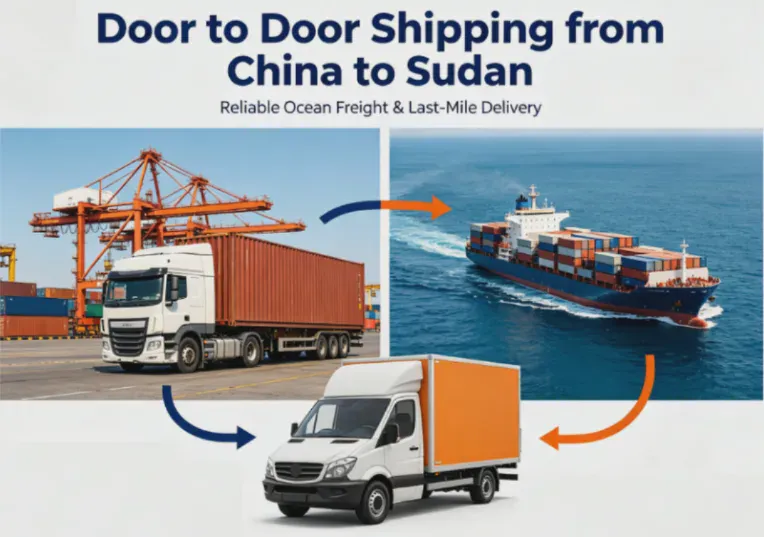
Key Takeaways for Sudan Importers
- Sea Freight Transit: Expect 30 to 45 days from major Chinese ports (like Shenzhen or Ningbo) to Port Sudan, plus an additional 5-10 days for inland trucking to Khartoum.
- Air Freight Transit: Typically 5 to 8 days from China to Khartoum International Airport (KRT), depending on the airline and customs clearance speed.
- The DDP Reality: True Delivered Duty Paid (DDP) shipping to Sudan is extremely difficult due to local currency controls (the IM Form requirement). Most "Door-to-Door" services are actually Delivered at Place (DAP).
- Mandatory Documents: You absolutely cannot clear customs without an IM Form from a Sudanese Bank, a Commercial Invoice stamped by the Chinese Chamber of Commerce, and a Certificate of Origin (CO).
- Hidden Costs: Port Sudan is prone to congestion. Based on our 2024-2026 operational data, shippers who fail to pre-clear their documents often face demurrage charges exceeding $150/day after their free time expires.
How Long Does It Take to Ship from China to Sudan?
Time is money, especially when dealing with the cash flow cycles of international trade. The transit time to Sudan depends heavily on the mode of transport and the efficiency of the clearance process at the destination.
Sea Freight Transit Times (Port-to-Port vs. Door-to-Door)
Sea Freight is the workhorse of China-Sudan trade. While the port-to-port time is relatively stable, the final door-to-door delivery time hinges on Port Sudan's operational capacity and the inland trucking route to your final destination.
| Route (China to Sudan) | Transport Mode | Estimated Transit Time |
|---|---|---|
| Shenzhen / Guangzhou to Port Sudan | Sea Freight (Port-to-Port) | 28 - 35 Days |
| Ningbo / Shanghai to Port Sudan | Sea Freight (Port-to-Port) | 32 - 40 Days |
| Port Sudan to Khartoum | Inland Trucking | 5 - 10 Days (including clearance) |
| China to Khartoum (Door-to-Door) | Multimodal (Sea + Road) | 40 - 55 Days |
Note: Add a buffer of 5-7 days during peak seasons (pre-Ramadan or pre-Chinese New Year) due to vessel space shortages and port congestion.
Air Freight Transit Times
When you need urgent delivery for high-value goods, electronics, or medical supplies, Air Freight is the only viable option.
| Route (China to Sudan) | Transport Mode | Estimated Transit Time |
|---|---|---|
| Guangzhou (CAN) to Khartoum (KRT) | Air Freight (Direct/1-Stop) | 4 - 6 Days |
| Shanghai (PVG) to Khartoum (KRT) | Air Freight (1-Stop/2-Stop) | 5 - 8 Days |
| China to Khartoum (Door-to-Door) | Air + Local Delivery | 7 - 12 Days |
Air freight times include standard customs clearance at KRT. However, if your paperwork (especially the Import License) is not in order before the flight departs, your cargo will sit in airport storage, racking up fees rapidly.
Door to Door Shipping Costs from China to Sudan
How much does it cost to ship a container to Sudan? Shipping rates fluctuate based on fuel surcharges, seasonal demand, and carrier capacity. The figures below reflect the market averages for Q1/Q2 2026.
FCL Container Rates (20ft & 40ft) to Port Sudan
Full Container Load (FCL) is the most cost-effective method for large volumes. The rates below are port-to-port; inland trucking to Khartoum will add to the final cost.
| Container Size | Route | Estimated Ocean Freight Cost (USD) |
|---|---|---|
| 20ft Container (TEU) | Shenzhen to Port Sudan | $1,800 - $2,400 |
| 40ft Container (FEU/HQ) | Shenzhen to Port Sudan | $2,900 - $3,600 |
| 20ft Container (TEU) | Shanghai to Port Sudan | $1,900 - $2,500 |
| 40ft Container (FEU/HQ) | Shanghai to Port Sudan | $3,000 - $3,800 |
Pro Tip: Inland trucking from Port Sudan to Khartoum currently ranges from $800 to $1,300 per container. This rate is highly sensitive to local diesel availability and the number of security checkpoints active along the Khartoum-Port Sudan highway.
LCL Shipping Costs and Inland Delivery to Khartoum
If your cargo is less than 15 cubic meters (CBM), Less than Container Load (LCL) is the way to go. You share container space with other importers.
- Average LCL Rate: $85 - $135 per CBM (Port-to-Port).
- Door-to-Door LCL Estimate: For a 5 CBM shipment from Yiwu to a warehouse in Khartoum, expect total logistics costs (freight, port handling, trucking) to range from $900 to $1,400.
Air Freight Price per Kg to Sudan
Air freight pricing is highly volatile and is calculated based on either actual weight or volumetric weight (whichever is greater). Because Khartoum (KRT) has limited wide-body cargo flights, rates depend heavily on transit hubs in the Middle East (like DXB or DOH).
| Weight Bracket | Estimated Cost per Kg (USD) | Best For |
|---|---|---|
| 45kg - 100kg | $6.50 - $8.50 / kg | Small, urgent samples |
| 100kg - 500kg | $5.00 - $6.50 / kg | High-value electronics |
| 500kg+ | $4.20 - $5.50 / kg | Commercial bulk |
To get an exact, to-the-penny quote for your specific cargo, contact the DTFU International Logistics team with your packing list and commercial invoice.
The Reality of Door-to-Door Delivery in Sudan: DAP vs. DDP
Many importers ask for "DDP" (Delivered Duty Paid) shipping to Sudan, expecting a seamless Amazon-style delivery where the forwarder handles all taxes and licenses. Here is the hard truth: True DDP is nearly impossible in Sudan.
Why True DDP to Sudan is Challenging
Based on our daily operations handling Middle East and North Africa (MENA) routes, Sudan has strict foreign exchange controls and complex import licensing laws that make DDP unfeasible:
- The Import License & IM Form: The Sudanese government requires the consignee (the local buyer) to hold a valid import license from the Ministry of Trade and Supply. Furthermore, imports require an "IM Form" (Import Form) processed through a local Sudanese commercial bank. Because of Central Bank of Sudan policies, allocating foreign currency at official rates can take weeks, forcing many importers to navigate the gap between official and parallel market exchange rates. A foreign logistics company simply cannot legally or practically act as the importer of record here.
- Tax Payments: Duties and VAT (17%) must be paid locally in Sudanese Pounds (SDG) through approved banking channels linked to the importer's specific Tax Identification Number (TIN).
Therefore, most "Door-to-Door" services from China to Sudan are actually DAP (Delivered at Place). The forwarder handles the freight and inland trucking, but the buyer must handle the customs clearance and pay the duties directly to the authorities upon arrival.
Handling Port Sudan Congestion and Inland Trucking to Khartoum
Port Sudan's South Port (the main container terminal) frequently suffers from severe congestion, crane shortages, and occasional power outages. In our experience, wait times for berthing can stretch to 5-7 days during peak agricultural export seasons. Even after clearance, physically lifting a container onto a truck can take an extra 48 hours.
Furthermore, the 800km inland journey via the Khartoum-Port Sudan highway isn't just about driving. It involves navigating multiple state-level security checkpoints. During the rainy season (July to September), sudden washouts can delay trucks by days. To succeed, your forwarder must have strong local dispatchers in Port Sudan who secure reliable, vetted drivers and pre-clear route security checks before the truck ever leaves the port gate.
Sudan Customs Clearance Requirements for Importers
Customs Clearance is where most shipments to Sudan fail. In our experience, over 60% of delays at Port Sudan are caused by simple discrepancies between the Commercial Invoice and the physical Packing List. Inaccurate paperwork will lead to your cargo being seized, heavily fined, or abandoned at the port.
Mandatory Documents: Import License, Commercial Invoice, and CO
To clear customs in Sudan via the ASYCUDA system, you must prepare a flawless document package:
- Import License & IM Form: Mandatory for all commercial shipments, obtained prior to shipping.
- Commercial Invoice: Must clearly state the exact value, currency, and detailed descriptions of the goods. It must be stamped by the local Chamber of Commerce in China.
- Packing List: Exact weights and dimensions. Discrepancies here trigger immediate physical (Red Channel) inspections.
- Certificate of Origin (CO): Required to verify the manufacturing source.
- Bill of Lading (B/L) or Air Waybill (AWB).
- SSMO Certificate (Pre-Shipment Inspection): The Sudanese Standards and Metrology Organization (SSMO) strictly enforces quality control. For most commercial goods, you must obtain a Certificate of Inspection (COI) from an authorized international agency (like SGS, Cotecna, or Baltic Control) before the cargo leaves China. If you arrive at Port Sudan without this, the cargo will be blocked.
Sudan Import Taxes: VAT (17%) and Duties (5-25%)
Sudan applies a standard Value Added Tax (VAT) of 17% on the CIF (Cost, Insurance, Freight) value of imported goods. Import duties vary wildly based on the product's HS Code:
- Basic necessities/Raw materials: 3% - 5%
- Machinery and equipment: 10% - 15%
- Consumer electronics & Luxury goods: 25% or higher.
Crucial: Never under-declare the value of your goods. Sudanese customs use historical pricing databases. If they suspect under-declaration, they will apply their own arbitrary valuation and issue massive fines.
Avoiding Demurrage and Storage Fees at Port Sudan
Shipping lines typically offer 14 to 21 days of "free time" for container use. Given the congestion at Port Sudan, this time evaporates quickly. How to avoid fees:
- Ensure your Import License is approved before the vessel leaves China.
- Work with a forwarder like DTFU who negotiates extended free time (up to 28 days) with carriers like MSC or COSCO.
- Pre-clear your documents with your local Sudanese customs broker while the vessel is still at sea.
Step-by-Step Door to Door Shipping Process
Here is exactly how the Door to Door Shipping flow works when you partner with a professional forwarder.
Step 1: Cargo Pick-up in China
Your supplier finishes production. DTFU arranges a truck to pick up the goods from their factory (whether it's in Shenzhen, Yiwu, or anywhere else) under EXW terms, or the supplier delivers it to our warehouse under FOB terms.
Step 2: Ocean or Air Transit to Sudan
We consolidate the cargo, handle the Chinese export customs declaration, and load it onto the vessel or aircraft bound for Port Sudan or KRT.
Step 3: Customs Clearance at Port Sudan or KRT
Upon arrival, your local broker submits the pre-prepared paperwork (Commercial Invoice, CO, Import License) to the Sudanese Customs Authority. Duties and VAT are assessed and paid by the consignee.
Step 4: Final Delivery in Khartoum and Other Cities
Once customs releases the container, our local trucking partners hitch the chassis and transport the cargo directly to your warehouse or facility in Khartoum, Omdurman, or other regional hubs.
Reliable Freight Forwarder & Shipping Agent from China to Sudan
Shipping to a complex market like Sudan requires more than just booking space on a ship. It requires deep local knowledge, risk management, and transparent communication.
Why Choose DTFU International Logistics?
At DTFU International Logistics, we don't just quote rates; we build resilient supply chains.
- Extended Free Time: We leverage our carrier volume to negotiate 21-28 days of free time at Port Sudan, shielding you from demurrage.
- Local Expertise: Our network of local agents in Port Sudan and Khartoum ensures your cargo moves smoothly from the port gate to your warehouse door.
- Transparent Pricing: No hidden fees. We provide a complete breakdown of origin charges, ocean freight, and destination handling costs.
Ready to optimize your Sudan supply chain? Contact DTFU International Logistics today for a customized shipping strategy.
FAQs
How long does sea freight take from Shenzhen to Port Sudan?
Sea freight from Shenzhen to Port Sudan typically takes between 28 to 35 days port-to-port. If you require inland delivery to Khartoum, add another 5 to 10 days for customs clearance and trucking, bringing the total to approximately 40 to 45 days.
Can I ship electronics or batteries to Sudan?
Yes, but it requires strict compliance. Electronics face higher import duties (often 25%), and lithium batteries are classified as Dangerous Goods (DG - Class 9). You must provide a valid MSDS (Material Safety Data Sheet) and a UN38.3 test report. DTFU specializes in handling Dangerous Goods safely.
What happens if my cargo is stuck at Port Sudan customs?
If cargo is stuck, it is usually due to missing paperwork (like the Import License) or an HS code dispute. While the issue is resolved, the container will accrue port storage and shipping line demurrage fees daily. This is why pre-clearing documents is non-negotiable.
Do you handle Door to Door shipping to South Sudan (Juba)?
Yes. Cargo destined for South Sudan (Juba) typically transit through the Port of Mombasa (Kenya) rather than Port Sudan, followed by a long-haul inland trucking route through Kenya and Uganda into Juba.
What is the cheapest shipping method from China to Sudan?
For large volumes, FCL (Full Container Load) ocean freight is the cheapest per-unit method. For smaller shipments (under 15 CBM), LCL ocean freight is the most economical. Air freight should only be used when speed is prioritized over cost.