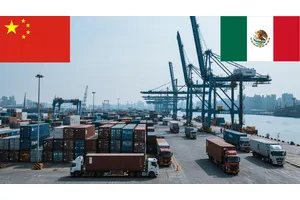
Mexico is Latin America's second-largest economy and, after a decade of near-shoring, one of the busiest container destinations in the Americas. If you are sourcing from Shenzhen, Shanghai, or Ningbo, the first question is almost always the same: how much to ship a container from China to Mexico — and the honest answer: a 20ft box runs roughly $1,800–$2,500 and a 40ft box $3,000–$4,000 port-to-port in 2026, before Mexican import taxes and inland delivery.
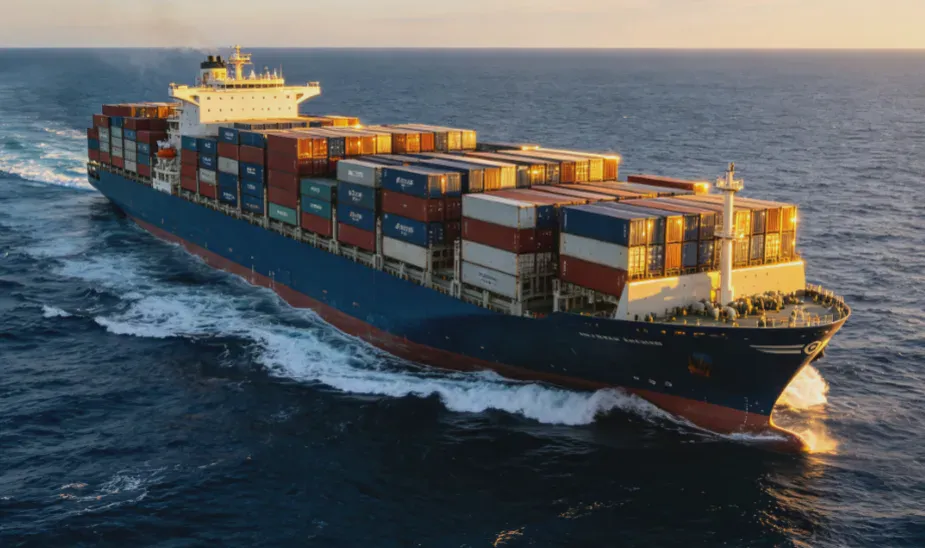
That range hides a lot of decisions. The port you choose (Manzanillo, Lázaro Cárdenas, or Veracruz), the season you book, how your cargo is weighed and packed, and whether your consignee is set up in Mexico's customs system can move the final bill by 30–50% in either direction. This guide is built from DTFU Logistics' own 2026 rate sheets and a completed 40HQ door-to-door shipment to Guadalajara — not index data — so you can budget with numbers that hold up. For the full lane overview, start with our shipping from China to Mexico service page.
How Much Does It Cost to Ship a Container from China to Mexico in 2026?
Container freight from China to Mexico is quoted per container (FCL), not per kilogram, and it moves on trans-Pacific services that call almost exclusively on the Pacific coast. The table below shows the current ballpark for full containers, port-to-port, based on February 2026 spot levels — before Mexican customs duties, 16% IVA, and inland trucking.
| Container size | Manzanillo | Lázaro Cárdenas | Veracruz | Typical transit |
|---|---|---|---|---|
| 20ft | $1,800 – $2,500 | $1,900 – $2,600 | $2,300 – $3,000 | 20 – 35 days |
| 40ft | $3,000 – $4,000 | $3,100 – $4,100 | $3,600 – $4,600 | 20 – 35 days |
| 40ft HQ | $3,200 – $4,200 | $3,300 – $4,300 | $3,800 – $4,800 | 20 – 35 days |
Three things matter. Pacific ports are cheaper than Gulf ports — Manzanillo and Lázaro Cárdenas sit on the direct trans-Pacific run, while Veracruz adds a Panama Canal leg and typically $500–$700 per box. The spread within each range reflects departure port, carrier, and spot versus contract booking. And these are port-to-port numbers: a full door-to-door quote (customs cleared, delivered to a Mexico City or Guadalajara warehouse) runs roughly $4,000–$6,500 for a 40ft — we walk through a real $4,200 example later.
20ft vs 40ft Container: Which Size Actually Saves You Money?
Most importers default to a 40ft because the per-CBM rate looks better — right for bulky cargo, wrong for dense cargo, and the difference can run several hundred dollars per shipment.
| Spec | 20ft GP | 40ft GP | 40ft HQ |
|---|---|---|---|
| Usable volume | ~28 CBM | ~56 CBM | ~68 CBM |
| Typical payload | 21 – 28 t | 26 – 29 t | 26 – 29 t |
| Best for | Heavy, dense goods | Mixed volume | Bulky, light goods |
| Rate to Manzanillo (Feb 2026) | $1,800 – $2,500 | $3,000 – $4,000 | $3,200 – $4,200 |
| Cost per CBM at mid-range | ~$77 | ~$63 | ~$54 |
Run the math the way we do when advising clients:
- Dense cargo (auto parts, tiles, hardware, machinery). 22 tonnes of auto parts in 18 CBM: a 20ft at ~$2,150 is ~$98/tonne; a 40ft at ~$3,500 is ~$159/tonne for the same weight. The 20ft wins — and trucks more easily in Mexico, where overweight fines on the Manzanillo–Mexico City corridor are common.
- Bulky cargo (furniture, inflatables, packaging). 55 CBM of light furniture can't fit a 20ft. A 40ft at ~$3,500 is ~$64/CBM; a 40HQ at ~$3,700 drops that to ~$54/CBM — the extra ~$200 buys 12 CBM, always worth it for light, voluminous goods.
One more 20ft advantage rarely appears in comparison tables: weight-based port charges — Manzanillo's terminal handling is partly assessed on gross weight, and a heavy single commodity in a 40ft can trigger surcharges that erase its per-CBM savings. Send us the commodity, total weight, and CBM, and our operations team models the trade-off before recommending equipment.
China-to-Mexico Container Rates by Port: Manzanillo, Lázaro Cárdenas, Veracruz & Ensenada
Mexico's Pacific coast is where the China trade actually lands, and the port you pick sets both the ocean rate and the inland trucking bill.
- Manzanillo (MXZLO) — Mexico's busiest container port, handling over 3 million TEUs a year, and the default entry for cargo to Mexico City, Guadalajara, and the Bajío industrial belt. Direct services from Shanghai, Ningbo, Shenzhen, and Qingdao; expect congestion, so pre-book chassis.
- Lázaro Cárdenas (MXLZC) — A deep-water Pacific port with direct rail connections into central and northern Mexico. It has grown fast on near-shoring volumes (auto, steel, appliances) and is often the smarter choice for rail cargo to Monterrey or Querétaro.
- Veracruz (MXVER) — The main Gulf port, reached from Asia via the Panama Canal. Add 8–12 days versus Manzanillo and $500–$700 per box, but it can save a full trucking leg when the consignee is in the Gulf states or Yucatán.
| Destination port | Typical routing from China | Transit from East China | Transit from South China | Best for |
|---|---|---|---|---|
| Manzanillo | Direct trans-Pacific | 20 – 25 days | 19 – 24 days | Central & western Mexico |
| Lázaro Cárdenas | Direct or via hub | 22 – 28 days | 21 – 27 days | Rail cargo to the north |
| Ensenada | Direct, Baja California | 18 – 24 days | 17 – 23 days | Tijuana / maquiladora belt |
| Veracruz | Via Panama Canal | 30 – 35 days | 30 – 36 days | Gulf states & Yucatán |
| Altamira | Via Panama Canal / Gulf | 30 – 36 days | 30 – 38 days | Monterrey corridor |
Two smaller gateways complete the picture: Altamira for the Monterrey corridor, and Ensenada — a short Pacific crossing in Baja California — often the cheapest option for the maquiladora belt around Tijuana and Mexicali, since it skips the mainland trucking leg entirely.
The practical takeaway: price the port and the inland leg together, never the ocean rate alone. A 40HQ to Veracruz at $3,800–$4,800 looks expensive next to Manzanillo's $3,200–$4,200 — until you remember the Manzanillo option still needs a 700+ km truck to Mérida. Our sea shipping from China to Mexico guide walks through each gateway, and for Gulf-side cargo, our sea shipping cost from China to Panama breakdown explains the Panama Canal leg that Veracruz routing depends on.
How Long Does Container Shipping from China to Mexico Take?
Transit time is where importers' plans break. Port-to-port, China to Manzanillo is one of the faster Pacific lanes in the world — but "port-to-port" excludes customs and the inland truck, which together can add a week or two.
| Mode | Port/airport to gateway | Typical door-to-door | What adds time |
|---|---|---|---|
| FCL (20ft / 40ft / 40HQ) | 20 – 36 days | 28 – 42 days | Customs hold, chassis, inland leg |
| LCL | 24 – 40 days | 32 – 48 days | Deconsolidation at Manzanillo |
| Air freight | 3 – 7 days | 5 – 10 days | Clearance at AIFA, GDL or MTY |
| Express courier | 2 – 5 days | 3 – 7 days | Remote-area delivery |
By port pair, the numbers our clients actually see: Shanghai–Manzanillo 20–25 days on direct services, Shanghai–Lázaro Cárdenas 22–28 days, Shanghai–Veracruz 30–35 days via the Panama Canal, and Shanghai–Altamira 30–36 days. A 40HQ we shipped from Ningbo to Manzanillo in March 2026 sailed in exactly 22 days, then took 7 more days to clear customs and truck to Guadalajara — 29 days door-to-door. Plan for the door-to-door number, not the vessel schedule — see our shipping time from China to Mexico page for the full matrix.
Three delays dominate: Manzanillo yard congestion (chassis shortages adding 2–5 days to gate-out in peak windows), customs holds from incomplete consignee data (RFC and Padrón issues — below), and inland trucking bottlenecks around Mexico City at year-end.
Container Shipping Cost Breakdown: What's Really in Your Quote?
A "China to Mexico container rate" can mean five different things depending on who quotes it. Here is the honest line-item picture for a 40HQ to Manzanillo with trucking to Mexico City:
| Cost item | Typical amount (USD) | Who usually pays |
|---|---|---|
| Ocean freight (40HQ, port-to-port) | $3,200 – $4,200 | Shipper (FOB terms) |
| Origin trucking + warehouse handling | $150 – $400 | Shipper |
| Export customs clearance (China) | $50 – $150 | Shipper |
| CNCA / AMS / ISPS security fees | $40 – $80 | Shipper |
| Destination THC + documentation | $200 – $400 | Consignee |
| Mexican customs broker (agente aduanal) | $150 – $350 | Consignee |
| IGI import duty | 0 – 20% of CIF | Consignee |
| IVA 16% | 16% of (CIF + IGI) | Consignee |
| DTA customs processing fee | ~0.08% of value | Consignee |
| Inland trucking (Manzanillo → Mexico City) | $600 – $1,100 | Consignee |
Notice the pattern: roughly $2,400–$4,900 of "extra" cost sits on the destination side — which is why an FOB buyer without a local broker often pays more than one with a single all-in DDP quote.
Real case: a 40HQ embroidery machine, Ningbo → Manzanillo → Guadalajara
This 40HQ shipment, completed in early 2026 for a garment manufacturer in Guadalajara, carried a 3,850 kg computerized embroidery machine (HS 8447.90) in a single plywood crate plus accessory cartons — and shows what a full container really costs end-to-end.
| Cost item | Amount (USD) |
|---|---|
| Origin trucking (Zhuji → Ningbo warehouse) | $180 |
| Warehouse handling & container stuffing | $220 |
| 1×40HQ ocean freight (Ningbo → Manzanillo) | $1,850 |
| Export customs clearance (Ningbo) | $95 |
| CNCA / AMS / ISPS fees | $65 |
| Ocean freight insurance (0.3% of value) | $210 |
| Import permit + customs broker (Mexico) | $350 |
| Terminal handling charge (Manzanillo) | $280 |
| Destination customs clearance | $180 |
| Chassis & gate-out fees | $120 |
| Trucking Manzanillo → Guadalajara | $650 |
| Total door-to-door | $4,200 |
At $4,200 door-to-door for a 3.85-tonne machine — about $1.09/kg — the total landed well inside the client's $6,000 budget. The ocean leg was a negotiated direct-carrier spot rate — where a forwarder with direct carrier contracts earns its keep — and DTFU Logistics handled every leg, one accountable team from the Zhuji factory floor to the Guadalajara dock.
What we learned from that shipment (and now do automatically). The machine needed a Mexican permiso de importación (Ministry of Economy permit) the client knew nothing about; Manzanillo's chassis shortage meant a 3-day terminal wait; and the supplier's invoice didn't separate FOB value from inland freight, triggering a customs hold. We now start the permit the moment the bill of lading is confirmed, pre-book chassis 48 hours before arrival, and demand a USD FOB value breakdown at order time — 24 hours of customs delay instead of the 1–2 weeks the client had been warned about.
Cargo insurance is the line beginners skip: at ~0.3% of value it added $210 here, and it is the only protection against a container lost overboard or a terminal fire — see our container insurance cost guide for the formula.
Mexico Customs for Container Imports: SAAI, Pedimento, RFC and the 16% IVA
Mexico's import system is strict, digitized, and intimidating for a first-time importer — but it is predictable. Every commercial import is declared electronically through SAAI (the SAT customs platform; the M3 version has been standard since 2023) under SAT and the customs agency ANAM, and filed as a pedimento aduanal by a licensed customs broker, the agente aduanal. There is no self-filing option for containerized cargo; your broker holds the keys.
Before your container can clear, your Mexican consignee needs three things in order:
- RFC — the Mexican tax ID; without it, a foreign company cannot be the importer of record.
- Padrón de Importadores — the importer registry (textiles, steel, and chemicals additionally require the sector-specific Padrón de Sectores Específicos).
- NICO — the commercial identification number used for certain regulated goods, assigned at the time of the pedimento.
The money side stacks on the CIF value (cost, insurance, freight):
| Tax component | Rate / basis | What it is |
|---|---|---|
| IGI (Impuesto General de Importación) | 0 – 20% typical (higher on some goods) | The import duty itself, set by HS code and origin |
| IVA | 16% of (CIF + IGI + DTA) | Mexico's value-added tax — the big line |
| DTA | ~0.08% of value + small minimum | Derecho de Trámite Aduanero, the processing fee |
| ISAN | Only for new vehicles | Excise on automobile imports |
Worked example on a $30,000 (CIF) container of machinery at a 5% duty rate:
| Step | Calculation | Amount (USD) |
|---|---|---|
| CIF value (machinery, HS 8447.90) | Declared | $30,000 |
| IGI at 5% | 5% × $30,000 | $1,500 |
| DTA processing fee | ~0.08% + minimum | $30 |
| IVA taxable base | $30,000 + $1,500 + $30 | $31,530 |
| IVA at 16% | 16% × $31,530 | $5,045 |
| Total import taxes | IGI + DTA + IVA | $6,575 |
For consumer electronics and many finished goods, IGI sits in the 10–20% band, so the same container can attract very different taxes by HS code — misclassification is the most common (and costliest) error we see, and Mexican customs actively targets undervaluation on electronics. Some products add NOM compliance (mandatory standards, including Spanish labeling under NOM-050) and regulator permits — COFEPRIS for health products, or a Ministry of Economy permiso de importación for machinery and used goods. Start the compliance check before the vessel sails. Our customs clearance team handles this end-to-end, and the shipping cost from China to Mexico guide covers duty rates in more depth.
LCL vs FCL to Mexico: The Real Break-Even
Not every shipment fills a container. LCL (less than container load) is how most small importers start: cargo shares a box, consolidates at origin, and deconsolidates at a CFS in Manzanillo or Lázaro Cárdenas. LCL quotes at $80–$150 per CBM, but the real comparison against FCL includes CFS handling, slower deconsolidation, and higher per-kg insurance.
| Cargo volume | LCL at $80 – $150/CBM (plus CFS fees) | FCL 20ft ($1,800 – $2,500) | Best choice |
|---|---|---|---|
| 5 CBM | $400 – $750 + fees | Overkill | LCL |
| 10 CBM | $800 – $1,500 + fees | Overkill | LCL |
| 15 CBM | $1,200 – $2,250 + fees | $1,800 – $2,500 | Borderline — compare all-in |
| 20 CBM | $1,600 – $3,000 + fees | $1,800 – $2,500 | Usually FCL |
| 28 CBM | Full 20ft equivalent | $1,800 – $2,500 | FCL |
The break-even sits around 12–15 CBM — below it, LCL; above it, the all-in FCL cost is almost always cheaper and faster. LCL also means double the handling, which matters for fragile or high-value goods, and heavy single pieces are genuinely dangerous in shared containers — the 3.85-tonne machine from our case study would never have gone LCL.
A Mexico City importer's October surprise. A client importing household goods had ~12 CBM ready in early October — right into the pre-holiday rush. The LCL freight itself was fine at ~$120/CBM, but Manzanillo's CFS was backed up, deconsolidation took 9 days, and storage pushed the effective cost past $160/CBM — more than a pro-rata FCL share. In October–December, LCL to Mexico is a scheduling risk as much as a cost question.
When a shipment is small but urgent, air freight is the escape hatch — 3–7 days via AIFA (NLU), Guadalajara, or Monterrey at roughly $4.50–$8.80/kg; our air shipping from China to Mexico guide covers it, and door-to-door shipping from China to Mexico explains the DDP structure that bundles customs into one price. A real inquiry this year showed how far inland demand reaches: a client in Valladolid, Yucatán (97783) needed a 30.8 kg lithium battery pack delivered DDP from Shenzhen, air freight, cleared — proof that inland Mexico tests a forwarder's local network.
When to Book Your Container: Peak Seasons and the Peso Factor
Container rates on this lane move with the global trans-Pacific cycle — 2026 has been volatile, with rates swinging by more than a third between June and August as carriers rebalanced capacity. The calendar tells you when to move.
| Window | What happens | Booking advice |
|---|---|---|
| Jan – Feb (Chinese New Year) | Factories close 1 – 3 weeks; space tight before the shutdown | Book 3 – 4 weeks ahead; ship before mid-January |
| Sep – Oct (Golden Week + pre-rush) | Port congestion and peak-season surcharges on Trans-Pacific | Lock rates by August |
| Jul – Oct (US holiday restocking) | Highest demand of the year; rates typically +15 – 30% | Use 40HQ space efficiently; book early |
| Aug – Nov (Mexican retail: Buen Fin + Christmas) | Mexican importers restock; inland trucking tightens | Confirm truck capacity with delivery quotes |
| May – Jul (US back-to-school) | Consumer-goods surge from South China | Consolidate LCL early to dodge the rush |
Two more notes. Mexico's own shopping calendar matters as much as China's: El Buen Fin (mid-November) and the December retail season pull container volumes into Manzanillo from August. Freight is quoted in USD while your Mexican buyer earns pesos: a 10% peso depreciation between quote and delivery raises the landed cost, so check the trend before committing to DDP in a weak-peso month. For the regional view, our china-to-americas overview puts this lane in context, and our container cost from China to Canada piece explains the same near-shoring logic from the northern side.
FAQs
Q1: How much does it cost to ship a 20ft container from China to Mexico?
Port-to-port, $1,800–$2,500 depending on destination port and season. Door-to-door all-in runs $2,800–$4,200.
Q2: How much does it cost to ship a 40ft or 40HQ container from China to Mexico?
A 40ft runs $3,000–$4,000 port-to-port; a 40HQ $3,200–$4,200 (Veracruz adds roughly $600). Door-to-door all-in typically lands at $4,000–$6,500.
Q3: How long does container shipping from China to Mexico take?
20–25 days to Manzanillo, 22–28 to Lázaro Cárdenas, and 30–35 to Veracruz via the Panama Canal. Add 5–10 days for customs and trucking; plan on 28–42 days door-to-door.
Q4: What documents do I need to clear a container in Mexico?
Commercial invoice (FOB value in USD), packing list, bill of lading, and a pedimento filed by a licensed agente aduanal — plus the consignee's RFC, Padrón, and any NOM certificates or import permits.
Q5: What import taxes apply to containers from China?
IGI import duty (0–20% typical by HS code), 16% IVA on CIF + duty, and a small DTA processing fee. Vehicles add ISAN.
Q6: What is the cheapest time of year to ship a container to Mexico?
February–June, between the Chinese New Year recovery and the July–October trans-Pacific peak. Golden Week (early October) and the pre-Christmas rush are the most expensive windows.