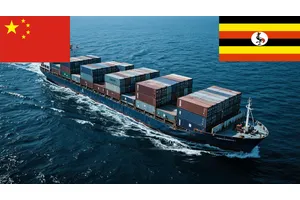
If you're sourcing goods from China and need a reliable freight forwarder from China to Uganda, you've probably already discovered the hard part: Uganda is landlocked. Every shipment — whether it's a 40-foot container of construction materials or a pallet of electronics — must travel over 1,000 kilometers inland from a seaport in Kenya or Tanzania before it reaches your Kampala warehouse. That inland leg introduces costs, risks, and customs procedures that most generic shipping guides never mention.
This guide is different. Written by a team with over a decade of hands-on freight forwarding experience on the China–East Africa lane, it walks you through every stage of the journey: shipping methods compared with real 2026 cost data, a granular step-by-step breakdown of the DDP door-to-door process, port strategy for both Chinese departure and African entry corridors, Uganda's PVOC compliance requirements, import duty calculations with worked examples, and cargo-specific playbooks for the six most-imported product categories. Whether you're a first-time importer figuring out your first LCL shipment or a seasoned B2B trader optimizing a FCL supply chain, you'll find actionable answers here.
The China–Uganda Trade Lane
China is Uganda's single largest trading partner. In 2024, Chinese exports to Uganda exceeded $1.38 billion, accounting for roughly 32% of Uganda's total imports, according to data from Trading Economics. This dominance isn't accidental — Chinese manufacturers offer unmatched price competitiveness across the product categories Ugandan businesses need most: electronics, building materials, machinery, textiles, furniture, and auto parts.
For a complete overview of our services, rates, and transit options on this lane, visit our dedicated Shipping From China To Uganda page.
But trade volume doesn't make logistics easy. Uganda's landlocked geography means every ocean freight shipment must pass through a neighboring country's seaport — almost always Mombasa, Kenya (and occasionally Dar es Salaam, Tanzania) — before traveling an additional 1,000 to 1,600 kilometers by road or rail to reach Kampala. This two-leg journey creates unique logistical challenges:
- Transit dependency: Your cargo's timeline depends not only on ocean carrier schedules but also on Kenyan port efficiency, cross-border customs processing, and inland road conditions.
- Customs complexity: Goods must transit through Kenya under a customs transit bond before clearing Uganda's own customs under the Uganda Revenue Authority (URA) — essentially two border procedures for one shipment.
- Cost layering: On top of ocean freight, you'll pay inland trucking, transit bond fees, border charges, and Ugandan import duties and taxes.
The good news? A competent freight forwarder who understands the Northern Corridor — the trade route connecting Mombasa to Uganda, Rwanda, and beyond — can handle all of this for you. The key is knowing your options so you choose the right shipping method, the right port strategy, and the right service level. That's what the rest of this guide covers.
Uganda's main import destinations are concentrated in the central and eastern regions: Kampala (the commercial capital and primary logistics hub), Entebbe (home to the international airport and a growing warehousing zone), Jinja (the industrial center on Lake Victoria), and Mbarara (the southwest's commercial gateway). Most shipments ultimately route to Kampala, where the majority of Uganda's warehousing and distribution infrastructure is located.
Shipping Methods from China to Uganda: Sea Freight vs Air Freight vs Express
Choosing how to ship is your most consequential logistics decision. It affects your total cost, transit time, inventory planning, and even the customs procedures you'll face. Here's how the three main methods compare for the China–Uganda route in 2026.
Quick Comparison Table
| Method | Transit Time (Door-to-Door) | Cost (2026 Estimate) | Best For |
|---|---|---|---|
| Sea Freight FCL (20ft/40ft) | 30–45 days | $2,850–$6,500 per container | Bulk cargo, heavy/dense goods, regular importers |
| Sea Freight LCL | 35–50 days | $150–$300 per CBM + inland | SMEs, shipments under 15 CBM, mixed cargo |
| Air Freight | 5–10 days | $4.00–$9.50 per kg | Urgent orders, high-value goods, perishables, low-volume |
| Express Courier (DHL/FedEx/UPS) | 3–7 days | $30–$40 per kg | Samples, documents, small e-commerce parcels |
| Rail + Truck (emerging) | 20–30 days | Variable (developing) | Medium-volume; Kenya SGR operational; Uganda segment under construction |
Sea Freight Deep-Dive: FCL vs LCL
For a detailed breakdown of ocean freight options, container types, and current sailing schedules to East Africa, see our Sea shipping From China Uganda guide.
FCL (Full Container Load) means you book an entire container — either a 20-foot (holds ~28 CBM / 33 cubic meters), a 40-foot (~58 CBM), or a 40-foot High Cube (~68 CBM). You're paying for the whole box regardless of how full it is. This makes FCL the most cost-effective option per unit when your shipment fills at least half a container.
For the China–Uganda route, a typical FCL shipment timeline breaks down like this:
- Days 1–3: Container pickup from supplier and trucking to Chinese loading port
- Days 3–5: Export customs clearance and container loading onto vessel
- Days 5–25: Ocean transit (Shanghai to Mombasa typically takes 18–22 days; Shenzhen to Mombasa is similar)
- Days 25–30: Port discharge and Kenya customs transit bond processing at Mombasa
- Days 30–40: Inland trucking from Mombasa to Kampala via the Malaba border crossing (~7–10 days for the ~1,150 km journey)
- Days 40–45: Uganda customs clearance and final delivery within Kampala
LCL (Less than Container Load) means you share container space with other importers. You only pay for the cubic meters (CBM) your cargo occupies, making it ideal for smaller shipments. However, LCL adds 5–10 extra days for consolidation at origin and deconsolidation at destination, plus a higher cost per CBM. For shipments over 15 CBM, FCL is almost always the better deal.
Pro Tip: Many Ugandan importers source from multiple Chinese suppliers. A freight forwarder with warehouse consolidation services can receive goods from all your suppliers at their Chinese warehouse, consolidate them into one FCL container, and ship everything together — giving you FCL economics even when no single supplier fills a container.
Air Freight Deep-Dive
When speed matters more than cost, air freight to Entebbe International Airport (EBB) is your answer. For a focused guide on air cargo rates, transit times, and airline options on this route, check our dedicated Air Shipping From China Uganda page. Here are the typical all-in rates by Chinese departure airport in 2026:
| Departure Airport | Destination | Typical Rate (USD/kg) | Transit (Door-to-Door) |
|---|---|---|---|
| Guangzhou Baiyun (CAN) | Entebbe (EBB) | $6.50–$8.50 | 5–8 days |
| Shenzhen Bao'an (SZX) | Entebbe (EBB) | $6.50–$8.50 | 5–8 days |
| Shanghai Pudong (PVG) | Entebbe (EBB) | $7.00–$9.00 | 6–9 days |
| Beijing Capital (PEK) | Entebbe (EBB) | $7.00–$9.50 | 6–10 days |
A critical detail many first-time shippers miss: air freight is charged on chargeable weight — the higher of actual weight versus volumetric weight (length × width × height in cm ÷ 6,000). A large but lightweight shipment like furniture cushions can cost far more by air than the actual kilogram weight suggests.
Direct flights from China to Entebbe are rare. Most air cargo transships through Dubai (DXB), Addis Ababa (ADD), or Istanbul (IST) — your freight forwarder should factor transit hub dwell time into the total transit estimate.
Air freight isn't always the expensive option it appears to be. If a stockout costs you $500 per day in lost sales, paying an extra $2,000 to receive goods 30 days faster via air versus sea is actually $13,000 cheaper once you account for the 30 days of lost revenue. This is the inventory carrying cost perspective — and it's why experienced importers run the numbers before defaulting to sea freight.
Decision Framework: Which Method Should You Choose?
| If Your Situation Is... | Choose... | Because... |
|---|---|---|
| Cargo >15 CBM, not urgent | Sea FCL | Lowest cost per unit; fixed container cost |
| Cargo <15 CBM, mixed suppliers | Sea LCL (consolidated) | Pay only for space used; consolidate to FCL when combined |
| High-value electronics, <200 kg | Air Freight | Lower insurance cost; theft risk reduction; faster cash cycle |
| Urgent replacement parts / samples | Express Courier | 3–5 days door-to-door; minimal customs complexity |
| Seasonal goods with hard deadline | Air Freight | Guaranteed arrival window; avoid missing the selling season |
The Complete DDP Door-to-Door Journey
For many Ugandan importers — especially those navigating their first shipment from China — DDP (Delivered Duty Paid) is the most practical service level. Under DDP terms, your freight forwarder handles everything: factory pickup in China, export customs, ocean freight, transit through Kenya, Uganda import clearance, all duties and taxes, and final delivery to your doorstep. You receive one all-in quote and one point of contact. Learn more about our end-to-end service in our Door to Door Shipping From China Uganda guide.
Incoterms First: EXW vs FOB vs CIF vs DDP for Uganda
Before mapping the journey, it's worth understanding which Incoterm fits your situation:
| Incoterm | What the Forwarder Does | What You Handle | Best For |
|---|---|---|---|
| EXW (Ex Works) | Almost nothing — picks up from your supplier's factory | Everything: China trucking, export customs, ocean freight, Kenya transit, Uganda customs, all duties, inland delivery | Only if you have an established logistics team in both China and Uganda |
| FOB (Free on Board) | China export customs + deliver to vessel | Ocean freight booking, insurance, Kenya transit, Uganda customs, all duties, inland delivery | Experienced importers with a preferred shipping line or insurance broker |
| CIF (Cost, Insurance, Freight) | China export + ocean freight to Mombasa + basic marine insurance | Kenya transit bond, Uganda customs, all duties, inland delivery to Kampala | Importers with a Ugandan customs broker but lacking ocean freight relationships |
| DDP (Delivered Duty Paid) | Everything — factory to Kampala doorstep, including all duties and taxes | Nothing except receiving the goods | First-time importers; complex cargo; anyone who wants a single all-in price and zero logistics headaches |
For most Ugandan importers without an in-country customs broker, DDP is the safest choice. CIF stops at Mombasa port — you'll still need to arrange transit bond, cross-border trucking, URA clearance, duty payment, and last-mile delivery. The cost savings of CIF over DDP are often consumed by the complexity premium of managing those steps yourself. If you're weighing different trade terms, our DDP vs FOB: Which Option Saves Time and Reduces Hassle comparison breaks down the real-world trade-offs.
The 7-Stage DDP Journey
Here is exactly what happens to your shipment under DDP shipping from China to Uganda:
Stage 1 — Supplier Pickup & Consolidation (Days 1–3)
Your forwarder dispatches trucks to your supplier(s) across China. If you're sourcing from multiple factories — say, electronics from Shenzhen, packaging from Guangzhou, and accessories from Yiwu — all goods are collected at the forwarder's consolidation warehouse. The warehouse team verifies quantities, checks for visible damage, and prepares cargo for container loading.
Stage 2 — Export Customs Declaration in China (Days 3–5)
China export customs requires: Commercial Invoice, Packing List, and any product-specific export licenses. For most general cargo categories exported to Uganda, no special export license is required. Your forwarder files the customs declaration electronically; clearance typically takes 1–2 working days for compliant documentation.
Stage 3 — Ocean Freight to Mombasa (Days 5–27)
Your container is loaded onto a vessel at the Chinese port of loading. The direct ocean transit to Mombasa takes 18–22 days depending on the departure port and carrier schedule. During this period, your forwarder should provide a Bill of Lading (B/L) — the legal document of title — and shipment tracking updates.
Stage 4 — Mombasa Port Arrival & Kenya Customs Transit Bond (Days 27–32)
This is the step that separates experienced Uganda-lane forwarders from generalists. Since your goods are destined for Uganda (not Kenya), they are placed under a customs transit bond — a legal instrument that allows goods to pass through Kenya without paying Kenyan import duties, on the condition that they exit Kenya at the designated border point (Malaba or Busia) within a specified timeframe.
The transit bond requires specific documentation: the Road Customs Transit Document (RCTD), a customs bond guarantee (arranged by your forwarder's Kenyan agent), and verification that the container seal is intact. Any delay in processing the transit bond means your container sits at Mombasa accumulating demurrage (port storage fees) — one of the most common hidden costs in the Uganda lane.
Stage 5 — Cross-Border Trucking: Mombasa → Malaba → Kampala (Days 32–42)
Once the transit bond is secured, your container is trucked approximately 1,150 kilometers from Mombasa to Kampala. The journey passes through Nairobi (where the Kenya Standard Gauge Railway (SGR) can haul containers from Mombasa to the Nairobi Inland Container Depot, saving 1–2 days), then continues by road to the Malaba border crossing between Kenya and Uganda.
At Malaba, Kenyan customs verifies the transit bond exit, and Ugandan customs pre-clears the shipment for entry. This border crossing can take anywhere from a few hours to 1–2 days depending on traffic volume and documentation completeness.
Stage 6 — Uganda Customs Clearance & Duty Payment (Days 42–45)
Once your goods are in Uganda, your forwarder (or their Ugandan customs brokerage partner) files the import declaration with URA through the ASYCUDA World digital customs system. This is where your earlier PVOC preparation pays off — without a valid Certificate of Conformity (CoC), the ASYCUDA system will reject the declaration.
Import duties and taxes are assessed based on the CIF value (cost of goods + insurance + freight) and the applicable HS Code classification. Your forwarder pays these on your behalf under DDP terms and provides you with the URA assessment notice for your records.
Stage 7 — Last-Mile Delivery (Days 45–47)
After customs release, your container is trucked to your specified delivery address — a warehouse in the Kampala industrial area, a retail store, or a distribution center in Jinja or Mbarara. You inspect the goods, confirm condition and quantity, and sign the delivery receipt. The shipment is complete.
Timeline by Stage
| Stage | Optimistic | Realistic | With Delays |
|---|---|---|---|
| 1. Supplier pickup & consolidation | 2 days | 3 days | 5 days |
| 2. China export customs | 1 day | 2 days | 3 days |
| 3. Ocean freight to Mombasa | 18 days | 22 days | 28 days |
| 4. Mombasa transit bond | 2 days | 5 days | 10+ days |
| 5. Inland trucking to Kampala | 7 days | 10 days | 14 days |
| 6. Uganda customs clearance | 1 day | 3 days | 7+ days |
| 7. Last-mile delivery | 1 day | 2 days | 3 days |
| Total Door-to-Door | 32 days | 47 days | 70+ days |
The difference between "optimistic" and "with delays" is almost entirely determined by how well your forwarder manages Mombasa port and the Malaba border crossing.
Insurance Gap Alert
Standard marine cargo insurance under CIF terms (Institute Cargo Clauses C) typically covers the ocean leg only — from Chinese port to Mombasa port. The inland transit from Mombasa to Kampala requires separate inland transit insurance (Institute Cargo Clauses A). Under DDP, a reputable forwarder includes end-to-end coverage that protects your cargo through every stage. Always confirm whether your quote includes full inland coverage — the Mombasa–Kampala leg carries higher risk of damage and theft than the ocean crossing.
Choosing Your Port Strategy: Chinese Departure Hubs & African Entry Corridors
Port selection is an overlooked lever for both cost and speed. On the Chinese side, shipping from the port closest to your supplier eliminates hundreds of dollars in unnecessary domestic trucking. On the African side, your choice between Mombasa and Dar es Salaam reshapes your entire inland logistics timeline.
Chinese Port of Loading: Match Your Supplier's Location
| Chinese Port | Best If Your Suppliers Are In... | Sailing Frequency to Mombasa |
|---|---|---|
| Shanghai | Yangtze River Delta — Jiangsu, Zhejiang, Shanghai | Weekly+ (highest frequency of any Chinese port) |
| Ningbo | Zhejiang manufacturing clusters (textiles, hardware, small commodities) | Weekly |
| Shenzhen (Yantian/Shekou) | Pearl River Delta — Shenzhen, Dongguan, Huizhou (electronics, consumer goods) | Weekly+ |
| Guangzhou (Nansha) | Guangzhou, Foshan, Zhongshan (furniture, building materials, lighting) | Weekly |
| Qingdao | Shandong Province (machinery, tires, chemicals, agricultural products) | Bi-weekly |
| Tianjin | Beijing-Tianjin-Hebei region (steel, industrial equipment, automotive) | Bi-weekly |
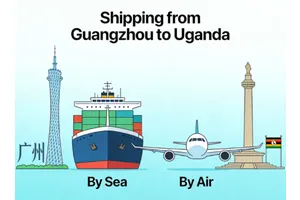
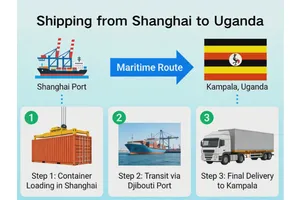
Key principle: A supplier in Shandong shipping through Qingdao might pay $150 in local trucking. That same supplier shipping through Shenzhen could pay $800+ in domestic transportation — a $650 unnecessary cost before the container even hits the water. Your freight forwarder should offer multi-port coverage so your cargo always ships from the optimal departure point. For example, our Shipping from Shanghai to Uganda and Shipping from Guangzhou to Uganda port-specific guides cover the two most common departure points in detail.
African Entry Corridor: Mombasa vs Dar es Salaam
| Factor | Mombasa (Kenya) | Dar es Salaam (Tanzania) |
|---|---|---|
| Distance to Kampala | ~1,150 km | ~1,600 km |
| Inland transit time | 7–10 days | 10–14 days |
| Port congestion | Moderate — improving with SGR diversion | Variable — prone to seasonal congestion |
| Rail connectivity | Kenya SGR: Mombasa → Nairobi (operational) | Tanzania SGR: Dar → Morogoro (partial); not yet reaching Uganda border |
| Northern Corridor | Primary route; well-established customs procedures | Secondary route; less predictable for Uganda-bound cargo |
| Best when... | Default choice for 90%+ of China–Uganda shipments | Supplier is near southern Uganda/Rwanda border; Mombasa congestion is severe |
For the vast majority of imports from China, Mombasa is the default and optimal entry port. The Northern Corridor is better established, transit times are shorter, and freight forwarders have more reliable agent networks along this route. Since Mombasa is Kenya's principal seaport, importers serving both markets may also find our Shipping From China To Kenya page useful. For shipments that do route through Tanzania's corridor, see our Shipping From China To Tanzania destination guide and Freight forwarder from China to Tanzania service overview.
Future outlook: In October 2024, Uganda signed a $2.2 billion contract with Turkey's Yapi Merkezi to construct the Kampala–Malaba Standard Gauge Railway, with completion targeted for 2028 (reported by Reuters). Once operational, this railway will connect Kampala directly to the Kenya SGR network, potentially reducing Mombasa–Kampala inland transit to 2–3 days. This development is worth watching — it will meaningfully reshape China–Uganda logistics economics.
Uganda Customs Clearance, PVOC Compliance & Import Duty Calculation
Navigating Uganda's import regulatory framework is where many shipments stall. Get the paperwork right, and clearance takes 1–3 days. Get it wrong, and your container sits at the border accumulating storage fees while you scramble to fix documentation you didn't know you needed.
PVOC / Certificate of Conformity: The Non-Negotiable Requirement
Since 2010, the Uganda National Bureau of Standards (UNBS) has enforced a mandatory Pre-Export Verification of Conformity (PVoC) program. Any regulated product arriving in Uganda without a valid Certificate of Conformity (CoC) is subject to a 15% penalty on the CIF value plus clearance delays.
Which products are regulated? The scope is broad and was expanded in 2025 to include additional categories:
- Electronics and electrical appliances
- Toys and children's products
- Building and construction materials
- Automotive parts and accessories
- Machinery and mechanical equipment
- Textiles, leather, plastic, and rubber goods
- Furniture
- Paper products and stationery
- Food products and packaging
- Gas appliances and fitness equipment (2025 additions)
Three certification pathways are available, and your forwarder should advise which fits your importing pattern:
| Pathway | How It Works | Best For |
|---|---|---|
| Pathway A | Product testing + physical inspection for each shipment | Infrequent importers; new product categories |
| Pathway B | Product registration (valid 1 year) + periodic inspections | Regular importers of the same product lines |
| Pathway C | Full product licensing (requires factory quality management system audit) | High-volume importers with consistent supply chains |
Typical timeline: Submit application and documentation ≥7–10 days before shipment. CoC issuance takes 3–7 working days after successful inspection. Authorized inspection agencies include SGS, Bureau Veritas, Intertek, and HQTS Group — these firms have offices in major Chinese cities and can inspect goods at the supplier's factory.
Required Documentation Checklist
Before your shipment departs China, confirm you have:
- Commercial Invoice — with accurate HS codes and declared value (URA cross-references; undervaluation triggers audits and fines)
- Packing List — detailed with quantities, weights, dimensions per carton
- Bill of Lading (B/L) — for sea freight, or Air Waybill (AWB) for air freight
- Certificate of Origin — may qualify for preferential tariff treatment
- Import Declaration Form (IDF) — filed with URA via their online portal before goods arrive
- Tax Identification Number (TIN) — you must be registered with URA
- Certificate of Conformity (CoC) — from the PVOC process
- Road Customs Transit Document (RCTD) — required for Mombasa corridor transit
Import Duties & Taxes: Calculate Your Total Landed Cost
Uganda applies a layered tax structure on imports. Here's what you'll pay:
| Tax Type | Rate | Applied On |
|---|---|---|
| Import Duty | 0%, 10%, or 25% (depends on HS Code) | CIF Value |
| VAT | 18% | CIF Value + Import Duty |
| Withholding Tax | 6% | CIF Value |
| Infrastructure Levy | 1.5% | CIF Value + Import Duty + VAT |
| Excise Duty (select goods) | 10%–60% | Specific goods only (alcohol, tobacco, fuel, sugar) |
Worked Example 1 — Electronics ($10,000 CIF, 25% duty category)
| Step | Calculation | Amount |
|---|---|---|
| 1. CIF Value | — | $10,000 |
| 2. Import Duty (25%) | $10,000 × 25% | $2,500 |
| 3. VAT (18%) | ($10,000 + $2,500) × 18% | $2,250 |
| 4. Withholding Tax (6%) | $10,000 × 6% | $600 |
| 5. Infrastructure Levy (1.5%) | ($10,000 + $2,500 + $2,250) × 1.5% | $221 |
| Total Duties & Taxes | $5,571 | |
| Total Landed Cost | $10,000 + $5,571 | $15,571 |
Worked Example 2 — Textiles/Clothing ($5,000 CIF, 25% duty category)
| Step | Calculation | Amount |
|---|---|---|
| 1. CIF Value | — | $5,000 |
| 2. Import Duty (25%) | $5,000 × 25% | $1,250 |
| 3. VAT (18%) | ($5,000 + $1,250) × 18% | $1,125 |
| 4. Withholding Tax (6%) | $5,000 × 6% | $300 |
| 5. Infrastructure Levy (1.5%) | ($5,000 + $1,250 + $1,125) × 1.5% | $111 |
| Total Duties & Taxes | $2,786 | |
| Total Landed Cost | $5,000 + $2,786 | $7,786 |
Important: These examples assume a 25% import duty — the most common rate for finished consumer goods. Raw materials and industrial inputs often fall into the 0% or 10% categories. Your HS code classification directly determines your duty rate; a competent freight forwarder verifies this before your goods ship, not after they arrive.
URA processes import declarations through the ASYCUDA World digital system. Correctly filed electronic declarations with complete supporting documents typically clear within 1–2 working days.
Four Customs Mistakes That Cause Avoidable Delays
- Undervaluing goods: URA maintains a valuation database. If your declared value is significantly below market norms, your shipment is flagged for physical inspection and re-valuation — adding 1–2 weeks and potential penalties.
- Missing or incorrect HS Codes: An HS code that doesn't match the goods triggers a re-classification review. Always have your forwarder verify HS codes against the EAC Common External Tariff.
- Not registered with URA before the shipment arrives: You need a TIN and an active URA account to file an IDF. Registering after your container is already at Mombasa guarantees delays.
- Incomplete CoC documentation: A CoC that lists "electronics" generally rather than specifying the exact product types and model numbers will be rejected at the ASYCUDA entry stage.
Cargo-Specific Shipping Playbooks: What Are You Importing?
Every product category has its own logistics playbook. Here's how the major import categories from China to Uganda should be handled.
Quick Reference
| Cargo Type | Recommended Method | Key Consideration | Special Doc/Requirement |
|---|---|---|---|
| Electronics & Batteries | Air (high-value) or Sea FCL (bulk) | Lithium battery compliance (UN38.3, MSDS) | Dangerous Goods declaration if lithium batteries |
| Construction Materials | Sea FCL | Dense goods: optimize weight vs volume per container | PVOC (regulated category) |
| Machinery & Equipment | Sea FCL (flat rack for oversized) | Oversized cargo; used equipment rules | Used machinery: additional UNBS inspection |
| Furniture & Home Goods | Sea LCL/FCL consolidation | Moisture protection; high cube utilization | PVOC (regulated category) |
| Textiles & Garments | Sea LCL/FCL consolidation | Bales vs hanging; seasonal timing | "Made in China" labels mandatory |
| Solar Panels | Sea FCL | Fragile cargo; high value per unit | Full insurance strongly recommended |
Electronics & Batteries
Electronics are the single largest Chinese import category for Uganda. They are also the most scrutinized by customs — UNBS classifies electronics as high-risk for PVOC compliance, so your CoC paperwork needs to be thorough and accurate.
If your shipment includes lithium batteries (smartphones, laptops, power banks, e-bike batteries, solar batteries), you must comply with UN38.3 testing requirements and provide a Material Safety Data Sheet (MSDS) . Lithium batteries are classified as Dangerous Goods (DG) — not all carriers accept them, and those that do charge a DG surcharge. Your forwarder must confirm carrier acceptance before booking.
Electronics are also high-theft-risk cargo. Full-coverage cargo insurance with a low deductible is strongly recommended, covering all stages including the Mombasa–Kampala inland leg.
Construction Materials
Uganda's construction boom means tiles, steel, cement, roofing, wiring, and plumbing materials dominate many import containers. These goods are dense — you'll hit a container's weight limit long before you fill its cubic capacity. A 20ft container can hold ~28,000 kg; with tiles weighing ~40 kg per square meter packed, you'll reach the weight cap at around 700 CBM-equivalent of cargo volume — well under the container's physical capacity. Your forwarder should optimize the container loading plan to maximize weight utilization without exceeding road weight limits on the Mombasa–Kampala corridor.
Oversized items like steel beams or prefabricated structures may require breakbulk shipping or flat rack containers — specialized equipment that not all forwarders can arrange on the Uganda lane.
Machinery & Equipment
Industrial and agricultural machinery often presents oversized or overweight challenges. Standard 40ft containers have a payload limit of approximately 26,000 kg; heavier items need specialized handling and potentially flat rack or open-top containers.
If you are importing used machinery, be aware that Uganda applies additional UNBS inspection requirements for used goods. The PVOC process for used equipment is more stringent than for new products — expect longer certification timelines and more detailed inspections.
A pre-shipment inspection in China — where an independent inspector verifies the machinery's condition, functionality, and specifications at the supplier's facility — can prevent costly disputes after the equipment arrives in Kampala.
Furniture & Home Goods
Furniture imports benefit significantly from consolidation, since many retailers source from multiple Chinese suppliers (wooden furniture from Foshan, upholstered pieces from Chengdu, hardware from Yongkang). Consolidating all orders at a Chinese warehouse and shipping as one FCL can reduce per-unit shipping cost by 25–35% compared to shipping each supplier's goods as separate LCL.
Furniture is also vulnerable to moisture damage during the long ocean + inland journey. Your forwarder should use container desiccants and ensure proper wrapping for upholstered items.
Textiles & Garments
High-volume, lightweight, and seasonally sensitive — textiles reward forward planning and consolidation. Uganda's two rainy seasons (March–May and October–November) can delay inland road transport, so factor this into your ordering calendar if your garments are for a specific retail season.
All imported garments must carry "Made in China" labeling as a minimum country-of-origin marking. Missing labels can cause customs to hold the shipment for rectification.
Solar Panels & Renewable Energy Equipment
Uganda's growing solar energy market makes this an increasingly common import category. Solar panels are fragile, high-value per unit, and require specialized crating for the rough road segments on the Mombasa–Kampala corridor. Full-coverage insurance — including breakage coverage — is non-negotiable for solar panel shipments.
7 Cost-Saving Strategies & Hidden Fees Every Uganda Importer Should Know
The difference between a profitable import and a money-losing one often comes down to costs you didn't see coming. If you're looking for the most budget-friendly approach, our Cheapest shipping agent from China to Uganda guide walks through rate comparison strategies in detail. Here are seven additional strategies to control your shipping costs — followed by the hidden fees that can blow your budget.
The 7 Strategies
1. Consolidate, Consolidate, Consolidate
If you're sourcing from three different factories in Guangdong, don't ship three separate LCL shipments. Have your forwarder collect everything at one warehouse and consolidate into one FCL container. This alone can save 25–35% on total freight costs.
2. Ship from the Right Chinese Port
A Shandong-based supplier shipping through Qingdao pays ~$150 in domestic trucking. The same supplier shipping through Shenzhen pays $700–$900. Always match your loading port to your supplier's geography — your forwarder should offer multi-port coverage so you're never forced to ship from a single city.
3. Book Off-Peak Whenever Possible
Ocean freight rates spike 20–30% during Chinese New Year (January/February) and the Q4 global peak (October–December). April through June and August tend to be 15–25% cheaper. If your inventory plan has flexibility, book outside these windows.
4. Right-Size Your Container
A 40ft container costs about 50–60% more than a 20ft but holds roughly twice the volume. If your cargo fills 70%+ of a 40ft, it's cheaper per unit than two 20ft containers. Conversely, if you're only shipping 20 CBM, a 20ft container is significantly cheaper than paying for an underutilized 40ft. Calculate your CBM before booking.
5. Nail Your HS Codes Before Shipping
An incorrect HS code doesn't just delay customs — it can mean paying 25% duty on goods that should be charged 10%, or vice versa triggering an audit. A reputable forwarder classifies your goods during the quotation stage, not after they arrive.
6. Plan PVOC Certification Early
Rush PVOC certification (submitting documents < 5 days before shipment) often incurs expedition fees and risks your CoC not being ready when the container arrives. Submit your PVOC application at least 10 days before your planned shipment date.
7. Insure Strategically, Not Blindly
Not every shipment needs premium all-risk coverage, but the Mombasa–Kampala inland leg is objectively higher-risk than the ocean crossing. If you're shipping high-value electronics or fragile goods, full-coverage insurance is a rounding error compared to the cost of losing a container.
Hidden Fees: The Ugly Truth
Every experienced Uganda importer has a story about a "hidden fee" that appeared after their container was already in transit. Here's what to watch for:
| Hidden Fee | What It Is | Typical Range | How to Avoid It |
|---|---|---|---|
| Port Demurrage | Mombasa storage fees when containers aren't picked up within free days (typically 7) | $50–$150/day after free period | Ensure transit bond documentation is filed before vessel arrival |
| Detention Charges | Late return of container to shipping line | $50–$100/day after free days | Coordinate inland trucking schedule with container return deadline |
| Transit Bond Fee | Kenya customs bond guarantee for Mombasa corridor transit | $200–$500 per container | Included in DDP quotes from reputable forwarders; verify |
| Border Surcharges | Unofficial facilitation fees at Malaba crossing | Variable | Mitigated by forwarders with established border agents |
| URA Inspection Fees | Physical inspection of flagged shipments | $150–$400 per inspection | Accurate documentation reduces flagging probability |
| Storage Fees | Kampala ICD storage if clearance is delayed | $20–$50/day | Have all documents ready before container arrives |
The transparent pricing litmus test: Before you book, ask your forwarder: "Does your quote include transit bond fees, border charges, port demurrage risk, and URA inspection contingencies?" If they hesitate or can't give a clear answer, expect surprises on your invoice.
Seasonal Planning Calendar
| Period | What Happens | Action |
|---|---|---|
| Jan–Feb | Chinese New Year — factory closures, port backlogs, rate spikes | Book before mid-January or wait until March |
| Mar–May | Uganda long rainy season — inland road conditions deteriorate | Add 3–5 days buffer to inland transit estimates |
| Apr–Jun | Post-CNY rate normalization — typically 15–25% lower | Optimal booking window for cost-sensitive shipments |
| Jul–Aug | Lower demand period; competitive rates | Second-best booking window |
| Oct–Nov | Uganda short rainy season + Q4 global peak begins | Book early; expect higher rates and border congestion |
| Dec | Holiday peak — highest rates of the year | Avoid if possible; book by September if unavoidable |
Pre-Shipment Quality Inspection: Cheap Insurance Against Expensive Problems
For Ugandan importers, returning defective goods to China is prohibitively expensive and time-consuming. A pre-shipment inspection — where a third-party inspector visits your supplier's factory to check product quality, quantity, packaging, and labeling before the goods leave China — costs $200–$400 per inspection day but can save thousands in disputes and dead inventory. Your freight forwarder can coordinate this; many have in-house inspection teams or partnerships with firms like SGS and Bureau Veritas.
Why DTFU Logistics Is Your Trusted Freight Forwarder from China to Uganda
Choosing the wrong freight forwarder on the Uganda lane doesn't just cost money — it costs time you can't recover. Every day your container sits at Mombasa because someone filed the transit bond late, or at Malaba because the PVOC certificate doesn't match the packing list, is a day your capital is tied up in transit instead of generating revenue in Kampala.
DTFU Logistics was founded in 2014 and has spent over a decade building the carrier relationships, African partner networks, and in-house customs expertise that the China–Uganda lane demands.
FIATA & IATA Dual-Certified Operations
We hold both FIATA (International Federation of Freight Forwarders Associations) and IATA (International Air Transport Association) certifications — credentials that represent independent verification of our professional standards, financial stability, and regulatory compliance. Not every forwarder serving the Uganda lane carries these certifications, and the difference shows in documentation discipline and customs clearance speed.
Nationwide Chinese Port Coverage
Headquartered in Shenzhen with operations spanning Shanghai, Ningbo, Guangzhou, Qingdao, Tianjin, and Xiamen, we ship from the port closest to your supplier — not the one closest to our office. This multi-port capability eliminates unnecessary domestic trucking costs and ensures your container boards the next available vessel regardless of where in China your goods are manufactured. Our direct contracts with major carriers — including Maersk, CMA-CGM, COSCO, Evergreen, and ONE — secure competitive rates and guaranteed space allocations, even during peak season capacity crunches.
Africa Lane Specialization
The China–Uganda route is not a generic shipping lane — it demands specific expertise in transit bond procedures, Northern Corridor logistics, URA customs processing, and PVOC coordination. Our dedicated Africa team handles this lane daily, maintaining agent relationships at Mombasa port, the Malaba border crossing, and within Kampala's logistics network.
One Contact, Full Visibility
Every DTFU client is assigned a dedicated account manager — a single person who knows your cargo, your suppliers, and your delivery requirements. You're not routed through a call center or bounced between departments. Paired with our 24/7 online cargo tracking platform, you know exactly where your shipment is at every milestone: when it leaves the supplier, when it clears Chinese export customs, when the vessel departs, when it berths at Mombasa, and when it clears Ugandan customs.
Transparent Pricing, No Surprises
Our quotes include transit bond fees, border charges, and inland trucking — not as optional line items, but as standard inclusions. We tell you what your total landed cost will be before you book because we believe the invoice you receive should match the quote you approved.
If you're planning a shipment from China to Uganda — whether it's your first container or your fiftieth — we'll provide a detailed, line-by-line quote within 4 business hours. Contact our team today, and let's move your cargo.
FAQs
Q: How long does shipping from China to Uganda take?
Sea freight takes 30–45 days door-to-door via the Mombasa corridor under normal conditions. Air freight takes 5–10 days door-to-door to Entebbe. Express courier services (DHL, FedEx, UPS) deliver in 3–7 days for small parcels and samples. Actual transit time depends on port congestion, customs processing speed, and seasonal factors. See our Shipping time from China to Uganda page for a detailed breakdown by shipping method.
Q: How much does a 20ft or 40ft container cost from China to Uganda?
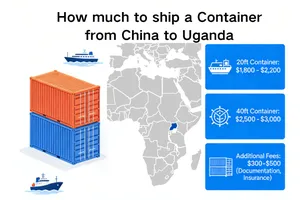
A 20ft container typically costs $2,850–$4,000 including inland trucking to Kampala. A 40ft container (or 40ft High Cube) runs $4,800–$6,500. These are all-in estimates for 2026; rates fluctuate based on season, carrier capacity, and fuel surcharges. LCL shipments cost $150–$300 per CBM plus inland trucking. For current pricing and a detailed rate breakdown, see our How much to ship a Container from China to Uganda and Shipping Cost from China to Uganda pages.
Q: What is the cheapest way to ship from China to Uganda?
Sea freight LCL (less than container load) is the cheapest option for shipments under 15 CBM — you only pay for the space you use. For larger volumes, sea freight FCL (full container load) offers the lowest cost per unit. Consolidating multiple supplier orders into one FCL container is the single most effective cost-reduction strategy for most importers.
Q: What documents are required for customs clearance in Uganda?
The essential documents are: Commercial Invoice (with HS codes), Packing List, Bill of Lading (sea) or Air Waybill (air), Certificate of Origin, Import Declaration Form (IDF) filed with URA, Tax Identification Number (TIN) , Certificate of Conformity (CoC) , and Road Customs Transit Document (RCTD) for Mombasa corridor transit.
Q: What products are restricted or banned from import into Uganda?
Prohibited items include used tires, counterfeit goods, ********s, certain chemicals, and products that fail UNBS safety standards. Some goods face additional licensing requirements — for example, pharmaceuticals require National Drug Authority authorization. Always verify your specific product category with your forwarder before placing supplier orders.