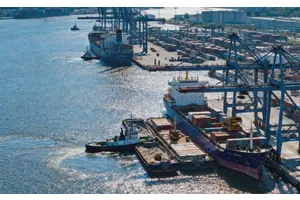
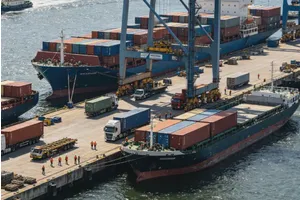
If you're sourcing goods from China and need them delivered to Hungary, understanding the real cost of shipping a container from China to Hungary is the first step to building a reliable import budget. Hungary has become one of Central Europe's most dynamic trade hubs — Chinese exports to Hungary topped $10 billion in 2025, spanning electronics, machinery, automotive parts, and consumer goods. But here's the challenge most first-time importers miss: Hungary is a landlocked country. There is no direct ocean freight to Budapest. Your container arrives at a European port — Koper, Rijeka, Hamburg, or Rotterdam — and then travels another 300 to 1,000 kilometers inland by truck or rail to reach its final destination.
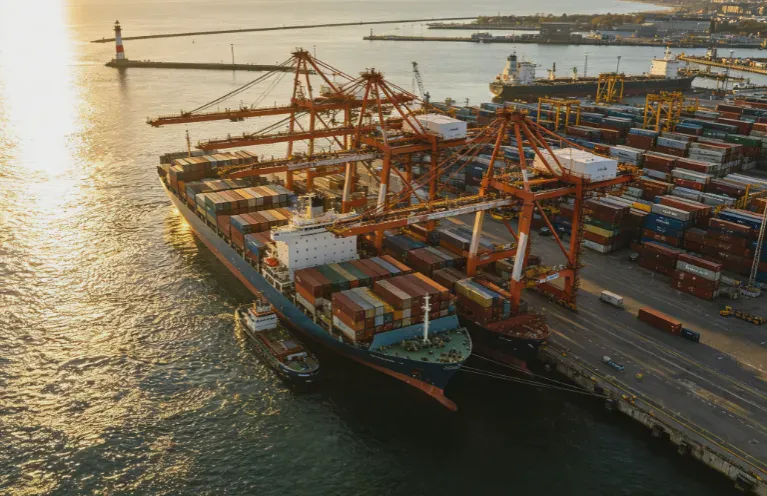
That extra leg changes the math. The ocean freight quote you see is never the full price. Between BAF surcharges, terminal handling charges at both ends, export and import customs brokerage, EU inland transport, import duties, and Hungary's 27% VAT (ÁFA), the total landed cost of a container can easily run 40–80% higher than the base freight rate alone. This guide breaks down every component — port by port, container type by container type, and mode by mode — so you can budget accurately, compare your options, and avoid the hidden fees that catch importers off guard.
Whether you're planning your first shipping from China to Hungary container or scaling an existing Central European import operation, understanding the full cost picture is essential to protecting your margins.
Key Factors That Determine Container Shipping Costs from China to Hungary
Before diving into the numbers, it's worth understanding the seven variables that move the needle most on your final freight bill. Small differences in any one of them can shift your total cost by hundreds or even thousands of dollars.
Container Type and Size
The three standard container types used on the China–Hungary route are the 20ft General Purpose (20GP), the 40ft General Purpose (40GP), and the 40ft High Cube (40HQ). A 20ft container holds approximately 33 cubic meters (CBM) or 10 standard pallets and has a payload of roughly 28,000 kg. A 40ft container doubles that — about 67 CBM, 21 pallets, and a 26,000–28,000 kg payload. The 40ft High Cube adds an extra 30 cm of interior height (2.70 m vs 2.39 m), giving you about 76 CBM — ideal for voluminous but lightweight goods like furniture or insulation materials. For a full comparison of container specifications and cost-per-CBM trade-offs, see our guide on high cube shipping container cost from China.
Cost-per-unit rule of thumb: A 40ft container typically costs only 30–50% more than a 20ft, even though it carries roughly twice the cargo. If you're shipping more than 15 CBM, a 40ft almost always delivers a lower cost per cubic meter or per kilogram.
Origin Port in China
Not all Chinese ports charge the same freight rate to Europe. Shanghai and Ningbo benefit from the highest sailing frequency and strongest carrier competition on the Asia–Europe trade lane, which keeps their base rates competitive. Shenzhen and Guangzhou in the south offer shorter transit times to Adriatic entry ports like Koper and Rijeka — a natural advantage for Hungary-bound cargo. Qingdao and Tianjin in the north tend to be the most affordable in absolute terms but involve longer transit times and typically route through northern European hubs like Hamburg or Gdansk. The table in Section 3 gives precise port-by-port ranges.
Transport Mode: Sea, Rail, or Air
Hungary's landlocked geography makes the mode decision more nuanced than for coastal EU countries. Sea freight remains the cheapest per-unit option, but it requires transshipment via an EU port plus inland transport to Budapest — adding 2–7 days and $150–$500 to your total. Rail freight via the China-Europe Railway Express delivers containers directly to Budapest in 15–22 days, roughly 50% faster than sea for about 30–50% more in freight cost. Air freight is the fastest at 3–7 days but costs 20–40 times more per kilogram than ocean freight, making it viable only for high-value, time-critical, or low-volume shipments.
Seasonality and Market Conditions
Container freight rates on the China–Europe route follow a predictable seasonal rhythm. The pre-Christmas peak (August through October) sees rates climb 20–30% above the annual average as retailers rush inventory for Q4. A secondary spike hits in January and February ahead of Chinese New Year, when factories shut down for 2–4 weeks and exporters scramble to ship before the closure. The softest periods — March through May and November — consistently offer the best rates. In 2026, the ongoing rerouting of vessels around the Cape of Good Hope (avoiding Red Sea risk) continues to absorb global container capacity, keeping baseline rates elevated compared to pre-2023 levels.
Cargo Characteristics
Your cargo's weight, volume, HS code classification, and any special handling requirements directly affect your freight rate. Heavy cargo (over 18 tons in a 20ft container) may incur overweight surcharges. Dangerous goods (DG) classified under IMO regulations require special documentation, stowage, and handling — typically adding $150–$500 per container. Oversized cargo that doesn't fit standard container dimensions may require flat rack or open top containers, which carry premium rates and limited availability.
Incoterms Chosen
The Incoterms 2020 rule you agree on with your Chinese supplier determines who pays for what. Under FOB (Free on Board) — the most common term quoted by Chinese factories — the supplier covers everything up to the vessel's departure, and you pay ocean freight, insurance, import customs, duties, VAT, and inland delivery. Under DDP (Delivered Duty Paid), your freight forwarder bundles absolutely everything into one price and one point of contact. The Incoterm you choose can shift thousands of dollars of cost and risk between buyer and seller. We break this down in detail in Section 7.
EU Port of Entry and Inland Routing to Budapest
Since Hungary has no seaport, your container must enter the EU through one of five major gateway ports, each with different inland distances to Budapest:
| Entry Port | Country | Distance to Budapest | Inland Transit | Typical Inland Cost |
|---|---|---|---|---|
| Koper | Slovenia | ~470 km | 1–2 days by truck/rail | $150–$300 |
| Rijeka | Croatia | ~510 km | 1–2 days by truck/rail | $150–$300 |
| Hamburg | Germany | ~1,000 km | 3–5 days by rail | $350–$500 |
| Rotterdam | Netherlands | ~1,300 km | 4–7 days by rail | $400–$550 |
| Gdansk | Poland | ~800 km | 2–4 days by rail | $250–$400 |
The Adriatic ports — Koper and Rijeka — are the natural choice for Hungary. They sit closest to Budapest, offer competitive rail connections, and pair well with departures from southern Chinese ports like Shenzhen and Guangzhou. Northern ports like Hamburg and Rotterdam have far more frequent sailings from Asia but add 600–900 km of overland distance to Budapest. Always compare the combined ocean-plus-inland cost — a cheap ocean rate to Rotterdam can become expensive once you add a $500 rail leg to Budapest.
Sea Freight Container Costs: Port-by-Port and Container Size Breakdown
Below is the most detailed publicly available cost table for FCL container shipping from China to Hungary in 2026. These are port-to-port ocean freight ranges (China port → EU entry port), excluding inland transport to Budapest, customs, duties, and VAT. All figures in USD. For a broader overview of container options and rate structures on this route, you can also reference our dedicated 20ft and 40ft shipping from China to Hungary guide.
| Origin Port | 20ft FCL | 40ft FCL | 40ft HQ | Sea Transit | Preferred EU Entry Port |
|---|---|---|---|---|---|
| Shanghai | $2,300–$3,500 | $2,800–$4,500 | $3,200–$4,800 | 30–40 days | Koper / Hamburg |
| Ningbo | $2,250–$3,500 | $2,950–$4,500 | $3,100–$4,700 | 30–40 days | Koper / Hamburg |
| Shenzhen | $2,400–$3,800 | $2,900–$5,000 | $3,300–$5,200 | 28–38 days | Koper / Rijeka |
| Guangzhou | $2,300–$3,800 | $2,900–$5,000 | $3,300–$5,200 | 28–38 days | Koper / Rijeka |
| Qingdao | $2,200–$3,500 | $2,800–$4,800 | $3,100–$5,000 | 32–45 days | Hamburg / Gdansk |
| Tianjin | $2,150–$3,200 | $3,650–$4,650 | $3,800–$5,000 | 35–45 days | Gdansk / Hamburg |
Important note on price ranges: These ranges reflect real-world market volatility. The low end represents off-peak season (March–May) spot rates; the high end reflects peak season (Aug–Oct) with tight capacity. Actual quotes depend on your specific sailing date, carrier, cargo weight, and negotiated volume. Always request a live quote from your freight forwarder — fixed prices in this market are a red flag.
LCL (Less than Container Load) Sea Freight Costs
If your shipment is below 8–12 CBM, LCL shipping is usually the most practical option. LCL rates from China to Hungary (via EU port transshipment) currently range from $80 to $200 per CBM, with total transit times of 35–45 days door-to-door. LCL consolidates your cargo with other importers' goods in a shared container — you only pay for the space you use. The trade-off is longer transit (consolidation and deconsolidation add 5–10 days), higher per-CBM cost, and a slightly elevated customs examination risk compared to a dedicated FCL container.
Port Selection Guide
- Shanghai / Ningbo: Best all-around choice. Highest sailing frequency to Europe, strong carrier competition, competitive rates. Works well with both Adriatic (Koper) and northern (Hamburg) entry points.
- Shenzhen / Guangzhou: Fastest transit to Hungary via the southern route through the South China Sea, Malacca Strait, and Suez Canal. Pairs naturally with Koper and Rijeka for the shortest total door-to-door time.
- Qingdao / Tianjin: Often the lowest base ocean freight, but longer transit (32–45 days) and routing through northern European ports means higher inland costs. Best for cargo sourced from northern Chinese factories.
What's Included — and What's NOT — in Port-to-Port Ocean Freight
Your ocean freight quote typically covers only the base freight rate from the Chinese port terminal to the EU port terminal. It does not include:
- BAF (Bunker Adjustment Factor) — fuel surcharge, typically $100–$400 per container
- THC (Terminal Handling Charge) — charged at both origin and destination, ~$100–$250 each end
- Documentation Fee — bill of lading issuance, ~$50–$100
- Export Customs Clearance — China-side customs brokerage, ~$150–$300
- Import Customs Brokerage — Hungary-side, ~$200–$500
- Inland Trucking/Rail — EU port to Budapest, ~$150–$500
- Import Duty — 0–12% of CIF value depending on HS code
- Hungary VAT (ÁFA) — 27% of CIF value + duty
- Cargo Insurance — typically 0.2–0.5% of cargo value. While it may seem like a small line item, skipping insurance on a high-value shipment is a significant risk — learn more in our shipping container insurance cost guide.
We walk through a complete all-in calculation with every line item in Section 7. For a focused breakdown of ocean freight pricing specifically, see our sea shipping cost from China to Hungary article.
Rail Freight Container Costs to Hungary via China-Europe Railway Express
For importers who need faster delivery than sea freight but can't justify air freight costs, the China-Europe Railway Express offers a compelling middle ground. Trains depart from major Chinese rail hubs and reach Budapest in 15–22 days — roughly half the time of ocean freight — at a cost premium of 30–50%.
| Departure City | 20ft FCL | 40ft FCL | Transit Time |
|---|---|---|---|
| Xi'an | $2,800–$3,800 | $3,800–$5,000 | 16–23 days |
| Chongqing | $3,000–$4,000 | $4,000–$5,500 | 15–20 days |
| Chengdu | $2,900–$3,900 | $3,900–$5,200 | 17–21 days |
| Zhengzhou | $3,200–$4,200 | $4,200–$5,800 | 18–22 days |
| Yiwu | $3,200–$4,200 | $4,200–$5,800 | 16–21 days |
| Xiamen | $3,000–$4,000 | $4,000–$5,500 | 18 days |
The rail corridor follows the route: China → Kazakhstan → Russia → Belarus → Poland → Hungary, with Budapest's BILK intermodal terminal serving as the primary arrival and customs clearance point. Chongqing and Xi'an offer the most mature and frequent rail services, making them the most reliable departure cities for Hungary-bound cargo.
Rail LCL Costs and Use Cases
Rail LCL from China to Budapest runs $200–$400 per CBM with transit times of 15–25 days. This is roughly 2–3× the cost of sea LCL but delivers in about half the time — an attractive trade-off for higher-value goods, seasonal inventory replenishment, or shipments where the carrying cost of goods in transit justifies the freight premium.
When Rail Beats Sea Freight
Rail is the right choice when:
- Your shipment has moderate urgency — you can't wait 35–45 days for sea freight but air is overkill
- You're shipping seasonal goods with a fixed sales window (holiday decorations, fashion, seasonal electronics)
- Port congestion or peak-season surcharges are making ocean freight unreliable
- Your cargo is high enough in value ($50,000+ per container) that the inventory carrying cost saved by 20 fewer days in transit outweighs the freight premium
- You're shipping from an inland Chinese city (Chengdu, Chongqing, Xi'an, Zhengzhou) where trucking to a seaport would add 2–4 days anyway — rail from a nearby hub can actually match or beat total sea transit time
For a side-by-side comparison of reliability, transit consistency, and real-world performance between these two modes, read our sea vs rail freight guide.
Key Considerations for Rail Freight
Rail freight comes with specific documentation requirements — the CIM consignment note replaces the ocean bill of lading. Weight limits are stricter than sea freight (containers typically cannot exceed 25 tons gross weight on rail vs 28–30 tons on ocean vessels). Cargo insurance for rail transit through multiple countries is essential and may carry slightly higher premiums. Current geopolitical dynamics along the route — particularly sanctions-related restrictions on certain commodity categories — should be discussed with your freight forwarder before booking.
Air Freight vs Sea vs Rail: Full Cost and Transit Time Comparison
For a holistic view, here is how all three modes compare across cost, speed, volume, and risk dimensions for the China–Hungary route:
| Dimension | Sea Freight (FCL) | Rail Freight (FCL) | Air Freight |
|---|---|---|---|
| 20ft Cost | $2,150–$3,800 | $2,800–$4,200 | N/A |
| 40ft Cost | $2,800–$5,200 | $3,800–$5,800 | N/A |
| Per-kg Cost | ~$0.15–$0.35 | ~$0.25–$0.50 | $4.00–$8.50 |
| Transit Time | 28–45 days (sea only) | 15–25 days | 3–7 days |
| Best For | Bulk, non-urgent, heavy cargo | Medium urgency, seasonal goods | Urgent, high-value, perishable, low-volume |
| Minimum Viable Volume | 1 CBM (LCL) | 1 CBM (LCL) | 45 kg |
| Risk Factors | Weather, port congestion, schedule delays | Geopolitical, weight restrictions | Limited cargo capacity, highest cost |
Normalized Cost Example: A 5,000 kg / 15 CBM Shipment
Let's normalize the comparison with a real-world example. Suppose you're shipping 5,000 kg of consumer electronics (15 CBM) from Shanghai to Budapest:
| Cost Component | Sea (LCL) | Rail (LCL) | Air Freight |
|---|---|---|---|
| Freight | $1,200–$3,000 | $3,000–$6,000 | $20,000–$42,500 |
| Inland to Budapest | $300–$500 | Included | $100–$200 |
| Total Transport | $1,500–$3,500 | $3,000–$6,000 | $20,100–$42,700 |
| Transit Time | 35–45 days | 15–25 days | 5–8 days |
| Cost per kg | $0.30–$0.70 | $0.60–$1.20 | $4.02–$8.54 |
The cost gap is stark: sea freight is 5–20× cheaper than air for this shipment profile. Rail sits in between — roughly double the cost of sea but a fraction of air.
Decision Framework
| If Your Priority Is… | Choose… |
|---|---|
| Lowest total cost | Sea freight FCL from Qingdao or Tianjin during off-peak season |
| Fastest delivery | Air freight from Shanghai, Beijing, or Guangzhou to Budapest (BUD) |
| Best cost-speed balance | Rail freight from Chongqing or Xi'an |
| Lowest cash outlay | Sea LCL — pay only for the CBM you use |
| Simplest process | DDP door-to-door service (sea or rail, depending on urgency) |
FCL vs LCL Shipping: When Does a Full Container Become More Cost-Effective?
One of the most frequent questions we get from importers is: "At what volume should I switch from LCL to a full container?" The answer depends on your specific route and rate, but for China–Hungary shipping, the break-even point typically falls between 10 and 14 CBM.
| Cargo Volume | LCL Cost (at $120/CBM avg) | 20ft FCL Cost (at $2,800 avg) | Winner |
|---|---|---|---|
| 3 CBM | ~$360 | $2,800+ | LCL |
| 6 CBM | ~$720 | $2,800+ | LCL |
| 10 CBM | ~$1,200 | $2,800+ | LCL (but check) |
| 14 CBM | ~$1,680 | $2,800+ | FCL usually wins |
| 20 CBM | ~$2,400 | $2,800+ | FCL always wins |
| 30+ CBM | $3,600+ (won't fit 20ft) | $3,800+ (40ft) | FCL always wins |
The Math Behind the Break-Even Point
At $120/CBM for LCL and $2,800 for a 20ft FCL, the raw freight cost crosses over at roughly 23 CBM. But that's only half the story. LCL shipments incur additional destination terminal handling charges (often $30–$60 per CBM vs a flat $150–$300 for FCL), deconsolidation fees ($50–$150), and a higher per-CBM customs brokerage cost. When you factor in these extras, the practical break-even drops to the 10–14 CBM range. Always ask your forwarder for both an LCL and FCL quote on shipments above 8 CBM — the answer may surprise you.
Beyond Cost: FCL and LCL Trade-Offs
FCL advantages: Your goods travel in a dedicated, sealed container. No consolidation or deconsolidation delays. Lower damage risk — your cargo isn't mixed with other importers' heavy machinery or sharp-edged pallets. Customs clearance is simpler (one container, one bill of lading, one importer). Transit is faster by 5–10 days.
LCL advantages: No minimum volume requirement. You can ship as little as 0.5 CBM. More frequent sailings — LCL consolidators run weekly or even bi-weekly services. Lower upfront cash outlay. Ideal for startups testing a new supplier or product line before committing to container-sized orders.
LCL hidden costs to watch: Destination terminal handling is proportionally more expensive for LCL (charged per CBM vs a flat fee per container). Deconsolidation fees at the EU warehouse. Higher customs examination probability — shared containers are statistically more likely to be flagged for inspection than single-importer FCL containers.
The Full Cost Picture: Customs Clearance, Import Duties, Hungary's 27% VAT, and Incoterms Impact
Ocean freight is only the starting line. Below is the complete formula for what you'll actually pay to move a container from a Chinese factory to a Budapest warehouse.
Total Landed Cost Formula
Total Landed Cost =
  Ocean Freight (or Rail Freight)
  + BAF (Bunker Adjustment Factor)
  + THC (Terminal Handling Charge) × 2 (origin + destination)
  + Documentation Fee (Bill of Lading / CIM)
  + Export Customs Clearance (China)
  + Cargo Insurance (0.2–0.5% of cargo value)
  + Inland Trucking / Rail (EU port → Budapest)
  + Import Customs Brokerage (Hungary)
  + Import Duty (0–12% of CIF value, depending on HS code)
  + Hungary VAT / ÁFA (27% of CIF value + Duty)
  + Miscellaneous (warehouse storage, customs exam, fumigation if applicable)
Real-World Example: 20ft Container of Electronics from Shenzhen to Budapest
Let's put real numbers to this formula. A Hungarian importer ships a 20ft container of laptop accessories (HS code 8473.30, 0% duty on IT parts) from a supplier in Shenzhen to their warehouse in Budapest. CIF value: $30,000.
| Line Item | Estimated Cost (USD) |
|---|---|
| Ocean Freight (Shenzhen → Koper, off-peak) | $2,600 |
| BAF (fuel surcharge) | $200 |
| THC (Shenzhen + Koper) | $350 |
| Documentation Fee | $75 |
| Export Customs Clearance (China) | $200 |
| Cargo Insurance (0.3% of $30,000) | $90 |
| Inland Trucking (Koper → Budapest, ~470 km) | $280 |
| Import Customs Brokerage (Hungary) | $350 |
| Import Duty (0% for HS 8473.30) | $0 |
| Hungary VAT / ÁFA (27% × $30,000 CIF) | $8,100 |
| Total Landed Cost | $12,245 |
The ocean freight of $2,600 represents just 21% of the total landed cost. The single largest line item is Hungary's 27% VAT at $8,100. Even on a duty-free product, this container costs over $12,000 door-to-door. For a product with a 12% duty rate (like textiles), the total would climb to roughly $16,000. This is why understanding the full cost picture — not just the ocean freight — is critical to accurate import budgeting.
Hungary Import Duties and HS Code Classification
Hungary applies the EU Common Customs Tariff (CCT). Import duty rates vary by product category based on the Harmonized System (HS) code classification:
| Product Category | Example HS Code | Typical Duty Rate |
|---|---|---|
| Electronics, computers, IT parts | 8471, 8473 | 0% |
| Machinery and mechanical appliances | 8479, 8428 | 0–2.7% |
| Furniture | 9403 | 0–5.6% |
| Automotive parts | 8708 | 3–4.5% |
| Clothing and textiles | 6204, 6109 | 12% |
| Footwear | 6403, 6404 | 8–17% |
| Toys and games | 9503 | 0–4.7% |
Correct HS code classification is non-negotiable. Under-classifying to pay a lower duty rate is customs fraud and can result in fines, shipment seizure, and audits. Over-classifying means you're literally overpaying tax. A professional freight forwarder's customs brokerage team can classify your goods accurately before shipment.
Chinese exporters can also apply for a EUR1 Certificate of Origin to qualify for reduced or zero preferential duty rates under applicable EU trade arrangements — worth asking your supplier about.
Hungary VAT (ÁFA): The 27% That Surprises Every First-Time Importer
Hungary's ÁFA (VAT) of 27% is the highest standard VAT rate in the European Union. It is calculated on the CIF value (cost of goods + insurance + freight) plus any import duty:
VAT Payable = 27% × (CIF Value + Import Duty)
Using our electronics example: 27% × ($30,000 + $0 duty) = $8,100.
Who pays it? The importer of record pays VAT at the time of import declaration. If you have an EU VAT registration (including a Hungarian VAT number), you can reclaim this amount on your next periodic VAT return — essentially treating it as a cash flow item rather than a permanent cost. If you do not have an EU VAT number, you must pay the VAT and cannot reclaim it, making it a permanent cost.
DDP as a solution for non-EU importers: If you're importing from outside the EU and don't have a Hungarian VAT registration, a DDP (Delivered Duty Paid) service through your freight forwarder is often the most practical solution. The forwarder acts as the importer of record, handles VAT payment, and delivers a single all-inclusive price — no separate VAT registration or reclaim process required. For a complete walkthrough of how door-to-door service works on this route, see our door to door shipping from China to Hungary guide.
How Incoterms 2020 Change Your Total Cost
The Incoterms 2020 rule you negotiate with your Chinese supplier determines which party bears which costs. Here is how the same Shenzhen-to-Budapest shipment plays out under four common Incoterms:
| Cost Item | EXW | FOB | CIF | DDP |
|---|---|---|---|---|
| Factory → Port (China) | Buyer | Seller | Seller | Forwarder |
| Export Customs (China) | Buyer | Seller | Seller | Forwarder |
| Ocean Freight | Buyer | Buyer | Seller | Forwarder |
| Cargo Insurance | Buyer | Buyer | Seller | Forwarder |
| EU Port → Budapest | Buyer | Buyer | Buyer | Forwarder |
| Import Customs & Duty | Buyer | Buyer | Buyer | Forwarder |
| Hungary VAT (27%) | Buyer | Buyer | Buyer | Forwarder |
| Approx. Total Buyer Cost | $12,975 | $12,500 | $12,245 | $13,500–$15,000 |
| Complexity for Buyer | Highest | Medium | Medium-Low | Lowest |
FOB is the most common quoting basis from Chinese factories. When a supplier says "$30,000 FOB Shenzhen," the $30,000 covers the goods plus all costs to get them onto the vessel in Shenzhen. You are responsible for everything from that point forward.
For first-time importers or those without a Hungarian entity, DDP offers the simplest experience — one price, one point of contact, no separate customs broker needed. For experienced importers with an EU VAT number and established customs brokerage relationships, FOB combined with your own freight forwarder gives you the most cost transparency and control. If you're weighing these two approaches, our DDP vs FOB comparison walks through the time, cost, and hassle trade-offs in detail.
7 Proven Strategies to Reduce Your Container Shipping Costs to Hungary
No compe***** guide covers these strategies in detail. These are the techniques we use with our own clients at DTFU Logistics to consistently lower their China–Hungary shipping costs.
1. Ship During Off-Peak Windows
The single highest-impact cost lever is timing. Ocean freight rates from China to Europe swing 20–30% between peak and off-peak seasons. March through May and November consistently offer the lowest rates. Avoid August through October (pre-Christmas peak) and January through early February (pre-Chinese New Year rush) unless your inventory planning gives you no choice. Book at least 3–4 weeks ahead of your target sailing date — last-minute bookings during peak season can carry 50%+ premiums.
2. Compare Multiple EU Entry Ports
Don't let your forwarder default to a single EU port. For Hungary, Koper (Slovenia) and Rijeka (Croatia) are the closest Adriatic options, but Hamburg and Rotterdam have far more frequent sailings from Asia. Your optimal port is the one where ocean freight + inland transport to Budapest is lowest — not where ocean freight alone is cheapest. A $2,400 rate to Hamburg plus $450 rail to Budapest ($2,850 total) loses to a $2,600 rate to Koper plus $280 trucking ($2,880 total). But in peak season, the spread can flip. Run the combined math every time.
3. Know Your FCL/LCL Break-Even Point
If you're consistently shipping 10 CBM or more per order, get both an LCL and FCL quote before booking. The break-even for China–Hungary typically falls at 10–14 CBM. Once you cross that threshold, a 20ft FCL is almost always the better deal — lower per-unit cost, faster transit, less handling, and lower damage risk. Your forwarder should run this comparison automatically; if they don't, ask.
4. Optimize Container Loading
A 20ft container holds roughly 10 standard pallets (33 CBM). A 40ft container holds about 21 pallets (67 CBM). If you're shipping 25 CBM, a 20ft won't fit but a 40ft will be 60% empty — you're paying for air. In that scenario, either consolidate with cargo from another Chinese supplier to fill the container, or split into two LCL shipments. Similarly, if you ship lightweight, voluminous goods (furniture, insulation, packaging materials), a 40ft High Cube gives you 12% more volume for typically only a 5–10% cost premium over a standard 40ft — lowering your cost per CBM.
5. Negotiate Annual Volume Contracts
If you ship 6 or more containers per year to Hungary (or split between Hungary and neighboring countries like Austria, Slovakia, or Poland), negotiate an annual volume contract with your freight forwarder. Contract rates locked in for 12 months typically run 10–20% below spot market pricing, and you gain guaranteed space allocation during peak season — when spot rates spike and capacity evaporates. At DTFU, our direct contracts with major carriers on the Asia–Europe lane allow us to offer our regular clients stable, competitive rates year-round.
6. Consolidate Suppliers Before Export
If you source from three different factories in Guangdong, Zhejiang, and Shandong, don't ship three separate LCL consignments. Use your freight forwarder's consolidation warehouse in China to collect all goods into one shipment. Combine them into a single FCL container and export together. You convert three expensive LCL shipments (with three sets of documentation and handling fees) into one cost-efficient FCL — typically saving 25–40% on total logistics cost.
7. Choose Rail for the Right Cargo
Rail freight isn't just "faster sea freight" — it's a financial tool. For a container with a cargo value of $50,000+, the 20-day reduction in transit time vs sea freight means $50,000 of inventory reaches your warehouse (and can be sold) three weeks sooner. If your inventory carrying cost (cost of capital, warehousing, insurance) is 15% annually, those three weeks cost roughly $430. When the rail freight premium is $1,000–$1,500, the net premium for rail shrinks to $570–$1,070 — and if faster delivery means you capture a sales window you'd otherwise miss, rail becomes the clear financial winner. Run this calculation for your own cargo value.
FAQs
How much does it cost to ship a 20ft container from China to Hungary?
Ocean freight for a 20ft container ranges from $2,150 to $3,800 USD, depending on the Chinese origin port and season. The all-in cost — including ocean freight, surcharges, customs clearance, EU inland transport to Budapest, import duties, and Hungary's 27% VAT — typically totals $4,000 to $6,500 USD for a moderately valued cargo. Higher cargo values increase the VAT line item proportionally.
How much does it cost to ship a 40ft container from China to Hungary?
Ocean freight for a 40ft container ranges from $2,800 to $5,200 USD. The all-in landed cost — including all surcharges, inland transport, customs, duties, and VAT — generally falls between $5,500 and $8,500 USD, depending on cargo value and duty rate.
How long does sea freight take from China to Hungary?
Port-to-port ocean transit from China to an EU entry port takes 28 to 45 days, depending on the origin port and the destination port. Inland transport from the EU port to Budapest adds another 2 to 7 days. Door-to-door by sea freight typically takes 32 to 50 days total.
Is rail freight cheaper than sea freight from China to Hungary?
No. Rail freight is typically 30–50% more expensive than sea freight for container shipping. However, rail is 40–50% faster — 15–22 days vs 28–45 days ocean transit. For a 40ft container, expect to pay roughly $3,800–$5,800 by rail vs $2,800–$5,200 by sea.
What is the cheapest way to ship a container from China to Hungary?
Sea freight FCL from Qingdao or Ningbo during the off-peak season (March–May) consistently offers the lowest absolute container shipping cost to Hungary. A 20ft container on this profile can be shipped for as low as $2,150–$2,300 in ocean freight. If your cargo volume is under 8 CBM, sea LCL is the cheapest option in absolute dollars, though the per-unit cost is higher.
How does shipping cost from China to Hungary compare to Poland?
Both countries are landlocked and rely on EU port transshipment, so base ocean freight costs are comparable. Hungary benefits from shorter inland distances via the Adriatic ports (Koper and Rijeka are ~470–510 km from Budapest), potentially saving $100–$200 in inland transport vs Poland (typically served via Gdansk/Gdynia on the Baltic). However, Hungary's 27% VAT is higher than Poland's 23% VAT — a 4% difference that can be significant on high-value shipments. For EU VAT-registered companies, this difference is a cash flow timing issue, not a permanent cost. For a detailed rate breakdown on the Polish route, check our cost of shipping a container from China to Poland guide.
Can I get door-to-door container shipping from China to Hungary?
Yes. DDP (Delivered Duty Paid) door-to-door service covers the entire journey: factory pickup in China, export customs clearance, ocean or rail freight, import customs clearance and duty payment at the EU border, VAT handling, and final truck delivery to your Budapest address. For a 20ft container, DDP service typically adds $1,500 to $3,000 on top of the base ocean freight, covering all customs brokerage, duties, VAT processing, and final-mile delivery. This is the simplest option for importers who want one price and one point of contact.