Choosing between 20ft and 40ft shipping from China to Jamaica is not a size question — it is a density and money question. A Kingston distributor once booked a 20ft for a furniture order that should have filled a 40HQ, paid LCL-style agony in rebooking, and watched a second shipment eat its margin on Kingston Freeport Terminal fees nobody had quoted upfront. Between the two box sizes, the hidden terminal charges at Kingston Freeport Terminal Limited (KFTL), a 30–45 day transit that almost always transships through Panama or Miami, and Jamaica's ASYCUDA World customs system, most first-time importers price the container correctly and everything around it wrong.
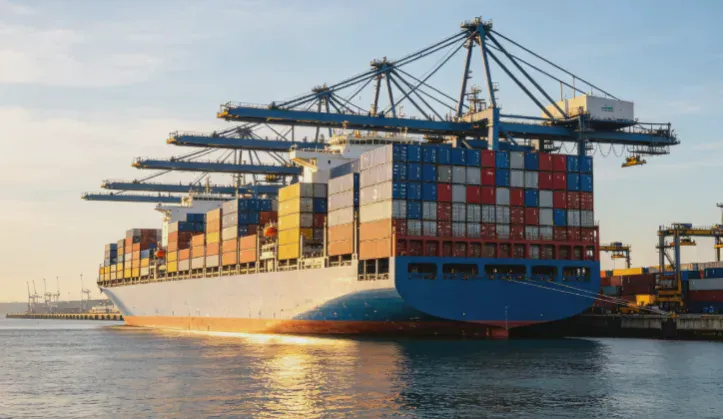
This guide gives you the real 2026 FCL (Full Container Load) rates we book from Shenzhen, Shanghai, and Ningbo to Kingston and Montego Bay, the density math that picks the right box, the Kingston-side fees that separate a real quote from a headline rate, and a door-to-door DDP option that removes Jamaica's customs learning curve almost entirely. For the route-level picture — services, pickup coverage across China, and the door-to-door process end to end — start on our Shipping From China to Jamaica page; this article is the container math underneath it.
The 20ft vs 40ft Decision in One Table
| Container | Usable Capacity | 2026 Port-to-Port Rate | Best For |
|---|---|---|---|
| 20ft (20GP) | ~28 CBM, ~28t payload | $2,500 – $3,200 | Dense heavy cargo: machinery, tiles, building materials |
| 40ft (40GP) | ~58 CBM, ~26t payload | $3,500 – $4,800 | Standard retail volume at the best per-CBM rate |
| 40ft High Cube (40HQ) | ~68 CBM, taller door | $3,800 – $5,100 | Bulky light cargo: furniture, apparel, consumer goods |
A 40ft carries about twice the volume of a 20ft for only 40–50% more money — that single ratio is why the per-cubic-meter number, not the headline price, should drive your decision. Cargo over roughly 30 CBM belongs in a 40ft on unit cost; between 15 and 30 CBM the choice depends on how heavy your goods are; under about 12–15 CBM, LCL (Less than Container Load) becomes the leading option. Jamaica's import mix pulls in both density directions — construction materials on one side, furniture and consumer goods on the other — so the rule matters more here than on single-cargo lanes.
Cost of Shipping a 20ft Container from China to Jamaica
The 20ft (or 20GP) is the workhorse for cargo that is heavy for its volume. On the 2026 lane it moves from Chinese ports to Kingston for roughly $2,500–$3,200 in pure ocean freight, with the exact number set by origin port, carrier, and season:
| Origin Port | 20GP Base Ocean Freight | Typical Sailing Frequency |
|---|---|---|
| Shenzhen / Guangzhou | $2,500 – $2,900 | Weekly to Panama hub |
| Shanghai | $2,600 – $3,100 | 2–3 weekly options |
| Ningbo | $2,600 – $3,200 | Weekly |
| Qingdao / Tianjin | $2,800 – $3,400 | Fortnightly, adds a feeder leg |
Southern China ports price this lane lowest — the Pearl River Delta's export volume keeps slot costs tight and sailings frequent — which is why Shenzhen suppliers usually beat northern origins by $100–$300.
Where a 20ft makes sense. Its ~28 CBM of usable space fills fastest by weight. Ceramic and porcelain tiles from Foshan, steel sections, construction hardware, pumps, and machinery routinely hit the payload ceiling long before the box is full — exactly the cargo a 20ft exists for. The rule of thumb: if your shipment is above roughly 400 kg/CBM, price the 20ft first. A 20 CBM load of tiles at 1,100 kg/CBM weighs 22 metric tons and sits near the container's practical limit; squeezing it into a 40ft would move the same tonnage at almost double the freight. If tiles, stone, or structural loads dominate your imports, our Shipping Building Materials from China guide digs into palletising, payload planning, and the edge-protection packaging a heavy 20ft needs.
Our industry insight: On China–Jamaica, "20ft cost" is only half the sentence. The destination half — KFTL terminal handling of roughly $150–$300, a Delivery Order (D/O) fee of $50–$100, and port storage that starts after a short free window and escalates daily — is where first-time importers get burned. Always ask for the DDC (Destination Delivery Charge) breakdown before booking, not after the vessel arrives. An "all-in" quote is the only truthful quote on this lane.
40ft Container Shipping Rates from China to Kingston
A 40ft (or 40GP) runs $3,500–$4,800 port-to-port to Kingston in 2026, and its tall sibling, the 40ft High Cube (40HQ), adds about 10 usable CBM for only $200–$400 more. That premium buys you a container that fits tall sofas, wardrobe boxes, and stacked retail stock without repacking — on a 40GP Shanghai–Kingston rate of $4,200 the per-CBM cost is roughly $72, while the 40HQ at $4,450 drops it to about $65. If you are weighing the high-cube upgrade on other lanes as well, our High cube shipping container cost from China guide shows when the extra height actually pays for itself.
| Origin Port | 40GP Base Ocean Freight | 40HQ Base Ocean Freight |
|---|---|---|
| Shenzhen / Guangzhou | $3,600 – $4,400 | $3,900 – $4,700 |
| Shanghai | $3,800 – $4,600 | $4,100 – $4,900 |
| Ningbo | $3,800 – $4,800 | $4,100 – $5,100 |
| Qingdao / Tianjin | $4,000 – $4,900 | $4,300 – $5,200 |
Where a 40ft makes sense. Furniture, mattresses, apparel and textiles, toys, and general consumer goods fill a 40ft by volume long before weight becomes an issue. A furniture brand importing 48 CBM of sofas for the Kingston and Montego Bay market is paying for one 40HQ rather than two 20ft containers — the whole economy-of-scale argument in one decision.
One caution on the payload: dense cargo does not scale up for free. A 40ft has a similar weight limit to a 20ft (~26t), so never "upgrade" heavy goods to a 40ft expecting to carry more tonnage — you will pay nearly double the freight to move the same weight plus wasted space.
20ft vs 40ft: The Cheapest Way to Ship a Container from China to Jamaica
Here is the decision framework that settles the argument in one calculation: divide your total shipment weight (kg) by total volume (CBM).
- Above ~400 kg/CBM → price the 20ft first. Weight fills the box before volume.
- Between ~250–400 kg/CBM → depends on total CBM. Above 30 CBM the 40ft's per-unit economics win.
- Below ~250 kg/CBM → price the 40HQ. Your volume needs the space; the height is nearly free.
Two real-style examples make it concrete. A Kingston building-materials importer moving ceramic tiles from Foshan at 1,100 kg/CBM has exactly one rational option: a 20ft loaded near its weight ceiling. A 40ft would carry the same tonnage for close to double the money. On the other side, a Kingston retailer importing 45 CBM of furniture and decor at 180 kg/CBM should book a 40HQ: the cargo fills 45 of 68 usable CBM, the premium over a 40GP is $200–400, and the only alternative is shipping air or a second container.
When FCL Beats LCL on This Lane
Below roughly 12–15 CBM, LCL looks cheaper — but Jamaica is the lane where the LCL trap is most vicious. Kingston's LCL stripping and warehouse-release charges frequently equal or exceed the ocean freight itself: a quote that looks like $80–$120 per CBM can land closer to $200 per CBM effective once the cargo clears the container freight station. Run the break-even honestly:
| Shipment Volume | LCL Total (~$100/CBM + stripping) | 20ft FCL Total (~$2,800 + fees) | Verdict |
|---|---|---|---|
| 5 CBM | ~$500 | ~$3,400 | LCL wins |
| 10 CBM | ~$1,000 | ~$3,400 | LCL wins |
| 12 CBM | ~$1,200 | ~$3,400 | Near break-even |
| 15 CBM | ~$1,500 | ~$3,400 | FCL edges ahead |
| 20 CBM | ~$2,000 | ~$3,400 | FCL wins clearly |
The tipping point sits around 12–15 CBM, and KFTL's destination charges push it even lower for Jamaican-bound cargo. That is why we routinely consolidate multi-supplier orders — one supplier in Yiwu, one in Shenzhen, one in Ningbo — into a single FCL at our China warehouse. Consolidation bypasses Kingston's stripping fees entirely and turns three LCL shipments into one clean container.
Real-life scenario: A Montego Bay retailer we work with used to import around 13 CBM of housewares quarterly as LCL through Miami. After we consolidated his two suppliers into one 20ft, his landed freight cost dropped by about a third, his lead time tightened by a week, and he stopped paying a Kingston broker to sort three separate consignments. The container paid for itself the first quarter.
Because we contract directly with carriers like ZIM, CMA CGM, and COSCO, DTFU Logistics locks contract space and rates on this lane ahead of the peak season squeeze — when demand spikes from August to October, GRI (General Rate Increases) and peak-season surcharges can inflate the base rate by 20–40% for shippers who book late.
Transit Time for FCL Shipping from Shenzhen to Jamaica
There is no direct China–Jamaica mainline service. Every container transships through a Caribbean or US hub — most commonly Colón/Cristobal (Panama), Caucedo (Dominican Republic), or Miami — and that extra leg is the single biggest variable in your lead time:
| Routing | Typical Ocean Transit | Notes |
|---|---|---|
| China → Colón (Panama) → Kingston | 30 – 38 days | Most common, one transshipment |
| China → Caucedo (DR) → Kingston | 32 – 40 days | Alternative Caribbean hub |
| China → Miami → Kingston | 35 – 45 days | Frequent sailings, adds US handling |
| Multi-stop (Mexico / US Gulf) | 40 – 50 days | Cheapest base rate, slowest |
From Shenzhen or Guangzhou, the standard expectation is 30–35 days via Panama; from Shanghai or Ningbo, plan for 35–42 days. The practical rule is to budget 40 days door-to-door and add a buffer. Port congestion at the transshipment hub, missed connections, and Caribbean hurricane season (June–November) all extend real-world delivery. November–December, when Christmas inventory floods KFTL, regularly adds 3–5 days on its own. When lead time matters more than freight cost, air freight reaches Kingston (KIN) in about 5–10 days via Miami or Panama — the option our Air Shipping from China to Jamaica guide covers for urgent restocks and high-value goods.
Plan around the calendar. Book container space 2–3 weeks ahead of your cargo being ready, and treat Q3–Q4 as the high-risk window: schedule non-urgent inventory for March–June (post-Chinese New Year through early summer) when rates are lowest and vessels run closest to schedule, and build a 2–3 week inventory buffer into anything that must land before the Christmas selling season.
Door-to-Door FCL Shipping from China to Jamaica
If the customs side of Jamaica worries you, the clean answer is door-to-door shipping under DDP. One provider handles the whole chain: factory pickup in China → export customs → ocean freight → Jamaican clearance → duty and tax payment → final delivery to your door in Kingston, Montego Bay, or anywhere on the island.
FOB, CIF, or DDP — What the Terms Actually Mean on This Lane
| Incoterm | Ocean Freight | Insurance | Jamaican Duty/GCT | Clearance | Last-Mile | Where Risk Transfers |
|---|---|---|---|---|---|---|
| EXW | Buyer | Buyer | Buyer | Buyer | Buyer | At the factory gate, China |
| FOB | Buyer | Buyer | Buyer | Buyer | Buyer | On board the vessel, China |
| CIF | Seller | Seller* | Buyer | Buyer | Buyer | On board the vessel, China |
| DDP | Seller | Seller | Seller | Seller | Seller | At your door, Jamaica |
*CIF insurance is minimum cover only; a forwarder-arranged DDP typically carries broader coverage.
For a small or first-time importing team, DDP wins almost every time on this lane. Under DDP, the forwarder's registered importer entity and licensed Jamaican broker handle your C82 declaration, your tax registrations, and every payment to the Jamaica Customs Agency (JCA) — you never need your own TRN (Tax Registration Number), TCC (Tax Compliance Certificate), or broker relationship. One quote, one accountable party, zero surprise invoices at destination. With DTFU Logistics, a door-to-door 20ft from a Shenzhen supplier to a Kingston warehouse typically runs 35–40 days end to end at one all-inclusive price. Follow the whole chain — pickup, export clearance, ocean transit, Kingston clearance, and island-wide delivery — in our Door to Door Shipping from China to Jamaica guide.
Real-life scenario: A Kingston solar-lighting distributor imported under FOB with a local broker for two years — chasing receipts, disputing duty assessments, and eating demurrage on a near-monthly basis. Their first DDP shipment, a 20ft from Nansha, cleared Jamaican customs in two days, delivered in 36 days door-to-door, and cost one transparent figure. They estimate it removed 10–15 hours of administrative work per shipment. That is the DDP value proposition on this lane in a nutshell.
How to Clear Customs for a 40ft Container in Jamaica
Jamaica Customs Agency (JCA) runs every import declaration through ASYCUDA World, an electronic customs platform. Your licensed broker files a C82 customs declaration through it together with your commercial invoice, packing list, and bill of lading. If the declaration is accurate and complete, clearance at Kingston normally takes 3–5 business days; errors trigger inspections, and inspections trigger storage fees that escalate by the day.
Duties, GCT, and the Levies Stacked on Top
Jamaica applies the CARICOM Common External Tariff (CET) on the CIF value (cost + insurance + freight) of your goods:
| Product Category | Typical Import Duty |
|---|---|
| Machinery & industrial inputs | 0 – 5% |
| Electronics & components | 5 – 10% |
| Furniture & consumer goods | 15 – 20% |
| Lighting fixtures | ~20% |
| Vehicles, alcohol, tobacco | 20 – 40% |
On top of duty, most commercial imports pay the General Consumption Tax (GCT) at the standard rate of 15%, calculated on the CIF value plus the import duty — GCT = 15% × (CIF + Import Duty) — along with a Customs Administration Fee, Standard Compliance Fee, and an environmental levy. Duty plus GCT plus levies together typically add 40–55% of the CIF value on top of your freight — the number most rate calculators never show you. If your business is GCT-registered in Jamaica you can reclaim input GCT; if not, treat it as a hard cost.
The Jamaica Customs Document Checklist
Have these ready before the vessel arrives — missing one document is the most common cause of demurrage:
- Bill of Lading (B/L) — original or telex release, matching the commercial invoice
- Commercial Invoice — must clearly state value, freight, and insurance for the CIF basis
- Packing List — accurate weights and dimensions (weight discrepancies trigger re-checks)
- Certificate of Origin — helps confirm the applicable CET rate
- C82 Declaration — filed electronically via ASYCUDA World by a licensed broker
- TRN / TCC / Importer Registration — held by the importer of record (handled for you under DDP)
- HS Code justification — technical datasheets and product photos for borderline goods
Our industry insight: Customs classification queries are routine for goods that combine functions — electronics with integrated components, lighting with built-in controllers — and they are not personal; they are revenue protection. Prepare the manufacturer's technical datasheet, product-label photos, and an HS classification justification before the vessel arrives. Documentation in hand wins most disputes within two days; documentation assembled after the query lands costs you storage.
Choosing a Freight Forwarder in China & Cargo Insurance
Two safeguards separate a smooth shipment from an expensive lesson on this lane. First, cargo insurance. A China–Jamaica container crosses the Pacific and the Caribbean with at least one transshipment, and June–November hurricane season makes rough seas a real risk. Insurance runs roughly 0.1–0.3% of the cargo value — a few hundred dollars on a $15,000 shipment — and we recommend it unconditionally for Caribbean-bound cargo, along with export-grade pallets and secure lashing. For the numbers behind typical premiums, our Shipping container insurance cost for shipments from China guide explains how insurers price the risk on long, multi-leg moves.
Second, choose a forwarder that actually operates on both ends of the lane. A base-in-China freight forwarder with direct carrier contracts, a presence at the Chinese origin ports, and a licensed partner in Kingston will quote honestly because they are accountable for the whole move — versus a broker quoting a cheap base rate and adding Jamaica-side fees later. DTFU Logistics is a FIATA and IATA certified forwarder moving cargo from China to 120+ countries, with dedicated account managers, transparent all-in quotes, and 24/7 shipment tracking.
FAQs
How much does it cost to clear a 40ft container in Jamaica?
Clearing agency and port-side fees — licensed broker, delivery order, and terminal handling — typically run $300–$600 per 40ft at Kingston. The far larger cost is duties and taxes: at 20% duty plus 15% GCT and levies on a $20,000 CIF shipment, government charges alone can exceed $8,000. Under a DDP arrangement these are bundled into one price.
How long does it take for a cargo ship from China to reach Jamaica?
Plan on 30–45 days of ocean transit depending on routing — 30–38 days via Panama from southern China, longer via Miami or multi-stop services. Budget about 40 days door-to-door, and add a 1–2 week buffer for peak season or hurricane-related delays.
Is it better to ship DDP or FOB to Kingston?
For first-time importers and lean teams, DDP is almost always the better choice: one price, no TRN/TCC requirements, no local broker relationship, and one accountable party if anything goes wrong. FOB only makes sense if you already have an established Jamaican clearance operation and are chasing the lowest freight line. For a head-to-head look at both terms, our DDP vs FOB: Which Option Saves Time and Reduces Hassle guide breaks down every cost and risk.
The 20ft vs 40ft decision on China–Jamaica comes down to density, not preference: heavy goods fill a 20ft by weight, voluminous goods justify a 40HQ by volume, and anything under 12–15 CBM needs a hard look at LCL's destination charges before you commit. Budget 30–45 days of transit plus a buffer, get an all-in quote that itemizes the Kingston-side fees, and seriously consider DDP if this is your first container into Kingston. If you would rather not navigate the density math, carrier contracts, and ASYCUDA filing alone, contact DTFU Logistics for a precise, transparent quote on your specific cargo — and let us handle the container, the transit, and the Kingston clearance as one accountable move.