If you're sourcing construction materials, machinery, or consumer goods from Chinese suppliers and need to get them to Angola, the first question you'll face is deceptively simple: should you book a 20ft or 40ft container? The answer affects everything — your per-unit shipping cost, your transit timeline, and even your customs clearance experience. With 20ft and 40ft shipping from China to Angola, getting the container choice right from the start can save you thousands of dollars and weeks of delays.
In this guide, we'll walk through everything you need to know to ship a container from China to Angola in 2026: how to pick the right container size, what you should realistically budget, how long the journey takes, how to handle Angola's mandatory CNCA certificate, and how to avoid the costly mistakes that trap first-time importers. Whether you're shipping a single 20ft container of tiles to Luanda or managing a regular flow of 40ft containers to Lobito, you'll leave with a clear, actionable plan.
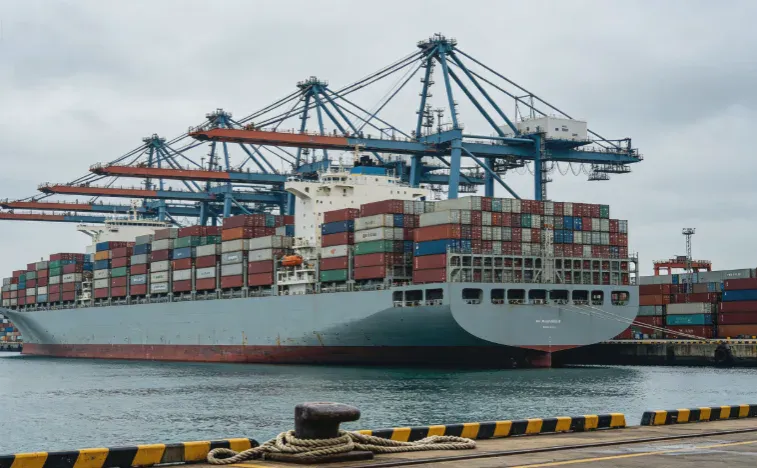
20ft vs 40ft Container: Which One Should You Choose?
Before you request a single freight quote, you need to answer one question: which container fits your cargo? It sounds straightforward, but choosing wrong means either paying for empty space or discovering too late that your goods won't fit. Here's how to get it right.
Container Specifications at a Glance
Understanding what each container actually holds is the foundation of a smart shipping decision. Here are the standard specifications for the three container types most commonly used on the China–Angola route:
| Specification | 20ft General Purpose (GP) | 40ft General Purpose (GP) | 40ft High Cube (HC) |
|---|---|---|---|
| Internal Length | 5.90 m (19'4") | 12.03 m (39'6") | 12.03 m (39'6") |
| Internal Width | 2.35 m (7'9") | 2.35 m (7'9") | 2.35 m (7'9") |
| Internal Height | 2.39 m (7'10") | 2.39 m (7'10") | 2.70 m (8'10") |
| Door Opening (W×H) | 2.34 × 2.28 m | 2.34 × 2.28 m | 2.34 × 2.58 m |
| Volume (CBM) | ~33 CBM | ~67 CBM | ~76 CBM |
| Max Payload | ~28,000 kg | ~26,500 kg | ~26,000 kg |
| Standard Pallets | 10–11 Euro pallets | 21–24 Euro pallets | 21–24 Euro pallets |
The 40ft High Cube deserves special attention for Angola-bound cargo. That extra 30 cm of height (roughly one foot) makes a meaningful difference for tall machinery, bulky furniture packaging, or construction forms that would otherwise require an open-top container — a more expensive and less common option on the West Africa route.
Cost-per-CBM: When a 40ft Beats Two 20fts
Here's where shippers often misjudge. A 40ft container doesn't cost double a 20ft — it typically runs only 30–50% more. This means the larger container gives you roughly twice the space for significantly less than twice the price.
Let's make that concrete. If a 20ft container from Shanghai to Luanda costs approximately $2,850 and a 40ft costs around $3,550, here's what you're actually paying per cubic meter:
| Container | Freight Cost | Volume (CBM) | Cost per CBM |
|---|---|---|---|
| 20ft GP | ~$2,850 | 33 CBM | ~$86/CBM |
| 40ft GP | ~$3,550 | 67 CBM | ~$53/CBM |
| 2 × 20ft GP | ~$5,700 | 66 CBM | ~$86/CBM |
The math is clear: if your cargo exceeds roughly 15 CBM, a single 40ft container almost always delivers better per-unit economics than LCL or two 20fts.
Cargo-to-Container Matching Guide
Beyond volume, cargo characteristics determine container choice:
Choose a 20ft container when shipping:
- Heavy, dense goods that reach weight limits before filling space — machinery, steel products, ceramic tiles, cement, hardware, auto parts
- Smaller import volumes where a 40ft would be half-empty
- Cargo from a single supplier that fills roughly 15–30 CBM
Choose a 40ft container when shipping:
- Voluminous but lighter goods — furniture, textiles, plastic products, insulation materials, solar panels, packaging materials
- Multiple suppliers' goods consolidated into one shipment
- Cargo volumes between 30–67 CBM
Choose a 40ft High Cube when shipping:
- Tall equipment or machinery that exceeds standard container height
- Furniture with tall packaging that wastes space in a standard GP
- Lightweight bulky goods where you benefit from every extra cubic meter
Angola-Specific: What's Actually in Those Containers?
The majority of containers moving from China to Angola carry goods tied to the country's infrastructure boom and growing consumer market. Based on our experience handling hundreds of Angola-bound shipments at DTFU Logistics, here's what typically fills containers on this route:
| Angola Import Category | Typical Container Choice | Why |
|---|---|---|
| Construction materials (tiles, steel, cement, roofing) | 20ft (heavy) or 40ft (volume) | Weight-dense goods fit 20ft efficiently; mixed building supplies favor 40ft |
| Machinery & industrial equipment | 20ft or 40ft HC | Heavy machinery in 20ft; taller equipment needs 40ft HC |
| Furniture & home goods | 40ft or 40ft HC | Volume-driven — furniture fills space before hitting weight limits |
| Electronics & appliances | 40ft | Moderate weight, high volume |
| Auto parts & vehicles | 20ft or 40ft (flat-rack for vehicles) | Dense, heavy auto parts in 20ft; vehicles need specialty containers |
| Textiles & clothing | 40ft | Lightweight, high volume |
How Much Does 20ft & 40ft Container Shipping Cost in 2026?
Now for the question every importer asks first: what's this going to cost? The honest answer is: it depends on your departure port, destination, the season, and which surcharges carriers have active. But we can give you reliable reference ranges based on mid-2026 market conditions.
2026 Reference FCL Rates by Port
The table below reflects current sea freight rates from major Chinese ports to Angola's two primary container ports — Luanda and Lobito. These are ocean freight-only estimates (excluding surcharges, which we'll break down next). Rates are based on DTFU Logistics' direct carrier contracts as of mid-2026 and represent the range you should expect for standard FCL (Full Container Load) shipments:
| Origin Port (China) | Destination | 20ft Container (USD) | 40ft Container (USD) |
|---|---|---|---|
| Shanghai | Luanda | $2,550 – $3,450 | $3,550 – $5,350 |
| Shanghai | Lobito | $2,550 – $3,350 | $3,800 – $5,500 |
| Shenzhen | Luanda | $2,550 – $3,450 | $3,800 – $5,500 |
| Shenzhen | Lobito | $2,600 – $3,500 | $3,750 – $5,450 |
| Ningbo | Luanda | $2,550 – $3,500 | $3,850 – $5,550 |
| Guangzhou | Luanda | $2,850 – $3,450 | $3,500 – $4,800 |
| Qingdao | Luanda | $2,600 – $3,500 | $3,700 – $5,500 |
| Tianjin | Luanda | $2,850 – $3,750 | $3,800 – $5,350 |
Why the range? Ocean freight is a dynamic market — rates fluctuate weekly based on capacity, fuel prices, and demand on the China–West Africa trade lane. A 20ft container that costs $2,550 in February might reach $3,450 in August. Always request a live quote before budgeting. For a deeper dive into how these rates are calculated and what drives fluctuations on this route, see our detailed breakdown of sea shipping cost from China to Angola.
What's Behind the Numbers: Sea Freight Cost Components
The base ocean freight is only part of the picture. Understanding what you're actually paying for helps you spot inflated quotes and budget accurately. Here's what makes up the total cost of a container shipment:
| Cost Component | What It Covers | Typical Range (2026) |
|---|---|---|
| Base Ocean Freight | Vessel space from Chinese port to Angolan port | $2,500 – $5,500 (varies by port pair) |
| BAF (Bunker Adjustment Factor) | Fuel cost adjustment — fluctuates with oil prices | ~$227/20ft, ~$454/40ft |
| PSS (Peak Season Surcharge) | Temporary surcharge during high-demand periods — carriers like CMA CGM have raised PSS on the Far East–West Africa lane multiple times in 2026 | $400 – $800/20ft, $800 – $1,600/40ft |
| GRI (General Rate Increase) | Carrier-imposed rate adjustment | $500/TEU (announced by multiple carriers for 2026) |
| THC (Terminal Handling Charge) | Port handling at origin + destination | $150 – $300 per container (combined) |
| Documentation Fee | Bill of Lading issuance, export docs | $150 – $200 |
| CNCA Certificate Fee | Mandatory Angola cargo tracking document | $150 – $350 |
| Customs Brokerage (Export) | China export declaration | $80 – $150 |
The Hidden Costs First-Time Importers Miss
Beyond the line items above, Angola-bound shipments carry destination-side costs that catch importers off guard:
- Port congestion surcharges at Luanda: During rainy season (October–April), when Luanda port occupancy exceeds 85%, carriers may impose congestion surcharges of $100–$300 per container.
- Demurrage & detention fees: Luanda port typically grants 7–14 free days of container storage. After that, daily charges accumulate — typically $20–$50/day for a 20ft and $40–$100/day for a 40ft. When customs clearance takes longer than expected, these fees can add up fast.
- Destination THC: Terminal handling at Luanda or Lobito ports costs approximately $100–$200 per container — separate from origin-side THC.
- Customs inspection fees: If Angolan customs flags your container for physical inspection, expect scanning or examination fees of $100–$300.
LCL as an Alternative for Smaller Volumes
If your cargo is under roughly 15 CBM and you don't need the speed of a dedicated container, LCL (Less than Container Load) is worth considering. LCL rates from China to Angola currently range from $120 to $180 per CBM. The trade-off is longer transit time — LCL shipments typically take 43–50 days versus 32–45 for FCL — because your cargo must be consolidated with other shipments and deconsolidated at destination.
Cost-Saving Strategies That Actually Work
After years of managing Angola-bound container shipments, here's what consistently lowers costs for our clients:
- Consolidate suppliers into one container: Instead of shipping three separate LCL shipments from different factories, collect everything at a consolidation warehouse in Guangzhou or Shenzhen and load one FCL container. This alone can reduce total freight costs by 20–30%.
- Book 3–4 weeks in advance: Spot market rates spike when capacity tightens. Booking ahead locks in contract rates and protects against last-minute surcharges.
- Ship during off-peak windows: February through April and June through July typically offer the most stable rates on the China–Angola route, before peak season surcharges kick in.
- Consider Lobito over Luanda: For cargo destined for southern or eastern Angola, routing through Lobito can save on both port charges and inland transportation — Lobito generally experiences less congestion and lower terminal fees.
How Long Does Container Shipping Take from China to Angola?
Once your container is loaded and the vessel departs, patience becomes your most valuable logistics asset. Here's what to expect.
Transit Time by Port Pair
| Origin Port (China) | Destination (Angola) | Typical Transit Time |
|---|---|---|
| Shanghai | Luanda | 35–40 days |
| Shenzhen | Luanda | 32–37 days |
| Guangzhou | Luanda | 33–38 days |
| Ningbo | Luanda | 36–42 days |
| Qingdao | Luanda | 38–45 days |
| Tianjin | Luanda | 40–45 days |
| Shanghai | Lobito | 38–43 days |
| Shenzhen | Lobito | 34–39 days |
Southern Chinese ports (Shenzhen, Guangzhou) enjoy a natural geographic advantage — roughly 3–5 days faster to Luanda compared to northern ports like Qingdao or Tianjin. For Lobito, add approximately 3–5 days versus the same origin port sailing to Luanda.
Direct vs Transshipment Routes
Not all sailings go straight from China to Angola. Many vessels transship — your container changes ships at an intermediate hub port — which extends transit time but sometimes provides the only available connection from smaller Chinese ports.
Common transshipment hubs for the China–Angola route include Singapore, Port Klang (Malaysia), Lomé (Togo), and Durban (South Africa). These same hubs also serve other West African destinations — for comparison, see our guide on 20ft and 40ft shipping from China to Nigeria, which shares similar routing patterns. A transshipment routing adds 7–14 days to the direct sailing time. When you receive a freight quote, always confirm whether the routing is direct or transshipped — lower freight rates sometimes mask a longer transit that could disrupt your supply chain.
Factors That Can Add Days (or Weeks)
Even a well-planned shipment can encounter delays. The most common culprits on the Angola route:
- Luanda port congestion: During the October–April rainy season, Luanda port occupancy regularly exceeds 85%, causing berthing delays of 7–14 days. Vessels wait at anchorage before they can even begin unloading.
- Carrier schedule reliability: Not all shipping lines are equal. Major carriers like Maersk and MSC generally maintain more reliable schedules on the West Africa route than smaller regional operators.
- CNCA pre-approval: When the CNCA certificate is secured before the vessel departs China, cargo generally clears faster at destination. Without pre-approved CNCA, customs will not release the container — period.
- Customs clearance speed: A well-prepared documentation package (consistent HS codes, matching cargo descriptions across all papers) can mean clearance in 2–3 days. Inconsistencies can trigger inspections that stretch to 2 weeks or more.
CNCA Certificate: Angola's Mandatory Document You Can't Afford to Miss
If you take away one thing from this guide, make it this: every sea freight shipment to Angola requires a CNCA certificate — and failing to get one before your vessel departs China can cost you over $5,000 in fines.
No English-language freight forwarding page covers CNCA in depth, which is exactly why we're going to explain it thoroughly here.
What Is the CNCA Certificate?
The CNCA (Conselho Nacional de Carregadores de Angola) — also referred to as the ARCCLA loading certificate or Angola Cargo Tracking Note (CTN) — is a mandatory cargo tracking document issued by Angola's National Shippers' Council. It functions similarly to the BSC (Bordereau de Suivi des Cargaisons) required by other West African countries, but with Angola-specific requirements and validation procedures.
Its purpose is twofold: to track all cargo entering Angola by sea, and to ensure importers comply with Angolan trade regulations before goods arrive at the port.
CNCA Is Mandatory — No Exceptions
The rule is absolute:
- Required for ALL sea freight shipments entering any Angolan port — Luanda, Lobito, Namibe, Cabinda, and Soyo
- Applies to both FCL and LCL, commercial cargo and personal effects
- Must be obtained and validated BEFORE the vessel departs from the Chinese port of loading
- The CNCA number must appear on the Bill of Lading
What Happens Without a CNCA: The Real Cost
The consequences of arriving at Luanda without a validated CNCA are severe — and entirely avoidable:
- Minimum fine: $5,000 USD — and this is the starting point, not the ceiling
- Customs will not release your cargo until the fine is paid and the CNCA is retroactively obtained (a process that can take weeks)
- Daily demurrage charges accumulate on your container while it sits at the port — at $20–$100 per day depending on container size, a 14-day customs hold adds $280–$1,400 to your costs
- Worst case: Cargo seizure or forced re-export at the importer's expense
We've seen the real-world impact firsthand. In early 2025, an importer in Benguela shipped a 40ft container of construction materials from Guangzhou. Their freight forwarder failed to secure the CNCA before the vessel sailed. By the time the container was released — 18 days after arrival — the combined fines and demurrage charges exceeded $12,000. That's a hard lesson in why CNCA compliance isn't optional.
CNCA Application Process: Step by Step
Here's how to get it right, in the correct order:
- Gather the required documents before booking your shipment (full checklist below)
- Submit your application through an authorized CNCA agent or your freight forwarder — DTFU Logistics handles this as a standard part of every Angola shipment
- CNCA validation and issuance: typically 2–5 working days when all documents are in order
- CNCA number is registered on the Bill of Lading before vessel departure
- Original CNCA certificate is sent to the consignee (importer) for presentation to Angolan customs
Documents Required for CNCA Application
| Document | Notes |
|---|---|
| Commercial Invoice | Must be in English or Portuguese; cargo descriptions must be detailed and consistent |
| Packing List | Detailed breakdown of contents, quantities, weights, and dimensions |
| Bill of Lading Draft | Or booking confirmation showing vessel name, voyage number, and container details |
| Freight Invoice | Showing the ocean freight amount — required for CNCA fee calculation |
| Exporter's Tax ID | Business registration or tax identification (required in some cases) |
Why CNCA Applications Get Rejected
The CNCA validation system is strict. These are the most common rejection reasons — and how to avoid them:
- Mismatched cargo descriptions: The description on the CNCA must match the Bill of Lading and Commercial Invoice exactly. "Ceramic tiles" on one document and "flooring materials" on another will trigger a rejection. Be consistent.
- Incomplete or vague HS codes: Angola's customs authority expects specific, 6-to-10-digit HS codes. "Construction materials" won't cut it — use the exact code for each product category.
- Missing freight value declaration: The CNCA requires the ocean freight amount to calculate the certificate fee. Omitting or estimating this number causes delays.
- Late submission: Submitting your CNCA application less than 3 working days before vessel departure risks the certificate not being validated in time. Submit early.
DTFU Logistics and CNCA: Built In, Not Bolted On
At DTFU Logistics, we treat CNCA as a core part of every Angola shipment — not an afterthought. Our team manages the full application process on your behalf: document verification, submission, follow-up, and delivery of the validated certificate. Because we handle CNCA for Angola-bound containers daily, we know exactly what the validation authority looks for and how to avoid the common rejection triggers. The result: your container sails with a validated CNCA number on the Bill of Lading, and your cargo clears without CNCA-related delays or fines.
Angola Customs Clearance, Import Duties & Required Documents
Getting your container to Luanda or Lobito is half the battle. Getting it through Angolan customs is the other half — and the one that catches more importers unprepared.
Angola Import Duties at a Glance
Angola applies import duties based on the CIF value (Cost, Insurance, and Freight) of your goods. While exact rates vary by HS code and are subject to change, here are the general ranges you should budget for:
| Product Category | Approximate Import Duty | Notes |
|---|---|---|
| Construction materials | 5% – 20% | Lower rates for essential building supplies |
| Machinery & industrial equipment | 2% – 10% | Often benefits from reduced rates for capital goods |
| Electronics & appliances | 10% – 30% | Higher rates on consumer electronics |
| Furniture | 20% – 30% | Rates depend on material and classification |
| Textiles & clothing | 20% – 35% | Among the highest duty categories |
| Vehicles & auto parts | 5% – 30% | New vehicles lower; used vehicles and parts higher |
Beyond duties, expect:
- VAT (IVA — Imposto sobre o Valor Acrescentado): Currently 14%, applied to the CIF value plus duty
- Customs service fee: Approximately 2% of CIF value
- Statistical tax: A small percentage applied by Angolan customs for trade data collection
Example calculation: If you import $20,000 worth of ceramic tiles (CIF Luanda) at a 15% duty rate:
- Import duty: $20,000 × 15% = $3,000
- VAT: ($20,000 + $3,000) × 14% = $3,220
- Total import charges: approximately $6,220 before customs service fees and broker charges
Angola Import Documentation Checklist
Present these documents to Angolan customs for a smooth clearance:
| Document | Required? | Notes |
|---|---|---|
| Original Bill of Lading | Mandatory | Must show validated CNCA number |
| CNCA Certificate | Mandatory | Original validated certificate |
| Commercial Invoice | Mandatory | Portuguese or English; detailed cargo descriptions |
| Packing List | Mandatory | Must match Invoice quantities and descriptions |
| Certificate of Origin | Usually required | Form F for China–Angola trade, or general CO |
| Import License (Licença de Importação) | Required | Obtained from Angola's Ministry of Commerce |
| IANOR Certificate | Product-dependent | Required for electronics, electrical goods, and regulated products |
| Insurance Certificate | Recommended | Marine cargo insurance policy document |
| Freight Invoice | Required | Shows ocean freight for duty calculation |
Import License and IANOR: Don't Overlook These
The Licença de Importação (Import License) must be obtained by the Angolan importer from the Ministry of Commerce before the goods arrive. Without it, customs will not process the entry — regardless of whether all other documents are in order. Application processing typically takes 1–3 weeks, so start early.
IANOR (Instituto Angolano de Normalização e Qualidade) certification applies to regulated products entering Angola — primarily electronics, electrical equipment, and certain consumer goods. If your product falls under IANOR's scope, you'll need pre-certification before the shipment arrives. Check with your freight forwarder whether IANOR applies to your specific cargo.
Three Tips for Faster Customs Clearance
- Pre-clear before arrival: Submit your CNCA, Import License, and all customs documents to your Angolan customs broker while the vessel is still at sea. By the time the container arrives, customs assessment should already be underway.
- Maintain document consistency: The cargo description on your Commercial Invoice, Packing List, Bill of Lading, and CNCA must all match precisely. Discrepancies — even minor ones — are the #1 trigger for customs holds.
- Work with an experienced Angola customs broker: Angola's customs procedures have nuances that a generalist broker may not know. A broker who clears containers daily at Luanda or Lobito will navigate the process faster and anticipate potential issues before they become delays.
Common Challenges When Shipping Containers to Angola & How to Overcome Them
Shipping to Angola isn't without its headaches. Being aware of them upfront — and knowing how to mitigate each one — is what separates smooth shipments from costly ones.
Challenge 1: Luanda Port Congestion
Luanda handles over 70% of Angola's containerized imports, and during the rainy season (October through April), port yard occupancy regularly exceeds 85%. When the port is congested, vessels wait at anchorage for days before berthing, and container discharge can take far longer than scheduled.
What you can do: For cargo destined for southern or eastern Angola (Benguela, Huambo, Lubango), route through Lobito port instead. Lobito typically operates at lower utilization and offers faster turnaround. If Luanda is your only option, build a 10–14 day congestion buffer into your planning timeline and pre-arrange fast-track customs clearance before your vessel arrives.
Challenge 2: Unpredictable Container Freight Surcharges
One month your 20ft container quote is $2,550; the next month, it's $3,350. PSS, GRI, and congestion surcharges can appear with as little as two weeks' notice — and carriers aren't required to honor quoted rates when new surcharges take effect.
What you can do: Work with a freight forwarder who maintains fixed-rate contracts with carriers on the China–West Africa route. Contract rates provide a buffer against sudden surcharge spikes. Additionally, budget 10–15% above the quoted ocean freight as a contingency — if surcharges don't materialize, you come in under budget; if they do, you're prepared.
Challenge 3: Documentation Inconsistency
A single mismatched HS code between your CNCA and Bill of Lading can hold your container at Luanda for days or weeks. Angola's customs system cross-references documents rigorously, and discrepancies flag your shipment for manual review.
What you can do: Centralize all shipping documentation through one experienced freight forwarder instead of coordinating across a supplier, a separate customs broker, and a shipping line independently. When one team prepares all documents — Invoice, Packing List, B/L, CNCA — consistency is built in from the start. Always review HS codes and cargo descriptions across all documents before submission.
Challenge 4: Container Loading Efficiency
A 20ft container loaded to 60% capacity costs the same as one loaded to 95% — but your per-unit shipping cost is nearly 60% higher on the under-loaded container. Yet many importers leave container optimization to their supplier's packing team, who lack the incentive to maximize space.
What you can do: Specify pallet dimensions and carton sizes that align with container dimensions. Standard Euro pallets (1,200 × 800 mm) fit efficiently in both 20ft and 40ft containers when arranged correctly. For mixed-SKU shipments, heavier items should be loaded first (bottom layer, evenly distributed), with lighter goods stacked on top. If you're consolidating from multiple suppliers, a professional consolidation warehouse can re-pack and optimize the container load before sealing.
Challenge 5: Free Time & Detention at Destination
Luanda and Lobito ports typically grant 7–14 days of free storage time after container discharge. Once that free time expires, daily demurrage (storage) and detention (container usage) charges kick in. A customs clearance delay of just one week beyond the free period can add $300–$700 to a 40ft container's total cost.
What you can do: The clock starts the day the container is discharged. Have your CNCA pre-approved, your Import License ready, and your customs broker engaged before the vessel arrives. If you've done the paperwork in advance, clearance should take 2–4 days — well within the free time window. Also, arrange trucking from the port to your warehouse before the container arrives so there's no post-clearance delay.
Challenge 6: Seasonal Rate Volatility
The China–West Africa trade lane experiences two annual peak seasons: August through October (ahead of China's National Day holiday in early October) and January through February (before Chinese New Year, when factories rush to ship before shutting down). During these windows, container freight rates can spike 20–40% above off-peak levels.
What you can do: Plan shipments 4–6 weeks ahead. If you know you'll need containers in September, lock in rates and space in July. For recurring shipments, negotiate forward contracts with your freight forwarder that guarantee rate stability across multiple sailings. If your timeline is flexible, target February–April and June–July sailings — historically the most stable pricing windows on this route.
Why Choose DTFU Logistics as Your Angola Container Shipping Partner?
If you've made it this far, you understand that shipping containers from China to Angola involves more than booking vessel space. It requires getting the CNCA right, navigating Angolan customs, and avoiding the surcharge and congestion traps that inflate costs. The right freight forwarder makes all of that manageable — and that's exactly what we've built DTFU Logistics to do.
Real Angola experience: Since 2014, we've shipped hundreds of containers from China to Angola — from 20ft containers of construction materials bound for Benguela infrastructure projects to 40ft HC containers of machinery and equipment for Luanda-based enterprises. This isn't a secondary market for us; it's a core route we know deeply. Beyond Angola, we also provide dedicated services for importers across the African continent, including shipping from China to South Africa and shipping from China to Nigeria.
CNCA handled from day one: We don't treat CNCA as an extra service you need to ask for. Every Angola-bound container we book includes CNCA processing as a standard part of the shipment — document verification, application submission, validation follow-up, and delivery of the certificate before your vessel departs.
Contract rates, not spot prices: Our direct agreements with major carriers — Maersk, MSC, CMA CGM, COSCO — on the China–West Africa route mean you benefit from stable contract pricing, not the volatile spot market. When PSS and GRI announcements hit, our clients are shielded from the worst of the impact.
Coverage across all major Chinese ports: Whether your supplier is in Guangzhou, Shanghai, Ningbo, Qingdao, Tianjin, or Shenzhen, we handle container pickup, loading, and export customs clearance at every major Chinese manufacturing hub and seaport.
FIATA & IATA dual certification: Our credentials are verified, internationally recognized, and backed by a track record of compliance and professional handling across every shipment we manage.
Transparent pricing, no surprises: 24/7 online container tracking keeps you informed at every milestone, a dedicated account manager handles your specific needs, and the quote you receive is what you pay — no hidden surcharges, no last-minute additions.
Ready to ship your 20ft or 40ft container from China to Angola? Contact DTFU Logistics today for a free, no-obligation sea freight quote — including CNCA processing, export customs clearance, and destination coordination. Let's get your container moving.
FAQs
What's the cheapest way to ship a container from China to Angola?
The most cost-effective approach is FCL sea freight booked 3–4 weeks in advance during the off-peak season (February–April), with cargo consolidated from multiple Chinese suppliers into a single container. A 40ft container from Shanghai or Shenzhen to Luanda provides the lowest per-CBM cost when your volume exceeds 15 CBM.
How long does a 20ft or 40ft container take from China to Luanda?
Transit time ranges from 32 to 45 days depending on your departure port. Shenzhen and Guangzhou are fastest (~32–38 days); Qingdao and Tianjin take longer (~38–45 days). Add 3–5 days for Lobito versus Luanda, and 7–14 days if your routing involves a transshipment at an intermediate hub.
Can I ship a 40ft container directly from Shenzhen to Lobito?
Yes. Direct services from Shenzhen to Lobito are available and, for cargo destined for southern or eastern Angola, Lobito is often the smarter choice — less congested than Luanda with lower terminal handling costs and shorter inland transportation distances to Benguela, Huambo, and Lubango.
What documents are required to import a container into Angola?
The complete Angola import document package includes: Bill of Lading (with CNCA number), validated CNCA Certificate, Commercial Invoice, Packing List, Certificate of Origin, Import License (Licença de Importação), IANOR certificate (if applicable), Insurance Certificate, and Freight Invoice.
Which Chinese port offers the cheapest container shipping to Angola?
Shanghai and Shenzhen consistently offer the most competitive FCL rates due to higher sailing frequency, greater carrier competition, and well-established direct services on the West Africa route. However, if your supplier is in northern China, the inland trucking cost to a southern port may offset the ocean freight savings — always calculate door-to-port, not just port-to-port.
How do I find a reliable freight forwarder for China to Angola container shipping?
Look for these signals: FIATA/IATA certification, proven experience with the Angola route, transparent CNCA handling capability (ask specifically how they manage it), and pricing that breaks down all surcharges — not just the base ocean freight. A forwarder worth working with should be able to show you recent Angola shipment records and explain exactly how they handle CNCA, customs clearance, and destination-side coordination.