Customer Background
Our client is a mid-sized commercial printing company based in Guayaquil, Ecuador. They specialize in high-volume book publishing, packaging printing, and promotional materials for local brands across the country. For years, they had been sourcing their printing ink from local distributors in Ecuador, paying heavily marked-up prices — sometimes 3x to 4x what the same product costs directly from Chinese manufacturers.
The owner, Mr. Carlos Mendoza, had been importing paper and binding materials from China for over five years through other freight forwarders. But printing ink was a different beast. He knew it contained flammable solvents and that most logistics companies would either quote him sky-high rates or simply refuse to handle it altogether.
He reached out to DTFU Logistics after a referral from a fellow printer in Quito. His question was straightforward: "Can you ship 3 pallets of printing ink from Shenzhen to my warehouse in Guayaquil at a price that still makes sense compared to buying locally?"
Cargo Information
| Item | Detail |
|---|---|
| Commodity | Offset Printing Ink (solvent-based, various colors) |
| Dangerous Goods Class | Class 3 — Flammable Liquid (UN 1210) |
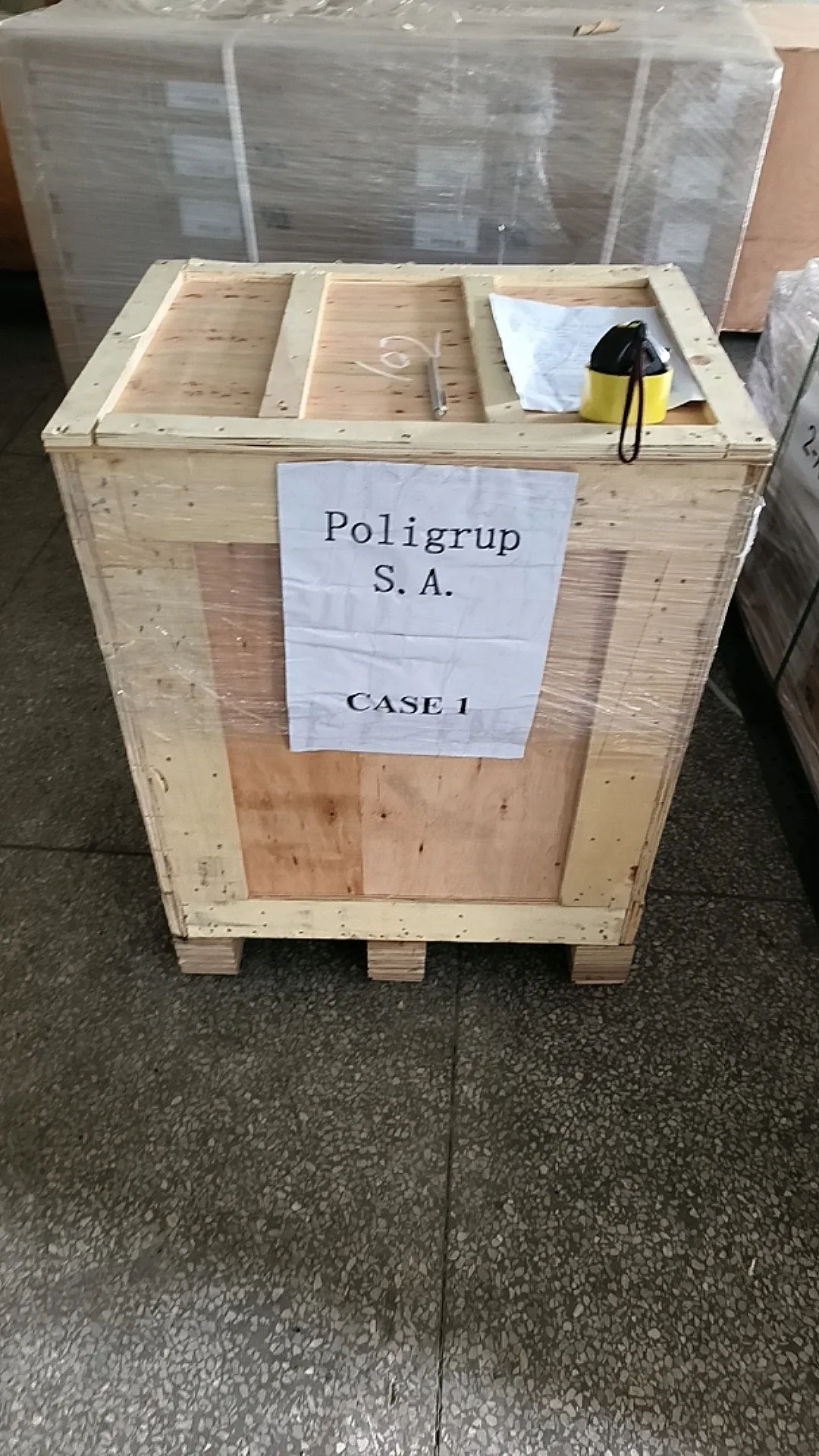
| Packaging | 1-gallon metal pails, packed in UN-approved wooden crates with absorbent material |
| Total Volume | Approx. 3.2 CBM |
| Total Weight | 1,850 kg |
| Number of Pallets | 3 pallets (shrink-wrapped and secured) |
| Incoterm | FOB Shenzhen |
The ink was supplied by a well-known manufacturer in Zhongshan, about 2 hours from Shenzhen. The supplier had experience exporting printing ink and provided all the necessary dangerous goods documentation — a critical factor that made this shipment feasible.
Why This Shipping Method
LCL (Less than Container Load) was the logical choice here. Three pallets at 3.2 CBM would never justify a full 20-foot container, especially since the customer was testing the waters with his first direct ink import.
Shipping by air was ruled out immediately — printing ink is heavy (nearly 2 tons), and airfreight for DG goods would cost a fortune. Sea freight via LCL struck the right balance between cost and transit time.
The key challenge was finding a freight forwarder willing to handle DG LCL cargo. Most forwarders in Shenzhen either:
- Don't accept dangerous goods for LCL consolidation at all
- Require a full container load (FCL) for any DG cargo
- Quote prohibitively high rates to discourage the business
This is where DTFU Logistics stands apart. We have established relationships with DG-compliant warehouses and shipping lines that accept Class 3 dangerous goods on LCL terms. For a customer like Carlos, who needs regular repeat shipments, having a forwarder that can handle DG LCL reliably is a genuine competitive advantage.
Shipping Process
Step 1: Pre-shipment Documentation
Before anything moved, the supplier prepared:
- Material Safety Data Sheet (MSDS) — confirming the flash point, handling procedures, and UN classification
- Dangerous Goods Declaration — signed and stamped by the shipper
- UN 4G test report — certifying that the packaging (fiberboard boxes with inner metal pails) met UN performance standards
- DG labels and placards — printed and ready for application
We reviewed all documents at DTFU before the truck even arrived. This upfront diligence saved us from last-minute surprises at the container freight station (CFS).
Step 2: Inland Transportation
The ink was trucked from Zhongshan to our designated DG-compatible warehouse in Yantian, Shenzhen. The truck itself carried the proper DG placard, and the driver held a valid hazardous materials transport certificate — a legal requirement in China that many低成本 forwarders skip.
Step 3: CFS Consolidation at Yantian
At the CFS, the three pallets were inspected by the warehouse supervisor. Key checks included:
- UN packaging marks present and legible
- DG labels affixed on two opposite sides of each crate
- No leaks, no damaged pails, no odor
- Proper segregation from incompatible goods (the warehouse kept the ink away from oxidizers and foodstuff)
The cargo was then loaded into a 20-foot LCL container alongside non-hazardous cargo (with proper segregation per IMDG Code requirements). The container was shipped via a mainline vessel from Yantian to Balboa, Panama, then transshipped to Guayaquil.
Step 4: Customs Clearance in Guayaquil
Ecuador's environmental agency (Ministerio del Ambiente) requires additional scrutiny for chemical imports. The customs broker we engaged in Guayaquil pre-filed the import declaration with the DG documentation attached. Because everything was in order, the cargo cleared customs in 3 days — faster than Carlos expected.
Step 5: Last-Mile Delivery
After customs clearance, the pallets were loaded onto a local truck and delivered directly to Carlos's printing facility in the industrial district of Guayaquil.
Challenges Encountered
1. Dangerous Goods Classification Confusion
The supplier's initial MSDS listed the ink as "environmentally hazardous substance" but didn't clearly state the Class 3 flammable classification. We had to request a revised MSDS from the manufacturer that explicitly referenced UN 1210 (Printing Ink, flammable). This took three email rounds and cost us 2 days.
2. DG LCL Space Allocation
Even after booking was confirmed, the shipping line reduced the number of DG slots available on the intended vessel. We were bumped to the next sailing — a 5-day delay. This is a common reality with DG LCL; lines prioritize non-hazardous cargo when space is tight.
3. Ecuador Customs Query
The Guayaquil customs officer flagged the shipment for a physical inspection, citing Ecuador's Resolution 116 (chemical import controls). Our local broker handled the inspection on-site, opening one crate to verify the product matched the MSDS. No fines, no detention — but it added 2 extra days to the clearance timeline.
How We Solved Them
| Challenge | Solution |
|---|---|
| Incomplete MSDS | Worked directly with the chemical engineer at the ink factory to produce a compliant document. Built a relationship so future shipments will use the corrected MSDS from the start. |
| Bumped from vessel | Proactively communicated the delay to Carlos within 24 hours. Rebooked on the next available DG-eligible vessel at no extra cost. |
| Customs inspection | Our Guayaquil broker attended the inspection in person with full documentation. We pre-paid the inspection fee ($85) to avoid further delays. |
Final Timeline
| Milestone | Date |
|---|---|
| First inquiry from Carlos | March 3, 2026 |
| Booking confirmed | March 7, 2026 |
| Cargo picked up from Zhongshan | March 12, 2026 |
| Arrival at Yantian DG warehouse | March 12, 2026 |
| Vessel departure from Yantian | March 17, 2026 |
| Arrival at Balboa (transshipment) | April 2, 2026 |
| Departure from Balboa | April 5, 2026 |
| Arrival at Guayaquil | April 10, 2026 |
| Customs clearance completed | April 13, 2026 |
| Delivered to Carlos's warehouse | April 14, 2026 |
Total transit time: 28 days (from factory pickup to final delivery)
Final Cost
| Cost Item | Amount (USD) |
|---|---|
| FOB charge (documentation, THC, export customs) | $180 |
| LCL ocean freight (3.2 CBM @ $45/CBM) | $144 |
| DG surcharge (LCL) | $120 |
| Bunker Adjustment Factor (BAF) | $55 |
| CFS receiving & handling | $80 |
| Terminal Handling Charge (Guayaquil) | $95 |
| Import customs clearance + broker fee | $210 |
| Physical inspection fee (Ecuador) | $85 |
| Local truck delivery (Guayaquil) | $120 |
| Cargo insurance (0.3% of declared value) | $45 |
| Total | $1,134 |
Cost per CBM: ~$354
Carlos told us later that buying the equivalent volume of ink from local distributors in Guayaquil would have cost him over $3,200 more than the total CIF + logistics cost. Even with the DG surcharge and customs inspection fees, he saved roughly 65% on his first shipment alone.
Customer Review
"I've been in printing for 18 years and always thought importing ink directly was too complicated. DTFU made it simple. They handled the dangerous goods paperwork, found space on an LCL vessel when others said it couldn't be done, and kept the cost low enough that I'm already planning my second order. The Guayaquil delivery was smooth — my press room had fresh ink on the shelves 28 days after it left China. I wish I had started this years ago."
— Carlos Mendoza, Owner, Imprenta del Pacífico, Guayaquil, Ecuador
Lessons Learned
-
DG documentation must be perfect from day one. A single missing MSDS detail can delay a shipment by a week or result in cargo being denied at the CFS. Always verify the MSDS against the specific UN number before booking.
-
DG LCL space is limited and unpredictable. Build in a 5-7 day buffer. If the cargo ships early, everyone is happy. If it gets bumped, you have wiggle room.
-
Ecuador customs takes chemicals seriously. But with proper paperwork and a competent local broker, physical inspection is a minor inconvenience, not a disaster. Budget $80-100 for inspection fees.
-
Price transparency builds trust. Carlos appreciated that we itemized every charge — including the DG surcharge — rather than hiding it in a bloated "all-in" rate. He knows exactly what he's paying for and why.
-
Repeat customers are where the real value is. This shipment was a test. Now that Carlos sees the savings, he plans to ship ink from China every 8-10 weeks. The upfront effort to get the DG compliance right pays for itself many times over on the repeat business.
Ready to ship printing ink or other dangerous goods from China to Ecuador or anywhere in the world? Contact DTFU Logistics at www.dtfulogistics.com for a competitive LCL rate and expert DG handling.