Customer Background
The customer is a U.S. sporting-goods importer based in the Chicago metro area. They bring in pine tar grip sticks for baseball and softball retail lines, distributed to team dealers and pro shops across the Midwest. The product is a solid pine-tar resin compound molded as a grip aid, applied by players to improve handle grip.
The customer is a repeat DDP shipper on the air lane. Prior orders had been moved under the same air-freight DDP arrangement, and this order was booked against that standing setup because the arrival requirement was set by the retail season start date.
Cargo Information
| Item | Detail |
|---|---|
| Commodity | Pine tar grip sticks (sports grip aids, solid pine-tar resin compound) |
| Mode | Air freight, DDP door-to-door |
| Origin | Shenzhen, China |
| Destination | Chicago Midway Airport (MDW), United States |
| Gross weight | 145 kg |
| Volume | 0.9 CBM |
| Chargeable weight | 150 kg |
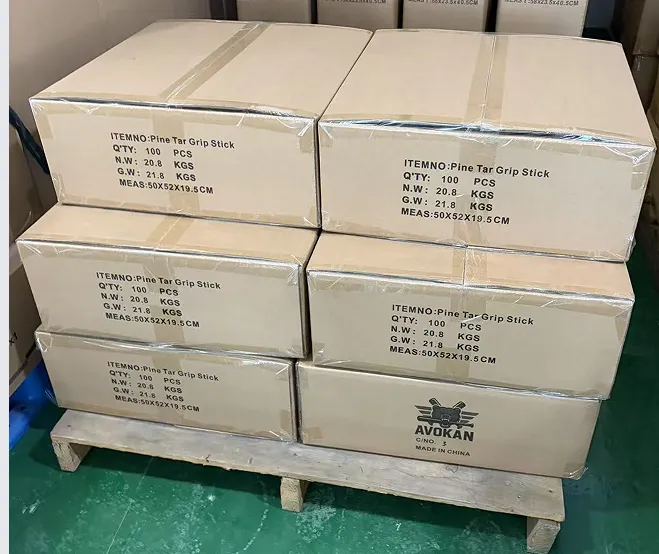
The shipment consisted of 9 cartons from one supplier. The product is a solid resin compound of moderate density; at 0.9 CBM the volumetric weight (0.9 × 167 = 150.3 kg) exceeded the gross weight (145 kg) by a small margin, so the chargeable weight was set at 150 kg.
Why This Shipping Method
Air freight DDP was selected over the alternatives for two reasons.
The first was the arrival requirement. The order had to be in stock for the retail season start date. Sea freight on this lane would have required 18–25 days door-to-door plus an inland leg, which exceeded the window; air freight via a transpacific hub reached MDW in approximately 3 days of main-haul transit.
The second was the dangerous-goods dimension. Because pine tar is flammable, the cargo was subject to the IATA Dangerous Goods Regulations (DGR). A standard express courier product generally restricts flammable-solids DG on its network or applies a per-piece DG surcharge that is unfavorable at this weight bracket. A regulated air freight booking consolidated the shipment into one DG consignment with a single Shipper's Declaration for Dangerous Goods, which was the more controllable route.
DDP was the chosen sale because the customer is a repeat DDP shipper on this lane. On air, DDP required a U.S. Importer of Record and a customs bond to be in place at arrival so the entry could be filed and cleared at MDW without the consignee establishing clearance arrangements per shipment.
Shipping Process
Step 1 — Dangerous-goods classification review (Shenzhen)
Before booking, the product's MSDS was reviewed against the IATA DGR. The material's flammability was checked: because the product is a solid pine-tar resin compound, the flammable-solids entry (Class 4.1) was the operative classification, and a flammable-liquid (Class 3) classification was ruled out on the basis of the physical state described in the MSDS. The applicable DGR entry, packing group, and packaging specification were confirmed before any booking was placed.
Step 2 — DG declaration and booking
The Shipper's Declaration for Dangerous Goods was issued, and the cartons were packed in UN-tested packaging with the required DG labels. The limited-quantity provision was reviewed against the shipment's aggregate weight and was not applied; the consignment was declared as fully regulated. The airline's acceptance of the Class 4.1 entry at Shenzhen was verified before tender.
Step 3 — Palletization and chargeable-weight verification
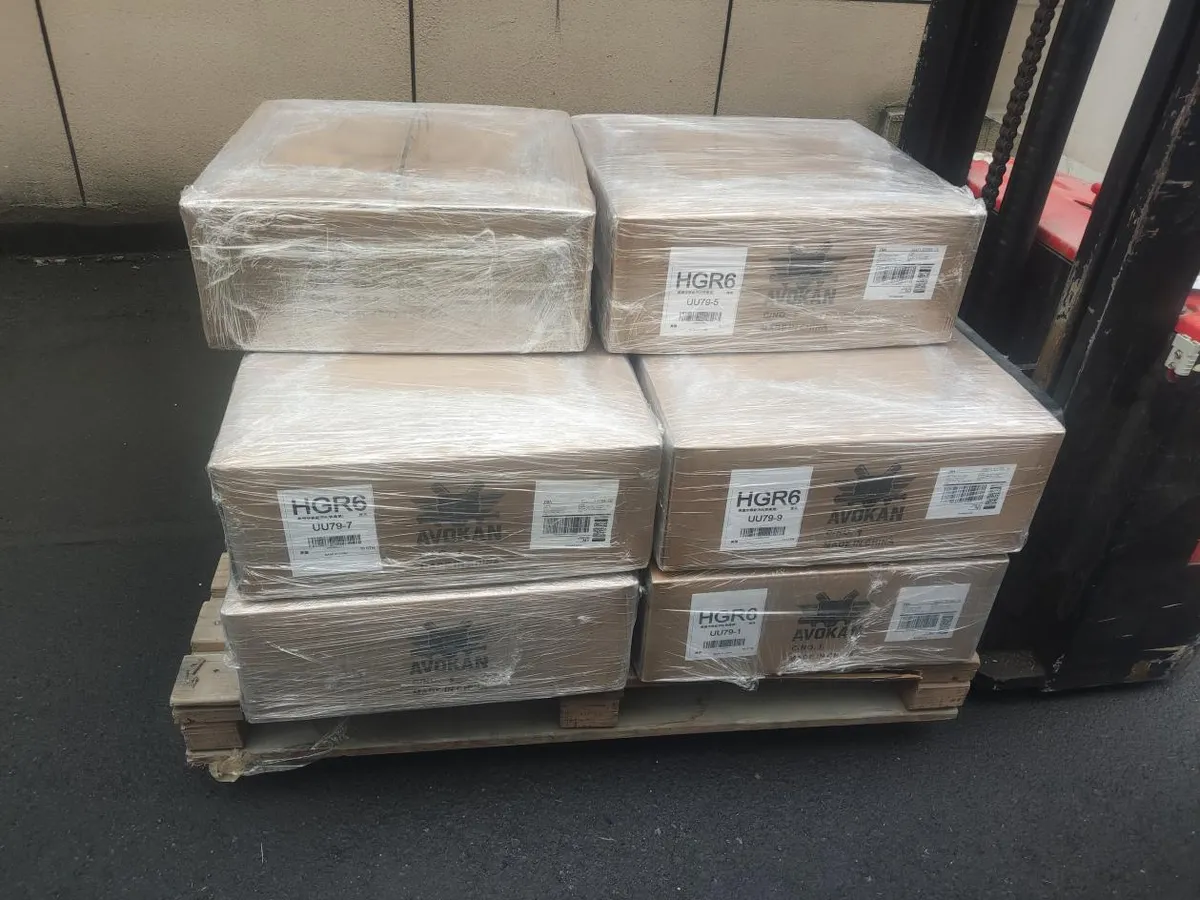
The 9 cartons were consolidated onto a single export pallet. Each carton was weighed and measured individually to confirm the chargeable-weight calculation: volumetric weight 150.3 kg against gross weight 145 kg, billed at 150 kg. No excess packaging was retained, so the volumetric figure did not inflate beyond 0.9 CBM.
Step 4 — Air uplift (Shenzhen → MDW)
The consignment was tendered to the airline at Shenzhen and uplifted on a scheduled service via a transpacific hub. Main-haul transit to Chicago Midway Airport was approximately 3 days.
Step 5 — DDP clearance and delivery (MDW)
On arrival at MDW, the entry was filed under the pre-arranged U.S. Importer of Record and customs bond, and the cargo cleared. Delivery from Midway to the consignee's facility was completed the same day.
Challenges Encountered
1. Dangerous-goods classification and documentation for a flammable-resin product
Pine tar is flammable, and the air move required a determination under the IATA DGR of how the solid resin compound should be classified and declared. The MSDS had to be reviewed for physical state and flammability data, the correct DGR entry confirmed, and the DG documentation and packaging arranged to match. A misclassification or a late declaration risked the consignment being refused at tender in Shenzhen or re-examined at the hub, either of which would have missed the season start date.
2. DDP importer-of-record setup for air cargo
Air DDP requires an entry to be filed and cleared at the arrival airport, which requires a U.S. Importer of Record with a bond. A non-U.S. forwarder cannot act directly as the importer of record; the IOR and bond had to be in place before arrival, or the cargo would have sat at the MDW airfreight warehouse while the entry was arranged.
3. Chargeable weight on a small, light air shipment
At 0.9 CBM the volumetric weight exceeded the gross weight, so the shipment was billed at the 150 kg chargeable figure rather than the 145 kg gross. On a DG shipment the chargeable weight also set the rate basis, and any expansion in packaging volume would have raised it further.
How We Solved Them
For the DG classification:
The MSDS was reviewed and the classification completed before booking. The flammable-solids entry was confirmed against the solid resin form, the Shipper's Declaration for Dangerous Goods was issued, and the cartons were packed in UN-tested packaging with the required DG labels. The airline's acceptance of the class at Shenzhen was verified before tender, so the consignment was not refused at uplift, and the declaration accompanied the shipment so the hub did not re-classify it.
For the DDP importer of record:
The U.S. Importer of Record and customs bond were confirmed in place before the aircraft arrived at MDW. Because the customer is a repeat DDP shipper, the standing arrangement was re-verified for this order rather than established from scratch. On arrival, the entry was filed under that IOR and the cargo cleared, allowing the final-mile delivery to proceed without the consignee handling clearance.
For the chargeable weight:
Each carton was weighed and measured during palletization and the volumetric weight was computed at 150 kg against 145 kg gross. The 9 cartons were consolidated onto one export pallet with no excess outer packaging. The 150 kg chargeable figure was confirmed to the customer before booking, so the landed-cost estimate matched the final invoice.
Final Timeline
| Milestone | Timing |
|---|---|
| Cargo collected at consolidation point, Shenzhen | Day 1 |
| DG classification review and MSDS assessment | Day 1 |
| Export DG declaration issued; export clearance granted | Day 2 |
| Departure Shenzhen | Day 2 |
| Transpacific hub connection | Day 3 |
| Arrival Chicago Midway Airport (MDW) | Day 4 |
| DDP clearance under U.S. Importer of Record and bond | Day 5 |
| Delivery to consignee, Chicago | Day 5 |
Total door-to-door transit time: 5 days
Final Cost
| Item | Cost (USD) |
|---|---|
| Air freight (150 kg chargeable × $6.80/kg) | $1,020 |
| DG documentation and declaration | $85 |
| Origin airport handling | $110 |
| U.S. clearance and DDP broker fees | $240 |
| Delivery MDW → consignee | $180 |
| Total DDP door-to-door | $1,635 |
Note: figures reflect the spot rate for this shipment (July 2026) and vary with season, fuel surcharge, and carrier capacity. The air freight was billed on the chargeable weight of 150 kg, which was set by the volumetric calculation rather than the gross weight.
Customer Review
"The grip sticks had to be in stock before the season start date, and the order cleared and delivered in Chicago on the fifth day. The DG declaration was handled at origin, and clearance at MDW was completed under the arranged Importer of Record, so there was no airport hold. The invoice matched the 150 kg chargeable weight quoted at booking."
— The customer's purchasing manager, Chicago
Lessons Learned
- Flammable-resin products need the DG determination before booking, not at the airport. The MSDS review and DGR classification were completed up front, so the Shipper's Declaration, UN-tested packaging, and airline acceptance were all in place before tender. A declaration left to uplift would have been refused or held, and the delay would have missed the season date.
- DDP on air is a clearance-in-advance exercise. The U.S. Importer of Record and bond had to be in place before the aircraft arrived at MDW, not after. Re-verifying the standing arrangement before each shipment is what keeps a repeat DDP lane from stalling at the airfreight warehouse.
- The volumetric weight governs even on a small, light shipment. At 0.9 CBM the chargeable weight was 150 kg against 145 kg gross. Quoting the chargeable figure before booking is what made the final invoice match the customer's expectation; single-pallet consolidation and no excess packaging kept the volume from inflating.
- The arrival airport is a booking-stage decision. The consignment was routed to MDW rather than ORD, and the final-mile leg and ground handling were arranged around Midway from the start. The airport choice shaped both the last-mile time and the destination-side cost.