Customer Background
Importer: Dulces Ecuador S.A.S. (a small family-run candy distributor based in Guayaquil)
Mr. Alejandro Reyes runs a modest distribution business supplying convenience stores (tiendas de barrio) and mini-markets across Guayaquil and the Santa Elena Province. For years, he sourced gummy candies from local wholesalers who imported from China and the U.S., paying margins that effectively doubled the factory price before the goods reached his warehouse.
In early 2026, Alejandro's nephew — who runs an electronics import business — introduced him to DTFU Logistics. The goal was simple: buy gummy candies directly from a manufacturer in Guangdong and get them to Guayaquil before an upcoming national holiday (Día del Niño — Children's Day, celebrated on June 1 in Ecuador). This was his first direct import from China.
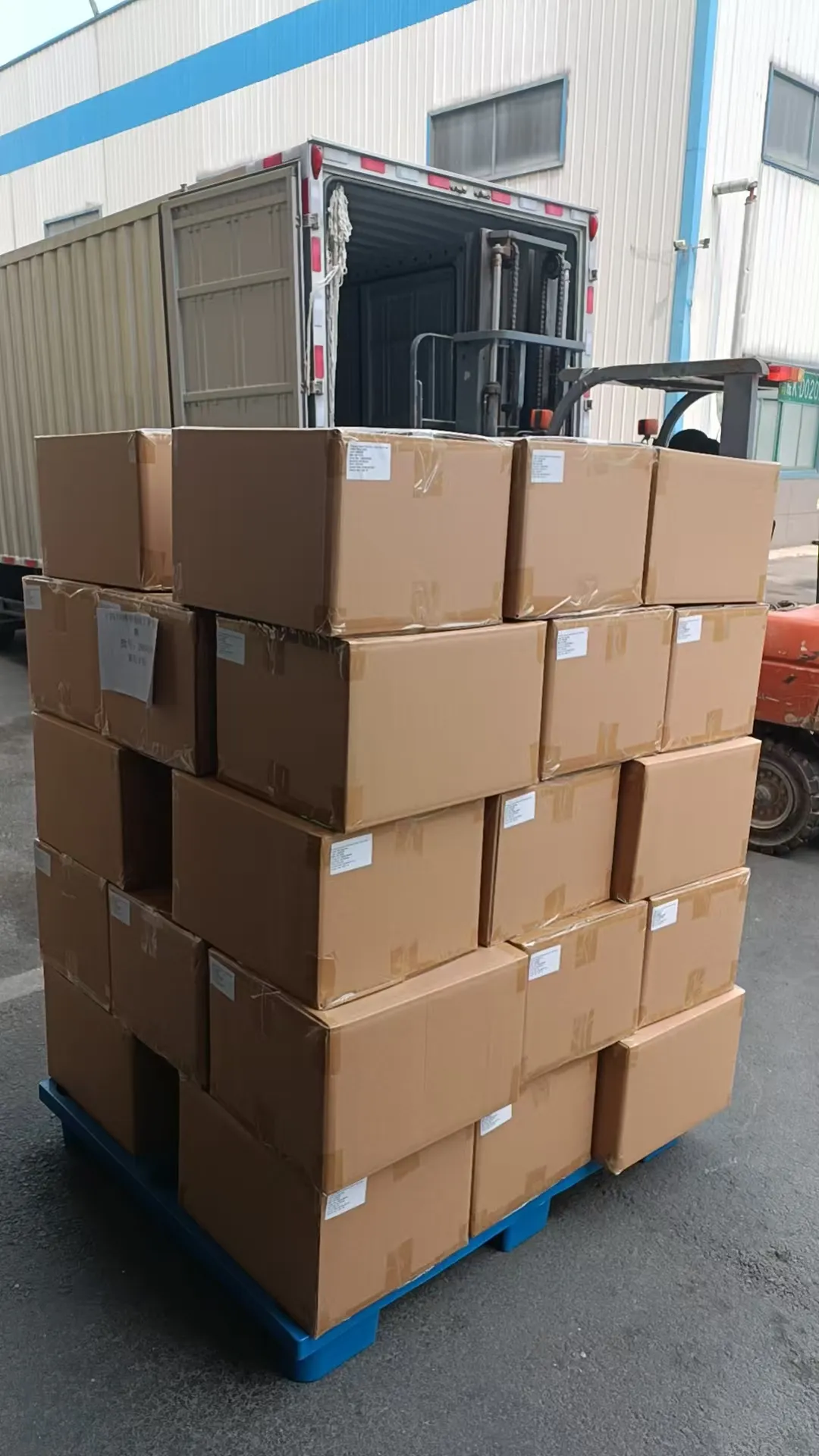
Cargo Information
| Item | Detail |
|---|---|
| Product | Gummy candies (assorted fruit flavors, 12 g / piece, packed in 500 g resalable bags) |
| HS Code | 1704.90.00 (sugar confectionery, not containing cocoa) |
| Quantity | 8,000 bags — 4,000 kg total |
| Packaging | 160 cartons, 25 kg each (50 bags per carton) |
| Total Volume | 14.5 CBM |
| Total Gross Weight | 4,250 kg (including packaging) |
| Origin | Jieyang, Guangdong, China |
| Destination | Guayaquil, Ecuador |
| Shipping Mode | Air Freight (consolidated) |
| Incoterm | FOB Shenzhen |
Why This Shipping Method
Gummy candies are a shelf-life-sensitive product. Typical production-to-expiry windows for Chinese-manufactured gummies range from 12 to 18 months. By the time Alejandro was ready to order, he had roughly 4 months before the product would need to be on shelves for the June 1 holiday.
For sea freight LCL from Shenzhen to Guayaquil — including factory pickup, consolidation, transit (30–35 days), customs clearance, and final delivery — the timeline would have consumed 45–50 days minimum. That would leave only about 10 weeks of selling time before the holiday. If the vessel missed a connection at Balboa or if customs flagged the shipment, the entire holiday window would be lost.
Air freight was the right call because:
- Speed: Door-to-door air freight from Shenzhen to Guayaquil takes 7–10 days. This left Alejandro with a comfortable 3+ month window to distribute and sell before expiry.
- Holiday deadline: With air freight, the cargo could land in Guayaquil by mid-April — two full months ahead of Día del Niño peak demand.
- Lower inventory risk: Air freight meant Alejandro could order a smaller, sellable quantity (4,000 kg) rather than filling a 20GP container (which would have required ~14,000 kg of gummies — too much for a first-timer's cash flow).
The trade-off: air freight cost per kg is significantly higher than sea. But for a time-sensitive, shelf-life-constrained food product, sea freight risked either missing the market window or ending up with expired stock.
Shipping Process
Step 1 — Factory Pickup & Inspection (Jieyang → Shenzhen)
DTFU Logistics arranged a temperature-controlled truck to collect 160 cartons from the gummy factory in Jieyang (about 4 hours northeast of Shenzhen). At the factory, our warehouse agent conducted a quick inspection: packaging integrity, seal condition, and — critically — labeling compliance.
Step 2 — Consolidation & Export Customs (Shenzhen Bao'an Airport)
The cargo was delivered to the air freight consolidation warehouse near Shenzhen Bao'an International Airport (SZX). The cartons were palletized and wrapped with stretch film to prevent moisture absorption during the flight. Export customs declaration was filed electronically under HS 1704.90.00.
Step 3 — Air Freight (Shenzhen → Miami → Guayaquil)
There are no direct cargo flights from Shenzhen to Guayaquil. The most practical routing for consolidated air freight is:
SZX → MIA (Miami International Airport) — ~16 hours flight time, then trucked overnight to GYE (José Joaquín de Olmedo International Airport, Guayaquil) — ~4 hours truck transfer after customs-bonded movement.
Total air transit: approximately 3 days (including the Miami connection).
Step 4 — Customs Clearance in Guayaquil
A licensed customs broker (agente de aduanas) filed the ECU-PASS import declaration, submitted the ARCSA food import permit, and arranged the mandatory sanitary inspection.
Step 5 — Final Delivery to Alejandro's Warehouse
After customs release, the pallets were trucked 15 minutes across Guayaquil to Alejandro's storage facility in the suburb of Durán.
Challenges Encountered
1. ARCSA Food Import Registration — The Biggest Hurdle
Ecuador's ARCSA (Agencia Nacional de Regulación, Control y Vigilancia Sanitaria) requires all imported food products — including confectionery — to have a Sanitary Registration (Registro Sanitario) before the goods can clear customs.
This registration requires: - Full product formulation (ingredients list with exact percentages) - Certificate of Free Sale (CFS) from the Chinese health authority - Nutritional analysis report from an accredited lab - Proof of manufacturing facility registration - Spanish-language label approval
Alejandro had none of this prepared. The factory only had Chinese-language internal documents and English brochures — none of which were export-ready for Ecuador.
2. Spanish Labeling Requirements
Ecuador enforces strict labeling rules under NTE INEN 2262 (2019) for prepackaged food products. The labels must include: - Product name in Spanish - Ingredient list (Spanish) - Nutritional information per serving - Net weight (in metric units) - Expiration date (clearly visible) - Manufacturer name and address - Importer name and RUC (tax ID) number - Lot/batch number - Country of origin - ARCSA sanitary registration number
The factory's original labels were entirely in Chinese and English — completely non-compliant.
3. Moisture & Temperature During Air Freight
Gummies are hygroscopic — they absorb moisture from the air. During air freight, the cargo hold temperature can swing between 5°C and 20°C depending on altitude and ground handling. If the packaging isn't sealed properly, gummies can sweat, stick together, or develop a hard outer crust — making them unsellable.
4. Shelf-Life Documentation
ARCSA requires a minimum remaining shelf life of 75% of the total product lifespan at the time of importation. For gummies with an 18-month shelf life, that means at least 13.5 months must remain upon arrival. The factory had produced the batch 2 months prior, leaving 16 months — still compliant, but only barely. Any delay in transit or customs could push the remaining shelf life below the threshold.
How We Solved Them
ARCSA Registration — Parallel Processing & Label Translation
DTFU Logistics's local compliance partner in Guayaquil — a food import specialist — handled the ARCSA sanitary registration application in parallel with the cargo's transit.
What was done: - The factory provided the full product formulation (translated to Spanish by DTFU's documentation team) - We sourced a Certificate of Free Sale from the local CIQ (China Inspection and Quarantine bureau) in Jieyang - A nutritional analysis was commissioned from an SGS lab in Shenzhen (results in 5 working days) - Our Guayaquil partner filed the ARCSA application with a fast-track processing request, citing the upcoming holiday season
Cost: $350 for the ARCSA registration (standard fee: $220; fast-track premium: $130). Processing time: 7 business days — versus the typical 4–6 weeks for a full application.
Custom Spanish Labels — Factory Correction
The factory agreed to print and apply corrected labels before shipment at a cost of $0.03 per bag ($240 total). The revised labels included: - "Gomitas con Sabor a Fruta — 500 g" (product name in Spanish) - Full ingredient list translated to Spanish - Importer info: Alejadro Reyes / RUC 1234567890001 - ARCSA registration number (placeholder applied after approval)
For the first shipment, labels were applied at the factory. For future orders, Alejandro plans to have labels printed locally in Guayaquil and applied upon arrival — which is faster and cheaper.
Moisture Protection — Packaging Upgrade
The factory initially used standard polybags with twist ties. DTFU insisted on heat-sealed, food-grade aluminum foil bags (same material used for coffee packaging) as the primary packaging, with each carton lined with a food-grade polyethylene moisture barrier. The additional packaging cost was $0.04 per bag — $320 total — but it eliminated the moisture risk entirely.
Shelf-Life Buffer — Air Freight Saves the Day
Because air freight compressed the total transit to 8 days (versus 45+ days for sea), the product arrived in Guayaquil with 15+ months of remaining shelf life — well above ARCSA's 13.5-month requirement. This gave Alejandro a full year of selling time.
Final Timeline
| Milestone | Date |
|---|---|
| Cargo picked up from Jieyang factory | April 2, 2026 |
| Arrival at Shenzhen Bao'an consolidation warehouse | April 2, 2026 |
| ARCSA sanitary registration application filed (via partner) | April 3, 2026 |
| ARCSA registration approved | April 11, 2026 |
| Flight SZX → MIA | April 5, 2026 |
| Arrival at Miami (cargo transfer) | April 6, 2026 |
| Arrival at Guayaquil (GYE) | April 7, 2026 |
| Customs clearance completed | April 12, 2026 |
| Delivered to Alejandro's warehouse in Durán | April 12, 2026 |
Total door-to-door transit: 10 days.
Final Cost
| Item | Cost (USD) |
|---|---|
| Factory pickup (Jieyang → Shenzhen, temperature-controlled truck) | $180 |
| Air freight (Shenzhen → Miami → Guayaquil, consolidated, 4,250 kg × $1.55/kg) | $6,588 |
| Documentation fee (AWB, COO, packing list, health certificate) | $95 |
| ARCSA sanitary registration (fast-track) | $350 |
| Custom Spanish labels (factory correction, 8,000 pcs × $0.03) | $240 |
| Packaging upgrade (aluminum foil bags + moisture liners) | $320 |
| Customs clearance (agente de aduanas fee) | $160 |
| Customs duties (Duty: 20% on CIF value, VAT 12% on CIF + Duty) | $2,042 |
| Truck delivery Guayaquil airport → Durán warehouse | $55 |
| Total | $10,030 |
CIF Value declared: $6,400 (FOB $5,600 + freight $800 allocated portion)
Duty rate: 20% under Ecuador's tariff for sugar confectionery (HS 1704)
VAT (IVA): 12% on (CIF + Duty) = 12% × $7,680 = $922
Total duties & taxes: $2,042
Per-unit logistics cost: $10,030 ÷ 8,000 bags = $1.25 per bag
Landed cost per bag (including cargo FOB): $5,600 ÷ 8,000 + $1.25 = $0.70 + $1.25 = $1.95 per bag
At a wholesale price of $3.50 per bag to tiendas, Alejandro's gross margin was 44% — far better than the 25–30% margin he had when buying from local wholesalers.
Customer Review
"I almost shipped by sea to save money, but DTFU explained that I would lose half my selling window before the holiday. Air freight cost more, sure — but the product arrived in 10 days with 15 months of shelf life still left. The ARCSA paperwork was the part I was most afraid of — I had no idea Ecuador required sanitary registration for gummy candies. DTFU's local partner handled everything. The gummies sold out in three weeks during Día del Niño promotions. I have already placed my second order for the Christmas season."
— Alejandro Reyes, Owner — Dulces Ecuador S.A.S.
Lessons Learned
-
Food imports into Ecuador require ARCSA Sanitary Registration — period. This is not optional, and processing takes 4–6 weeks under normal circumstances. Apply for the registration before the cargo ships, not after. DTFU's ability to parallel-process the application during transit saved this shipment, but not every application qualifies for fast-track.
-
Spanish labeling is mandatory, not a nice-to-have. Ecuador's INEN standards are enforced at the border. Non-compliant labels mean the cargo sits in customs warehouse at $15–$20/day storage. Budget for label reprints — either at the factory (if there's time) or at destination (if there's a trusted printer).
-
Air freight justifies itself for shelf-life-sensitive food products. The cost premium over sea freight ($1.55/kg vs. ~$0.35/kg for LCL) is significant. But when you factor in extended selling time, lower inventory risk, and the ability to hit a specific market window, the math often works in air's favor.
-
Packaging matters more than you think. Gummies from a humid Chinese coastal factory — then flown through Miami's humidity — will absorb moisture without proper heat-sealed barriers. A packaging upgrade at origin costs pennies per unit but prevents the entire shipment from being unsellable.
-
Ecuador's food tariff structure is protectionist. At 20% duty + 12% VAT, the tax burden on imported gummies is substantial (roughly 34% of CIF value). Importers need to factor this into their pricing from day one. Alejandro's margin still worked because he bypassed two layers of local wholesalers.
-
For seasonal products, book air freight 3–4 weeks before the target date. This gives time for regulatory paperwork (ARCSA), labeling corrections, and customs clearance without cutting into the selling window.