Mode: 1×40HQ Full Container Load (FCL)
Commodity: Computerized Embroidery Machine (Heavy Industrial Machinery)
Customer Background
The client is a mid-sized garment manufacturing company based in Guadalajara, Jalisco — Mexico's textile and apparel heartland. They had been using older mechanical embroidery units for their production line but decided to upgrade to a modern 12-head computerized embroidery machine to increase output and expand into custom embroidery orders. After evaluating suppliers in China, they placed an order with a machinery manufacturer in Zhuji, Zhejiang Province — roughly a 2.5-hour drive from Ningbo Port.
The client had limited experience with international freight. Their previous imports were predominantly raw fabric shipments handled on an EXW basis by their suppliers, and this was their first time importing heavy industrial machinery from China. They reached out to DTFU Logistics after an online search, specifically requesting a full-container solution that could keep total logistics costs under control.
Cargo Information
| Item | Detail |
|---|---|
| Commodity | Computerized Embroidery Machine (12-head, model: CY-1201) |
| Packaging | Plywood crate with internal foam padding |
| Dimensions (Crate) | 280cm × 180cm × 190cm (L×W×H) |
| Gross Weight | 3,850 kg |
| Container Type | 1×40HQ Dry Van |
| Total CBM | ~9.6 CBM (single piece, container shared with auxiliary accessories) |
| Accessories | 4 boxes of spare parts (needles, thread stands, control box, installation tools) |
The machine was packed by the manufacturer in a single reinforced plywood crate. Auxiliary accessories were packed separately in standard cartons and loaded alongside the main crate to fill the container.
Why This Shipping Method
For a single heavy machine weighing close to 4 tons, breakbulk or LCL (Less than Container Load) could have been considered. However, three factors pushed the decision toward a dedicated 1×40HQ FCL:
-
Weight Distribution Risk — At 3,850 kg in a single crate, handling the machine as LCL would involve multiple crane lifts and transshipment handling at consolidation centers, increasing the risk of shock damage. A dedicated container meant the crate could be loaded once at origin and not touched again until devanning at destination.
-
Cost Efficiency — While LCL rates for 9.6 CBM may appear cheaper at first glance, the total cost picture (including consolidation fees, CFS charges at both ends, and higher cargo insurance premiums for machinery in shared containers) made FCL the more economical choice. The total logistics cost was kept low by negotiating a competitive spot rate directly with the carrier.
-
Timeline Control — The client had a firm production deadline. FCL shipments from Ningbo to Manzanillo typically offer more reliable vessel space and fewer transshipment variables compared to LCL, which often requires consolidation at transshipment hubs.
Shipping Process
Phase 1: Origin Handling (Ningbo)
The manufacturer delivered the crated machine to DTFU's nominated warehouse near Ningbo Port on March 12.
Fig 1: Cargo staged at Ningbo warehouse, showing the main plywood crate and auxiliary cartons prior to container loading.
Upon arrival, the warehouse team performed a condition check. The plywood crate was manufacturer-sealed with steel strapping bands and internal foam corner protectors. The auxiliary cartons were standard double-walled corrugated boxes. All items were documented with photos for the pre-carriage survey report.
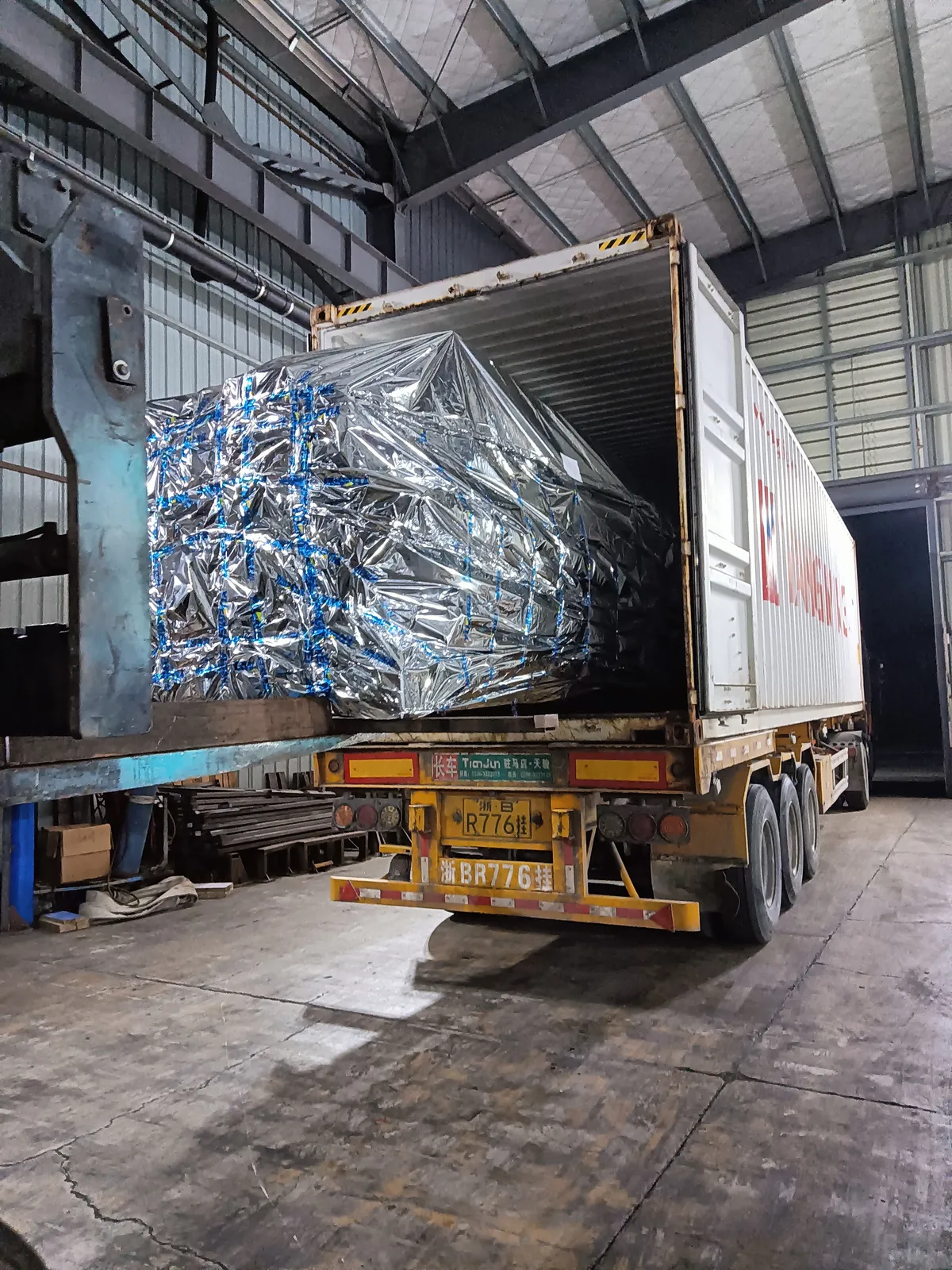
The main crate was loaded first, positioned at the container's centerline to maintain balanced weight distribution. The auxiliary cartons were stowed around and on top of the main crate, with dunnage bags and air pillows filling all voids to prevent shifting. The container tail was secured with a cargo restraint net and additional strap lashing.
Phase 2: Export Customs Clearance
The machine was classified under HS Code 8447.90 (parts and accessories of knitting machines). Documentation prepared:
- Commercial Invoice and Packing List
- Bill of Lading (telex release)
- Certificate of Origin (needed to claim preferential tariff treatment under the Mexico-China trade agreement)
- Machine specification sheet and photos for Mexican customs reference
Export customs clearance in Ningbo was straightforward. The shipment was released within one working day.
Phase 3: Ocean Transit
The container was gated in at Ningbo Port on March 14 and loaded onto MV YM Mobility (vessel voyage: 038E). The direct service routing was Ningbo → Manzanillo with a scheduled transit time of 22 days.
Fig 2: Container loading at Ningbo Port — 1×40HQ loaded aboard MV YM Mobility.
Phase 4: Arrival and Customs Clearance (Manzanillo)
Vessel arrived at Manzanillo on April 5. The container was discharged and moved to the customs inspection area.
Challenges Encounterled
Challenge 1: Import Permit for Industrial Machinery
Mexico requires a "permiso de importación" (import permit) issued by the Ministry of Economy for second-hand or specialized industrial machinery. While this machine was brand-new, the classification still triggered a permit requirement under Mexico customs regulations for machinery with electric control modules. The client was unaware of this requirement.
Challenge 2: Container Availability and Congestion at Manzanillo
Manzanillo is Mexico's busiest cargo port on the Pacific coast, handling approximately 3+ million TEUs annually. During the vessel's berthing window, the terminal experienced typical congestion, with yard utilization exceeding 85%. The container was discharged but sat in the yard for 3 days before being gated out, as chassis availability was also tight.
Challenge 3: Documentation Inconsistency
The manufacturer's commercial invoice listed the machine's value in RMB without a clear INCOTERMS breakdown. Mexican customs required a precise FOB value declaration in USD, and the initial invoice did not separate inland freight from the product value, which caused an initial hold on the customs submission.
How We Solved Them
Solution 1: Expedited Permit Application
DTFU's Mexico desk contacted a local customs broker in Manzanillo to initiate the import permit application as soon as the vessel departed Ningbo. The broker submitted the machine specification sheet, brand-new certification from the manufacturer, and the original purchase contract in Spanish translation. The permit was issued within 5 working days — well before the vessel arrived. The total cost for the permit and broker service was kept low at approximately $350 USD.
Solution 2: Proactive Chassis Booking
To mitigate the Manzanillo chassis shortage, DTFU's operations team pre-booked a chassis through the carrier's equipment control desk 48 hours before the vessel's estimated arrival. This reduced the gate-out delay from a potential 5–7 days to just 3 days. The container was picked up on April 8.
Solution 3: Invoice Correction
The operations team contacted the manufacturer to re-issue the commercial invoice in a Mexico-compliant format. A corrected invoice with FOB Ningbo values broken out clearly was submitted electronically to Mexican customs. The hold was lifted within 24 hours.
Final Timeline
| Milestone | Date | Remarks |
|---|---|---|
| Cargo delivered to Ningbo warehouse | Mar 12 | Condition check & stowage |
| Container stuffed & sealed | Mar 13 | Stowage photos documented |
| Export customs clearance | Mar 14 | Released same day |
| Vessel departure (Ningbo) | Mar 14 | MV YM Mobility |
| Vessel arrival (Manzanillo) | Apr 5 | On schedule |
| Discharge & customs hold | Apr 5–7 | Import permit & invoice corrected |
| Gate-out from terminal | Apr 8 | Chassis pre-booked |
| Cargo delivered to Guadalajara | Apr 10 | Final mile by truck (2 days) |
Total door-to-door transit: 29 days (from warehouse receipt to customer delivery).
Final Cost
The total logistics cost was kept deliberately low, as the client had a tight procurement budget.
| Cost Item | Amount (USD) |
|---|---|
| Origin trucking (Zhuji → Ningbo warehouse) | $180 |
| Warehouse handling & container stuffing | $220 |
| 1×40HQ Ocean freight (Ningbo → Manzanillo) | $1,850 |
| Export customs clearance (Ningbo) | $95 |
| CNCA / AMS / ISPS fees | $65 |
| Ocean freight insurance (0.3% of declared value) | $210 |
| Import permit (Mexico) & customs broker fee | $350 |
| Terminal handling charge (Manzanillo) | $280 |
| Destination customs clearance | $180 |
| Chassis & gate-out fees | $120 |
| Trucking Manzanillo → Guadalajara | $650 |
| Total | $4,200 |
At $4,200 for a door-to-door FCL shipment of heavy industrial machinery from inland China to inland Mexico, the per-kg cost worked out to approximately $1.09/kg — highly competitive for this cargo type and route.
Customer Review
"The machine arrived in perfect condition. We were worried about the import permit because we had heard stories of machinery being held at customs for weeks, but DTFU handled it before the boat even arrived. The total cost was very reasonable — we had budgeted closer to $6,000. I would use them again for our next machine upgrade."
— Carlos M., Production Manager, Guadalajara
Lessons Learned
-
Start the Mexico import permit process early — Even for brand-new machinery, the Mexican Ministry of Economy permit requirement should be triggered the moment the Bill of Lading is confirmed, not after the vessel arrives. This alone can save 1–2 weeks of customs hold time.
-
Container stowage for heavy machinery matters — The single-crate, centerline-loaded configuration with dunnage filling all voids proved effective. No internal load shift was detected upon devanning. For future shipments of top-heavy machinery, cross-lashing at additional anchor points would be recommended.
-
Manzanillo congestion is a known variable — Pre-booking chassis and coordinating with the carrier's local agent is essential. Relying on "first come, first served" chassis availability can add unpredictable delays.
-
Invoice formatting for Mexican customs — Chinese suppliers commonly issue invoices without INCOTERMS breakdowns. Requesting a separate FOB value declaration in USD at the time of order placement prevents last-minute correction loops.
-
FCL remains the most cost-effective option for single heavy pieces — Despite paying for a full 40HQ container, the total cost was lower than what LCL would have been once consolidation, CFS, and higher insurance premiums were factored in.