Customer Background
The customer is an electrical contractor and utility materials supplier based in the Santa Cruz, California area. They supply and install medium-voltage cable accessories for utility and commercial distribution projects across the central California coast. This shipment fed a scheduled cable-installation job where the termination work was fixed to a specific window — the cable joints had to be on site before the field crew mobilized, because the line segment could not stay open once the scheduled work began.
The customer's usual import channel was a domestic distributor with local stock. For this order, the medium-voltage joints were sourced directly from the manufacturer in China, and the project schedule did not allow for the distributor's standard replenishment lead time. They engaged DTFU Logistics for a door-to-door air move, and the shipment was booked in the same week as a second DTFU-handled air consignment to the same destination — automotive radiators for a separate customer order.
Cargo Information
| Item | Detail |
|---|---|
| Commodity | Cold shrink joints (medium-voltage cable accessories, silicone insulation) |
| Mode | Air freight |
| Origin | Shenzhen, China |
| Destination | Santa Cruz, CA, United States |
| Gross weight | 210 kg |
| Volume | 1.4 CBM |
| Chargeable weight | 234 kg (volumetric weight exceeded gross weight) |
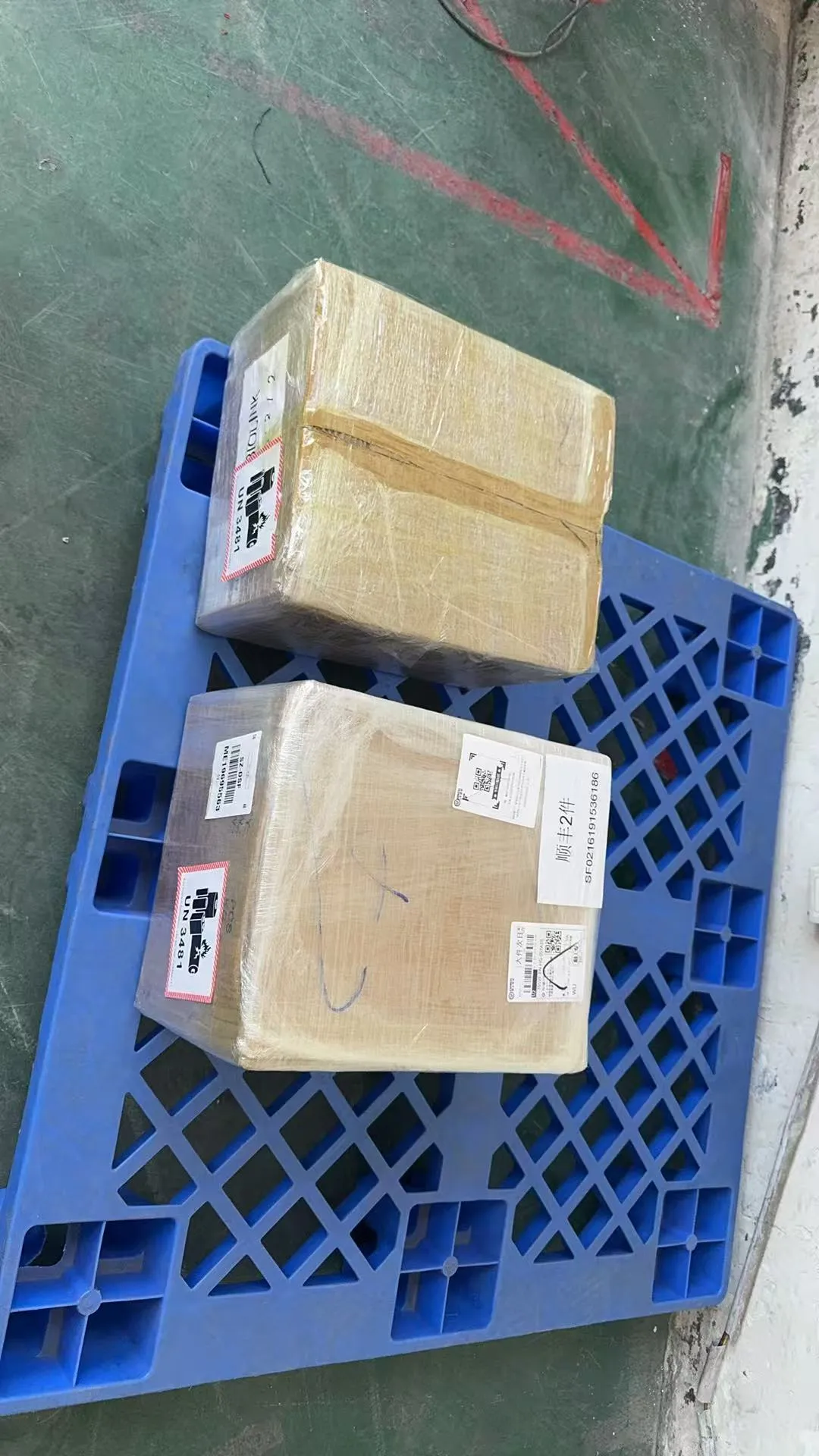
The shipment consisted of 7 cartons. Cold shrink joints are silicone rubber insulation sleeves that are pre-expanded and held in place by a removable spiral core; they must not be compressed, crushed, or deformed before installation, or the interference fit against the cable insulation is lost. The cartons were therefore packed with the joint assemblies upright and secured, with the load-bearing faces of each carton kept clear of the silicone parts. The chargeable weight was driven by volume: at the standard air freight divisor of 1 CBM = 167 kg, the 1.4 CBM produced a volumetric weight of 234 kg against a gross weight of 210 kg.
Why This Shipping Method
Air freight was selected because the installation window was fixed and non-negotiable.
The cable joints were required on site before the scheduled installation date. A sea freight move from Shenzhen to a West Coast port followed by inland trucking to Santa Cruz was quoted at roughly 18–25 days door-to-door, which placed arrival after the field crew was already scheduled to begin. The project could not be deferred without rescheduling the line segment and the associated utility shutdown coordination.
Air freight was evaluated as the alternative. Shenzhen Bao'an (SZX) has direct belly-hold capacity to the San Francisco Bay Area (SFO/SJC), with an air transit time of approximately 2 days, followed by a short truck leg of about 1–1.5 hours from the Bay Area to Santa Cruz. The door-to-door estimate was 5 days, which cleared the installation window with margin.
The cost penalty was accepted knowingly — air freight ran substantially higher than the sea freight alternative on a per-kilogram basis — but the decision was driven by the project schedule rather than the freight invoice. A delayed cable installation at a fixed line segment carried coordination and labor costs that exceeded the freight differential.
Shipping Process
Step 1 — Booking and cargo collection
The booking was placed as soon as the manufacturer confirmed readiness, and the cargo was collected from the supplier in Shenzhen and brought to the forwarder's consolidation point at the airport. Because the shipment was small (7 cartons) and deadline-bound, it was moved directly to the consolidation point rather than waiting for a standard multi-day consolidation cycle.
Step 2 — Weight and volume verification
Each carton was weighed and measured individually. The gross weight was confirmed at 210 kg and the volume at 1.4 CBM, giving a volumetric weight of 234 kg at the 167 kg/CBM divisor. Since the volumetric weight exceeded the gross weight, the chargeable weight was set at 234 kg. The upright packing of the joint assemblies was re-checked at this stage to confirm the cartons could be stacked without the silicone parts bearing the weight of the cartons above.
Step 3 — Export customs declaration
The export declaration was filed in Shenzhen for the cable-accessory line. The HTS classification for the cable accessories was confirmed before booking and used consistently on the export declaration and the commercial invoice, so the data carried through to the U.S. entry without a classification change. The declaration cleared the same working day.
Step 4 — Airline uplift
The cartons were tendered to the airline at Shenzhen Bao'an and uplifted on a scheduled service to the San Francisco Bay Area. The air sector took approximately 2 days. The routing placed the shipment at SFO/SJC, the nearest Bay Area cargo airports to Santa Cruz, minimizing the truck leg at destination.
Step 5 — U.S. clearance and coordinated last-mile delivery
On arrival, the shipment moved through U.S. customs clearance. The last-mile truck leg from the Bay Area to Santa Cruz was arranged in coordination with the second air consignment to the same destination (automotive radiators, shipped in the same week). The two consignments were cleared and delivered through the same administrative arrangement, and the truck leg was handled in a single pass to Santa Cruz. The cold shrink joints were delivered ahead of the installation window.
Challenges Encountered
1. Fixed installation-window deadline
The joints had to be on site before the scheduled installation date, with the line segment and field crew already committed. There was no buffer for a booking rejection, a missed flight, or a clearance hold at any point in the chain — a one-day slip could have pushed delivery past the start of the field work.
2. Fragile silicone parts in air handling
Cold shrink joints are silicone insulation sleeves that fail functionally if compressed or deformed before installation. Air freight involves repeated handling — collection, palletization, airline transfer, and ground handling at both airports — and stacked cartons at any point could transfer weight onto the silicone assemblies. The parts also had to be protected from dust and moisture ingress during handling.
3. HTS classification and the coordination of two same-destination air consignments
The cable-accessory line sits between adjacent HTS positions (8544 and 8536), and the tariff line chosen at origin had to match the U.S. entry to avoid a rate revision. In parallel, two separate small air consignments were moving to the same destination in the same week — the joints and the radiators — and without coordination they would have generated two clearance files, two broker fees, and two separate truck runs to Santa Cruz.
How We Solved Them
For the installation-window deadline:
The booking was placed the day readiness was confirmed, and cargo collection skipped the standard consolidation cycle. The export declaration was prepared in parallel with collection so that clearance and flight uplift ran back-to-back. The destination-side clearance was arranged before departure, and the last-mile truck was scheduled in advance rather than booked after arrival, removing a day of staging time at the airport.
For the fragile silicone parts:
The packaging plan was specified and checked at the consolidation point: cartons were loaded upright with the joint assemblies vertical so the removable spiral cores were not side-loaded, and each carton was marked as non-stackable over its contents. Stacking was limited to cartons whose structural faces carried the load, keeping the silicone parts clear of the cartons above. The cartons were also kept sealed and dry through handling to prevent dust or moisture from reaching the pre-expanded assemblies.
For the HTS classification and consignment coordination:
The tariff line was confirmed before booking and used consistently on the export declaration, commercial invoice, and U.S. entry, so no classification change was raised at clearance. The two same-destination consignments were consolidated administratively: a single clearance arrangement covered both, and the last-mile truck was scheduled as one run to Santa Cruz rather than two separate deliveries. This reduced the per-shipment cost of the destination leg and removed one additional touch point for the cargo.
Final Timeline
| Milestone | Date |
|---|---|
| Cargo ready at supplier (Shenzhen) | July 6 |
| Cargo collected, consolidation point at airport | July 6 |
| Weight and volume verification (210 kg / 1.4 CBM / 234 kg chargeable) | July 6 |
| Export customs declaration filed and cleared | July 7 |
| Departure Shenzhen Bao'an (SZX) | July 7 |
| Arrival San Francisco Bay Area (SFO/SJC) | July 9 |
| U.S. customs clearance | July 9 |
| Coordinated truck to Santa Cruz | July 10 |
| Delivery, ahead of scheduled installation window | July 10 |
Total door-to-door transit time: 5 days
Final Cost
| Item | Cost (USD) |
|---|---|
| Air freight (234 kg chargeable × $4.50/kg, Shenzhen → SFO/SJC) | $1,053 |
| Origin airport handling (Shenzhen) | $110 |
| U.S. customs clearance | $150 |
| Truck SFO/SJC → Santa Cruz | $140 |
| Total door-to-door | $1,453 |
Note: figures reflect the spot rate at the time of booking (July 2026) and vary with fuel prices and available air capacity. The last-mile truck leg was coordinated with the concurrent radiators consignment to the same destination, which kept the per-shipment delivery cost down; the figure above is this shipment's apportioned cost.
Customer Review
"The joints were on site before the installation window opened, so the field crew started on the scheduled date. Packaging held up — the silicone assemblies were received upright and showed no compression or deformation. The clearance and delivery were handled together with the radiators shipment we also had coming in the same week, which simplified the receiving side."
— The customer's project coordinator, Santa Cruz, CA
Lessons Learned
-
For utility/electrical components, the installation window is the freight driver. When a cable segment and field crew are committed to a fixed date, air freight is the only mode that reliably clears the window, and the cost decision should be framed against the cost of a deferred installation rather than the freight bill alone.
-
Pre-expanded silicone insulation requires explicit handling constraints. Cold shrink assemblies fail if compressed or deformed, so the packing plan has to specify upright placement and keep load-bearing faces clear of the silicone parts. Marking cartons as non-stackable over their contents and checking the plan at the consolidation point is what preserves the interference fit through air handling.
-
The HTS line for cable accessories should be settled before booking, not at entry. The line sits across adjacent positions (8544/8536), and confirming the classification once and using it consistently on the export declaration, invoice, and U.S. entry removes the rate-revision risk at clearance.
-
Two small same-destination air consignments are cheaper managed as one. Coordinating clearance and last-mile delivery for the joints and the radiators as a single administrative arrangement cut the per-shipment destination cost and reduced the number of handling points, which matters more when the cargo is small and deadline-bound.