Customer Background
The customer is a specialty automotive shop in the Santa Cruz, California area that restores classic vehicles and carries out performance-build work. This radiator order fed a restoration project whose completion date was fixed in advance; the build could not proceed without the radiators on hand by that date.
The shop had previously sourced parts on longer ocean lead times and used domestic suppliers for routine items. This order was different: the aluminum-core radiators were produced to spec in China, and the remaining supply chain window after production would not absorb a standard ocean transit. They engaged DTFU Logistics to arrange the transport and to quote the duty-inclusive landed cost before committing to the move.
Cargo Information
| Item | Detail |
|---|---|
| Commodity | Automotive radiators (aluminum core), fully drained |
| Mode | Air freight |
| Origin | Shenzhen, China |
| Destination | Santa Cruz, CA, United States |
| Gross weight | 420 kg |
| Volume | 2.8 CBM |
| Chargeable weight | 468 kg (volumetric weight exceeded gross weight) |
| Cartons | 11 |
The shipment consisted of 11 cartons supplied by one manufacturer. The radiators are aluminum-core units with stamped tanks, and their protective cartons add substantial air volume relative to net weight. The volumetric weight, calculated at 2.8 CBM × 167 kg/CBM = 468 kg, exceeded the 420 kg gross weight, so the cargo was billed on the volumetric figure.
Why This Shipping Method
Air freight was selected over sea freight because the restoration deadline could not absorb a 20+ day ocean lead time.
The ocean alternative from Shenzhen to the U.S. West Coast, including drayage or rail to the Bay Area and a final truck leg to Santa Cruz, carried a realistic door-to-door window above 20 days, with port congestion adding uncertainty on top. Air freight to the San Francisco Bay Area (SFO/SJC) followed by a short truck move to Santa Cruz was estimated at 5 days door-to-door, which met the build date with margin.
The cost penalty was material: the air rate ran roughly 4 times the sea rate for the same chargeable weight. The customer's decision was driven by the fixed build deadline rather than the freight invoice — the radiators had to be in the shop on a specific date or the build could not be completed.
Separately, because the cargo is an aluminum automotive part, the duty exposure was not limited to MFN. Both Section 301 (auto parts list) and Section 232 (aluminum) rates applied on top of MFN, and the duty stack was calculated at the costing stage so the customer received a duty-inclusive landed-cost figure rather than a freight-only estimate.
Shipping Process
Step 1 — Booking and cargo collection
The radiators were collected from the manufacturer in Shenzhen and brought to the forwarder's consolidation point at Shenzhen Bao'an (SZX). Collection was arranged immediately after readiness was confirmed, since the window did not allow for a standard multi-day consolidation cycle.
Step 2 — Drained-condition verification and packaging inspection
Each radiator was verified to be fully drained of coolant before tendering. Residual liquid in the core is a spillage and compliance concern for air carriage, so the drained state was confirmed and recorded per unit. The packaging was inspected for protection of the aluminum fins and tanks; corrugated edging was in place over the fin faces and the units were staged upright.
Step 3 — Palletization and weight verification
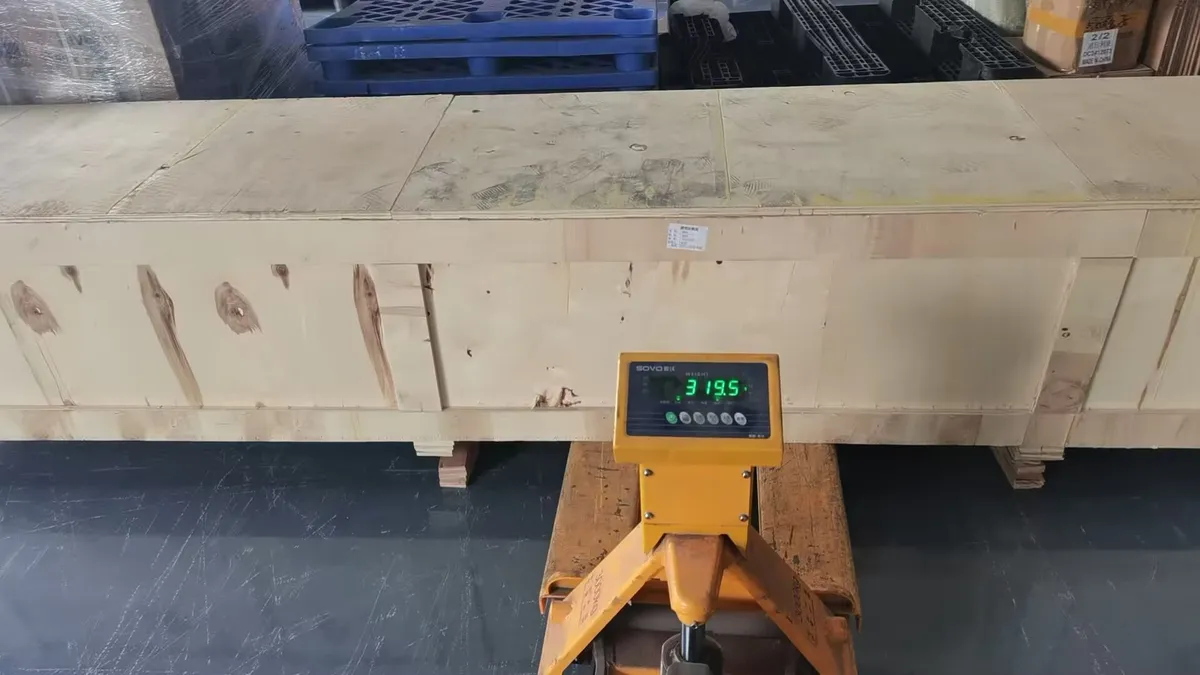
The 11 cartons were consolidated onto export pallets. Each carton was weighed and measured individually to confirm the volumetric calculation. The volumetric weight came to 468 kg against a gross weight of 420 kg, the difference representing the air volume occupied by the protective packaging.
Step 4 — Export customs declaration
The export declaration was filed in Shenzhen. Automotive radiators are not restricted goods for export from China; the commercial invoice, packing list, and declaration were submitted and cleared within the same working day.
Step 5 — Airline uplift
The cargo was tendered to the airline at Shenzhen Bao'an. The main-haul sector to the San Francisco Bay Area was uplifted on a scheduled service into SFO or SJC, with an in-transit time of approximately 2 days.
Step 6 — Import clearance and delivery in Santa Cruz
On arrival, the shipment moved through U.S. customs clearance, with duty assessed on the aluminum auto-parts line. The radiators were then trucked from the Bay Area airport to Santa Cruz, a road leg of roughly 1–1.5 hours, and delivered to the shop the same day clearance was granted.
Challenges Encountered
1. Time-critical modal-shift decision and its cost premium
The order's supply chain window had been shortened by production timing, leaving the shop with a hard deadline that the 20+ day ocean option could not meet. Shifting to air raised the freight cost to roughly 4 times the sea rate, and the compressed window left no buffer for a booking rejection, a missed flight, or a consolidation delay at any point in the chain.
2. Section 301 and Section 232 duty exposure on aluminum auto parts
The radiators fall under an aluminum auto-parts classification subject to both Section 301 and Section 232 rates stacked on top of MFN. The applicable rate stack had to be confirmed before booking so the landed-cost figure reflected the full tariff burden; a classification error at entry would have exposed the customer to a rate revision or additional duty at delivery.
3. Air-cargo packaging for fragile aluminum radiators
Aluminum fins are easily deformed, and the tank necks and mounting points are the first parts to suffer in rough handling. In addition, radiators must be fully drained of coolant for air carriage. Packaging and handling had to prevent fin damage across the two flight segments and the ground transfers, and the drained state had to hold for the whole move.
How We Solved Them
For the time-critical decision:
A sea-versus-air comparison — transit window, chargeable-weight rate, and duty-inclusive landed cost — was prepared on the day the deadline was confirmed. The air booking was placed immediately, cargo collection was completed within 24 hours of readiness, and the export declaration was prepared in parallel with collection so clearance and uplift ran back-to-back. The customer decided on the full comparison, not on the freight bill in isolation.
For the duty exposure:
The radiators were classified before booking and the applicable rate stack — Section 301 auto parts plus Section 232 aluminum on top of MFN — was confirmed and reflected in the landed-cost figure quoted to the customer. The classification used at origin was carried through to the U.S. entry so no rate revision could surface at clearance.
For the air-cargo packaging:
Drained condition was verified and recorded for each unit before tendering. The existing corrugated fin edging was retained, the radiators were staged upright in the cartons, and the cartons were shrink-wrapped and strapped on the export pallets to limit movement during flight and transfers. The shipment was tracked through both the main-haul and the truck leg, with delivery confirmation obtained on arrival.
Final Timeline
| Milestone | Date |
|---|---|
| Cargo ready at manufacturer (Shenzhen) | July 14 |
| Cargo collected, consolidation point | July 15 |
| Export customs declaration filed | July 15 |
| Export clearance granted | July 15 |
| Departure Shenzhen Bao'an (SZX) | July 16 |
| Arrival SFO/SJC | July 18 |
| U.S. customs clearance | July 18 |
| Truck SFO/SJC → Santa Cruz, delivery | July 19 |
Total door-to-door transit time: 5 days
Final Cost
| Item | Cost (USD) |
|---|---|
| Air freight (468 kg chargeable × $4.20/kg, Shenzhen → SFO/SJC) | $1,966 |
| Origin airport handling | $120 |
| U.S. clearance | $150 |
| Truck (SFO/SJC → Santa Cruz) | $140 |
| Total door-to-door | $2,376 |
Note: figures reflect the spot rate for this shipment (July 2026) and vary with season, fuel surcharge, and available capacity. Air freight ran approximately 4 times the sea freight rate for the chargeable weight; the ocean alternative was not selected because its 20+ day transit exceeded the build deadline. Section 301 and Section 232 duty on the aluminum auto-parts line is collected separately at entry and was included in the landed-cost figure quoted to the customer.
Customer Review
"We had a fixed completion date for the build and the ocean transit would have put the radiators in the shop after the deadline. The landed-cost figure we were quoted included the 301 and 232 duties, so there was no change at entry. The shipment arrived in Santa Cruz on day five, drained and undamaged, and went straight into the build."
— The customer's shop manager, Santa Cruz
Lessons Learned
- Deadline-driven modal shifts change the cost comparison. When the alternative is a missed build or repair deadline, air freight at roughly 4 times the sea rate can still be the lower-cost decision commercially. The freight choice should be framed against the cost of the delay, not the freight bill in isolation.
- The volumetric-to-gross weight relationship drives air freight economics for radiators. 2.8 CBM of protective packaging billed at 468 kg chargeable against a 420 kg gross weight; a quote based on gross weight alone would have understated the air cost and skewed the sea-versus-air comparison.
- Duty stacking on aluminum auto parts has to be confirmed before booking. Section 301 and Section 232 stacked on MFN materially change landed cost; confirming the classification and rate stack at the costing stage removed any rate surprise at U.S. entry.
- Drained condition and fin protection are one air-cargo requirement. Verifying full coolant removal satisfies air-carriage rules, and corrugated edging plus upright staging and pallet strapping prevented the fin deformation that made the parts fragile in the first place.