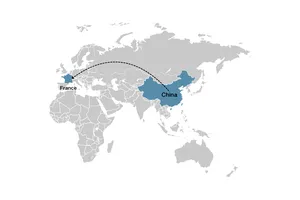
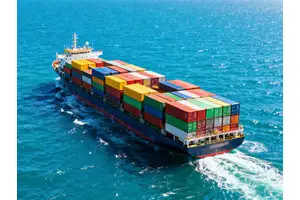
Are you wondering how long it takes for your goods to arrive when using shipping from China to France? With so many options like sea freight, air freight, and rail freight, it’s crucial to understand which method suits your needs best. In this comprehensive guide, we’ll explore the main shipping methods, routes, and key factors affecting the shipping time from China to France so you can make informed decisions for your business.
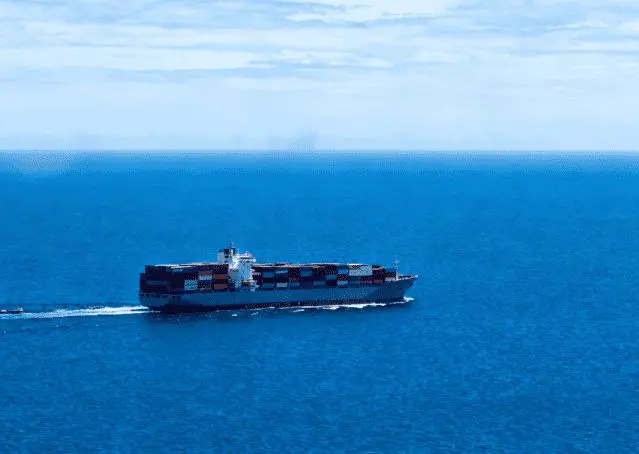
China to France
When shipping goods from China to France, choosing the right shipping method is critical for balancing cost, speed, and reliability. Here’s a comprehensive overview of the most common freight options, their characteristics, and when to choose each method.
Sea Freight from China to France
Sea freight (ocean shipping) is the most common and cost-effective method for transporting large volumes of cargo between China and France. It is ideal for bulk shipments and goods that are not time-sensitive.
Main Features:
-
Suitable for full container load (FCL) and less than container load (LCL)
-
Lower cost per unit compared to air or rail
-
Longer transit time (typically 25–40 days port-to-port, depending on the route and port congestion)
-
Offers flexibility with different container types: 20FT (28CBM), 40FT (56CBM), 40HQ (68CBM), and 45HQ (78CBM)
When to choose: When shipping large, heavy, or non-urgent goods, or if you want to minimize transportation costs.
Professional Tip: At DTFU International Logistics Co.,Ltd, we offer end-to-end sea freight services, including consolidation, customs brokerage, insurance, and real-time tracking. For more details on costs and procedures, see our in-depth guide on .
Air Freight from China to France
Air freight is the fastest method for shipping goods from China to France. It is suitable for high-value, urgent, or time-sensitive shipments.
Main Features:
-
Transit time: typically 2–7 days door-to-door, depending on the service
-
Higher cost compared to sea or rail freight
-
Suitable for smaller shipments, electronics, perishables, or high-value items
-
Direct flights available between major Chinese airports (e.g., Shanghai Pudong, Beijing Capital, Guangzhou Baiyun) and French airports (Paris Charles de Gaulle, Lyon Saint-Exupéry)
When to choose: When speed is critical and the shipment size/weight justifies the cost.
DTFU Recommendation: Our air freight solutions offer flexible options, cargo insurance, and door-to-door delivery across France. If you're interested in expedited options, check our insights on .
Rail Freight from China to France
Rail freight offers a mid-point solution in terms of speed and cost. The China-Europe rail network has grown rapidly over the past few years, making it a viable alternative for certain goods.
Main Features:
-
Transit time: typically 15–22 days door-to-door
-
Costs between sea and air freight
-
Regular services from key Chinese cities (Chongqing, Wuhan, Zhengzhou, Xi’an) to major European hubs (Duisburg, then connecting to France by truck or rail)
-
Ideal for electronics, automotive parts, textiles, and e-commerce goods
When to choose: For goods requiring faster delivery than sea freight, but at a lower cost than air freight.
DTFU Value: We provide seamless rail freight solutions, including customs clearance, tracking, and final-mile delivery in France.
Door to Door Delivery from China to France
Door to door delivery is an integrated logistics service covering the entire shipping process – from your supplier in China to the recipient’s address in France.
Main Features:
-
Includes pickup, export customs clearance, international transit, import customs clearance, and final delivery
-
Available for sea, air, and rail freight; ideal for e-commerce, SMEs, and clients seeking hassle-free solutions
-
Simplifies the logistics process and provides a single point of contact
When to choose: For businesses and individuals seeking a hassle-free, all-inclusive shipping experience.
DTFU Expertise: We specialize in tailored door to door solutions, including FBA (Amazon Fulfillment), warehouse handling, insurance, and one-stop customs clearance. You may also find it helpful to read our resource on .
Main Shipping Routes from China to France
Selecting the optimal shipping route is essential for timely and reliable delivery. Below are the main routes by each shipping method, including key ports and transit points.
Sea Freight Routes
| Major China Ports | Main France Port | Typical Route | Frequency | Notes |
|---|---|---|---|---|
| Shanghai | Le Havre | Shanghai → Singapore → Le Havre | Weekly | Le Havre: Largest container port in France |
| Shenzhen | Marseille-Fos | Shenzhen → Suez Canal → Marseille | Weekly | Marseille-Fos: Key port for south France |
| Ningbo | Le Havre/Marseille | Ningbo → Singapore → Le Havre/Marseille | Weekly | Flexible routing via Mediterranean or North Europe |
| Qingdao | Le Havre | Qingdao → Busan → Le Havre | Bi-weekly | Good for north China exporters |
Route Insights: Le Havre and Marseille-Fos are the most commonly used entry ports in France for containerized cargo. Connections from Singapore, Rotterdam, or Antwerp are often used for transshipment.
Air Freight Routes
| Major China Airports | Main France Airports | Example Airlines | Typical Transit Time |
|---|---|---|---|
| Shanghai Pudong (PVG) | Paris Charles de Gaulle (CDG) | Air France, China Eastern | 2–5 days |
| Guangzhou Baiyun (CAN) | Paris CDG, Lyon LYS | Air France, China Southern | 3–6 days |
| Beijing Capital (PEK) | Paris CDG | Air France, Air China | 2–5 days |
Direct Flights: Regular direct flights operate between Chinese and French major airports, ensuring fast transit for urgent cargo.
Rail Freight Routes
| Main Rail Hubs in China | European Entry Point | Final Delivery to France | Typical Transit Time |
|---|---|---|---|
| Chongqing | Duisburg (Germany) | Truck/Rail to France | 16–20 days |
| Xi’an | Małaszewicze (Poland) | Truck/Rail to France | 15–18 days |
| Wuhan | Hamburg (Germany) | Truck/Rail to France | 16–22 days |
Route Highlights: Trains from China primarily arrive in Germany or Poland, then goods are transported by truck or rail to France, including major cities like Paris, Lyon, and Marseille.
Door to Door (All Modes)
For door to door shipments, the routing combines the modes above with local pickup and last-mile delivery in France. This can include customs clearance at French entry ports (Le Havre, Marseille-Fos, Paris CDG) and express courier or trucking to the recipient.
Choosing the Right Route and Method
Selecting the optimal shipping method and route depends on several factors:
-
Urgency of delivery
-
Type and volume of goods
-
Budget constraints
-
Special handling requirements (e.g., temperature control, oversized cargo)
DTFU International Logistics Co.,Ltd provides expert consultation to help global traders, e-commerce sellers, manufacturers, and SMEs find the best logistics solution from China to France. Our services ensure professional handling, transparent communication, and efficient transit for every shipment.
For tailored advice or a shipping quote, contact our team at . As a highly professional, cost-effective, and reliable freight forwarder, we are dedicated to helping you succeed in global trade.
How long does it take to ship from China to France
Shipping time from China to France depends on the chosen transportation mode, origin and destination cities, customs clearance, and other logistics factors. Below, I’ll provide a comprehensive comparison of shipping times for the three main freight methods: sea freight, air freight, and rail freight. All information is up-to-date as of 2025 and based on my hands-on experience managing large-scale international shipments at DTFU International Logistics Co.,Ltd.
Related reading: If you’re comparing costs as well as transit times, check our detailed breakdown of the .
Sea freight shipping time from China to France
Sea freight is the most common and cost-effective option for shipping large volumes. Transit time varies based on the specific ports, service type (FCL/LCL), and whether direct or transshipment routes are used.
Typical routes & transit times (2025):
| Chinese Port | French Port | FCL Estimated Transit Time (Days) | LCL Estimated Transit Time (Days) |
|---|---|---|---|
| Shanghai | Le Havre | 28 – 35 | 33 – 40 |
| Shenzhen | Le Havre | 29 – 37 | 34 – 42 |
| Ningbo | Marseille | 30 – 38 | 35 – 43 |
| Qingdao | Fos-sur-Mer | 32 – 40 | 37 – 45 |
Key Notes:
-
Port congestion and seasonal demand (e.g., pre-Christmas) may affect actual shipping times.
-
Door-to-door sea freight services may add 7–10 days to account for trucking, consolidation, and last-mile delivery.
-
FCL (Full Container Load) is usually faster than LCL (Less than Container Load) due to less handling and fewer stops.
Air freight shipping time from China to France
Air freight is the fastest shipping method, widely used for urgent shipments, high-value products, and e-commerce.
Typical air shipping times:
-
Direct flights: 2 – 4 days (including customs clearance)
-
Indirect flights (with transit): 4 – 7 days
| Chinese Airport | French Airport | Direct Flight Time (hours) | Total Door-to-Door (days) |
|---|---|---|---|
| Shanghai PVG | Paris CDG | 12 – 14 | 2 – 4 |
| Guangzhou CAN | Paris CDG | 13 – 15 | 2 – 4 |
| Beijing PEK | Paris CDG | 11 – 13 | 2 – 4 |
| Shenzhen SZX | Paris CDG | 13 – 14 | 2 – 4 |
Key Notes:
-
Shipping time includes export customs clearance and import clearance in France.
-
Peak periods (e.g., major shopping festivals) may cause delays.
-
Express air courier services (e.g., DHL, FedEx) can deliver in as fast as 1–3 days but at higher costs.
Rail freight shipping time from China to France
Rail freight is a growing option, especially for shipments balancing speed and cost between sea and air. With the development of the China-Europe Railway Express, rail shipping has become more reliable and frequent.
Typical rail shipping times:
| Chinese Rail Hub | French Rail Terminal | Estimated Transit Time (Days) |
|---|---|---|
| Chengdu | Lyon | 18 – 22 |
| Xi’an | Duisburg (then truck to France) | 16 – 19 |
| Wuhan | Valenton (Paris) | 20 – 24 |
Key Notes:
-
The above timelines cover rail transit only. Door-to-door delivery may add 2–4 days.
-
Rail is best for electronics, automotive parts, textiles, and other time-sensitive goods.
-
Rail routes may be temporarily affected by geopolitical events (e.g., Eurasian border policies, war zones).
Step-by-step process of shipping from China to France
Shipping goods from China to France involves a series of well-coordinated steps to ensure efficiency, cost-effectiveness, and compliance with international regulations. Below is an overview of the typical process, applicable whether you are an importer, exporter, or logistics manager.
1. Inquiry and Quotation
-
Contact a reputable freight forwarder (such as DTFU International Logistics Co.,Ltd) with your shipment details (cargo type, weight, volume, origin, destination, required services).
-
Receive a tailored quotation covering freight costs, surcharges, customs duties, insurance, and value-added services.
2. Booking the Shipment
-
Confirm the booking with your selected freight forwarder. Choose the most suitable shipping method (sea, air, or rail), service type (FCL/LCL/express), and any additional services (such as cargo insurance or door-to-door delivery).
-
Arrange pick-up or delivery to the forwarder’s warehouse or consolidation center in China.
3. Export Customs Clearance
-
Prepare the necessary shipping documents:
-
Commercial Invoice
-
Packing List
-
Bill of Lading/Air Waybill
-
Export License (if required)
-
-
Your freight forwarder will submit the documents to Chinese customs for clearance.
4. International Transportation
-
Cargo is loaded onto the designated vessel, plane, or train.
-
The shipment is transported from the port/airport/rail hub in China to the corresponding arrival point in France.
5. Import Customs Clearance in France
-
Upon arrival, the freight forwarder or appointed customs broker handles French customs clearance.
-
Documents, taxes, and duties are processed according to the EU and French regulations.
6. Final Delivery
-
After customs release, goods are delivered to the consignee’s designated address, warehouse, or fulfillment center via road or courier.
-
For door-to-door shipments, your freight forwarder will coordinate last-mile delivery and provide real-time tracking.
Key Factors Affecting Shipping Time from China to France
As an international freight forwarding expert, I have analyzed multiple case studies and shipping records for trade between China and France. The shipping time can vary significantly, influenced by several key factors. Understanding these will help you make informed decisions and optimize your supply chain.
1. Shipping Method
The choice between sea freight, air freight, rail freight, or door-to-door delivery is the most significant determinant of transit time. Generally, air freight is the fastest but also the most expensive, while sea freight is slower but cost-effective for bulk cargo.
| Shipping Method | Typical Transit Time | Cost Level | Suitable For |
|---|---|---|---|
| Sea Freight | 25–40 days | Low | Large volumes, non-urgent shipments |
| Air Freight | 3–7 days | High | Urgent, high-value, or perishable goods |
| Rail Freight | 15–22 days | Medium | Moderate volumes, time-sensitive cargo |
| Door-to-door | 7–45 days | Varies | E-commerce, special handling needed |
For reference, if you are considering other European destinations, you may want to compare with the or .
2. Origin and Destination Ports
The specific ports selected in China and France affect total transit time. Major Chinese ports like Shanghai, Shenzhen, and Ningbo have more frequent sailings and better infrastructure, reducing delays. In France, Le Havre and Marseille are key entry points.
-
Port congestion, vessel schedule changes, or limited sailing frequencies may add days to your delivery.
3. Customs Clearance Efficiency
Delays often occur during customs procedures in both China and France. Factors influencing clearance time include:
-
Accuracy and completeness of documentation
-
Product classification and compliance with EU regulations
-
Import restrictions or duties Engaging a professional freight forwarder like DTFU International Logistics Co.,Ltd ensures faster and smoother customs clearance through experienced handling and up-to-date compliance knowledge.
4. Seasonal Demand and Public Holidays
Shipping times can be extended during peak seasons (e.g., Chinese New Year, Golden Week, Christmas) due to increased cargo volume and port congestion.
5. Weather and Force Majeure Events
Typhoons, strikes, pandemics, and geopolitical issues can lead to unexpected delays. For example, in 2023, strikes at French ports and the Red Sea crisis impacted shipping schedules worldwide.
6. Cargo Type and Special Handling
Certain types of cargo, such as hazardous materials, oversized shipments, or temperature-controlled goods, may require additional documentation, inspections, or specialized equipment, affecting transit times.
7. Carrier and Route Selection
Different carriers and shipping lines offer varied transit schedules and reliability. Fast direct services typically cost more, while transshipment routes may be cheaper but slower.
How to Get Faster Shipping from China
Businesses aiming to minimize shipping time between China and France can use several proven strategies:
1. Choose the Fastest Shipping Mode
If time is critical, opt for air freight or express courier services. For larger shipments, rail freight offers a balanced solution between speed and cost.
2. Book Shipments Early
Reserve space well in advance, especially before peak seasons. Early booking ensures your cargo is prioritized and avoids last-minute delays due to space constraints.
3. Work with a Professional Freight Forwarder
Partnering with an experienced company like DTFU International Logistics Co.,Ltd gives you access to priority services, optimized route planning, and proactive exception management.
-
DTFU offers a one-stop logistics solution, including sea freight, air freight, rail freight, Amazon FBA, warehouse, insurance, customs clearance, door-to-door delivery, OOG freight, consolidated freight, and breakbulk freight — all designed to streamline your supply chain.
4. Ensure Accurate Documentation
Prepare all shipping and customs documents correctly to prevent clearance delays. Leverage the expertise of your freight forwarder to review and validate paperwork.
5. Consider Multi-Modal Solutions
Integrating multiple transport modes, such as sea-air or rail-truck, can optimize both cost and transit time for your specific needs.
6. Monitor Real-Time Shipment Status
Use advanced tracking and supply chain visibility tools to identify potential bottlenecks early and respond proactively.
7. Leverage Local Expertise
Local agents in both China and France can expedite processes, resolve issues on-site, and keep you updated on regulatory changes.
How to Get a Customized Shipping Solution
Different businesses have unique requirements. Here’s how you can obtain a shipping solution tailored to your needs:
1. Assess Your Cargo and Business Priorities
Determine your priorities: Is speed, cost, reliability, or flexibility most important? Analyze your shipment size, frequency, value, and any special handling needs (e.g., dangerous goods, temperature control).
2. Request a Tailored Quote
Contact a reputable freight forwarder like DTFU International Logistics Co.,Ltd. Provide the following details for a customized proposal:
-
Cargo description and volume (e.g., 20FT/40FT container, LCL, pallet count)
-
Trade terms (EXW, FOB, CIF, DDP, etc.)
-
Preferred shipping method(s)
-
Origin and destination addresses/ports
-
Required delivery deadline
-
Any special instructions (insurance, warehousing, repacking, Amazon FBA prep, etc.)
3. Benefits of Choosing DTFU International Logistics Co.,Ltd
-
Professional Analysis: Our team assesses your needs and recommends the optimal solution.
-
One-Stop Service: From pick-up in China to final delivery in France, including value-added services like cargo insurance and customs clearance.
-
Cost Efficiency: We negotiate with carriers to secure competitive rates.
-
Transparency: Real-time tracking and proactive communication.
-
Compliance: Ensuring your cargo meets all EU and French import regulations.
4. Ongoing Support and Optimization
DTFU experts offer continuous support, suggesting adjustments as your business evolves or as market conditions change.
Contact DTFU International Logistics Co.,Ltd today for a free consultation and discover how our professional, cost-effective, and high-quality shipping solutions can help your business succeed in the China-France