Customer Background
The customer is a storage and organization products distributor based in Chicago, Illinois. They supply nestable packing boxes and storage containers to big-box retailers, e-commerce sellers, and logistics suppliers across the Midwest. Their catalog is built around a private-label line of plastic packing boxes sold with matching plastic lids across roughly a dozen SKUs.
The company had previously sourced equivalent products from domestic distributors and one Vietnamese supplier. Rising landed costs from those channels prompted them to test direct importing from China for the first time. They engaged DTFU Logistics through a referral, with the specific requirement that the first container demonstrate a clear per-unit landed-cost saving while matching the delivery reliability they had from local stock.
Cargo Information
| Item | Detail |
|---|---|
| Commodity | Packing boxes with plastic lids (nestable storage boxes, mixed SKUs) |
| Mode | Ocean freight FCL |
| Origin | Ningbo, China |
| Destination | Chicago, IL, United States (IPI via Los Angeles / Long Beach) |
| Incoterm | FOB Ningbo |
| Container | 1×40HQ |
| Gross weight | 13,400 kg |
| Volume | 54 CBM |
| Pallets | 18 |
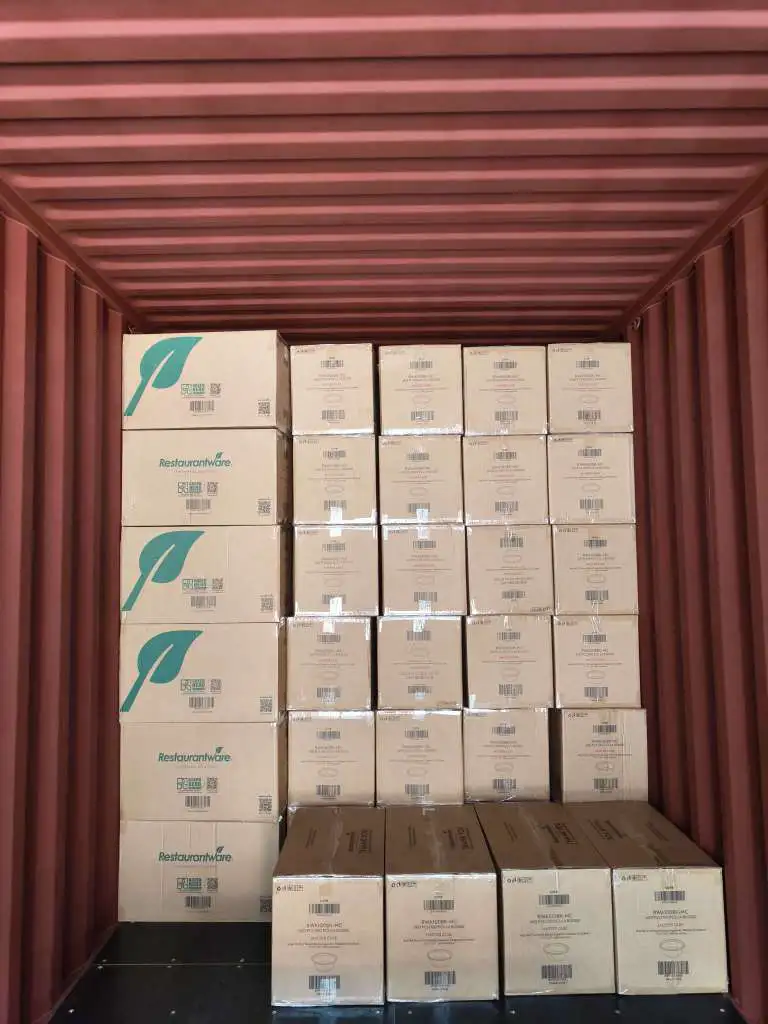
The cargo was a mix of box bodies and lids across six sizes. The boxes are manufactured from polypropylene and nest inside one another, while the lids are flat-molded panels. Combined, the shipment sat at roughly 54 CBM against a 40HQ usable volume of about 67 CBM — a moderate load density for a plastic container mix, with the constraint being cube rather than weight (13,400 kg is well below the ~26 t payload limit).
Why This Shipping Method
A 40HQ full-container move was selected over LCL consolidation. At 54 CBM, the cargo exceeded the range where LCL becomes cost-effective, and the mixed-SKU carton mix would have been handled, re-sorted, and reloaded at both the origin consolidation warehouse and the destination depot — two additional touch points that add damage and mis-sort risk for a first-time importer measuring the exercise against local stock reliability.
For the inland leg to Chicago, the container moved under the standard IPI (Interior Point Intermodal) model: ocean to a West Coast port, then rail to the Chicago ramp, then drayage to the warehouse. This routing was chosen over an all-water East Coast service because it offered a materially shorter door-to-door window at a comparable all-in cost for a Midwest destination.
A secondary consideration was landed-cost exposure. Plastic packing boxes fall under HTS 3924/3926, which are subject to Section 301 tariffs on goods of Chinese origin. The tariff treatment was reviewed during the costing stage so the per-unit comparison the customer wanted would reflect the true duty-inclusive number, not the freight quote alone.
Shipping Process
Step 1 — Factory loading (Yongkang → Ningbo)
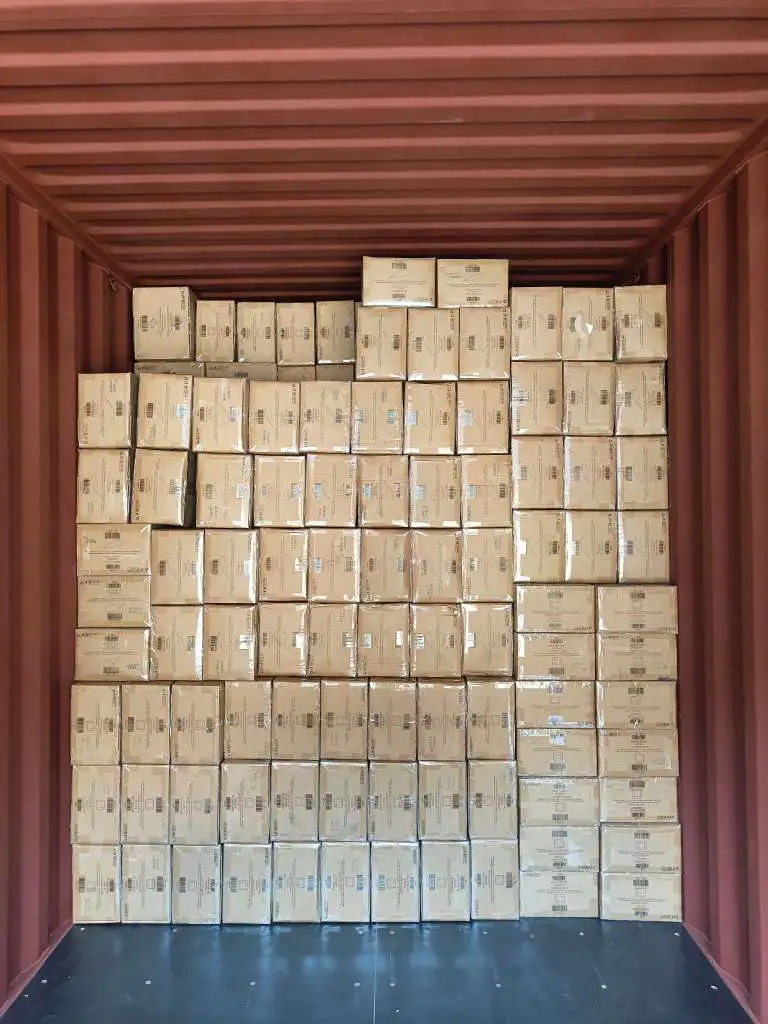
The factory is located near Yongkang, approximately two hours' drive from Ningbo Port. An empty 40HQ was dropped at the factory. Loading followed a pre-agreed nestable plan: lids flat-packed first to form a stable base layer, then nested box bodies stacked vertically, with heavier and fully-assembled SKUs at the bottom of each pallet column. Loading took about five hours under the factory export team's supervision. The container was sealed with a high-security bolt seal; container and seal numbers were recorded.
Step 2 — Export customs clearance (Ningbo)
The commercial invoice, packing list, and export declaration were filed through the China Customs single window. Because the shipment spanned multiple SKUs under one HS line, the declared unit values were cross-checked against the packing list to keep the invoice and customs data consistent — a detail that matters downstream for the U.S. ISF and entry filing. The declaration cleared the same day.
Step 3 — Ocean freight (Ningbo → Long Beach)
The container loaded onto a scheduled transpacific service at Ningbo's Beilun terminal. The ocean crossing to the Port of Long Beach, California took 13 days.
Step 4 — Rail inland haulage (Long Beach → Chicago)
After discharge and U.S. customs clearance, the container transferred to a rail ramp for the inland leg. The rail transit from Southern California to the Chicago ramp took five days, covering roughly 3,200 km on the double-stack network.
Step 5 — Drayage and unloading (Chicago)
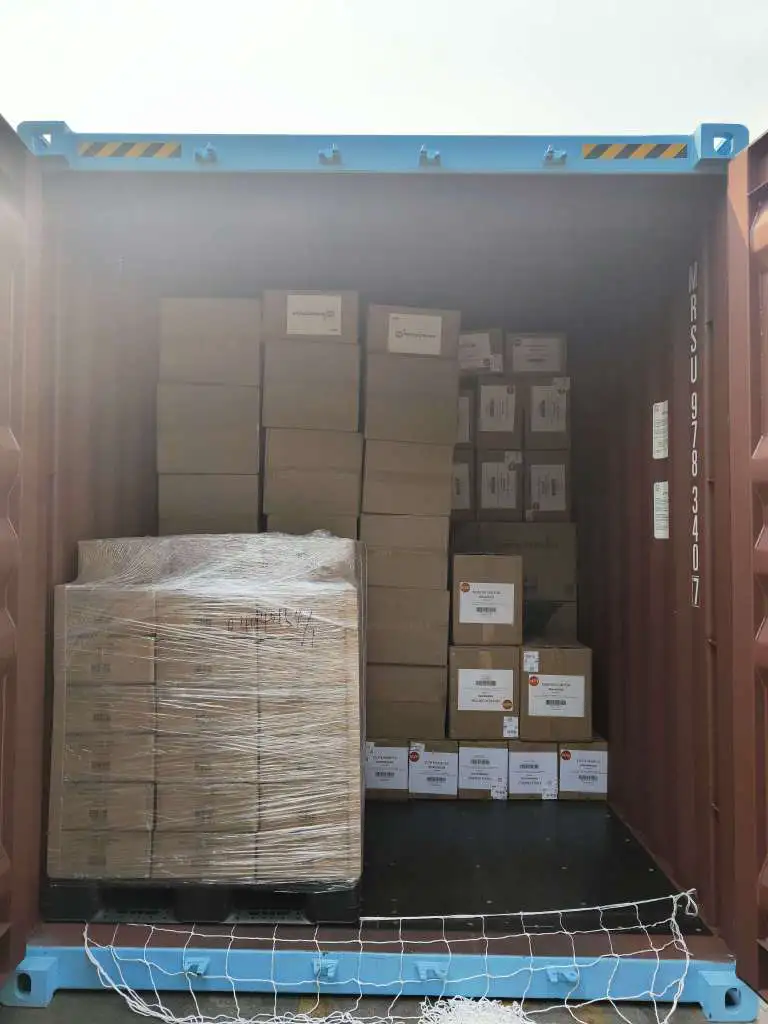
The container was drayed from the Chicago rail ramp to the customer's warehouse in the western suburbs. Unloading took approximately two hours; all cartons were received intact and the seal number matched the bill of lading.
Challenges Encountered
1. Mixed-SKU load density and the volumetric constraint
The six SKUs did not share uniform dimensions, and empty interior space inside nested cartons was the main source of wasted volume. Loaded without a plan, the mix would have consumed well over 54 CBM and risked leaving the 40HQ half-empty, directly increasing the per-unit freight cost the customer was comparing against local sourcing.
2. HS classification and Section 301 exposure
Plastic storage boxes sit in a grey zone between HTS 3924 (household articles of plastics) and HTS 3926 (other articles of plastics), which can carry different MFN and Section 301 treatment. The tariff line chosen at origin had to match what was declared on the U.S. entry, or the customer faced a rate revision or a liquidated-damages risk on the ISF.
3. ISF data consistency for a first-time importer
As a first-time U.S. importer, the customer had no experience with the Importer Security Filing (ISF) "10+2" rule, which requires 10 importer-side data elements — including container stuffing location, consolidator, and HTS line — no later than 24 hours before the cargo is laden at the foreign port.
How We Solved Them
For the load density issue:
The nestable loading plan was finalized before the container drop: lids flat-packed at the base layer, box bodies nested and stacked vertically, fully-assembled heavier SKUs allocated to the lower pallet tiers. Cartons were loaded on 18 pallets with stretch wrap and edge protection. The plan recovered approximately 8 CBM compared with a straight carton-by-carton load, and the mixed carton sizes were sequenced so that air gaps fell between, not across, pallet columns.
For the HS classification risk:
The tariff line was confirmed before booking, and the same HTS was used consistently on the export declaration, the commercial invoice, the ISF, and the U.S. entry. The Section 301 rate was factored into the landed-cost model given to the customer, so the per-unit comparison against domestic supply reflected the duty-inclusive figure rather than a freight-only estimate.
For the ISF requirement:
The ISF was filed by DTFU's licensed U.S. customs broker 24 hours before the vessel lading cut-off, using the stuffing location and consolidator data captured at the factory. The customer was briefed on the four flexible ISF elements so that any post-filing change could be updated before the vessel reached the first U.S. port.
Final Timeline
| Milestone | Timing |
|---|---|
| Empty container drop and factory loading (Yongkang) | Day 1 |
| Export customs clearance (Ningbo) | Day 2 |
| Vessel departure Ningbo (Beilun) | Day 3 |
| Arrival Long Beach | Day 15 |
| U.S. customs clearance | Day 16 |
| Rail departure Long Beach | Day 17 |
| Arrival Chicago rail ramp | Day 21 |
| Drayage and warehouse unloading | Day 22 |
Total door-to-door transit time: 22 days
Final Cost
| Item | Cost (USD) |
|---|---|
| Ocean freight (1×40HQ, Ningbo → Long Beach) | $2,780 |
| Origin THC, documentation, port fees | $410 |
| Container loading supervision and dunnage | $150 |
| Export customs clearance (China) | $120 |
| ISF filing | $45 |
| U.S. customs clearance (bond not included) | $160 |
| Rail IPI (Long Beach → Chicago) | $1,150 |
| Drayage (Chicago ramp → warehouse) | $380 |
| Total door-to-door | $5,195 |
Note: figures reflect the spot rates for this shipment (July 2026) and vary with season, fuel surcharge, and carrier capacity. Section 301 duty on the plastic line is collected separately at entry and was quoted to the customer as part of the landed-cost model.
Customer Review
"We were comparing against a domestic supplier and a Vietnamese option, so the container had to clear a hard per-unit cost target. The nestable loading plan and the tariff number we quoted ahead of shipment are the two reasons the comparison worked. The container arrived in Chicago in 22 days with no carton damage and the seal intact."
— The customer's supply chain manager, Chicago
Lessons Learned
- Nestable loading is where the freight saving lives for plastic containers. A pre-agreed stacking plan for six mixed SKUs recovered roughly 8 CBM against a carton-by-carton load. For a plastic cargo that cubes out before it weighs out, load density is directly equivalent to a freight discount.
- The HS line has to be settled before booking, not at entry. Using one consistent HTS across the export declaration, ISF, and U.S. entry removed the tariff-revision risk and let the customer see the true Section 301-inclusive cost before committing.
- First-time U.S. importers need the ISF handled for them. The 24-hour pre-lading rule is the single most common compliance failure for new importers; filing it from stuffing-location data captured at origin removed the exposure entirely.
- IPI rail remains the default for Midwest inland points. The ocean-plus-rail model delivered 22 days door-to-door to Chicago at a cost below an all-water East Coast service, and is a reliable baseline for any Midwest-bound container.