Are you trying to work out what a shipment from Shenzhen to Chile will really cost, and finding that the answers you get range from suspiciously cheap to absurdly expensive? This guide settles the practical questions: which Shenzhen terminal your cargo should leave from, the 2026 rate bands for 20ft, 40ft, LCL and air, how the China–Chile free trade agreement takes your duty to zero, what Chile's customs service actually asks for at San Antonio, and what the whole chain costs landed in Santiago.
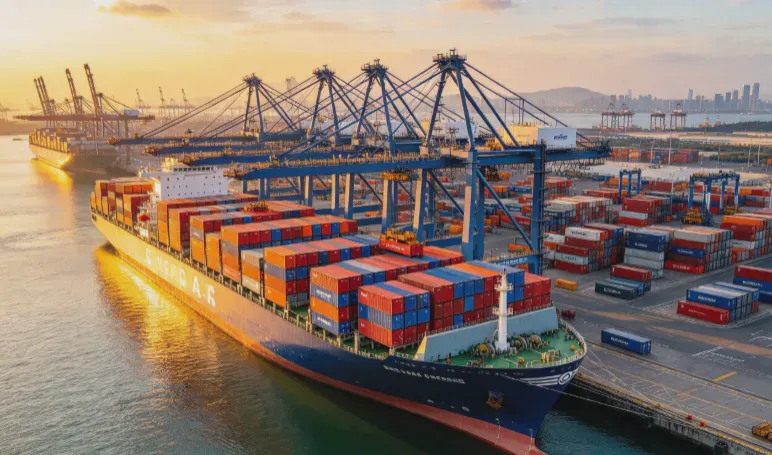
Why Shenzhen Is the Natural Origin for Chile-Bound Cargo
Shenzhen is not just one Chinese port among many. For a large share of what Chile imports from China, it is the origin the goods are actually made and consolidated in — and that matters more than any rate table.
The Pearl River Delta around Shenzhen produces the categories Chile buys most heavily: consumer electronics, LED lighting and drivers, auto parts, power tools, small appliances, plastic products, garments and increasingly solar equipment. Huaqiangbei in Futian remains one of the world's densest electronics component markets, and the factories in Longgang, Bao'an, Dongguan and Huizhou that feed it are within a few hours' trucking of the Shenzhen terminals.
Chile's own profile reinforces the fit. It is one of the most open economies in South America, with a free trade agreement with China that has been in force since 2006 and was upgraded in 2019, and a consumer market that imports heavily from southern China. Meanwhile Chile's mining and construction sectors — the copper industry above all — pull in machinery, spares and solar hardware that originate in this same region.
There is also a routing advantage that does not exist from every Chinese port. Chile's west-coast ports sit on the transpacific loop, and Shenzhen's Yantian terminal in particular is a first-call port on several Asia–South America services, which translates into shorter transit and fewer transshipment handovers than an origin that has to feed cargo into the loop through a hub.
Yantian vs Shekou vs Chiwan: Choosing Your Shenzhen Terminal
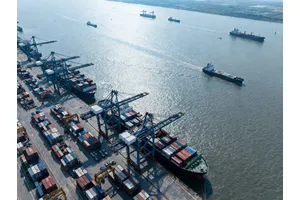
Shenzhen has three container terminals, and which one your cargo leaves from changes your trucking cost, your cut-off discipline and, on some services, your transit time by up to a week. Importers who treat "Shenzhen" as a single point of departure are the ones who miss deadlines.
| Terminal | Location | Main Function | Best Suited To |
|---|---|---|---|
| Yantian | East Shenzhen, Yantian district | Deep-water mainline terminal, direct Asia–South America services | Factories in Longgang, Pingshan, Huizhou and eastern Dongguan; cargo that must sail direct |
| Shekou | West Shenzhen, Nanshan district | Mainline and feeder services, strong intra-Asia links | Factories in Bao'an, Nanshan, western Dongguan; consolidated LCL cargo |
| Chiwan | West Shenzhen, adjacent to Shekou | Smaller operation sharing the western harbour | Cargo already in the Nanshan/Bao'an belt when Shekou capacity is tight |
The practical rule that saves importers the most money: match the terminal to the factory, not to the sailing schedule. A container loaded in Longgang and trucked west to Shekou crosses the entire city, and in Shenzhen traffic that haul can add both hours and cost for no benefit. Conversely, cargo from Bao'an or Dongguan routed to Yantian faces a similar penalty in the other direction.
There is a second consideration that only shows up when schedules tighten. Yantian carries the direct west-coast South America services; Shekou handles a large share of groupage and feeder traffic. If you are shipping LCL, your container is stuffed at a consolidation warehouse and the cut-off you must meet is the CFS cut-off, which is typically earlier than the terminal gate-in. LCL cargo arriving after that cut-off misses the sailing even though the vessel has not left. This is the single most common avoidable failure on the Shenzhen–Chile lane, and it happens to importers who apply FCL timelines to LCL bookings. Matching the terminal to the cargo is the first thing DTFU checks on a Chile booking, before any rate is quoted.
Cost to Ship a Container from Shenzhen to Chile in 2026
FCL Container Rates from Shenzhen
| Container Type | Capacity | Shenzhen → San Antonio | Shenzhen → Valparaíso | Notes |
|---|---|---|---|---|
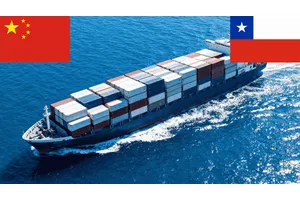
| 20ft (20GP) | ~28 CBM | $2,400 – $2,800 | $2,400 – $2,900 | Best for dense goods, machinery, tiles |
| 40ft (40GP) | ~56 CBM | $3,500 – $4,200 | $3,600 – $4,300 | Volume cargo, furniture, general merchandise |
| 40ft High Cube (40HQ) | ~68 CBM | $3,600 – $4,400 | $3,700 – $4,500 | Light bulky cargo — see the 20ft vs 40ft comparison |
Port-to-port spot ranges, mid-2026. Contract rates on committed monthly volume typically run 10–20% below these figures. Ocean rates on the transpacific west-coast lane move within a quarter, so treat any figure older than six weeks as indicative.
Two points about scope, because this is where most published Chile rates mislead. These figures are port-to-port — they cover ocean freight plus standard origin and destination terminal handling, and they exclude Chile's import duty and IVA, inland trucking and documentation. If you are comparing them against a full shipping cost guide for the Chile lane, check which scope each number uses. Any quote that presents a door-to-door delivered price without saying so is not comparable to a port-to-port rate, and the difference is not small.
LCL Rates from Shenzhen
| Origin | Destination | Rate per CBM | Minimum |
|---|---|---|---|
| Shenzhen (Shekou/Yantian CFS) | San Antonio | $80 – $120 | 1 CBM |
| Shenzhen (Shekou/Yantian CFS) | Valparaíso | $85 – $130 | 1 CBM |
| Shenzhen (Shekou/Yantian CFS) | Iquique | $95 – $140 | 1 CBM |
LCL works well up to roughly 12–15 CBM. Above that, the arithmetic usually turns in favour of a 20ft container — not only because the ocean cost is comparable, but because LCL carries fixed destination charges for deconsolidation and CFS handling that do not shrink with volume. On small shipments those fixed charges can approach the ocean freight itself.
Air Freight Rates from Shenzhen
| Weight Bracket | Economy (per kg) | Express (per kg) | Transit |
|---|---|---|---|
| 45–100 kg | $6.50 – $8.00 | $8.50 – $11.00 | 3–5 days |
| 100–300 kg | $5.80 – $7.50 | $8.00 – $10.50 | 3–5 days |
| 500 kg and above | $5.20 – $6.80 | $7.50 – $9.80 | 3–5 days |
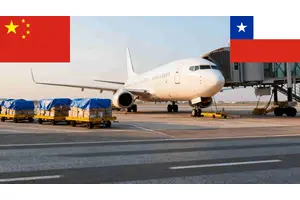
Shenzhen Bao'an International Airport (SZX) has direct and one-stop cargo routings to Santiago (SCL) in the four-to-seven-day range, with Guangzhou (CAN) as a nearby alternative when capacity out of SZX is tight — the air freight option for this lane is covered in more detail separately. Air freight is priced on chargeable weight, which is the greater of actual weight and volumetric weight — volume in cubic centimetres divided by 6,000. For light, bulky cargo, that calculation is what makes air expensive, and it is the first thing to check before assuming air is affordable.
How Long Does Shipping from Shenzhen to Chile Take?
| Route | Ocean Transit | Door-to-Door (FCL) | Door-to-Door (LCL) |
|---|---|---|---|
| Shenzhen → San Antonio | 26–30 days | 32–40 days | 40–50 days |
| Shenzhen → Valparaíso | 27–33 days | 33–42 days | 41–52 days |
| Shenzhen → Iquique | 30–36 days | 37–46 days | 45–56 days |
The door-to-door figures add origin handling, destination customs and inland delivery to the ocean leg. LCL runs longer at both ends because of consolidation waiting in Shenzhen and deconsolidation in Chile.
Where transit times go wrong is transshipment. Not every sailing is a direct call, and cargo routed through Busan, Manzanillo or Balboa picks up a handover at each hub. A service advertising 30 days port-to-port but transshipping twice can easily deliver in 38. If your production schedule depends on a specific arrival, ask which service and whether it is a direct call — the answer changes the plan. Our China–Chile shipping time guide breaks the same transit chain down leg by leg.
Chile's calendar also matters. The national holidays on 18–19 September shut down a large part of the port and customs workforce for several days around them, and the September-to-December period is peak season into South America, when space tightens and rates firm. Shipments planned to arrive in that window should be booked earlier than the rest of the year would suggest.
The China–Chile FTA: Getting Your Duty to Zero with Form F
This is the single largest cost lever available to a Chilean importer, and it is genuinely under-used.
Chile's general ad valorem tariff is 6%. Under the China–Chile free trade agreement, which entered force in 2006 and was upgraded in 2019, the large majority of Chinese-origin goods enter Chile duty-free — but only if the preferential origin is claimed properly.
| Scenario | Duty on a $20,000 CIF Shipment | What You Need |
|---|---|---|
| No preferential claim | $1,200 (6% ad valorem) | Standard import documents |
| FTA preference claimed correctly | $0 | Form F certificate of origin, issued in China and matching the shipment exactly |
The mechanics matter as much as the principle. Form F is issued at origin, and it has to describe the goods consistently with the commercial invoice and the bill of lading — the same description, the same quantities, the same HS classification. A Form F that disagrees with the invoice in any of those fields will be refused, and the shipment reverts to the 6% rate. We see this most often when a supplier issues the certificate from a trading company that is not the shipper on the bill of lading, or when the HS code on the certificate was chosen by the supplier without checking Chile's eight-digit tariff classification.
There is a second layer to watch: anti-dumping duties. Certain Chinese-origin products — steel products and grinding balls among them — carry additional duties in Chile that apply regardless of FTA preference. If your cargo falls into one of those categories, the duty calculation has to be built from the specific HS code, not from the headline rate.
And IVA applies on top of everything. Chile's value-added tax is 19%, assessed on the CIF value plus duty — a line DTFU shows explicitly on every Chile quotation rather than leaving it to be discovered at clearance. On the $20,000 CIF example, IVA alone is $3,800 even when duty is zero — which is why duty-free does not mean cheap, and why importers who budgeted only the duty line still meet a significant tax figure at clearance.
Chile Customs Clearance: RUT, the Licensed Broker and Product Rules
Chilean import clearance runs through the Servicio Nacional de Aduanas, and the process is more formalised than in many South American markets.
What you need in place before the vessel arrives:
- RUT (Rol Único Tributario) — the Chilean tax identification number. Without it you cannot act as importer of record.
- A licensed agente de aduanas — Chile requires clearance through a licensed customs broker. This is a legal requirement, not a convenience.
- The DIN import declaration — filed electronically by the broker, with the tariff classification and valuation.
- Form F — if you are claiming FTA preference, as above.
- Product-specific approvals where they apply — see below.
The product rules catch importers who assume that clearing customs is the whole job:
| Authority | Covers | Practical Impact |
|---|---|---|
| SAG (Servicio Agrícola y Ganadero) | Plant and animal products, wood packaging, food of plant origin | Inspections and phytosanitary certificates; ISPM 15 marking on wooden pallets is checked |
| ISP (Instituto de Salud Pública) | Food, cosmetics, pharmaceuticals, medical devices | Registration before import; unregistered goods can be held |
| SEC (Superintendencia de Electricidad y Combustibles) | Electrical and electronic products, LED lighting, appliances | Certification and Spanish labelling required for consumer sale |
| Chilean labelling rules | Consumer goods generally | Spanish-language labelling; non-compliant goods can be blocked from sale |
For a Shenzhen exporter, the SEC requirement is the one that most often causes surprises, because LED lighting, power supplies and small appliances are exactly the cargo the Delta produces most. Certification takes time and should be started well before the shipment is booked, not discovered at the port.
Shipping Electronics and Lithium Batteries from Shenzhen to Chile
Electronics are Shenzhen's signature export to Chile, and lithium batteries are the part that goes wrong most often.
Lithium cells and batteries are classified as dangerous goods, and the applicable UN number depends on how they are shipped:
| UN Number | Applies To | Practical Requirement |
|---|---|---|
| UN 3480 | Lithium-ion cells and batteries shipped alone | Dangerous goods declaration, MSDS, UN38.3 test report, state-of-charge limits |
| UN 3481 | Lithium-ion batteries packed with or contained in equipment | Same documentation; classification depends on packing configuration |
| UN 3090 / 3091 | Lithium metal equivalents | Stricter limits; many carriers refuse entirely |
The documents that must exist before booking: an MSDS, a UN38.3 test summary report, a properly completed dangerous goods declaration, and packaging that meets the applicable packing instruction. Several carriers on the west-coast South America trade restrict or refuse lithium cargo outright, so the booking itself depends on the carrier's policy, not only on the paperwork.
Two operational points that come from handling this cargo. First, state-of-charge limits apply to cells shipped alone, and suppliers routinely ship at full charge unless told otherwise — an easily avoided rejection. Second, a shipment declared as "electronics" that contains batteries is a mis-declaration, and it is the fastest way to have a container held at the terminal. Declare what is inside.
Door-to-Door DDP from Shenzhen: What the Landed Cost Looks Like
Door-to-door service means one party takes responsibility from your supplier's door in Shenzhen to your warehouse in Chile, including export clearance, ocean freight, Chilean customs, duty, IVA and inland delivery.
Here is what a 20ft container of LED lighting and consumer electronics from a Bao'an factory to a Santiago warehouse actually costs, itemised:
| Cost Component | Amount | Notes |
|---|---|---|
| Factory pickup and export clearance | $320 | Bao'an to Shekou, customs declaration |
| Origin terminal handling | $180 | Yantian/Shekou THC |
| Ocean freight, Shenzhen → San Antonio | $2,600 | Mid-band 20ft rate |
| Destination THC and port charges | $310 | San Antonio terminal |
| Customs broker fee | $220 | Licensed agente de aduanas |
| Import duty | $0 | Form F claimed under the China–Chile FTA |
| IVA (19%) | $2,470 | 19% on CIF value of $13,000 |
| Inland trucking San Antonio → Santiago | $480 | 1–2 days, standard chassis |
| Total landed | $6,580 | Excluding cargo insurance |
The striking line in that table is the tax. IVA of $2,470 exceeds the ocean freight of $2,600 in scale, and it is payable whether or not duty is zero. Importers who plan from the freight quote alone and meet the IVA at clearance are the ones who end up short of working capital — the reason DTFU quotes this lane with every layer visible rather than as a single ocean number.
Cargo crossing the Pacific for a month before an inland leg has real exposure, and container insurance is inexpensive relative to the value at risk. Under DDP, the forwarder quotes a single delivered figure and carries the compliance and cash-flow burden. Under DAP, the forwarder delivers to the named place but the importer remains responsible for duty, IVA and clearance. The choice is less about headline price than about who is equipped to clear — an importer without RUT registration and a broker relationship is usually better served by DDP on the first shipments.
Where DDP changes the arithmetic most sharply is on smaller consignments. On a 3 CBM LCL shipment, the fixed destination charges and broker fees are proportionally much larger, and a DDP quote removes several cost lines the importer would otherwise have to assemble.
Delivery Inside Chile: Santiago, Concepción, the Mining North and ZOFRI
Chile is a 4,300-kilometre strip of country, and delivery cost and time depend heavily on where your cargo is going.
| Destination | From San Antonio | Typical Inland Time | Notes |
|---|---|---|---|
| Santiago | 110 km | 1–2 days | The main distribution hub; most cargo terminates here |
| Valparaíso / Viña del Mar | 100 km | Same day – 1 day | Close to the port itself |
| Concepción / Biobío | ~500 km south | 2–3 days | Southern industrial and forestry region |
| Antofagasta / northern mining | 1,300+ km north | 4–6 days | Mining supply chain; higher trucking cost |
| Iquique (ZOFRI) | Far north | 4–6 days | Free trade zone — see below |
| Punta Arenas / Patagonia | Extreme south | 7+ days | Longest inland leg; plan generous buffers |
A practical constraint that surprises importers: Chilean road regulations impose axle-weight limits, and a 20ft container loaded to its full 28-tonne capacity may exceed what a standard chassis can legally carry on some routes. The load often has to be split, or a heavier-rated chassis booked. This is worth checking before the container is stuffed, not after it lands.
Iquique deserves separate mention because of ZOFRI, the Zona Franca de Iquique. Goods entering the free zone can be stored, processed or re-exported with duty and IVA deferred, which makes it a genuinely useful structure for importers distributing into northern Chile, Bolivia or Peru rather than selling directly into the Chilean domestic market. The rules for moving goods from the free zone into Chile proper are specific, and the tax treatment changes at that point — worth planning with a broker rather than assuming.
FAQs
How much does it cost to ship a 20ft container from Shenzhen to Chile?
Port-to-port, a 20ft container from Shenzhen to San Antonio runs $2,400–$2,800 at mid-2026 rates, and to Valparaíso $2,400–$2,900. A 40ft runs $3,500–$4,200. These exclude duty, IVA, inland trucking and documentation.
How long does shipping from Shenzhen to Chile take?
Ocean transit is 26–30 days to San Antonio. Door-to-door, an FCL shipment takes roughly 32–40 days and an LCL shipment 40–50 days, with the extra time coming from consolidation and deconsolidation.
Do I pay import duty on Chinese goods in Chile?
Chile's general tariff is 6%, but most Chinese-origin goods enter duty-free under the China–Chile FTA — provided a valid Form F certificate of origin accompanies the shipment. Without it, the 6% rate applies.
Should I use Yantian or Shekou?
Match the terminal to your factory. Yantian serves eastern Shenzhen, Longgang and Huizhou and carries the direct west-coast services; Shekou serves Bao'an, Nanshan and western Dongguan and handles much of the consolidated LCL traffic.
What documents do I need to import into Chile?
A commercial invoice, packing list, bill of lading, Form F if claiming FTA preference, and your RUT. Clearance runs through a licensed agente de aduanas, who files the DIN declaration.
Can I ship lithium batteries from Shenzhen to Chile?
Yes, with a dangerous goods declaration, MSDS, UN38.3 test report and compliant packaging. Several carriers restrict lithium cargo, so the booking depends on carrier policy as well as documentation.
Conclusion: Making the Shenzhen–Chile Lane Predictable
The variable that decides whether a Shenzhen–Chile shipment goes smoothly is rarely the ocean rate. It is whether the terminal matched the factory, whether the Form F was issued correctly and matched the invoice, whether the product certifications SEC or ISP requires were in place before sailing, and whether the budget included the 19% IVA rather than stopping at freight.
Each of those is knowable before you book. The importers who get caught are the ones who treat the quote as the whole picture and the paperwork as an afterthought. On this lane we book against direct carrier allocations out of Yantian and Shekou, so the terminal decision and the sailing date are settled together rather than one after the other.
If you want the real delivered cost of your Shenzhen–Chile shipment — with the terminal choice, the FTA documentation and the inland leg priced in from the start — contact us and we will put together a line-by-line quote with the scope stated openly. For importers who want the wider picture first, our Chile lane page and the door-to-door Chile guide cover the service options, and our customs clearance overview explains how the brokerage side works on this trade.