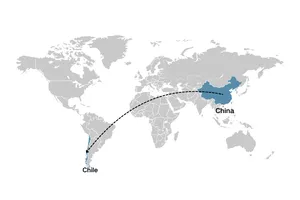
Are you wondering how sea shipping from China to Chile works, and what factors influence its cost and transit time? In this comprehensive guide, we’ll dive into everything you need to know about shipping by sea between these two countries—covering crucial topics like LCL and FCL costs, main ports, import taxes, and the step-by-step shipping process. Get expert tips and discover why the right logistics partner can make all the difference for your China-to-Chile sea freight.
How Much Does Sea Shipping Cost from China to Chile?
When shipping goods via sea shipping from China to Chile, understanding the cost structure is crucial for effective budgeting and supply chain planning. Costs can vary significantly depending on shipment size, service type, route, and current market conditions.
Related reading: If you're also considering nearby routes in South America, see our guide on Shipping Cost from China to Mexico.
LCL (Less than Container Load) Costs
LCL (Less than Container Load) is ideal for shippers with smaller cargo volumes that do not fill a full container. In LCL, your goods share container space with other shipments, and costs are typically calculated based on volume (CBM - cubic meters) or sometimes weight.
Current 2025 LCL Sea Freight Rates from China to Chile (Reference Table)
| Origin Port in China | Destination Port in Chile | LCL Base Rate (per CBM) | Estimated Total Cost (1 CBM, incl. basic charges) | Typical Surcharges* |
|---|---|---|---|---|
| Shanghai | San Antonio | $90 – $120 | $300 – $380 | THC, DOC, AMS |
| Shenzhen | Valparaiso | $95 – $130 | $320 – $400 | THC, DOC, AMS |
| Ningbo | San Antonio | $90 – $120 | $300 – $370 | THC, DOC, AMS |
*Note: Surcharges such as Terminal Handling Charges (THC), Documentation Fees (DOC), and Automated Manifest System (AMS) fees are not always included in the base rate.
Key Points:
- LCL is cost-effective for cargo volumes under 15 CBM.
- LCL may incur higher per-unit costs due to consolidation and deconsolidation.
- Transit time can be slightly longer due to the need for cargo consolidation.
FCL (Full Container Load) Costs for Sea Freight
FCL (Full Container Load) is suitable for shippers with enough cargo to fill an entire container. Rates are fixed per container, making it more economical for high-volume shipments.
2025 FCL Rates from China to Chile (Reference Table)
| Container Type | Capacity (CBM) | Shanghai → San Antonio | Shenzhen → Valparaiso | Ningbo → San Antonio |
|---|---|---|---|---|
| 20FT | 28 CBM | $2,000 – $2,500 | $2,100 – $2,600 | $2,000 – $2,500 |
| 40FT | 56 CBM | $3,500 – $4,200 | $3,600 – $4,300 | $3,500 – $4,200 |
| 40HQ | 68 CBM | $3,800 – $4,500 | $3,900 – $4,600 | $3,800 – $4,500 |
FCL Insights:
- FCL offers better rates per CBM for larger volumes.
- Suitable for 15 CBM and above.
- Reduced risk of cargo damage and lower handling time compared to LCL.
Additional Charges in Sea Freight
In addition to basic freight charges, several additional fees apply in international shipping:
- THC (Terminal Handling Charges): Charged at both origin and destination ports.
- BL (Bill of Lading) Fee: For documentation and compliance.
- Customs Clearance Fees: Both in China and Chile.
- Security Fees: Such as ISPS (International Ship and Port Facility Security).
- Insurance: Strongly recommended for high-value or sensitive cargo.
- Delivery Charges: For door-to-door or port-to-door shipments.
- Demurrage and Detention: If containers are not cleared within free time.
Understanding these charges upfront helps avoid unexpected costs and ensures smoother shipment handling.
Factors Affecting Sea Freight Costs
Sea shipping costs from China to Chile are influenced by multiple dynamic factors:
- Fuel Surcharges: Fluctuate with global oil prices.
- Seasonal Demand: Peak seasons (before Christmas, Chinese New Year) see higher rates.
- Port Congestion: Delays at major ports can result in extra costs.
- Container Availability: Shortages may spike rates.
- Shipping Routes: Direct vs. transshipment routes affect costs and transit times.
- Cargo Type & Special Handling: Hazardous, OOG (Out-of-Gauge), or temperature-sensitive goods will incur premium charges.
- Regulatory Changes: Recent IMO (International Maritime Organization) sulfur regulations have impacted bunker costs.
Staying updated on market trends and regulatory news is essential for accurate cost forecasting.
Explore more: For sea container rates to neighboring regions, check out Shipping Cost from China to South Africa.
Practical Recommendations for Sea Freight
Drawing from my experience as a logistics analyst, here are some actionable tips:
- Plan in Advance: Secure space and rates at least 2–4 weeks ahead, especially during peak seasons.
- Consolidate Shipments: If possible, group cargo to maximize container utilization.
- Work with a Reputable Freight Forwarder: Partner with an expert like DTFU International Logistics Co.,Ltd for transparent pricing and smooth operation.
- Request Detailed Quotes: Ensure all surcharges and potential extra fees are included.
- Consider Insurance: Always insure your cargo, given long transit and risk factors on the sea route.
- Leverage Digital Tools: Use tracking systems for real-time updates and supply chain visibility.
How Long Does Sea Shipping Take from China to Chile?
Transit time is a critical factor when using sea shipping from China to Chile. It affects inventory planning, product launches, and overall customer satisfaction.
LCL (Less than Container Load) Transit Time
LCL shipments usually have a longer transit time compared to FCL due to cargo consolidation and deconsolidation processes.
Typical LCL Transit Time Table (2025)
| Origin Port in China | Destination Port in Chile | Typical LCL Transit Time (Days) |
|---|---|---|
| Shanghai | San Antonio | 38 – 45 |
| Shenzhen | Valparaiso | 40 – 47 |
| Ningbo | San Antonio | 38 – 45 |
Notes:
- LCL shipments may involve additional stops or transshipment, extending the overall delivery time.
- Allow extra time for customs clearance and final delivery.
FCL (Full Container Load) Transit Time
FCL shipments enjoy more direct routing and faster handling at ports, resulting in shorter overall transit times.
Typical FCL Transit Time Table (2025)
| Origin Port in China | Destination Port in Chile | Typical FCL Transit Time (Days) |
|---|---|---|
| Shanghai | San Antonio | 30 – 40 |
| Shenzhen | Valparaiso | 32 – 42 |
| Ningbo | San Antonio | 30 – 40 |
Key Insights:
- Direct sailings are available but limited; most routes involve transshipment (e.g., via Panama Canal or US West Coast).
- FCL is more reliable for time-sensitive shipments.
Learn more: For comparison, see typical Shipping time from China to Saudi Arabia if your supply chain extends to the Middle East.
Factors Affecting Sea Shipping Transit Time
Multiple variables can influence the actual time from China to Chile:
- Shipping Route: Direct sailing vs. transshipment ports (e.g., via Panama, US, or Mexico).
- Port Congestion: Seasonal backlog or strikes at origin/destination ports.
- Weather Conditions: Typhoons, storms, and adverse weather impacting sailing schedules.
- Customs Clearance: Delays due to incomplete documentation or inspections.
- Carrier Schedules: Frequency and reliability of shipping lines on the China-Chile route.
- Regulatory Inspections: Chilean authorities may conduct more thorough checks on certain products.
Staying informed about global logistics events and maintaining regular communication with your freight forwarder is crucial.
Practical Recommendations for Sea Shipping
- Choose the Right Incoterms: DDU/DDP or FOB depending on your capability to handle destination formalities.
- Buffer for Delays: Always build in an extra 1–2 weeks for unforeseen delays (weather, customs, port congestion).
- Track Shipments: Use advanced tracking tools for real-time updates.
- Prepare Documents Early: Ensure all shipping and customs documents are accurate and submitted ahead of time.
- Consult Local Experts: Work with a reliable logistics partner like DTFU International Logistics Co.,Ltd who has deep knowledge of both Chinese and Chilean port operations.
- Stay Updated: Monitor global logistics trends, including Panama Canal congestion and container shortages, which may affect transit times.
Shipping goods by sea from China to Chile involves careful consideration of costs, transit times, and operational factors. By understanding the variables and working with an experienced logistics provider such as DTFU International Logistics Co.,Ltd, businesses can optimize their international supply chains and ensure timely, cost-effective deliveries.
Main Ports in China and Chile
Main Ports in China
When organizing sea shipping from China to Chile, selecting the right port of departure is critical for both cost and efficiency. China is home to some of the world’s largest and most advanced ports, offering regular, high-frequency services to South America and specifically to Chile. Here are the key ports frequently used for sea shipping from China to Chile:
| Port Name | Location | Major Export Commodities | Relevance to Chile Trade | Remarks |
|---|---|---|---|---|
| Shanghai Port | Shanghai, East China | Electronics, machinery, textiles, chemicals | Largest volume for Chile-bound containers | Offers direct and transshipment services |
| Shenzhen Port | Guangdong, South China | Electronics, machinery, furniture, garments | Strong trade routes to Chilean West Coast | Efficient customs clearance & consolidation |
| Ningbo-Zhoushan Port | Zhejiang, East China | Auto parts, machinery, textiles | Major exporter to Latin America | Fast-growing, modern facilities |
| Qingdao Port | Shandong, North China | Rubber, chemicals, machinery | Access for North China exporters | Excellent rail/road connectivity |
| Guangzhou (Nansha) Port | Guangdong, South China | Machinery, textiles, food products | Convenient for Pearl River Delta cargo | Major consolidation hub |
| Xiamen Port | Fujian, Southeast China | Machinery, footwear, clothing | Relevant for smaller/flexible consignments | Competitive rates for LCL shipments |
| Tianjin Port | Tianjin, North China | Steel, chemicals, heavy industries | Occasional shipments to Chile | Largest port in North China |
Shanghai Port and Shenzhen Port are most commonly used for FCL (Full Container Load) and LCL (Less than Container Load) shipments to Chile, as they offer frequent sailings, global carrier presence, and the latest port technology. Ningbo-Zhoushan is another strong choice due to its rapid expansion and increasing number of direct shipments to South America.
Tip: Choosing the closest port to your factory or supplier can significantly reduce domestic trucking costs and transit time.
Main Ports in Chile
Chile’s long, narrow geography necessitates a string of efficient, well-connected ports along its Pacific coastline. Most sea freight from China to Chile is destined for the following main ports:
| Port Name | City/Region | Type | Major Imported Goods | Role in China Trade | Remarks |
|---|---|---|---|---|---|
| San Antonio | Valparaíso Region | Container | Electronics, apparel, machinery | Main entry for China containers | Largest port, modern infrastructure |
| Valparaíso | Valparaíso Region | Container | Vehicles, electronics, chemicals | Key for central Chile distribution | Close proximity to Santiago |
| Iquique | Tarapacá Region | Multipurpose | Automotive, textiles, electronics | Gateway for northern Chile & Bolivia | Free trade zone available |
| Arica | Arica y Parinacota | Multipurpose | Machinery, foodstuffs | Supports north Chile and Peru routes | Useful for landlocked neighbors |
| San Vicente | Biobío Region | Container/Bulk | Machinery, electronics | Central-southern Chile distribution | Often used for industrial imports |
| Antofagasta | Antofagasta Region | Multipurpose | Mining equipment, industrial goods | Key for mining/industrial sectors | Major mining hub |
San Antonio and Valparaíso are the primary ports for containerized goods from China and are ideally positioned for distribution to Santiago and other major commercial centers. For businesses targeting Chile’s north or neighboring countries, Iquique and Arica can be strategic choices due to their status as free trade zones and proximity to regional markets.
Import Tax and Duty Instructions for Exports from China to Chile
Importing goods from China to Chile involves complying with both Chinese export and Chilean import regulations. Understanding the tax and duty structure is essential for accurate landed cost calculation and seamless customs clearance.
Also read: Interested in similar duty processes elsewhere? See Shipping Cost from China to South Africa.
1. Free Trade Agreement (FTA) Benefits
Chile and China have a Free Trade Agreement (FTA) in place since 2006, further upgraded in 2019. This FTA eliminates or significantly reduces tariffs on most goods traded between the two countries. As of 2025:
- Over 97% of products exported from China to Chile now benefit from zero import tariffs.
- To qualify, your shipment must be accompanied by a Certificate of Origin issued by Chinese authorities.
Note: For goods not covered by the FTA, Most Favoured Nation (MFN) tariffs apply, which can vary by HS code.
2. Main Taxes and Duties
| Type | Rate / Description | Remarks |
|---|---|---|
| Customs Duty | 0% (for most goods under FTA) | Some exceptions apply; verify HS code and latest tariff rates |
| VAT (IVA) | 19% (on CIF value + duty) | Charged on total cost (including freight and insurance) |
| Other Taxes | Excise taxes for specific goods (e.g., alcohol, tobacco) | Not applicable for general merchandise |
| Customs Charges | USD 30–60 (approximate handling fee) | Varies by port and shipment type |
Calculation example:
If you ship electronics valued at USD 10,000 (CIF), import duty would be 0%, but the 19% VAT would apply on the full CIF value.
3. Required Documentation
- Commercial Invoice
- Packing List
- Bill of Lading
- Certificate of Origin (to claim FTA benefits)
- Import License (for restricted goods only)
- Insurance Certificate (if applicable)
Tip: Ensure all documents are accurate and consistent to avoid clearance delays.
4. Customs Clearance Process
- Arrival at Chilean port: Cargo is offloaded and customs declaration is lodged.
- Document review: Customs verifies all submitted documentation and FTA eligibility.
- Duty and VAT payment: Importer pays applicable taxes and fees before cargo release.
- Physical inspection: Random checks or checks for flagged shipments.
- Cargo release: Once cleared, goods are released for inland delivery.
5. Practical Recommendations and Latest Updates
- Stay updated: Chile regularly updates its tariff schedules and FTA implementation rules. Use the official Chilean customs website (Servicio Nacional de Aduanas) or consult a professional freight forwarder.
- FTA utilization: Always request a Certificate of Origin from your Chinese supplier to maximize cost savings.
- Work with professionals: Engaging an expert freight forwarder such as DTFU International Logistics Co.,Ltd can streamline your documentation, clearance, and compliance process. We provide one-stop customs clearance, cargo insurance, and end-to-end logistics support for shipments from China to Chile.
As a logistics specialist with extensive experience, I recommend full transparency in shipping documentation, leveraging the FTA, and working with a reliable partner like DTFU International Logistics Co.,Ltd for a cost-effective, smooth, and compliant shipping experience.
Sea Shipping Process from China to Chile: Step-by-Step Guide
As an experienced logistics analyst with over a decade of expertise, I understand that navigating the sea shipping process from China to Chile can seem complex, especially for businesses new to international logistics. Below is a step-by-step guide to help importers, exporters, and supply chain managers streamline their operations and reduce risks when shipping goods between these two important trade partners.
Step 1: Cargo Preparation and Documentation
- Cargo Inspection and Packing: Ensure that your goods are packed securely, following international shipping standards. Proper packaging minimizes damage and ensures compliance with customs rules.
- Documentation: Prepare essential documents, including the Commercial Invoice, Packing List, Bill of Lading (B/L), Certificate of Origin, and any special permits (if required for controlled goods). For LCL (Less than Container Load) shipments, accurate cargo measurement and declaration are crucial to avoid additional fees.
Step 2: Choose the Right Shipping Mode
- LCL (Less than Container Load): Suitable for shipments that do not fill a full container. Multiple shippers share space, optimizing costs.
- FCL (Full Container Load): Ideal for larger shipments. Options include 20FT (28CBM), 40FT (56CBM), 40HQ (68CBM), and 45HQ (78CBM) containers, depending on cargo volume.
- Special Services: If you require oversized cargo handling, OOG Freight, or Breakbulk Freight, consult with your logistics partner.
Step 3: Booking and Pickup
- Freight Booking: Partner with a reputable freight forwarder—like DTFU International Logistics Co.,Ltd—to secure space on vessels departing from major Chinese ports (e.g., Shanghai, Shenzhen, Ningbo).
- Cargo Pickup: Arrange for inland transportation from your warehouse or supplier’s facility to the departure port. DTFU Logistics offers door-to-door, road freight, and warehouse solutions for seamless pickup.
Step 4: Export Customs Clearance in China
- Customs Declaration: Submit all documents to Chinese customs for export clearance. Your freight forwarder should assist in ensuring compliance and resolving any issues promptly.
- Cargo Inspection: Goods may be subject to customs inspections. Proper documentation and packaging reduce the likelihood of delays.
Step 5: Ocean Transit
- Container Loading: Cargo is loaded onto the vessel. For LCL, goods are consolidated with other shipments.
- Transit Time: Typical sea shipping from China to Chile (e.g., Shanghai to San Antonio) ranges from 25 to 35 days for FCL, depending on routes and vessel schedules.
- Cargo Tracking: Utilize advanced tracking systems provided by leading forwarders to monitor shipment progress in real time.
Step 6: Import Customs Clearance in Chile
- Document Submission: Upon vessel arrival at ports like San Antonio or Valparaíso, submit documents to Chilean customs for clearance.
- Duty and Tax Payment: Pay applicable import duties and taxes. Your logistics provider can assist in calculating and prearranging payments to ensure smooth clearance.
Step 7: Final Delivery
- Deconsolidation (For LCL): Goods are separated at the destination warehouse.
- Transport to Final Destination: Arrange for inland delivery to your warehouse, Amazon FBA center, or customer location. DTFU Logistics offers comprehensive end-to-end delivery, including one-stop customs clearance and cargo insurance for risk mitigation.
Summary Table: Shipping Steps and Responsibilities
| Step | Shipper Responsibility | Freight Forwarder Responsibility (e.g., DTFU Logistics) |
|---|---|---|
| Cargo Preparation | Yes | Advisory/Support |
| Documentation | Yes | Verification/Assistance |
| Booking & Pickup | Optional | Yes |
| Export Customs Clearance | Optional | Yes |
| Ocean Transit | No | Yes |
| Import Customs Clearance | No | Yes |
| Final Delivery | Optional | Yes |
This process ensures compliance with both Chinese and Chilean regulations, minimizes delays, and provides peace of mind throughout the shipping journey.
Why Choose DTFU Logistics for Your China-Chile Sea Shipping?
Selecting the right freight forwarding partner is crucial for efficient, reliable, and cost-effective sea shipping from China to Chile. Here’s why DTFU International Logistics Co.,Ltd stands out as your preferred logistics provider:
1. Deep Experience and Global Expertise
With over a decade of international logistics experience, our team understands the unique challenges and opportunities in the China-Chile trade lane. Our experts, led by Ivan Chan, have handled thousands of FCL and LCL shipments, as well as complex out-of-gauge and project cargos.
2. Comprehensive One-Stop Solutions
We offer a full spectrum of services, including:
- Sea Freight (FCL & LCL)
- Road Freight and Air Freight
- Amazon FBA Logistics for e-commerce sellers
- Warehousing (in both China and Chile)
- Cargo Insurance Services
- One-Stop Customs Clearance
- Door-to-Door Delivery
- OOG Freight, Consolidated Freight, and Breakbulk Freight
This integrated approach streamlines your shipments and reduces communication hassles. You get a single point of contact for the entire shipping process.
3. Competitive Pricing and Transparent Costs
We leverage long-term partnerships with major carriers and local port agents to secure preferential ocean freight rates. Our quotations are clear and transparent—no hidden fees—helping you control logistics costs and boost profitability.
Sample FCL Ocean Freight Rates (for reference, updated Q4 2025)
| Origin Port | Destination Port | 20FT | 40FT | 40HQ | Transit Time (Days) |
|---|---|---|---|---|---|
| Shanghai | San Antonio | $2,800 | $4,900 | $5,100 | 28–35 |
| Shenzhen | Valparaíso | $2,950 | $5,050 | $5,250 | 27–34 |
| Ningbo | San Antonio | $2,820 | $4,950 | $5,150 | 29–36 |
Please consult us for real-time rates, as ocean freight prices may fluctuate due to global market conditions and fuel surcharges.
4. Reliable Transit and Real-Time Visibility
Our advanced IT systems and real-time cargo tracking keep you updated at every stage—providing shipment location, estimated arrival, and potential disruptions.
5. Local Expertise in Both China and Chile
We maintain experienced teams and partners at both origin and destination, ensuring smooth cargo handling, customs clearance, and prompt delivery to your final destination.
6. Risk Management and Insurance
DTFU Logistics provides comprehensive cargo insurance options and professional risk assessment, minimizing your exposure to loss or damage during sea transit.
7. Commitment to High-Quality Customer Service
Our multilingual support team offers 24/7 customer service, proactive shipment updates, and immediate response to emergencies or inquiries.
In summary, partnering with DTFU International Logistics Co.,Ltd for your sea shipping from China to Chile ensures you benefit from a highly professional, cost-effective, and trustworthy logistics service provider. We are committed to helping global traders, e-commerce sellers, manufacturers, and SMEs optimize their supply chains and succeed in the evolving international marketplace.
For the latest shipping rates, tailored solutions, or a free consultation, please contact us.