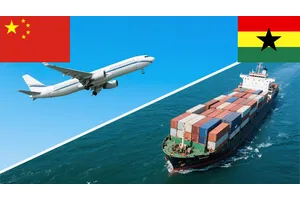
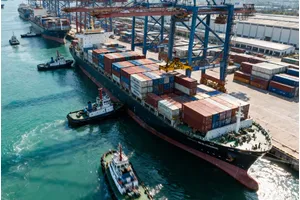
Shipping from Guangzhou to Ghana is one of the busiest trade lanes between Asia and West Africa — and one of the easiest to get wrong. Guangzhou is the single largest sourcing and consolidation hub for Ghanaian importers in Asia, home to the African wholesale markets of Xiaobei, Sanyuanli and Zhanxi, the Canton Fair, and the deep-water Port of Nansha. Yet most buyers still lose money not on the product, but on the freight: a quote that hides terminal fees, a container that clears slowly because one document was missing, or a cargo total that arrives far above the price they budgeted for.
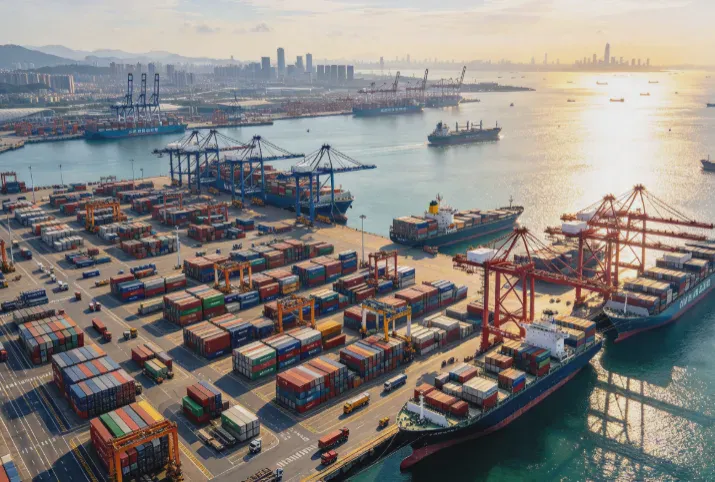
This guide walks you through the entire Guangzhou–Ghana lane in plain terms — what it costs in 2026, how long it takes, when to choose FCL versus LCL, how door-to-door DDP works, how to consolidate goods from five different suppliers into one shipment, how Ghana's ICUMS customs system operates, and how to calculate your real landed cost before you pay a supplier a single yuan. Whether you are a B2B wholesaler, an e-commerce seller, or a small business shipping to Ghana for the first time, everything you need is below. For a port-agnostic overview of the wider lane, start with our guide to Shipping From China To Ghana.
Cost to Ship from Guangzhou to Ghana: 2026 Rates & What Your Quote Includes
Let's start with the number everyone searches for. In 2026, an all-in, port-to-port shipment from Guangzhou to Ghana costs roughly $2,200–$3,200 for a 20ft container and $3,200–$4,300 for a 40ft container, while LCL runs about $70–$250 per CBM and air freight lands between $4.50 and $8.50 per kilogram. These ranges cover ocean freight, origin handling, destination terminal handling and customs brokerage — but exclude Ghana's import duties and VAT, which depend on your HS code and cargo value.
20ft & 40ft Container Rates from Guangzhou (Nansha & Huangpu) to Tema and Takoradi
Guangzhou loads containers at two main gateways: the modern deep-water Port of Nansha (the primary terminal for West Africa services) and the legacy Huangpu port area. Rates shift with fuel, season and carrier space, so treat the table below as a 2026 planning benchmark rather than a firm quote.
| Container | Destination | Typical Rate (USD, port-to-port) | Best For |
|---|---|---|---|
| 20ft GP | Tema | $2,250 – $2,950 | 15–33 CBM of standard cargo |
| 40ft GP | Tema | $3,250 – $4,050 | 33–67 CBM; high-volume shipments |
| 40ft HQ | Tema | $3,400 – $4,300 | Light but bulky goods (apparel, furniture) |
| 20ft GP | Takoradi | $2,450 – $3,200 | Western-Ghana importers |
| 40ft GP | Takoradi | $3,450 – $4,350 | Bulk cargo to the Western Region |
A quick container-capacity reference: a 20ft GP holds about 33 CBM, a 40ft GP about 67 CBM, and a 40ft HQ up to 76 CBM. That capacity gap is why the 40ft usually delivers the lowest cost per cubic meter once your cargo passes roughly 30 CBM. For a detailed, container-by-container comparison, see How much to ship a Container from China to Ghana.
LCL Shipping Cost per CBM & the FCL vs LCL Break-Even Point
LCL (Less than Container Load), also called groupage or consolidation, lets you pay only for the space your cargo occupies. You are billed on chargeable CBM — the greater of volume or weight (a "W/M" measure) — plus fixed documentation and handling fees. The break-even against a full container usually sits near 15 CBM:
| Cargo Volume | Recommended Mode | Why |
|---|---|---|
| 1 – 8 CBM | LCL | Lowest upfront cost; no minimum container charge |
| 9 – 15 CBM | LCL (watch fixed fees) | Still cheaper than FCL, but fees start to bite |
| 15 – 25 CBM | FCL 20ft | Per-CBM cost drops sharply with a full container |
| 25 CBM + | FCL 40ft | Best value per cubic meter |
Our Industry Insights: We routinely see importers book two or three LCL shipments out of habit when a single 20ft container would have cost them less — and arrived faster with fewer handling touches. If your Guangzhou consolidation is approaching 15 CBM, ask your forwarder to run the FCL math before you book LCL. The savings often cover a full extra week of inventory.
Guangzhou to Ghana Air Freight Cost per kg (Baiyun Airport – CAN)
For urgent or high-value cargo, Guangzhou Baiyun International Airport (CAN) is South China's main air-cargo hub, with direct and connecting services to Kotoka International Airport (ACC) in Accra on carriers such as Ethiopian Airlines, Emirates, Kenya Airways and Qatar Airways. Air freight is priced on chargeable weight — the greater of actual weight or volumetric weight (calculated at a 1:167 ratio, i.e. length × width × height in cm ÷ 6000). Typical 2026 rates run $4.50–$8.50 per kg, depending on weight break, dimensions and season.
What Your Quote Actually Includes: The Cost Breakdown
A "rate to Ghana" is never a single number. Understanding each line item is what protects you from a surprise invoice at Tema:
| Cost Element | What It Covers | Typical Range (20ft, USD) |
|---|---|---|
| Ocean freight | Core carriage from Nansha to Tema/Takoradi | $1,300 – $2,300 |
| BAF / EBS surcharges | Fuel and bunker adjustments | $80 – $220 |
| Origin charges | Loading, CFS/CY handling, export docs, China customs | $200 – $450 |
| Destination THC | Terminal handling, release, port security at Tema | $300 – $600 |
| Customs brokerage | GRA declaration agent fees (duties separate) | $150 – $300 |
| Cargo insurance | Marine coverage, typically 0.3%–1.5% of cargo value | $70 – $180 |
When Is It Cheapest to Ship from Guangzhou to Ghana?
Freight rates follow a seasonal rhythm. The third quarter (July–September) is generally the softest window for Guangzhou–West Africa sailings, while rates climb from October through January as Christmas retail demand and pre-Chinese New Year congestion tighten space. The Chinese New Year (February) and Golden Week (early October) factory closures also disrupt bookings. Lock in your space 4–6 weeks ahead of peak season to avoid last-minute premium surcharges.
Shipping Time from Guangzhou to Ghana: Transit Times by Route & Mode
Transit time is the second question every importer asks — and the one most often answered only halfway. Real door-to-door timing includes the sailing, the customs clearance, and the inland delivery to your warehouse, not just the ocean leg.
Sea Freight Transit: Nansha to Tema by Suez and Cape Routes
Vessels from Nansha reach Tema through one of two corridors. The Suez Canal route is the faster one; the Cape of Good Hope route is a longer, but sometimes cheaper, alternative when Suez transits are disrupted by surcharges or congestion.
| Route | Transit Time | Notes |
|---|---|---|
| Guangzhou (Nansha) → Tema via Suez | 25 – 35 days | Fastest; subject to Suez surcharges |
| Guangzhou (Nansha) → Tema via Cape of Good Hope | 40 – 55 days | Slower, no Suez fees |
| Guangzhou → Takoradi (any route) | 30 – 50 days | Fewer direct sailings |
Most Guangzhou–Ghana services transship via hubs such as Singapore, Tanjung Pelepas, Colombo, Algeciras or Tanger Med before the final leg down the West African coast. For average transit times across all Chinese gateways, see our guide to Shipping time from China to Ghana.
Air Freight Transit: CAN to Kotoka (ACC)
Air is dramatically faster. Airport-to-airport, cargo from Baiyun (CAN) reaches Accra in 3–7 days. When you add China pickup, export clearance and Ghana final-mile delivery, door-to-door air DDP typically runs 7–12 days. The breakdown looks like this: 1–2 days pickup and export clearance in Guangzhou, 1–3 days flight transit, 2–3 days Ghana customs clearance, and 1–2 days final delivery.
Final-Mile Delivery Times to Accra, Kumasi, Takoradi & Tamale
Once cleared at Tema, inland trucking determines your true delivery date. From the port:
| Inland Destination | Road Time from Tema |
|---|---|
| Accra | ~30 minutes |
| Kumasi | ~4 hours |
| Takoradi | ~5–6 hours |
| Tamale | ~8 hours |
Real-Life Scenario: A Ghanaian retail client ordered electronics, apparel and household goods from four suppliers scattered across Guangzhou, Foshan and Dongguan. Shipping each order separately would have meant four B/Ls, four customs entries and four sets of minimum charges. Instead, we consolidated all four consignments in our Guangzhou warehouse, loaded a single 20ft container to Tema, cleared once through ICUMS, and trucked the goods directly to Kumasi — one shipment, one clearance, and a materially lower cost per unit.
Sea Freight vs Air Freight from Guangzhou to Ghana: Which Mode Fits Your Cargo
Choosing between sea and air is really a question of value density and urgency. Neither mode is universally better; the right answer depends on what you are shipping.
When Sea Freight Wins
Sea freight from Guangzhou to Ghana is the default for heavy, bulky and lower-value-density cargo — building materials, furniture, machinery, ceramics, auto parts and container-loads of general merchandise. Cost per unit is a fraction of air, and both FCL and LCL options exist depending on volume. If your suppliers sit outside Guangdong, our overview of Sea shipping From China Ghana covers sailings from other major Chinese ports.
When Air Freight Wins
Air freight from Guangzhou to Ghana makes sense for high-value, lightweight and time-critical goods — electronics, mobile accessories, fashion, cosmetics and product samples — or whenever a stockout would cost more than the freight premium. The speed of air protects your sales window. Our guide to Air shipping From China Ghana breaks down carriers, weight breaks and chargeable-weight rules.
Express Courier
For documents, samples and e-commerce parcels under a few hundred kilograms, express couriers such as DHL, FedEx, UPS and Aramex deliver door-to-door in 2–5 days. It is the most expensive option per kilogram but the simplest for small, urgent consignments.
| Mode | Transit Time | Best For | Cost Level |
|---|---|---|---|
| Sea FCL | 25 – 43 days | Bulk, heavy, full loads | Lowest per unit |
| Sea LCL | 33 – 46 days | Small/mixed loads under 15 CBM | Low–medium |
| Air freight | 3 – 12 days | Urgent, high-value, light cargo | High |
| Express courier | 2 – 5 days | Documents, samples, small parcels | Highest |
Door-to-Door & DDP Shipping from Guangzhou to Ghana
For many importers, especially first-timers, the appeal of DDP (Delivered Duty Paid) is simple: one price, one partner, no surprises. Under Incoterms 2020, DDP places the maximum obligation on the seller or its logistics provider — and in practice, that means your forwarder handles everything from the supplier's door in Guangzhou to your warehouse in Ghana. If you are weighing Incoterms first, our deep-dive on DDP shipping from China to Ghana explains exactly what a genuine DDP rate should contain.
What a True DDP Quote Covers
A legitimate DDP rate should include all six layers below. If any is missing, that cost will reappear later:
- Inland pickup from your Guangzhou/Foshan/Dongguan supplier
- Export documentation and China customs clearance
- International freight (ocean or air)
- Destination port handling at Tema or Takoradi
- Ghana import duties, VAT and levies
- Final-mile delivery anywhere in Ghana
The "Fake DDP" Trap
Be wary of DDP quotes that are dramatically below the market. Some operators win business by under-declaring cargo value or using irregular clearance channels. When the Ghana Revenue Authority (GRA) flags the shipment, the agent often abandons it — leaving you to pay the correct duties, penalties, and accumulating demurrage and detention just to release your goods.
Our Industry Insights: A container of textiles seized at Tema because a budget agent had forged the commercial invoice cost one importer a three-week delay and thousands of dollars in penalties. The cheap quote was never cheap. When you evaluate a DDP provider, demand a written landed-cost breakdown, confirm they use their own licensed Ghanaian customs broker, and ask whether the quote is based on the true declared value. Transparency beats penalties every time.
Importer of Record & DDP Eligibility
Under a proper DDP arrangement, your forwarder acts through its own licensed Ghanaian broker as the Importer of Record (IOR) for the specific shipment, so you do not need to register an independent broker for that cargo. Always confirm this in writing before booking. For a full walk-through of every handover point from factory floor to final delivery, see Door to Door Shipping From China Ghana.
Cargo Consolidation in Guangzhou for Ghana: Markets, Canton Fair & Multi-Supplier Pickup
Guangzhou is not simply one of several Chinese ports — it is the beating heart of West African trade in Asia. Understanding its ecosystem is what separates a smooth shipment from a chaotic one. If your suppliers sit in the Pearl River Delta's eastern cluster, our guide to Shipping From ShenZhen to Ghana covers that neighbouring gateway.
Guangzhou as the #1 Consolidation Hub for African Importers
The city pairs an enormous manufacturing base (the Guangzhou–Foshan–Dongguan cluster) with a densely packed wholesale ecosystem aimed squarely at African buyers: Xiaobei Road, Sanyuanli and Zhanxi markets, plus the Nansha Bonded Logistics Park. For Ghanaian importers, this concentration means you can source, inspect, repack and ship from one city. If part of your supply chain ships from the Yangtze Delta instead, we also handle Shipping from Shanghai to Ghana.
Multi-Supplier Consolidation: Five B/Ls into One
A consolidation warehouse (a CFS, or Container Freight Station) receives goods from your various suppliers, inspects them, repacks or palletizes as needed, and loads everything into a single LCL or FCL shipment. Instead of five supplier invoices, five customs declarations and five minimum charges, you clear customs once and pay one freight bill. This is the single biggest cost lever for importers who buy from multiple factories.
Sourcing from Guangzhou Markets, Alibaba & 1688
Buyers sourcing through Alibaba, 1688 or Taobao still need a physical point to gather goods. Working with a forwarder that maintains a Guangzhou consolidation warehouse lets you ship domestic orders to one address, combine them, and export in one go — with pre-shipment inspection before anything leaves China.
Canton Fair to Guangzhou Export
The Canton Fair (China Import and Export Fair) at the Pazhou complex runs every April and October, making Guangzhou the natural base for buyers who attend in person. The 2026 autumn session (October 15 – November 4) covers electronics and machinery, then furniture and housewares, then textiles and office supplies. Buying at the Fair and shipping directly out of Guangzhou — rather than routing goods back through another city — saves both time and inland freight.
Ghana Customs Clearance & Documentation: ICUMS, CTN, TIN & IDF
Ghana's clearance process is digital, strict, and unforgiving of errors. Getting the paperwork right before your vessel docks is the difference between a smooth release and a stack of daily storage fees.
Required Shipping & Customs Documents
| Document | Purpose |
|---|---|
| Bill of Lading (B/L) or Airway Bill (AWB) | Proof of contract and cargo ownership |
| Commercial Invoice | Declared CIF value (must match the packing list) |
| Packing List | Itemized contents, weights and dimensions |
| Certificate of Origin | Confirms goods were manufactured in China |
| Import Declaration Form (IDF) | Submitted electronically via ICUMS |
| Insurance Certificate | Required — duties are calculated on CIF value |
| Tax Identification Number (TIN) | Mandatory for every Ghanaian importer |
ICUMS Clearance Step by Step
ICUMS (Integrated Customs Management System) is Ghana's single-window customs platform, run by the GRA Customs Division. Every commercial import passes through it. The workflow runs: obtain a Unique Consignment Number (UCN) → submit all declaration documents → pass a risk assessment that sorts cargo into a Green (auto-cleared), Yellow (document review) or Red (physical inspection) channel → pay duties and levies → present the tax payment certificate → collect the Delivery Order. The ICUMS processing fee itself is 0.75% of FOB value, on top of duties.
CTN/ECTN: The Document Most Importers Forget
Every shipment to Ghana — regardless of Incoterm — requires a Cargo Tracking Note (CTN/ECTN) validated before the cargo arrives. Miss it and your container waits at the port. Confirm with your forwarder that the CTN is filed while the vessel is still at sea.
Product-Specific Permits (FDA, GSA & PPRSD)
Beyond standard documents, some categories need permits from a regulator — and these must be obtained before shipment, as approval can take two to four weeks:
| Product Category | Regulator | Document |
|---|---|---|
| Food, beverages, cosmetics | FDA Ghana | Import permit / product registration |
| Pharmaceuticals | FDA + PPRSD | Registration and import permit |
| Electronics, building materials | Ghana Standards Authority (GSA) | Conformity assessment |
| Agricultural inputs | PPRSD | Phytosanitary certificate |
Ghana Import Duty & VAT: How to Calculate Your True Landed Cost
Most importers underestimate Ghana's tax stack until the bill arrives. Duties are calculated on the CIF value (Cost + Insurance + Freight), and several levies layer on top of the base duty.
Customs Duty Rates (ECOWAS Common External Tariff)
| Goods Category | Customs Duty |
|---|---|
| Essential goods and raw materials | 0 – 5% |
| Semi-processed goods | 10% |
| Finished consumer goods | 20% |
| Special goods (vehicles, spirits, luxury items) | 35%+ |
All Levies Stacked on Top of Duty
| Levy | Rate | Applied On |
|---|---|---|
| VAT | 15% | CIF value + duty |
| NHIL (National Health Insurance Levy) | 2.5% | CIF value + duty |
| GETFund Levy | 2.5% | CIF value + duty |
| COVID-19 Health Recovery Levy | 1% | CIF value + duty |
| ECOWAS Levy | 0.5% | CIF value |
| AU Levy | 0.2% | CIF value |
| ICUMS processing fee | 0.75% | FOB value |
Worked Example: Guangzhou (Nansha) to Tema
Say you are importing $10,000 of mobile phone accessories (finished consumer goods, 20% duty) from Guangzhou to Tema via a 20ft container:
| Component | Calculation | Amount |
|---|---|---|
| Goods (FOB value) | — | $10,000 |
| Sea freight (Nansha → Tema) | — | $2,300 |
| Insurance (~1.5% of goods) | — | $150 |
| CIF value (customs base) | — | $12,450 |
| Customs duty (20%) | $12,450 × 20% | $2,490 |
| VAT (15%) | ($12,450 + $2,490) × 15% | $2,241 |
| NHIL (2.5%) | ($12,450 + $2,490) × 2.5% | $373.50 |
| GETFund (2.5%) | ($12,450 + $2,490) × 2.5% | $373.50 |
| COVID-19 Levy (1%) | ($12,450 + $2,490) × 1% | $149.40 |
| ECOWAS Levy (0.5%) | $12,450 × 0.5% | $62.25 |
| AU Levy (0.2%) | $12,450 × 0.2% | $24.90 |
| ICUMS fee (0.75% of FOB) | $10,000 × 0.75% | $75 |
| Total landed cost | — | ≈ $18,239 |
That is roughly 82% above your FOB price — the real figure you must price into your margins. Always run this calculation before confirming your selling price in Ghana. Because the CIF base includes insurance, an accurate policy matters far more than the premium suggests — see Shipping container insurance cost for shipments from China.
Cedi Volatility & Its Impact on Landed Cost
Ghana's cedi (GHS) has historically been volatile against the dollar, and because both your freight and your duties are settled in foreign currency, exchange-rate movement can quietly erode margins between order and sale. Build a currency buffer into your pricing, and where possible settle freight in USD to avoid double conversion costs.
Shipping from Guangzhou to Tema vs Takoradi: Ports, Charges & Avoiding Demurrage
Ghana has two commercial seaports and one international airport. Knowing which one fits your business — and what each charges — keeps your inland costs down.
Tema Port: Ghana's Main Container Gateway
Tema Port, about 25 km east of Accra, handles the large majority of Ghana's containerized imports and is operated by Meridian Port Services (MPS) under the Ghana Ports and Harbours Authority (GPHA). If you import general consumer goods, electronics, textiles or machinery, your cargo almost certainly arrives here. The Tema Motorway links the port to Accra in about 30 minutes.
Takoradi Port: The Western Region Alternative
Takoradi Port serves the Western Region, about 220 km west of Accra. It traditionally handles bulk cargo (minerals, timber, cocoa) but also accepts containers. If your business sits in Takoradi, Sekondi or the surrounding area, importing via Takoradi can save significant inland trucking compared with clearing at Tema and hauling west.
Hidden Charges at Tema: Storage, Demurrage & Detention
The fees that catch importers off guard are the ones charged per day once cargo sits:
| Charge | Trigger | How to Avoid |
|---|---|---|
| Port storage / rent | Cargo not collected after free days | Clear quickly; pre-file ICUMS |
| Demurrage | Container overstays at the terminal | Submit documents 5–7 days before arrival |
| Detention | Container held outside the port too long | Return empty equipment promptly |
| Examination fee | Red-channel physical inspection | Keep invoices accurate and consistent |
| Documentation errors | Mismatched invoice vs packing list | Double-check before submission |
Our Industry Insights: Nine out of ten demurrage bills we see were preventable — not because clearance was slow, but because documents were incomplete when the vessel docked. File the CTN before arrival, submit the ICUMS declaration 5–7 days out, and make sure your commercial invoice and packing list match to the letter. A day of port storage can cost more than the whole documentation effort.
Kotoka International Airport (ACC) for Air Cargo
All air imports clear at Kotoka International Airport in Accra. Procedures mirror Tema's, but with far smaller cargo volumes, clearance is usually faster — another reason air freight suits urgent, high-value shipments.
FAQs
How much does it cost to ship a container from Guangzhou to Ghana in 2026?
An all-in, port-to-port 20ft container from Nansha to Tema runs about $2,250–$2,950, and a 40ft about $3,250–$4,300, excluding Ghana duties and VAT. LCL costs roughly $70–$250 per CBM, and air freight $4.50–$8.50 per kg.
How long does shipping from Guangzhou to Ghana take?
Sea freight from Nansha to Tema takes 25–35 days via Suez, or 40–55 days via the Cape of Good Hope. Air freight to Accra takes 3–7 days airport-to-airport, or 7–12 days door-to-door.
What is the cheapest way to ship from Guangzhou to Ghana?
For small loads, LCL sea freight is the most affordable. Once you pass roughly 15 CBM, a full 20ft FCL container delivers a lower cost per cubic meter.
What documents do I need to import from China to Ghana?
A Bill of Lading or AWB, commercial invoice, packing list, certificate of origin, import declaration form (IDF), insurance certificate and your TIN — plus product-specific permits such as FDA, GSA or PPRSD where applicable.
Is it cheaper to ship from Guangzhou or Shenzhen to Ghana?
The two are close, but Guangzhou (Nansha) usually offers more frequent West Africa sailings and better consolidation infrastructure for African-market cargo, while Shenzhen (Yantian) can be competitive for goods sourced in the east. Ask your forwarder to quote both.