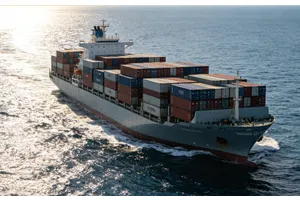
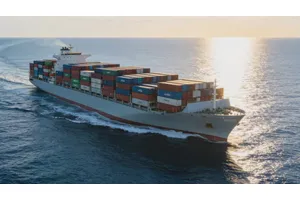
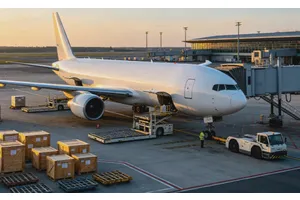
Shipping cost from China to Honduras is not one number. It is three freight legs and two tax lines stacked on a single invoice, and most quotes stop counting at the first leg. Identical cargo on the same vessel can produce two pieces of paper: $3,200 port-to-port or $8,900 door-to-door to San Pedro Sula. Neither forwarder is lying; they stopped at different points.
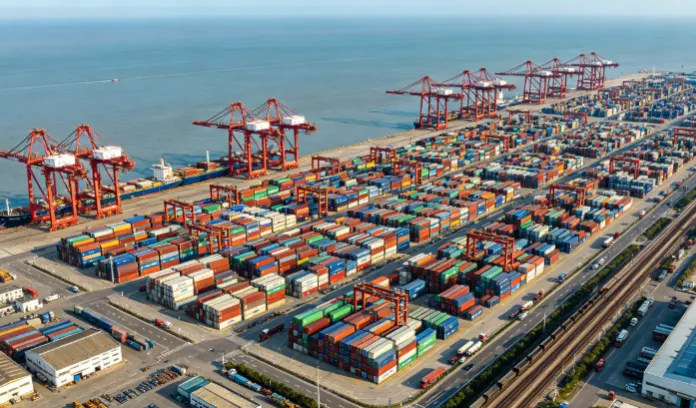
This guide counts the whole distance: FCL, LCL and air rates for September 2026, the DAI and ISV calculation most importers get wrong by one tax base, why Chinese-origin goods get no free-trade relief on this lane, and the post-arrival charges that decide whether your budget survives Puerto Cortés.
How Much Does It Cost to Ship from China to Honduras in 2026?
Every rate below carries a caliber — the point on the journey where the forwarder stops paying, and the reason our Shipping From China to Honduras service page quotes the same box at several different totals.
| Mode | Cost (September 2026) | Transit | Caliber |
|---|---|---|---|
| Sea FCL — 20ft | $2,000–$3,500 | 28–42 days | Port-to-port, Puerto Cortés |
| Sea FCL — 40ft / 40HQ | $3,000–$5,000 | 28–42 days | Port-to-port, Puerto Cortés |
| Sea LCL | $100–$200 per CBM | 28–42 days + 3–5 days | Ocean and origin charges |
| Air freight | $5.00–$9.00 per kg | 3–7 days | Airport-to-airport |
| Express courier | $10–$18 per kg | 2–5 days | Door-to-door, duties often billed separately |
None of those figures includes DAI, ISV, destination handling or inland delivery.
The three freight legs: why "one ocean freight rate" is really three bills
Honduras has no direct sailings from China. Every container relays through a transshipment port, and every relay adds a cost layer a port-to-port quote does not show.
| Leg | Where it happens | Main cost items |
|---|---|---|
| Leg 1 — China export | Shenzhen, Shanghai, Ningbo, Qingdao | Ocean freight, OTHC, documentation, VGM, ISPS, BAF, PSS, GRI |
| Leg 2 — Transshipment | Colón, Miami, Kingston | Container reloading, feeder slot, connection time |
| Leg 3 — Honduras import | Puerto Cortés and inland | DTHC, CFS, brokerage, aforo inspection, inland trucking |
Leg 3 accounts for 15–25% of a door-to-door total, and 30–45% on small LCL shipments, where minimum charges hit a volume too small to absorb them.
Why two quotes for the same route can differ by more than 2x
Published 40ft rates for this lane span $3,000 to $7,500, and LCL quotes run from $80 to $280 per CBM. That is not market chaos; it is five unanswered questions: ① Which Incoterm? ② What is the named delivery point? ③ Are DTHC and CFS inside? ④ Are DAI and ISV inside? ⑤ How long does the rate hold, and is GRI locked?
How long does shipping from China to Honduras take?
| Origin port | Sea to Puerto Cortés | Air to SAP (San Pedro Sula) |
|---|---|---|
| Shenzhen / Guangzhou | 28–35 days | 4–7 days |
| Shanghai / Ningbo | 30–38 days | 4–7 days |
| Qingdao / Tianjin | 35–42 days | 5–8 days |
Transit time is not delivery time — add 3–5 days for LCL deconsolidation and container pickup at Puerto Cortés.
Our industry insight. The most expensive weeks to move cargo into Honduras are the two before Chinese New Year and the one before Golden Week, when Chinese capacity tightens and PSS lands on an already firm rate. At the destination, Semana Santa, the Feriado Morazánico and the September independence celebrations compress customs working hours and slow release.
20ft and 40ft Container Shipping Cost from China to Honduras (FCL)
A 20ft container from China to Honduras costs US$2,000–US$3,500 port-to-port in September 2026, and a 40ft or 40HQ costs US$3,000–US$5,000. Everything above those numbers depends on how far up the journey your forwarder agreed to carry the cost.
| Container | ① Port-to-port, Puerto Cortés | ② + DTHC, CFS and port charges | ③ + DAI, ISV and delivery to San Pedro Sula |
|---|---|---|---|
| 20GP | US$2,000–US$3,500 | US$2,600–US$4,300 | US$12,900–US$14,400 |
| 40GP | US$3,000–US$5,000 | US$3,700–US$6,000 | US$14,100–US$16,700 |
| 40HQ | US$3,000–US$5,000 | US$3,700–US$6,000 | US$14,100–US$16,900 |
| 45HQ (limited availability) | Quoted per shipment | — | — |
Column ③ assumes a US$30,000 CIF cargo at 15% DAI and 15% ISV, plus typical brokerage and trucking. Read it as an order of magnitude — Section 6 works through the arithmetic.
Why the same 40ft box is quoted anywhere from US$3,000 to US$7,500
Five variables explain the spread: origin port (Shenzhen and Guangzhou hold the deepest equipment pools; Qingdao and Tianjin absorb extra barge legs), equipment availability (40HQ and 45HQ tighten first), whether the relay leg is included, peak surcharges (GRI, PSS and BAF can add several hundred dollars per box) and validity (a 7-day rate is a different product from a 30-day rate with GRI locked).
A quote that names nothing beyond Puerto Cortés is port-to-port; the lines that follow are DTHC, port charges, documentation and bill of lading fees, aforo inspection, brokerage, inland trucking and any demurrage and detention triggered by a slow release.
Container capacity: 20GP vs 40GP vs 40HQ
Practical loading volume is roughly 28 CBM in a 20GP, 58 CBM in a 40GP and 68 CBM in a 40HQ. The theoretical figures of 33, 67 and 76 CBM assume no pallets, dunnage or wasted space. A 20GP at US$2,600 all-in works out at about US$93 per usable CBM against US$54 for a 40HQ at US$3,700 — so size the container to the cargo, not the rate. Overweight, Open Top/Flat Rack (OOG) and RoRo equipment each price their own way.
From our own published material. Our Sea Shipping from China to Honduras guide already states the principle this article is built on — CAFTA-DR "primarily benefits US trade; China-origin goods are subject to standard import tariffs".
LCL Shipping Cost from China to Honduras: Rates per CBM and Cargo Size
LCL from China to Honduras costs about US$100–US$200 per CBM in September 2026 on a standard quote that covers port operations. The US$80–US$150 per CBM you will see elsewhere is the ocean leg alone — the same shipment, stopped earlier.
| Cargo volume | Rate per CBM | Caliber |
|---|---|---|
| 1–3 CBM | US$150–US$200 | Origin CFS and port charges included |
| 4–8 CBM | US$120–US$180 | Same |
| 9–15 CBM | US$100–US$150 | Same |
| 15 CBM+ | US$90–US$130 | Price a 20GP before booking |
| Ocean leg only | US$80–US$150 | Excludes destination CFS, DTHC, brokerage, DAI and ISV |
Minimum charge: 1 CBM or one revenue ton.
The destination-charge cliff: why small LCL hurts at the destination
LCL is billed twice: consolidated at a CFS in China, then stripped out again in Honduras. The second charge runs on w/m — weight or measure, whichever is greater, and on small shipments it can approach the cost of the main freight. Across the whole journey, destination charges typically represent 30–45% of a small LCL shipment's door-to-door total. A per-CBM quote almost never includes DTHC, destination CFS, brokerage, DAI or ISV.
A caliber comparison worth keeping in mind. Quotes for this lane in 2026 range from US$80 to US$280 per CBM. The US$80 figure is an ocean-leg rate; the US$280 end is not an overcharge — it is built for remote inland destinations, oversized pieces or cargo that must be examined. Same lane, different stopping points.
FCL vs LCL break-even: the line sits at about 12–15 CBM
The working rule: once your cargo passes roughly 12–15 CBM, price a 20ft container before you book LCL. Heavy cargo reaches the break-even sooner, because w/m charges the greater of the two — a dense 8 CBM pallet shipment can be billed as though it occupied 12. LCL still suits high-value cargo in small volume and phased replenishment.
Air Freight Cost from China to Honduras: Rates per kg and Chargeable Weight
Air freight from China to Honduras costs about US$5.00–US$9.00 per kg in September 2026, airport-to-airport, with the rate falling as chargeable weight rises. Express courier runs US$10–US$18 per kg, but that price already includes door delivery.
| Chargeable weight | Rate per kg | Transit | Notes |
|---|---|---|---|
| 45–99 kg | US$8.00–US$9.00 | 3–6 days | Minimum band; samples and market tests |
| 100–299 kg | US$6.50–US$8.00 | 3–6 days | Typical small-seller replenishment |
| 300–499 kg | US$5.50–US$6.50 | 3–6 days | Crossover point against LCL |
| 500–999 kg | US$5.00–US$5.80 | 3–7 days | Consolidated freight rates |
| 1,000 kg+ | Quoted per shipment | 4–8 days | Better rates, more routing choices |
| Express courier | US$10–US$18 per kg | 2–5 days | Door-to-door; duties often billed after delivery |
Three things decide the number. Chargeable weight is the greater of actual and volumetric weight, and the industry divisor is 6,000 — so 1 CBM of light cargo becomes 167 kg of billable weight. Routing: cargo lands at SAP (Ramón Villeda Morales, San Pedro Sula), the country's busiest cargo airport, or XPL (Palmerola), opened in 2021. Watch for quotes using "SPS" as an airport code — there is no such IATA code. Commodity: lithium batteries, liquids and aerosols carry a dangerous goods surcharge and 2–4 extra days of documentation.
Air earns its premium on time-sensitive, high-value and low-density cargo. Above roughly 300 kg of dense cargo, LCL or a 20GP wins on cost.
Honduras Ports and Transshipment: Why Every China Shipment Relays via Colón, Miami or Kingston
There are no direct China–Honduras sailings. Every route is a relay, and the relay is where two quotes for the same cargo quietly diverge.
Puerto Cortés handles roughly 80% of national container imports — 1M+ TEUs, UN/LOCODE HNPCR — with the deepest carrier coverage, the best equipment availability and the highest demurrage exposure. Puerto Castilla (bulk and project cargo) and the Pacific ports of San Lorenzo and Amapala are not routine container options for Chinese exports.
Three relay hubs shape both the price and the calendar: Colón (Panama) is the most common and lowest-cost connection, Miami offers the most stable schedules at a premium, and Kingston (Jamaica) is the price-advantage option with a thinner schedule and more rollover risk. Because we book all three, the relay is a choice rather than a given: Shipping From China to Panama for cost, Shipping from China to USA for schedule stability, and Shipping From China to Jamaica when the rate is the deciding factor.
Why most quotes stop at the port. One compe*****'s page is unusually candid: "Our sea freight service ends at Puerto Cortés. Consignees must handle import customs and final delivery." That is a legitimate product — and it is also the point where 30–45% of a door-to-door total begins.
Beyond the terminal, three corridors carry your cargo inland: CA-1 north to San Pedro Sula and Choloma (about 1.5 hours), CA-5 south to Tegucigalpa (4–5 hours), and CA-2 running west from San Lorenzo. Tolls, route choice and security escorts on high-value loads are all billed separately.
Honduras Import Duty and Customs Clearance: How DAI and ISV Are Actually Calculated
Honduras does not tax your cargo once. It taxes it twice, and the second tax is calculated on top of the first. Import duty (DAI) runs 0–15%, and up to 20% on certain goods, applied to CIF. Then ISV — 15% standard, 18% on beer, alcohol and tobacco — applies to CIF + DAI + customs service fees.
| Step | Calculation | Worked example |
|---|---|---|
| 1. CIF value | Goods + international freight + insurance | US$30,000 |
| 2. DAI rate | From the HS code (0–15%, up to 20%) | 15% |
| 3. DAI payable | CIF × rate | US$4,500 |
| 4. Customs service fees | Aforo and documentation | US$150 |
| 5. ISV base | CIF + DAI + fees | US$34,650 |
| 6. ISV payable | Base × 15% | US$5,197 |
| 7. Total tax | DAI + fees + ISV | ≈US$9,847 |
| Landed cost | CIF + tax + DTHC, CFS, brokerage, storage, trucking | ≈US$41,047 |
A forwarder who bases ISV on CIF alone lands about US$697 short on this shipment — a gap that reappears as a customs charge the day the container arrives.
A claim worth correcting. A competing page suggests that China-origin goods may qualify for CAFTA-DR tariff relief. They do not. CAFTA-DR is a United States–Central America agreement: Chinese-origin goods pay standard Honduran tariffs and receive no preference.
| Origin of goods | Preference available | What you pay |
|---|---|---|
| China | None | Full DAI + ISV |
| United States | CAFTA-DR | 0% on most qualifying goods |
| European Union | EU Association Agreement | Reduced or zero on qualifying goods |
| Central America (SIECA / CACM) | Regional agreement | 0% on qualifying goods |
A China–Honduras free trade agreement was explored, but talks were shelved in July 2026, so no relief is imminent.
Clearance runs on three systems worth knowing before your first shipment: the RTN (your importer tax number, required before the first declaration), SARAH for electronic declarations, and the aforo channel — green releases on documents, yellow requires documentary review, red triggers physical inspection and adds 2–4 days. Product approvals, ISPM-15 treatment on wooden packing and a clean invoice–packing list–bill of lading set are what keep you in the green channel.
Door-to-Door Shipping Cost from China to Honduras (DDP) and Cost by Destination City
A door-to-door quote is the only figure you can compare against your selling price, because it is the only one that includes every leg and both tax lines.
| Scenario | Route | Door-to-door total | Share of cargo value |
|---|---|---|---|
| A | 2 CBM LCL, FOB Shenzhen → San Pedro Sula | ≈US$2,630 | 66% |
| B | 1 × 40HQ FCL, FOB Shenzhen → Choloma | ≈US$15,192 | 61% |
| C | 300 kg air, FOB Shenzhen → Tegucigalpa | ≈US$8,656 | 62% |
Scenario A is origin and destination charges plus 15% DAI and 15% ISV on CIF; Scenario B carries a full container's tax load on a US$20,000 CIF value; Scenario C shows how quickly air loses ground once both taxes apply.
Incoterms decide where that line falls. EXW leaves almost everything with you; FOB is the default on this lane, with your supplier delivering to the Chinese port and the forwarder taking over; CIF adds freight and insurance but stops at the Honduran port; DAP adds clearance and inland delivery without duties; DDP is the full door-to-door product, and the one to quote when you need a fixed landed price. Where that line should sit for your cargo is exactly what our comparison of DDP vs FOB: Which Option Saves Time and Reduces Hassle works through.
Our industry insight. In all three scenarios, the door-to-door total lands between 60% and 66% of the cargo value — and in each one the tax line is larger than the ocean freight line. Importers who benchmark against a port-to-port rate are budgeting for roughly a third of what they will pay.
Inland delivery scales with distance: index Puerto Cortés at 1.00, San Pedro Sula and Choloma at 1.05–1.12, La Ceiba at 1.15–1.25, Tegucigalpa at 1.20–1.30 and Roatán at 1.25-plus, where a ferry leg and double handling apply.
One clarification for online sellers: Honduras has no Amazon FBA warehouse. Sellers shipping here serve domestic retail, marketplaces or their own fulfilment — so the DDP door-to-door product, not an FBA prep service, is what this lane requires.
How to Reduce Shipping Cost from China to Honduras: 8 Cost Levers (and the Post-Arrival Costs Nobody Quotes)
Free time is where budgets break — and it is the one cost line almost no compe***** publishes.
| Charge | Free time | Then | Notes |
|---|---|---|---|
| Demurrage (container at port) | 7 days | US$170/day (days 8–21), US$180/day from day 22 | Carrier tariff, per container |
| Detention (container off-terminal) | 7 days | Standard carrier tariff | Clock runs until the empty is returned |
| Port storage | 5 days | US$20–US$50 per day | Varies by terminal and cargo type |
| Reefer storage | 3–4 days | Higher daily rate | Reefers have the shortest free time |
Green-channel clearance takes 2–4 days from a complete declaration — inside the seven free days if your documents are ready before arrival.
| Lever | What it does |
|---|---|
| 1. Book 15–25 days before cargo is ready | Avoids peak-season GRI and PSS |
| 2. Price FCL and LCL at 12–15 CBM | Catches the break-even before you book |
| 3. Pre-clear with complete documents | Keeps you in the green aforo channel |
| 4. Take 30-day validity, GRI locked | Turns a spot rate into a budget |
| 5. Declare CIF accurately | DAI and ISV both scale with it |
| 6. Choose the relay hub deliberately | Colón for cost, Miami for schedule, Kingston for price |
| 7. Insure high-value cargo | Costs a fraction of a total loss |
| 8. Confirm free time before booking | Free time, not the freight rate, decides whether the budget holds |
A quote that is dramatically cheaper than the market is usually an ocean-leg-only rate, a rate that expires before your cargo sails, or one whose DAI and ISV bill arrives separately.
Lever 7 is the easiest one to get wrong, because the premium looks like pure cost until something goes over the side. Shipping container insurance cost for shipments from China sets out what cover actually adds against the cargo value at risk on a relay routing like this one.
FAQs
How much does a 20ft container from China to Honduras cost?
US$2,000–US$3,500 port-to-port in September 2026, or US$12,900–US$14,400 delivered to San Pedro Sula with DAI, ISV, DTHC and trucking included.
How much does a 40ft or 40HQ cost?
US$3,000–US$5,000 port-to-port, and roughly US$14,100–US$16,900 door-to-door under the same assumptions.
How much do LCL and air freight cost?
LCL runs US$100–US$200 per CBM with origin and destination port charges included; air runs US$5.00–US$9.00 per kg airport-to-airport, falling above 300 kg.
How long does shipping take?
28–42 days by sea from China to Puerto Cortés, plus 3–5 days for LCL deconsolidation, or 3–7 days by air to SAP.
Can I ship directly from China to Honduras without transshipment?
No. There are no direct sailings; every shipment relays through Colón, Miami or Kingston.
What is the cheapest way to ship from China to Honduras?
Sea FCL once your cargo passes about 12–15 CBM; below that, LCL. Air is cheaper only when the deadline or the cargo value justifies the freight.
How do I calculate the total landed cost?
CIF + DAI + ISV + DTHC + CFS + brokerage + storage + trucking. DAI applies to CIF; ISV applies to CIF + DAI + customs fees.
Getting a Quote You Can Actually Compare
The structure should be familiar by now: three freight legs and two tax lines. A comparable quote names the Incoterm, names the delivery point, states whether DTHC and CFS are inside, states whether DAI and ISV are inside, and states how long the rate holds. Ask every forwarder for the same cargo described the same way — mode, volume or weight, CIF value, HS code and destination address — then compare totals, not headlines. A US$3,000 port-to-port rate and a US$8,900 door-to-door rate are not competing offers; they are different distances on the same road. Our overview of The Strategic Role of Freight Forwarders in Modern Supply Chains covers what a forwarder is actually accountable for once the rate is agreed.
That distance is what China–Honduras shipping services from DTFU Logistics covers end to end. Founded in Shenzhen in 2014 and holding FIATA and IATA certification, DTFU Logistics moves 5,000+ shipments a year across 120+ countries on direct carrier contracts. Every shipment gets a dedicated account manager, a tracking platform that shows each leg including the transshipment, cargo insurance and 24/7 support.
Send us your cargo details for a quote broken out by leg and tax line.