Are you struggling to accurately estimate landed costs or facing unexpected delays when importing goods into Central America? In our 10+ years of managing supply chains at DTFU International Logistics, we've seen that sea shipping from China to Costa Rica often catches importers off guard with hidden storage fees and strict customs inspections like the Canal Rojo.
In this comprehensive 2026 guide, based on hundreds of successful shipments, we break down the entire ocean freight process. From leveraging the China-Costa Rica Free Trade Agreement to choosing between Puerto Caldera (Pacific) and Puerto Limón (Caribbean), you will learn how to optimize your routing, manage risks, and eliminate unexpected costs.
Quick Answer: Sea Freight to Costa Rica at a Glance
- Average Transit Time: 25 to 40 days (Port-to-Port), depending on the route and carrier.
- Estimated Cost (40ft Container): $3,800 - $5,800 USD, subject to peak season surcharges.
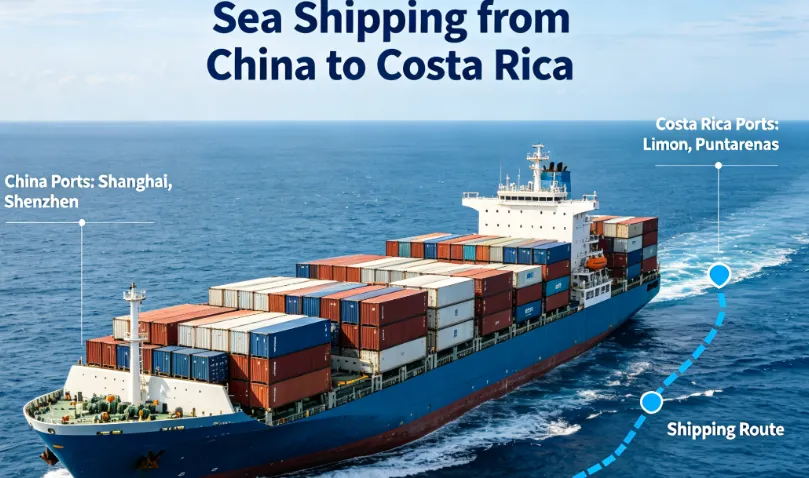
- Major Origin Ports in China: Shanghai, Shenzhen, Ningbo, Guangzhou.
- Major Destination Ports in Costa Rica: Puerto Caldera (Pacific Coast) and Puerto Limón / Moín (Caribbean Coast).
- Key Customs Document: The DUA (Documento Único Aduanero) is mandatory for all imports.
Understanding the China-Costa Rica Sea Freight Market
The Impact of the China-Costa Rica Free Trade Agreement (FTA)
The Free Trade Agreement (FTA) between China and Costa Rica has significantly reduced import barriers. Many Chinese manufactured goods, including electronics, textiles, and machinery, now benefit from reduced or zero tariffs. To take advantage of these preferential rates, importers must ensure their suppliers provide a valid Certificate of Origin (COO) during the export process.
FCL vs. LCL: Which Standard Container Method Fits Your Cargo?
Choosing the right container shipping method depends entirely on your cargo volume and budget.
- FCL (Full Container Load): Ideal for large shipments (over 15 CBM). You rent the entire 20ft or 40ft container. It offers better security, lower per-unit costs, and faster port handling since the container goes directly to you.
- LCL (Less than Container Load): Perfect for smaller shipments. You share container space with other importers and only pay for the volume (CBM) you use. However, LCL requires consolidation in China and deconsolidation in Costa Rica, adding a few days to the transit time.
Specialized Shipping: RoRo (Vehicles) and OOG (Out of Gauge) Cargo
Not all cargo fits into a standard container. For oversized machinery, construction equipment, or vehicles, specialized ocean freight is required.
- RoRo (Roll-on/Roll-off): The safest and most efficient way to ship wheeled cargo like cars, trucks, and buses. Vehicles are driven directly onto the vessel in China and driven off in Costa Rica.
- OOG (Out of Gauge): Used for heavy or oversized industrial equipment that exceeds standard container dimensions. This cargo is loaded onto Flat Rack or Open Top containers, requiring specialized port handling and securing techniques.
The Complete Sea Freight Process: From China to Costa Rica
Step 1: Booking & Supplier Coordination (Your Role)
The process begins with securing space on a vessel. You or your freight forwarder will coordinate with your Chinese supplier to confirm the cargo readiness date. It is crucial to define the Incoterms (e.g., FOB, EXW) upfront, as this determines who pays for the local Chinese logistics and export clearance.
Step 2: Cargo Pickup & Container Loading in China
If shipping under EXW (Ex Works), your forwarder arranges a truck to pick up the goods directly from the factory. For FCL, the empty container is brought to the supplier for loading. For LCL, the goods are transported to a consolidation warehouse near major ports like Shenzhen or Shanghai.
Step 3: Chinese Export Customs Clearance
Before the cargo can be loaded onto the ship, it must clear Chinese customs. Your supplier or forwarder will submit the Commercial Invoice, Packing List, and Export License. Proper customs clearance documentation prevents costly delays at the origin port.
Step 4: Ocean Transit (Pacific vs. Caribbean Routes)
The vessel departs China and crosses the Pacific Ocean. Depending on your final destination in Costa Rica, the ship will either route directly to the Pacific coast or transit through the Panama Canal to reach the Caribbean coast. Ocean transit is the longest phase of the journey.
Step 5: Port Handling at Puerto Caldera or Puerto Limón
Upon arrival, the container is unloaded at the destination port. Puerto Caldera handles the majority of Asian imports due to its Pacific location, while Puerto Limón (and the Moín Container Terminal) serves the Caribbean side. The port will issue a cargo arrival notice, and Terminal Handling Charges (THC) will apply.
Step 6: Costa Rican Customs Clearance & The "Canal Rojo" Risk
To release the cargo, your local customs broker must file the DUA (Documento Único Aduanero) through the TICA (Tecnología de Información para el Control Aduanero) system. You must pay all applicable import duties, VAT (usually 13%), and specific consumption taxes. Crucial Tip: Costa Rican customs uses a traffic light system. If your shipment hits the Canal Rojo (Red Channel), it triggers an intensive physical inspection. In our experience, inconsistent HS codes or undervalued commercial invoices are the primary triggers for these costly 3-to-5-day delays.
Step 7: Final Inland Delivery to Your Door
Once customs clears the shipment, the container or LCL cargo is loaded onto a chassis or delivery truck. A local trucking company transports the goods from the port to your warehouse, distribution center, or final address in Costa Rica.
How Much Does Sea Shipping Cost from China to Costa Rica?
Estimated 20ft & 40ft Container Prices (FCL)
Ocean freight rates fluctuate based on seasonality, fuel costs, and carrier capacity. Below is an estimated cost breakdown for 2026 standard container shipping from major Chinese ports to Costa Rica.
| Origin Port (China) | Destination Port (Costa Rica) | 20ft Container (FCL) | 40ft Container (FCL) |
|---|---|---|---|
| Shanghai / Ningbo | Puerto Caldera | $2,900 - $3,500 | $3,800 - $4,800 |
| Shenzhen / Guangzhou | Puerto Caldera | $2,800 - $3,400 | $3,700 - $4,700 |
| Shanghai / Shenzhen | Puerto Limón | $3,100 - $3,800 | $4,100 - $5,200 |
Note: Rates are market estimates and subject to General Rate Increases (GRI) during peak seasons.
LCL Consolidation Rates per CBM
For smaller shipments, LCL rates are calculated per Cubic Meter (CBM) or per ton, whichever is greater. On average, shipping LCL from China to Costa Rica costs between $120 and $220 per CBM. Keep in mind that destination deconsolidation fees will also apply.
Hidden Fees to Watch For: Demurrage, Detention, and Storage
The ocean freight rate is only one part of the total landed cost. Beyond standard THC (Terminal Handling Charges) and customs brokerage fees, importers frequently lose money to hidden delays. You must strictly budget and plan for:
- Demurrage & Detention (D&D): Shipping lines usually offer 7-14 free days. Once exceeded, penalties can quickly escalate to $50-$100+ per container, per day.
- Port Storage (Bodegaje): If your DUA filing is delayed or you hit a Canal Rojo inspection, port storage fees at Puerto Caldera accrue rapidly.
- Import Duties & Taxes: Ranging from 1% to 15% based on the HS Code, plus the standard 13% Value Added Tax (VAT). Always verify your supplier's Certificate of Origin to claim FTA benefits.
How Long Does Sea Freight Take to Costa Rica?
Port-to-Port Transit Times
Transit times depend heavily on the chosen shipping line, transshipment ports, and the final destination coast in Costa Rica.
| Route (Port to Port) | Average Transit Time |
|---|---|
| Shenzhen to Puerto Caldera | 25 - 32 Days |
| Shanghai to Puerto Caldera | 28 - 35 Days |
| Ningbo to Puerto Limón | 32 - 40 Days |
Factors Influencing Delays: Customs and Peak Seasons
While the sailing schedule is usually predictable, delays can occur. Peak shipping seasons (August to October) and the lead-up to Chinese New Year often cause port congestion and vessel roll-overs. Additionally, incomplete documentation can trigger intensive physical inspections by Costa Rican customs, delaying your cargo by several days.
DTFU International Logistics: Your Supply Chain Risk Management Partner
Proactive Risk Mitigation & Compliance Consulting
Shipping to Central America requires more than just buying freight space; it demands active risk management. At DTFU International Logistics, we don't just sell freight—we audit your commercial documents, verify HS codes before departure, and pre-plan for customs to keep your cargo out of the Canal Rojo. We focus on protecting your margins from unexpected demurrage and compliance penalties.
Preferential Contract Rates & Guaranteed Space
Through a decade of carrier partnerships, we provide guaranteed vessel space during peak seasons. Our clients benefit from preferential contract rates that keep landed costs below market average, ensuring you remain competitive without sacrificing transit reliability.
Seamless End-to-End Execution
From factory pickup in Shenzhen to final-mile delivery in San José, our team handles every detail. We coordinate with elite Costa Rican customs brokers to ensure rapid DUA filing and smooth terminal extraction, transforming a complex international supply chain into a predictable, hands-off experience for your business.
FAQs
How long does sea freight take from Shanghai to Puerto Caldera?
Direct or well-routed sea freight from Shanghai to Puerto Caldera typically takes between 28 and 35 days port-to-port. If you are shipping LCL, add an extra 3 to 5 days for consolidation and deconsolidation processes.
What is the current cost of a 40ft container to Costa Rica?
As of 2026, shipping a standard 40ft container (FCL) from major Chinese ports to Costa Rica costs between $3,800 and $5,800 USD. Prices vary based on the specific origin port, carrier routing, and seasonal demand fluctuations.
Can I ship heavy machinery or vehicles from China to Costa Rica?
Yes, you can easily ship vehicles and heavy machinery. Vehicles are typically shipped using specialized RoRo (Roll-on/Roll-off) vessels, while oversized industrial machinery is transported using OOG (Out of Gauge) equipment like Flat Rack or Open Top containers.
What are the main import duties for Chinese goods in Costa Rica?
Import duties generally range from 1% to 15% depending on the product's HS Code. Thanks to the China-Costa Rica Free Trade Agreement, many goods qualify for reduced tariffs. However, almost all imports are subject to a standard 13% VAT upon entry.
Is it better to route cargo to the Pacific (Caldera) or Caribbean (Limón) coast?
For shipments originating in Asia, routing to Puerto Caldera on the Pacific coast is usually faster and more cost-effective. Shipping to Puerto Limón requires transiting the Panama Canal, which adds transit time and potential canal toll surcharges.
Do you offer door-to-door sea freight delivery in Costa Rica?
Yes, DTFU International Logistics offers comprehensive Door-to-Door (D2D) sea freight services. We manage the factory pickup in China, ocean transit, customs clearance (DUA), and the final inland trucking delivery to your exact address in Costa Rica.