Are you facing various challenges when it comes to shipping goods from China to Belgium? Such as unclear sea freight costs, unpredictable transit times, unfamiliarity with major ports in both regions, ambiguity around import taxes and duties, and the difficulty of choosing a reliable freight forwarder? Rest assured, this article will break down these issues in detail, equipping you to handle China-Belgium sea shipping with ease.
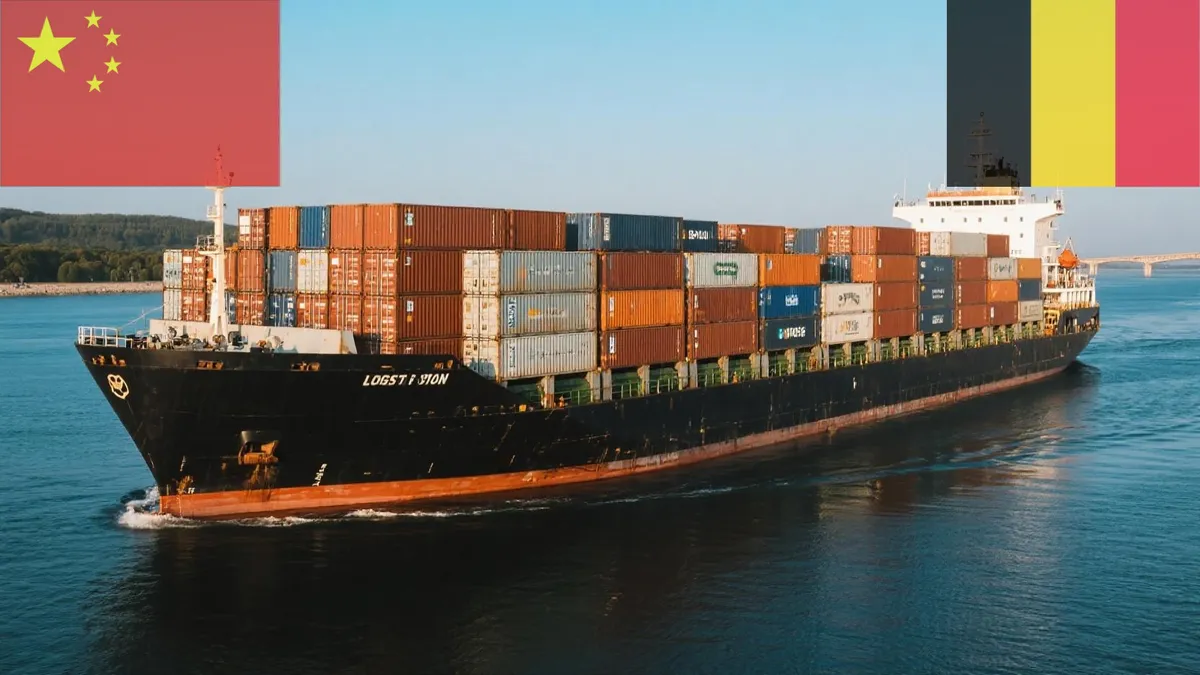
How Much Does Sea Shipping Cost from China to Belgium?
In 2025, sea shipping costs from China to Belgium fluctuate based on multiple factors: shipment type (LCL/FCL), origin and destination ports, container size, and dynamic surcharges. Current market conditions—including global fuel price volatility and severe port congestion in Northern Europe—also influence rates. Below is a comprehensive breakdown of costs and key considerations.
LCL (Less than Container Load) Costs
LCL sea freight is ideal for smaller shipments that share container space. Rates are typically calculated per cubic meter (CBM) or ton, whichever is greater.
| Origin Port in China | Destination Port in Belgium | Approximate Cost per CBM (USD) |
|---|---|---|
| Shanghai Port | Antwerp Port | 220 - 420 |
| Shenzhen Port | Antwerp Port | 200 - 390 |
| Ningbo-Zhoushan Port | Zeebrugge Port | 210 - 400 |
| Guangzhou Port | Zeebrugge Port | 230 - 430 |
Key Points:
- Costs generally include basic handling fees but exclude customs clearance fees (approximately €80 - 150 in Belgium) and local delivery charges to cities like Brussels or Ghent.
- LCL rates from southern Chinese ports (e.g., Shenzhen Port) to Belgian ports are 5 - 10% lower than northern routes due to more frequent sailings.
- Some providers offer "all-in" LCL rates (e.g., $140/CBM from Guangzhou to Antwerp), which include THC and documentation fees.
FCL (Full Container Load) Costs for Sea Freight
FCL sea freight is recommended for larger shipments requiring dedicated containers. Below are typical rates for 20-foot (20GP) and 40-foot (40GP/40HQ) containers:
| Origin Port in China | Destination Port in Belgium | 20GP Cost (USD) | 40GP/40HQ Cost (USD) |
|---|---|---|---|
| Tianjin Port | Zeebrugge Port | 2,500 - 3,800 | 3,600 - 5,200 |
| Shanghai Port | Antwerp Port | 2,300 - 3,500 | 3,200 - 4,800 |
| Shenzhen Port | Antwerp Port | 2,100 - 3,200 | 3,000 - 4,500 |
| Guangzhou Port | Zeebrugge Port | 2,400 - 3,600 | 3,400 - 5,000 |
Key Points:
- Rates from northern ports (e.g., Tianjin Port) are 10 - 15% higher due to longer routes through the Malacca Strait and Suez Canal.
- Peak season surcharges (PSS) of $400/20GP and $600/40HQ apply from August - October and January - February, aligning with pre-holiday stockpiling and post-New Year manufacturing resurgences.
- Premium carriers like Maersk offer faster direct routes (e.g., Shanghai to Antwerp in 28 days) at a 15 - 20% premium over standard lines.
Additional Charges in Sea Freight
Mandatory Fees
Terminal Handling Charges (THC):
- 20GP: $120 - 180 (Shanghai Port to Antwerp Port)
- 40GP/40HQ: $180 - 250 (Shenzhen Port to Zeebrugge Port)
Seal Fee: $10 - 25 per container, for securing the cargo.
Documentation Fee (ODF): $70 - 100 per container (standard for EU-bound shipments).
Variable Surcharges
- Fuel Surcharge (BAF): Adjusted monthly, Maersk's new BAF rates effective October 1, 2025, show this surcharge averaging 22% of the base rate due to rising VLSFO prices (currently $509.82/ton) .
- Port Congestion Surcharge (PCS): Imposed due to ongoing delays at European ports—Antwerp Port currently levies $300 - 450/TEU due to 44-hour average berthing delays .
- Canal Transit Fee: Approximately $300 - 500 per container due to the 2024 Suez Canal Toll increase,which increased rates by 15% for container ships .
Factors Affecting Sea Freight Costs
Port Congestion:
- Antwerp-Bruges Port (Europe's second-largest container port) has seen waiting times increase 37% since March 2025, with vessels now waiting an average of 44 hours to berth .
- Congestion has led to detention fees averaging $200 - 350 per container for delayed pickups, particularly during peak seasons.
Route Diversions:
- Ongoing Houthi attacks in the Red Sea have forced some carriers to divert via the Cape of Good Hope, adding 10 - 14 days to transit times and increasing fuel costs by 30% .
Regulatory Changes:
- New EU emissions regulations have introduced additional charges for high-carbon vessels, adding approximately $150 - 250 per container.
Practical Recommendations for Sea Freight
Peak Season Planning: Avoid shipping 4 - 6 weeks before Christmas (November) and during Chinese New Year (January/February) when both manufacturing and port operations slow down.
Carrier Selection:
- Cost-Effective: COSCO, Hapag-Lloyd (rates 10 - 15% lower than premium lines but with longer transit times).
- Reliability: Maersk, MSC (better on-time performance for time-sensitive cargo like electronics).
Route Optimization: Southern Chinese ports offer better rates and shorter transit times to Belgium, with Shenzhen to Antwerp routes saving 3 - 5 days compared to northern ports.
For a tailored quote, consult DTFU Logistics. Our experts track real-time port conditions and surcharges to ensure cost-effectiveness for your China-Belgium sea shipping.
How Long Does Sea Shipping Take from China to Belgium?
In 2025, sea shipping from China to Belgium transit times vary based on origin/destination ports, shipment type (LCL/FCL), and external factors like weather and port congestion. Below is a detailed breakdown of timelines and key considerations.
LCL (Less than Container Load) Transit Time
LCL shipments (shared containers) take longer due to consolidation/deconsolidation at origin and destination ports.
| Origin Port in China | Destination Port in Belgium | Approximate Transit Time (Days) |
|---|---|---|
| Shanghai Port | Antwerp Port | 35 - 45 |
| Shenzhen Port | Antwerp Port | 32 - 42 |
| Ningbo-Zhoushan Port | Zeebrugge Port | 34 - 44 |
| Guangzhou Port | Zeebrugge Port | 36 - 46 |
Key Points:
- LCL timelines include 7 - 10 days for cargo consolidation at Chinese ports and 5 - 7 days for deconsolidation in Belgium.
- Customs clearance in Belgium typically takes 2 - 5 days but can extend to 10+ days during peak periods or if documents are incomplete.
FCL (Full Container Load) Transit Time
FCL shipments (dedicated containers) offer more predictable timelines due to reduced handling.
| Origin Port in China | Destination Port in Belgium | Transit Time (Days) |
|---|---|---|
| Shanghai Port | Antwerp Port | 28 - 35 |
| Shenzhen Port | Antwerp Port | 25 - 32 |
| Ningbo-Zhoushan Port | Zeebrugge Port | 27 - 34 |
| Tianjin Port | Zeebrugge Port | 32 - 40 |
Key Points:
- Direct routes from southern Chinese ports (e.g., Shenzhen) to Antwerp are fastest, leveraging optimized Suez Canal passages.
- Northern ports (Tianjin) often require longer routes, adding 5 - 7 days compared to southern counterparts.
- Premium services (e.g., MSC’s "EU Express") cut transit times by 3 - 5 days for critical cargo but at a 20% premium.
Factors Affecting Sea Shipping Transit Time
Route and Distance: Southern Chinese ports are approximately 1,200 nautical miles closer to Europe than northern ports, reducing transit times by 3 - 5 days.
Geopolitical Risks: Red Sea diversions add 10 - 14 days to standard transit times, though most carriers continue using the Suez Canal with enhanced security .
Port Congestion:
- Antwerp Port delays currently add 3 - 5 days to unloading schedules, with congestion worst during Q3 and Q4 .
- Inland transport delays from ports to Belgian industrial zones have increased by 20% due to the Rhine River has a low water level issues affecting barge traffic .
Seasonal Factors: Winter storms in the North Sea (December - February) can cause 2 - 4-day delays.
Customs Processing: New EU digital customs procedures (ICS2) have streamlined clearance but require precise documentation—errors can add 5 - 8 days.
Practical Recommendations for Sea Shipping
- Booking Lead Time: Reserve FCL space 6 - 8 weeks in advance during peak seasons to secure preferred sailings.
- Real-Time Tracking: Use carrier digital platforms (Maersk Flow, MSC CargoSmart) to monitor vessel positions and port delays.
- Documentation Preparation: Ensure compliance with EU standards, including CE marking documentation and accurate commodity codes.
For a precise timeline tailored to your shipment, contact DTFU Logistics. Our team provides real-time updates on port conditions and route optimizations to ensure on-schedule delivery.
Main Ports in China and Belgium
Main Ports in China
China’s world-class ports are critical for sea shipping to Belgium, offering advanced infrastructure and global connectivity.
| Port Name | Location | Annual Cargo Volume (TEUs - 2024) | Key Features |
|---|---|---|---|
| Shanghai Port | Shanghai | ~49 million | The world’s busiest container port, with 20 weekly sailings to Antwerp. Specializes in electronics and machinery shipments. |
| Shenzhen Port | Shenzhen | ~30 million | A hub for consumer goods and technology products. Offers fastest transit times to Belgium (25+ days). |
| Ningbo-Zhoushan Port | Ningbo | ~35 million | Deep-water port handling heavy machinery and bulk cargo. Strategic for Zhejiang manufacturers. |
| Guangzhou Port | Guangzhou | ~27 million | Major hub for automotive parts and furniture exports to Europe. |
| Tianjin Port | Tianjin | ~21 million | Northern China’s gateway, serving Beijing and Hebei provinces. Primary port for pharmaceutical exports. |
Main Ports in Belgium
Belgium’s ports are strategic gateways to the European market, offering excellent inland connectivity to Germany, France, and the Netherlands.
| Port Name | Location | Annual Cargo Volume (TEUs - 2024) | Key Features |
|---|---|---|---|
| Antwerp-Bruges Port | Antwerp/Flanders | ~14 million | Europe’s second-largest container port, handling 60% of Belgium’s seaborne trade. Direct rail links to major European cities within 24 hours. |
| Zeebrugge Port | West Flanders | ~4.5 million | Specializes in Ro-Ro cargo, automobiles, and offshore energy equipment. Fastest access to northern France and southern UK. |
| Ghent Port | East Flanders | ~1.2 million | Focuses on bulk cargo, steel products, and agricultural goods. Connected to the Rhine-Meuse-Scheldt delta. |
These ports form the backbone of China-Belgium sea trade, leveraging Belgium’s central location to distribute goods across Europe within 48 hours via road or rail.
Import Tax and Duty Instructions for Exports from China to Belgium
Understanding import taxes and duties is critical for sea shipping from China to Belgium, as unexpected costs can disrupt budgets and cause delays. Below is a clear breakdown.
Basic Composition of Taxes and Duties
- Customs Duty: Determined by the HS code, ranging from 0% (most industrial machinery) to 17% (certain textiles and footwear).
- VAT (Value-Added Tax): 21% on most goods, calculated on CIF value + customs duty. Reduced rates (6%) apply to food, books, and medical supplies.
- Anti-Dumping Duties: Apply to specific products like solar panels (15 - 25%) and certain steel products.
Tax and Duty Table for Common Commodities
| Commodity Category | HS Code Range | Customs Duty Rate | VAT Calculation | Example (CIF Value: €1000) |
|---|---|---|---|---|
| Machinery & Equipment | Starting with 84 | 0 - 2% | (1000 + 20) × 21% = €214.2 | Total: 20 + 214.2 = €234.2 |
| Electronics (phones, laptops) | Starting with 85 | 0% | (1000 + 0) × 21% = €210 | Total: 0 + 210 = €210 |
| Textiles & Clothing | 61 - 63 | 12 - 17% | (1000 + 120) × 21% = €235.2 | Total: 120 + 235.2 = €355.2 |
| Automotive Parts | 8708 - 8709 | 0 - 3% | (1000 + 30) × 21% = €216.3 | Total: 30 + 216.3 = €246.3 |
| Medical Devices | Starting with 90 | 0% | (1000 + 0) × 6% = €60 | Total: 0 + 60 = €60 |
Special Notes
- Duty Exemptions: Goods originating from China may qualify for reduced tariffs under EU-China trade agreements. Verify with the EU Tariff Database.
- IPR Requirements: Ensure products don’t infringe European patents or trademarks to avoid seizure.
- Digital Documentation: EU’s ICS2 system requires electronic submission of customs declarations 24 hours before arrival.
- Preference Certificates: Form A (Generalized System of Preferences) can reduce duties for eligible products by 3 - 5%.
For precise calculations and updates on EU tax policies (e.g., 2025 digital services tax implications), consult DTFU Logistics. Our team verifies HS codes and duty rates to ensure compliance.
Why Choose DTFU Logistics for Your China-Belgium Sea Shipping?
When it comes to sea shipping from China to Belgium, partnering with a logistics expert familiar with EU regulations and regional nuances is critical. DTFU Logistics offers a highly professional, cost-effective, and tailored one-stop service for global traders.
- End-to-End Management for Seamless Shipping: We handle every step—from factory pickup in China (Shanghai, Shenzhen, Guangzhou) to final delivery in Belgium (Brussels, Antwerp, Ghent). Our team manages dual customs clearance, ensuring compliance with EU requirements (ICS2 filings, CE documentation). A recent client shipping electronics from Shenzhen to Antwerp avoided €3,000 in penalties through our pre-shipment compliance checks.
- Transparent Pricing with No Hidden Fees: We break down costs clearly, including base freight, BAF, PCS, and VAT estimates. Our 2025 pricing tool accounts for Suez Canal surcharges and EU emissions fees.
- Flexible Solutions for European Markets: Whether you need LCL for small textile shipments or FCL for automotive parts, we tailor options to your cargo. For urgent shipments, we offer sea-air hybrid services (e.g., Guangzhou to Brussels in 12 days) at 35% lower cost than full air freight.
- Local Expertise in Belgium: Our on-ground team in Antwerp monitors port congestion, coordinates with customs brokers for fast clearance, and provides onward distribution via Belgium’s excellent rail and road network. We also offer bonded warehouse solutions in the Port of Antwerp Free Zone for duty-deferred storage.
Don’t let logistics complexities hinder your trade with Belgium and the EU. Contact DTFU Logistics today for a 24-hour quote. Let us turn your China-Belgium sea shipping into a hassle-free, efficient, and cost-effective process—backed by expertise in European trade regulations.