Are you facing various challenges when it comes to shipping goods from China to Algeria? Such as unclear sea freight costs, unpredictable transit times, unfamiliarity with major ports in both regions, ambiguity around import taxes and duties, and the difficulty of choosing a reliable freight forwarder? Rest assured, this article will break down these issues in detail, equipping you to handle China-Algeria sea shipping with ease.
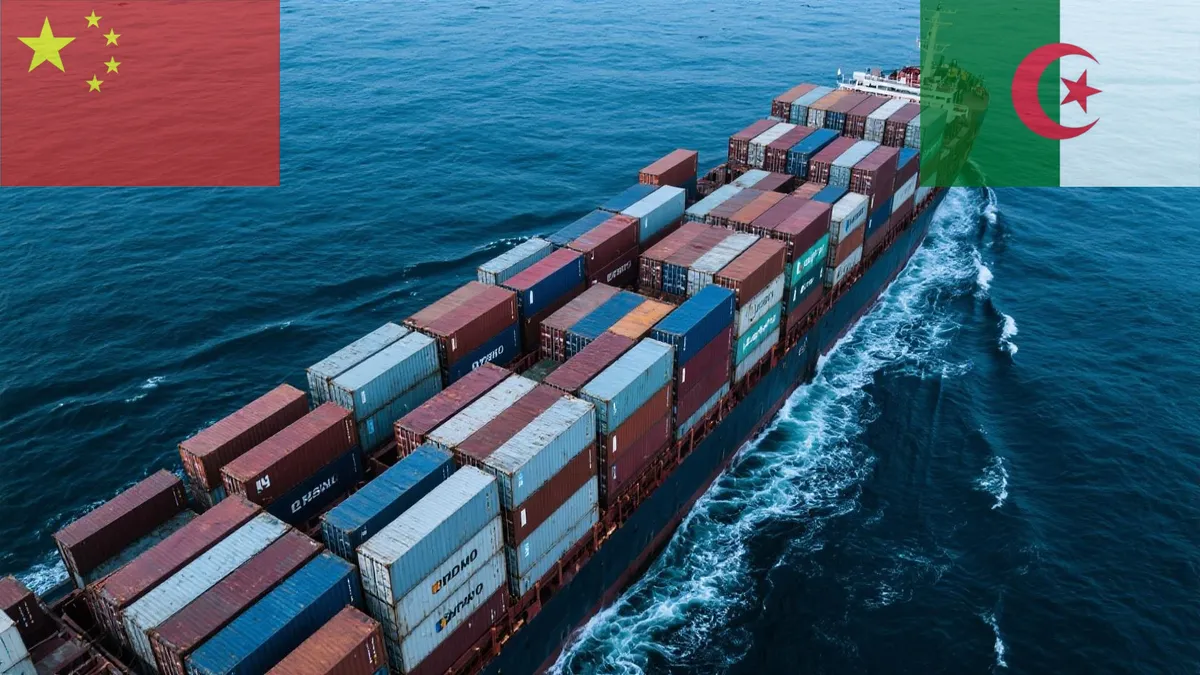
How Much Does Sea Shipping Cost from China to Algeria?
In 2025, sea shipping costs from China to Algeria fluctuate based on multiple factors: shipment type (LCL/FCL), origin and destination ports, container size, and dynamic surcharges. Current market conditions—including Mediterranean fuel price volatility and occasional port congestion in Algerian harbors—also influence rates. Below is a comprehensive breakdown of costs and key considerations.
LCL (Less than Container Load) Costs
LCL sea freight is ideal for smaller shipments that share container space. Rates are typically calculated per cubic meter (CBM) or ton, whichever is greater.
| Origin Port in China | Destination Port in Algeria | Approximate Cost per CBM (USD) |
|---|---|---|
| Shanghai Port | Algiers Port | 220 - 420 |
| Shenzhen Port | Algiers Port | 200 - 390 |
| Ningbo-Zhoushan Port | Bejaia Port | 210 - 400 |
| Guangzhou Port | Oran Port | 230 - 430 |
Key Points:
- Costs generally include basic handling fees but exclude customs clearance fees (approximately $100 - 150 in Algeria) and local delivery charges.
- LCL rates from southern Chinese ports (e.g., Shenzhen Port) to Algerian ports are 10 - 15% lower than northern routes due to more direct Mediterranean access.
- Some providers offer "all-in" LCL rates (e.g., $130/CBM from Guangzhou to Algiers), which include THC and documentation fees.
- LCL shipments to Algeria often require transshipment via Mediterranean hubs like Marseille or Barcelona, adding 5 - 7 days to transit time.
FCL (Full Container Load) Costs for Sea Freight
FCL sea freight is recommended for larger shipments requiring dedicated containers. Below are typical rates for 20-foot (20GP) and 40-foot (40GP/40HQ) containers:
| Origin Port in China | Destination Port in Algeria | 20GP Cost (USD) | 40GP/40HQ Cost (USD) |
|---|---|---|---|
| Tianjin Port | Algiers Port | 3,800 - 4,500 | 5,200 - 6,000 |
| Shanghai Port | Bejaia Port | 3,500 - 4,200 | 4,800 - 5,600 |
| Shenzhen Port | Algiers Port | 3,200 - 3,900 | 4,500 - 5,300 |
| Guangzhou Port | Oran Port | 3,400 - 4,100 | 4,700 - 5,500 |
Key Points:
- Rates from northern ports (e.g., Tianjin Port) are 15 - 20% higher due to longer routes through the Indian Ocean and Suez Canal.
- Peak season surcharges (PSS) of $400/20GP and $600/40HQ apply from May - July and October - December, aligning with Algeria’s pre-holiday shopping and construction season peaks.
- Premium carriers like CMA CGM offer faster direct routes (e.g., Shenzhen to Algiers in 28 days) at a 10 - 15% premium over standard lines.
- Bejaia Port offers discounted rates (10 - 15% lower than Algiers) for bulk cargo like construction materials due to government infrastructure incentives.
Additional Charges in Sea Freight
Mandatory Fees
Terminal Handling Charges (THC):
- 20GP: $110 - 150 (Shanghai Port to Algiers Port)
- 40GP/40HQ: $160 - 210 (Shenzhen Port to Bejaia Port)
Seal Fee: $10 - 25 per container, for securing the cargo.
Documentation Fee (ODF): $70 - 90 per container (standard for Algerian-bound shipments).
Suez Canal Transit Fee: $300 - 450 per container, a mandatory charge for all Mediterranean routes.
Variable Surcharges
- Fuel Surcharge (BAF): Adjusted monthly, averaging 25% of the base rate in 2025 due to Mediterranean fuel price fluctuations.
- Port Congestion Surcharge (PCS): Imposed during peak periods—Algiers Port adds $250 - 350/TEU during Q4 holiday imports.
- Currency Adjustment Factor (CAF): 5 - 8% of the base rate, reflecting Euro/USD exchange rate volatility impacting Algerian trade.
Factors Affecting Sea Freight Costs
Port Congestion:
- Algiers Port faces 5 - 8-day berthing delays during peak seasons, with detention fees averaging $150 - 200 per day for delayed pickups.
- Infrastructure limitations at Algiers Port (only 60% of berths can handle modern container ships) contribute to regular congestion surcharges.
Customs and Duties:
- Algeria levies customs duties ranging from 5 - 30% based on product type, with an additional 19% VAT on most imports.
- Documentation errors can trigger inspections, adding $300 - 600 in fees and 7 - 10 days in delays.
Route Optimization:
- Southern Chinese ports (Shenzhen, Guangzhou) to Algerian ports save 5 - 7 days compared to northern routes by utilizing more efficient Suez Canal transit schedules.
- Transshipment via Mediterranean hubs like Malta can reduce costs by 10% but adds 3 - 5 days to transit time.
Practical Recommendations for Sea Freight
Peak Season Planning: Avoid shipping 4 - 6 weeks before Eid al-Fitr and Eid al-Adha, when Algerian ports face severe backlogs.
Carrier Selection:
- Cost-Effective: COSCO, Hapag-Lloyd (rates 10 - 15% lower than premium lines but with longer transit).
- Reliability: CMA CGM, MSC (better on-time performance for critical cargo with weekly direct sailings).
Documentation: Ensure complete paperwork with French translations (required for Algerian customs) and validated certificates of origin to qualify for potential duty reductions.
For a tailored quote, consult DTFU Logistics. Our experts track real-time port conditions and surcharges to ensure cost-effectiveness for your China-Algeria sea shipping.
How Long Does Sea Shipping Take from China to Algeria?
In 2025, sea shipping from China to Algeria transit times vary based on origin/destination ports, shipment type (LCL/FCL), and external factors like weather and port congestion. Below is a detailed breakdown of timelines and key considerations.
LCL (Less than Container Load) Transit Time
LCL shipments (shared containers) take longer due to consolidation/deconsolidation at origin and destination ports, plus transshipment through Mediterranean hubs.
| Origin Port in China | Destination Port in Algeria | Approximate Transit Time (Days) |
|---|---|---|
| Shanghai Port | Algiers Port | 38 - 46 |
| Shenzhen Port | Algiers Port | 35 - 42 |
| Ningbo-Zhoushan Port | Bejaia Port | 36 - 44 |
| Guangzhou Port | Oran Port | 37 - 45 |
Key Points:
- LCL timelines include 7 - 10 days for cargo consolidation at Chinese ports and 5 - 7 days for deconsolidation in Algeria.
- Customs clearance in Algeria typically takes 5 - 10 days but can extend to 14+ days during peak seasons or with incomplete documentation.
- Transshipment through Mediterranean hubs adds 3 - 5 days but offers more flexible scheduling for smaller shipments.
FCL (Full Container Load) Transit Time
FCL shipments (dedicated containers) offer more predictable timelines due to reduced handling and direct routing options.
| Origin Port in China | Destination Port in Algeria | Transit Time (Days) |
|---|---|---|
| Shanghai Port | Algiers Port | 28 - 35 |
| Shenzhen Port | Algiers Port | 25 - 32 |
| Ningbo-Zhoushan Port | Bejaia Port | 26 - 33 |
| Tianjin Port | Oran Port | 32 - 40 |
Key Points:
- Direct routes from southern Chinese ports (e.g., Shenzhen) to Algiers are fastest, leveraging optimized Suez Canal schedules.
- Northern ports (Tianjin) require longer transit due to extended Indian Ocean and Suez Canal passage.
- Premium services (e.g., CMA CGM’s "Mediterranean Express") cut transit times by 3 - 5 days for time-sensitive cargo like medical supplies.
- Bejaia Port offers slightly faster unloading (1 - 2 days) compared to Algiers due to less congestion.
Factors Affecting Sea Shipping Transit Time
Route and Distance: Southern Chinese ports are approximately 2,500 nautical miles closer to Algeria than northern ports, reducing transit times by 5 - 7 days.
Weather Conditions: Mediterranean storms (December - February) can cause 2 - 4-day delays as vessels adjust speed or routing.
Port Congestion:
- Algiers Port averages 4 - 6 days of berthing delays during Q4 holiday imports and post-Eid restocking periods.
- Suez Canal congestion can add 3 - 5 days during peak global shipping seasons (January - March and August - October).
Shipping Line Schedules: Premium carriers (CMA CGM, MSC) offer weekly direct sailings, while budget lines (COSCO) have biweekly schedules with longer transit.
Customs and Documentation: Algerian customs require strict document verification—errors can add 7 - 14 days to delivery. Ensure French translations for all paperwork.
Practical Recommendations for Sea Shipping
- Route Prioritization: Use southern Chinese ports (Shenzhen, Guangzhou) for faster access to Algeria.
- Booking Lead Time: Reserve FCL space 6 - 8 weeks in advance during peak seasons (May - July and October - December) to secure on-time sailings.
- Avoid Seasonal Delays: Schedule shipments to arrive outside of Algeria’s major holidays (Eid al-Fitr, Eid al-Adha) and summer vacation period (August).
- Real-Time Tracking: Partner with logistics providers offering GPS container tracking to monitor Suez Canal transit and Mediterranean routing proactively.
For a precise timeline tailored to your shipment, contact DTFU Logistics. Our team provides real-time updates on port conditions and route optimizations to ensure on-schedule delivery.
Main Ports in China and Algeria
Main Ports in China
China’s world-class ports are critical for sea shipping to Algeria, offering advanced infrastructure and global connectivity to Mediterranean markets.
| Port Name | Location | Annual Cargo Volume (TEUs - 2024) | Key Features |
|---|---|---|---|
| Shanghai Port | Shanghai | ~49 million | The world’s busiest container port, with direct weekly sailings to Algeria. Handles all cargo types including electronics and machinery. |
| Shenzhen Port | Shenzhen | ~30 million | A hub for consumer goods exports—ideal for Algeria’s retail imports. Offers fastest transit times to North Africa. |
| Ningbo-Zhoushan Port | Ningbo | ~35 million | Deep-water port specializing in bulk cargo (e.g., construction materials, grains) crucial for Algeria’s infrastructure projects. |
| Guangzhou Port | Guangzhou | ~27 million | Strategic for shipments to western Algeria, with efficient links to Pearl River Delta manufacturers. |
| Tianjin Port | Tianjin | ~21 million | Northern China’s gateway, serving industries in Hebei and Shandong. Offers comprehensive services but with longer transit times to Algeria. |
Main Ports in Algeria
Algeria’s ports, along the Mediterranean coast, are vital for sea trade, with ongoing expansions to support economic growth and infrastructure development.
| Port Name | Location | Annual Cargo Volume (TEUs - 2024) | Key Features |
|---|---|---|---|
| Algiers Port | Algiers City | ~1.1 million | Algeria’s largest and busiest port, handling 60% of containerized imports. Undergoing $1.2 billion expansion to add 3 new berths by 2027. |
| Bejaia Port | Bejaia Province | ~0.7 million | Specializes in bulk cargo (construction materials, grains) and project cargo for Algeria’s eastern regions. |
| Oran Port | Oran City | ~0.6 million | Western Algeria’s main port, serving industrial zones and focused on machinery imports. Recently upgraded with new container terminals. |
| Annaba Port | Annaba Province | ~0.3 million | Growing port handling primarily food imports and regional trade. Benefits from proximity to Tunisian border. |
These ports form the backbone of China-Algeria sea trade, linking China’s manufacturing hubs to Algeria’s growing demand for goods and infrastructure development materials. Algiers Port’s expansion reflects Algeria’s commitment to increasing trade capacity with Asian partners, including China.
Import Tax and Duty Instructions for Exports from China to Algeria
Understanding import taxes and duties is critical for sea shipping from China to Algeria, as unexpected costs can disrupt budgets and cause delays. Below is a clear breakdown.
Basic Composition of Taxes and Duties
- Customs Duty: Determined by the HS code of goods, ranging from 5% (essential goods) to 30% (luxury items).
- Value Added Tax (VAT): 19% on most imports, calculated on CIF value + customs duty.
- Excise Tax: Applies to specific goods (alcohol, tobacco, luxury vehicles) at rates up to 100%.
- Statistical Tax: 0.5% of CIF value for all imports, used for trade data collection.
Tax and Duty Table for Common Commodities
| Commodity Category | HS Code Range | Customs Duty Rate | VAT Calculation | Example (CIF Value: $1000) |
|---|---|---|---|---|
| Machinery & Equipment | Starting with 84 | 10% | (1000+100)×19% | Total: 100 + 209 + 5 = $314 |
| Electronics (phones, laptops) | Starting with 85 | 15% | (1000+150)×19% | Total: 150 + 218.5 +5= $373.5 |
| Textiles & Clothing | 61 - 63 | 20% | (1000+200)×19% | Total: 200 + 228 +5= $433 |
| Construction Materials | 68 - 70 | 12% | (1000+120)×19% | Total: 120 + 212.8 +5= $337.8 |
| Medical Supplies | Starting with 90 | 5% | (1000+50)×19% | Total: 50 + 199.5 +5= $254.5 |
Special Notes
- Duty Exemptions: Machinery for industrial projects and medical equipment may qualify for reduced or 0% customs duty under Algeria’s industrial development programs.
- Certificate of Origin: A validated Chinese certificate of origin can reduce duty rates for certain goods (e.g., machinery) by 3 - 5% under Sino-Algerian trade agreements.
- Calculation Order: Always calculate "customs duty first, then VAT, then statistical tax" to avoid errors.
- Documentation: Algerian customs require French translations of all commercial documents, including invoices and packing lists, to process duties efficiently.
- Prohibited Items: Certain goods including used clothing and electronics face restrictions or higher duties—verify regulations before shipping.
For precise calculations and updates on Algeria’s latest tax policies (including potential 2025 adjustments to industrial equipment tariffs), consult DTFU Logistics. Our team verifies HS codes and duty rates to ensure compliance.
Why Choose DTFU Logistics for Your China-Algeria Sea Shipping?
When it comes to sea shipping from China to Algeria, partnering with a logistics expert familiar with regional nuances is critical. DTFU Logistics offers a highly professional, cost-effective, and tailored one-stop service for global traders.
- End-to-End Management for Seamless Shipping: We handle every step—from factory pickup in China (Shanghai, Shenzhen, Guangzhou) to final delivery in Algeria (Algiers, Oran, Constantine). Our team manages dual customs clearance, ensuring compliance with Algerian requirements (French documentation, HS code verification). For example, a recent client shipping 300 tons of construction materials from Shenzhen to Bejaia avoided delays via our pre-clearance checks and local coordination.
- Transparent Pricing with No Hidden Fees: We break down costs clearly, including base freight, THC, Suez Canal fees, VAT, and customs duty estimates. This transparency helps you budget accurately for China-Algeria sea shipping.
- Flexible Solutions for Algerian Markets: Whether you need LCL for small textile shipments or FCL for bulk machinery, we tailor options to your cargo. For urgent humanitarian aid, we offer sea-air hybrid services (e.g., Guangzhou to Algiers in 12 days) at 35% lower cost than full air freight.
- Local Expertise in Algeria: Our on-ground team in Algiers monitors port congestion, coordinates with local agents for fast deconsolidation, and navigates Algeria’s logistics challenges (e.g., inland transport from ports to southern cities). We also assist with free zone logistics (e.g., Algiers Free Zone) for duty-exempt storage and distribution.
- Seasonal Optimization: Our experts help clients avoid costly delays during Algeria’s peak import seasons by leveraging alternative ports like Bejaia and Oran when Algiers congestion is high.
Don’t let logistics complexities hinder your trade with Algeria. Contact DTFU Logistics today for a 24-hour quote. Let us turn your China-Algeria sea shipping into a hassle-free, efficient, and cost-effective process—backed by expertise in regional trade.