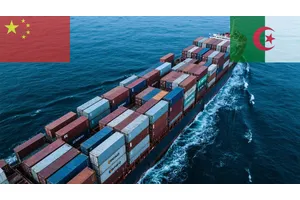
Are you wondering what impacts the Sea Shipping Cost from China to Algeria and how you can save on your next international shipment? Navigating the complexities of ocean freight, freight rates, and customs can be overwhelming for importers. In this comprehensive guide, we’ll break down the key factors affecting costs, explain major shipping routes, and share practical tips to optimize your logistics from China to Algeria. Dive in to discover the best strategies for managing your sea shipping expenses efficiently!
Introduction: Navigating Ocean Freight to Algeria
Shipping goods via sea from China to Algeria is a strategic choice for global traders looking for cost-effective and reliable transport solutions. Over the past decade, China has emerged as one of Algeria’s largest trading partners, with volumes of machinery, electronics, textiles, and construction materials moving regularly between the two countries. As a Senior Logistics Analyst at DTFU International Logistics Co.,Ltd, I have seen that choosing the right freight forwarding partner and understanding the factors that influence sea shipping costs is crucial for importers and exporters alike. In this guide, we’ll break down the main variables affecting sea shipping cost from China to Algeria, helping you make informed decisions and optimize your logistics.
Related reading: If you're looking for the most affordable options, see our guide to the Cheapest shipping agent from China to Algeria.
Understanding the China-Algeria Trade Route
The China–Algeria trade route is a major artery in global commerce, connecting Asia’s industrial heartland with North Africa’s largest economy. Most shipments depart from leading Chinese ports such as Shanghai, Ningbo, Shenzhen, and Guangzhou—all equipped to handle large container volumes and offering regular sailings to North Africa.
On the Algerian side, primary destination ports include Algiers, Oran, Skikda, Bejaia, and Annaba. These ports are strategically located to serve the country’s major industrial and commercial centers, facilitating efficient inland distribution.
| Route | Main Departure Ports in China | Main Arrival Ports in Algeria | Typical Transit Time* |
|---|---|---|---|
| China to Algiers | Shanghai, Ningbo, Shenzhen, Guangzhou | Algiers | 25–35 days |
| China to Oran | Shanghai, Ningbo, Shenzhen, Guangzhou | Oran | 28–38 days |
| China to Skikda/Bejaia/Annaba | Shanghai, Ningbo, Shenzhen, Guangzhou | Skikda, Bejaia, Annaba | 30–40 days |
*Transit times are estimates and can vary based on routing, carrier, and seasonal congestion.
Trade between China and Algeria is largely containerized, with both FCL (Full Container Load) and LCL (Less than Container Load) solutions available depending on shipment size.
For more details on port-to-port logistics along this route, you may find Shipping from Shanghai to Algeria useful.
Why Sea Freight is the Preferred Choice for Importers
Sea freight remains the most popular shipping mode for China–Algeria trade for several compelling reasons:
- Cost-effectiveness: Per-unit shipping costs are significantly lower for sea freight compared to air or rail, especially for bulk or heavy cargo.
- Capacity: Ocean vessels can transport large volumes in both 20ft (28CBM) and 40ft (56CBM) containers, with 40HQ and 45HQ options for larger shipments (68CBM and 78CBM respectively).
- Versatility: Sea freight accommodates diverse cargo types, including general goods, machinery, OOG (Out-of-Gauge), and breakbulk.
- Reliability: Established carrier schedules and regular sailings ensure predictable lead times.
For importers and exporters aiming to balance cost, speed, and cargo safety, sea shipping offers flexibility and value unmatched by other modes.
What Influences Sea Shipping Costs from China to Algeria?
Several interrelated factors determine the total cost of shipping goods by sea from China to Algeria. Understanding these will help you control expenses and plan your logistics more effectively.
Distance and Transit Time: China to Algiers, Oran, Skikda
The geographical distance between your chosen Chinese port and the Algerian destination port is a fundamental cost driver. Longer routes typically mean higher freight charges due to increased fuel consumption, crew costs, and vessel time.
-
Typical distances:
- Shanghai to Algiers: Approx. 11,000 nautical miles
- Ningbo to Oran: Approx. 10,800 nautical miles
- Shenzhen to Skikda: Approx. 11,200 nautical miles
Transit time directly affects not only the base ocean freight rate but also your supply chain’s agility. Shorter transit times may command a premium, while longer or transshipment routes can be less expensive but risk delays, particularly during peak shipping seasons.
Cargo Volume: FCL (Full Container Load) vs. LCL (Less than Container Load)
Your cargo’s volume and weight determine whether FCL or LCL is the optimal choice:
- FCL: Suitable for shipments that can fill an entire container (28CBM for 20ft, 56CBM for 40ft, 68CBM for 40HQ, 78CBM for 45HQ). Offers cost savings per CBM and enhanced security, as the container is sealed from origin to destination.
- LCL: Ideal for smaller shipments (less than a full container). Charges are based on the greater of actual weight (in tons) or volume (in CBM), often with a minimum billing threshold.
| Container Type | Capacity (CBM) | Typical Use |
|---|---|---|
| 20ft | 28 | Medium-sized shipments |
| 40ft | 56 | Large/heavy shipments |
| 40HQ | 68 | Voluminous/lightweight/bulky goods |
| 45HQ | 78 | Extra volume shipments |
Tip: Always optimize your packing to maximize container space utilization.
Seasonal Factors: Peak Season Surcharges (PSS) and General Rate Increases (GRI)
The shipping industry is cyclical, with specific times of year—such as pre–Chinese New Year or prior to Ramadan—seeing a surge in demand. During these peak seasons, carriers apply:
- Peak Season Surcharges (PSS): Temporary additional fees to cover high demand.
- General Rate Increases (GRI): Broad-based price hikes, often announced with little notice.
Staying aware of global shipping trends and planning shipments outside of peak periods can significantly reduce costs.
| Season | Typical Surcharge | Notes |
|---|---|---|
| Pre–Chinese New Year | High | Jan–Feb; heavy export volumes from China |
| Ramadan & Eid | Medium-High | Dates vary; increased imports into Algeria |
| Summer/Fall (Sep–Nov) | High | “Golden Week” in China, global holiday demand |
*Rates and surcharges are subject to market fluctuations and carrier policies.
For comparison, see how peak season surcharges affect other North African routes: Cheapest shipping agent from China to Egypt.
Currency Fluctuations and Fuel Adjustment Factors (BAF)
Two financial variables can cause sea freight rates to change even after booking:
- Currency Fluctuations: Ocean freight is typically quoted in USD, but local charges (like port handling or documentation) might be billed in RMB or DZD (Algerian Dinar). Volatility in exchange rates can impact your final cost.
- Bunker Adjustment Factor (BAF): This surcharge covers changes in marine fuel prices. As global oil markets fluctuate, carriers adjust BAF to reflect increased or decreased fuel costs.
| Surcharge Type | Description | Impact on Cost |
|---|---|---|
| BAF | Adjusts for fuel price changes | Moderate to significant |
| CAF | Currency Adjustment Factor | Minor to moderate |
Actionable Advice: Always check whether your freight rate is all-inclusive or if surcharges like BAF and CAF are billed separately.
Choosing a knowledgeable freight forwarder like DTFU International Logistics Co.,Ltd ensures you get transparent pricing, proactive cost management, and access to competitive carrier rates. We handle all aspects of your sea shipping from China to Algeria—including space allocation, customs clearance, and cargo insurance—so you can focus on growing your business.
Breakdown of Sea Freight Charges and Fees
Efficient budgeting for sea shipping cost from China to Algeria requires a clear understanding of all the charges and fees involved in the shipping process. As an experienced logistics analyst, I will break down each component, ensuring you can plan your shipments with confidence.
Ocean Freight Rates (OFR) Explained
Ocean Freight Rates (OFR) are the core charges applied by carriers for transporting your goods by sea between the port of loading (China) and the port of discharge (Algeria). Rates are determined by several factors, including:
- Container Type and Size: Common options are 20ft (28 CBM), 40ft (56 CBM), 40HQ (68 CBM), and 45HQ (78 CBM).
- Full Container Load (FCL) vs. Less than Container Load (LCL): FCL is cost-efficient for large shipments, whereas LCL is preferred for smaller volumes.
- Current Market Conditions: Spot rates can fluctuate due to demand, fuel prices, global events, and seasonal surcharges.
Typical Current Freight Rates (2026 Reference):
| Route (China - Algeria) | 20ft FCL (USD) | 40ft FCL (USD) | LCL (USD/CBM) |
|---|---|---|---|
| Shanghai – Algiers | $1,800–$2,400 | $3,350–$3,850 | $80–$100 |
| Ningbo – Oran | $1,900–$2,500 | $3,450–$3,950 | $85–$105 |
| Shenzhen – Bejaia | $2,000–$2,600 | $3,550–$4,050 | $88–$110 |
| Guangzhou – Annaba | $1,900–$2,500 | $3,450–$3,950 | $85–$105 |
Note: Rates fluctuate based on market trends, carrier space availability, and booking lead time. For accurate, up-to-date quotes, consult a reputable freight forwarder like DTFU International Logistics Co.,Ltd. For further insights into transit costs for other regional lanes, read about Sea Shipping from China to Algeria.
Local Port Charges in China and Algeria (THC, Doc Fees)
Apart from the ocean freight, local charges at origin and destination ports must be considered:
- Terminal Handling Charges (THC): Fees for loading and unloading containers at the port terminals.
- Documentation Fees: Costs for preparing the Bill of Lading, customs forms, and export declarations.
- Other Possible Charges: Security fees, port security, container cleaning, and release fees.
| Fee Type | China (Origin) | Algeria (Destination) |
|---|---|---|
| Terminal Handling Charge (THC) | $80–$120/container | $110–$170/container |
| Documentation Fee | $30–$50/shipment | $40–$70/shipment |
| Port Security/Admin Fees | $10–$25/shipment | $15–$35/shipment |
Customs Duties and Taxes in Algeria (VAT, Import Duties)
Upon arrival at Algerian ports, shipments are subject to customs duties and taxes.
- Import Duties: Vary based on product type and HS Code; standard rates range from 5%–30%.
- Value Added Tax (VAT): Typically 19% but can vary for specific goods.
- Additional Levies: Some goods may attract extra taxes, such as the Temporary Additional Duty (DAP).
Example Calculation (for a $10,000 CIF shipment of electronics, 10% duty, 19% VAT):
- Import Duty: $10,000 × 10% = $1,000
- Subtotal: $11,000
- VAT: $11,000 × 19% = $2,090
- Total Duties & Taxes: $1,000 (duty) + $2,090 (VAT) = $3,090
Always confirm the latest rates and rules with your logistics provider or customs broker, as Algerian import regulations can change.
Insurance and Additional Service Fees
- Cargo Insurance: Strongly recommended to mitigate risk from loss or damage. Premiums are usually 0.3%–0.5% of the insured value.
- Additional Services: Such as warehousing, customs inspection/clearance, consolidation, and door-to-door delivery.
| Service Type | Typical Fee (USD) | Notes |
|---|---|---|
| Marine Insurance | 0.3%–0.5% of value | Highly recommended for all shipments |
| Warehousing | $4–$10/CBM per week | Depending on storage duration/location |
| Customs Inspection | $120–$250/shipment | If randomly selected or required |
| Door-to-Door Delivery | $200–$500+/shipment | Based on delivery address and cargo specifics |
Leveraging a one-stop logistics partner like DTFU International Logistics Co.,Ltd ensures transparent costing and reduces unexpected surcharges through expert pre-planning.
Major Shipping Routes and Transit Times
Selecting the right shipping route and understanding the estimated transit time are crucial for planning your sea shipping from China to Algeria. Here’s a breakdown of the most important ports and their significance.
Top Departure Ports in China
- Shanghai: The world’s busiest container port, offering extensive sailings to North Africa. Ideal for high-volume and consolidated shipments.
- Ningbo: Known for efficient handling and competitive rates, especially for machinery, electronics, and bulk goods.
- Shenzhen: Preferred for exports of consumer electronics, textiles, and e-commerce shipments.
- Guangzhou: Major hub for automotive parts, appliances, and general cargo.
All these ports provide direct and transshipment services to Algeria, ensuring flexibility for both FCL and LCL shipments. For a comparative look at West Africa shipping, check Shipping from Shanghai to Ghana.
Main Arrival Ports in Algeria
- Algiers: Largest port in Algeria; primary entry for commercial cargo. Handles over 50% of the country’s imports.
- Oran: Western Algeria’s gateway; key for shipments destined to industrial and agricultural centers.
- Bejaia: Important oil export/import port; also handles wide range of containerized goods.
- Annaba: Eastern hub, serving manufacturing and mining sectors.
Estimated Transit Times for Key Routes
Transit times can vary due to the routing, carrier schedules, and potential transshipments at Mediterranean hubs such as Valencia, Malta, or Tangier.
| Route (China – Algeria) | Direct/Transshipment | Estimated Transit Time (Days) |
|---|---|---|
| Shanghai – Algiers | Transshipment | 29–35 |
| Ningbo – Oran | Transshipment | 30–36 |
| Shenzhen – Bejaia | Transshipment | 31–37 |
| Guangzhou – Annaba | Transshipment | 31–38 |
Direct services are limited; most sailings involve one or two transshipments. Peak season, port congestion, or customs delays may extend transit times.
Pro Tip: Planning ahead and booking early, especially during peak shipping seasons (July–October), can help secure space and preferred schedules.
How to Calculate and Reduce Your Shipping Costs
Practical Tips for Lowering Freight Expenses
Controlling sea shipping costs from China to Algeria is vital for maintaining profit margins. As a logistics expert, I recommend these proven strategies:
-
Plan Shipments in Advance: Avoid peak-season surcharges and space shortages by booking early. Peak periods (e.g., before Ramadan, Christmas, and Chinese New Year) see sharp rate increases.
-
Optimize Cargo Volume:
- FCL (Full Container Load) is more cost-effective for larger shipments.
- LCL (Less than Container Load) works best for small consignments, but consolidating with other importers can reduce per-unit costs.
-
Negotiate with Multiple Carriers: Request quotes from several major carriers and freight forwarders, including DTFU International Logistics Co.,Ltd, to leverage competitive rates.
-
Choose the Right Shipping Terms: Select Incoterms (FOB, CIF, DDP) that fit your risk and cost preferences (see below for a detailed comparison).
-
Consolidate Shipments: Grouping small shipments reduces handling and documentation fees.
-
Review Surcharges and Fees: Understand all potential extra charges (e.g., BAF – Bunker Adjustment Factor, CAF – Currency Adjustment Factor) to avoid surprises.
-
Accurate Documentation: Prevent delays and fines by ensuring all paperwork is correct.
-
Work with a Reputable Freight Forwarder: A reliable provider like DTFU International Logistics Co.,Ltd offers advice, transparent pricing, and customs support to minimize unnecessary costs.
The Importance of Accurate Volumetric Weight Calculation
Freight costs for sea shipping from China to Algeria often depend on both actual weight and volumetric weight. Carriers use whichever is greater for LCL shipments. Calculating this correctly prevents overcharging.
Volumetric weight formula for sea freight:
- CBM (Cubic Meters) = Length (m) × Width (m) × Height (m) per package, summed for all packages.
- Example: 5 packages, each 1.2m × 1m × 1m = 1.2 CBM × 5 = 6 CBM.
- LCL rates are applied per CBM.
Container capacity reference:
| Container Type | Capacity (CBM) | Typical Use Case |
|---|---|---|
| 20FT | 28 | Small to medium shipments |
| 40FT | 56 | Medium to large shipments |
| 40HQ | 68 | High-volume, lightweight cargo |
| 45HQ | 78 | Extra-large, high-volume shipments |
Ensuring precise measurement avoids unnecessary charges and optimizes your shipping budget.
Why Incoterms Matter: FOB vs. CIF vs. DDP
Incoterms define the division of responsibilities and costs between the buyer and seller.
| Incoterm | What It Means | Who Handles Freight | Who Handles Insurance | Who Handles Destination Customs & Delivery | Typical Use Case |
|---|---|---|---|---|---|
| FOB (Free on Board) | Seller delivers goods to the port; buyer arranges main carriage | Buyer | Buyer | Buyer | Experienced buyers with their own forwarder |
| CIF (Cost, Insurance, Freight) | Seller pays for carriage and insurance to the arrival port | Seller | Seller | Buyer | Buyers preferring seller-arranged shipping |
| DDP (Delivered Duty Paid) | Seller handles everything until goods reach buyer's location, incl. import duties | Seller | Seller | Seller | Buyers seeking ‘door-to-door’ simplicity |
Key takeaway: Choose Incoterms with care. For hands-off service and cost predictability, DDP through a trusted partner like DTFU is ideal. For more control or established logistics teams, FOB or CIF may suit better.
Comparing Carrier Offers: Maersk, CMA CGM, COSCO, and MSC
Selecting the right ocean carrier for your route to Algeria can impact transit time, reliability, and cost. Here’s a general comparison (actual rates vary by season and cargo):
| Carrier | Strengths | Service to Algeria Ports | Relative Price | DTFU Expertise |
|---|---|---|---|---|
| Maersk | Global coverage, reliable schedules | Algiers, Oran, Skikda | $$ | Yes |
| CMA CGM | Strong Asia-Africa network, good frequency | Algiers, Bejaia, Annaba | $$ | Yes |
| COSCO | Competitive rates, major China ports focus | Algiers, Oran | $ | Yes |
| MSC | Flexible, frequent sailings, high capacity | Algiers, Oran, Annaba | $$ | Yes |
DTFU International Logistics Co.,Ltd partners with all major carriers to secure space and the most competitive rates, ensuring the best match for your shipment profile.
Customs Clearance Process for Imports to Algeria
Essential Documentation: Bill of Lading, Commercial Invoice, Packing List
Smooth customs clearance is essential in Algeria. You must prepare and submit the following documents:
- Bill of Lading (B/L): The main transport document, issued by the carrier.
- Commercial Invoice: Detailed invoice from the seller, stating value, description, and HS code.
- Packing List: Provides detailed info on the contents, weight, and packaging of your shipment.
- Import License (if required): Some products require pre-approval or import permits.
Tip: Errors or inconsistencies can cause delays, fines, or cargo seizure. DTFU’s customs team offers expert document review as part of our service.
Certificate of Conformity and Quality Standards
Certain goods entering Algeria (e.g., electronics, machinery, food products) require a Certificate of Conformity (CoC) to prove compliance with Algerian and international standards.
- Who issues the CoC? Authorized testing and certification bodies.
- Common regulated products: Electrical goods, vehicles, pharmaceuticals, cosmetics.
- Failing to provide this certificate can result in rejection or additional inspection at Algerian ports.
DTFU can coordinate pre-shipment inspections and certification to ensure hassle-free entry.
Understanding Algeria's Import Regulations and Restrictions
Algeria enforces strict import controls to protect public health and local industry. Key points for importers:
- Restricted goods: Some items (e.g., pharmaceuticals, chemicals, used vehicles) need special permissions.
- Prohibited goods: Weapons, counterfeit goods, and certain agricultural products are strictly banned.
- Import duties & VAT: These apply to most imported goods, calculated on CIF value. Current rates (2026) are typically between 5% and 30% depending on HS code, plus a standard 19% VAT.
- Pre-shipment requirements: Registration with the Algerian Ministry of Commerce may be needed for certain product categories.
- Labeling and Language: All products must have French/Arabic labeling and documentation.
Source: Algerian Customs and current Algerian trade policy guidelines.
DTFU International Logistics Co.,Ltd provides end-to-end customs clearance, including document preparation, tariff assessment, and compliance advice, ensuring your goods clear Algerian customs smoothly.
Why Choose DTFU International Logistics Co.,Ltd for Your China-Algeria Shipments?
When shipping from China to Algeria, choosing a reliable freight forwarder is crucial for cost control, risk mitigation, and efficient delivery. DTFU International Logistics Co.,Ltd stands out as a leading international logistics partner for the China-Algeria trade route. Here’s why:
Competitive Rates and Reliable Space Allocation
We leverage our strong partnerships with major shipping lines such as Maersk, CMA CGM, COSCO, and MSC to ensure our customers benefit from the most competitive rates and reliable space, even during peak seasons. Our volume contracts allow us to negotiate preferential rates for both FCL (Full Container Load) and LCL (Less than Container Load) shipments.
Instead of fluctuating market rates, we offer stable, contract-based pricing that can save you up to 20%.
- 20FT Containers: Access to preferential contract rates significantly lower than the spot market average.
- 40FT/40HQ Containers: Bulk volume discounts with guaranteed space protection and priority loading.
- LCL Cargo: Optimized consolidation services designed to minimize your per-CBM cost through smart aggregation.
Note: Rates fluctuate based on season, carrier, and service level. Contact us for the latest rates tailored to your needs.
Comprehensive Door-to-Door and Port-to-Port Services
As a one-stop logistics provider, DTFU offers a wide range of solutions to match your shipping requirements:
- Sea Freight: FCL, LCL, Consolidated Cargo, Breakbulk, and OOG (Out-of-Gauge) services.
- Road Freight within China and across North Africa.
- Air Freight for urgent shipments.
- Amazon FBA services for e-commerce sellers.
- Warehouse solutions in both China and Algeria.
- Cargo insurance services for complete risk management.
- One-stop customs clearance and advisory.
- Door-to-door delivery to every major city in Algeria, including inland destinations beyond the ports of Algiers, Oran, Bejaia, and Annaba.
24/7 Customer Support and Transparent Tracking
Our multilingual support team is available around the clock to answer your queries, provide real-time shipment updates, and proactively handle any disruptions:
- Online tracking system for full visibility from origin to destination.
- Instant alerts on customs status, port releases, and delivery scheduling.
- Flexible communication channels: Email, WhatsApp, WeChat, and phone.
Expertise in Handling Complex Customs Procedures
Shipping to Algeria requires in-depth understanding of local import regulations, documentation, and standards. Our dedicated customs clearance team has extensive experience with:
- Preparation and verification of all required documents (Bill of Lading, Commercial Invoice, Packing List, Certificate of Conformity).
- Navigating Algeria's import restrictions and sector-specific compliance.
- Quick and accurate calculation of duties, VAT, and other taxes.
- Resolution of clearance issues—minimizing delays, unexpected costs, and compliance risks.
FAQs: Sea Shipping from China to Algeria
How much does it cost to ship a 20ft container from China to Algeria?
As of early 2026, the average ocean freight rate for a 20ft container (28CBM) from main ports in China (such as Shanghai, Ningbo, Shenzhen) to Algeria (Algiers, Oran, Bejaia) ranges from USD $1,800 to $2,400. The final cost depends on the carrier, route, season, and value-added services like insurance and customs clearance.
How much does it cost to ship a 40ft container from China to Algeria?
Shipping a 40ft container (56CBM) typically costs between USD $3,350 and $4,050 for standard FCL services. 40HQ containers (68CBM) are slightly higher. Please note, prices are subject to change based on market demand, peak season surcharges, and currency fluctuations.
How long does shipping take from China to Algeria by sea?
Transit times vary by origin and destination port. Here is a summary of estimated transit times:
| Route (Port-to-Port) | Estimated Transit Time |
|---|---|
| Shanghai – Algiers | 30-35 days |
| Ningbo – Oran | 32-38 days |
| Shenzhen – Bejaia | 33-40 days |
| Guangzhou – Annaba | 32-38 days |
Delays may occur due to port congestion, customs inspection, or weather conditions. DTFU closely monitors your shipment and provides transparent updates at every stage.
What is the cheapest time of year to ship to Algeria?
Shipping rates are generally lowest during the off-peak season, notably from March to May and October to November. Avoiding the pre-holiday rush, Chinese New Year, and the European summer season can yield significant savings. However, rates can fluctuate due to fuel adjustments (BAF) and general rate increases (GRI). DTFU can help you plan shipments to optimize cost efficiency.
Can DTFU handle door-to-door delivery to inland cities in Algeria?
Yes. In addition to traditional port-to-port service, DTFU International Logistics Co.,Ltd offers comprehensive door-to-door shipping solutions. Our network covers all major inland cities in Algeria, including Blida, Constantine, Setif, and Tlemcen. We coordinate local trucking, customs clearance, and last-mile distribution—so your cargo reaches its final destination safely and on time.
DTFU International Logistics Co.,Ltd is committed to providing highly professional, cost-effective, and high-quality logistics solutions for global traders. If you need expert support with your China-Algeria shipments, contact us for a free consultation and personalized quote.