Are you looking for a hassle-free way to ship goods from China to Ethiopia? DDP shipping from China to Ethiopia offers a streamlined solution that simplifies customs clearance and ensures cost transparency. In this comprehensive guide, we’ll explain what DDP (Delivered Duty Paid) shipping means, explore its advantages, and provide you with step-by-step instructions for a smooth shipping experience. Discover how DDP shipping can benefit Ethiopian importers and how to choose the best freight forwarder for your needs.
What Is DDP Shipping from China to Ethiopia?
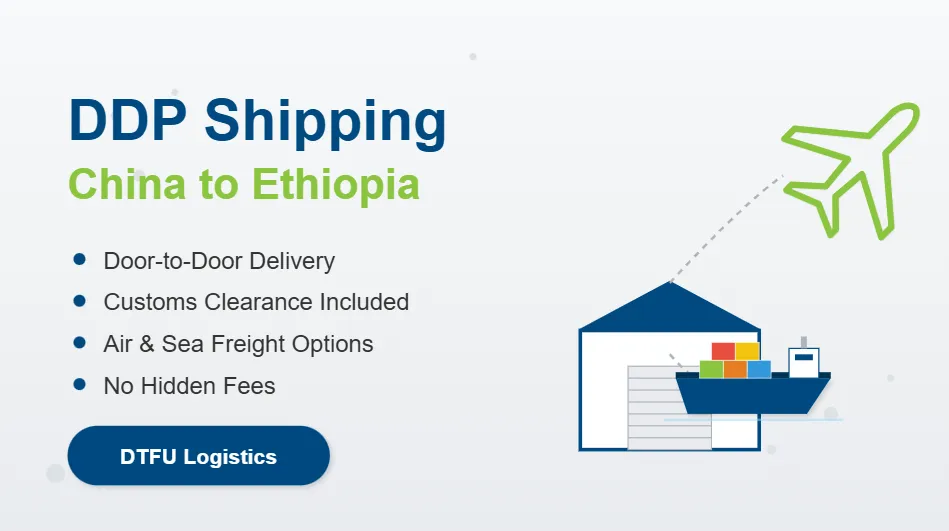
DDP (Delivered Duty Paid) is one of the most advantageous Incoterms for importers looking for a hassle-free shipping experience. Under DDP, the seller (exporter in China) is responsible for almost every aspect of the shipping process—from pick-up at the origin to delivery at the buyer’s door in Ethiopia. This includes export and import customs clearance, duties, taxes, freight charges, and final delivery. The importer has minimal responsibility and risk, making DDP shipping particularly attractive for companies new to international trade or those seeking a predictable cost structure.
In a typical DDP shipping from China to Ethiopia arrangement, the freight forwarder—or logistics provider—handles the following key steps:
- Export customs clearance in China
- International freight (by sea freight or air freight)
- Import customs clearance in Ethiopia
- Payment of import duties and taxes
- Final delivery to the specified address in Ethiopia
At DTFU International Logistics Co.,Ltd, we provide comprehensive DDP services that simplify the process for our clients. Our logistics experts coordinate each stage, ensuring full compliance with both Chinese and Ethiopian regulations.
Key Differences Between DDP, DAP, and Other Incoterms
Understanding the distinction between DDP, DAP (Delivered At Place), and other common Incoterms is crucial for importers to manage risks and costs effectively. Here’s a simplified comparison:
| Term | Seller’s Responsibility | Buyer’s Responsibility | Customs Duty/Tax Payment | Delivery Location |
|---|---|---|---|---|
| DDP | Everything incl. duties/taxes, delivery to door in Ethiopia | Minimal (accept delivery) | Seller | Buyer's premises (Ethiopia) |
| DAP | Transportation to named place (Ethiopia); NOT duties/taxes | Duties, taxes, import clearance | Buyer | Named place in Ethiopia |
| CIF | Cost, Insurance, Freight to port (e.g., Djibouti Port) | Import clearance, duties, taxes, local delivery | Buyer | Destination port |
| FOB | Delivery to departure port in China | All costs/risks after port departure | Buyer | Port of loading (China) |
Key Takeaways:
- DDP provides maximum convenience for the buyer, as the seller manages the entire process including complex customs and local regulations in Ethiopia.
- DAP shifts customs clearance, duties, and taxes onto the buyer.
- CIF and FOB require the buyer to be heavily involved in local logistics and compliance.
When choosing DDP shipping from China to Ethiopia, importers avoid surprises and potential delays related to customs or payment of local taxes and duties.
Related reading: If you are considering DDP solutions for other African destinations, you may be interested in our article on DDP shipping from China to Kenya.
Advantages of DDP Shipping for Ethiopian Importers
Simplified Customs Clearance and Duty Handling
Navigating Ethiopian customs clearance can be challenging, especially for those unfamiliar with the country’s unique rules and paperwork requirements. With DDP shipping, the freight forwarder manages the entire customs process, including:
- Preparing and submitting required documentation (commercial invoice, packing list, bill of lading/airway bill, etc.)
- Ensuring compliance with Ethiopian Revenue and Customs Authority (ERCA) regulations
- Calculating and paying all duties, VAT, and import taxes on behalf of the importer
This comprehensive service reduces administrative burden and minimizes the risk of shipment delays due to missing documents or incorrect declarations.
Reduced Risk and Hassle for Buyers
By choosing DDP shipping, Ethiopian buyers transfer most of the shipment risks and logistical headaches to their freight forwarder. This includes:
- Avoiding potential fines or product seizures due to non-compliance
- No need to interact directly with customs authorities
- Lower risk of delays caused by incomplete paperwork or misunderstandings of local import laws
This is especially valuable for small businesses, cross-border e-commerce sellers, and newcomers to international trade who may lack experience in complex logistics processes.
Cost Transparency and Predictable Delivery Times
An important benefit of DDP shipping from China to Ethiopia is complete cost transparency. All charges—including international shipping, customs duties, taxes, and last-mile delivery—are agreed upon upfront. This allows buyers to:
- Accurately calculate total landed costs for their goods
- Avoid unexpected expenses at the destination
- Confidently provide quotations to end customers
Additionally, because the freight forwarder is responsible for every stage—including dealing with local authorities and last-mile delivery—delivery times are more reliable and predictable. This improves supply chain planning and helps businesses maintain healthy inventory levels.
Step-by-Step DDP Shipping Process from China to Ethiopia
DDP (Delivered Duty Paid) shipping from China to Ethiopia is a comprehensive logistics service where the freight forwarder or seller takes full responsibility for delivering goods to the buyer’s destination, including all shipping, customs clearance, duties, and taxes. This model is highly favored by Ethiopian importers as it eliminates import hassles and unexpected costs.
The typical DDP shipping workflow involves:
- Cargo Pickup: The freight forwarder arranges for the goods to be collected from the supplier or factory in China.
- Export Customs Clearance: All necessary export procedures and documentation are handled at the Chinese port of origin.
- International Transportation: The cargo is shipped to Ethiopia via either air freight or sea freight, based on the client’s requirements.
- Import Customs Clearance in Ethiopia: The freight forwarder manages all local customs clearance, pays import duties, taxes, and handles compliance with Ethiopian regulations.
- Last Mile Delivery: Goods are delivered directly to the buyer’s specified address in Ethiopia.
This seamless process ensures that the buyer receives their goods without the need to interact with customs or pay additional fees upon arrival.
Required Documents and Customs Procedures
Proper documentation and compliance with Ethiopian customs regulations are crucial for a smooth DDP shipping experience. As of January 2026, the following documents are typically required:
- Commercial Invoice: Details of the goods, their value, and transaction terms.
- Packing List: Specifies the contents, packaging type, and volume.
- Bill of Lading/Air Waybill: Proof of shipment and transport mode.
- Certificate of Origin: Verifies the origin of the goods (mandatory for some goods in Ethiopia).
- Import Permit: For regulated or restricted items, an import permit from the Ethiopian Revenue and Customs Authority (ERCA) may be needed.
- Insurance Certificate: If cargo insurance is arranged.
The customs procedures include:
- Declaration of goods with the appropriate HS Codes.
- Payment of any applicable import duties, Value Added Tax (VAT), and other surcharges.
- Inspection or quarantine (if required) for certain categories such as food, chemicals, or electronics.
- Release of cargo once all obligations are satisfied.
Having a professional logistics partner like DTFU International Logistics Co.,Ltd ensures that all documentation is accurate and timely, drastically reducing the risk of delays or fines.
Recommended resource: For details about transit timing, see Shipping time from China to Ethiopia.
Door-to-Door Delivery Explained
Door-to-door delivery under DDP means that the entire logistics chain—from the seller’s warehouse in China to the buyer’s doorstep in Ethiopia—is managed by the freight forwarder. The client benefits from:
- End-to-end logistics management: No need to coordinate with multiple carriers or agents.
- One-stop service: DTFU International Logistics can handle Sea Freight, Air Freight, Warehousing, Cargo Insurance, Customs Clearance, and Final Delivery.
- Peace of mind: All risks, including delays, customs complications, and damage, are handled by the provider.
- Fixed, transparent pricing: With DDP, there are no surprise costs upon delivery.
This service is ideal for businesses and individuals unfamiliar with international shipping regulations or those seeking a hassle-free import process.
DDP Shipping Methods: Air Freight vs. Sea Freight
When arranging DDP shipping from China to Ethiopia, choosing the right transport mode is crucial. The two primary options are DDP Air Freight and DDP Sea Freight. Your decision should be based on cargo size, budget, time sensitivity, and product characteristics.
Comparing DDP Air Freight and DDP Sea Freight
| Aspect | DDP Air Freight | DDP Sea Freight |
|---|---|---|
| Transit Time | 4-7 days (typically) | 25-40 days (varies by departure port & route) |
| Cost | Higher per kg, suitable for small, high-value goods | Lower per CBM/ton, suitable for large, heavy cargo |
| Cargo Suitability | Electronics, samples, urgent parts, pharmaceuticals | Machinery, building materials, bulk commodities |
| Capacity | Usually up to 500-1000kg per shipment | FCL: 20FT (28CBM), 40FT (56CBM), 40HQ (68CBM), 45HQ (78CBM) |
| Departure Ports | Shanghai, Guangzhou, Shenzhen, Beijing, Hong Kong | Shanghai, Ningbo, Qingdao, Shenzhen, Xiamen |
| Destination | Addis Ababa Bole International Airport (ADD) | Djibouti Port (main sea gateway, then road to Ethiopia) |
| Customs Handling | Faster but strict documentation, security checks | More complex, greater risk of inspection delays |
| Environmental Impact | Higher carbon footprint | Lower per ton-km, but longer transit |
Sample Cost and Transit Time Table (January 2026 Estimates):
| Mode | Route | Average Cost (USD) | Estimated Transit Time |
|---|---|---|---|
| Air Freight | Shanghai – Addis Ababa (100kg cargo) | $5–$7/kg | 4–7 days |
| Sea Freight | Shanghai – Djibouti – Addis Ababa (FCL 20FT) | $2,100–$2,660 | 30–40 days |
Note: Final costs vary with cargo size, season, and surcharges. DTFU International Logistics provides customized quotes for both modes.
Transit Times, Costs, and Cargo Suitability
When planning your shipment, consider the following:
- Air Freight is best for urgent shipments, small parcels, and high-value goods. Customs clearance at Addis Ababa is relatively quick, and final delivery can be arranged within 1–2 days after arrival.
- Sea Freight is cost-effective for bulk cargo. Goods typically arrive at Djibouti Port, the main maritime gateway for Ethiopia. From Djibouti, cargo is transported via road or rail to Addis Ababa or other Ethiopian cities.
Cargo types best suited for each mode:
- Air Freight: Fashion, electronics, pharmaceuticals, documents, samples.
- Sea Freight: Industrial equipment, furniture, building materials, bulk foods.
Choosing the right freight forwarder is essential in managing these complexities. As a leading provider, DTFU International Logistics Co.,Ltd offers reliable, cost-effective, and fully managed DDP shipping solutions tailored to the needs of businesses in Ethiopia. Our expertise covers all aspects of the logistics chain, ensuring your goods arrive safely, on time, and with full compliance.
If you require further insights or a personalized shipping plan, feel free to contact us at DTFU International Logistics Co.,Ltd. We are committed to delivering seamless and transparent DDP shipping experiences from China to Ethiopia.
Explore similar topics: Discover more about Air Shipping From China Ethiopia and Sea Shipping From China Ethiopia for detailed freight options.
How to Calculate DDP Shipping Costs from China to Ethiopia
Factors Affecting DDP Freight Rates
When shipping under the DDP (Delivered Duty Paid) term from China to Ethiopia, it’s essential to understand the comprehensive cost structure. Unlike other Incoterms, DDP covers not only freight but also customs clearance, import duties, and last-mile delivery in the destination country. Here are the main factors that influence DDP shipping rates:
-
Shipping Method (Sea Freight vs Air Freight):
- Air Freight is faster but generally more expensive, suitable for urgent or high-value goods.
- Sea Freight is cost-effective for larger, non-urgent shipments.
- DTFU International Logistics Co.,Ltd provides both options with transparent pricing.
-
Cargo Volume and Weight:
- FCL (Full Container Load): Based on container size (such as 20FT = 28CBM, 40FT = 56CBM, 40HQ = 68CBM).
- LCL (Less than Container Load): Calculated per cubic meter (CBM) or per kilogram for air.
-
Type of Goods:
- General cargo vs. special cargo (e.g., hazardous, oversized, temperature-sensitive).
- Certain commodities may require additional handling or documentation.
-
Origin and Destination Locations:
- Cost varies depending on pick-up (city of origin in China) and delivery point in Ethiopia.
- Example: Shipping from Shanghai Port to Addis Ababa typically differs from shipping from Shenzhen.
-
Customs Duties and Taxes:
- DDP includes estimated import duties, VAT, and service charges as required by Ethiopian Customs.
- Rates depend on HS code, declared value, and specific regulations.
-
Additional Services:
- Insurance, warehousing, packing, and last-mile delivery.
- DTFU International Logistics offers comprehensive support (including cargo insurance, door-to-door, and one-stop customs clearance).
-
Market Trends and Surcharges:
- Fluctuations in fuel costs, currency exchange rates, and seasonal demand can impact rates.
Typical DDP Sea Freight Cost Structure Example
| Cost Component | Typical Range (USD, January 2026) | Notes |
|---|---|---|
| Sea Freight (20ft FCL) | $2,590 – $3,150 | Shanghai – Djibouti Port |
| Local Charges in China | $210 – $350 | Customs, documentation, loading |
| Inland Transit (Ethiopia) | $840 – $1,260 | Djibouti Port to Addis Ababa (road) |
| Ethiopian Taxes & Duties | 25% – 35% of CIF value | Depends on HS Code |
| Last Mile Delivery | $70 – $280 | Within Addis Ababa |
| Insurance (Optional) | 0.2% – 0.5% of cargo value | Highly recommended |
Note: Rates vary depending on market fluctuations and cargo specifics. For accurate quotations, consult a trusted forwarder such as DTFU International Logistics Co.,Ltd.
Example: DDP Shipping Cost Calculation
Let’s go through a practical example for a 10-ton general cargo shipment by sea freight from Shanghai, China to Addis Ababa, Ethiopia:
Scenario Details:
- Cargo: General household appliances
- Volume: 1 x 40HQ container (68 CBM)
- Value: $40,000 USD
Step-by-Step Cost Breakdown:
| Step | Amount (USD) | Details |
|---|---|---|
| Ocean Freight | $2,940 | Shanghai to Djibouti (40HQ) |
| Origin Charges (China) | $280 | Export clearance, docs, local handling |
| Inland Transit (Djibouti–Addis) | $1,120 | Trucking from Djibouti to Addis Ababa |
| Import Duties/Taxes | $8,400 | ~21% CIF (depends on actual HS code, for reference) |
| Customs Clearance (ETH) | $245 | Broker fees, local handling |
| Last Mile Delivery | $140 | To consignee’s warehouse in Addis Ababa |
| Insurance (optional) | $105 | ~0.26% of $40,000 |
| Total Estimated DDP Cost | $13,230 | All-inclusive, door-to-door |
Key Points:
- The above estimate covers every stage from China factory to Ethiopian buyer’s doorstep.
- All risk and compliance issues are managed by your DDP forwarder, such as DTFU International Logistics, ensuring peace of mind.
For an accurate, up-to-date quotation, contact DTFU International Logistics Co.,Ltd—your reliable partner for DDP shipping from China to Ethiopia.
Customs Regulations and Import Restrictions in Ethiopia
Commonly Imported Goods and Prohibited Items
Ethiopia is one of Africa’s fastest-growing markets but has strict customs regulations. Knowing what you can (and cannot) import is crucial for compliance.
Commonly Imported Goods:
- Machinery & electrical equipment
- Vehicles & automotive parts
- Textiles and garments
- Consumer electronics
- Pharmaceuticals and medical equipment
- Construction materials
- Plastic and chemical products
Prohibited or Restricted Items:
- Narcotics and illegal drugs
- Weapons and ammunition (without special permit)
- Counterfeit goods and currency
- Pornographic materials
- Used clothing (some restrictions)
- Used vehicles over 8 years old
- Certain hazardous chemicals
Tip: Always check the latest Ethiopian Revenue and Customs Authority (ERCA) list for updates, as regulations change regularly.
Ethiopian Customs Duties, Taxes, and Compliance Tips
Customs duties and import taxes in Ethiopia can significantly impact the total landed cost. Here’s what importers must know:
Main Import Duties & Taxes
| Tax Type | Typical Rate | Calculation Base |
|---|---|---|
| Customs Duty | 0% – 35% | CIF (Cost+Insurance+Freight) |
| Value Added Tax (VAT) | 15% | CIF + Duty |
| Surtax | 10% | CIF + Duty |
| Excise Tax | 10% – 100% | Varies by product |
| Withholding Tax | 3% | CIF + Duty |
Example: For general electronics, duty may be 20%, VAT 15%, surtax 10%.
Compliance Tips
- Ensure HS Code classification is accurate for your products.
- Prepare all necessary documents: Commercial Invoice, Packing List, Bill of Lading/Airway Bill, Certificate of Origin, and any product-specific certifications.
- Engage a reputable DDP forwarder (DTFU International Logistics) who understands both Chinese export and Ethiopian import procedures.
- Pre-shipment inspection may be required for some product categories.
- Avoid under-declaration or false invoicing—Ethiopian customs applies strict penalties for misdeclaration.
- Monitor policy changes; Ethiopia’s customs regulations are updated periodically to comply with economic strategies and protect local industries.
Conclusion: Understanding DDP shipping costs and Ethiopia’s import regulations is essential for successful, compliant logistics operations. Partnering with a professional freight forwarder like DTFU International Logistics Co.,Ltd helps simplify the process, manage costs, and avoid compliance pitfalls—ensuring your cargo arrives safely and on time.
How to Choose a Reliable DDP Freight Forwarder in China
Choosing a reliable DDP (Delivered Duty Paid) freight forwarder in China is critical for ensuring smooth, cost-effective, and compliant shipping from China to Ethiopia. The right partner can dramatically reduce operational risks, ensure customs compliance, and deliver a seamless logistics experience. Here are the key points to consider:
1. Evaluate Industry Experience and Credentials
- Expertise: Look for freight forwarders with extensive experience in handling DDP shipping to Ethiopia. A company well-versed in both Chinese export regulations and Ethiopian import laws will help you avoid costly mistakes.
- Certifications: Verify that the forwarder holds valid international shipping licenses (e.g., FMC, NVOCC, or FIATA membership) and has proven track records in both sea freight and air freight logistics.
- Reputation: Check references, testimonials, and third-party review platforms to ensure that the forwarder has a history of reliable service.
2. Comprehensive Service Portfolio
A reliable freight forwarder should be able to provide a one-stop solution for your supply chain needs. Core services should include:
| Service | Description |
|---|---|
| Sea Freight | Full-container (FCL) and LCL options from major Chinese ports to Djibouti, the main gateway port for Ethiopia. |
| Air Freight | Fast, reliable air cargo to Addis Ababa and other major Ethiopian airports. |
| Customs Clearance | End-to-end customs handling in both China and Ethiopia. |
| Door-to-Door Delivery | True DDP service, including inland transport in Ethiopia. |
| Cargo Insurance | Insurance options to protect your goods throughout transit. |
| Warehousing & Consolidation | Storage, repacking, and document management for efficient shipping. |
DTFU International Logistics Co.,Ltd stands out as a leading provider of all the above services, trusted by traders worldwide for our expertise in DDP shipping, competitive rates, and excellent customer support.
3. Transparent Pricing and Cost Structure
A trustworthy DDP freight forwarder should offer clear, itemized quotations that include all relevant charges:
- Freight costs (air or sea)
- Customs duties and taxes in Ethiopia
- Origin and destination port charges
- Inland delivery fees
- Insurance and value-added services
Ask for a sample quotation and compare it with others. Beware of unrealistically low offers, which may conceal hidden fees or inadequate service.
4. Local Expertise and Network in Ethiopia
Effective DDP shipping requires a strong network in both China and Ethiopia. Key aspects include:
- Established partnerships with local customs brokers in Ethiopia.
- Fleet management for last-mile delivery within Ethiopia.
- Up-to-date knowledge of current Ethiopian import policies and restrictions.
5. Technology and Communication
- Shipment Tracking: Choose a forwarder with real-time cargo tracking and online management tools.
- Customer Support: Responsive, multilingual support teams can provide timely updates and resolve issues quickly.
- Proactive Communication: Regular shipment status reporting and quick response to queries are essential.
6. Compliance & Risk Management
Compliance with international and Ethiopian logistics regulations is non-negotiable. Your forwarder should:
- Provide guidance on required shipping documents and labeling standards.
- Ensure strict adherence to incoterms, customs rules, and cargo safety protocols.
- Offer cargo insurance and assistance with claims if needed.
7. Value-added Services
Look for extra services that simplify your supply chain:
- Cargo consolidation
- Amazon FBA preparation
- Breakbulk and OOG freight options
- Project cargo handling
By following these criteria, you can confidently select a partner like DTFU International Logistics Co.,Ltd for your DDP shipping from China to Ethiopia—ensuring professionalism, reliability, and peace of mind every step of the way.
Tips for a Smooth DDP Shipping Experience
A successful DDP shipping process from China to Ethiopia depends on careful planning and attention to detail. Here are actionable tips to ensure your shipments arrive safely, quickly, and cost-effectively:
Best Practices for Packing and Labeling
-
Use Quality Packaging Materials: Choose robust cartons, pallets, or crates suitable for the type and weight of your cargo. International shipments are subject to frequent handling—invest in strong packaging to avoid damage.
-
Comply with Ethiopian Labeling Requirements: All packages must display accurate labeling, including product description, weight, measurements, and markings in accordance with Ethiopian import laws. Incorrect or incomplete labeling may result in delays or penalties.
-
Palletization & Container Optimization: For container shipments, maximize cargo space. The standard container capacities are:
Container Type Capacity (CBM) 20FT 28 CBM 40FT 56 CBM 40HQ 68 CBM 45HQ 78 CBM -
Protect Against Moisture and Pilferage: Use desiccants, shrink wrap, and tamper-evident seals as necessary.
For further reading on container pricing in East Africa, see: 20ft & 40ft Container Shipping Cost from China to Kenya.
Tracking Your DDP Shipment and After-Sales Support
- Real-time Shipment Tracking: Partner with a freight forwarder offering online tracking portals or mobile apps. This allows you to monitor your cargo from departure at the Chinese port (e.g., Shanghai, Shenzhen, Ningbo) until arrival at the Ethiopian destination.
- Proactive Status Updates: Expect regular updates on shipment milestones—departure, customs clearance, in-transit, and final delivery. Good communication helps you plan for inventory and distribution.
- After-Sales Support: Choose a logistics provider with dedicated after-sales support. They should assist with document retrieval, claims processing for lost/damaged goods, and any post-delivery queries.
Additional Tips
- Stay Updated on Regulations: Ethiopian customs and import regulations can change. Stay informed about taxes, documentation, and prohibited goods.
- Plan for Peak Seasons: Shipping costs and transit times may fluctuate during Chinese holidays (e.g., Chinese New Year) or peak import periods. Book in advance and maintain close contact with your freight forwarder.
- Review Insurance Coverage: Even with DDP, verify your cargo insurance covers potential risks during the full journey, especially the last-mile segment in Ethiopia.
- Maintain Clear Documentation: Organize all shipping documents—commercial invoice, packing list, bill of lading, import licenses, and certificates of origin—for customs clearance and compliance.
By implementing these best practices and partnering with an experienced provider like DTFU International Logistics Co.,Ltd, you can optimize every stage of your DDP shipping from China to Ethiopia for reliability, transparency, and peace of mind.