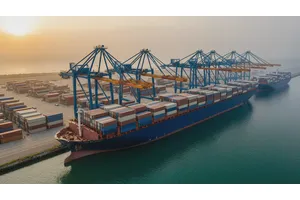
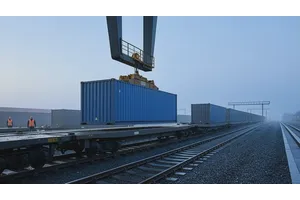
Are you still working to last year's Chinese New Year calendar? The 2027 dates are now official, they land eleven days earlier than 2026, and the carriers have already filed the surcharges that will price your January bookings. Here is the shutdown calendar, what each mode costs before the factories close, the surcharges with their effective dates, and the last departure you can realistically make on each lane.
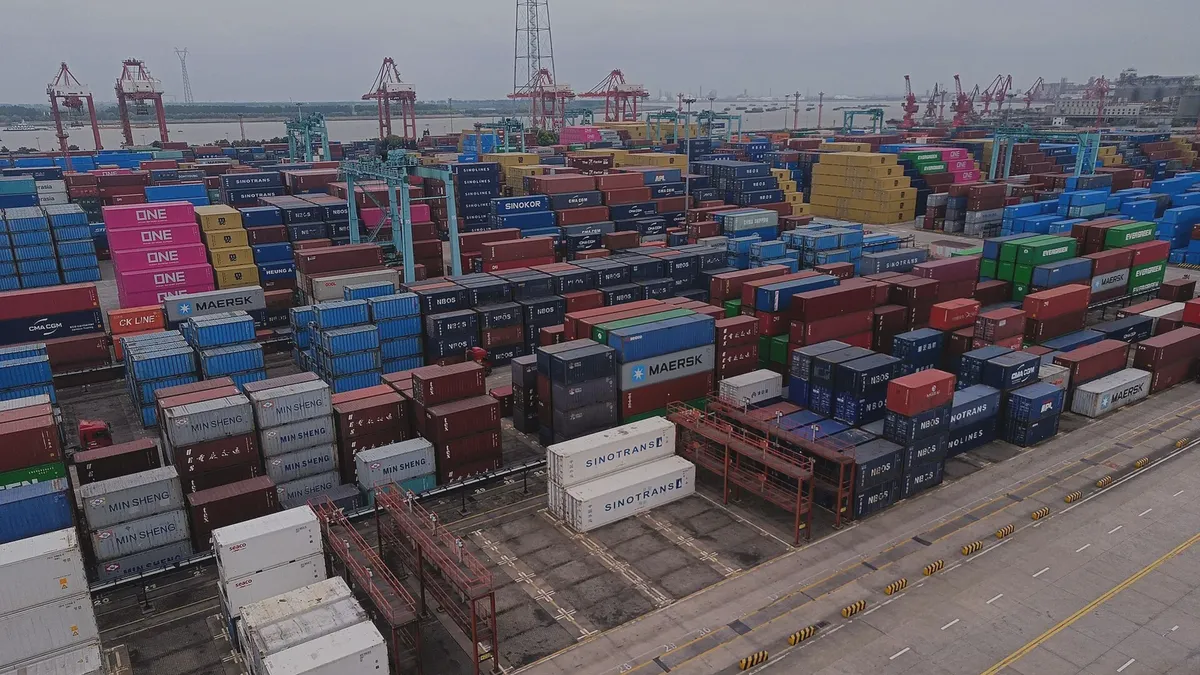
When Chinese New Year 2027 Shuts China Down
Chinese New Year's Day falls on Saturday 6 February 2027, the first day of the Year of the Goat, with New Year's Eve on Friday 5 February. The State Council published the 2027 Spring Festival arrangement on 5 November 2026: the official break runs Friday 5 February to Saturday 13 February, nine days, with Sunday 31 January and Sunday 14 February turned into make-up working days. In 2026 the holiday ran from 17 February, so the whole season has moved 11 days forward — and those 11 days come straight out of the window you have to produce, pack and load.
The official calendar is the least useful of the three dates that decide your shipment. Write all three down:
- Lunar date — fixed, no confirmation needed: Eve 5 February, New Year 6 February, Lantern Festival 20 February.
- State Council break — 5 to 13 February 2027, published 5 November 2026. Government offices, banks and the port authorities work to this.
- Your supplier's own shutdown — set by each factory, always wider than the official nine days. Most export factories in Guangdong, Zhejiang and Fujian stop production between 25 and 30 January, some from 20 January, and reopen between 22 February and 2 March. Nothing about the 2027 calendar changes that behaviour; a June 2027 delivery promise is a March production plan, not a February one.
The restart is slower than the shutdown. When the lines restart after the Lantern Festival on 20 February, factories typically run at a third to a half of normal output for the first two weeks: the experienced workers with long journeys home come back last, and the new hires who replace the ones who do not return need training before the quality returns to the pre-holiday standard. Plan on full output in the second week of March, not the first day of the new lunar year.
Why January Space Tightens in December This Year
The 2027 rush has a second ingredient that most CNY guides ignore: the Asia–Europe network is being rebuilt at the same time.
Suez transits are back in volume. Xeneta counted 467,297 TEU of weekly capacity committed to the Red Sea in October — about 50% of the pre-crisis August 2023 level, and roughly double what carriers offered at the end of August 2026, releasing around 600,000 TEU that the Cape of Good Hope diversions had absorbed. Evergreen relaunched its China–Red Sea OGRD service on 12 November, calling Qingdao, Shanghai, Ningbo, Shekou, Singapore, Jeddah, Sokhna and Aqaba. Premier Alliance restarted Suez transits on its Asia–Mediterranean MD1 loop from Ningbo on 13 November, adding a Sokhna call. Emirates Shipping Line launched a fortnightly Central/South China–Red Sea service from Shanghai on 13 November. For sea freight from China to Europe, that rebuild is the difference between a 28–36 day and a 42–48 day ocean leg — and it is why booking early matters more than booking cheap this winter.
For your January booking that cuts two ways:
- Base rates are soft, so the pre-CNY peak is being pushed into surcharges. Drewry's World Container Index on 12 November put the composite at $4,305 per 40ft, down 2% week on week, with Shanghai–Rotterdam at $3,504 and Shanghai–Los Angeles at $7,416. The 1 November general rate increases failed on both main lanes, which is why carriers have stopped trying to lift the base rate and started filing targeted peak season surcharges instead — the details are in the table below.
- Reliability is the thing you are actually buying in January. Carriers announced eight blank sailings for the week of 16 November, up from four the week before on the transpacific and five on Asia–Europe, and the pre-CNY void programme for the first two weeks of February has not been published yet. Flexport has also warned that vessels returning to the Suez routing will arrive at North European ports at the same time as ships still sailing around the Cape, which produces berth bunching for a few weeks. A booking that looks fine in December can be rolled twice in January.
What It Costs to Ship from China Before Chinese New Year 2027
These are the port-to-port ocean bands DTFU is quoting for January 2027 allocations — base freight with standard bunker adjustments inside them, carrier surcharges excluded, at the low end of what the market supports. The January PSS step is added separately, because it depends on your booking date rather than on your origin.
| Destination (port-to-port) | 20GP | 40GP | 40HQ | Ocean transit |
|---|---|---|---|---|
| North Europe — Hamburg, Rotterdam, Antwerp | $2,000–2,800 | $3,200–4,500 | $3,600–5,200 | 28–36 days via Suez, 42–48 via Cape |
| Mediterranean — Genoa, Valencia, Barcelona | $2,000–2,400 | $3,600–4,200 | $3,800–4,500 | 25–32 days via Suez |
| US West Coast — Los Angeles, Long Beach | $3,300–4,300 | $5,100–6,300 | $5,300–6,600 | 15–19 days |
| US East Coast — New York, New Jersey | $4,600–5,700 | $7,000–8,400 | $7,200–8,700 | 30–36 days |
The transpacific rows need one sentence of explanation, because the published index looks much higher: Drewry's Shanghai–Los Angeles assessment is $7,416 per 40ft on the spot market for boxes booked this week, while a named-account allocation booked weeks ahead on a Foshan or Ningbo contract prices well below that. If a quote to Los Angeles lands far under both numbers, the scope is wrong — check whether it is port-to-port, whether THC and the destination delivery order are inside it, and whether it was priced before or after the December surcharge. The same check applies to European gateways: a shipping from China to Germany quote that reads low is usually ex-THC and pre-PSS, and the shipping routes from China to the USA guide explains why the East Coast all-water option carries a higher base rate than the West Coast landbridge. Port pairs and the inland legs behind each transpacific band are listed on the shipping from China to the USA gateway page.
Smaller shipments price off volume, not off the box:
| Lane | LCL per CBM | Air freight per kg | Express per kg | LCL vs 20GP break-even |
|---|---|---|---|---|
| North Europe (FRA, AMS, CDG) | $55–90 | $4.00–6.50 | $7–12 | around 20–22 CBM |
| US West Coast (LAX, ORD) | $95–155 | $4.80–8.20 | $9.50–14.50 | around 15–17 CBM |
| US East Coast (JFK, ATL) | $110–175 | $4.80–8.20 | $9.50–14.50 | around 14–16 CBM |
Two things about those LCL numbers are worth money. First, the break-even arrives earlier than the arithmetic suggests, because a consolidated cubic metre also pays origin CFS receiving, destination de-consolidation and a delivery-order fee that a full container does not — on German lanes that stack adds 15–20% to a small shipment. Second, LCL consolidation has a receiving cut-off three to seven days ahead of the vessel cut-off, so the LCL deadline is effectively a week earlier than the FCL deadline on the same sailing.
Air into the Mediterranean is not quoted separately here because it moves through the same Frankfurt, Milan and Madrid consolidations as North Europe cargo, at roughly $0.30–0.60 per kg above the Frankfurt bracket on our own bookings.
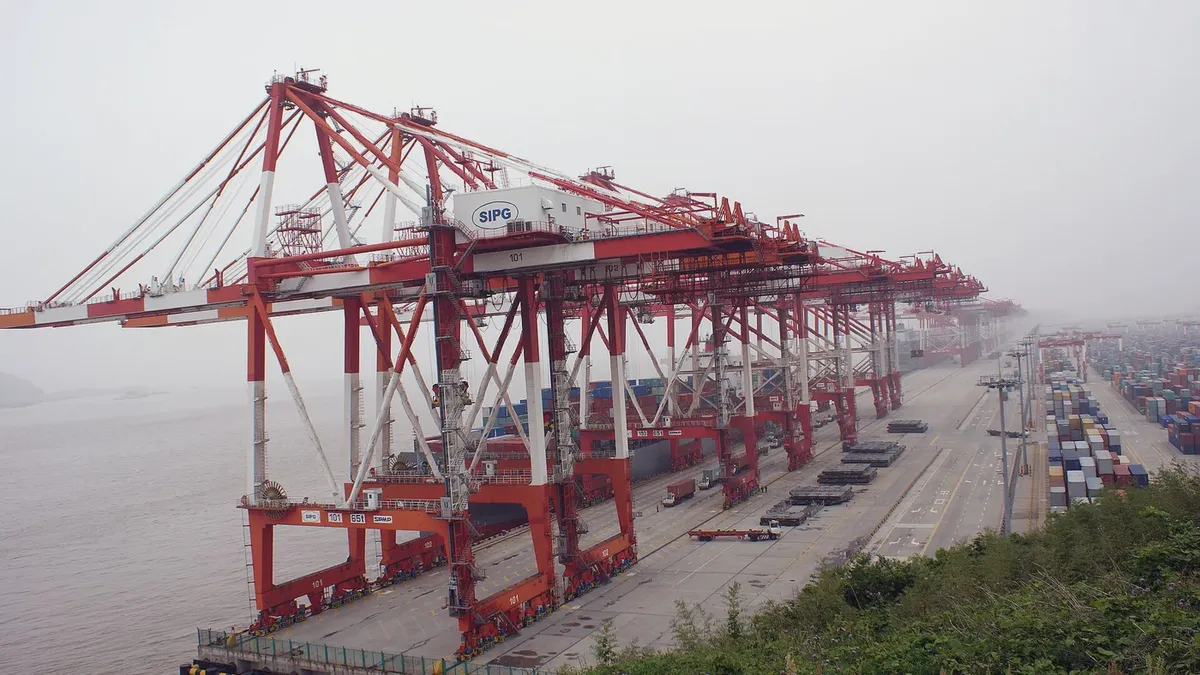
The Surcharge Calendar: What Each Carrier Adds and When
This is the part of the invoice that has already been decided for you. Carriers file the pre-CNY peak season surcharges in November, not in January, because the charge is fixed by the pricing date rather than by the sailing date.
| Carrier | Charge | Amount | Effective | Date that fixes the level |
|---|---|---|---|---|
| Maersk | PSS, Far East Asia to North Europe | $1,000 per 40ft | 1 December 2026 | Price calculation date (scheduled departure of first water leg at booking; gate-in for FMC-regulated bookings) |
| CMA CGM | PSS, Asia to Mediterranean and North Africa | $800 per 20ft, $1,600 per 40ft | 25 November 2026 | Cargo loading date |
| Maersk | PSS, Far East Asia to Mediterranean | $750 per 20ft, $1,500 per 40ft | 23 November 2026 | Price calculation date |
| Maersk | Heavy load surcharge, Far East Asia to Mediterranean | up to $400 per 20ft where VGM exceeds 25 t | 23 November 2026 | Verified gross mass of the container |
Read the fourth column before you sign anything. Maersk prices off the price calculation date, which for a non-US booking is the scheduled departure of the first water leg as it stood when you confirmed; for a booking under US Federal Maritime Commission rules it is the container gate-in date. So a booking confirmed on 28 November for a 3 December first leg pays the new $1,000; the same cargo confirmed for a 27 November leg does not. With CMA CGM the trigger is the loading date. On the same physical sailing, two importers can be paying different rates depending on which date their forwarder put on the booking.
The heavy-load surcharge is the one that catches industrial buyers. A 20ft of machinery, tiles or steel that grosses over 25 tonnes pays up to $400 extra from 23 November — and a 20ft rated for 28 tonnes of cargo will hit that threshold with about 26 tonnes of dense cargo after packaging, which is exactly the sort of box that gets loaded to the limit in the pre-holiday rush.
What One 40HQ to Hamburg Actually Lands At
A rate card only becomes a decision once the lines are added up. Take a 40HQ of household furniture, HS 9403, FOB $28,000 ex Shenzhen, priced on a December carrier notice and sailing on 22 January:
| Line | Amount | Comment |
|---|---|---|
| Goods, FOB Shenzhen | $28,000 | what you pay the factory |
| Ocean freight, 40HQ to Hamburg | $4,400 | middle of the $3,600–5,200 band |
| Maersk PSS from 1 December | $1,000 | applies to any booking priced after that date |
| Origin charges — THC, export declaration, documents | $350 | |
| Marine insurance | $70 | 0.25% of CIF |
| Customs value (CIF) | $33,820 | goods + freight + origin charges + insurance |
| Import duty, 2.7% | $913 | EU third-country rate for furniture |
| Import VAT, 19% | $6,599 | charged on customs value + duty; recoverable if you are VAT-registered |
| Destination THC, delivery order, trucking to warehouse | $780 | |
| Cash needed at the border | $7,512 | duty + import VAT |
| Landed cost, excluding recoverable VAT | $35,513 |
Three things in that table are worth more than the total. The $1,000 surcharge is 3.6% of the goods value and 23% of the ocean freight — the same box priced a week earlier, on a 27 November sailing, keeps the old level, which is the only lever you actually control. The import VAT is not a cost if you are VAT-registered, but it is $6,599 of cash out of your account at the border, and it comes back weeks later; in a January shipment that lands during the factory shutdown, that timing matters. And the destination charges sit outside the ocean quote entirely, so a forwarder who quotes "Hamburg all-in" without naming them is quoting a number your consignee will pay on top. Our China customs clearance service runs the export declaration and the destination document set as one file, which is what keeps that $350 origin line from growing a re-work charge.
Last Sailing Dates: Working Backwards from Your Supplier's Last Production Day
Two deadlines decide whether your goods make it, and most missed shipments fail the first one. The production deadline is the last day your factory can finish, inspect and pack. The vessel deadline is the last day the container can load. The factory deadline comes first, and it is the one nobody writes into the purchase order.
Working back from transit times on the routings carriers actually publish:
| Lane | Port-to-port transit | Recommended last departure | Cargo lands |
|---|---|---|---|
| North Europe via Suez | 28–36 days | 20–24 January | 17 February – 1 March |
| Mediterranean via Suez | 25–32 days | 22–26 January | 16 February – 27 February |
| US West Coast | 15–19 days | 25–29 January | 9–17 February |
| US East Coast | 30–36 days | 18–22 January | 17 February – 27 February |
Now subtract back through the rest of the chain. A container needs to be at the terminal three to five days before sailing; VGM and shipping-instruction cut-offs fall 24 to 48 hours before that, and terminals tighten rather than relax them in the rush. That puts the factory's last production day five to eight days before the sailing date — 12 to 19 January for the North Europe and US East Coast rows above. If your supplier says production finishes on 27 January, the sailing you should be booking is not the one on 28 January; it is the one on 3 February, and that vessel is the one that gets blanked.
Where Cargo Actually Gets Stuck: Trucking, CFS and Equipment
The port stays open through the holiday. Almost nothing else does, and the failures cluster in three places.
- Trucking. Container haulage in Guangdong and Zhejiang depends on drivers who travel home, and the shortage starts about a week before the holiday. Drayage that quotes $220–320 per 40HQ from Foshan to Nansha in November quotes materially more in the last week of January, and the real risk is not price, it is a truck that never arrives. Cargo sitting in a supplier's yard on 28 January is cargo waiting for March.
- CFS and consolidation warehouses. The warehouse receiving LCL cargo closes before the port does — commonly three to five days earlier — and stops accepting new cargo rather than holding it. That is why LCL shippers lose a week without noticing: their vessel date looks fine while their receiving window has already closed.
- Empty equipment. Carriers reposition empties ahead of the peak, but inland depots in Foshan, Dongguan and Yiwu run dry in the final ten days, and a 40HQ picked up late may come with a damaged floor or a missing CSC plate that costs a day at the gate. Book the pick-up, not just the space.
- FBA inbound slots. For sellers moving to Amazon FBA shipping from China, the appointment is a fourth deadline: fulfilment centres run reduced receiving schedules in the first half of February, and a February arrival that misses its slot can sit for a week even when the container is cleared.
A door-to-door shipping from China booking absorbs the trucking and receiving risk into one party, which is worth paying for in January precisely because the failure modes above are all hand-off failures between supplier, trucker, CFS and forwarder.
The other quiet failure is documentation volume. Export declarations queue as brokers work through a compressed January, and a single mismatch between the packing list and the declaration holds the container while the vessel sails. On the EU side, the maritime ICS2 house-level ENS has to be filed and accepted before loading; a rejected filing means the box does not sail, and it always happens on the booking with no slack.
If You Miss the Last Vessel
Missing it is survivable, but the options narrow fast and only one of them is cheap.
Rollover to the next string. If the carrier rolls your box rather than your booking lapsing, you keep your place and sail in the first week of March at the post-holiday rate — which is usually lower, because demand collapses in the second half of February. The catch is that your allocation is gone, and post-holiday space in March is tight in a different way, as every importer restocks at once. DTFU re-books rolled cargo onto the first post-holiday sailing while that space still exists, because the March scramble is as tight as the January one.
Storage at origin. Container yard storage plus demurrage inside China runs from a few dollars a day to well over $100 per container per day depending on the terminal and the tariff, and Chinese terminals do not waive it because of the holiday. Two weeks of storage on a 40HQ frequently costs more than the difference between the pre-holiday and post-holiday ocean rate.
The air bridge. For the SKUs that must be on shelf, air freight from China is the only mode that works in the last three weeks. Our own comparison on European lanes: 1,200 kg of top-selling cartons moves by air at $4.00–6.50 per kg, so roughly $4,800–7,800 plus handling, against about $150 for the same weight sharing a 40HQ. That is a 30–50x premium per kilo, and it is still usually cheaper than an empty shelf for six weeks — but it only works if the goods exist. Nothing flies after 30 January.
Sea-air via the Gulf or Korea. A small amount of cargo can go by sea to Jebel Ali or Busan and then by air to Europe, arriving in 18–22 days at roughly half the pure air rate. It suits dense, high-value cargo and nothing else; the transhipment adds a handling risk that is hard to insure.
A Booking Checklist for the Next Six Weeks
Six things to get in writing, in this order, and the first two this month:
- Your supplier's three dates — last production day, last day they will accept a booking, first day back. Not the public holiday dates; their dates, on paper.
- Space for January sailings, booked in the first half of December. Pre-CNY space on the last two sailings of each string is sold before your cargo exists. Waiting for a confirmed ready date in January means competing with every late shipper in Asia.
- The surcharge position on your quote — which carrier notice number it includes, the amount, and the date that fixes it. A quote that says "all-in" without naming the PSS is a quote that will be re-priced.
- The cut-off set — vessel cut-off, VGM cut-off, shipping-instruction cut-off, and for LCL the CFS receiving cut-off.
- The rollover policy — whether rolled cargo keeps priority on the next vessel, who pays the storage while it waits, and a shipment tracking reference that still updates while the office is closed.
- Who answers between 5 and 20 February, when your usual contact is on a train home and your consignee is chasing a delivery order.
DTFU Logistics books these pre-CNY windows out of Shenzhen, Nansha and Ningbo on direct carrier allocations, so the space question gets answered with a vessel name and a cut-off rather than a range — and the documentation check on a January shipment runs before the booking is confirmed, not after the container is at the gate. If you want a realistic last-sailing date for your own cargo, send us the product, volume and destination and we will work the dates backwards with you.
FAQ
When is Chinese New Year 2027? Saturday 6 February 2027, the first day of the Year of the Goat. New Year's Eve is Friday 5 February and the Lantern Festival falls on Saturday 20 February.
What are the official 2027 Spring Festival holidays in China? The State Council notice published on 5 November 2026 sets the break from Friday 5 February to Saturday 13 February 2027, nine days, with Sunday 31 January and Sunday 14 February as make-up working days.
What is the last day to ship from China before Chinese New Year 2027? For ocean freight, plan on cargo loading between 18 and 29 January depending on the lane: 18–22 January for the US East Coast (30–36 day transit), 20–24 January for North Europe (28–36 days), 22–26 January for the Mediterranean, and 25–29 January for the US West Coast. Cargo has to be at the terminal three to five days before sailing, so the factory's last production day is five to eight days before that.
How much more expensive is shipping before Chinese New Year? On Asia–Europe the December peak season surcharge is $1,000 per 40ft (Maersk, from 1 December) and on Asia–Mediterranean $1,600 per 40ft (CMA CGM, from 25 November) or $1,500 per 40ft (Maersk, from 23 November). On a 40HQ to Hamburg at $4,400 base freight, that is a 23% increase on the ocean leg alone.
Are freight rates higher or lower than last year at this point? Lower on the base rate and higher on the surcharge. Drewry's composite World Container Index was $4,305 per 40ft on 12 November 2026, down 2% week on week, with Shanghai–Rotterdam at $3,504 and Shanghai–Los Angeles at $7,416. Carriers replaced failed general rate increases with targeted peak season surcharges.
Should I book LCL or FCL for a January shipment? Below about 20–22 CBM to Europe (15–17 CBM to the US West Coast), LCL is cheaper on freight but loses a week to the consolidation receiving cut-off, which matters more than the rate in January. Above the break-even, a 20GP costs less and sails on the FCL cut-off.
Can I still ship by air during Chinese New Year? Yes, but only cargo that already exists. Air capacity tightens and rates rise in the last ten days before the holiday, and there is nothing to fly once factories stop around 30 January. Plan air for the 15–25 January window, or for the post-holiday restock from 22 February.
What happens to my container if it misses the last sailing? It either rolls to the next vessel on the same string — usually the first week of March — or waits in a Chinese container yard, where storage and demurrage run from a few dollars to over $100 per container per day. Get the rollover policy in writing before you book.
Why are January sailings so much fuller this year? The holiday is 11 days earlier than in 2026 (6 February against 17 February), so the same production and shipping volume compresses into a shorter window, and every importer targets the same last two sailings per string. Carriers also blank sailings in the first two weeks of February, removing the natural overflow capacity.
Does the Suez return help my January booking? It helps the base rate and hurts reliability. Around 600,000 TEU of capacity has been released back into the Asia–Europe network as Red Sea transits resumed, which keeps base rates soft, but vessels arriving via Suez and via the Cape bunch at North European terminals for a few weeks, and blank sailings are being used to manage the excess.
How far in advance should I place the production order? Final pre-holiday purchase orders should be confirmed by early December for standard goods, and by late October for anything tooled, customised or needing sample approval. Factories fill their pre-holiday capacity 8–10 weeks before the holiday.
Is it cheaper to wait until after Chinese New Year? The ocean rate usually is — post-holiday demand drops and carriers discount to fill the first March sailings. The cost you are trading against is stock cover: goods produced in February land in late March or April, so waiting means either six weeks of empty shelf or an air bridge that costs 30–50 times the ocean rate per kilo.