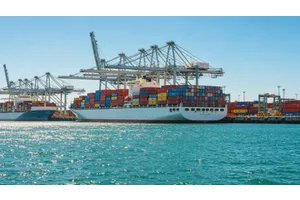
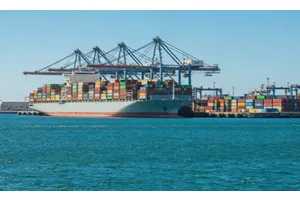
If you're sourcing goods from China and need them delivered to Romania with speed and predictability, air shipping from China to Romania is the most reliable logistics channel available today. As China's position as Romania's largest trading partner in Asia continues to strengthen — with bilateral trade surpassing $12 billion in 2025, up 24% year-over-year — businesses across Europe are increasingly turning to air freight to keep their supply chains moving, their inventory stocked, and their customers satisfied. Yet for many importers, air freight remains a black box: How much does it actually cost per kilogram? How long does it really take? Why does the invoice sometimes show a higher weight than what you put on the scale?
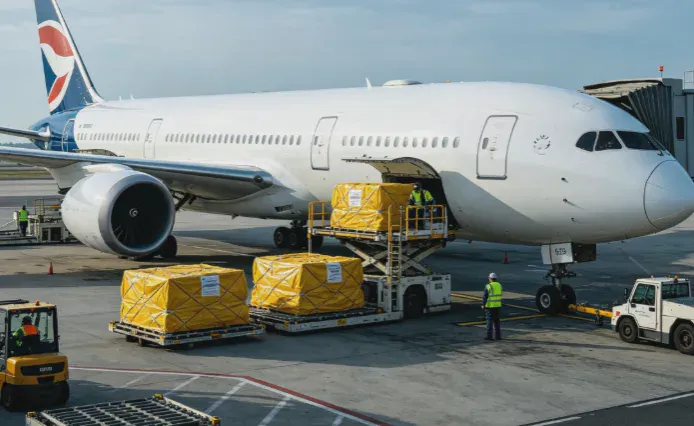
As a core trade lane in our service network, shipping from China to Romania is a route we operate daily — and one where our direct airline contracts and in-country customs partnerships deliver measurable advantages for importers.
At DTFU Logistics, we've been answering these questions every day since 2014. As a FIATA and IATA dual-certified freight forwarder with direct contracts across major airlines, we've managed thousands of air shipments from China to destinations across Eastern Europe — Romania included. This guide draws on that experience to give you the clearest, most actionable picture of air freight from China to Romania available anywhere. We'll cover real 2026 rates, actual transit times by route, volumetric weight explained with worked examples, a step-by-step walkthrough of the entire shipping process, customs clearance and tax calculations specific to Romania, DDP door-to-door options, a real client case study, and proven strategies to reduce your air freight costs without sacrificing speed.
How Long Does Air Freight Take from China to Romania?
Understanding air freight transit time from China to Romania is the starting point for any import planning. Air freight is dramatically faster than sea freight — but "fast" can mean different things depending on your route, carrier choice, and whether you need door-to-door service or airport-to-airport delivery.
Airport-to-Airport Transit Times by Route
The table below shows typical transit times from China's major cargo hubs to Romania's primary international airports. These are airport-to-airport figures — door-to-door service adds additional time for pickup, customs clearance, and final delivery.
| Departure Airport (China) | Arrival Airport (Romania) | Typical Transit Time | Routing |
|---|---|---|---|
| Shenzhen Bao'an (SZX) | Bucharest OTP | 3–5 days | Direct / IST transit |
| Guangzhou Baiyun (CAN) | Bucharest OTP | 5–7 days | AMS transit |
| Shanghai Pudong (PVG) | Bucharest OTP | 4–6 days | FRA / IST transit |
| Hong Kong (HKG) | Bucharest OTP | 3–5 days | IST / LEJ transit |
| Beijing Capital (PEK) | Bucharest OTP | 5–7 days | MUC transit |
| Guangzhou Baiyun (CAN) | Cluj-Napoca (CLJ) | 4–6 days | AMS transit |
| Guangzhou Baiyun (CAN) | Timișoara (TSR) | 5–7 days | AMS transit |
Direct flights from major Chinese hubs to Bucharest offer the fastest turnaround — usually 3 to 5 days airport-to-airport. Transit flights routed through Istanbul (IST), Amsterdam (AMS), Frankfurt (FRA), or Doha (DOH) add 1 to 3 extra days but often come with more competitive rates and more flexible scheduling. For economy consolidated air freight, where cargo from multiple shippers is grouped onto a single flight to lower costs, expect 7 to 12 days airport-to-airport.
Door-to-Door Air Freight Timeline
When you factor in the full logistics chain, here's how the timeline breaks down for a typical door-to-door air freight shipment from China to Romania:
| Stage | Typical Duration | What Happens |
|---|---|---|
| Supplier Pickup & Warehouse Receiving | 1 day | Cargo collected from factory and delivered to forwarder's consolidation warehouse |
| China Export Customs Clearance | 1–2 days | Customs declaration filed, documents verified, cargo cleared for export |
| Air Transport (Flight) | 1–2 days | Cargo loaded, flight departs, arrives at Romanian airport |
| Romania Import Customs Clearance | 1–3 days | Import declaration submitted, duties & VAT assessed, cargo released |
| Final Delivery (Last Mile) | 1–2 days | Cargo trucked to consignee's warehouse, office, or retail location |
| Total Door-to-Door | 8–12 days | End-to-end from Chinese supplier to Romanian recipient |
Delays most commonly occur during customs clearance — either on the China side (incomplete export documentation) or the Romania side (incorrect HS codes, missing certificates). Working with an experienced freight forwarder who pre-reviews all documentation before the shipment departs China is the single most effective way to keep this timeline on track.
Express Courier vs. Traditional Air Freight
For shipments under 30 kg — such as product samples, documents, or small parcels — international express couriers like DHL, UPS, and FedEx offer 3-to-5-day delivery from China to Romania. However, the per-kilogram cost is significantly higher than traditional air freight:
| Shipping Method | Best For | Typical Transit | Cost per kg (Approx.) | Weight Sweet Spot |
|---|---|---|---|---|
| Express Courier (DHL/UPS/FedEx) | Samples, documents, parcels <30 kg | 3–5 days | $8–$15/kg | Under 30 kg |
| Traditional Air Freight | Commercial cargo, 45 kg+ | 5–10 days | $3–$6.50/kg | 100–500 kg |
| Consolidated Air Freight | Cost-sensitive shipments, 45 kg+ | 7–12 days | $3–$5/kg | 100–300 kg |
The break-even point between express courier and traditional air freight is typically around 30 to 45 kg. Above that threshold, the unit economics of air freight become increasingly favorable. For a deeper side-by-side comparison across different trade lanes, our guide to air freight vs express shipping breaks down when each option delivers the best value.
Air Freight Costs from China to Romania (July 2026 Rates)
Cost is the question every importer asks first — and it's also the one surrounded by the most confusion. Air freight costs from China to Romania depend on far more than just the weight printed on your packing list.
Cost per Kilogram by Weight Bracket
Air freight rates follow a weight-ladder structure: the heavier your shipment, the lower your rate per kilogram. Below are indicative rates for general commercial cargo, airport-to-airport, as of July 2026:
| Weight Bracket | Rate Range (USD/kg) | Best Use Case |
|---|---|---|
| 45–100 kg | $3.80–$6.50/kg | Small commercial shipments, samples in bulk |
| 100–300 kg | $3.50–$6.00/kg | Regular commercial imports, e-commerce restocking |
| 300–500 kg | $3.00–$5.50/kg | Mid-volume importers, consolidated shipments |
| 500 kg+ | $2.80–$5.00/kg | High-volume importers, best unit economics |
Rates also vary by departure airport. Shenzhen (SZX) and Guangzhou (CAN) tend to offer the most competitive pricing due to high flight density and strong competition among carriers. Hong Kong (HKG) provides the widest carrier selection but may carry slightly higher terminal handling charges. Shanghai (PVG) and Beijing (PEK) fall in the middle range.
How Chargeable Weight Works: The Volumetric Weight Rule
This is the single most important concept in air freight pricing — and the one that surprises first-time shippers the most. Airlines don't simply charge based on what your cargo weighs on a scale. They charge based on chargeable weight, which is the greater of your shipment's actual gross weight and its volumetric weight.
The formula for volumetric weight is:
(Length × Width × Height in centimeters) ÷ 6,000 = Volumetric Weight in kilograms
The divisor 6,000 is the IATA-standard volumetric conversion factor. Here's what this means in practice:
Example 1 — Lightweight, bulky cargo: A carton measuring 50 cm × 50 cm × 50 cm with an actual weight of 15 kg. Volumetric weight = (50 × 50 × 50) ÷ 6,000 = 125,000 ÷ 6,000 = 20.83 kg → You pay for 21 kg, not 15 kg.
Example 2 — Dense, compact cargo: A carton measuring 40 cm × 30 cm × 30 cm with an actual weight of 25 kg. Volumetric weight = (40 × 30 × 30) ÷ 6,000 = 36,000 ÷ 6,000 = 6 kg → You pay for 25 kg (the actual weight is higher).
This rule has a direct impact on your packaging strategy. Reducing unnecessary void space inside cartons — or choosing carton dimensions that pack efficiently into standard Unit Load Devices (ULDs) used on aircraft — can meaningfully lower your freight bill. For low-density products like textiles, apparel, and certain plastic goods, packaging optimization is often the single fastest way to reduce air freight costs.
Additional Fees and Surcharges Explained
The base air freight rate is never the full picture. Importers should budget for the following additional charges:
| Surcharge / Fee | Typical Range | What It Covers |
|---|---|---|
| Fuel Surcharge | 10–20% of base freight | Adjusts for jet fuel price fluctuations; updated monthly |
| Security Surcharge | $0.10–$0.25/kg | Airport security screening and compliance |
| Terminal Handling Charge | $50–$150/shipment | Cargo handling at origin and destination airport terminals |
| Air Waybill (AWB) Fee | $25–$50 | Issuance of the air transport document |
| Customs Brokerage Fee | $80–$200 (China side) | Preparation and submission of export customs declaration |
| Dangerous Goods Surcharge | +30–50% on base rate | Special handling, documentation, and compliance for DG cargo |
| Peak Season Surcharge (PSS) | +20–30% on base rate | Applied during Q4 holiday season and pre-Chinese New Year rush |
Seasonal Rate Fluctuations and Best Times to Ship
Air freight pricing is highly seasonal. Understanding the rhythm of the market helps you plan shipments when rates are lowest:
- Off-Peak (April–August): The most favorable window. Capacity is ample, rates are at their lowest, and transit times are most predictable. This is the ideal period for non-urgent, forward-planned shipments.
- Shoulder Season (January–March): Rates ease after the Q4 peak but can spike briefly around Chinese New Year (late January to mid-February), when factories close and pre-holiday rush shipments crowd available capacity.
- Peak Season (September–December): The most expensive period. Christmas and New Year inventory buildup in Europe combines with China's National Day Golden Week (early October) and Singles' Day (November 11) to push rates up by 20–30%. Booking 3 to 4 weeks in advance is essential to secure space.
Major Airports and Airlines for China–Romania Air Freight
Choosing the right departure and arrival airports has a direct impact on both cost and transit time — and for businesses distributing goods across multiple EU markets, understanding the broader European air freight landscape is equally important. We also provide dedicated air shipping from China to Italy, air shipping from China to Germany, and other major EU destinations with the same competitive rates and hands-on service.
Here's what you need to know about the key hubs on both ends of this trade lane.
Chinese Departure Airports
| Airport | IATA Code | Region | Best For | Key Advantage |
|---|---|---|---|---|
| Shanghai Pudong | PVG | East China | General cargo, machinery, textiles | Largest mainland cargo volume; highest European route density |
| Shenzhen Bao'an | SZX | South China | Electronics, e-commerce parcels | Adjacent to Pearl River Delta manufacturing; strong e-commerce handling |
| Guangzhou Baiyun | CAN | South China | Industrial goods, apparel, auto parts | Competitive rates; strong China Southern network |
| Hong Kong | HKG | South China (SAR) | High-value goods, urgent shipments | World's busiest cargo hub; widest carrier choice; fastest transit |
| Beijing Capital | PEK | North China | High-end manufacturing, precision instruments | Northern China's primary cargo gateway; Star Alliance hub |
| Zhengzhou Xinzheng | CGO | Central China | Charter cargo, large equipment | Emerging hub with strong Cargolux partnership; competitive charter rates |
Romanian Arrival Airports
| Airport | IATA Code | Location | Best For | Customs Clearance Speed |
|---|---|---|---|---|
| Bucharest Henri Coandă | OTP | Capital (South) | All cargo types — first choice | 1–2 days (fastest) |
| Cluj-Napoca | CLJ | Northwest (Transylvania) | Regional distribution to NW Romania | 2–3 days |
| Timișoara Traian Vuia | TSR | West | Industrial goods for western Romania | 2–3 days |
OTP (Bucharest) should be your default choice unless your final destination is clearly closer to Cluj or Timișoara. Bucharest offers the most frequent flight connections, the most comprehensive cargo handling facilities (including cold chain storage and 24/7 dangerous goods handling), and the fastest customs processing in the country.
Airlines and Route Comparison
| Airline | Typical Route | Transit Time | Frequency | Best For | Approx. Cost/kg |
|---|---|---|---|---|---|
| Turkish Airlines (TK) | SZX/CAN/HKG → IST → OTP | 3–5 days | Daily | Balanced cost & speed; widest China coverage | $3.50–$5.50 |
| China Southern (CZ) | CAN → AMS → OTP/TSR | 5–7 days | Daily | Pearl River Delta exports | $4.00–$6.00 |
| Lufthansa (LH) | PVG → FRA → OTP | 4–6 days | Daily | High-value industrial goods | $4.50–$7.00 |
| Qatar Airways (QR) | CAN/PVG → DOH → OTP | 4–6 days | Daily | Middle East connections | $4.00–$6.50 |
| Air China (CA) | SZX → PEK → MUC → OTP | 5–7 days | Daily | Northern China origins | $4.50–$6.50 |
| Cargolux (CV) | HKG → LUX → OTP | 4–6 days | 5× weekly | Charter and oversized cargo | Quote-based |
Turkish Airlines operates the most extensive network for China-to-Romania air freight, with daily flights from Shenzhen, Guangzhou, and Hong Kong transiting through its Istanbul hub. For time-sensitive shipments from South China, the SZX–IST–OTP routing is often the fastest option available.
Charter Flight Options
For shipments exceeding 50 tons, oversized cargo that cannot fit standard ULDs, or projects requiring dedicated aircraft, charter flights offer a tailored solution. Common charter aircraft include the Boeing 777F (100-ton payload), Boeing 747-400F (120-ton payload), and Antonov AN-124 for oversized project cargo. Charter operations require 3 to 5 working days of advance planning for landing permits and air rights approval on both the Chinese and Romanian sides. Cargo insurance of at least 120% of the shipment value is strongly recommended for charter operations. For a complete overview of coverage options and cost factors, see our guide to cargo insurance for shipments from China.
Step-by-Step Air Freight Process from China to Romania
Knowing the process helps you anticipate timelines, prepare documentation, and avoid costly delays. Here's the complete workflow, stage by stage.
Step 1: Supplier Pickup and Cargo Preparation
The journey begins at your supplier's factory or warehouse in China. Your freight forwarder arranges truck pickup and delivers the cargo to their consolidation warehouse. At the warehouse, the forwarder's team verifies the quantity, inspects packaging integrity, checks labeling, and confirms that the goods match the booking details. This is also when your Commercial Invoice and Packing List are finalized — accuracy at this stage prevents problems at every subsequent checkpoint.
Step 2: China Export Customs Clearance
Before cargo can leave China, it must clear Chinese export customs. The key requirements are:
- Accurate HS Code classification for every product line
- A complete Commercial Invoice with declared value, quantity, and product description
- A detailed Packing List with carton count, dimensions, and gross/net weight
- The Air Waybill (AWB) draft
- Any product-specific certificates — CE conformity documents for electronics, MSDS (Material Safety Data Sheet) for chemical products, or UN38.3 test reports for lithium batteries
China customs operates a largely paperless system, and most declarations clear within 24 to 48 hours. Incorrect HS codes or discrepancies between declared and actual cargo are the most common triggers for inspection, which can add 2 to 5 days and additional inspection fees.
Step 3: Airline Booking and Air Transport
Once export customs releases the cargo, your forwarder books it onto the selected flight. The Air Waybill (AWB) is formally issued — this is the core transport document for air freight, serving as both a contract of carriage and a receipt for the goods. Throughout transit, you can track your shipment in real time using the AWB number on the airline's tracking portal, supplemented by GPS-based truck tracking for the pickup and final delivery legs.
Step 4: Romania Import Customs Clearance
When the flight arrives at OTP, CLJ, or TSR, Romanian customs takes over. A customs broker — either your own or one provided by your forwarder under a DDP arrangement — submits the import declaration through Romania's ANAF digital customs portal. Customs officers review the documentation, assess duties and taxes, and may conduct a physical inspection. We'll cover the exact tax calculation in the next section.
Step 5: Final Delivery
After customs release, there are three delivery options:
- Airport-to-Airport: You collect the cargo from the airport or arrange your own trucking. Best for experienced importers with local logistics partners.
- Airport-to-Door: Your forwarder arranges trucking from the airport to your warehouse.
- Full Door-to-Door: Your forwarder handles everything — pickup in China, export, air transport, import clearance, duty/tax payment, and final delivery to your door. This is the DDP model we explore in depth in Section 7.
Romanian Customs Clearance, Duties, and Import Taxes
This is where most online guides fall short. As an EU member state, Romania follows European Union Customs Union regulations — but the specific tax rates, documentation requirements, and procedural nuances are uniquely Romanian. Getting this right is the difference between same-day clearance and a week-long hold at the airport.
Required Documentation for Romanian Customs
| Document | Purpose | Required For |
|---|---|---|
| Commercial Invoice | Declares product description, HS code, unit price, total value, and Incoterm | All shipments |
| Packing List | Specifies carton count, dimensions, gross weight, and net weight | All shipments |
| Air Waybill (AWB) | Transport document issued by the airline | All shipments |
| Certificate of Origin | Verifies country of manufacture; may enable preferential tariff rates under EU trade agreements | Goods eligible for reduced duty rates |
| SAD (Single Administrative Document) | The standardized EU import declaration form | All shipments (handled by customs broker) |
| CE Certificate / Declaration of Conformity | Proof of compliance with EU product safety standards | Electronics, machinery, toys, medical devices |
| MSDS / UN38.3 Report | Safety documentation for hazardous or battery-containing goods | Lithium batteries, chemicals, liquid products |
How Import Duties and VAT Are Calculated
Romania applies the following charges to imported goods:
- Customs Duty: Ranges from 0% to 17%, determined by the product's HS Code classification. Electronics typically fall in the 0–3% range, textiles and apparel in the 8–12% range, and certain agricultural or luxury goods can reach higher brackets.
- Value Added Tax (VAT): Romania's standard VAT rate is 19%, applied to most imported goods.
- Excise Duty: Applies only to specific product categories — alcohol, tobacco, energy products, and certain luxury items.
The tax base for both customs duty and VAT is the CIF value (Cost + Insurance + Freight) — meaning you pay tax not only on the product value but also on the shipping and insurance costs. Here's a worked example:
Scenario: You import electronics with a product value of $5,000. Air freight costs $800 and insurance costs $50, for a CIF value of $5,850. The applicable customs duty rate is 3%.
Customs Duty = $5,850 × 3% = $175.50
VAT Base = $5,850 + $175.50 = $6,025.50
VAT = $6,025.50 × 19% = $1,144.85
Total Import Charges = $175.50 + $1,144.85 = $1,320.35
This example illustrates why accurate HS Code classification matters so much — a single-digit error could shift your goods into a higher duty bracket and increase your landed cost by hundreds of dollars. EU customs enforcement has become increasingly rigorous; our analysis of the EU's 79% tariff on Chinese ceramic tableware shows how dramatically tariff classifications can impact importers' bottom lines.
EORI Number Requirement
Every business importing goods into any EU country — including Romania — must register for an EORI number (Economic Operators Registration and Identification). This unique identifier is used across all EU customs systems to track your import activity. Registration is done through the Romanian Customs Authority (Autoritatea Vamală Română) and typically takes 1 to 2 weeks. If you don't have an EORI number, a DDP freight forwarder can clear goods under their own credentials — one of the key advantages of the DDP model.
Common Customs Pitfalls and How to Avoid Them
- Wrong HS Code: Triggers incorrect duty assessment, increased inspection probability, and potential fines. Always have your forwarder or customs broker verify HS codes before the shipment departs China.
- Under-Declared Value: Romanian customs cross-references declared values against market benchmarks. Significant under-valuation can result in cargo seizure, re-assessment at a higher value, and penalties.
- Missing CE Certification: Electronics, machinery, toys, and medical devices imported into Romania must carry valid CE marking and supporting documentation. Without it, customs will reject the shipment at the border.
DDP Air Freight from China to Romania (Door-to-Door)
DDP air shipping from China to Romania is the simplest way to import goods if you want a single, all-inclusive price with zero customs paperwork on your end. Under Delivered Duty Paid (DDP) terms — defined by Incoterms 2020 — the seller (or in practice, the freight forwarder acting on the seller's behalf) assumes responsibility for the entire logistics chain: pickup in China, export clearance, air transport, Romanian import customs clearance, payment of all duties and VAT, and final delivery to your door.
What DDP Covers (and What It Doesn't)
Included in DDP Air Freight:
- Factory/warehouse pickup in China
- China export customs clearance and documentation
- Air freight from China to Romania
- Romanian import customs brokerage and clearance
- Payment of customs duties, VAT (19%), and any applicable excise taxes
- Last-mile trucking to your specified delivery address
For a complete walkthrough of how door-to-door shipping from China to Romania works across all transport modes — sea, air, and rail — see our dedicated Romania door-to-door guide.
Typically NOT Included (confirm with your forwarder):
- Product testing and certification costs (CE, MSDS, UN38.3, etc.)
- Warehouse storage fees beyond a standard free period (usually 3–5 days)
- Return shipping or disposal costs for goods rejected due to quality issues
- Customs penalties resulting from incorrect product information provided by the importer
DDP Air Freight Cost Breakdown Example
Let's walk through a realistic scenario: 100 kg of consumer electronics shipped from Shenzhen (SZX) to Bucharest (OTP) under DDP terms.
| Cost Component | Amount (USD) | Notes |
|---|---|---|
| Factory Pickup (Shenzhen → Forwarder Warehouse) | $40 | Local trucking within Shenzhen |
| China Export Customs Clearance | $120 | Documentation preparation and declaration filing |
| Air Freight (SZX → OTP, 100 kg @ $4.50/kg) | $450 | Standard air freight rate for 100 kg bracket |
| Fuel & Security Surcharges | $80 | Approx. 18% of base freight |
| Romania Import Customs Brokerage | $150 | Local broker fee for import declaration |
| Customs Duty (electronics, 0%) | $0 | Most consumer electronics carry 0% EU duty |
| VAT (19% on CIF value) | $152 | CIF ≈ $800; VAT = $800 × 19% |
| Last-Mile Delivery (OTP → Bucharest address) | $60 | Local trucking within Bucharest metro area |
| Total DDP Cost | $1,052 | All-inclusive, door-to-door, no hidden fees |
For comparison, the same shipment under CIF terms — where you handle Romanian customs clearance yourself — would cost approximately $690 in freight and China-side charges, leaving you to pay the $152 VAT and arrange your own customs broker (typically $150–$300). The DDP premium over CIF is modest — roughly $60 to $160 — and buys you complete peace of mind.
Who Should Use DDP Air Freight?
DDP is the right choice for:
- E-commerce sellers shipping 10–500 kg per month who don't want to manage customs documentation
- First-time importers without an EORI number or experience navigating Romanian customs
- Small and medium businesses that prefer predictable, all-inclusive pricing over managing multiple vendors and fee streams
- Importers shipping to multiple Romanian cities who want a single logistics provider for the entire chain
However, if you already have an established customs broker in Romania and hold your own EORI number, importing under CIF or FOB terms and managing customs locally may be more cost-effective, especially at higher volumes. A good freight forwarder will be honest about which model suits your situation — not push DDP when it doesn't make financial sense. To understand the full trade-offs between Incoterms, read our comparison of DDP vs FOB and which option saves more time and reduces hassle for international shipments.
How to Reduce Air Freight Costs and Choose a Reliable Freight Forwarder
Beyond the specific strategies covered throughout this guide, here are seven proven ways to lower your air freight costs from China to Romania — plus a framework for selecting a forwarder you can trust.
7 Proven Strategies to Lower Air Freight Costs
- Consolidate shipments to reach higher weight brackets. Instead of shipping 4 separate 50 kg consignments, combine them into one 200 kg shipment. You'll move from the $3.80–$6.50/kg bracket into the $3.50–$6.00/kg bracket — a saving of $0.30–$0.50 per kilogram across the entire shipment.
- Optimize your packaging to minimize volumetric weight. Review your carton dimensions: can you reduce void space? Can you switch to a more space-efficient carton size? For low-density products, a 10% reduction in carton volume translates directly to a 10% reduction in chargeable weight and a 10% reduction in freight cost.
- Ship during off-peak months (April–August). Rates are 20–30% lower than during the Q4 peak, capacity is more readily available, and transit times are more predictable. If your inventory planning allows it, shift non-urgent shipments into this window.
- Use transit flights instead of direct flights. A routing through Istanbul or Doha adds 1 to 3 days but typically saves 15–25% on the base freight rate. Turkish Airlines' extensive IST hub operations make this a particularly cost-effective option for Romania-bound cargo.
- Negotiate long-term contracts for consistent volumes. If you ship 200 kg or more per month, most forwarders can offer contracted rates that are 10–20% below spot market pricing, with guaranteed space even during peak season.
- Compare rates across departure airports. The rate difference between Shenzhen and Shanghai for the same destination can reach $0.50–$1.00/kg. If your suppliers are flexible on which port they deliver to, this is easy money left on the table.
- Choose the right Incoterm. Experienced importers with local customs brokers and EORI numbers may save by using FOB or CIF terms. First-time importers or those without Romanian customs expertise will almost always come out ahead with DDP, where the forwarder handles everything. For large-volume shipments where air freight isn't the best fit, see our guide to sea shipping costs from China to Romania for FCL and LCL pricing to Constanța.
How to Choose an Air Freight Forwarder from China to Romania
Selecting the right air freight forwarder is a decision that impacts every shipment you'll ever make. Evaluate potential partners against these seven criteria:
- FIATA and IATA certification — The two most important credentials in international freight forwarding. IATA certification confirms the forwarder is authorized to issue AWBs and book cargo directly with airlines. FIATA certification signals adherence to global forwarding standards.
- Direct airline contracts — Forwarders with direct carrier agreements get better rates, guaranteed space (even in peak season), and faster problem resolution than those working through intermediaries.
- Full-service coverage — Can they handle air freight, DDP door-to-door, customs clearance on both sides, and last-mile delivery in Romania? Fewer handoffs mean fewer delays and lower total cost.
- Proven experience on the China–Romania route — General logistics experience is not the same as route-specific expertise. Ask how many Romania-bound shipments they handle per month.
- Transparent pricing — A trustworthy forwarder provides line-item quotes with all surcharges disclosed upfront, not a single number that balloons with hidden fees later.
- Real-time tracking — You should be able to see exactly where your cargo is at any moment, whether through an online platform, AWB tracking, or direct communication with your account manager.
- Responsive communication — When a flight is delayed or customs raises a question, you need a real person who responds within minutes — not an automated email that takes 24 hours.
Why DTFU Logistics Stands Out
At DTFU Logistics, we bring all seven of these qualities to every shipment. We are proudly FIATA and IATA dual-certified, with direct contracts across major carriers including Turkish Airlines, China Southern, Lufthansa, and Qatar Airways. We've been managing air freight from China to destinations worldwide since 2014, with a service network spanning 120+ countries.
For Romania-bound importers, we offer competitive rates secured through our direct airline partnerships, guaranteed cargo space even during Q4 peak season, and a dedicated account manager who coordinates your entire shipment — from supplier pickup in Shenzhen, Guangzhou, Shanghai, or any major Chinese manufacturing hub, through to final delivery in Bucharest, Cluj, Timișoara, or anywhere in Romania. Our 24/7 online tracking platform and real-time WhatsApp updates ensure you're never in the dark about where your cargo is.
And here's the honest truth: we will not recommend air freight when sea freight or rail freight is the better choice for your business. If your cargo is heavy, non-urgent, and suitable for ocean transport, we'll tell you — and help you save 60–80% on shipping costs. We serve importers across the continent — from our shipping from China to Europe hub services to dedicated country lanes including shipping from China to Germany, France, Italy, Spain, and every major EU market. Our goal is to be your logistics partner for the long term, not to maximize a single transaction.
FAQs
How much does air freight from China to Romania cost per kilogram?
Air freight from China to Romania typically costs between $3.00 and $6.50 per kilogram, depending on your shipment weight, departure airport, destination airport, chosen airline, and the time of year. Shipments over 300 kg qualify for the most competitive rates, while smaller consignments under 100 kg pay a higher per-kilogram rate. These figures cover airport-to-airport freight; door-to-door and DDP services include additional charges for pickup, customs clearance, duties, VAT, and final delivery.
How long does air freight take from China to Romania?
Airport-to-airport transit typically takes 3 to 7 days, with direct and fast-connection flights at the lower end (3–5 days) and standard or consolidated services at the upper end (6–10 days). Door-to-door service, which adds pickup, customs clearance on both sides, and final delivery, generally takes 8 to 12 days. Express courier services (DHL, UPS, FedEx) deliver within 3 to 5 days for parcels under 30 kg.
What is volumetric weight and how is it calculated?
Volumetric weight — also called dimensional weight — is a pricing mechanism used by airlines to account for cargo that is light but bulky. It is calculated as: (Length × Width × Height in centimeters) ÷ 6,000 = Volumetric Weight in kilograms. The airline charges based on whichever is greater: the actual gross weight or the volumetric weight. Optimizing your packaging to reduce empty space is one of the most effective ways to lower air freight costs.
Which Chinese airport is best for air freight to Romania?
The best departure airport depends on your supplier's location and your cargo type. Shanghai Pudong (PVG) is the leading choice for general cargo from East China, Shenzhen Bao'an (SZX) excels for electronics and e-commerce goods from the Pearl River Delta, Guangzhou Baiyun (CAN) offers competitive rates on a strong China Southern network, and Hong Kong (HKG) provides the widest carrier selection and fastest connections for high-value, time-critical shipments.
How much import duty and VAT will I pay in Romania?
Customs duty rates range from 0% to 17% depending on your product's HS Code classification (electronics are typically 0–3%, textiles 8–12%). Romania's standard VAT rate of 19% is then applied to the CIF value (Cost + Insurance + Freight) plus the customs duty amount. See Section 6 for a complete worked calculation example.
What documents do I need for air freight customs clearance in Romania?
The core required documents are: Commercial Invoice, Packing List, Air Waybill (AWB), Certificate of Origin (for preferential duty treatment), and the SAD (Single Administrative Document — handled by your customs broker). Depending on your product category, you may also need CE conformity certificates, MSDS sheets, or UN38.3 test reports for lithium batteries.
Can I ship electronics or batteries by air from China to Romania?
Yes, but lithium batteries and battery-containing products are classified as dangerous goods under IATA regulations and require special documentation — specifically, an MSDS (Material Safety Data Sheet) and a UN38.3 test summary demonstrating that the batteries meet UN transportation safety standards. Your freight forwarder must be IATA-certified to handle dangerous goods shipments and will guide you through the specific packaging and labeling requirements.
How do I choose a reliable air freight forwarder from China to Romania?
Look for a forwarder with FIATA and IATA dual certification, direct airline contracts, full-service coverage (air freight + customs + DDP + last-mile delivery), proven China–Romania route experience, transparent line-item pricing, real-time cargo tracking, and responsive, person-to-person communication. See Section 9 for a complete evaluation framework.
What is the cheapest way to ship from China to Romania?
For large, heavy, or non-urgent cargo, sea freight is the most economical option — FCL (Full Container Load) from major Chinese ports to Constanța typically costs $2,550–$4,950 for a 20-foot or 40-foot container, with a 30-to-40-day transit time. For medium-sized shipments where speed matters more than absolute minimum cost, consolidated air freight at the 100–300 kg weight bracket offers the best balance of affordability and transit time. For small parcels under 30 kg, international express couriers are the most practical option despite higher per-kilogram rates.