If you're a Polish business importing from China — whether you're an e-commerce seller restocking inventory, a manufacturer waiting on critical components, or a wholesaler launching a new product line — you've almost certainly asked yourself: how fast can I get this shipment, and what will it actually cost? Air shipping from China to Poland is the answer when speed is non-negotiable, but navigating the maze of freight rates, transit times, customs regulations, and forwarder selection can feel overwhelming. In this guide, we'll walk you through every step of the process — from understanding how air freight actually works, to breaking down real per-kilogram costs, to clearing Polish customs without delays. By the time you finish reading, you'll know exactly which air freight option fits your cargo, your timeline, and your budget.
Air Freight from China to Poland: How It Works & When to Use It
Before diving into costs and timelines, it helps to understand what air freight actually involves — and whether it's the right mode for your shipment.
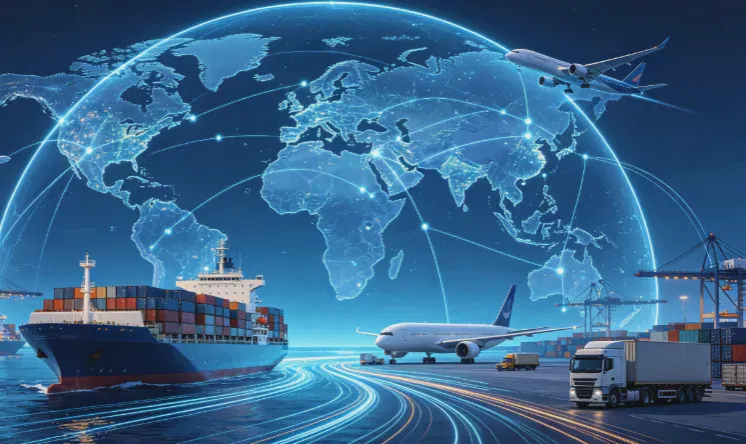
Air freight refers to the transportation of commercial cargo via dedicated cargo aircraft or the belly hold of passenger planes. Unlike express courier services (DHL, FedEx, UPS) that handle small parcels, air freight is designed for shipments starting at around 45 kg and scaling up to multiple tons. The key document governing every air shipment is the Airway Bill (AWB) — a non-negotiable contract between the shipper and the carrier issued under IATA (International Air Transport Association) regulations.
There are five main types of air freight service from China to Poland, and which one you choose has a major impact on both cost and speed:
- Standard Air Freight (Airport-to-Airport): The most common option for commercial shipments. Your cargo travels from a Chinese departure airport to a Polish arrival airport. You (or your forwarder) handle pickup and final delivery separately. Minimum chargeable weight is typically 45 kg.
- Express Air Freight / Courier: Door-to-door service via DHL, UPS, or FedEx. Best for samples, documents, and small parcels under 100 kg. Fast (2–5 business days) but expensive on a per-kg basis.
- Consolidated Air Freight: Multiple shippers' cargo is combined into one shipment to share space and reduce costs. Ideal for smaller shipments (45–300 kg) where you don't need a dedicated pallet position. Transit is slightly longer due to consolidation/deconsolidation time.
- DDP Air Freight (Door-to-Door with Duties Paid): An all-inclusive service where your freight forwarder handles everything — pickup from the Chinese supplier, export clearance, air transport, Polish import customs, payment of duties and 23% VAT, and final delivery to your door. This is the most hassle-free option.
- Charter Flights: For oversized cargo, project shipments, or urgent bulk freight exceeding standard airline capacity. Expensive but extremely fast (1–3 days).
So when should you choose air freight? The decision comes down to three factors: cargo value density, time sensitivity, and budget. If your goods are worth more than roughly $30 per kg, the speed of air freight — and the faster inventory turnover it enables — almost always justifies the higher shipping cost. Similarly, if a production line is down waiting for a component, the cost of air freight is negligible compared to the cost of idle machinery. For e-commerce sellers shipping to Amazon FBA warehouses in Poland or across Europe, air freight is a critical tool for avoiding stockouts during peak selling seasons. For a complete overview of all freight modes and services available on this trade lane, visit our dedicated guide to shipping from China to Poland.
Step-by-Step Air Shipping Process: From Factory to Door in Poland
Understanding the end-to-end journey of your cargo removes uncertainty and helps you spot potential delays before they happen. Here's exactly how air shipping from China to Poland works, broken into six stages.
Step 1: Supplier Pickup & Export Preparation
Your freight forwarder collects the cargo from your supplier's factory or warehouse anywhere in China — Shenzhen, Guangzhou, Shanghai, Ningbo, Yiwu, or beyond. At the forwarder's warehouse, the goods are checked against the packing list, weighed, measured, and prepared for export. If your cargo needs export packaging (reinforced cartons, palletizing, or crating), this is when it happens.
Step 2: Export Customs Clearance (China Side)
Before cargo can leave China, it must clear Chinese export customs. Your forwarder submits the Commercial Invoice, Packing List, and other required documents to China Customs. For most general cargo, this is a straightforward electronic declaration that clears within hours. However, certain goods — electronics, batteries, chemicals, or items requiring export licenses — may need additional documentation or inspection.
Step 3: Booking & Loading
Once export clearance is obtained, your forwarder books space with the airline. The cargo is built into Unit Load Devices (ULDs) — standardized pallets or containers that fit directly into aircraft cargo holds — and transported airside to the aircraft. At this stage, the Airway Bill (AWB) number is issued. This is your tracking reference for the entire journey.
Step 4: Air Transit
The flight itself takes approximately 10–12 hours from major Chinese hubs to Warsaw, assuming a direct routing. For shipments traveling via a transit hub (Frankfurt, Amsterdam, Vienna, or Dubai), add 1–2 days for the connection. Throughout transit, you can track your AWB number through your forwarder's online cargo tracking platform or directly on the airline's website.
Step 5: Arrival & Import Customs Clearance (Poland Side)
This is the stage where many shipments experience delays — not because of the airline, but because of incomplete documentation. Upon landing at Warsaw Chopin Airport (WAW) or another Polish airport, the cargo is transferred to a bonded warehouse pending customs clearance. Your customs broker (usually arranged by your forwarder) submits an electronic import declaration through Poland's AIDA (Automatic Import Declaration System). We cover this stage in detail in the customs section below.
Step 6: Last-Mile Delivery
Once customs releases the cargo, it's loaded onto a truck for final delivery. From Warsaw, road transport reaches most Polish cities within 24 hours: Kraków (4–5 hours), Wrocław (3–4 hours), Gdańsk (4 hours), Poznań (3 hours), Łódź (1.5 hours), and Katowice (3 hours). For DDP shipments, this step is included in your all-in rate. For airport-to-airport shipments, you'll need to arrange collection separately.
Required Documents Checklist
Missing or incorrect paperwork is the number one cause of customs delays. Here's what you need for air freight from China to Poland:
| Document | Required? | Notes |
|---|---|---|
| Commercial Invoice | ✅ Always | Must include HS codes, unit values, total value, and Incoterms |
| Packing List | ✅ Always | Itemized weight, dimensions, and quantity per carton |
| Airway Bill (AWB) | ✅ Always | Issued by the airline or forwarder at booking |
| Certificate of Origin | 🔶 If applicable | Required to claim preferential duty rates under trade agreements |
| CE Certification / Declaration of Conformity | 🔶 If applicable | Mandatory for regulated products entering the EU market (electronics, toys, machinery, PPE) |
| EORI Number | ✅ Always | EU Economic Operators Registration and Identification number — your importer ID |
| Import Declaration | ✅ Always | Filed electronically via Poland's AIDA system by your customs broker |
Air Freight Transit Times, Routes & Airlines from China to Poland
One of the most common questions we hear is: "How long does air shipping from China to Poland really take?" The honest answer depends on which service type you choose and which route your cargo travels.
Transit Times by Service Type
| Service Type | Door-to-Door Transit | Best For |
|---|---|---|
| International Express (DHL/UPS/FedEx) | 2–5 business days | Samples, documents, parcels under 100 kg |
| Standard Air Freight (Airport-to-Airport) | 3–7 business days | Commercial cargo ≥45 kg |
| DDP Door-to-Door Air Freight | 3–5 business days | Full-service including customs clearance and VAT |
| Economy Air Freight (via Transit Hub) | 5–9 business days | Cost-sensitive, non-urgent bulk shipments |
| Charter Flights | 1–3 business days | Oversized cargo, project cargo, emergency shipments |
Departure Airports in China
The airport you ship from matters — it affects available airlines, flight frequency, and rate competitiveness:
- PVG (Shanghai Pudong) — China's largest international air cargo hub. The highest frequency of direct flights to Europe, including daily service to Warsaw. Competitive rates across all weight tiers.
- CAN (Guangzhou Baiyun) — The primary gateway for South China. Ideal if your suppliers are in Guangdong, the Pearl River Delta, or Hong Kong.
- SZX (Shenzhen Bao'an) — The epicenter of China's electronics manufacturing. If you're shipping consumer electronics, e-commerce goods, or tech accessories, your cargo likely starts here.
- PEK (Beijing Capital) — The main hub for North China. LOT Polish Airlines operates direct flights from Beijing to Warsaw.
- HKG (Hong Kong) — The world's busiest cargo airport. Premium service with the widest carrier choice, but slightly higher handling costs.
- Others: NGB (Ningbo), XMN (Xiamen), TAO (Qingdao) — suitable for cargo originating near these port cities.
Destination Airports in Poland
| Airport (Code) | Region Served | Best For |
|---|---|---|
| Warsaw Chopin (WAW) | Central Poland / Nationwide | Primary hub — fastest customs processing, most flight connections |
| Katowice (KTW) | Silesia / Southern Poland | Industrial and manufacturing cargo |
| Kraków (KRK) | Lesser Poland / Southeast | Regional distribution |
| Wrocław (WRO) | Lower Silesia / Southwest | Regional distribution |
| Gdańsk (GDN) | Pomerania / Northern Poland | Baltic region access |
| Poznań (POZ) | Greater Poland / West | Regional distribution |
Key Airlines & Routes (2026 Reference)
| Departure | Destination | Primary Airlines | Frequency |
|---|---|---|---|
| PVG (Shanghai) | WAW (Warsaw) | China Southern (CZ), LOT Polish (LO) | Daily |
| PEK (Beijing) | WAW (Warsaw) | LOT Polish (LO), Air China (CA) | Daily |
| CAN (Guangzhou) | WAW (Warsaw) | China Southern (CZ), Air China (CA) via PEK | 5–7 flights/week |
| SZX (Shenzhen) | WAW (Warsaw) | Connecting via PVG, CAN, or PEK | 3–5 flights/week |
| HKG (Hong Kong) | WAW (Warsaw) | Cathay Pacific (CX), Cargolux (CV) | 5–7 flights/week |
5 Factors That Affect Transit Time
- Direct vs. connecting flights — Direct routes save 1–2 days over transit connections through Frankfurt, Amsterdam, or Dubai.
- Peak vs. off-peak season — August through October is the busiest period for China–Europe air freight. Space tightens, and transit can slip by 1–3 days.
- Documentation accuracy — Incorrect HS codes, missing CE certifications, or incomplete commercial invoices can add 1–3 days at customs.
- Customs inspection — Random physical inspections affect roughly 3–5% of air freight shipments and add 1–2 days.
- Destination airport congestion — WAW handles the highest volume; secondary airports like KTW or WRO may clear cargo faster during peak periods.
Peak Season Strategy
If your shipment falls between August and October, plan ahead. Book space at least 2–3 weeks in advance. Expect rates to be 15–25% higher than off-peak levels. If your timeline has some flexibility, consider rail freight (China–Europe Railway Express) as an alternative — it delivers to Poland in 14–20 days at roughly one-third the cost of air freight.
Air Freight Costs & Rates: A Complete Pricing Breakdown
Understanding what you're actually paying for — and how airlines calculate that number on your invoice — is the difference between an accurate budget and an expensive surprise.
The 6 Components of Your Air Freight Bill
- Base Freight Rate — The per-kg charge for the flight itself. This is the headline number, but it's only part of the total.
- Fuel Surcharge — A variable surcharge indexed to global jet fuel prices. Typically adds $0.50–$1.50 per kg.
- Security Surcharge — Mandatory airport security screening fee. Usually $0.15–$0.30 per kg.
- Terminal Handling Charges — Covers cargo handling at both departure and arrival airports. Includes ULD buildup/breakdown and warehouse storage.
- Customs Clearance Fee — Your broker's fee for processing export (China side) and import (Poland side) declarations.
- Last-Mile Delivery — Trucking from the Polish airport to your final address. Only applies to door-to-door and DDP shipments.
Chargeable Weight: The Number That Actually Matters
Here's the single most important concept in air freight pricing — and the one that catches first-time shippers off guard.
Airlines charge based on chargeable weight, which is the greater of: - Actual (Gross) Weight — what your cargo weighs on a scale - Volumetric (Dimensional) Weight — the space your cargo occupies
The formula: Volumetric Weight (kg) = Length × Width × Height (cm) ÷ 6000
Real example: You're shipping a carton of electronic accessories. Actual weight: 80 kg. Dimensions: 120 × 80 × 100 cm.
Volumetric weight = 120 × 80 × 100 ÷ 6000 = 160 kg
You pay for 160 kg — not 80 kg. That's double what the scale says. This is why lightweight, bulky items (pillows, empty display cases, foam packaging) can be surprisingly expensive by air. The fix? Compact your packaging. Every centimeter you shave off the dimensions directly reduces your freight cost.
Reference Rates by Weight Tier (Airport-to-Airport, July 2026)
| Weight Tier | Rate (USD/kg) | Typical Transit | Who It's For |
|---|---|---|---|
| 45–100 kg | $7.50 – $9.00 | 5–7 days | Small commercial shipments, samples in bulk |
| 101–500 kg | $6.00 – $7.50 | 4–6 days | Mid-size shipments, palletized cargo |
| 501–1,000 kg | $5.00 – $6.50 | 3–5 days | Regular commercial volumes |
| 1,000+ kg | $4.50 – $5.80 | 3–5 days | High-volume shippers, consolidated freight |
Rates are indicative and fluctuate weekly based on fuel prices, seasonal demand, and airline capacity. Always request a current quote for your specific shipment.
DDP Door-to-Door Rates (All-Inclusive)
| Weight Tier | DDP Rate (USD/kg) | Includes |
|---|---|---|
| 45–100 kg | $10.00 – $15.00 | Pickup + Export + Air Freight + Polish Customs + 23% VAT + Delivery |
| 101–500 kg | $8.00 – $12.00 | Same as above |
| 500+ kg | $7.00 – $10.00 | Same as above |
Airport-to-Airport vs. DDP: Which Costs More?
Let's compare a real scenario. You're shipping 300 kg of machinery parts from Shanghai to a warehouse in Katowice.
| Cost Item | Airport-to-Airport | DDP (All-Inclusive) |
|---|---|---|
| Air freight (300 kg × $6.50) | $1,950 | (included) |
| Export customs fee | $80 | (included) |
| Polish import customs broker fee | $150 | (included) |
| Import duty (3% on $15,000 CIF) | $450 | (included) |
| VAT (23% on $15,450) | $3,554 | (included) |
| Trucking WAW → Katowice | $180 | (included) |
| Total | $6,364 | $3,000–$3,600 |
At first glance, airport-to-airport looks cheaper — until you factor in the duty and VAT you'll pay upon import. DDP bundles everything into a single per-kg rate. For shipments under 500 kg, DDP is often the better deal. For larger volumes where you already have a Polish customs broker and VAT deferment setup, airport-to-airport can save money. Learn more about how all-inclusive door to door shipping from China to Poland simplifies the entire import process from pickup to final delivery.
7 Ways to Reduce Your Air Freight Costs
- Consolidate shipments to reach higher weight brackets — shipping 500 kg at $6.00/kg is 33% cheaper per kilo than 45 kg at $9.00/kg.
- Minimize packaging volume — remember, you're paying for space as much as weight. Eliminate unnecessary void fill and use right-sized boxes.
- Book 2–3 weeks ahead during off-peak periods — last-minute bookings in any season carry a premium.
- Choose economy/transshipment over direct flights for non-urgent cargo — routing via a hub can save 15–25%.
- Compare total landed cost, not just the freight rate — a low air freight quote with surprise customs fees costs more than an honest all-in DDP rate.
- Build a relationship with one forwarder — consistent volume earns negotiated rates, priority space allocation, and better service.
- Avoid peak season (August–October) if possible — or budget for 15–25% higher rates and book early.
Poland Customs Clearance & Import Tax Guide for Air Freight
Polish customs doesn't have to be a black box. Once you understand the system, the requirements, and the math, clearing air freight becomes predictable.
Poland's Place in the EU Customs Union
Poland is a full member of the EU Customs Union. This means goods cleared through Polish customs can circulate freely across all 27 EU member states without additional customs formalities. For importers serving customers across the continent, our shipping from China to Europe hub covers all major trade lanes and freight modes. If your ultimate market is Germany, Czech Republic, Slovakia, or beyond, clearing through Poland is a perfectly valid — and often faster — route. For businesses distributing across Central and Western Europe, we also offer dedicated air shipping from China to Germany with the same door-to-door convenience.
Key Import Requirements
EORI Number: Every business importing goods into the EU must have an Economic Operators Registration and Identification (EORI) number. It's your unique identifier in the EU customs system. If you don't have one, your freight forwarder or customs broker can help you apply — the process typically takes 3–5 business days in Poland.
HS Code Classification: The Harmonized System (HS) code determines your import duty rate, any applicable restrictions, and whether you need special certifications. Take the time to get this right — an incorrect HS code can trigger audits, penalties, or shipment holds. Use the EU TARIC database to verify your code.
AIDA System: Poland uses the AIDA (Automatic Import Declaration System) electronic platform for all import declarations. Your customs broker submits declarations digitally. For most standard air freight shipments, clearance is processed within hours — often before the cargo even leaves the aircraft's warehouse.
Import Duties & Taxes Explained
| Tax Type | Rate | Applied To |
|---|---|---|
| Customs Duty (Import Tariff) | 0%–12% (varies by HS code) | CIF value (Cost + Insurance + Freight) |
| VAT | 23% (standard), 8% or 5% (reduced) | CIF value + Customs Duty |
| Excise Duty (Akcyza) | Varies by product | Alcohol, tobacco, energy products only |
How the calculation works — a real example:
You import $10,000 worth of Bluetooth speakers (HS code: 8518.22, duty rate: 0% under EU MFN). The air freight and insurance cost (CIF) is $10,800.
- Customs Duty: $10,800 × 0% = $0
- VAT Base: $10,800 + $0 = $10,800
- VAT at 23%: $10,800 × 23% = $2,484
- Total import cost: $10,800 + $2,484 = $13,284
Now, the same shipment as automotive parts (HS code: 8708.99, duty rate: 3%): Duty = $324 → VAT = $2,558 → Total taxes = $2,882.
The HS code matters. A lot.
DDP vs. DDU: Which Incoterms for Air Freight?
| Incoterms | Who Pays Freight? | Who Pays Duty & VAT? | Who Handles Customs? | Best For |
|---|---|---|---|---|
| DDP (Delivered Duty Paid) | Shipper/Forwarder | Shipper/Forwarder | Shipper/Forwarder | Importers without Polish customs expertise |
| DAP/DDU (Delivered at Place) | Shipper/Forwarder | Importer | Importer | Importers with their own EORI and customs broker |
| EXW (Ex Works) | Importer | Importer | Importer | Experienced importers with full logistics control |
DDP is the most popular choice for air freight to Poland because it eliminates uncertainty. You know exactly what you'll pay, when your cargo will arrive, and that there won't be surprise fees at the border. If you already have a Polish customs broker and VAT deferment account, DAP can save you 15–20% on the all-in cost. For businesses importing into multiple EU countries, DDP shipping from China to Germany follows the same streamlined model with all duties and VAT pre-paid.
5 Customs Mistakes That Cause Delays
- Wrong or inconsistent HS codes — the single most common reason for customs holds. Double-check before submitting.
- Missing CE certification — if your product requires CE marking and you can't produce the Declaration of Conformity, customs will detain your shipment.
- Undervaluation — declaring a lower value to reduce duty/VAT triggers customs audits. Penalties far exceed any tax savings.
- No valid EORI number — without it, your customs declaration cannot be processed. Apply before your cargo departs China.
- Weight/quantity mismatch — the packing list must match what's actually in the shipment. Discrepancies trigger physical inspection.
Air Freight vs Sea Freight vs Rail Freight: Choosing the Best Mode
Air freight isn't always the answer. Here's how it stacks up against the alternatives for China–Poland shipping.
| Dimension | Air Freight | Rail Freight (China–Europe Railway Express) | Sea Freight |
|---|---|---|---|
| Transit Time | 3–7 days | 14–20 days | 35–45 days |
| Cost per kg | $4.50–$9.00 | $1.50–$4.00 | $0.50–$2.00 |
| Cost per CBM | $350–$700 | $150–$250 | $30–$80 |
| Reliability | High (weather dependent) | High (fixed schedule) | Moderate (port congestion, vessel delays) |
| Carbon Footprint | Highest | Medium | Lowest |
| Best For | High-value, urgent, lightweight cargo | Medium-value goods, time-sensitive, Central/Eastern Europe delivery | Heavy/bulky, low-value, non-urgent cargo |
| Poland Entry Point | WAW, KTW, KRK, WRO, GDN, POZ | Małaszewicze (Terespol), Warsaw | Gdańsk, Gdynia |
For a detailed breakdown of ocean freight pricing on this route, see our guide to sea shipping cost from China to Poland.
How to Decide
Choose air freight if: Your goods are worth more than ~$30 per kg, you need delivery within 7 days, and the shipment is under 2–3 cubic meters. Air is also the right call when inventory stockout costs outweigh freight costs — as is often the case with Amazon FBA sellers and manufacturers dependent on just-in-time components.
Choose rail freight if: Your destination is in central or eastern Poland, you can accept 2–3 weeks transit, and your shipment is between 500 kg and 5 tons. The China–Europe Railway Express has become a legitimate middle ground — significantly faster than sea freight and significantly cheaper than air. The Małaszewicze terminal on the Poland–Belarus border is one of the largest rail freight transshipment hubs in Europe.
Choose sea freight if: Your cargo is heavy, bulky, and not time-sensitive. A 40-foot container from China to Gdańsk or Gdynia costs $2,200–$3,800 and carries up to 26 tons — making it the most economical option for large-volume shipments by a wide margin. For current container rates and FCL/LCL options, check our complete guide to the cost of shipping a container from China to Poland.
A Hidden Third Option: Sea-Air Combined
Sea-air combined transport routes your cargo by ocean to a Middle Eastern or Southeast Asian hub (Dubai, Singapore, or Colombo), then transfers it to air freight for the final leg to Poland. Total transit: 15–20 days. Cost: roughly 40–50% less than pure air freight. This niche option works well for cargo originating near southern Chinese ports where the sea leg to a transshipment hub is short.
What Can (and Can't) You Ship by Air from China to Poland?
Not everything can — or should — go by air. Here's what flies, what doesn't, and how to pack what does.
Goods Commonly Shipped by Air to Poland
- Consumer electronics & accessories — smartphones, headphones, chargers, smart home devices. Shenzhen and Guangzhou are the world's factory floor for these categories.
- Automotive parts & components — Poland is one of Europe's largest automotive manufacturing hubs. Air freight keeps production lines running.
- Machinery & industrial equipment — spare parts, precision tools, and small machinery where downtime costs exceed freight costs.
- E-commerce goods & FBA inventory — fast-moving SKUs heading to Amazon fulfillment centers in Poland or redistribution across Europe.
- Textiles, apparel & fashion accessories — seasonal fashion where missing a trend window means lost revenue.
- Medical devices & temperature-controlled pharma — cold chain air freight with active temperature monitoring.
- Samples & prototypes — small, high-value, and urgent.
Restricted & Prohibited Items
Air cargo is governed by the IATA Dangerous Goods Regulations (DGR), which classify hazardous materials into 9 classes:
- Completely prohibited on passenger and cargo aircraft: Explosives (Class 1, most divisions), flammable gases (Class 2.1), spontaneously combustible substances (Class 4.2), and most radioactive materials (Class 7).
- Conditionally allowed (requires DG declaration, special packaging, and carrier approval): Lithium batteries — UN3480 (standalone) and UN3481 (contained in equipment). These require UN38.3 test certification and must be declared at booking. Magnetic materials (Class 9), certain liquids and powders (with MSDS documentation), and dry ice (as a refrigerant for temperature-controlled shipments).
Critical rule: Always inform your freight forwarder about battery-containing cargo before booking. Undeclared lithium batteries are the leading cause of air cargo fires and result in severe penalties.
Air Freight Packaging Best Practices
- Use double-wall corrugated boxes — single-wall cartons collapse under the stacking pressure of air cargo handling.
- Waterproof your cargo — air freight sits on tarmacs and in warehouses where exposure to weather is possible. A polyethylene liner or wrap is cheap insurance.
- Cushion internally — foam inserts, bubble wrap, or air pillows. Cargo aircraft vibrate differently than trucks or ships.
- Palletize shipments over 100 kg — loose cartons get handled more times. A palletized shipment is moved as one unit, reducing damage risk.
- Label everything — shipper/consignee details, handling instructions ("Fragile," "This Side Up"), and DG labels if applicable.
- Insure your cargo — statistically, 0.5–1% of air cargo experiences damage or loss. On a $50,000 shipment, that's a $250–$500 expected loss. Cargo insurance typically costs 0.2–0.5% of the declared value — virtually always worth it.
Real Scenario: Electronics from Shenzhen to Warsaw
A Polish e-commerce seller places an order for 300 kg of Bluetooth earphones from a supplier in Shenzhen. They need the inventory at their Warsaw warehouse within 5 days to avoid an Amazon stockout penalty.
Solution: DDP air freight, SZX → WAW.
| Day | Action |
|---|---|
| Day 1 | Forwarder picks up 300 kg from supplier in Shenzhen. Cargo weighed, measured, and export documents prepared. |
| Day 2 | Export customs cleared. Cargo booked on China Southern flight via Guangzhou (CAN) to Warsaw (WAW). AWB issued. |
| Day 3 | Cargo departs CAN in the morning, arrives WAW same evening (local time). Transferred to bonded warehouse. |
| Day 4 | Import declaration submitted via AIDA. Customs cleared by afternoon. Duty: 0% (electronics). VAT at 23% pre-paid via DDP. |
| Day 5 | Truck delivers 300 kg to the seller's warehouse in Warsaw. Inventory live on Amazon by evening. |
Lessons: CE certification (RED Directive for wireless devices) and UN38.3 battery test reports were prepared in advance. Without these documents, customs clearance would have added 2–3 days.
How to Choose a Reliable Air Freight Forwarder from China to Poland
The right forwarder makes the difference between a shipment that arrives on time and one that generates daily anxiety. Here's what to look for.
8-Point Evaluation Checklist
-
Industry certifications: Does the forwarder hold IATA and FIATA accreditation? IATA certification means they're authorized to issue Airway Bills directly with airlines. FIATA membership signals adherence to global forwarding standards. Without these, you're dealing with a reseller — not a direct operator.
-
China–Poland lane experience: How many shipments has this forwarder handled on this specific route? Do they have a Polish customs brokerage partner or an in-house team? Lane-specific expertise means they know which airlines are most reliable, which Polish airports clear fastest, and which documents Polish customs scrutinizes most.
-
Direct airline contracts: Forwarders with direct contracts to China Southern, Air China, LOT Polish, and Cargolux secure better rates and guaranteed space — especially critical during peak season when secondary agents get bumped.
-
Transparent pricing: Does the quote itemize the base rate, fuel surcharge, security fee, and handling charges? Or is it a single number with fine print? A transparent forwarder shows you exactly what you're paying for.
-
Door-to-door (DDP) capability: Can they handle the entire journey — pickup in China, export clearance, air transport, Polish import clearance, VAT payment, and final delivery? A forwarder that can do DDP gives you one throat to choke when something goes wrong.
-
Cargo tracking: Do they offer a real-time online tracking platform? Being able to see exactly where your AWB is — rather than emailing for updates — saves time and reduces anxiety.
-
Customer support: Is there a dedicated account manager who knows your business? Can they communicate in both English and Chinese (for supplier coordination) and Polish (for customs issues)?
-
References & reviews: Can they share case studies or references from other Polish importers? A forwarder confident in their track record will happily provide them.
5 Red Flags
- ❌ A price far below market rates — a quote of $3.00/kg for DDP air freight from China to Poland is either bait-and-switch or excludes major cost items.
- ❌ Cannot explain chargeable weight — if your forwarder can't walk you through the actual weight vs. volumetric weight calculation, they don't understand air freight fundamentals.
- ❌ No physical office or warehouse in China — a virtual forwarder with no physical presence cannot inspect, repack, or consolidate your cargo.
- ❌ Vague about Polish customs — a forwarder who says "customs will be fine" without asking about your HS codes, CE certifications, or EORI number is not prepared for Polish import realities.
- ❌ Doesn't offer cargo insurance — every professional forwarder offers cargo insurance. If it's not even mentioned, that's a warning sign.
Why DTFU Logistics Is Built for China-to-Poland Air Freight
With over a decade of experience in international freight forwarding and FIATA and IATA dual certification, our team has moved thousands of air shipments from China to Poland — and we've learned what matters along the way.
We maintain direct contracts with China Southern, Air China, LOT Polish Airlines, and Cargolux, which means competitive rates year-round and guaranteed space allocations during peak season. Our multi-airport network — covering Shanghai, Guangzhou, Shenzhen, Beijing, and Ningbo — lets us pick up from your supplier and route through the most cost-effective departure point, not just the nearest one.
On the Polish side, we handle AIDA customs declarations, EORI registration assistance, and 23% VAT processing as standard with every DDP shipment. Beyond Poland, our European air freight network covers key markets including air shipping from China to France, Germany, and the Netherlands — all backed by the same FIATA and IATA-certified service. Your dedicated account manager — fluent in English, Chinese, and with Polish-speaking support — is your single point of contact from booking to delivery. And our 24/7 online tracking platform means you always know where your cargo is, whether it's on the tarmac in Guangzhou or clearing customs in Warsaw.
FAQs
How long does air shipping from China to Poland take?
Standard air freight takes 3–7 business days airport-to-airport. DDP door-to-door service typically takes 3–5 business days. Express courier services (DHL, UPS, FedEx) deliver in 2–5 business days. The fastest option — charter flights — can move cargo from China to Poland in 1–3 days.
How much does air freight from China to Poland cost per kg?
Airport-to-airport rates range from $4.50 to $9.00 per kg, depending on your weight tier. DDP door-to-door rates (all-inclusive, covering pickup, air freight, Polish customs, 23% VAT, and final delivery) range from $7.00 to $15.00 per kg. Shipments over 1,000 kg get the lowest per-kg rates.
What is the cheapest way to ship from China to Poland?
Sea freight is cheapest at $0.50–$2.00 per kg, but takes 35–45 days. Rail freight via the China–Europe Railway Express costs $1.50–$4.00 per kg and takes 14–20 days. Air freight is the most expensive but fastest — and for high-value or time-sensitive goods, the total landed cost comparison often favors air when you account for inventory carrying costs and speed to market.
What documents are required for air shipping from China to Poland?
You need: Commercial Invoice, Packing List, Airway Bill (AWB), your EORI number, and an Import Declaration (filed by your customs broker). Depending on the product, you may also need a Certificate of Origin and CE Certification / Declaration of Conformity.
Can I ship electronics with lithium batteries by air from China to Poland?
Yes, but with strict conditions. Lithium batteries — both standalone (UN3480) and contained in equipment (UN3481) — require UN38.3 test certification, dangerous goods declaration at booking, and special packaging compliant with IATA DGR Section II. Always inform your forwarder about battery-containing cargo before booking — undeclared batteries are a serious safety violation.