Are you seeking a fast, secure, and reliable solution for air shipping from China to Libya? As a FIATA- and IATA-certified freight forwarder based in Shenzhen with over a decade of hands-on experience moving cargo across the China–North Africa corridor, we’ve handled everything from urgent automotive parts and high-value electronics to temperature-sensitive pharmaceuticals bound for Tripoli and Benghazi. Navigating international air freight, Libyan customs regulations, and multi-hub transit routes is genuinely complex — and getting it wrong can mean costly delays, unexpected duties, or cargo sitting in a Middle Eastern hub for days.
In this comprehensive, 2026-updated guide, we’ll draw from our direct operational experience to uncover the key benefits of air shipping, walk you through the entire process step-by-step, highlight the major airports and routes we use daily, break down real cost factors with actual pricing context, and help you choose the best air freight forwarder for China-Libya shipments. Let’s streamline your logistics and ensure your cargo arrives safely and on time.
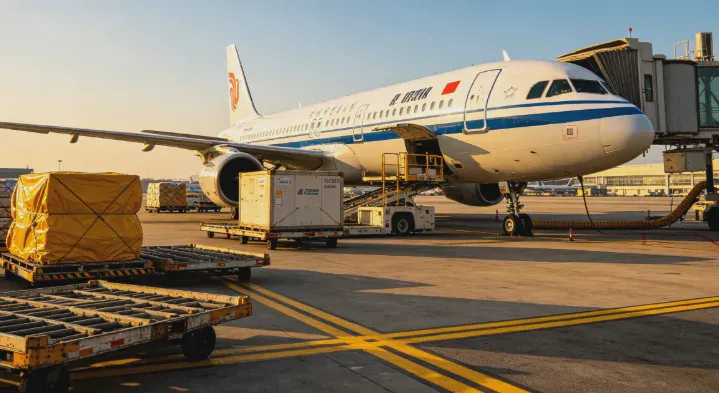
Key Benefits of Air Freight from China to Libya
Fast Transit Times and Reliable Schedules
One of the main advantages of Air Shipping from China to Libya is its unmatched speed. While sea freight can take 25–40 days via the Mediterranean, air freight typically delivers cargo in 4 to 7 days door-to-airport, depending on routing and connections. In our operational experience, the fastest corridor is Shanghai PVG → Doha (DOH) → Tripoli Mitiga (MJI) via Qatar Airways Cargo, which we’ve consistently clocked at roughly 4–5 days from departure to arrival — provided documentation is clean and Libyan customs releases without physical inspection.
This rapid transit is essential for businesses with urgent shipments, high-value products, or tight inventory cycles. For example, last year we managed an urgent shipment of automotive brake-system components for a Libyan distributor. Their assembly line was 48 hours from shutting down. By switching from their planned sea freight to our air solution via Istanbul, we had the parts at Mitiga Airport in 5 days — saving them an estimated $35,000 in lost production.
Airlines operate on fixed schedules, providing reliable and predictable arrival times. This consistency reduces the risk of stockouts and supports just-in-time supply chain strategies. Automotive, electronics, and pharmaceutical industries in Libya benefit significantly from timely and dependable air cargo services from China.
Enhanced Security and Reduced Risk
Air freight is recognized for its heightened security compared to other shipping methods. Airports have strict IATA-compliant security protocols — including X-ray screening, explosive trace detection, and tamper-evident seals — minimizing the risk of theft, damage, or loss. The short transit time also reduces exposure to multiple handling points and environmental hazards. For sensitive cargo, such as electronics, medical equipment, and perishable goods, air shipping offers peace of mind.
In our decade of handling China-to-Libya shipments, we’ve learned that cargo insurance is non-negotiable for high-value electronics and pharmaceutical goods. Libya’s current customs environment can involve unexpected physical inspections, and while rare, mishandling during inspection can occur. DTFU provides all-risk cargo insurance and end-to-end tracking via our online platform, ensuring your goods are protected and traceable throughout the journey from China to Libya. We always advise clients to insure at 110% of CIF value to cover not just the goods, but also freight and anticipated duties.
Ideal Cargo Types for Air Shipping
Not all cargo is suited for air freight due to weight and size constraints. However, air shipping is ideal for:
- High-value products (e.g., mobile phones, laptops)
- Time-sensitive shipments (e.g., pharmaceuticals, urgent spare parts)
- Perishable goods (e.g., seafood, fresh produce)
- Samples and documents
- Small-batch or low-volume shipments
The table below provides a comparison of typical cargo types suitable for air freight:
| Cargo Type | Reason for Air Shipping | Typical Industry |
|---|---|---|
| Electronics | High value, time-sensitive | Consumer Electronics |
| Pharmaceuticals | Temperature control, urgency | Healthcare |
| Automotive Parts | Just-in-time inventory | Automotive |
| Fashion & Apparel | Seasonal, fast-to-market | Retail |
| Documents & Samples | Speed, security | All Industries |
Step-by-Step Process: How to Ship by Air from China to Libya
Choosing the Right Air Freight Forwarder
Selecting a professional air freight forwarder is the single most important decision in your China-to-Libya supply chain. In our 10+ years of experience, we’ve seen shipments fail not because of airline issues, but because the forwarder lacked expertise in Libyan customs procedures or underestimated documentation requirements.
Here is what we recommend you evaluate:
- Experience with China-Libya Corridor: Choose a forwarder with a proven track record in this trade lane. Libya is not a standard destination — customs processes differ from Egypt or Morocco, and only forwarders with active Libya operations understand the nuances of clearing at Mitiga versus Benina.
- Comprehensive Services: The ideal forwarder provides not just air shipping, but also customs clearance, cargo insurance, and door-to-door delivery under DDP or DDU terms. Many clients assume they only need airport-to-airport service, only to realize later that customs clearance in Libya requires a local broker they don’t have.
- Transparent Pricing: Look for clear quotations with a breakdown of all charges — base freight, fuel surcharge, security fees, terminal handling, and customs clearance. Hidden fees are, unfortunately, common in this corridor. At DTFU, we provide itemized quotations with no hidden charges.
- Strong Global Network: Partners at origin and destination airports ensure smooth handling. Our direct contracts with Qatar Airways Cargo, Emirates SkyCargo, and Turkish Cargo give us priority space allocation, even during peak season.
DTFU International Logistics Co.,Ltd is a FIATA- and IATA-certified freight forwarder headquartered in Shenzhen. We offer one-stop international logistics services, including Air Freight, Sea Freight, Cargo Insurance, and Door-to-Door delivery from China to Libya.
If you are comparing air and sea options, you may also want to review Sea Shipping cost from China to Libya for a broader logistics perspective in the North Africa region.
Required Shipping Documents and Customs Procedures
Proper documentation is essential for smooth customs clearance. For air shipments from China to Libya, the following documents are required — and in our experience, incomplete or mismatched paperwork is the #1 cause of delays at Mitiga and Benina airports:
- Air Waybill (AWB): The main transport document for air cargo. The consignee name on the AWB must exactly match the importer of record registered with Libyan Customs.
- Commercial Invoice: Must detail the goods' value, currency, and transaction terms using the correct Incoterms 2020 (we typically recommend DDP or CIF for first-time importers to minimize surprises).
- Packing List: Specifies the contents, dimensions, and gross/net weight of each package. Discrepancies between the invoice and packing list trigger automatic inspections.
- Certificate of Origin: Often required to prove origin and determine applicable duty rates under Libya’s trade agreements.
- Import Licenses: Required for restricted items as per Libyan regulations — especially telecommunications equipment, pharmaceuticals, and chemicals.
- Insurance Certificate: If coverage is purchased. We recommend all-risk coverage for shipments valued above $5,000.
Customs Tips (From Our Operations Team)
- Accuracy is non-negotiable: Even a minor discrepancy — for example, a typo in the consignee name or mismatched HS codes between the invoice and packing list — can result in cargo being held for 3–7 additional days. We always run a three-point document check before departure.
- Stay updated on the latest Libyan import restrictions. For 2026, Libya** enforces strict rules on certain electronics (especially telecommunications and GPS devices), chemicals, and food products. We monitor these regulations weekly and advise clients before shipping.
- HS Code accuracy matters: Libya uses the international Harmonized System, but local customs officers may apply additional sub-classifications. Incorrect HS codes can lead to fines or confiscation. Our team offers complimentary HS code verification for all bookings.
- DTFU’s team offers One-Stop Customs Clearance at both origin (China) and destination (Libya) to simplify this process for clients.
Packaging and Labeling Guidelines for Air Cargo
Proper packaging and labeling protect your cargo and ensure compliance with airline and customs requirements. In our experience shipping to Libya, packaging failures account for roughly 15% of insurance claims on this route — usually because goods weren’t properly secured for multi-leg handling through Middle Eastern hubs.
-
Packaging: Use durable, lightweight materials to minimize chargeable weight (remember: airlines bill on actual or volumetric weight — whichever is higher). Fragile or high-value goods should have inner cushioning and be packed in reinforced cartons or ISPM-15 certified crates for heavier industrial items. For Libya specifically, we recommend moisture-barrier wrapping if transiting through humid Gulf hubs like Dubai or Doha during summer months.
-
Labeling: Each package must be clearly labeled with:
- Shipper and consignee details (exactly matching the AWB)
- Package number and gross/net weight
- Handling instructions (e.g., “Fragile”, “Keep Dry”, “This Way Up”)
- Any regulatory labels (e.g., for dangerous goods / DG cargo classified under IATA DGR)
Pro Tip: Non-compliant packaging can cause delays or damage claims. DTFU provides expert guidance on IATA-compliant packaging for international air freight, including lithium battery shipments (UN 38.3 test summary required) and temperature-controlled pharma cargo.
Tracking and Managing Your Air Shipment
Modern air freight solutions offer advanced tracking and shipment management tools:
- Online Tracking: Monitor your cargo in real time with the AWB number via airline or forwarder portals.
- Proactive Notifications: Receive updates on key milestones: departure, arrival, customs clearance, and delivery.
- 24/7 Customer Support: DTFU International Logistics offers round-the-clock support and issue resolution.
Efficient tracking helps you plan your supply chain activities and quickly address any exceptions or delays.
Major Airports and Air Cargo Routes between China and Libya
Top Chinese Airports for International Air Freight
When shipping goods by air from China to Libya, the choice of the departure airport can influence both transit time and cost. China boasts some of the world's busiest and most advanced cargo airports, offering frequent international flights and connections to Africa.
Key Chinese Airports Serving Air Cargo to Libya:
| Airport Name | Location | IATA Code | Annual Air Cargo Volume (2025, million tons) | Major Airlines with Africa Service |
|---|---|---|---|---|
| Shanghai Pudong International Airport | Shanghai | PVG | 3.7 | Air China Cargo, China Southern, Emirates SkyCargo, Ethiopian Airlines |
| Guangzhou Baiyun International Airport | Guangzhou | CAN | 2.0 | China Southern Cargo, Qatar Airways, Turkish Cargo |
| Beijing Capital International Airport | Beijing | PEK | 2.0 | Air China Cargo, EgyptAir Cargo, Turkish Cargo |
| Shenzhen Bao’an International Airport | Shenzhen | SZX | 1.7 | SF Airlines, China Southern, Emirates SkyCargo |
| Hong Kong International Airport | Hong Kong SAR | HKG | 4.2 | Cathay Pacific Cargo, Emirates SkyCargo, Qatar Airways |
Shanghai PVG and Guangzhou CAN are especially popular for shipments to North Africa, including Libya. These airports offer extensive international cargo flight networks and customs clearance efficiency.
Key Libyan Airports Receiving Air Cargo
While Libya does not have the cargo volumes of major global hubs, it maintains several strategic airports for receiving international shipments, including those from China.
Key Libyan Airports for Air Freight:
| Airport Name | City | IATA Code | Notes |
|---|---|---|---|
| Mitiga International Airport | Tripoli | MJI | Main air gateway for commercial cargo imports |
| Tripoli International Airport | Tripoli | TIP | Recently reopened, expected to increase cargo capacity |
| Benina International Airport | Benghazi | BEN | Serves Eastern Libya; growing trade and humanitarian traffic |
| Misrata Airport | Misrata | MRA | Regional business and industrial cargo hub |
Most China-to-Libya air shipments are routed through Mitiga (MJI) or Benina (BEN), depending on the consignee's location and logistics requirements.
Typical Air Freight Routes and Transit Times
There are no direct, scheduled cargo flights from China to Libya; instead, shipments often transit via major Middle Eastern or European hubs. This helps optimize cost and speed.
Typical Air Freight Routing:
-
China → Middle Eastern Hub (e.g. Doha, Dubai, Istanbul) → Libya
- Airlines: Qatar Airways Cargo, Emirates SkyCargo, Turkish Cargo
-
China → European Hub (e.g. Frankfurt, Paris) → Libya
- Airlines: Lufthansa Cargo, Air France Cargo (limited connections)
Estimated Transit Times (Airport-to-Airport):
| Origin (China) | Hub Airport | Libyan Destination | Typical Transit Time (Days) |
|---|---|---|---|
| Shanghai (PVG) | Doha (DOH) | Tripoli (MJI) | 4–7 |
| Guangzhou (CAN) | Istanbul (IST) | Benghazi (BEN) | 5–8 |
| Shenzhen (SZX) | Dubai (DXB) | Misrata (MRA) | 5–9 |
Note: Actual transit times may vary due to customs clearance, airline schedules, and current geopolitical developments in North Africa. For time-critical shipments, DTFU International Logistics Co.,Ltd offers route optimization and real-time tracking solutions.
Air Shipping Costs: Understanding Pricing Factors
Shipping by air from China to Libya is generally faster but more expensive than sea freight. Understanding the cost structure helps businesses make informed decisions and manage budgets effectively.
If you're evaluating costs for other North African countries, you may also find our guide on Air Shipping from China to Algeria insightful.
Main Charges and Surcharges in Air Freight
Air freight costs are influenced by several key factors. In our experience quoting hundreds of China-to-Libya shipments annually, here is what actually drives your final invoice:
-
Chargeable Weight (Actual or Volumetric):
- Airlines use either actual weight or volumetric weight (Length × Width × Height in cm ÷ 6000) for pricing — whichever is higher. This is why a box of 10 kg LED light strips measuring 100×50×40 cm gets charged as 33 kg volumetric. We always advise clients to optimize packaging dimensions before quoting.
-
Air Freight Rate:
- Quoted per kilogram, based on route, season, and airline. For China-to-Libya, rates are typically segmented into +45 kg, +100 kg, +300 kg, and +500 kg weight breaks — higher volumes unlock significantly lower per-kilo rates.
-
Fuel Surcharges (MYC):
- Fluctuate with international jet fuel prices and are adjusted monthly by carriers. In 2026, fuel surcharges on the China–Middle East lane have stabilized around $0.90–$1.40/kg after the volatility of 2022–2023.
-
Security and Screening Fees (SSC):
- Ensures compliance with global aviation security standards. All cargo departing Chinese airports undergoes 100% screening; fees range from $0.20–$0.40/kg.
-
Terminal Handling Charges (THC):
- Fees for cargo handling at both origin and destination airports. For air freight, these are typically lower than sea freight but still add $0.30–$0.60/kg.
-
Customs Clearance Fees:
- Includes documentation and formalities at both ends. Libyan customs clearance can involve informal "facilitation fees" depending on the broker; working with a reputable forwarder eliminates this uncertainty.
-
Other Surcharges:
- May include war-risk insurance (applicable to Libyan airspace, typically $0.05–$0.15/kg), peak season congestion surcharges (September–January), or special handling for dangerous goods.
Sample Cost Breakdown Table (Reference Only):
| Cost Component | Typical Range (USD/kg) |
|---|---|
| Basic Air Freight Rate | $5.00 – $10.00 |
| Fuel Surcharge | $0.80 – $1.50 |
| Security Fee | $0.20 – $0.40 |
| Handling Charges | $0.30 – $0.60 |
| Customs & Docs | Variable |
| Total (Airport to Airport) | $6.30 – $12.50 |
Note: Pricing is indicative as of Q2 2026, based on standard general cargo (non-DG) moving via Doha or Istanbul to Tripoli Mitiga. Actual rates vary by exact dimensions, weight break, commodity type, and current fuel surcharge levels. For a firm, itemized quotation with no hidden fees, contact DTFU International Logistics Co.,Ltd.
Tips for Reducing Air Shipping Costs
-
Optimize Packaging:
- Use compact, sturdy packaging to minimize volumetric weight.
-
Consolidate Shipments:
- Combine multiple consignments to take advantage of lower per-unit rates.
-
Book in Advance:
- Advance booking can help secure better rates, especially during peak seasons.
-
Choose the Right Airport Pair:
- Some origin/destination combinations offer lower rates due to airline competition.
-
Flexible Transit Times:
- If your cargo is not urgently required, opt for deferred air services at lower costs.
-
Leverage Freight Forwarder Expertise:
- Partner with an experienced forwarder like DTFU International Logistics Co.,Ltd to access volume discounts, route optimization, and customs expertise.
Air Freight vs. Sea Freight: Cost and Speed Comparison
For many shippers, the choice between air freight and sea freight depends on cargo type, urgency, and budget. Here is our honest assessment — based on hundreds of shipments we’ve managed on this route:
| Factor | Air Freight (China to Libya) | Sea Freight (China to Libya) |
|---|---|---|
| Transit Time | 4–9 days | 25–40 days |
| Typical Cost/CBM | $600–$1,200 | $80–$250 |
| Cargo Types | High-value, urgent, small volume | Large, non-urgent, bulk goods |
| Customs Clearance | Fast, streamlined | May be slower, port-dependent |
| Tracking | Real-time, detailed | Varies by carrier |
| Reliability | High schedule reliability | Subject to port congestion, weather |
Sea freight remains more cost-effective for bulky or heavy cargo, while air freight is best for time-sensitive shipments. That said, for shipments between 200–500 kg, we sometimes recommend a sea-air combined solution (ocean to Jebel Ali, then air to Libya) that lands in 12–18 days at roughly 40% of pure air freight cost. DTFU International Logistics Co.,Ltd can advise you on the optimal mode based on your cargo profile, budget, and delivery deadline.
If your business also considers nearby destinations, you may find our resource on Door to Door Shipping from China to Morocco valuable for comprehensive North Africa logistics planning.
Customs Clearance for Air Shipments to Libya
Key Customs Regulations and Import Restrictions
When shipping cargo via air from China to Libya, understanding key customs regulations is essential for a smooth clearance process. Libya operates under the General Customs Authority (GCA), and while the country is working toward full WTO accession, its import framework remains complex and subject to frequent regulatory shifts. Libyan Customs has specific requirements that all importers, exporters, and freight forwarders must meet — and in our experience, first-time shippers consistently underestimate the documentation rigor required at Mitiga and Benina.
1. Essential Import Documents:
- Air Waybill (AWB): The primary shipping document for all air cargo.
- Commercial Invoice: Must detail the value, description, and HS codes of goods.
- Packing List: Specifies package contents and dimensions.
- Certificate of Origin: Often required for certain commodities.
- Import License: Required for controlled or restricted items.
- Insurance Certificate: If goods are insured during transit.
2. Import Restrictions:
- Prohibited Items: Libya bans the import of weapons, ********s, certain food products, alcohol, and items violating Islamic law.
- Restricted Items: Pharmaceuticals, telecommunication devices, and chemicals may require additional permits or approvals from Libyan authorities.
- Product Standards: Goods must comply with Libyan quality, labeling, and safety standards. Non-compliant items face seizure or return.
3. Duties and Taxes:
- Customs Duties: Calculated based on the CIF (Cost, Insurance, Freight) value.
- VAT & Other Levies: A Value Added Tax (VAT) and additional surcharges may apply, depending on commodity type.
4. HS Codes:
- Accurate HS Classification is essential. Errors can cause significant delays or additional duties.
Expert Tip: Work with an experienced air freight forwarder like DTFU International Logistics Co.,Ltd to ensure accurate documentation and compliance. According to the International Federation of Freight Forwarders Associations (FIATA) best practices, proper documentation review before departure reduces customs-related delays by up to 70%. Our Shenzhen-based documentation team reviews every AWB, invoice, and packing list before cargo boards the aircraft.
Common Challenges and How to Avoid Delays
The customs clearance process in Libya can be complex, especially for first-time shippers or those dealing with high-value or sensitive cargo. Being aware of common challenges helps avoid costly delays:
| Challenge | Description | Prevention/Best Practice |
|---|---|---|
| Incomplete or Incorrect Documentation | Missing AWB, invoices, or mismatched details are the top causes of clearance delays. | Double-check all documents before shipment. Use a checklist and professional review. |
| Incorrect HS Codes or Product Declarations | Wrong codes can lead to fines, higher duties, or confiscation. | Consult with a licensed customs broker or DTFU’s experts for classification. |
| Import License or Permits Missing | Restricted items held up due to lack of approval. | Confirm licensing requirements before shipping. |
| Regulatory Changes & Policy Updates | Libya updates regulations frequently, especially for sensitive items. | Stay informed via official channels or rely on experienced local partners. |
| Physical Inspections and Cargo Holds | Random or targeted inspections can cause delays. | Ensure compliant, transparent documentation and proper packing. |
| Language Barriers | All documentation must be in English or Arabic as required by customs. | Prepare documents in the requested languages. |
Best Practices for Smooth Customs Clearance:
- Use pre-clearance services if available.
- Ensure all goods and documents match in terms of quantity, value, and description.
- Leverage technology for real-time tracking and document sharing.
- Partner with a reputable air freight forwarder like DTFU International Logistics Co.,Ltd, who provide door-to-door, one-stop customs clearance, and insurance services.
DTFU Exclusive: Pre-Shipment Document Checklist for China → Libya Air Freight
Before your cargo departs, use this checklist — developed from our 10+ years of managing Libya-bound shipments — to eliminate the documentation errors that cause 80% of customs delays:
| # | Check Item | Verified |
|---|---|---|
| 1 | Air Waybill (AWB) — Consignee name matches Libyan importer of record exactly | ☐ |
| 2 | Commercial Invoice — Value, currency, and Incoterms 2020 (DDP/CIF/FOB) stated clearly | ☐ |
| 3 | Packing List — Matches invoice line-by-line; gross/net weights and dimensions accurate | ☐ |
| 4 | HS Codes — Verified against Libya’s customs tariff; no ambiguous classifications | ☐ |
| 5 | Certificate of Origin — Issued by CCPIT or authorized chamber; stamped and signed | ☐ |
| 6 | Import License — Obtained for restricted goods (electronics, pharma, chemicals) | ☐ |
| 7 | Insurance Certificate — Coverage at 110% of CIF value; all-risk recommended | ☐ |
| 8 | Labeling — All packages marked in English/Arabic with handling instructions | ☐ |
| 9 | Packaging — IATA-compliant; DG labels applied if shipping lithium batteries or chemicals | ☐ |
| 10 | AWB Pre-Alert — Sent to destination broker 24–48 hours before arrival | ☐ |
Download a printable PDF version of this checklist by contacting our team.
Choosing the Best Air Freight Forwarder for China-Libya Shipments
Selecting the right air freight forwarder can make the difference between seamless delivery and costly errors. Here’s what to look for, and why DTFU International Logistics Co.,Ltd is your trusted partner:
Key Criteria for Selecting a Forwarder:
| Criteria | Description |
|---|---|
| Experience and Expertise | Choose a forwarder with proven experience in China-Libya air cargo routes and a track record of successful customs clearance and on-time delivery. |
| Service Coverage | The best providers offer end-to-end solutions: pick-up, consolidation, warehousing, cargo insurance, customs clearance, and last-mile delivery. |
| Global Network | A forwarder with a strong network in both China (e.g., Shanghai, Guangzhou, Beijing) and Libya (Tripoli, Benghazi, etc.) |
| Transparent Pricing | Look for clear, upfront pricing with detailed breakdowns of all charges and surcharges. |
| Real-time Tracking | Advanced IT systems for cargo tracking, proactive notifications, and customer support. |
| Compliance and Reliability | The ability to navigate changing regulations, secure permits, and respond to emergencies or delays. |
Why Choose DTFU International Logistics Co.,Ltd?
- FIATA & IATA Dual Certification: We are a fully certified member of the International Federation of Freight Forwarders Associations (FIATA) and the International Air Transport Association (IATA). This means our operations, documentation, and cargo handling procedures meet the highest global standards — not just industry averages.
- Comprehensive Services: From air freight, sea freight, road freight to warehouse, cargo insurance, Amazon FBA, and door-to-door delivery under DDP, DDU, FOB, or EXW terms.
- Professional Team: Over 10 years of experience in handling complex international shipments, particularly between China and Africa. Our operations managers speak English, Arabic, and Mandarin, eliminating language barriers at both origin and destination.
- Local Expertise: Deep understanding of both Chinese export procedures and Libyan import customs requirements. We maintain active partnerships with licensed customs brokers in Tripoli and Benghazi.
- Tailored Solutions: Flexible cargo options, including OOG (Out of Gauge), consolidated, and breakbulk freight for businesses of all sizes. We also offer sea-air combined solutions for mid-weight shipments needing faster-than-ocean transit at lower-than-air cost.
- Competitive Rates: Cost-effective solutions without compromising quality or speed. Our direct carrier contracts with Qatar Airways Cargo, Emirates SkyCargo, and Turkish Cargo ensure priority space and competitive rates — even during peak season.
- One-Stop Clearance: Smooth, hassle-free customs clearance and documentation support at both ends. We handle HS code classification, import license guidance, and duty estimation upfront.
- Transparent Communication: Clear, regular updates and a dedicated account manager assigned to every shipment. No call centers — you deal with the same expert from quote to delivery.
FAQs
Q1: What is the typical transit time for air shipping from China to Libya?
A: The average air freight transit time ranges from 4 to 7 days airport-to-airport, depending on the route, chosen service (direct or indirect), and customs processing time. In our operational data for 2025–2026, the fastest reliable corridor is Shanghai PVG → Doha (DOH) → Tripoli Mitiga (MJI) via Qatar Airways Cargo, averaging 4–5 days. The Guangzhou CAN → Istanbul (IST) → Benghazi (BEN) route via Turkish Cargo typically takes 5–8 days. Remember: door-to-door times add 1–3 days for origin pickup and destination delivery.
Q2: Can I ship personal effects or samples by air from China to Libya?
A: Yes. Both commercial and personal shipments are accepted. However, ensure you provide all required documents (passport copy for individuals, invoice, packing list) and comply with Libyan import regulations.
Q3: Are there any restrictions on shipping electronics to Libya by air?
A: Electronics are permitted, but additional certifications, import licenses, and safety standards may apply. Check with your freight forwarder for the latest regulatory updates.
Q4: What are the advantages of choosing air freight over sea freight to Libya?
A:
| Comparison | Air Freight | Sea Freight |
|---|---|---|
| Transit Time | 4–7 days | 25–35 days |
| Cost | Higher | Lower |
| Security | High (reduced risk of damage/theft) | Moderate |
| Ideal for | Urgent, high-value, perishable goods | Large, non-urgent, bulk cargo |
| Customs Complexity | Moderate | Moderate |
Q5: Does DTFU offer cargo insurance for air shipments?
A: Absolutely. DTFU International Logistics Co.,Ltd provides comprehensive all-risk cargo insurance to protect your goods throughout the shipping process. For China-to-Libya air freight, we typically recommend insuring at 110% of CIF value to cover the goods, freight charges, and anticipated duties. Given Libya’s current customs environment and occasional physical inspection requirements, insurance is particularly important for electronics, pharmaceuticals, and high-value machinery. We can issue certificates within 2 hours of booking confirmation.
Q6: What should I consider when packing goods for air shipping to Libya?
A: Ensure packaging is robust, secure, and clearly labeled, adhering to airline and destination requirements. Use pallets or sturdy cartons for easy handling.