Customer Background
Our client is a mid-sized oil and gas equipment distributor based in Lagos, Nigeria. They supply industrial valves — including gate valves, ball valves, and check valves — to local oil refineries, water treatment plants, and construction contractors across Nigeria's Niger Delta region. Having previously relied on multiple middlemen for their China procurement, they approached DTFU Logistics seeking a direct, cost-effective, and reliable freight forwarding partner to manage their first sea freight shipment from Shenzhen.
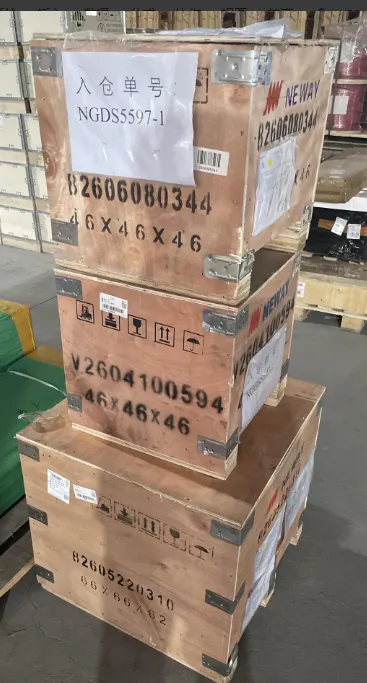
Cargo Information
| Detail | Description |
|---|---|
| Commodity | Industrial valves (gate valves, ball valves, check valves) |
| HS Code | 8481.80 |
| Quantity | 58 cartons on 2 pallets |
| Total Volume | 8.6 CBM |
| Total Weight | 1,920 kg |
| Packaging | Plywood crates with foam cushioning inside cartons |
| Incoterm | FOB Shenzhen |
| Service Type | LCL (Less than Container Load) |
| Origin | Shenzhen, China |
| Destination | Lagos, Nigeria (Tin Can Island Port) |
Why This Shipping Method
The client's initial inquiry was for a full 20GP container. After reviewing their cargo volume — just 8.6 CBM — we recommended LCL instead. Here's why:
- Cost efficiency: A full 20GP container from Shenzhen to Lagos would cost roughly $2,800–$3,200, while LCL for 8.6 CBM came in around $950–$1,100. For a first-time shipper testing the Nigeria market, this was a no-brainer.
- Flexibility: LCL allowed the client to ship a smaller trial batch. If the valves sold well, they could scale up to FCL on the next order.
- Weekly consolidation: Multiple LCL sailings from Shenzhen to Lagos every week meant no waiting for container load consolidation.
The only trade-off was longer deconsolidation time at Lagos port — a trade-off the client accepted given the significant savings.
Shipping Process
Step 1: Cargo Delivery & Export Customs Clearance (Shenzhen)
The supplier delivered the crated valves to our designated LCL warehouse in Shenzhen's Yantian district. Our warehouse team inspected all 58 cartons for quantity and external condition, then re-palletized them into 2 sturdy export-grade pallets. Export customs declaration was filed through China's Single Window system using the HS code 8481.80, and clearance was granted within 6 hours with no inspection triggered.
Step 2: Container Loading & Main Vessel
The pallets were consolidated into a 40GP container alongside cargo from three other shippers bound for Lagos. The container was loaded onto MSC's Asia-West Africa service at Yantian Port. The vessel sailed on a Wednesday with a direct routing: Shenzhen → Singapore (transshipment) → Tema → Lagos.
Step 3: Sea Transit
The total sea transit was approximately 22 days, including a 3-day transshipment stop in Singapore. We shared the bill of lading and weekly tracking updates with the client so they could prepare their import documents in parallel.
Step 4: Arrival & Deconsolidation at Tin Can Island Port
The vessel arrived at Apapa anchorage on day 24, but Apapa's notorious congestion meant a 9-day wait at anchor before berthing. We proactively diverted the container to Tin Can Island Port (Port Code: NITIN) — an alternative port about 8 km west of Apapa — which had a shorter waiting time. The container was discharged, and deconsolidation took place at the CFS (Container Freight Station) inside the port. Our local agent supervised the separation of our client's 2 pallets from the rest of the groupage cargo.
Step 5: SONCAP Certification & Customs Clearance
This was the trickiest part. Nigeria requires a SONCAP Certificate (Standards Organisation of Nigeria Conformity Assessment Program) for most industrial imports, including valves. Our client had not yet obtained it. We immediately engaged our Lagos-based SONCAP processing partner to handle the Product Certificate (PC) and Shipment Certificate (SC) applications.
Simultaneously, the customs declaration was filed through the NICIS II (Nigeria Integrated Customs Information System II) — the electronic clearance platform used by the Nigeria Customs Service. Our agent classified the valves under the correct HS code and declared the dutiable value based on the commercial invoice. Duty and 7.5% VAT were assessed at approximately 12% combined CIF value.
Step 6: Delivery
Once SONCAP was cleared and customs duty paid, the cargo was examined by Nigeria Customs (physical inspection rate for LCL is higher than FCL — roughly 30% of LCL shipments get inspected). The inspection passed with no discrepancies. The pallets were released, loaded onto a truck, and delivered to the client's warehouse in Ikeja, Lagos — approximately 2 hours from the port.
Challenges Encountered
- Lagos port congestion: Apapa port is infamous for its gridlock — trucks queue for days just to enter. Waiting time at anchorage regularly exceeds 7–10 days during peak periods.
- Missing SONCAP certificate: The client was unaware that valves required SONCAP. Applying after shipment arrival caused a 5-day delay in customs clearance.
- LCL deconsolidation tracking: Sharing a container with other shipments meant our cargo could not be processed independently — we had to wait for the entire container's cargo to be deconsolidated at the CFS.
- Physical inspection at customs: LCL shipments face a higher probability of physical examination at Nigerian ports, adding uncertainty to the release timeline.
How We Solved Them
| Challenge | Solution |
|---|---|
| Port congestion at Apapa | Proactively diverted the container to Tin Can Island Port, which had a shorter vessel queue. Tin Can handles about 40% of Lagos's container traffic and is often the smarter choice for LCL cargo. |
| Missing SONCAP | Our local compliance team fast-tracked the SONCAP application in 3 working days (normal timeline: 5–7 days) through our accredited partner in Lagos. The client now knows to apply for SONCAP before shipment departure. |
| Deconsolidation priority | We arranged with the CFS operator to prioritize our groupage lot by pre-submitting the cargo manifest and delivery order electronically, reducing CFS processing from 3 days to 1.5 days. |
| Physical inspection risk | Our customs clearance agent pre-cleaned all documentation — commercial invoice, packing list, bill of lading, and SONCAP certificate — to minimize red flags. The inspection itself took only half a day. |
Final Timeline
| Milestone | Date | Elapsed |
|---|---|---|
| Cargo arrived at Shenzhen warehouse | May 12, 2026 | Day 0 |
| Vessel departed Yantian, Shenzhen | May 14, 2026 | Day 2 |
| Transshipment at Singapore | May 20–22, 2026 | Day 8–10 |
| Arrived at Lagos anchorage | June 5, 2026 | Day 24 |
| Berthing & discharge at Tin Can Island Port | June 14, 2026 | Day 33 |
| CFS deconsolidation completed | June 16, 2026 | Day 35 |
| SONCAP certificate obtained | June 18, 2026 | Day 37 |
| Customs clearance & release | June 20, 2026 | Day 39 |
| Delivered to Ikeja warehouse | June 20, 2026 | Day 39 |
Total door-to-door transit: 39 days
Final Cost
| Cost Item | Amount (USD) |
|---|---|
| LCL freight (Shenzhen → Tin Can Island, 8.6 CBM) | $985 |
| THC & documentation at origin | $165 |
| CFS & deconsolidation at destination | $140 |
| SONCAP certificate (PC + SC, expedited) | $280 |
| Import duty & 7.5% VAT (≈12% of CIF $1,390) | $167 |
| Customs clearance agent fee | $120 |
| Truck delivery to Ikeja warehouse | $95 |
| Total | $1,952 |
The total logistics cost came to under $2,000 for a 1.9-ton shipment of industrial valves moving from a factory floor in Shenzhen to a warehouse in Lagos. By comparison, air freight for the same volume would have been $6,000–$8,000, and a full 20GP container would have cost roughly $3,200 — making LCL the clear winner for this shipment.
Customer Review
"This was our first time importing valves from China directly, and honestly, we were nervous about the whole process — especially the port congestion we kept hearing about. DTFU handled everything from warehouse receipt in Shenzhen to truck delivery at our door in Ikeja. The SONCAP issue was our fault for not preparing earlier, but their team sorted it out fast. Knowing that our next shipment can skip the learning curve is priceless. We're already planning a full 20GP order." — Chibuzo O., Procurement Manager, Lagos-based industrial equipment distributor
Lessons Learned
-
Plan SONCAP before the vessel sails, not after. Nigeria's SONCAP certificate is mandatory for valves and hundreds of other industrial products. Apply for the Product Certificate (valid for one year) first, then issue the Shipment Certificate per consignment. Doing this before departure saves 5–7 days at destination.
-
Tin Can Island Port > Apapa for LCL. For LCL cargo into Lagos, Tin Can Island Port consistently offers shorter anchorage waiting times compared to Apapa. Always discuss the port choice with your freight forwarder before booking.
-
LCL paperwork is heavier than FCL. Sharing a container means every co-loader's documents must align. A single mismatch in one shipper's paperwork can delay deconsolidation for everyone. Insist on clean, pre-vetted documentation from your forwarder.
-
A good local agent in Lagos is non-negotiable. Nigeria's customs environment — NICIS II, SONCAP, physical inspection rates — changes frequently. Having boots on the ground who know the CFS managers and customs officers makes the difference between a 39-day delivery and a 60-day nightmare.
-
Valves are in demand, but compliance matters. Nigeria's oil and gas sector drives steady demand for industrial valves, but customs pays close attention to safety-related imports. Proper HS classification (8481.80) and correct valuation on the invoice prevent costly demurrage and inspection delays.
For your next LCL shipment from China to Nigeria — or any destination across 120+ countries — contact DTFU Logistics for a tailored freight solution with real local expertise.