Customer Background
Our client, TecnoImport S.A. de C.V., is a small electronic products distributor based in San Salvador, El Salvador. They supply affordable tablets and mobile accessories to local retailers, schools, and government-contracted educational programs across the country. With a warehouse in Soyapango (just east of San Salvador), they typically import 100–300 units per month — too small for a full container but enough to justify regular shipments.
The owner, Mr. Carlos Henríquez, had been buying Inch Tablets (a budget-friendly Chinese brand) from a supplier in Shenzhen's Huaqiangbei electronics market for about a year. Initially, he used air freight for speed, but rising costs were eating into his already slim margins. He reached out to DTFU Logistics looking for a more cost-effective ocean freight solution without sacrificing reliability.
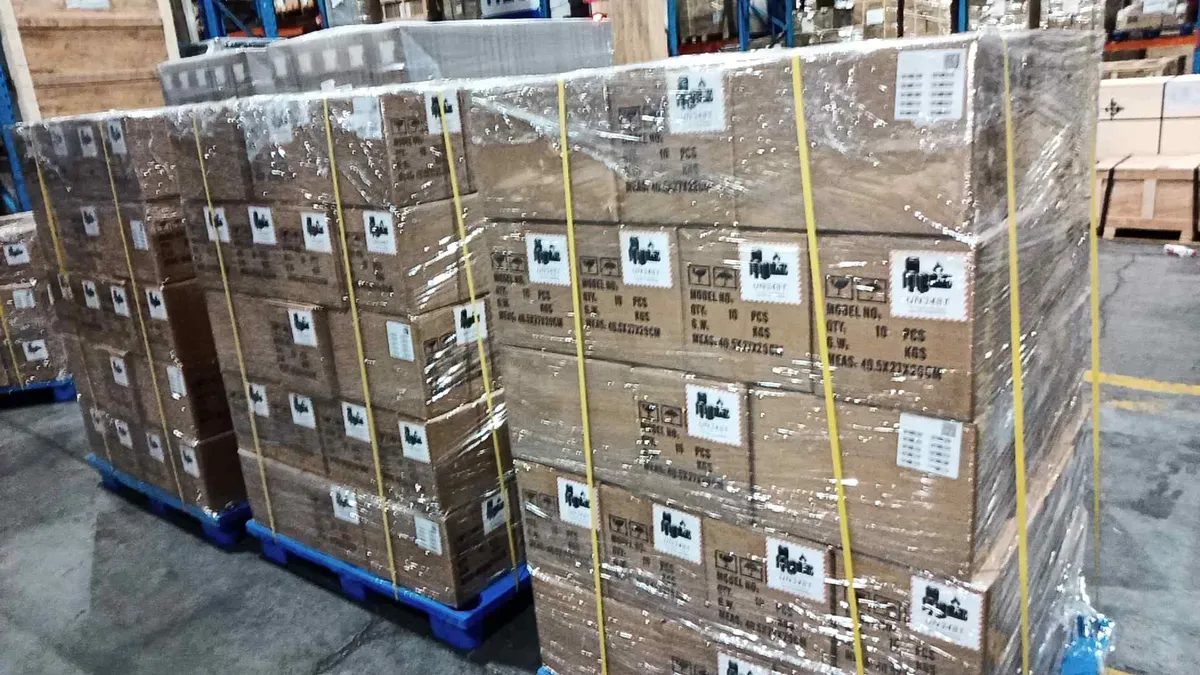
Cargo Information
| Item | Details |
|---|---|
| Product | Inch Tablets (7-inch and 10-inch models) |
| HS Code | 8471.30.0100 (Portable digital automatic data processing machines) |
| ECCN | 5A992.c (mass-market encryption, no license required) |
| Total Units | 240 tablets (mixed models) |
| Total Volume | 3.2 CBM (8 pallets, each 0.4 CBM) |
| Total Gross Weight | 420 kg |
| Packaging | Individual retail boxes → 30 boxes per master carton → 8 pallets, shrink-wrapped with corner guards |
| Incoterm | FOB Shenzhen |
Each tablet was valued at approximately USD 28 FOB, making the total cargo value roughly USD 6,720. This is a classic low-value, high-volume electronics shipment where freight cost can easily exceed 15–20% of the goods value if not optimized properly.
Why This Shipping Method
Mr. Henríquez had two realistic options for this shipment:
| Method | Cost Estimate (approx.) | Transit Time |
|---|---|---|
| Air Freight (direct to SAL) | ~USD 950–1,200 | 5–7 days |
| LCL Sea Freight via Acajutla | ~USD 180–250 | 28–35 days |
For a product with a unit cost of only USD 28, air freight would have added USD 4–5 per unit — an unacceptable 15–18% logistics cost ratio. LCL shipping, on the other hand, brought that down to under USD 1 per unit.
Beyond pure cost, LCL made sense because:
- Volume doesn't justify FCL — 3.2 CBM is well below the 20–25 CBM threshold for a full 20GP container.
- Central American small-market reality — Most importers in El Salvador, Nicaragua, and Honduras use LCL for electronics precisely because local demand is modest. Consolidation services from Shenzhen to Acajutla are well-established.
- Inventory flexibility — Mr. Henríquez could ship smaller, more frequent batches instead of tying up capital in a full container's worth of inventory.
Shipping Process
The end-to-end process unfolded as follows:
1. Supplier Coordination (Shenzhen)
The tablet supplier delivered all 240 units to DTFU Logistics' consolidation warehouse in Bao'an District, Shenzhen. Our warehouse team inspected each carton for damage, verified quantities against the packing list, and repalletized the cargo into 8 uniform pallets for better container utilization.
2. Export Customs Clearance
We classified the tablets under HS Code 8471.30.0100 and verified the ECCN classification — a critical step for any electronics export from China. Since the Inch Tablets use standard WPA2 encryption (mass-market), the ECCN fell under 5A992.c, which does not require an export license from Chinese authorities. We prepared the commercial invoice, packing list, and customs declaration, and submitted them via the Single Window system. Clearance took 1 day with no inspections.
3. LCL Consolidation & Stuffing
The 8 pallets were consolidated at the CFS (Container Freight Station) in Yantian Port, Shenzhen, sharing a 40GP container with other LCL cargoes — textiles bound for Guatemala and auto parts for Honduras. Our cargo was loaded last (near the door) with plywood dunnage separating it from heavier shipments to prevent crushing.
4. Main Vessel Voyage
The container was loaded onto MSC's "Ningbo" as part of the Andes Service (MSC's dedicated Asia–West Coast South America loop that also serves Central America). Route: Yantian → Shanghai (transshipment) → Manzanillo, Panama (transshipment) → Acajutla, El Salvador.
This transshipment-heavy routing is typical for LCL to smaller Central American ports — there are no direct sailings from China to Acajutla.
5. Arrival & Destination Clearance (Acajutla)
The container arrived at Puerto de Acajutla on schedule. Acajutla handles about 70% of El Salvador's maritime cargo, but it's a modest facility compared to ports like Balboa or Colon. Our local customs broker in El Salvador handled the import declaration, paid the applicable DV (STM) — 13% VAT (IVA) and 15% import duty on the CIF value. Total duties: approximately USD 1,442.
6. Final Mile Delivery
After customs release, the cargo was deconsolidated at the CFS in Acajutla, loaded onto a 5-ton truck, and delivered to Mr. Henríquez's warehouse in Soyapango — about 100 km from the port, a 1.5-hour drive via the CA-2 highway.
Challenges Encounterred
1. ECCN Classification Uncertainty
The supplier wasn't sure about encryption compliance. Inch Tablets run a modified Android OS with WPA2 Wi-Fi encryption — technically a "mass-market encryption commodity." Getting the supplier to provide the chipset specs and encryption details took three rounds of back-and-forth.
2. Transshipment Risk in Manzanillo
Manzanillo, Panama, is a busy transshipment hub. LCL cargo discharged for re-loading can occasionally be misrouted or delayed. We needed to closely monitor the container's movement through the Panamanian hub.
3. Cargo Weight Distribution
The 8 pallets of tablets were light (420 kg total) but occupied 3.2 CBM. Mixed into a container with heavier textiles and auto parts, there was a risk of the lighter pallets shifting or being crushed during rough seas.
4. Acajutla Port Delays
Acajutla is a single-berth port with limited crane capacity. Vessels sometimes face anchoring delays of 1–3 days during peak season. This was July — not peak season for Central America — but still a variable to manage.
How We Solved Them
ECCN Classification
We cross-referenced the tablet's specifications against the BIS (Bureau of Industry and Security) Commerce Control List and confirmed 5A992.c status. A technical explanation letter was prepared for Chinese customs to expedite the export declaration.
Transshipment Monitoring
We used our real-time tracking platform to monitor the container at each milestone. When the container arrived in Manzanillo, our operations team contacted the local stevedore to confirm the re-stow priority. The container was on the feeder vessel within 36 hours of discharge — no delays.
Packing & Dunnage
At the CFS, we instructed the warehouse team to place the 8 pallets on the door-side end of the container (the safest position for light cargo) with plywood sheets vertically separating them from the heavier auto parts cargo. Each pallet was additionally cross-banded with plastic strapping. No damage occurred during transit.
Port Contingency
We built in a 3-day buffer in the delivery timeline and communicated this to Mr. Henríquez upfront. Since his inventory was not critical, the buffer was acceptable. In the end, the vessel berthed without delay at Acajutla — no extra waiting time.
Final Timeline
| Milestone | Date |
|---|---|
| Cargo received at Shenzhen warehouse | June 3, 2026 |
| Export customs clearance completed | June 4, 2026 |
| Vessel departed Yantian | June 6, 2026 |
| Transshipment at Shanghai | June 8–9, 2026 |
| Transshipment at Manzanillo, Panama | June 20–21, 2026 |
| Arrival at Acajutla | June 28, 2026 |
| Customs release in El Salvador | July 1, 2026 |
| Delivered to Soyapango warehouse | July 1, 2026 |
Total transit time: 28 days from warehouse receipt to door delivery — right on the lower end of the expected 28–35 day range.
Final Cost
| Cost Item | Amount (USD) |
|---|---|
| LCL freight (3.2 CBM, Shenzhen → Acajutla) | $195 |
| CFS consolidation & palletizing | $48 |
| Export customs clearance (China) | $35 |
| BL documentation & telex release | $25 |
| Destination THC & CFS charges (Acajutla) | $88 |
| Customs brokerage (El Salvador) | $120 |
| Import duties & VAT (CIF basis) | $1,442 |
| Truck delivery (Acajutla → Soyapango) | $85 |
| Total logistics cost | $2,038 |
| Logistics cost per unit | ~$8.49 |
Note: The duties & VAT ($1,442) are taxes paid to the Salvadoran government, not logistics service fees. The pure freight & service cost was only $596 (all items except duties), or approximately $2.48 per unit — an extremely competitive rate for LCL electronics shipping from China to Central America.
Customer Review
"I was paying over $1,000 for air freight every month and it was killing my margins. DTFU Logistics showed me how LCL sea freight could work for my small tablet shipments. The process was smooth — they handled the ECCN paperwork, I didn't even know that was a thing. The tablets arrived in perfect condition, no damage at all. Total shipping cost was less than what I used to pay for air freight alone. I've already booked our next two shipments with them. Highly recommend for anyone importing electronics to El Salvador."
— Carlos Henríquez, Owner, TecnoImport S.A. de C.V., San Salvador
Lessons Learned
-
ECCN classification is non-negotiable for electronics. Even budget tablets from Huaqiangbei need proper encryption compliance documentation. A mass-market classification (5A992.c) is straightforward but requires the supplier to disclose chipset details — something they may be reluctant to share initially. Build this into the timeline.
-
LCL to Central America requires patience with transshipments. There are no direct China–Acajutla sailings. Two transshipments (Shanghai + Manzanillo) is normal. A 28-day transit from Shenzhen to El Salvador is actually excellent for LCL — plan for 30–35 days to be safe.
-
Acajutla is functional but basic. El Salvador's main Pacific port handles the volume but lacks the infrastructure of larger regional hubs. Working with an experienced local customs broker is essential to avoid clearance delays.
-
Dunnage matters more than you think. Mixing light electronics with heavy cargo in a shared LCL container can lead to crushed cartons. Simple plywood dividers and proper pallet placement solved this completely.
-
For small Central American importers, LCL is the sweet spot. Mr. Henríquez saved over 80% on freight costs compared to air freight. For tablets, laptops, and other consumer electronics with moderate unit value, LCL sea freight via Acajutla is the most economical choice for the Salvadoran market — as long as you have a partner who understands the nuances of consolidation, transshipment, and regional customs requirements.
Ready to ship electronics from China to El Salvador or other Central American destinations? Contact DTFU Logistics for a competitive LCL quote tailored to your cargo.