Customer Background
The customer is a consumer electronics importer based in the Chicago area. They distribute home-use IPL hair removal devices to online marketplace sellers across the United States, supplying the devices as a finished consumer product line.
The devices are sourced from a manufacturer in Shenzhen. The customer had previously moved smaller trial orders through express couriers. When order volume grew to a consolidated lot of 980 kg, they engaged DTFU Logistics for a full DDP door-to-door move, so that duty payment and FDA entry coordination were handled in one package rather than split across multiple service providers.
Cargo Information
| Item | Detail |
|---|---|
| Commodity | Home-use IPL (intense pulsed light) hair removal devices, each with a built-in rechargeable Li-ion battery |
| Mode | Sea freight DDP, LCL consolidation |
| Origin | Shenzhen, China |
| Destination | Glendale Heights, IL, United States (Chicago suburb) |
| Incoterm | DDP (door-to-door) |
| Gross weight | 980 kg |
| Volume | 3.5 CBM |
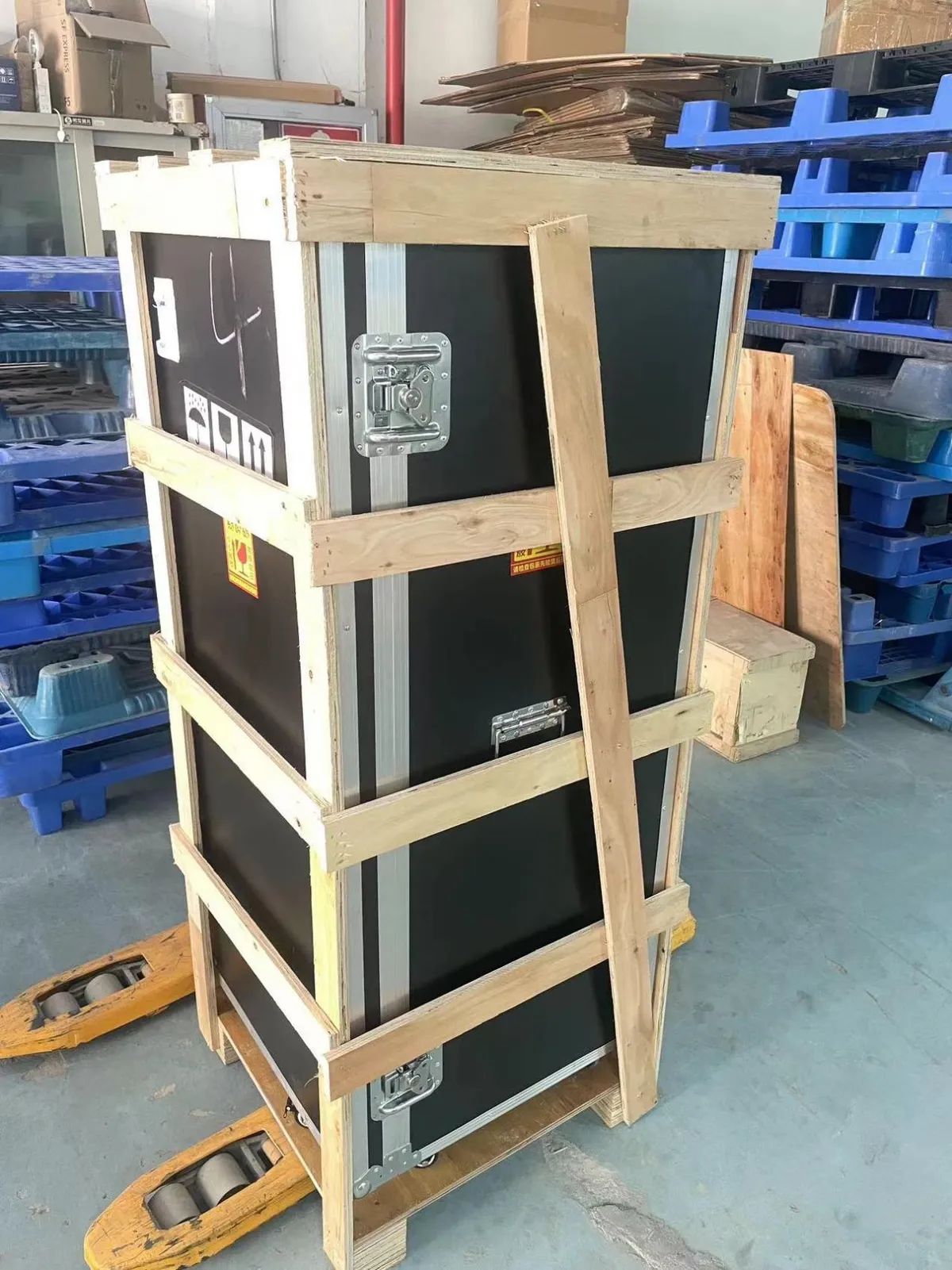
The shipment occupied 3.5 CBM of LCL space at 980 kg gross weight — a small, weight-moderate lot that cubes out near its weight. Each device contains a built-in rechargeable Li-ion battery, so every carton carried battery marking for the sea leg and the cartons were kept segregated within the LCL load. As a home-use IPL device, the product is regulated as a Class II medical device under FDA product code OHT (21 CFR 878.4810), which drove the compliance checks described below.
Why This Shipping Method
LCL consolidation was selected over a full-container move because the lot measured 3.5 CBM — roughly 5% of a 40HQ's usable volume. A full-container booking would have priced the unused space into the freight; LCL billed only the occupied cube, with the consignment sharing the container with other shippers' cargo for the West Coast leg.
Sea freight was chosen over air freight on cost. At 980 kg, the air alternative would have carried the device volume and the battery premium (IATA DGR, UN3481) at a rate several times the ocean figure, and the customer's stock position did not require that speed. A 30-day door-to-door window was acceptable for a restock lot feeding online marketplace listings.
The DDP structure was the material factor for this customer. Under DDP, DTFU arranged a U.S. Importer of Record with a continuous customs bond, filed the entry, and settled duty at arrival. For an FDA-regulated device, this placed the registration/listing verification and the Form FDA 2877 coordination inside the same package rather than leaving them to the customer's own broker.
Shipping Process
Step 1 — Cargo collection and consolidation (Shenzhen)
The cargo was collected from the manufacturer in Shenzhen and received at the consolidation point. Gross weight and volume were verified at 980 kg and 3.5 CBM against the booking. Each carton was checked for battery marking before it was accepted into the load.
Step 2 — FDA compliance verification before lading
The manufacturer's 510(k) clearance (K number) for product code OHT was verified, along with an active FDA establishment registration and device listing. The Form FDA 2877 radiation declaration was prepared for entry because the device emits optical radiation. All three checks were closed before the container was laded.
Step 3 — Battery DG review and segregation
The built-in batteries were classified for the sea leg as dangerous goods under IMDG Class 9 (UN3481 — lithium-ion batteries contained in equipment). Battery-marked cartons were segregated from non-battery cargo in the LCL load, and the DG declaration was issued so the container's paperwork matched the manifest.
Step 4 — Export customs declaration and ISF filing
The export declaration was filed through the China Customs single window and cleared the same day. The Importer Security Filing (ISF) "10+2" was filed 24 hours before vessel lading with the stuffing location and consolidator data captured at the consolidation point.
Step 5 — Ocean LCL leg (Shenzhen → West Coast)
The container was stuffed on the weekly LCL schedule and loaded on a transpacific service from a West Coast-bound port. The ocean crossing took 12 days.
Step 6 — U.S. clearance, FDA entry, and DDP settlement
On discharge, the U.S. entry was filed by DTFU's licensed customs broker under the arranged Importer of Record and continuous bond. The FDA line released with the entry once the registration/listing data and Form FDA 2877 were confirmed. Duty was settled at entry within the DDP package.
Step 7 — Inland truck to Glendale Heights
A truck was dispatched from the West Coast port and the devices were delivered to the customer's warehouse in Glendale Heights, Illinois.
Challenges Encountered
1. FDA device clearance and radiation-form verification before lading
A home-use IPL device is regulated as a Class II medical device under FDA product code OHT. Entry requires the manufacturer's 510(k) clearance, an active FDA establishment registration and device listing, and a Form FDA 2877 radiation declaration on entry because the device emits optical radiation. None of these can be retrofitted once the cargo is in transit — a missing K number holds the FDA line at the border regardless of the freight status.
2. Li-ion battery DG handling on the LCL sea leg
Each device contains a built-in rechargeable Li-ion battery. On the sea leg this is a dangerous good under IMDG Class 9 (UN3481). Battery-marked cartons, the DG declaration, and segregation within the LCL container all had to be reconciled before the load closed, and the DG paperwork had to match the manifest at both origin and destination.
3. DDP importer-of-record and tariff settlement
DDP for a U.S. entry requires a U.S. entity to act as Importer of Record holding a continuous bond; a foreign forwarder cannot assume that role directly. The duty and tariff settlement at entry also had to be funded and declared on the entry, which for an FDA-regulated device includes the device HTS line and its ad valorem duty.
How We Solved Them
For the FDA compliance requirement:
The manufacturer's 510(k) K number, FDA establishment registration, and device listing were verified before the cargo was laded. The Form FDA 2877 radiation declaration was prepared in advance and forwarded with the entry documents. On arrival, the FDA line released with the rest of the container without a hold.
For the battery DG requirement:
The built-in batteries were classified as IMDG Class 9, UN3481. Cartons were marked accordingly and segregated from non-battery cargo within the LCL load, and the DG declaration was issued so the container's paperwork matched the manifest at both origin and destination.
For the DDP importer-of-record requirement:
A U.S. entity was arranged to act as Importer of Record under a continuous bond for the entry. The ISF was filed 24 hours before lading, and duty was settled at entry within the DDP package, giving the customer a single billed figure covering freight, FDA coordination, and tariffs.
Final Timeline
| Milestone | Timing |
|---|---|
| Cargo collected from manufacturer, Shenzhen consolidation point | Day 1 |
| FDA compliance verification (510(k), registration/listing, Form FDA 2877) | Day 2 |
| Battery DG review and carton segregation | Day 3 |
| Export customs declaration (Shenzhen) | Day 4 |
| ISF filing (24-hour pre-lading rule) | Day 5 |
| LCL container stuffing and vessel departure | Day 7 |
| Arrival West Coast port (12-day ocean leg) | Day 19 |
| Discharge; U.S. entry and FDA entry filing | Day 20 |
| CBP and FDA release | Day 23 |
| Inland truck dispatch | Day 24 |
| Delivery to Glendale Heights, IL | Day 30 |
Total door-to-door transit time: 30 days
Final Cost
| Item | Cost (USD) |
|---|---|
| Ocean LCL freight | $350 |
| Origin handling | $180 |
| ISF filing | $45 |
| U.S. clearance and FDA entry coordination | $180 |
| DDP duty and tariff settlement | $420 |
| Truck to Glendale Heights | $260 |
| Total door-to-door | $1,435 |
Note: figures reflect the spot rates for this shipment (July 2026) and vary with season, fuel surcharge, and carrier capacity. The DDP duty and tariff settlement reflects the assessed ad valorem duty on the device entry, settled at arrival by the U.S. Importer of Record.
Customer Review
"The FDA documentation was checked before the container loaded, so the entry cleared without a hold and the devices were released with the rest of the LCL shipment. The battery cartons were separated in the consolidation and the IMDG paperwork matched the manifest. Duty and the FDA entry work were covered inside the DDP package, and the cargo delivered in Glendale Heights on the scheduled day."
— The customer's import operations manager, Glendale Heights, IL
Lessons Learned
- FDA device compliance is a before-lading gate, not an entry-time task. The 510(k) K number, establishment registration, device listing, and Form FDA 2877 are conditions of release for a Class II device; a missing K number stops the border release no matter where the container sits.
- Battery-equipped devices make the sea leg a DG coordination point. IMDG Class 9 (UN3481) classification, battery-marked cartons, segregation in the LCL load, and a DG declaration that matches the manifest are separate checks that all have to close before the container is stuffed.
- DDP on FDA-regulated goods transfers importer responsibility. The U.S. Importer of Record and continuous bond holder carries the FDA and tariff liability; that role and the bond need to be arranged before lading, not discovered at entry.
- For a small device lot, LCL keeps the freight line minor while compliance does the work. At 3.5 CBM the ocean freight was a small item; ISF timing, FDA entry coordination, and the battery handling were the load-bearing parts of the move.