Customer Background
The customer is a housewares and foodservice importer based in the New York metropolitan area. They supply glassware and tabletop products to foodservice distributors, hospitality accounts, and independent retailers across the region. This shipment was the first container of a new private-label line of glass beaker drinking glasses manufactured in Guangdong.
The line had previously been sourced through domestic distributors. Direct importing was evaluated for the private-label SKU on landed-cost grounds, with the first container required to establish a repeatable baseline for per-unit cost and transit reliability. The order was placed on FOB any Chinese port terms, which left the load port open across multiple Chinese ports; in practice the container was stuffed at the factory in Guangdong, and Yantian was selected as the load port for an all-water East Coast service to New York.
Cargo Information
| Item | Detail |
|---|---|
| Commodity | Glass beaker drinking glasses (food-contact glassware, private label) |
| Mode | Ocean freight FCL |
| Origin | Yantian, China |
| Destination | New York, NY, United States (all-water via the Panama Canal) |
| Incoterm | FOB any Chinese port |
| Container | 1×20GP |
| Gross weight | 18,200 kg |
| Volume | 24 CBM |
| Pallets | 14 |
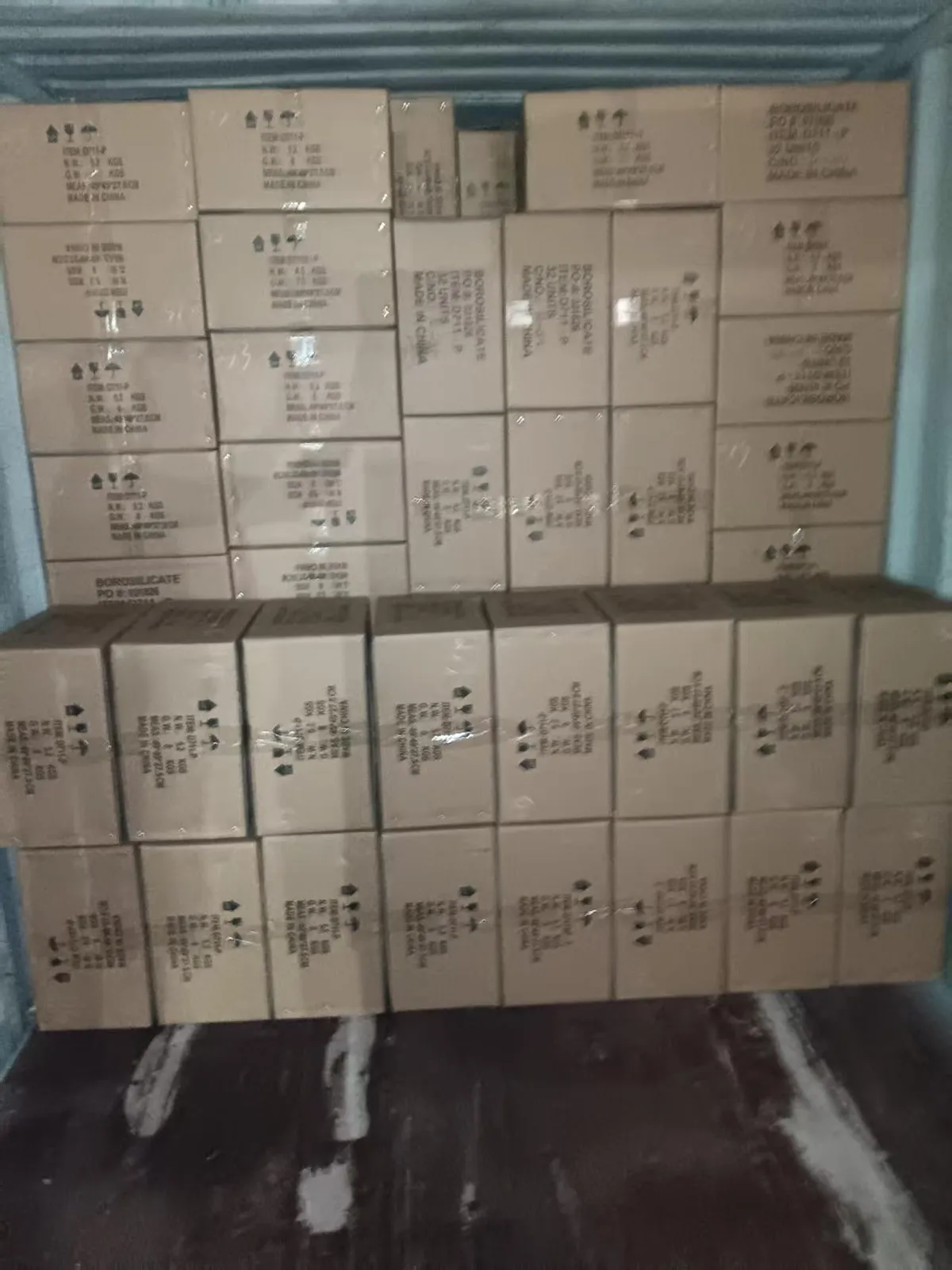
The shipment consisted of 14 pallets of beaker drinking glasses in corrugated cartons. Glassware is a weight-dense, low-cube commodity: at 18,200 kg the load ran near the practical payload of a 20GP, while 24 CBM filled roughly three-quarters of usable container volume. This is a weight-constrained load rather than a cube-constrained one. Each carton was fitted with individual cell dividers so the glasses did not contact one another directly in transit.
Why This Shipping Method
A 1×20GP full-container move was selected over LCL consolidation. At 24 CBM and 18,200 kg, the cargo sits beyond the practical LCL range for a fragile, weight-dense commodity. LCL would add a consolidation at origin and a de-consolidation at the destination warehouse — two additional handling events, each with breakage exposure — and the per-cubic-meter LCL rate would not improve on the flat FCL rate for a load that is heavy but not cube-large. FCL also gave control over the stuffing plan, which is where breakage on glass cargo is largely decided.
The routing used an all-water East Coast service via the Panama Canal to New York/New Jersey. The alternative — Yantian to Los Angeles/Long Beach, then rail inland — was rejected. Rail would add a vessel-to-rail transload, a multi-day rail transit with continuous vibration, and a second transfer at the destination ramp: three further handling events on a fragile cargo. Glassware is weight-dense and low-cube, so it does not gain the transit-time advantage from rail that light cargo does, and the door-to-door saving did not justify the added breakage exposure. The all-water service held total door-to-door transit to 32 days.
On the commercial side, the sale was concluded FOB any Chinese port. The load port was nominated as Yantian for this service; the stuffing location remained the factory in Guangdong. That distinction is not purely contractual — it determines what must be reported on the ISF, as set out below.
Shipping Process
Step 1 — Packing specification and factory stuffing (Guangdong)
Before the empty container was ordered, the packing and loading specification was agreed with the factory: corrugated cartons with individual cell dividers per glass, palletization with corner boards and full shrink-wrap, and a stacking limit of two pallet heights inside the container. The two-tier cap was the key structural decision — it prevents the lower tier from carrying the compressive load of a full column of heavy glass cartons. Heavier pallets were allocated to the lower tier, keeping the center of gravity low and central.
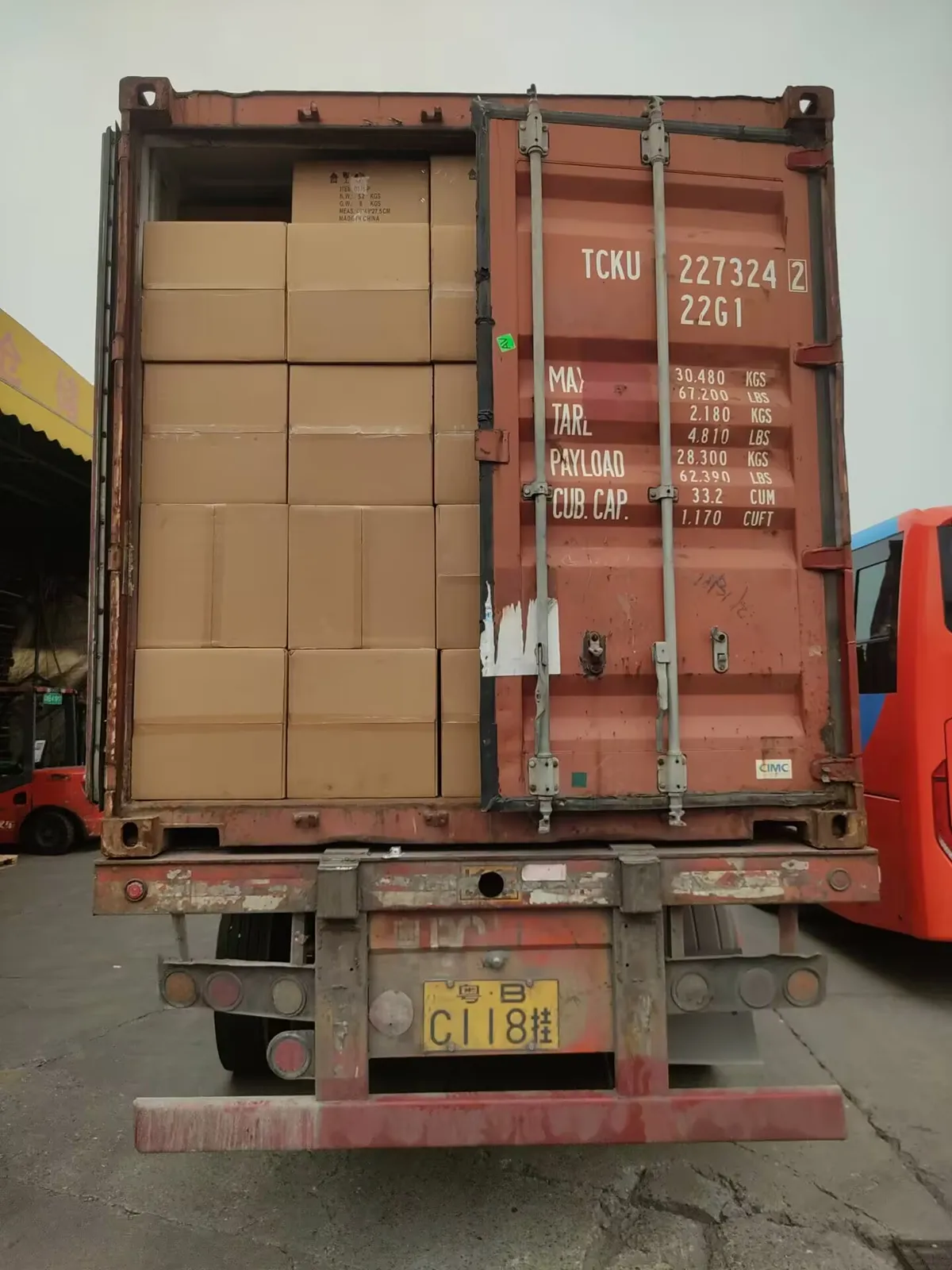
The empty 1×20GP was dropped at the factory. The 14 pallets were loaded in two tiers against the pre-agreed plan, the container was sealed with a high-security bolt seal, and the seal and container numbers were recorded.
Step 2 — Export customs clearance (Yantian)
The container was gated into Yantian terminal. The commercial invoice, packing list, and export declaration were filed, with unit values cross-checked against the packing list so the export data stayed consistent with the U.S. entry. The declaration cleared the same day.
Step 3 — Ocean freight (Yantian → New York/New Jersey)
The container loaded onto an all-water East Coast service, transiting the Panama Canal to the New York/New Jersey port complex. The ocean leg took 28 days.
Step 4 — ISF filing and U.S. entry
The Importer Security Filing ("10+2") was filed by DTFU's licensed U.S. customs broker no later than 24 hours before the vessel was laden at Yantian. The container stuffing location was reported as the factory address in Guangdong — not the load port — because the ISF requires the physical location where the container was packed. The entry, with the commercial documents and the FDA test report attached, was pre-filed so it could be presented for release on arrival.
Step 5 — Terminal handling and drayage (New York)
On arrival the container moved through terminal handling and was drayed to the customer's warehouse in the New York metro area. Unloading took approximately two hours; cartons were counted against the packing list and breakage was tallied at carton level before the seal number was reconciled against the bill of lading.
Challenges Encountered
1. Fragile-cargo loading and breakage control
Beaker drinking glasses are annealed soda-lime glass and fail in compression. Direct glass-to-glass contact, column stacking of heavy cartons, and vibration from additional handling events are the three dominant breakage vectors. On a load running at 18,200 kg in a 20GP, the compressive force across the lower tier is high, and a conventional full-height stacking plan would have placed several thousand kilograms of glass directly on top of the bottom cartons.
2. FDA food-contact documentation at entry
The glasses are food-contact articles. For glass and ceramic foodware, FDA compliance is assessed on lead and cadmium release from the glaze and body under FDA CPG 7117.06 and 7117.07. There is no "FDA certificate" for this category; the evidence that CBP will accept at entry is a third-party laboratory test report. A missing or non-compliant report can result in sample collection and detention, which converts a routine clearance into a multi-week hold with terminal storage charges.
3. ISF stuffing-data accuracy under a multi-port incoterm
The sale was concluded FOB any Chinese port, meaning the load port could have been any one of several Chinese ports. This creates a common filing error: reporting the stuffing location as the load port when the container was in fact packed at a supplier's factory. Under the ISF "10+2" rule, the container stuffing location field must state the physical address where the container was loaded, and a port-based entry when the stuffing happened elsewhere is a data discrepancy that CBP can cite. The discrepancy would surface only if the shipment were inspected or audited, at which point it becomes a $5,000-per-filing exposure.
How We Solved Them
For the fragile-cargo loading issue:
The packing and stacking specification was settled before the container was ordered. Individual cell dividers inside each carton removed glass-to-glass contact within the carton. Palletization used corner boards and full shrink-wrap to bind each pallet into a single rigid unit. The stacking limit of two pallet heights kept the compressive load on the lower tier within the carton's crush rating, and heavier pallets were placed below lighter ones to hold the center of gravity low. The two-tier plan was enforced at stuffing; no mid-container re-stacking was performed. The all-water routing kept the total number of handling events low, which was the operational reason it was chosen over rail. At unloading, carton breakage was counted against the packing list, and the recorded breakage rate came in below the threshold the customer had set before booking.
For the FDA food-contact documentation issue:
A third-party laboratory test report covering lead and cadmium release under CPG 7117.06/7117.07 was obtained from the manufacturer and reviewed before shipment. The report covered the glaze and body composition of the actual production batch. It was checked for completeness — batch identification, test method, and results against the FDA limits — and shipped with the commercial documents so it was available for the entry at first presentation. Because the documentation was complete at arrival, the entry was released without sample collection or detention.
For the ISF stuffing-data issue:
The ISF was filed 24 hours before the lading cut-off with the stuffing location reported as the factory address in Guangdong where the container was actually packed, not as the port of Yantian. The seller's data for the manufacturer and supplier fields was confirmed against the packing documents before filing. Because the FOB any Chinese port term does not change the physical stuffing location, the accurate factory address was used regardless of which port was nominated for loading. The customer was briefed on the four flexible ISF elements so any post-filing correction could be updated before the vessel reached the first U.S. port.
Final Timeline
| Milestone | Timing |
|---|---|
| Empty container drop and factory stuffing (Guangdong) | Day 1 |
| Container gated into Yantian terminal; export declaration filed | Day 2 |
| Export customs clearance granted | Day 3 |
| Vessel departure Yantian | Day 4 |
| Arrival New York/New Jersey | Day 32 |
| U.S. customs clearance released (pre-filed entry) | Day 32 |
| Terminal handling and drayage to customer warehouse | Day 32 |
Total door-to-door transit time: 32 days
Final Cost
| Item | Cost (USD) |
|---|---|
| Ocean freight (1×20GP, Yantian → New York) | $2,650 |
| Origin THC, port fees, documentation | $360 |
| Cargo insurance | $180 |
| ISF filing | $45 |
| U.S. customs clearance | $150 |
| New York terminal handling | $220 |
| Drayage (terminal → customer warehouse) | $300 |
| Total door-to-door | $3,905 |
Note: figures reflect the spot rates for this shipment (July 2026) and vary with season, fuel surcharge, and carrier capacity. U.S. import duty on the glassware HTS line is assessed separately at entry and was not included in the freight quote.
Customer Review
"The container cleared the 32-day door-to-door estimate and the breakage count at unloading was within the threshold we set at booking. The FDA test report was the only document the entry needed — no samples were pulled. The ISF was filed with the factory stuffing address rather than the port, which was the detail we would have gotten wrong on our own."
— The customer's supply chain manager, New York
Lessons Learned
- Breakage on glass cargo is decided at origin, not in transit. Cell dividers, corner boards, and a two-pallet-height stacking cap on a 20GP controlled breakage better than any transit-side measure could. The stacking limit trades container height for compression safety, which is the correct trade for a weight-dense glass load.
- FDA food-contact compliance for glassware is evidence-based, not certificate-based. There is no "FDA certificate"; the operative document is a third-party test report for lead/cadmium release per CPG 7117.06/7117.07. Reviewing the report against the production batch before shipment was what kept clearance to a single day.
- ISF stuffing data must reflect physical reality, regardless of the incoterm. An FOB any Chinese port sale does not permit a generic stuffing location. Reporting the factory address where the container was actually packed removes a discrepancy that would otherwise only surface at inspection or audit.
- The all-water East Coast route is the correct default for fragile heavy cargo. Fewer handling events outweighed the longer transit for an 18,200 kg glass load; the rail option's speed advantage was irrelevant to a cargo that was neither time-sensitive nor cube-limited at these figures.