Planning Shipping from Shanghai to Panama in 2026? As the world's busiest container port and the exit door for the Yangtze River Delta's vast manufacturing base, Shanghai is where thousands of FCL and LCL consignments begin their Pacific crossing every week — yet most importers researching this route only find generic "China to Panama" advice that ignores how their cargo actually departs. If you are sourcing from suppliers in Shanghai, Suzhou, Hangzhou, or Ningbo, understanding the true cost and timeline of this lane is the difference between a predictable landed cost and a surprise invoice that erases your margin.
In this 2026 guide, our team at DTFU Logistics — a FIATA and IATA certified freight forwarder moving cargo from China to 120+ countries — walks you through real sea freight rates from Shanghai to Balboa, Colón, and Manzanillo, air freight pricing from Shanghai Pudong (PVG), Panama customs duties and the 7% ITBMS tax, and the door-to-door DDP options that remove the headache entirely. By the end, you will know exactly how to compare quotes, which Panama destination suits your goods, and how to keep your total cost to a minimum. Sourcing from another Chinese port instead? Our country-wide Shipping From China to Panama guide compares rates from every major origin, so you can benchmark these Shanghai numbers against your own.
Sea Freight from Shanghai to Panama: Routes, Ports, and FCL vs. LCL Options
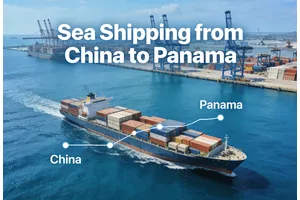
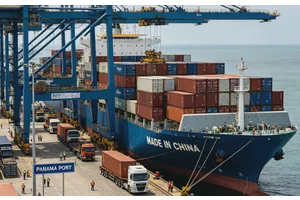
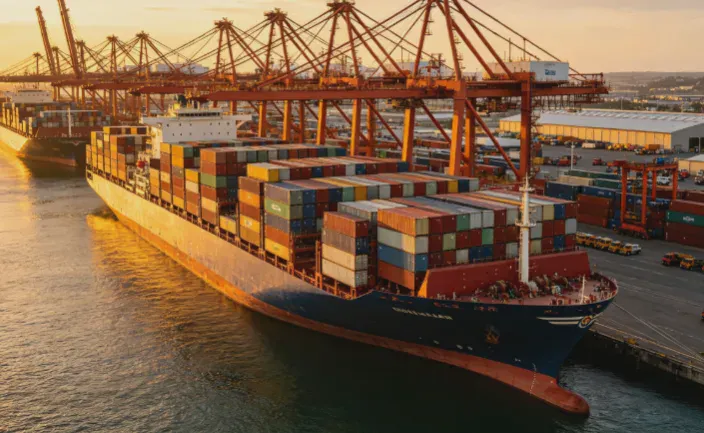
When shippers talk about Sea Freight from Shanghai to Panama, they are really choosing between two decisions: which Shanghai terminal to load from and which Panama port to target. On the Chinese side, your container typically loads at Waigaoqiao or the Yangshan Deep-Water Port, the two main terminals serving Shanghai. Cargo from Yangtze River Delta factories often trucks into Shanghai in a few hours, which is why so many China sourcing hubs consolidate there before the ocean leg.
On the Panama side, three terminals matter. Balboa, on the Pacific coast, is the closest arrival point for ships crossing the Pacific — no Panama Canal transit is required. Cristóbal and Manzanillo International Terminal (MIT), on the Atlantic/Caribbean side near the city of Colón, require the vessel to transit the Panama Canal. Choosing the right destination port changes both your freight rate and your transit time, a point we return to later.
Within sea freight, you will book either FCL (Full Container Load) — an exclusive 20ft or 40ft container — or LCL (Less than Container Load), where your cargo shares a container with other shippers and you pay only for the space you use. Most mainline carriers offer weekly sailings from Shanghai to Balboa; for the Atlantic-side terminals, your booking may route direct or via a transshipment hub, which can add a week to the schedule. Loading from Shenzhen, Ningbo, or Guangzhou instead? Our Sea Shipping from China to Panama guide breaks down direct and transshipment departures from every major Chinese hub.
How Much Does It Cost to Ship from Shanghai to Panama? (2026 FCL Rates)
The most common question we hear is simple: How much does it cost to ship from Shanghai to Panama? For full containers, the honest answer is a range, because ocean freight is only part of your cost. Here are the reference bands we see for 2026 from Shanghai's main terminals, consistent across the market for port-to-port moves:
| Destination Port (Panama) | 20ft Container (20GP) | 40ft / 40HQ Container | Estimated Transit |
|---|---|---|---|
| Balboa (Pacific side) | $2,650–$3,250 | $3,250–$4,200 | 30–36 days |
| Colón / Cristóbal (Atlantic side) | $2,750–$3,400 | $3,400–$4,300 | 32–38 days |
| Manzanillo (MIT) (Atlantic side) | $2,750–$3,450 | $3,400–$4,300 | 33–40 days |
These rates are base ocean freight and exclude origin local charges in Shanghai (terminal handling, documentation, and booking fees), destination terminal handling, customs clearance, duties, and inland trucking — easily CNY 1,500–2,000 (about $200–$280) at origin alone plus several hundred dollars more in Panama.
Why Freight Quotes Vary So Much
If you compare quotes and see 20ft prices from $1,500 to $4,000, nobody is trying to cheat you — yet. The spread comes from four variables: (1) season, since rates climb 20–40% between August and November and again around Chinese New Year; (2) carrier and service tier, as direct mainlines cost more than transshipment routings; (3) whether the quote is all-in or port-to-port; and (4) how close to sailing day you book. Our advice: never compare a port-to-port FOB quote with an all-in DDP quote. Ask every forwarder for a line-by-line breakdown so you are comparing the same scope. If you are still deciding between Incoterms, our DDP vs FOB: Which Option Saves Time and Reduces Hassle comparison shows exactly where responsibility and risk sit under each term.
Our Industry Insights: In our experience at DTFU Logistics, a 20ft container from Shanghai to Balboa that looks "cheap" at $1,800 on a spot-rate listing is rarely the real cost by the time you add Shanghai THC, export documentation, Panama terminal handling, and broker fees. We quote DDP all-in precisely so importers can compare the number that actually matters: the cost when cargo arrives at their warehouse.
LCL Shipping Cost from Shanghai to Panama per CBM: When Consolidation Wins
For shipments under roughly 12–15 cubic meters, paying for a full container is wasteful. LCL shipping cost from Shanghai to Panama per CBM typically runs $80–$150 per CBM, which makes it the most economical option for test orders, small restocks, and first-time importers. Your goods are consolidated at a Shanghai container freight station, loaded with other cargo, and deconsolidated at the destination.
The catch is time. Consolidation and deconsolidation add roughly 5–10 days to your total transit, because your cargo must wait for a container to fill at origin and be separated again at destination. You also pay a destination CFS (container freight station) handling fee. Here is the breakeven logic most guides skip:
| Volume | LCL @ $125/CBM | FCL 20ft (33 CBM capacity) | Verdict |
|---|---|---|---|
| 5 CBM | $625 | — | LCL clearly cheaper |
| 10 CBM | $1,250 | ~$2,900 | LCL cheaper in total, higher per-CBM |
| 15 CBM | $1,875 | ~$2,900 | FCL wins per unit |
Once your volume approaches 12–15 CBM, a dedicated 20ft FCL container delivers a lower cost per cubic meter even when it is not completely full — and your cargo arrives faster because it bypasses the deconsolidation warehouse.
Air Freight Cost from Shanghai (PVG) to Panama (PTY) per Kg
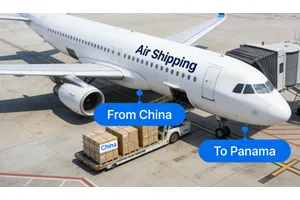
When speed beats cost — a seasonal restock, high-value electronics, or urgent samples — air freight from Shanghai Pudong (PVG) to Tocumen International Airport (PTY) in Panama City is the answer. Here are the current 2026 per-kilogram bands:
| Air Product | Rate per Kg | Transit Time | Best For |
|---|---|---|---|
| Standard Air Freight | $5.00–$9.00 | 4–7 days | 100–500 kg, high-value cargo |
| Consolidated Air | $6.00–$8.50 | 5–8 days | Smaller volumes pooling on one air waybill |
| Express Courier (DHL/FedEx/UPS) | $8.00–$12.00 | 2–5 days | Parcels under 100 kg, urgent documents, samples |
The Route Reality Nobody Tells You
There are no direct cargo flights from mainland China to Panama. Every PVG-to-PTY air shipment transits through a hub — most commonly Miami or Los Angeles in the United States, or Amsterdam and Paris CDG in Europe. The routing affects both price and time: US transits are usually faster but add security screening steps, while European transits can be a day or two slower yet sometimes cheaper. Budget this into your planning and always ask your forwarder which hub your airline uses. For air rates out of other Chinese gateways, see our Air Shipping from China to Panama overview.
Air freight is priced on chargeable weight — whichever is higher, your actual gross weight or your volumetric weight (length × width × height in cm ÷ 6,000). A 50 kg carton measuring 100 × 80 × 60 cm is charged as 80 kg. If your packaging is loose, you pay for air you did not use.
How Long Does Shipping from Shanghai to Panama Take? Transit Time by Mode
The second question every buyer asks is timing, and the honest answer depends on mode and destination:
| Shipping Method | Typical Transit Time |
|---|---|
| Sea FCL (Shanghai → Balboa) | 30–38 days |
| Sea FCL via Panama Canal (Colón / MIT) | 33–42 days |
| Sea LCL | 35–45 days (adds 5–10 for deconsolidation) |
| Sea Door-to-Door (DDP) | 35–45 days |
| Air Freight (PVG → PTY) | 4–7 days |
| Air Door-to-Door (DDP) | 5–10 days |
| Express Courier | 2–5 days |
For the FCL sea leg to Balboa, plan on 30–38 days from the Shanghai CY cut-off to discharge. If your destination sits on the Atlantic side, add 2–4 days for the Panama Canal transit. Beyond the ocean itself, your total timeline is shaped by Shanghai's sailing-day cut-off (miss it and you wait a week), Panama's customs window (typically 2–5 business days), peak-season congestion from September to December, and local holidays — Panama's November independence holidays and the rainy season (May–November) both slow port operations.
Door-to-Door Shipping from Shanghai to Panama: The DDP Process, Priced All-In
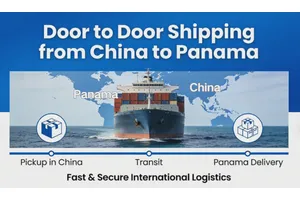
For importers without a dedicated logistics team or a Panama customs broker, door-to-door shipping from Shanghai to Panama under a DDP (Delivered Duty Paid) arrangement is the lowest-stress path. One price, one point of contact, and your supplier pickup to final delivery is handled end to end — the same trusted model we detail in our Door to Door Shipping from China to Panama service guide, executed here from Shanghai-area origins. A proper DDP service covers five stages:
- Supplier pickup — cargo is collected from your factory or warehouse in the Shanghai/Yangtze River Delta area and delivered to our consolidation warehouse or the port.
- Export customs clearance — China-side documentation and declarations completed on your behalf.
- International transportation — your sea or air freight leg from Shanghai to Panama.
- Panama import clearance — a licensed Panamanian customs broker files the import declaration, and all duties and the 7% ITBMS are paid.
- Last-mile delivery — cargo is trucked from the port or airport to your warehouse or final address in Panama.
What an All-In DDP Price Really Costs
For sea DDP, expect roughly $10.00–$15.00 per kg (all-in, 35–45 days); air DDP runs $12.00–$18.00 per kg (5–10 days). A point many first-time importers miss: the ocean freight itself is only 40–50% of the total DDP cost. The rest is origin handling, Panama customs brokerage, import duties averaging about 12%, the 7% ITBMS, destination terminal handling, and inland trucking. That is why a "cheap" $2,500 port-to-port quote can easily become a $6,000+ landed cost at your door — and why we always recommend comparing all-in numbers.
Real-Life Scenario: A Panama City distributor we work with imports decorative home goods from three suppliers in the Shanghai area. They tried booking each supplier separately via LCL and paying a local broker at destination. By switching to a single DDP consolidation — all three factories delivering to our Shanghai warehouse, one 20ft container, one invoice — their door-to-door cost per cubic meter dropped by roughly 25%, and their customs delays all but disappeared because every shipment cleared under the same compliant documentation set.
Panama Customs Clearance and Import Duties: Taxes on Goods from Shanghai
Clearing customs in Panama is straightforward once you know the rules. The authority is the Autoridad Nacional de Aduanas (ANA), and every commercial import must be handled by a licensed customs broker (Agente de Aduanas) — you cannot self-declare as an importer. Your broker files the import declaration against these standard documents: the Commercial Invoice, Packing List, Bill of Lading (sea) or Air Waybill (air), Certificate of Origin, and any product-specific permits such as phyto-sanitary certificates for food or a Certificate of Free Sale for cosmetics and medical devices.
Import duties in Panama are ad valorem, typically 0–15% of the CIF value (Cost + Insurance + Freight), averaging around 12%. On top of duty, Panama applies a 7% ITBMS — the country's value-added tax — calculated on the CIF value plus the duty amount. Here is how the two taxes stack for a typical electronics shipment:
| Shipment (CIF $10,000, electronics) | Amount |
|---|---|
| Import duty (8%) | $800 |
| ITBMS (7% on $10,000 + $800) | $756 |
| Total import tax | $1,556 (≈15.6% of CIF) |
Because duty bands differ by product — machinery in Chapter 84 can enter at 0–5%, while furniture and textiles in Chapters 94 and 61–64 attract 10–15% — your HS code classification directly changes your landed cost. Confirm your HS codes with your broker before you ship; a wrong code is the most common cause of inspection holds that add 2–5 days at the port.
Shanghai to Balboa or Colón? Choosing the Right Panama Destination and the Colon Free Zone (ZLC)
Panama is two logistics worlds divided by the Canal, and choosing correctly saves both time and money. If your final market is Panama City or the Pacific side, ship to Balboa — your vessel crosses the Pacific and discharges without entering the Canal, keeping transit shorter. If your warehouse or customers are on the Caribbean coast or inside the Colon Free Trade Zone, discharge at Colón or Manzanillo (MIT); the Canal transit is baked into your freight rate, but you save the inland trucking cost of hauling cargo across the isthmus.
That second option connects to one of Panama's most powerful advantages for importers: the Colon Free Trade Zone (ZLC), the largest free zone in the Western Hemisphere. Goods entering ZLC for storage and re-export are exempt from import duties and ITBMS. You can land a full container from Shanghai, warehouse it duty-free, and then either re-export smaller batches to Costa Rica, Colombia, Venezuela, or the Caribbean — or release goods into Panama's domestic market incrementally, paying duty only on what actually enters the local economy. Because this duty-deferral model spans the whole isthmus, DTFU also routes regional cargo across the hemisphere — our Shipping From China to Americas hub page maps every market this gateway can feed.
Our Industry Insights: For a client distributing auto parts across Central America, we route full containers from Shanghai into the Colon Free Zone instead of Balboa. Instead of paying roughly 15–20% in duties and ITBMS upfront on every container, they now defer those taxes until parts are pulled for a specific market. That released meaningful working capital and let them hold regional stock closer to buyers. If you are serving more than just the Panama domestic market, this model is worth modeling before you commit to a single destination port.
Cheapest Way to Ship from Shanghai to Panama
There is no single cheapest method — it depends on volume, product, and urgency. But across every shipping mode from Shanghai to Panama, seven strategies consistently cut cost:
- Match volume to method. Under ~12 CBM use LCL; above that, book a 20ft FCL for a lower cost per cubic meter.
- Book 3–4 weeks ahead. Rates jump 20–40% from August to November and again before Chinese New Year; early booking locks space and pre-peak pricing.
- Ship in the soft window. March through August typically offers rates 20–40% below peak season.
- Optimize packaging. For LCL and air, every cubic meter counts — trim dead space to cut volumetric weight.
- Discharge at the port nearest your warehouse. Never default to the cheapest port-to-port quote; compare total port-to-door cost.
- Use ZLC to defer duties. Warehouse in the Colon Free Zone and release stock in batches to protect working capital.
- Consolidate suppliers. If you source from three factories across the Yangtze Delta, merge them into one container instead of paying LCL rates three times.
Our Industry Insights: The forwarder you choose is the seventh lever most people ignore. A Class-A forwarder with direct carrier contracts — like DTFU Logistics, with FIATA and IATA certification and pickup capability in Shanghai and across China — typically secures rates 10–15% below spot market and prevents the expensive mistakes (wrong HS codes, missing documents, surprise demurrage) that quietly erase whatever a low quote appeared to save.
FAQs
How much does it cost to ship a container from Shanghai to Panama in 2026?
A 20ft container from Shanghai to Balboa or Colón generally runs $2,650–$3,250, and a 40ft/40HQ container $3,250–$4,200, port-to-port. These base rates exclude local charges, customs clearance, duties, and inland delivery — so always request an all-in quote to compare apples to apples.
How long does shipping from Shanghai to Panama take by sea and by air?
Sea freight FCL takes 30–38 days to Balboa (add 2–4 days if your destination is on the Atlantic side via the Canal). LCL adds 5–10 days for consolidation. Air freight from PVG reaches PTY in 4–7 days.
What is the cheapest way to ship from Shanghai to Panama?
For large volume, sea freight FCL is cheapest per unit. For shipments under ~12 CBM, LCL is the low absolute-cost choice. Air freight is only economical for urgent or high-value cargo.
What documents do I need for sea and air shipments from Shanghai to Panama?
Commercial invoice, packing list, Bill of Lading (sea) or Air Waybill (air), Certificate of Origin, and the import declaration filed by your Panama customs broker. Restricted goods may also need phyto-sanitary certificates or a Certificate of Free Sale.
Whether you are shipping a full container of furniture to a Panama City retailer or small e-commerce batches to the Colon Free Zone, the winning formula is the same: choose the right Shanghai terminal, the right Panama destination, and the right Incoterm — then compare all-in costs, not headline freight rates. With transparent pricing, direct carrier contracts, and pickup capability across China's ports, DTFU Logistics makes shipping from Shanghai to Panama simple, predictable, and cost-effective. Reach out to our team today for a free, no-hidden-fee quote on your next shipment.