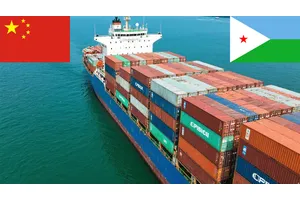
If you're sourcing goods from China's manufacturing heartland and need them delivered to the Horn of Africa, shipping from Shanghai to Djibouti is one of the most efficient freight corridors you can tap into. Shanghai — the world's busiest container port by throughput — offers multiple weekly direct sailings to the Port of Djibouti, the largest deep-water port in East Africa and the undisputed maritime gateway for the region. A direct container from Shanghai's Waigaoqiao or Yangshan terminals can reach Djibouti's Doraleh Container Terminal in as little as 19 days. But efficiency on this route depends on choices you make well before a container leaves the dock: carrier selection, Incoterms, seasonal timing, and whether your cargo's true destination is Djibouti City itself or Addis Ababa, 750 kilometers inland.
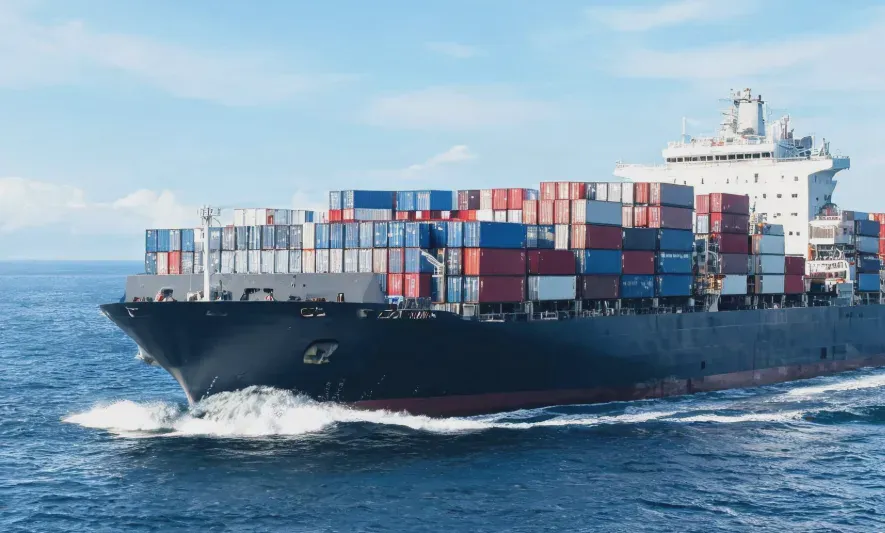
In this guide, we draw on over a decade of hands-on freight forwarding experience to give you the complete picture. You'll get Shanghai-specific cost breakdowns for FCL, LCL, and air freight, carrier-by-carrier transit time comparisons, a practical walkthrough of DDP door-to-door logistics, Djibouti customs requirements — including the often-overlooked ECTN certificate — and a detailed look at moving cargo onward to Ethiopia. Whether you're shipping construction materials, electronics, machinery, or consumer goods, this is the reference we wish every first-time shipper on this route had before they booked.
Sea Freight from Shanghai to Djibouti: FCL & LCL Shipping Options
Shanghai's sheer sailing frequency gives it a structural advantage over every other Chinese port for the Djibouti route. While this guide focuses on Shanghai departures, our dedicated Shipping From China To Djibouti page covers service options from all major Chinese ports — Shenzhen, Ningbo, Guangzhou, and Qingdao included. During peak weeks, we count six or more vessel departures from Shanghai to Djibouti across major carriers — something Ningbo, Shenzhen, or Qingdao simply cannot match. More sailings mean more space availability, more pricing competition among carriers, and shorter waiting times if your cargo misses one cutoff.
FCL (Full Container Load) from Shanghai
If your shipment exceeds roughly 14 cubic meters or 12 metric tons, FCL shipping from Shanghai to Djibouti is almost certainly your most cost-effective option. You rent the entire container, it gets sealed at your supplier's facility (or our consolidation warehouse near Waigaoqiao), and it isn't opened again until it reaches Djibouti customs.
Here's how the container types break down for this route, based on the payload constraints you'll encounter at both Shanghai and Djibouti:
| Container Type | Typical Capacity | Approx. Max Payload | Best For |
|---|---|---|---|
| 20ft GP (20GP) | 33 CBM | 21–22 tons | Small-to-medium machinery, dense bulk goods, first-time FCL shipments |
| 40ft GP (40GP) | 67 CBM | 25–26 tons | Furniture, textiles, consumer goods, mixed commercial cargo |
| 40ft High Cube (40HQ) | 76 CBM | 25–26 tons | Bulky but lighter goods — insulation materials, packaged appliances, plastic products |
One operational detail that matters specifically from Shanghai: the port's weight limits and crane specifications are generous, but Djibouti's Doraleh Terminal imposes its own handling constraints. In practice, net cargo weight should not exceed 21 tons per 20ft container to avoid unloading delays or surcharges at the destination side. We've had clients who packed 24 tons into a 20GP at Yangshan only to face demurrage charges in Djibouti while arranging special-handling equipment. Don't let that be you.
Direct transit times from Shanghai to Djibouti vary by carrier and service:
| Carrier / Service | Routing | Typical Transit | Notes |
|---|---|---|---|
| CMA CGM (MEX1/REX2) | Direct | 19–23 days | Fastest option; calls Waigaoqiao Phase 2 |
| COSCO | Direct | 20–24 days | Strong schedule reliability; good Ethiopia transit coordination |
| Maersk | Direct | 19–23 days | Competitive on 40HQ rates; inland Ethiopia partnerships |
| MSC / PIL / HMM | 1-stop (Singapore / Colombo) | 25–30 days | Wider schedule availability, slightly lower base rates |
The difference between 19 days and 30 days may not sound dramatic on paper, but for an importer managing inventory for a construction project or retail season in Addis Ababa, those 11 days can make or break a timeline.
LCL (Less than Container Load) from Shanghai
If your shipment is smaller — say 2 to 10 CBM — LCL shipping from Shanghai to Djibouti lets you pay only for the space you use without subsidizing an empty container. Your cargo is consolidated with other shipments at a Shanghai CFS (Container Freight Station), loaded into a shared container, and deconsolidated upon arrival at Djibouti.
LCL transit from Shanghai to Djibouti typically runs 22 to 35 days, reflecting the extra time for consolidation before sailing and deconsolidation after arrival. Costs range from approximately USD 85 to USD 180 per CBM, depending on cargo type, season, and destination charges.
Here's the trap many first-time LCL shippers miss: destination CFS charges at the Port of Djibouti — covering container unloading, sorting, and storage — regularly account for about 15% of total LCL shipping costs, yet they're rarely quoted upfront in the initial price-per-CBM figure. When comparing LCL quotes, always ask: "Does this include Djibouti-side CFS and handling?" If the answer is vague, budget an extra 15–20% on top of the quoted rate.
FCL vs LCL: Decision Thresholds
| Factor | FCL | LCL |
|---|---|---|
| Volume threshold | >14 CBM or >12 tons | 2–10 CBM |
| Cost per unit | Lower at volume | Higher per CBM, but no unused-space waste |
| Transit speed | 19–23 days (direct) | 22–35 days (consolidation + deconsolidation) |
| Damage risk | Lower (sealed, single-shipper container) | Higher (multiple handling points) |
| Flexibility | Fixed schedule, dedicated space | Ship as needed, no minimum commitment |
| Best for | Bulk machinery, construction materials, large commercial orders | Trial orders, mixed-SKU shipments, SME importers, furniture & textiles samples |
Air Freight from Shanghai to Djibouti: Fast Shipping for Urgent Cargo
When time is the constraint, air freight from Shanghai to Djibouti offers a radically different speed tier. Departing from Shanghai Pudong International Airport (PVG) — China's largest air cargo hub — shipments typically reach Djibouti–Ambouli International Airport (JIB) in 3 to 7 days, including one transit stop through a Middle Eastern hub like Dubai (DXB), Doha (DOH), or Addis Ababa (ADD). For a more detailed look at air cargo options on this corridor — including airline recommendations and rate negotiation tips — see our dedicated Air Shipping From China Djibouti guide.
Air freight Shanghai to Djibouti cost per kg breaks down by weight tier:
| Weight Tier | Approx. Cost (USD/kg) | Typical Scenario |
|---|---|---|
| 45–100 kg | USD 6.00–10.00 | Samples, documents, small urgent parcels |
| 100–300 kg | USD 5.00–8.00 | Small consignments of electronics, medical supplies |
| 300–1,000 kg | USD 4.00–7.00 | Mid-volume time-sensitive shipments, spare parts |
| 1,000+ kg | USD 3.50–6.00 | Larger urgent shipments (negotiable with forwarders) |
Chargeable weight is the key concept to understand here: airlines charge based on whichever is higher — actual gross weight or volumetric weight (length × width × height in cm ÷ 6,000). A shipment of lightweight but bulky packaging materials might weigh 200 kg on the scale but occupy 5 CBM, giving a volumetric weight of 833 kg. You'll pay for 833 kg, not 200 kg. Experienced forwarders optimize packaging density to close that gap.
For shipping electronics from Shanghai to Djibouti, air freight is often the default choice. High-value, compact, and susceptible to humidity damage during long ocean transits, electronics shipments — smartphones, components, medical devices — justify the air premium. We've moved consignments of circuit-board assemblies from Shanghai's Zhangjiang tech zone to Djibouti City in under 96 hours door-to-door, something no ocean service can touch.
Air vs. Sea from Shanghai to Djibouti
| Criterion | Sea Freight (FCL) | Air Freight |
|---|---|---|
| Transit time | 19–35 days | 3–7 days |
| Cost per kg (typical) | USD 0.40–0.80 | USD 4.00–8.00 |
| Cost per CBM (typical) | USD 85–180 | USD 600–1,200+ |
| Best cargo | Heavy, bulky, non-urgent | Light, valuable, time-sensitive |
| Shanghai departure | Waigaoqiao / Yangshan terminals | Pudong International (PVG) |
| Djibouti arrival | Doraleh Container Terminal | Ambouli International (JIB) |
The economics are straightforward: at roughly 10× the cost per kilogram, air freight makes sense when the cargo's value density, urgency, or shelf-life sensitivity outweighs the freight premium. For a container of ceramic tiles headed to a Djibouti construction project, ocean is the only rational choice. For 200 kg of replacement machinery parts that are holding up a factory line in Addis Ababa, air freight pays for itself in avoided downtime.
Shanghai to Djibouti Shipping Costs: Complete 2026 Price Breakdown
The cost to ship from Shanghai to Djibouti isn't a single number — it's a stack of line items, some of which compe*****s conveniently leave out of their quotes. Here's what actually goes into the total. For a broader price comparison across all Chinese departure ports (not just Shanghai), our Shipping Cost from China to Djibouti analysis provides additional rate benchmarks and seasonal trend data.
FCL Container Rates (Shanghai → Djibouti, 2026 Reference)
| Container Type | Ocean Freight Range | Notes |
|---|---|---|
| 20ft GP | USD 2,200–3,600 | Base ocean freight only; excludes all local charges |
| 40ft GP | USD 3,200–5,000 | Per-container economics favor 40ft at higher volumes |
| 40ft High Cube | USD 3,500–5,500 | Slightly higher than standard 40ft; best for voluminous cargo |
These are FCL container rate Shanghai to Djibouti ranges as of mid-2026. Actual rates fluctuate weekly based on the Shanghai Containerized Freight Index (SCFI), carrier General Rate Increases (GRI), and Red Sea security conditions affecting the Bab el-Mandeb transit.
LCL Rates (Shanghai → Djibouti, 2026 Reference)
For smaller shipments, expect to pay USD 85–180 per CBM for the ocean leg. But the LCL shipping Shanghai to Djibouti price that matters is the all-in figure, which layers on Shanghai-side CFS consolidation fees, documentation charges, and Djibouti-side deconsolidation — the last of which can add USD 30–60 per CBM depending on the forwarder.
The Hidden Cost Stack (Often Missing from Quotes)
When comparing shipping quotes, these charges exist on virtually every Shanghai→Djibouti shipment but aren't always disclosed in the first-round price:
| Charge | Description | Approx. Impact |
|---|---|---|
| BAF (Bunker Adjustment Factor) | Fuel surcharge; fluctuates with oil prices | 5–15% of base ocean freight |
| CAF (Currency Adjustment Factor) | Compensates carrier for USD/CNY exchange rate shifts | 1–3% of ocean freight |
| PCS (Port Congestion Surcharge) | Applied when Djibouti berth wait times rise (2024 saw 3+ day waits in some months) | Variable; can reach USD 200–500/container |
| THC (Terminal Handling Charges) | Paid at both Shanghai and Djibouti ends | USD 150–300 per end, per container |
| ECTN Certificate | Mandatory for Djibouti; arranged by forwarder | USD 100–250 per shipment |
| Customs inspection | Djibouti Customs inspects 100% of documentation; discrepancies trigger 1–3% cargo value penalty | 1–3% of declared value if flagged |
| Demurrage & detention | Container usage beyond free days at Djibouti | USD 30–80/day after free period (typically 7–10 days) |
When Is the Cheapest Time to Ship?
Seasonal timing heavily influences the cheapest shipping from China to Djibouti on the Shanghai route:
- Chinese New Year (January/February): Rates spike 20–50% in the 3 weeks leading up to the holiday as factories rush to ship before shutting down. Avoid booking FCL in the two weeks immediately before CNY if cost is your primary concern.
- Ramadan: East African import volumes often dip, which can create favorable rates for flexible shippers. But Djibouti port and customs operations may run on reduced hours.
- Golden Week (early October): Another pre-holiday rush from China; book at least 4 weeks ahead.
- Q4 peak (October–November): Global peak season pushes rates up across all routes; Shanghai→Djibouti is no exception.
Pro tip: The best rate windows tend to be March–April (post-CNY lull) and June–August (between Ramadan and the Q4 run-up). If your procurement cycle allows, aim for these windows — or sign a longer-term contract with a forwarder who has direct carrier agreements at Shanghai to lock in rate stability.
Door-to-Door & DDP Shipping from Shanghai to Djibouti
For importers who want to deal with one point of contact and receive a single, predictable invoice, door-to-door shipping from Shanghai to Djibouti — and specifically DDP shipping from China to Djibouti — is the highest-convenience option available.
The 5-Stage Door-to-Door Process
- Supplier pickup (Shanghai / Yangtze River Delta): Truck collects cargo from your factory or supplier warehouse anywhere in the Shanghai-Jiangsu-Zhejiang corridor and delivers it to a Shanghai CFS or port terminal. For FCL, containers can be loaded directly at the factory under shipper's seal.
- China export customs clearance: Your forwarder submits the export declaration to Chinese Customs using the commercial invoice, packing list, and customs power of attorney. For most general cargo, this clears within 1–2 business days at Shanghai.
- International ocean/air transport: The container loads at Waigaoqiao or Yangshan and sails the Indian Ocean–Red Sea corridor to Djibouti.
- Djibouti import customs clearance + duty payment: This is the bottleneck for most self-managed shipments. Under DDP, your forwarder's Djibouti-licensed customs broker pre-files documentation, pays import duties and VAT on your behalf, and clears the cargo.
- Final delivery: Truck delivers to your specified address in Djibouti City, or — for Ethiopia-bound cargo — transfers to rail or road carrier for the inland leg.
Incoterms 2020: Which Term Makes Sense for This Route?
None of the five competing articles we reviewed for this guide cover this. Yet your choice of Incoterm fundamentally determines who pays for what, where risk transfers, and what your total landed cost actually is:
| Incoterm | Seller Obligation Ends | Buyer Handles | Best For |
|---|---|---|---|
| EXW (Ex Works) | Factory gate, Shanghai | Everything — trucking, export clearance, ocean freight, import clearance, duties, final delivery | Experienced importers with a fully built logistics team |
| FOB (Free On Board) | Loaded onto vessel at Shanghai port | Ocean freight, insurance, Djibouti import clearance, duties, delivery | Buyers who want control of ocean freight and have a Djibouti customs broker |
| CIF (Cost, Insurance, Freight) | Djibouti port (unloaded) | Import clearance, duties, inland delivery | Buyers with established Djibouti customs relationships |
| DDU (Delivered Duty Unpaid) | Djibouti destination address | Import duties and taxes only | Buyers who want logistics handled but prefer to manage tax payment directly |
| DDP (Delivered Duty Paid) | Djibouti destination address, duties paid | Nothing — truly door-to-door | First-time importers, SMEs without local Djibouti presence, Ethiopia-bound cargo |
For most importers dealing with this route for the first time, or those whose real end-market is Ethiopia (where you'd rather not manage two separate customs regimes), DDP is the recommended Incoterm. The cost premium over CIF is modest — typically 10–20% — and buys you budget certainty, timeline predictability, and a single accountable party. For a deeper dive into how these trade terms compare in practice, see our DDP vs FOB: Which Option Saves Time and Reduces Hassle article.
Why DDP Works Particularly Well on the Shanghai→Djibouti Route
The Shanghai-Djibouti corridor has three characteristics that make DDP especially valuable:
- Djibouti's 100% documentation inspection policy means discrepancies between commercial documents and customs declarations are virtually guaranteed to be caught. Under CIF or FOB, the importer wears that risk; under DDP, the forwarder — who prepared all the documentation in the first place — is accountable.
- ECTN compliance requires advance electronic filing that must exactly match the Bill of Lading. A forwarder handling your shipment end-to-end eliminates the version-control errors that happen when Shipper, Forwarder, and Consignee each handle different documents.
- Ethiopia transit continuity: If your cargo is continuing to Addis Ababa, the transit declaration at Djibouti must match the original import entry. One set of hands managing the full chain eliminates the finger-pointing that plagues multi-party shipments.
We've seen clients shave 8–12 days off total door-to-door timelines by switching from FOB (self-managed destination side) to DDP on this route, purely because the forwarder pre-clears documentation while the vessel is still at sea.
Djibouti Customs Clearance: Documents, Duties & Import Regulations
Djibouti customs clearance from China shipments follows a documentation-first philosophy: get the papers right, and clearance moves fast. Get them wrong, and even a $500 LCL shipment can sit for weeks accumulating storage charges.
The 7 Essential Documents for Djibouti Import Clearance
- Commercial Invoice — Must include shipper and consignee details, accurate HS codes, declared cargo value, and currency. Discrepancies between invoice values and customs declarations trigger automatic inspection with penalties of 1–3% of declared value.
- Packing List — Itemized quantities, weights, dimensions, and packaging types per carton or pallet. Djibouti Customs cross-references this against the invoice and the physical cargo.
- Bill of Lading (B/L) — For ocean freight. Ensure the consignee name on the B/L exactly matches the entity clearing customs in Djibouti. Mismatches here are the single most common cause of clearance delays we encounter on this route.
- Certificate of Origin — Issued by a Chinese chamber of commerce or CIQ authority. While Djibouti doesn't offer preferential tariff treatment linked to origin, the certificate is a mandatory customs document and its absence can halt clearance entirely.
- ECTN Certificate (Electronic Cargo Tracking Note) — Mandatory for virtually all African destinations including Djibouti. This must be filed electronically before the vessel departs. Missing ECTN fines can reach USD 2,500 per shipment, and cargo may be held at the port until the certificate is produced.
- Import License — Required for certain regulated goods (pharmaceuticals, food products, chemicals, telecom equipment). Check with your forwarder before shipping if your product falls into a regulated category.
- Insurance Certificate — Proof of cargo insurance coverage. While not always mandatory for clearance, it's required for any claim and signals professional shipment management to customs authorities.
Djibouti Import Duties & VAT
Djibouti applies a customs duty regime structured by HS code chapter, generally ranging from 0% to 33% depending on the product category:
- Essential goods (staple foods, medicines, basic construction materials): 0–5%
- General consumer goods (textiles, furniture, household items): 10–20%
- Electronics and machinery: 10–15%
- Vehicles and luxury items: 20–33%
On top of customs duty, a VAT (TVA) of 10% is applied to the CIF value plus duty. For accurate duty estimates on specific HS codes, work with a forwarder who can pre-classify your products — guessing an HS code is the fastest route to an expensive customs inspection.
Why Shipments Get Stuck at Djibouti Customs
After managing hundreds of clearances through Doraleh, here are the five patterns we see repeatedly:
- HS code misclassification — using a lower-duty code hoping to save money; Djibouti's 100% document inspection catches this regularly
- Invoice value doesn't match commercial reality — under-declaring cargo value to reduce duty triggers inspection and penalties
- Missing or incorrect Certificate of Origin — especially the consignee details not matching the B/L
- ECTN not filed (or filed late) — this is entirely avoidable with a competent forwarder
- Consignee name inconsistency — the importer on the B/L differs from the entity clearing customs
The pattern is clear: documentation errors, not transport problems, cause the vast majority of delays on this route.
Djibouti as East Africa's Gateway: Ethiopia Transit & Regional Distribution
Here's a statistic that shapes everything about this shipping route: according to the Djibouti Port Authority, approximately 90% of goods arriving at the Port of Djibouti are bound for landlocked Ethiopia. (For a complete guide to serving this market, see our Shipping From China To Ethiopia route page.) If you're shipping from Shanghai to Djibouti, there's a nine-in-ten chance your cargo's real destination is Addis Ababa, Modjo Dry Port, or an industrial zone in the Ethiopian highlands.
This changes the logistics equation significantly. You're not just planning a Shanghai→Djibouti shipment — you're planning a Shanghai→Addis Ababa supply chain, with Djibouti as the transit hub.
The Addis Ababa–Djibouti Railway: China's BRI Game-Changer
Built by Chinese state-owned enterprises and operational for commercial freight since 2018, the 752-kilometer Addis Ababa–Djibouti Railway is the single most important logistics asset on this corridor. The choice between rail and sea for inland legs involves distinct cost, speed, and reliability trade-offs — our Sea vs Rail Freight: Which Is Faster and More Reliable from China comparison breaks these down in detail. Electrified, standard-gauge, and purpose-built for containerized freight, it has transformed what used to be a grueling 2–5 day truck journey into a 12–15 hour rail transit.
| Transport Mode | Djibouti → Addis Transit Time | Cost Profile | Best For |
|---|---|---|---|
| Rail (Addis Ababa–Djibouti Railway) | 12–15 hours (+ loading/unloading) | Moderate, stable | Containerized cargo, regular-volume shipments, projects |
| Road (truck) | 2–5 days (variable with checkpoints) | Higher per container, volatile | Flexible routing, door delivery to non-rail-served locations, urgency |
The railway's freight capacity has expanded steadily since 2022, and COSCO and Maersk both offer integrated sea-rail service agreements that cover Shanghai→Djibouti→Addis Ababa under a single through-rate. For importers moving 5+ containers per month to Ethiopia, these integrated contracts can deliver 15–25% cost savings compared to separately booking ocean freight and road transport.
Ethiopia Transit: The Process Step-by-Step
- Container arrives at Doraleh Container Terminal, Djibouti: Your forwarder files a transit declaration with Djibouti Customs, specifying Ethiopia as the final destination.
- Bonded transfer: The container moves under customs bond to a Djibouti rail terminal or truck depot. No import duties are paid to Djibouti — they're deferred to Ethiopian Customs.
- Rail or road transport: The container travels under transit documentation to Addis Ababa (rail to Indode Station; road to Modjo Dry Port or other designated customs zones).
- Ethiopian import clearance: Duties and taxes are assessed and paid per Ethiopian Customs regulations. Having an Ethiopian-licensed customs broker on the ground is essential at this stage.
- Final delivery: Truck from the rail terminal or dry port to the importer's warehouse, factory, or retail location.
The critical operational detail: transit documentation at Djibouti must exactly match the import declaration ultimately submitted in Ethiopia. Any discrepancy — HS code, declared value, shipper/consignee details — between the Djibouti transit filing and the Ethiopian import entry will cause delays measured in weeks, not days. This is why using one forwarder for the full Shanghai→Addis chain produces meaningfully better outcomes than splitting the ocean and inland legs between different providers.
Beyond Ethiopia: Regional Distribution from Djibouti
The Port of Djibouti also serves as a transshipment hub for Shipping From China To Somalia, South Sudan, and other COMESA members. The Djibouti International Free Trade Zone (DIFTZ) — a massive Chinese-invested project adjacent to the port — offers bonded warehousing, light assembly, and regional distribution capabilities. For importers serving multiple East African markets, staging inventory at DIFTZ and distributing in-country as orders come in is an increasingly viable alternative to warehousing in each destination country.
How to Choose a Freight Forwarder for Shipping from Shanghai to Djibouti
Not all freight forwarders for the Shanghai to Djibouti route are equal — and on a route where Djibouti-side documentation quality is the difference between a 3-day and 3-week clearance, the stakes are higher than they look on a quote comparison spreadsheet. Choosing the right freight forwarder from China to Djibouti is the single highest-leverage decision you'll make; a forwarder with Shanghai operational presence, direct carrier contracts, and Djibouti-side customs expertise will consistently outperform a lowest-bidder broker on total landed cost and timeline certainty.
8 Criteria for Evaluating a Shanghai→Djibouti Specialist
- Shanghai port operational presence: Does the forwarder have staff who physically manage cargo at Waigaoqiao and Yangshan terminals? Or is "Shanghai" just an office address on their website while operations actually run from a different city? Ask how many TEUs they processed through Shanghai last month.
- Direct carrier contracts: Forwarders with direct volume agreements with CMA CGM, COSCO, and Maersk at Shanghai can offer rates 10–20% below spot-market pricing — and crucially, they have space priority during peak season when spot bookings get rolled.
- Djibouti-licensed customs broker on staff (or exclusive partner): A forwarder who subcontracts Djibouti clearance to the cheapest available broker on arrival is introducing a single point of failure. Ask: "Do you have a dedicated, named customs broker in Djibouti? How long have you worked with them?"
- Ethiopia transit integration: If Ethiopia is your end market, can the forwarder provide a single through-rate and single set of documentation covering Shanghai→Djibouti→Addis Ababa? Or do they hand off at Djibouti port? The latter introduces coordination risk that cascades into delays.
- DDP capability with transparent pricing: A forwarder should be able to quote you a DDP landed cost broken down by line item (ocean freight, THC, customs duty estimate, VAT, last-mile delivery), not just a round number.
- Pricing structure transparency: If a quote shows a single all-in number without breakdown, you cannot compare it against other quotes or budget for variables. Insist on a line-by-line quotation.
- Cargo tracking visibility: Can you see where your container is — not just "at sea" but which vessel, which port, which terminal, and when it's projected to arrive — through a customer-facing platform? In 2026, real-time tracking is table stakes.
- Professional certifications: FIATA and IATA certifications signal a forwarder that has passed professional standards audits and adheres to internationally recognized operating practices. NVOCC registration with China's Ministry of Transport is the minimum legal requirement for issuing House Bills of Lading.
Red Flags When Comparing Forwarders
- A quote significantly below the market range (USD 2,200–3,600 for a 20GP) — rates that look too good to be true usually exclude critical surcharges
- Inability to name their Djibouti-side customs partner when asked directly
- No explanation of which Incoterm their quote assumes (many low quotes are EXW — you pay everything after factory pickup)
- No physical office address in Shanghai; no track record you can verify online
- Refusal to provide a line-by-line cost breakdown
As a freight forwarder headquartered in Shenzhen with dedicated Shanghai port operations and FIATA/IATA dual certification, DTFU Logistics has been managing China→East Africa shipments since 2014. Our direct carrier contracts at Shanghai secure space and rates that spot-market buyers cannot replicate, and our in-country customs partners in Djibouti and Ethiopia ensure documentation continuity from factory to final destination. We track every container in real time, and we answer emails about your shipment — not just your quote.
FAQs
How long does sea shipping from Shanghai to Djibouti take?
Direct sailings from Shanghai to Djibouti take 19 to 23 days via carriers like CMA CGM, COSCO, and Maersk. Transshipment services (via Singapore or Colombo) extend transit to 25 to 35 days. The fastest door-to-door FCL timeline we've achieved on this route — Shanghai factory pickup to Djibouti City delivery — is 24 days.
How much does it cost to ship a 20ft container from Shanghai to Djibouti?
As of mid-2026, ocean freight for a 20GP container from Shanghai to Djibouti ranges from USD 2,200 to USD 3,600, depending on the carrier, season, and sailing frequency. This is base ocean freight only. All-in DDP costs (including local charges, customs clearance, duties, and delivery) typically add 30–50% on top of the ocean freight figure.
Does Shanghai to Djibouti shipping require transshipment via Singapore?
Not necessarily — and for most shipments, not ideally. CMA CGM, COSCO, and Maersk all operate direct Shanghai→Djibouti services without a Singapore stop. Some smaller carriers or less frequent services route through Singapore or Colombo, which adds 5–10 days. When booking, always ask: "Is this a direct sailing or a transshipment service?" Direct is faster, cheaper (fewer handling fees), and lower-risk.
What is the cheapest way to ship from Shanghai to Djibouti?
For shipments over 14 CBM or 12 tons, FCL ocean freight is cheapest per unit. For shipments of 2–10 CBM, LCL ocean freight is more economical than booking a half-empty container. For very small or high-value cargo, air freight may be cost-justified when you factor in inventory carrying costs. Beyond mode choice, the most impactful way to reduce cost is to ship during the March–April or June–August rate valleys and book at least 3–4 weeks in advance.
Can I ship from Shanghai to Ethiopia via Djibouti?
Absolutely — and this is the route that approximately 90% of all Ethiopian imports follow. Cargo arrives at Djibouti's Doraleh Terminal, clears transit customs formalities, and moves inland via the Addis Ababa–Djibouti Railway (12–15 hours) or road transport (2–5 days). The key is working with a forwarder who can handle the full Shanghai→Addis Ababa chain under coordinated documentation. Splitting the ocean and inland legs between different providers is the most common source of delay on this corridor.
Is DDP shipping available from Shanghai to Djibouti?
Yes. DDP shipping from Shanghai to Djibouti covers factory pickup anywhere in the Yangtze River Delta, Chinese export clearance, ocean or air freight, Djibouti import clearance with duties and taxes prepaid, and final delivery to your door in Djibouti City. DDP is the recommended Incoterm for first-time importers on this route, SMEs without a local Djibouti presence, and any shipment where budget certainty is a priority.