Stand at the gate of Shuwaikh Port on a July afternoon and you will understand Kuwait's import habit at a glance: thermometers reading 48°C, gantry cranes lifting Chinese-made goods onto waiting trucks, and a queue of containers that never ends. The shipping cost from China to Kuwait is the first number every importer asks about — and the one most rate sheets make look simpler than it is. We are DTFU Logistics, a Shenzhen forwarder clearing cargo through Shuwaikh and Shuaiba since 2014, and this guide gives you the 2026 rates we actually quote, the port fees first quotes hide, and the customs rules that decide whether your container clears in a day or a week. Our sea shipping cost from China to Kuwait guide covers the headline figures; here we go deeper into the decisions that change what you pay.
Shuwaikh or Shuaiba? Choosing Kuwait's Gateway Port
Most articles treat Kuwait as a single destination with a single port. Your choice between its two working commercial harbors changes both your freight rate and your last-mile bill — make it on purpose, not by default.
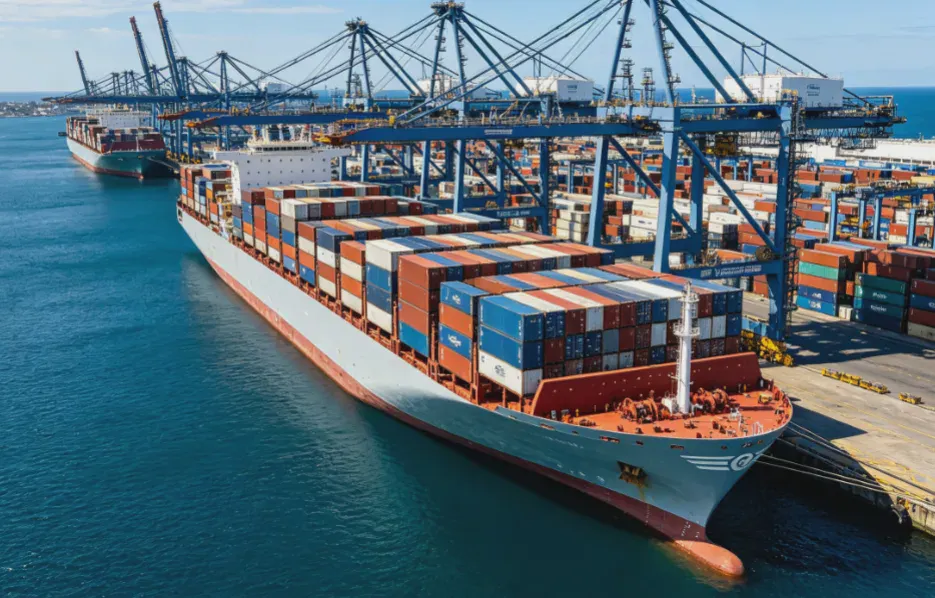
Shuwaikh Port sits on the western edge of Kuwait City, about 20 minutes from the downtown commercial districts and the Shuwaikh Industrial Area. It is the country's main commercial gateway — the port that receives the majority of consumer goods, electronics, furniture, and general cargo. Because it sits inside the city, cargo discharged here has the shortest truck leg to Kuwait's retail market — same-day delivery to the nearby Shuwaikh Industrial Area is routine.
Shuaiba Port lies about 50 kilometers to the south, on the coast near Al Ahmadi, in the middle of Kuwait's petrochemical and industrial belt. Built originally for the oil sector, it remains the natural choice for project cargo, steel, construction materials, chemicals, and heavy machinery heading to the industrial zones. The trade-off is distance: trucking into Kuwait City from Shuaiba costs more and takes roughly an hour longer than from Shuwaikh.
There is also Mina Abdullah, a smaller multipurpose harbor further south — but for ordinary China imports, the decision is almost always Shuwaikh versus Shuaiba.
| Criterion | Shuwaikh Port | Shuaiba Port |
|---|---|---|
| Location | Kuwait City (western edge) | ~50 km south, Al Ahmadi industrial belt |
| Main cargo | Consumer goods, electronics, furniture, general cargo | Steel, construction materials, chemicals, project cargo |
| Truck leg to Kuwait City | Short — same-day delivery common | ~60–90 min, higher trucking cost |
| Terminal congestion | Busier; tighter during Q4 and Ramadan | Generally quieter, more predictable |
| Free storage days | Typically 5–7 days before demurrage | Typically 5–7 days before demurrage |
| Best for | Retailers, e-commerce, FMCG, most importers | Factories, contractors, heavy/industrial cargo |
What we tell first-time importers at DTFU: do not let the forwarder pick your Kuwait port for you. We once had a client shipping lighting fixtures — pure consumer goods — whose freight was routed to Shuaiba because the vessel schedule was cheaper. The ocean saving was about $150, and the extra trucking and waiting cost them almost double that. For consumer goods, Shuwaikh is usually worth the slightly higher rate; for steel and machinery, Shuaiba is where you want to be.
Our shipping from China to Kuwait service page covers both ports, and your account manager will confirm the discharge port before booking — it is a line item you should see on the draft booking, not discover on the arrival notice.
What Actually Makes Up the Shipping Cost from China to Kuwait
A freight quote is not one price; it is a stack of charges. Ocean freight is the base rate the shipping line charges to move the container from a Chinese port to Kuwait — the most volatile component, swinging with demand, fuel, and capacity. Terminal handling charges (THC) apply at both ends: origin THC in China for loading, destination THC in Kuwait for discharging. Port and customs fees at the Kuwait end include the KPA gate pass and the Bayan declaration filing. Documentation fees cover the bill of lading and certificate of origin. Insurance is optional but unwise to skip on a lane with a transshipment leg and 30 days at sea. And for regulated products, KUCAS certification — the Kuwait Conformity Assessment Scheme — adds a pre-shipment cost many first quotes simply omit.
| Cost Component | What It Covers | Typical 2026 Range (USD) |
|---|---|---|
| Ocean freight (20ft FCL) | Base sea transport, origin port to Kuwait | $1,500 – $2,500 |
| Ocean freight (40ft FCL) | Base sea transport, origin port to Kuwait | $2,000 – $3,500 |
| Ocean freight (LCL) | Per cubic meter, consolidated cargo | $80 – $150 / CBM |
| THC — destination | Unloading at Shuwaikh or Shuaiba | $150 – $300 / container |
| Bayan declaration + KPA fees | Electronic customs filing and port gate fees | ~$100 – $200 (agent-dependent) |
| Customs duty | 5% of CIF value on most commercial goods | 5% of CIF |
| Cargo insurance | All-risk cover, typically | 0.1% – 0.3% of cargo value |
| Documentation | B/L, CO, and related paperwork | $35 – $80 (typical) |
| KUCAS (regulated goods) | TER + TIR inspections before departure | Quoted per product family |
Two notes on this table. First, these ranges match what our site quotes across all Kuwait articles — if someone offers a 20ft well below $1,500, ask what is missing. Second, the destination-side fees (THC, Bayan, KPA, trucking) are what turn a $1,900 quote into a $2,600 landed cost; the gap between CIF-style and delivered pricing on this lane is routinely 30–40%, which is why you compare full quotes, not headline rates.
2026 Container Rates from China to Kuwait (FCL & LCL)
Rates vary by origin port because vessel frequency, capacity, and distance differ along the Chinese coast. The table below reflects the August 2026 market on the China–Gulf trade lane, with Shenzhen and Guangzhou typically the most competitive for southern manufacturers and Shanghai/Ningbo strong for eastern exporters.
| Origin Port | 20ft FCL (USD) | 40ft FCL (USD) | LCL (USD / CBM) |
|---|---|---|---|
| Shenzhen | $1,600 – $2,200 | $2,100 – $3,000 | $80 – $110 |
| Guangzhou | $1,600 – $2,300 | $2,100 – $3,100 | $80 – $120 |
| Shanghai | $1,700 – $2,400 | $2,200 – $3,200 | $85 – $120 |
| Ningbo | $1,700 – $2,300 | $2,200 – $3,100 | $85 – $120 |
| Qingdao | $1,800 – $2,500 | $2,400 – $3,400 | $90 – $130 |
The biggest multiplier on these numbers is timing. Chinese New Year (January–February), Ramadan, and the Q4 retail rush tighten space on Gulf-bound vessels and push rates up 30–50% — we have seen 20ft quotes jump from $1,700 to $2,400 in two weeks during a bad peak. Off-peak months (roughly March–May) offer cheaper rates and easier equipment; if your cargo is not time-critical, the shoulder season is the cheapest discount on this lane.
For smaller shipments, LCL is the sensible entry point: below roughly 15 CBM you pay only for the volume you use, at $80–$150 per CBM including origin consolidation. The catch is time — consolidation and deconsolidation add days, and your cargo shares a box with other shippers, so one co-loader's document hold can slow the whole container.
Sea, Air, or DDP: Matching the Mode to Kuwait's Market
Kuwait is small, wealthy, and imports almost everything it consumes: electronics and appliances, furniture, fashion, auto parts for a car culture built on Japanese and American models, and huge volumes of building material feeding the New Kuwait 2035 program. Each category points to a different shipping mode.
Sea freight (FCL) is the workhorse for building materials, auto parts, furniture, and any order approaching a container. Sea freight (LCL) suits first orders and e-commerce sellers testing new SKUs. Air freight earns its premium on restocks of fast-moving electronics, urgent spare parts, and high-value goods — KWI clears air cargo in days, not weeks. Door-to-door (DDP) packages any of the above with Kuwait customs, duty, and final delivery — vital on this lane because foreign buyers and small traders often hold no Kuwaiti commercial license, so DDP clears using the forwarder's local license.
| Mode | Typical Transit | 2026 Cost | Best For |
|---|---|---|---|
| Sea FCL | 25 – 35 days port-to-port | 20ft $1,500 – $2,500; 40ft $2,000 – $3,500 | Bulk, construction, auto parts, furniture |
| Sea LCL | 28 – 40 days | $80 – $150 / CBM | First orders, under ~15 CBM |
| Air freight | 3 – 7 days | $3.50 – $6.50 / kg | E-commerce restock, spare parts, high-value goods |
| DDP door-to-door | 30 – 45 days (sea) / 5 – 8 days (air) | All-in, duty + delivery included | Buyers without a Kuwaiti license, first-time importers |
For the air side, our air shipping from China to Kuwait guide has the full per-kg breakdown, and our door-to-door shipping from China to Kuwait guide walks through DDP in detail. The principle is boring and true: sea for weight, air for speed, DDP for peace of mind — if your cargo lands in a Kuwait City showroom and you want nothing to do with customs yourself, door-to-door shipping is the mode to price first.
Kuwait Customs in Practice: 5% Duty, No VAT, and the Bayan System
Kuwait's import taxes are simpler than most competing articles on this topic claim. Based on current customs practice: most commercial goods entering Kuwait pay a 5% customs duty on their CIF value under the GCC Common Customs Tariff. Basic foodstuffs and some medical supplies are exempt or reduced, and goods like tobacco face far higher rates. Kuwait has not implemented a value-added tax. A VAT law passed in 2016 as part of the GCC framework has been postponed repeatedly — as of 2026, no VAT applies to imports, unlike Saudi Arabia and the UAE. Some forwarder blogs tell you to budget "5% duty plus 5% VAT"; on this lane, budget the 5% duty and question any VAT line. Rules can change with little notice, so confirm the current position with your forwarder before a large shipment.
The paperwork is where Kuwait gets strict, and it runs on Bayan, Kuwait's electronic customs declaration platform under the General Administration of Customs (KGAC). Every commercial shipment is declared through Bayan before release, and the accuracy of that declaration decides whether you clear in a day or sit in demurrage. The documents that matter:
- Commercial invoice and packing list — with correct HS codes and unit values; discrepancies are the most common trigger for physical inspection.
- Bill of lading — consignee details must match the importer of record exactly.
- Certificate of origin (CO) — for most commercial goods, this should be issued by CCPIT in China and legalized by the Kuwaiti Embassy or Consulate; an unlegalized CO is a classic reason for cargo to stop at Shuwaikh.
- KUCAS documents — for regulated product categories (electronics, toys, auto parts, and many others), a Technical Evaluation Report (TER) and Technical Inspection Report (TIR) must be issued before the vessel departs China. No TIR at arrival means rejection or, in the worst cases, destruction.
Real lane lesson from our operations team: one of our auto-parts clients shipped a 20ft of suspension components to Shuaiba with everything in order except the CO legalization — the supplier's agent in China had sent the certificate for stamping two weeks late. The container arrived, the Bayan declaration was filed, and KGAC held the release for nine days while the legalized original was flown in. Nine days of port storage on a 20ft container in Kuwait is not a rounding error. The rule we now enforce on every Kuwait booking: original legalized CO in hand (or couriered) before the vessel sails, not after.
Our customs clearance service page covers the Bayan filing, KGAC inspections, and legalization end to end. And since Gulf neighbors differ — Saudi Arabia now applies its own VAT — our shipping cost from China to Saudi Arabia guide is useful context for why the Kuwait tax treatment deserves an explicit question, not an assumption.
The Jebel Ali Factor: How Most Kuwait Cargo Actually Arrives
Routing fact that changes both price and patience: much China–Kuwait cargo does not sail direct. The Gulf's dominant hub is Jebel Ali in Dubai, and most LCL volume — plus anything on a weekly feeder schedule — transships there. A typical journey: China → Singapore (or direct) → Jebel Ali → feeder to Shuwaikh. Transshipment usually adds 4–7 days, and when Jebel Ali congests — common in Q4 and after regional disruptions — that leg stretches further.
Direct services do exist — COSCO and MSC operate China–Gulf strings that call Kuwait directly, and direct space is worth a small premium: one discharge port, one set of port fees, and several days less at sea. The catch is availability; direct sailings from your specific port are not always on the week you need, so experienced shippers decide "direct or via Jebel Ali" at booking time, not on the vessel schedule.
| Routing (China → Kuwait) | FCL Transit | LCL Transit | Notes |
|---|---|---|---|
| Shenzhen → Shuwaikh (direct or via Singapore) | 22 – 26 days | 26 – 32 days | Best frequency from South China |
| Shanghai → Shuwaikh (direct) | 25 – 30 days | 30 – 35 days | Strong east-coast option |
| Ningbo → Shuaiba | 26 – 31 days | 31 – 36 days | Good for industrial cargo to the south |
| Qingdao → Shuwaikh | 28 – 35 days | 33 – 40 days | Slower, often cheaper for North China |
| Any origin → Jebel Ali → Kuwait | Add 4 – 7 days | Add 4 – 7 days | Most common LCL routing; hub congestion risk |
Because Jebel Ali sits at the center of this lane, the UAE is the pivot, not a side note. Our shipping from China to UAE service page and the shipping cost from China to UAE guide are worth reading even if your final destination is Kuwait — Dubai-leg rates and congestion are the best leading indicator for what your Kuwait quote looks like next month.
A Real China–Kuwait Shipment, Line by Line
Numbers are abstract until they come from an actual shipment. This de-identified case from our files is a 40ft high-cube of auto body parts (hoods, fenders, reinforcement panels — about 58 CBM, 9,200 kg, HS 8708) moved from Shanghai to a Gulf distributor on the exact routing your Kuwait cargo will take: ocean leg via Singapore to Jebel Ali, then clearance and delivery. Door-to-door: 27 days, including a two-day customs inspection.
| Cost Item | Amount (USD) |
|---|---|
| Ocean freight (1×40HQ, Shanghai → Jebel Ali) | $1,800 – $2,200 |
| Container stuffing & dunnage materials | $250 |
| Truck pickup, factory → Shanghai terminal | $280 |
| Export customs clearance (China) | $120 |
| Documentation (B/L, CO) | $80 |
| Ocean surcharges (BAF, LSS, etc.) | $350 – $450 |
| Import clearance & inspection (destination) | $350 |
| Terminal handling charges (destination) | $200 |
| Truck delivery, port → warehouse | $180 |
| Total estimated cost | $3,610 – $4,130 |
Two numbers from this case are worth more than the table. First, the total came to roughly $3,610–$4,130 for a full 40HQ door-to-door — the all-in price has to cover the destination-side stack, not just the ocean leg. Second, the customer calculated that importing directly from China beat buying the same parts from local Gulf distributors by 30–35% even after every fee above — the margin story that keeps this lane busy.
"This was our first time importing a full container, and honestly I was a bit nervous about it. But DTFU kept us updated at every stage — when the container was loaded, when it left Shanghai, and when it arrived. The one hiccup with customs was handled quickly. The parts arrived clean and undamaged, and we saved a lot compared to local pricing. We'll definitely be doing this again." — Operations manager, Gulf auto spares distributor
Comparing the wider Gulf? Our sea shipping cost from China to Bahrain guide shows how the same lane economics look for Kuwait's closest small-market neighbor.
Shipping Around Kuwait's Clock: Summer Heat, Ramadan, and Peak Season
Kuwait is not a neutral environment for cargo — it is one of the hottest places on earth, and its calendar has rhythms a good shipping plan respects.
Summer heat. From June through September, daytime temperatures pass 50°C and a steel container on a Kuwait quay becomes a solar oven. We have seen the results: bitumen that arrived as a solid block, cosmetics and plastics that degraded, electronics that failed a week after delivery. Heat-sensitive goods — asphalt products, chemicals, candles, chocolate, some adhesives — should sail in the cooler months or in reefer/insulated options, with the consignee's storage confirmed before the container is released. Plan that in China, not after arrival.
During Ramadan, port and government hours shorten, clearance throughput drops, and the Eid holidays close everything for days. A container that clears in two days in March can take a week in Ramadan — plan arrivals around the holiday calendar or accept the delay.
The Q4 retail rush and the weeks before Chinese New Year move space, equipment, and rates all against you. Book containers 2–3 weeks ahead in peak, confirm equipment before production finishes, and ship non-urgent Q4 stock in late summer when rates are softer.
Kuwait's ports allow roughly 5–7 free days before demurrage starts — a short window when clearance can stall on a single document. The fix is procedural: pre-file the Bayan declaration, courier legalized originals before the vessel arrives, and never treat trucking as an afterthought, because a cleared container still costs money every day it sits at the terminal.
How to Get a Quote You Can Actually Trust
The difference between a good Kuwait quote and a trap is rarely the headline number; it is the small print. A complete quote itemizes: ocean freight (and whether BAF/THC at origin is included), destination THC, Bayan and KPA fees, the 5% duty (or an all-in DDP price that includes it), documentation and legalization, and the final delivery leg. When comparing quotes, ask five questions:
- Is this FOB, CIF, or DDP — and what exactly is excluded at the destination?
- Which Kuwait port is the discharge port, and why?
- Are the CO legalization and KUCAS requirements handled in this price?
- What happens to the free-storage clock if clearance is delayed by documents?
- Can you show me a similar shipment's itemized invoice from the last six months?
Red flags, once you know them: per-kg air quotes below ~$3.50/kg, sea quotes that mention neither port nor incoterm, and any forwarder who says "Kuwait customs is simple." It is not — and the ones who say it is have never cleared a container with an unlegalized CO.
This is where working with a forwarder who lives on this lane pays for itself. DTFU Logistics is FIATA and IATA dual-certified, operates from Shenzhen with direct carrier contracts on the China–Gulf strings, and every Kuwait shipment gets a dedicated account manager plus 24/7 cargo tracking — the same operational setup that produced the case study above. You can reach the team through our contact page — the quote you get back itemizes destination-side costs instead of hiding them.
FAQs
1. How much does it cost to ship a container from China to Kuwait in 2026? A 20ft container typically costs $1,500–$2,500 and a 40ft $2,000–$3,500 in ocean freight alone, depending on origin port and season. Landed costs — including destination THC, Bayan fees, 5% duty, and trucking — typically run 30–40% higher than the ocean-only figure.
2. What is the cheapest way to ship from China to Kuwait? Sea freight, without competition: LCL at $80–$150 per CBM under ~15 CBM, or FCL once you approach a container's worth. Booking off-peak (March–May) and avoiding the Q4 and pre-Chinese-New-Year rushes saves 30–50% versus peak pricing.
3. How long does sea freight from China to Kuwait take? Port-to-port transit is 25–35 days on direct services (Shenzhen to Shuwaikh is usually fastest at 22–26 days). Jebel Ali routing adds 4–7 days; LCL adds a few more for consolidation.
4. Do I need KUCAS certification to ship to Kuwait? For regulated product categories — electronics, toys, auto parts, and many others — yes. You need a Technical Evaluation Report (TER) and a Technical Inspection Report (TIR) issued before the vessel leaves China. Ship without them and your goods face rejection at Kuwait customs.
5. Can I import into Kuwait without a local commercial license? Not under your own name — a Kuwaiti commercial license is required to clear commercial imports. Most foreign buyers solve this with DDP shipping, where the forwarder clears using its local license and delivers duty-paid — exactly what our door-to-door service covers.
The bottom line on the Kuwait lane: the shipping cost from China to Kuwait is not one number — it is a stack of ocean freight, port fees, a 5% duty with no VAT to worry about, and the document discipline that keeps a container moving through Bayan instead of sitting in demurrage. Price it like a stack, choose your port on purpose, and route through Jebel Ali with your eyes open. When you are ready to price your actual cargo — one pallet of spare parts or a quarterly building-materials program — contact DTFU Logistics for an itemized 2026 quote, and we will show you the full stack before you commit.