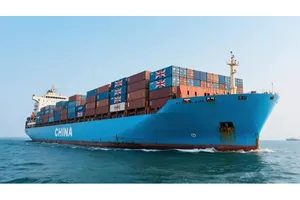
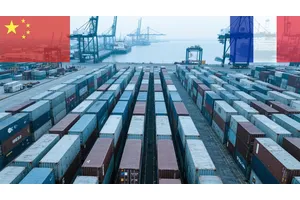
As Europe faces another summer of prolonged heatwaves and record-breaking temperatures, demand for air conditioners has surged across the continent. According to the International Energy Agency (IEA), the number of air conditioning units in Europe has more than doubled over the past two decades, and that growth trajectory is accelerating. Households and businesses that once relied on fans or natural ventilation are now investing in cooling systems — creating significant opportunities, and equally significant supply chain challenges, for importers, distributors, and retailers.
For businesses sourcing air conditioners from China, understanding how to plan transportation, navigate customs requirements, and avoid seasonal shipping bottlenecks has never been more critical. In this article, we explore why Europe's demand for air conditioners is growing, how it impacts international logistics, and what importers should consider when shipping air conditioning products from China to Europe.

Why Is Air Conditioner Demand Surging in Europe?
Europe has traditionally maintained a low household air conditioner penetration rate compared with markets like North America and Asia. As of 2023, only about 20% of European households owned air conditioning, compared to over 90% in the United States and Japan. Many residential buildings were designed for milder climates, and air conditioning was long considered a luxury rather than a necessity.
That picture has changed dramatically. Several converging factors are driving demand:
- More frequent and intense heatwaves: The summer of 2022 saw temperatures exceed 40°C in the UK for the first time on record, while Southern Europe has regularly experienced weeks of extreme heat. The 2023 European summer was among the hottest ever recorded, and 2024 continued the trend.
- Rising baseline temperatures: Climate change is pushing average summer temperatures higher across Central and Northern Europe — regions that historically had little need for cooling.
- Health and productivity awareness: Employers and governments are increasingly recognizing that indoor heat exposure affects worker productivity and public health, leading to new regulations around workplace cooling.
- Commercial sector growth: Data centers, server rooms, and commercial buildings are expanding rapidly, driving demand for commercial-grade HVAC equipment.
Countries including Spain, Italy, France, Germany, Belgium, the Netherlands, and the UK have all reported double-digit growth in seasonal demand for cooling equipment. For importers, this translates to larger purchase orders, tighter delivery windows, and more pressure on logistics planning.
Why China Remains the Dominant Source for Air Conditioners
China accounts for roughly 40% of global air conditioner exports and remains the world's largest manufacturing hub for HVAC products. Many of the leading international brands — as well as rapidly growing Chinese brands like Midea, Gree, and Haier — either manufacture in China or rely on Chinese component suppliers.
Key advantages of sourcing from China include:
- Scale and capacity: Chinese factories can handle large-volume orders with shorter production lead times than most alternatives.
- Cost competitiveness: Direct sourcing from Chinese manufacturers often yields 15–30% cost savings compared to purchasing from regional distributors.
- Product breadth: From residential split systems and portable units to commercial chillers and VRF systems, Chinese suppliers offer the full spectrum.
- Export infrastructure: Major ports like Shanghai, Ningbo, Shenzhen, and Qingdao are well-equipped for high-volume containerized exports of HVAC equipment.
For European buyers, sourcing directly from Chinese manufacturers provides better pricing, greater product selection, and more control over production timelines — provided the logistics are managed effectively.
Logistics Challenges During Peak Air Conditioner Season
While manufacturing capacity in China is robust, transportation becomes significantly more constrained during peak demand periods. Importers who fail to plan ahead often face costly disruptions.
1. Container Space Tightens Quickly
Peak export season for air conditioners typically runs from March through July, overlapping with general pre-summer cargo surges and sometimes conflicting with other seasonal exports. On key routes from Shanghai, Ningbo, Shenzhen, and Qingdao to major European ports (Rotterdam, Hamburg, Antwerp, Valencia, Felixstowe), vessel space can become scarce.
Late bookings frequently result in:
- Rolled cargo (shipment pushed to a later vessel)
- Spot rates 50–100% higher than contracted rates
- Limited choice of sailing schedules
Recommendation: Book container space at least three to four weeks before your intended departure date during peak season. Forwarders with strong carrier relationships can often secure space even when the spot market is tight.
2. Delivery Timing Makes or Breaks Profitability
Air conditioners are among the most seasonal products in international trade. A shipment that arrives in late August or September may have already missed the hottest weeks and the strongest consumer demand. Retailers and distributors rely on having inventory in warehouses by late spring or early summer at the latest.
| Delivery Arrival Window | Sales Impact |
|---|---|
| April – May | Optimal: inventory in place before peak demand |
| June – July | Acceptable: captures mid-to-late summer sales |
| August | Risky: demand already tapering in many markets |
| September+ | Missed season: likely requires warehousing until next year |
3. Customs Clearance Demands Proper Documentation
Air conditioners face more regulatory scrutiny than general consumer goods. Depending on the product type and destination country, importers must prepare:
- Core shipping documents: Commercial Invoice, Packing List, Bill of Lading or Air Waybill
- CE marking documentation: Required for all air conditioners sold in the EU/EEA market
- Energy efficiency labeling: EU energy labels (A+++ through D scale) are mandatory for residential air conditioning units
- F-Gas compliance: Under EU Regulation (EU) 2024/573, products containing fluorinated greenhouse gases (including common refrigerants like R-410A and R-32) must comply with phase-down schedules and import licensing requirements
- WEEE compliance: Air conditioners fall under the Waste Electrical and Electronic Equipment Directive, requiring producer registration in most EU countries
- Certificate of Origin: May be required for preferential tariff treatment under applicable trade agreements
Missing or incomplete documentation is one of the most common causes of customs delays. Working with a freight forwarder experienced in HVAC shipments can help ensure all paperwork is in order before the cargo departs China.
Sea Freight, Air Freight, or Rail: Which Is Right for Your Shipment?
The optimal shipping method depends on order volume, urgency, and budget. Here's how the options compare for China-to-Europe air conditioner shipments:
| Method | Transit Time | Best For | Typical Cost Level |
|---|---|---|---|
| Sea Freight (FCL/LCL) | 28–40 days | Full container loads; cost-sensitive large orders | Lowest |
| Air Freight | 3–7 days | Urgent restocking; high-value commercial units | Highest |
| Rail Freight | 18–25 days | Central/Eastern European destinations; mid-volume orders | Moderate |
| Sea + Air Combination | Varies | Core volume by sea + urgent top-up by air | Optimized |
For most full-container shipments of residential air conditioners, ocean freight remains the most economical choice by a wide margin. A 40-foot container typically holds 150–250 residential split-system units depending on model and packaging. Rail freight via the China-Europe Railway Express can be a compelling middle ground, particularly for importers serving Germany, Poland, the Czech Republic, and neighboring markets.
Real-world scenario: One European distributor we work with at DTFU ships the bulk of their annual air conditioner inventory by sea in March and April, then uses air freight for smaller, urgent replenishment orders in June and July if demand outpaces forecasts. This blended approach keeps overall logistics costs manageable while preventing stockouts during peak weeks.
Key EU Regulatory Requirements for Air Conditioner Imports
European importers must navigate a specific regulatory landscape when bringing air conditioning equipment into the EU. Overlooking these requirements can result in rejected shipments, fines, or products that cannot be legally sold.
CE Marking and Compliance
All air conditioners placed on the EU market must bear CE marking, demonstrating conformity with applicable EU directives including:
- Low Voltage Directive (LVD) 2014/35/EU
- Electromagnetic Compatibility (EMC) Directive 2014/30/EU
- Ecodesign Directive 2009/125/EC
- Energy Labelling Regulation (EU) 2017/1369
Importers — not just manufacturers — bear legal responsibility for CE compliance. Before shipping, confirm that your supplier's products have valid CE certification from an accredited testing body.
Refrigerant Regulations
This is one of the most nuanced areas for air conditioner imports. The updated F-Gas Regulation (EU) 2024/573 accelerates the phase-down of HFCs (hydrofluorocarbons) and imposes stricter controls:
- Products using high-GWP (Global Warming Potential) refrigerants like R-410A face increasingly tight quota restrictions
- R-32, with roughly one-third the GWP of R-410A, is becoming the standard for new residential units
- R-290 (propane) is emerging as a low-GWP alternative, especially in monobloc heat pumps and portable units
Importers should verify the refrigerant type and ensure the product falls within current quota allowances. Non-compliant products may be refused entry at EU customs.
Energy Labelling
Residential air conditioners up to 12 kW must display the EU energy label. Since March 2021, the scale has been rescaled from A+++/D to A/G, and units that previously earned A+++ may now rate B or C. Ensure your Chinese supplier provides compliant energy labels for the current rating scale — outdated labels can cause issues at retail or customs inspection.
Practical Tips for Importing Air Conditioners from China
Book Earlier Than You Think You Need To
During the March–July peak window, we recommend booking container space four weeks in advance rather than the typical two. Vessel schedules fill quickly, and early bookings also tend to secure better rates.
Insist on Export-Grade Packaging
Air conditioners contain compressors, copper coils, electronic control boards, and refrigerant lines — all vulnerable to damage during transit. Poor packaging is a leading cause of cargo claims. Ensure your supplier uses:
- Reinforced corrugated cartons rated for containerized export
- Adequate internal cushioning (EPE foam or molded pulp)
- Palletized loading with proper strapping
- Moisture barrier protection, especially for sea freight
Verify Compliance Before the Container Leaves China
Do not assume your supplier has handled EU regulatory requirements. Request and review copies of CE certificates, energy labels, refrigerant specifications, and test reports before the shipment departs. Resolving compliance issues at origin is far cheaper and faster than dealing with a detained container at Rotterdam or Hamburg.
Partner With an Experienced Freight Forwarder
Shipping HVAC equipment from China to Europe involves multiple stages:
- Factory pickup and consolidation
- Export customs declaration in China
- Ocean, air, or rail transportation
- EU import customs clearance
- Import duty and VAT processing
- Last-mile delivery to warehouse or distribution center
An experienced China-based freight forwarder like DTFU Logistics can coordinate the entire chain — from supplier pickup in China through to final delivery in Europe — reducing the number of intermediaries, minimizing communication gaps, and helping you avoid costly delays.
How Freight Costs Behave During Peak Season
Freight rates on China-to-Europe routes are highly seasonal. During peak demand periods, importers should anticipate:
- Base rate increases: Carriers typically implement General Rate Increases (GRI) of $200–$500 per container during peak months
- Peak Season Surcharges (PSS): Additional fees can range from $300 to over $1,000 per FEU on high-demand sailings
- Equipment imbalances: Shortages of 40-foot high-cube containers at Chinese ports can delay loading by several days
- Port congestion: Major European hubs like Rotterdam and Hamburg may experience berthing delays during peak periods, extending total transit time by 3–7 days
Requesting freight quotations 6–8 weeks before your intended shipment gives you time to compare options, lock in competitive rates, and avoid last-minute premium pricing. At DTFU, we help clients secure space and rates in advance by leveraging our direct contracts with major carriers on the Asia-Europe trade lane.
FAQs
Can I ship air conditioners that contain refrigerant?
Yes, but there are important distinctions. Most residential air conditioners are shipped as sealed systems with refrigerant pre-charged at the factory. This is permitted for ocean freight under standard IMDG Code provisions, though the refrigerant type must be declared. For air freight, pressurized refrigerant containers face stricter IATA Dangerous Goods Regulations — always confirm with your forwarder before booking air freight for pre-charged units.
How long does sea freight from China to Europe take?
Typical port-to-port transit times for FCL shipments:
| Origin Port (China) | Destination Port (Europe) | Approximate Transit |
|---|---|---|
| Shanghai | Rotterdam | 30–35 days |
| Ningbo | Hamburg | 30–35 days |
| Shenzhen | Felixstowe | 28–33 days |
| Qingdao | Antwerp | 32–38 days |
| Guangzhou | Valencia | 28–34 days |
Door-to-door delivery — including inland trucking at both ends and customs clearance — typically adds 5–10 days to the above estimates.
What are the import duties for air conditioners from China to the EU?
Air conditioners fall under various HS codes depending on type (window/wall units, split systems, portable units, etc.), typically in Chapter 8415 of the Harmonized System. EU import duty rates generally range from 2.2% to 3.7%, but the exact rate depends on product classification. VAT — typically 19–25% depending on the destination country — also applies. A qualified customs broker or freight forwarder can help you determine the correct HS code and applicable duty rate before you ship.
Should I ship FCL or LCL for air conditioners?
For orders of 10 cubic meters or more, FCL (Full Container Load) is almost always the better choice. Air conditioner cartons are relatively large, and LCL (Less than Container Load) shipments can become expensive on a per-unit basis. Additionally, LCL cargo is handled more frequently at consolidation warehouses, increasing the risk of damage. For smaller test orders or samples, LCL or air freight remain practical options.
Planning Ahead Is the Key to a Resilient Supply Chain
The surge in European air conditioner demand shows no signs of slowing down. For importers, the difference between a profitable season and a missed opportunity often comes down to logistics preparation — not product quality or pricing.
Importers who book early, verify compliance before shipping, and work with an experienced freight forwarder are consistently better positioned to secure inventory when it matters most. Rather than reacting to space shortages and rate spikes, proactive planning keeps your supply chain stable, your costs predictable, and your customers satisfied.
Why Importers Choose DTFU Logistics for China-to-Europe HVAC Shipping
At DTFU Logistics, we have been helping businesses ship air conditioners, HVAC equipment, and home appliances from China to Europe since 2014. As a FIATA and IATA certified freight forwarder headquartered in Shenzhen with a network covering 120+ countries, we bring deep experience in managing seasonal, high-volume shipments on the Asia-Europe trade lane.
Our air conditioner shipping services cover the full journey:
- Ocean Freight (FCL & LCL) — competitive rates via direct carrier contracts
- Air Freight — fast, reliable options for urgent restocking
- China-Europe Rail Freight — balanced speed and cost for Central/Eastern Europe
- Customs Clearance — export declaration in China + import clearance in the EU
- Compliance Support — guidance on CE marking, energy labels, F-Gas documentation
- Warehousing — secure storage in China for consolidation and pre-shipment inspection
- Cargo Insurance — comprehensive coverage for high-value HVAC shipments
- Door-to-Door Delivery — from Chinese factory to your European warehouse
Whether you're shipping a full container of residential split systems or need a flexible logistics plan combining sea and air freight, our team designs shipping solutions around your timeline and budget — not the other way around.
Contact DTFU today to discuss your air conditioner shipping requirements and receive a customized freight quotation.