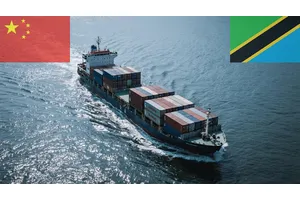
You're sitting on a supplier quote — a factory in Ningbo or Guangzhou ready to ship your goods. The product pricing looks solid. But then comes the real question: how much to ship a container from China to Tanzania — and more importantly, what will the total landed cost be once that container clears customs at Dar es Salaam and reaches your door? If you've ever felt that gut-punch moment when the freight quote comes in thousands of dollars higher than expected, you're not alone. Hidden surcharges, unfamiliar Tanzanian import regulations, and a maze of Incoterms make container shipping costs feel like a guessing game. This guide changes that.
In this comprehensive 2026 guide, you'll get exact 20ft and 40ft container rate ranges from every major Chinese port, a line-by-line breakdown of every cost component (not just the ocean freight), a deep dive into Tanzania's import duty structure and the PVoC requirement that catches first-time importers off guard, and a practical Incoterms comparison that shows you exactly which trade term saves you the most money for your situation. Whether you're a first-time importer or scaling up your shipping from China to Tanzania, this guide equips you with the data and frameworks to budget accurately and avoid costly surprises.
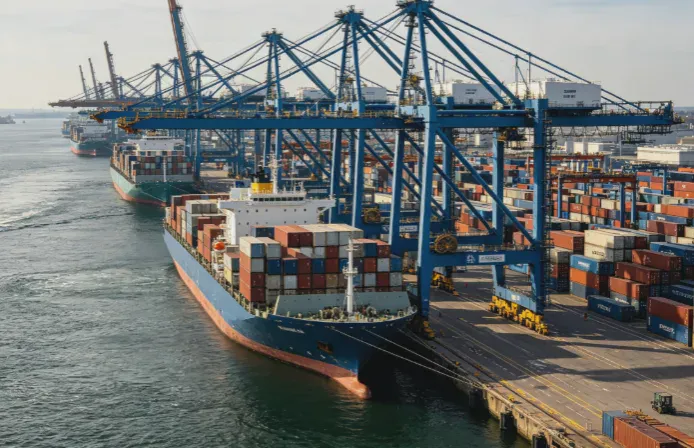
Container Shipping Costs from China to Tanzania
Container shipping rates between China and Tanzania fluctuate constantly — driven by fuel prices, seasonal demand, carrier capacity, and port congestion. In our 10+ years managing the China-East Africa corridor, we've watched 20ft rates swing from under $1,000 during the 2020 downturn to over $5,000 during the 2021-2022 supply chain crisis. The figures below reflect June 2026 market conditions based on actual freight quotations we're seeing across major carriers this month.
20ft Container (FCL) Costs by Chinese Port
A 20ft GP container holds approximately 33 cubic meters (CBM) and is ideal for heavy, dense cargo (up to ~28 metric tons). It is the most popular choice for first-time importers testing the shipping container from China to Tanzania route. For a broader view of how these rates compare across East Africa, you can also reference our sea shipping from China to Tanzania cost breakdown.
| Origin Port (China) | 20ft FCL Rate (USD) | Avg. Transit Time |
|---|---|---|
| Shanghai | $1,850 – $2,550 | 25–35 days |
| Shenzhen (Yantian/Shekou) | $1,900 – $2,700 | 25–36 days |
| Ningbo-Zhoushan | $1,800 – $2,600 | 25–38 days |
| Guangzhou (Nansha) | $1,800 – $2,500 | 21–28 days |
| Qingdao | $2,000 – $3,100 | 28–41 days |
| Xiamen | $1,950 – $2,800 | 22–30 days |
| Tianjin | $2,100 – $3,300 | 30–40 days |
Important: These are port-to-port ocean freight estimates only — they reflect the rates we're currently securing for our clients (June 2026). Total landed cost including surcharges, customs, duties, and delivery can be 2–3× the base freight rate. We always recommend requesting a line-by-line quote rather than comparing on ocean freight alone. See Section 3 for a complete breakdown.
40ft Container & 40ft High Cube (FCL) Costs by Chinese Port
A 40ft GP container holds ~67 CBM, and a 40ft High Cube (HC) offers roughly 13% more internal height (2.69m vs 2.39m). For voluminous cargo like furniture, textiles, or plastic goods, the 40ft option typically delivers a lower cost per CBM than the 20ft.
| Origin Port (China) | 40ft FCL Rate (USD) | 40ft HC Rate (USD) | Avg. Transit Time |
|---|---|---|---|
| Shanghai | $3,150 – $4,250 | $3,300 – $4,500 | 28–32 days |
| Shenzhen (Yantian/Shekou) | $3,300 – $4,500 | $3,500 – $4,800 | 25–30 days |
| Ningbo-Zhoushan | $3,100 – $4,100 | $3,200 – $4,400 | 27–31 days |
| Guangzhou (Nansha) | $3,000 – $4,000 | $3,150 – $4,300 | 21–26 days |
| Qingdao | $3,800 – $5,000 | $4,000 – $5,300 | 29–34 days |
| Xiamen | $3,300 – $4,400 | $3,500 – $4,700 | 22–28 days |
| Tianjin | $4,200 – $5,500 | $4,400 – $5,800 | 32–40 days |
Cost-per-CBM comparison: At the mid-range, a 20ft container from Shanghai costs ~$66/CBM ($2,200 ÷ 33 CBM), while a 40ft container costs ~$55/CBM ($3,700 ÷ 67 CBM). If you're shipping volume cargo, the 40ft is nearly always more economical on a per-unit basis.
LCL (Less than Container Load) Shipping Rates
If you don't have enough cargo to fill a container, LCL (Less than Container Load) lets you share container space with other shippers. Your cargo is consolidated at a Container Freight Station (CFS) and co-loaded into a shared container.
| Metric | LCL Range |
|---|---|
| Rate per CBM | $60 – $160 |
| Minimum charge | $200 – $250 |
| Typical transit time | 30–45 days |
The FCL/LCL crossover rule: At approximately 15–18 CBM, a 20ft FCL container becomes cheaper than shipping the same volume via LCL. Below 15 CBM, LCL is usually the more economical choice. We routinely run this comparison for clients and find that many are surprised by how early the FCL tipping point arrives — especially once you factor in the reduced handling risk of a dedicated container versus shared CFS consolidation. Always ask your freight forwarder to quote both options side by side.
How Your Cargo Type Affects Shipping Costs
Not all cargo is created equal in the eyes of shipping lines. Here's how different cargo categories impact your container costs:
- General cargo (furniture, consumer goods, textiles): Baseline rates apply. These are the easiest to ship and attract standard freight charges.
- Used vehicles & auto parts: Vehicles can ship via RORO (Roll-On/Roll-Off) vessels or in containers. RORO is typically cheaper ($800–$1,500 per vehicle) but offers less protection. Containerized vehicle shipping requires proper securing and may incur additional handling fees. Tanzania also enforces age restrictions on used vehicle imports — vehicles over 10 years old face higher duties.
- Heavy machinery & equipment: Oversized equipment may require flat rack containers or open-top containers, which carry surcharges of 20–50% above standard container rates. Weight surcharges may apply for cargo exceeding 28 metric tons per 20ft unit.
- Dangerous goods (DG): Chemicals, batteries, and flammable materials require DG documentation, specialized handling, and may incur surcharges of $150–$400 per container. Not all carriers accept DG cargo on the China-East Africa route — confirm carrier acceptance before booking.
- Construction materials: High-volume shipments (steel, timber, tiles) can often negotiate bulk rates. Consider breakbulk shipping for oversized steel structures or project cargo.
Rate Disclaimer: All costs quoted in this guide are based on June 2026 market data and represent the ranges we are seeing for actual bookings. Ocean freight rates are inherently volatile — they can shift weekly based on carrier capacity, fuel prices, and geopolitical events. The figures above should be used as a budgeting reference, not a binding quotation. For an accurate, same-day rate for your specific shipment, contact a freight forwarder with a live carrier connection.
The True Cost Breakdown: What's Really in Your Container Quote
The ocean freight rate you see on a carrier's tariff sheet is only the starting point. After handling hundreds of containers on this route, we've learned that first-time importers are almost always caught off guard by the gap between "the rate I was quoted" and "what I actually paid." Here's every line item that makes up your total shipping cost — including charges that don't appear on initial carrier quotes.
Ocean Freight Surcharges Explained
Shipping lines break their pricing into a base rate plus a series of surcharges. Each of these serves a specific purpose:
| Surcharge | What It Covers | Typical Cost (20ft) |
|---|---|---|
| BAF (Bunker Adjustment Factor) | Fuel price fluctuation pass-through | $100 – $300 |
| PSS (Peak Season Surcharge) | Seasonal demand premium during high-volume months | $400 – $1,200 |
| THC (Terminal Handling Charges) | Loading/unloading at origin and destination ports | $200 – $400 |
| Documentation Fee | Bill of Lading issuance, export declaration filing | $50 – $120 |
| ISPS (International Ship & Port Security) | Security surcharge mandated by SOLAS convention | $15 – $30 |
| Seal Fee | Container seal for cargo integrity | $10 – $25 |
| VGM (Verified Gross Mass) | Mandatory container weighing before loading | $15 – $30 |
Current Peak Season Surcharges (June 2026)
As of June 2026, major carriers have implemented significant PSS increases on the China-East Africa route, driven by strong demand ahead of the Q3 peak season and congestion at Dar es Salaam port:
| Carrier | 20ft PSS | 40ft PSS | Effective Date |
|---|---|---|---|
| Maersk | $1,000 | $1,400 | June 15, 2026 |
| CMA CGM (North/Central China origin) | $500 | $1,000 | June 21, 2026 |
| CMA CGM (South China origin) | $450 | $900 | March 25, 2026 |
| Hapag-Lloyd | $400/TEU | — | January 1, 2026 |
These surcharges are on top of the base ocean freight rate. A 20ft container from Shanghai quoted at $2,200 with Maersk would carry an effective ocean freight of $3,200 after PSS.
Origin & Destination Charges Most Quotes Leave Out
Beyond ocean freight and carrier surcharges, every shipment incurs costs at both ends:
- Origin (China): Factory-to-port trucking ($150–$400), export customs brokerage ($100–$200), port service fees ($50–$100)
- Destination (Tanzania): THC at Dar es Salaam ($100–$250), customs clearance brokerage ($150–$350), possible physical inspection fees ($50–$150)
Worked Example: Total Landed Cost for a Real Shipment
Let's walk through a realistic scenario: you're shipping a 20ft container of furniture from a factory near Ningbo to your warehouse in Dar es Salaam. The cargo has a CIF value of $15,000 and falls under a 25% import duty category.
| Cost Item | Estimated Amount (USD) |
|---|---|
| Factory-to-port trucking (Ningbo area) | $250 – $380 |
| Export customs clearance & documentation | $150 – $220 |
| Ocean freight (Ningbo → Dar es Salaam) | $2,000 – $2,600 |
| Bunker Adjustment Factor (BAF) | $150 – $250 |
| Peak Season Surcharge (PSS) | $500 – $1,000 |
| Terminal Handling Charges (origin + destination) | $350 – $480 |
| Destination customs brokerage | $200 – $320 |
| Import duty (25% × $15,000 CIF) | $3,750 |
| VAT (18% × [$15,000 + $3,750]) | $3,375 |
| Port-to-warehouse trucking (local Dar) | $180 – $280 |
| TOTAL ESTIMATED LANDED COST | $6,905 – $12,655 |
The gap between the lowest estimate ($6,905) and the highest ($12,655) largely depends on which carrier you use, whether you ship during peak season, and whether your freight forwarder has negotiated preferential rates. This is why getting a tailored, itemized quote from an experienced freight forwarder is essential — generic rate estimates can be off by thousands of dollars.
Tanzania Import Duties, Taxes & PVoC Compliance
Understanding Tanzania's import tax regime is critical. Get it wrong, and your container could sit at Dar es Salaam port accumulating demurrage charges while you sort out the paperwork. According to the Tanzania Revenue Authority (TRA) , all commercial imports are assessed on their CIF value through the TANCIS system, and misclassification of goods is one of the leading causes of customs disputes we see in practice.
How Tanzania Import Duties Are Calculated
Import duty in Tanzania is calculated on the CIF value (Cost + Insurance + Freight) of your goods. The percentage depends on the HS Code (Harmonized System code) classification of each product.
| Product Category | Typical Import Duty Rate |
|---|---|
| Electronics & electrical goods | 0% – 10% |
| Machinery & industrial equipment | 0% – 10% |
| Furniture | 25% |
| Textiles, apparel & footwear | 25% or $0.40/kg |
| Vehicles (new, up to 3,000cc) | 25% |
| Vehicles (used, various ages) | 25% + age-based restrictions |
| Construction materials | 10% – 25% |
| Plastics & rubber products | 10% – 25% |
Duty calculation formula:
Import Duty = CIF Value × Applicable Duty Rate (%)
Tanzania applies the EAC Common External Tariff (CET) structure as a member of the East African Community, which means duty rates are harmonized across Kenya, Uganda, Rwanda, Burundi, South Sudan, DRC, and Tanzania for most product categories. This is a key advantage for importers serving multiple East African markets from a single Tanzania entry point — the duty treatment remains consistent under the CET framework.
VAT (18%) & Other Import Charges
Value Added Tax (VAT) in Tanzania is levied at 18% on the total of CIF value plus import duty:
VAT = 18% × (CIF Value + Import Duty)
There is also a customs processing fee of approximately 1.6% of the CIF value, and excise duty applies to specific goods including alcohol, tobacco, petroleum products, and certain luxury items.
Real calculation example — furniture shipment:
- CIF value: $15,000
- Import duty (25%): $3,750
- VAT (18% × $18,750): $3,375
- Processing fee (1.6% × $15,000): $240
- Total import taxes: $7,365
Pro tip: your HS code classification directly determines your duty rate. Classifying your product incorrectly can result in significant overpayment — or worse, a customs audit. A knowledgeable freight forwarder can help pre-classify your goods before shipment.
PVoC: The Mandatory Requirement No One Talks About
Here's something no compe***** guide tells you: Tanzania enforces a mandatory Pre-shipment Verification of Conformity (PVoC) program, administered by the Tanzania Bureau of Standards (TBS) under the Standards Act. This program requires that regulated products be inspected and certified for compliance with Tanzanian standards before they leave China. In our experience, PVoC is the single most overlooked requirement by first-time shippers on this route — and the consequences of non-compliance are severe.
Key PVoC facts every importer must know:
-
Is it mandatory? Yes — for all regulated products imported into Tanzania. Exemptions exist for personal effects, diplomatic shipments, and certain raw materials, but commercial goods almost always require PVoC.
-
Who performs the inspection? TBS-authorised inspection agencies including SGS, Bureau Veritas, Intertek, and Cotecna. These agencies have offices in major Chinese cities.
-
The PVoC process:
- Importer submits an Import Declaration Form (IDF) to TBS
- An authorised inspection agency is assigned
- Inspector visits the supplier's facility or consolidation warehouse in China
- Product testing (if required) verifies conformity to applicable Tanzanian standards
- A Certificate of Conformity (CoC) is issued — this document must accompany your shipment
-
Typical cost: $200 – $500 per inspection, depending on product complexity and location
-
Consequences of non-compliance: Your container will be rejected at Dar es Salaam port, face fines of up to 15% of CIF value, or be ordered for re-export — all at your expense
The PVoC process takes 5–10 business days. Start it before your cargo reaches the port, or you risk missing your vessel cutoff. A competent freight forwarder can coordinate the PVoC application and inspection on your behalf, ensuring the Certificate of Conformity is ready before your container sails.
Tanzania Customs Clearance: Step by Step
Once your vessel arrives at Dar es Salaam, your cargo enters the TANCIS (Tanzania Customs Integrated System) clearance workflow:
- Manifest lodgement: The shipping line submits the cargo manifest to Tanzania Customs
- Customs declaration: Your clearing agent submits the customs entry via TANCIS, attaching all required documents
- Assessment: TANCIS calculates duties and taxes based on the declared HS codes and CIF value
- Payment: Duties and VAT are paid through designated banks linked to TANCIS
- Inspection & release: Customs may conduct physical examination. Once satisfied, the container is released
- Gate-out: The container exits the port for final delivery
Critical requirement since January 2025: Tanzania now requires the consignee's Taxpayer Identification Number (TIN) on all import manifests. Ensure your freight forwarder has your valid TIN before the vessel arrives — missing TIN information is one of the top causes of clearance delays.
FOB vs CIF vs DDP: Which Incoterm Saves You the Most Money?
Your choice of Incoterms directly affects how much you pay — and who is responsible at each stage of the journey. Under Incoterms 2020, the three most common terms for China-to-Tanzania shipments are FOB (Free on Board), CIF (Cost, Insurance, and Freight), and DDP (Delivered Duty Paid). A fourth term, DDU (Delivered Duty Unpaid) — where the seller handles everything except import duties and VAT — is less common today but still appears in some supplier contracts. For a detailed side-by-side comparison, we've published a dedicated breakdown: DDP vs FOB: Which Option Saves Time and Reduces Hassle. Here's how each plays out in practice for the China-Tanzania route.
Incoterms at a Glance: Who Pays for What?
| Cost Responsibility | FOB (Free on Board) | CIF (Cost, Insurance, Freight) | DDP (Delivered Duty Paid) |
|---|---|---|---|
| Factory-to-port trucking (China) | Buyer | Seller | Seller |
| Export customs clearance (China) | Buyer | Seller | Seller |
| Ocean freight | Buyer | Seller | Seller |
| Marine cargo insurance | Buyer (optional) | Seller (minimum cover) | Seller |
| Destination THC | Buyer | Buyer | Seller |
| Import customs clearance (Tanzania) | Buyer | Buyer | Seller |
| Import duty & VAT | Buyer | Buyer | Seller |
| Inland delivery to your door | Buyer | Buyer | Seller |
Cost Scenarios: Real Numbers Under Each Incoterm
Using the same 20ft furniture shipment from Ningbo (CIF value: $15,000, duty: 25%), here's approximately what you pay as the importer under each Incoterm:
| Cost Component | FOB | CIF | DDP |
|---|---|---|---|
| Ocean freight | $2,400 | $0 (seller pays) | $0 (included) |
| Insurance | $75 (you arrange) | $0 (seller arranges) | $0 (included) |
| Import duty | $3,750 | $3,750 | $0 (included) |
| VAT (18%) | $3,375 | $3,375 | $0 (included) |
| Destination clearance + delivery | $680 | $680 | $0 (included) |
| Total buyer cost (beyond goods) | $10,280 | $7,805 | Built into product price |
DDP typically adds 25-40% to the supplier's EXW price. While it looks more expensive on the supplier invoice, it eliminates customs risk, surprise costs, and the need to coordinate multiple service providers in Tanzania. For first-time importers, DDP almost always provides better cost certainty — and as a FIATA-certified freight forwarder coordinating DDP shipping from China to Tanzania daily, we've seen too many FOB shipments incur unexpected costs that erased any theoretical savings.
A word of caution: DDP only works well when your freight forwarder is transparent about the duty and tax calculations built into the price. Always ask for an itemized DDP breakdown — a reputable forwarder will provide one without hesitation. If the quote is a single lump sum with no supporting detail, treat that as a red flag.
Which Incoterm Should You Choose?
| Your Situation | Recommended Term |
|---|---|
| First-time importer, no customs broker in Tanzania | DDP — all-inclusive, lowest risk |
| Experienced importer with local broker | FOB or CIF — can save 15–20% |
| High-value or time-sensitive cargo | DDP — minimizes customs delays |
| Testing a new supplier relationship | CIF — balanced risk split |
| Multiple suppliers, consolidating in China | EXW at each factory + FCL/DDP from consolidation warehouse |
The Complete Door-to-Door Shipping Process
Understanding the end-to-end shipping journey helps you plan your timeline and avoid costly mistakes at each stage. Here's how a container moves from a Chinese factory to your door in Tanzania — this is the process we follow for every door to door shipping from China to Tanzania shipment we manage.
Phase 1: Pre-Shipment Preparation (China) — 7–14 Days
- Cargo readiness: Your supplier confirms quantities, packaging, and ready date
- PVoC application: Submit IDF to TBS, book inspection with an approved agency (SGS/Bureau Veritas/Intertek)
- Container booking: Your freight forwarder reserves space with a carrier (Maersk, COSCO, MSC, CMA CGM, PIL)
- Export documentation: Prepare Commercial Invoice, Packing List, and export declaration forms
- Factory loading: The container is delivered to the supplier's facility for loading, then returned to the port
Phase 2: Export & Ocean Transit — 21–41 Days
- Export customs clearance: China Customs processes the export declaration (typically 1–2 days)
- Vessel loading: The container is loaded onto the assigned vessel at the origin port
- Ocean transit: The vessel sails the China–East Africa route, typically passing through the Malacca Strait, across the Indian Ocean, to Dar es Salaam
- Vessel arrival: The container is discharged at Dar es Salaam Port
Phase 3: Tanzania Import Clearance & Final Delivery — 5–10 Days
- Manifest submission: The carrier files the cargo manifest with Tanzania Customs
- TANCIS declaration: Your clearing agent submits the customs entry with all supporting documents
- Duty & tax assessment: TANCIS calculates the amount due; you pay via a designated bank
- Inspection: Customs may conduct a physical examination (random or targeted)
- Release & gate-out: The container is released and exits the port
- Inland delivery: A truck delivers the container to your warehouse or store
Required Documents Checklist
| Document | Required? | Notes |
|---|---|---|
| Bill of Lading (B/L) | ✅ Mandatory | Issued by the carrier; proves ownership |
| Commercial Invoice | ✅ Mandatory | Must state accurate product descriptions and values |
| Packing List | ✅ Mandatory | Details carton count, weights, dimensions |
| PVoC Certificate of Conformity | ✅ Mandatory | Issued by TBS-approved inspection agency |
| Import Declaration Form (IDF) | ✅ Mandatory | Filed with TBS before shipment |
| TIN Certificate | ✅ Mandatory (since Jan 2025) | Consignee's Taxpayer Identification Number |
| Certificate of Origin | Optional | May reduce duty if a trade agreement applies |
| Marine cargo insurance | Recommended | Proof of cargo insurance coverage — protects against loss or damage; we recommend at least 0.3–0.5% of cargo value. For a deeper look at coverage options, see our guide on shipping container insurance cost for shipments from China. |
| Fumigation Certificate | Conditional | Required for wooden packaging materials |
Common documentation errors to avoid:
- Mismatch between the Commercial Invoice value and the declared CIF value on the customs entry
- HS code classification that doesn't match the product description — triggers re-assessment and delays
- Missing TIN on the manifest — this alone causes more clearance delays than any other single issue
- PVoC certificate issued for the wrong product category or expired before vessel arrival
Transit Times & Major Shipping Routes from China to Tanzania
Transit time varies significantly depending on your origin port and whether you choose a direct service or transshipment routing. If you're comparing multiple routes, our dedicated shipping time from China to Tanzania guide provides expanded detail on carrier schedules and seasonal variations.
Transit Times by Origin Port
| Origin Port (China) | Direct Route (if available) | Via Transshipment | Best For |
|---|---|---|---|
| Shanghai | 25–28 days | 30–35 days | General cargo, machinery — see shipping from Shanghai to Tanzania for port-specific rates |
| Shenzhen (Yantian/Shekou) | 22–26 days | 28–36 days | Electronics, consumer goods |
| Ningbo-Zhoushan | — | 25–38 days | Furniture, textiles, volume cargo |
| Guangzhou (Nansha) | 21–24 days | 25–28 days | Fastest route to Dar es Salaam |
| Qingdao | 20–25 days | 28–41 days | Northern China cargo; competitive rates |
| Xiamen | 22–26 days | 25–30 days | Fujian province manufacturers |
| Tianjin | — | 30–40 days | Northern industrial cargo |
Direct Routes vs Transshipment
Direct services mean your container stays on one vessel from origin to destination. Currently, COSCO and MSC offer the most reliable direct services from Chinese ports to Dar es Salaam:
- Nansha → Dar es Salaam (COSCO): ~21 days — the fastest China-Tanzania connection
- Qingdao → Dar es Salaam (direct service launched late 2024): ~20 days
Transshipment involves your container being offloaded at an intermediate hub and transferred to a second vessel. Common transshipment points for this route include Singapore, Port Klang (Malaysia), and Colombo (Sri Lanka). According to the World Shipping Council (WSC) , transshipment is standard practice on routes without sufficient direct volume — approximately 30% of global container movements involve at least one transshipment. It adds 5–15 days but may offer lower rates during capacity-crunched periods.
The Indian Ocean crossing typically follows a route through the Strait of Malacca, across the Bay of Bengal, and south along the East African coast to Dar es Salaam. Shipping lines monitor monsoon patterns (June–September and December–March) that can affect scheduling on this corridor.
Dar es Salaam as Your Gateway to East Africa
Dar es Salaam isn't just Tanzania's main port — it's the maritime lifeline for much of East and Central Africa.
Why Import Through Tanzania?
Dar es Salaam Port handles over 90% of Tanzania's containerized imports and serves as the primary gateway for six landlocked countries. According to the Tanzania Ports Authority (TPA) , the port is undergoing significant expansion under the Dar es Salaam Maritime Gateway Project (DMGP) , with new berths and cargo handling equipment improving throughput capacity. In practical terms, this means reduced vessel waiting times and faster container turnaround — improvements we've observed firsthand in recent shipments.
Compared to Mombasa (Kenya), Dar es Salaam offers shorter inland transit distances to Zambia, Malawi, and southern DRC — making it the preferred entry point for importers serving those markets. If you're evaluating both corridors, we've published a companion guide on shipping from China to Kenya and shipping from Shanghai to Kenya for comparison.
Regional Distribution: Transit Times & Costs
| Destination | Road Transit from Dar es Salaam | Estimated Cost per Container |
|---|---|---|
| Lusaka, Zambia | 3–5 days | $1,200 – $1,800 |
| Lilongwe, Malawi | 2–4 days | $800 – $1,200 |
| Lubumbashi, DRC | 5–8 days | $2,000 – $3,000 |
| Kampala, Uganda | 5–7 days | $1,800 – $2,500 |
| Kigali, Rwanda | 4–6 days | $1,500 – $2,200 |
| Bujumbura, Burundi | 5–7 days | $1,600 – $2,400 |
Cross-border transit uses bonded transit procedures — your container is sealed at Dar es Salaam and cleared at the destination country's border or inland customs depot. As an EAC (East African Community) member, Tanzania facilitates duty-free transit of goods destined for other EAC states under the customs union agreement, though monitoring fees and transit bonds still apply.
Real Shipment Case Study + 10 Expert Cost-Saving Tips
Nothing brings shipping costs to life like a real example. Here's an anonymized case from our operations desk at DTFU Logistics.
Case Study: 40ft Furniture Container — Ningbo to Dar es Salaam
Client profile: A SME furniture importer in Dar es Salaam, first-time container shipment from China.
Shipment details: One 40ft High Cube container, 55 CBM of assembled and flat-pack furniture, cargo value $28,000 (EXW).
The challenge: The client's supplier in Ningbo was ready to ship, but a PVoC Certificate of Conformity had not been applied for — and the vessel cutoff was 3 days away. Without a PVoC, the container would be rejected at Dar es Salaam.
How we solved it: DTFU Logistics expedited the PVoC application with Bureau Veritas' Ningbo office. We pre-classified all 14 HS codes for the mixed furniture shipment, coordinated a next-day inspection at the supplier's warehouse, and received the Certificate of Conformity before the vessel's document cutoff.
Actual cost breakdown:
| Cost Item | Amount (USD) |
|---|---|
| Ocean freight (Ningbo → Dar es Salaam, 40ft HC) | $4,200 |
| BAF + PSS (Maersk, June 2026) | $1,500 |
| Terminal Handling Charges (origin + destination) | $480 |
| Export documentation & customs | $180 |
| PVoC inspection (Bureau Veritas) | $350 |
| Marine cargo insurance (0.5% of value) | $140 |
| Destination customs clearance | $320 |
| Import duty (25% × $28,000 CIF) | $7,000 |
| VAT (18% × $35,000) | $6,426 |
| Inland delivery (Dar port → warehouse) | $200 |
| TOTAL LANDED COST | $20,796 |
Timeline: 34 days door-to-door from Ningbo factory to Dar es Salaam warehouse, with zero customs delays thanks to proactive PVoC preparation. The container was delivered directly to the client's retail warehouse and distribution center, where inventory was unloaded and checked against the packing list within 48 hours of gate-out.
Key lesson: The PVoC process nearly derailed this shipment. Starting PVoC early — ideally 2 weeks before the planned vessel departure — prevented a costly missed sailing and port storage fees.
10 Proven Ways to Reduce Your Container Shipping Costs
- Book 3–4 weeks in advance. Last-minute bookings during capacity crunches can carry premiums of 20–40%. Forward planning gives your freight forwarder time to secure the most competitive rate.
- Choose direct routes when available. Nansha or Qingdao direct services cut 5–15 days from transit time, reducing your working capital cycle and the risk of transshipment delays.
- Switch from LCL to FCL at the 15–18 CBM threshold. Below 15 CBM, LCL is cheaper. Above it, a dedicated 20ft container typically costs less in total — plus your cargo isn't handled at an intermediate CFS.
- Consolidate multiple suppliers into one FCL. Instead of shipping four separate LCL shipments from different factories, truck them all to a consolidation warehouse near the port and load one container. This can cut per-unit shipping costs by 30–50%.
- Negotiate annual volume contracts. If you ship 6+ containers per year, many freight forwarders offer tiered volume discounts — and carriers value consistent volume when allocating space during peak season.
- Optimize container utilization. Professional loading plans can increase utilization from 80% to 90-95%. That's an extra 5 CBM per 40ft container — essentially free capacity.
- Use FOB or CIF if you have a reliable Tanzanian customs broker. The 15–20% cost savings vs DDP is real — but only if your broker is competent. A bad broker costs far more in delays than you save.
- Audit your HS code classifications. A furniture set misclassified under a 25% duty rate when the correct HS code carries 10% will cost you $2,250 in unnecessary duties on a $15,000 shipment. Have a professional pre-classify.
- Ship during off-peak windows when possible. The August–October peak season (pre-Q4 retail) consistently carries the highest surcharges. February–April and November–early December typically see softer rates.
- Bundle services with one freight forwarder. Freight + customs brokerage + insurance + inland delivery under one provider eliminates the coordination inefficiencies of managing multiple vendors — and usually qualifies for bundled pricing.
FAQs
Q: How much does it cost to ship a 20ft container from China to Tanzania?
A: Port-to-port ocean freight for a 20ft container ranges from $1,800 to $3,300 depending on the origin port (June 2026 rates). For a continuously updated rate reference, see our shipping cost from China to Tanzania page. The total landed cost — including all surcharges, import duties (0–25%), VAT (18%), and inland delivery — typically ranges from $4,500 to $8,500+ depending on cargo value and destination.
Q: How much does a 40ft container from China to Tanzania cost?
A: Port-to-port ocean freight for a 40ft container ranges from $3,000 to $5,500. The all-inclusive landed cost, including duties and delivery, typically ranges from $8,000 to $20,000+ depending on cargo value. See our worked example in Section 3 for a detailed breakdown.
Q: How long does sea freight from China to Tanzania take?
A: 21 to 41 days depending on origin port and routing. Nansha (Guangzhou) offers the fastest direct service at ~21 days; Qingdao direct takes ~20 days. Transshipment via Singapore or Port Klang adds 5–15 additional days.
Q: What documents do I need to import goods from China to Tanzania?
A: Mandatory documents include the Bill of Lading, Commercial Invoice, Packing List, PVoC Certificate of Conformity, Import Declaration Form (IDF), and your TIN Certificate (required since January 2025). Optional but recommended: Certificate of Origin, Insurance Certificate.
Q: What is the cheapest way to ship from China to Tanzania?
A: Sea freight LCL for shipments under 15 CBM; sea freight FCL (20ft container) for shipments over 15 CBM. Ocean freight is always more economical than air freight for non-urgent cargo — though if speed is critical, we also offer air shipping from China to Tanzania with transit times of 5–8 days. Always compare total landed cost — not just the freight rate — when evaluating quotes. For budget-conscious importers, our guide on the cheapest shipping agent from China to Tanzania provides additional cost-optimization strategies.
Q: How much import duty and tax will I pay in Tanzania?
A: Import duty ranges from 0% to 25% depending on your product's HS code classification. VAT is 18% on the total of CIF value plus import duty. Example: a $15,000 CIF furniture shipment at 25% duty would incur approximately $3,750 in duty plus $3,375 in VAT.