If you're sourcing goods from China and searching for a reliable freight forwarder from China to Somalia, you've likely encountered the same frustration: most logistics providers either don't serve Somalia at all, or they quote you a rate without understanding the fragmented reality of Somali customs. In our 10+ years managing shipments from China to the Horn of Africa, we've seen how a poorly chosen forwarder can turn a straightforward container shipment into a cascade of demurrage charges, customs holds, and missed delivery deadlines. This guide is built to solve that problem. Whether you're importing construction materials for Mogadishu's rebuilding boom, electronics from Shenzhen for your retail business in Hargeisa, or your first LCL test order from Yiwu, you'll find actionable answers here.
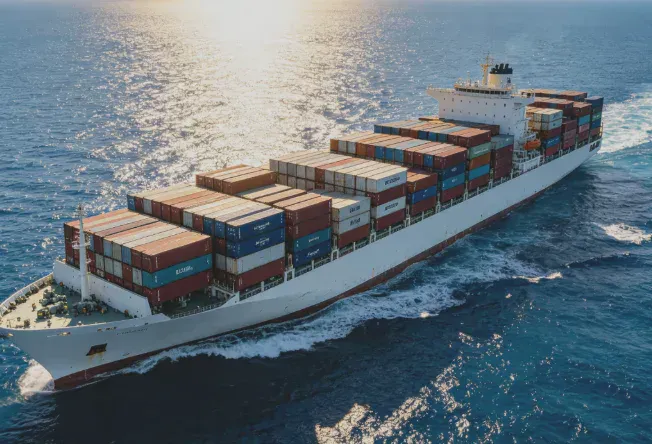
Shipping Methods from China to Somalia: Sea, Air & Door-to-Door Compared
Choosing how to ship is the single most consequential logistics decision you'll make. It determines your landed cost, your inventory cycle, and the customs procedures you'll face on the Somali side. Here's how the four main methods compare on the China–Somalia route in 2026.
Quick Comparison Table
| Method | Transit Time (Door-to-Door) | Cost Level | Best For |
|---|---|---|---|
| Sea Freight FCL (20ft/40ft) | 30–40 days | $ (Lowest per unit) | Bulk cargo ≥15 CBM, regular importers |
| Sea Freight LCL | 35–50 days | $$ (Pay per CBM) | Small volume <15 CBM, multi-supplier sourcing |
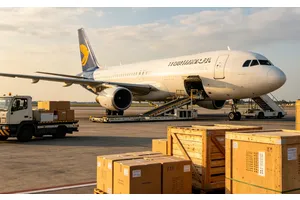
| Air Freight | 5–10 days | $$$$ (Per kg) | Urgent orders, high-value goods, perishables, samples |
| Door-to-Door DDP | Varies by mode + 3–7 days | $$–$$$ (All-inclusive) | First-time importers, hands-off convenience |
| Express Courier (DHL/FedEx/UPS) | 3–7 days | $$$$$ (Highest per kg) | Documents, small parcels, e-commerce samples |
Sea Freight: FCL vs LCL
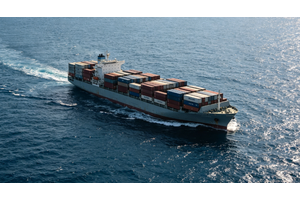
Sea freight from China to Somalia is the backbone of bilateral trade. It's the most economical option for virtually any shipment over a few cubic meters, but the FCL-versus-LCL decision has real cost and risk implications.
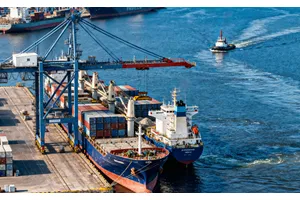
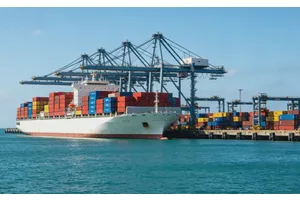
FCL (Full Container Load) means you book an entire container. You're paying for the whole box regardless of how full it is, which makes it dramatically more cost-effective per unit once your cargo exceeds roughly 15 cubic meters. The container is sealed at your supplier's factory (or at the consolidation warehouse) and stays sealed until it reaches Somali customs — meaning less handling, lower damage risk, and a single, predictable freight cost.
| Container Type | Internal Capacity | Max Payload | Best For |
|---|---|---|---|
| 20ft GP (General Purpose) | ~28 CBM (33 m³) | ~18 tons | Heavy, dense cargo: construction materials, machinery, tiles, cement |
| 40ft GP | ~56 CBM (67 m³) | ~26 tons | Mid-to-large volume: mixed cargo, electronics, auto parts |
| 40ft HQ (High Cube) | ~68 CBM (76 m³) | ~26 tons | Bulky but lightweight: furniture, textiles, insulation, packaging |
For specialized cargo, your forwarder can arrange Open Top (OT) containers for over-height machinery, Flat Rack (FR) containers for over-width equipment, and Reefers (refrigerated containers) for temperature-sensitive food or pharmaceutical shipments.
LCL (Less than Container Load) is the answer when your shipment is too small to justify an entire container — perhaps you're testing a new product line, or your order is only 3–8 CBM. Your goods share container space with other importers' cargo, and you only pay for the cubic meters you occupy. The trade-off is clear: lower cost per shipment in exchange for longer transit time (consolidation and deconsolidation add 5–10 days on each end) and marginally higher handling risk compared to FCL.
Real-World Example: A Mogadishu-based electronics distributor sources goods from three suppliers — smartphones from Shenzhen, accessories from Guangzhou, and packaging from Yiwu — totaling 12 CBM per order. Rather than paying for three separate LCL shipments, their forwarder consolidates all three at a Guangzhou warehouse, stuffs them into a single 20ft container, and ships FCL to Mogadishu. The consolidation saves approximately 22% versus shipping separately, and the FCL transit is 7–10 days faster than LCL.
Air Freight: When Speed Trumps Cost
When your cargo is urgent, high-value, or perishable, air freight from China to Somalia is the only option that makes sense. Most commercial air cargo from China arrives at Aden Adde International Airport (MGQ) in Mogadishu or Egal International Airport (HGA) in Hargeisa, with the most common departure airports being Guangzhou Baiyun (CAN), Shanghai Pudong (PVG), and Shenzhen Bao'an (SZX). For a focused breakdown of air cargo rates, airline options, and express services on this route, see our dedicated Air Shipping from China to Somalia guide.
Air freight pricing uses chargeable weight — the greater of actual weight versus volumetric weight (L × W × H in cm ÷ 6,000). This means a large but lightweight box can cost far more than its actual kilogram weight suggests. Optimize your packaging density before booking.
A practical rule of thumb from our experience: if your shipment is under 200 kg, has a high per-unit value, and a 35-day sea voyage would tie up capital that could otherwise be reinvested, air freight often delivers better total economics once you factor in inventory carrying costs. For example, if a $15,000 shipment tied up for 35 extra days at sea costs you $400 in lost working-capital opportunity plus $300 in additional insurance, the $600 air freight premium over sea freight starts looking like a bargain — especially when it means your goods are on shelves and generating revenue three weeks sooner.
Important: Electronics containing lithium batteries require DG (Dangerous Goods) declaration under IATA regulations. Your forwarder must hold IATA DG certification to handle battery-containing cargo by air. Not all forwarders have this capability — it's one area where credentials become non-negotiable.
Door-to-Door (DDP): The Hands-Off Option
Door-to-door shipping from China to Somalia under DDP (Delivered Duty Paid) terms is the closest thing to a logistics autopilot. Your freight forwarder handles everything: factory pickup across China, export customs declaration, ocean or air freight, import customs clearance in Mogadishu or Berbera, all duties and taxes, and final trucking to your door. Learn more about our end-to-end DDP process, including a step-by-step walkthrough of a real Somalia shipment, in our Door to Door Shipping from China to Somalia guide. You receive one all-in quote and deal with one point of contact.
For most importers — especially those without an established customs broker in Somalia — DDP is the safest choice. It eliminates the risk of surprise demurrage charges, customs valuation disputes, and coordination breakdowns between separate logistics providers. The premium you pay for DDP over managing the chain yourself is almost always less than the cost of a single customs delay.
Major Ports, Shipping Routes & Transshipment Strategies
There's a reality about shipping from China to Somalia that most generic freight guides gloss over: no direct ocean services exist between Chinese ports and Somali terminals. Every container transships. Understanding where and how your cargo transfers between vessels is the difference between a predictable 28-day transit and a mysterious 45-day delay.
Chinese Departure Ports
| Port | Region Served | Best If Your Suppliers Are In… | Somalia Route Strength |
|---|---|---|---|
| Shanghai | East China (Yangtze Delta) | Jiangsu, Zhejiang, Shanghai | Highest carrier frequency; competitive rates |
| Ningbo-Zhoushan | East China | Zhejiang, southern Jiangsu | Strong African line connections |
| Shenzhen (Yantian/Shekou) | South China (Pearl Delta) | Shenzhen, Dongguan, Huizhou | Electronics export hub; CMA CGM Noura Express coverage |
| Guangzhou (Nansha) | South China | Guangzhou, Foshan, Zhongshan | Wholesale market proximity; consolidation hub |
| Qingdao | North China | Shandong, Hebei, Tianjin, Beijing | Northern China coverage; competitive for machinery |
| Xiamen | Southeast China | Fujian | Alternative southern port; less congested |
Choosing the departure port closest to your suppliers minimizes domestic trucking costs within China — sometimes saving $300–$800 per container before it even hits the water.
Somali Destination Ports
Port of Mogadishu is Somalia's largest and busiest seaport, handling the majority of containerized imports from Asia. Recent modernization investments — including new gantry cranes and expanded berths — have improved turnaround times, though congestion during peak periods (especially pre-Ramadan) remains a risk. Mogadishu serves the capital region and south-central Somalia.
Port of Berbera (Somaliland), expanded by DP World with a $442 million investment, is now a regional logistics powerhouse. Its deeper draft accommodates larger vessels, and its modern container terminal offers faster processing than Mogadishu. Berbera also serves as a strategic transit corridor into landlocked Ethiopia — a consideration if your distribution extends beyond Somalia's borders. For importers serving the broader Horn of Africa, our Shipping From China To Ethiopia guide covers the inland corridor from Berbera in detail.
Port of Bosaso (Puntland) handles regional trade and medium-sized vessels, primarily serving the northern commercial market. Port of Kismayo (Jubaland) serves the south but has more limited container handling capacity.
The Transshipment Corridors
Jebel Ali (Dubai, UAE) is the primary transshipment hub for the Somalia lane. Cargo from Shanghai, Ningbo, or Shenzhen is offloaded at Jebel Ali and transferred to regional feeder vessels bound for Mogadishu or Berbera. This is the most established corridor with the highest sailing frequency — but Jebel Ali congestion during peak season (especially the weeks leading up to Ramadan) can add 5–10 days to your transit.
Salalah (Oman) is increasingly favored by MSC and Maersk as a Horn of Africa transshipment alternative. Its deep-water port and efficient operations often deliver faster feeder connections to Somali ports compared to Jebel Ali, particularly from South China origins.
Djibouti serves as a regional gateway, especially for cargo ultimately destined for Somaliland or northern Somalia. Containers arriving at Djibouti can be trucked overland to Hargeisa, though this adds road transit time and border formalities compared to direct Berbera discharge. For importers routing cargo through Djibouti as a primary entry point, see our dedicated Shipping From China To Djibouti service page for direct rates and transit options.
Our recommendation: For shipments from South China (Shenzhen, Guangzhou) to Mogadishu, we prefer the Salalah corridor via CMA CGM's Noura Express service — it consistently delivers the most reliable feeder connections with the least congestion risk. For North China origins (Shanghai, Qingdao) to Berbera, the Jebel Ali route offers better frequency. Note that carrier surcharges on the Far East–Africa lane fluctuate seasonally — our CMA CGM Raises PSS on Far East–West Africa Lane update tracks the latest rate adjustments affecting this corridor.
Transit Time Reference
| Route | FCL Ocean Transit | Door-to-Door (Estimated) |
|---|---|---|
| Shanghai → Mogadishu | 25–35 days | 35–45 days |
| Ningbo → Mogadishu | 25–35 days | 35–45 days |
| Shenzhen → Mogadishu | 25–35 days | 35–45 days |
| Guangzhou → Berbera | 28–38 days | 38–48 days |
| Shanghai → Berbera | 28–38 days | 38–48 days |
| Qingdao → Mogadishu | 30–40 days | 40–50 days |
LCL shipments add an additional 5–10 days on each end for consolidation and deconsolidation. Door-to-door DDP adds 3–7 days to the port-to-port time for customs clearance, duty payment, and inland trucking.
Shipping Costs from China to Somalia: Complete 2026 Price Guide
Freight rates are never static — they shift with fuel prices, seasonal demand, carrier capacity, and geopolitical events affecting the Indian Ocean and Red Sea corridors. The figures below represent real market ranges as of June 2026, based on our active contracts with major carriers serving the Horn of Africa.
Sea Freight Rates (June 2026)
| Container / Mode | Origin → Destination | Estimated Cost (USD) | Notes |
|---|---|---|---|
| 20ft FCL | Shanghai → Mogadishu | $2,800 – $3,500 | Most competitive from East China ports |
| 20ft FCL | Shenzhen → Mogadishu | $3,000 – $3,800 | South China premium due to longer feeder distance |
| 20ft FCL | Ningbo → Berbera | $2,800 – $3,500 | Competitive alternative to Shanghai |
| 20ft FCL | Guangzhou → Mogadishu | $2,900 – $3,600 | Consolidation hub advantage |
| 40ft FCL | Shanghai → Mogadishu | $4,500 – $5,500 | Best per-CBM value for volume shipments |
| 40ft FCL | Shenzhen → Mogadishu | $4,800 – $5,800 | Higher rates but faster feeder connections |
| 40ft HQ | Shanghai → Mogadishu | $4,700 – $5,700 | Extra 12 CBM for lightweight cargo |
| LCL | Guangzhou → Mogadishu | $120 – $180 / CBM | Ideal for sub-15 CBM shipments |
| LCL | Shanghai → Mogadishu | $130 – $190 / CBM | Slightly higher due to consolidation pricing |
For a deeper dive into container selection, cost optimization, and port-by-port rate comparisons, read our 20ft and 40ft shipping from China to Somali cost breakdown with real June 2026 data.
Air Freight Rates (June 2026)
| Weight Tier | Typical Rate (USD/kg) | Notes |
|---|---|---|
| Under 45 kg | $8.00 – $12.00 | Express courier territory |
| 45 – 100 kg | $7.00 – $9.50 | Standard air freight minimum |
| 100 – 300 kg | $6.50 – $8.50 | Volume discount begins |
| 300 – 500 kg | $5.50 – $7.50 | Consolidated air freight |
| 500 kg+ | $4.50 – $6.50 | Best air freight economics |
| DG (batteries) surcharge | +$1.50 – $2.00 / kg | Applies on top of base rate |
Guangzhou (CAN) and Shanghai (PVG) typically offer the most competitive air freight rates to Mogadishu (MGQ) due to higher cargo consolidation volume. Shenzhen (SZX) is a close third.
DDP Door-to-Door Estimates
| Mode | Estimated All-In Cost | Best For |
|---|---|---|
| Sea + DDP | $4.20 – $5.50 / kg (volume-dependent) | Bulk shipments, predictable timeline |
| Air + DDP | $8.00 – $12.00 / kg | Urgent, high-value, low-volume |
Hidden Costs to Budget For
Even experienced importers get surprised by charges that fall outside the headline freight rate. Here's what to watch for:
- THC (Terminal Handling Charges) at both origin and destination ports — typically $100–$250 per container at each end
- Documentation fees: B/L issuance ($50–$100), Certificate of Origin ($30–$60)
- ECTN filing fee: Mandatory for Somalia, typically $50–$150 depending on cargo value
- Customs inspection fees: If your container is selected for physical inspection at Mogadishu or Berbera
- Demurrage & detention: If clearance is delayed beyond the free storage period (usually 5–7 days at Somali ports)
- Inland trucking: From port to final destination — highly variable based on distance and road conditions
Pro Tip: Always ask for an all-in landed cost breakdown that includes ocean freight, both-end THC, documentation, ECTN, customs brokerage, import duties, and inland delivery. A forwarder who only quotes the ocean freight rate is leaving you exposed to $800–$1,500+ in unanticipated charges at destination.
Somalia Customs Clearance: Documents, Duties & Regional Differences
If there's one section of this guide that will save you the most money and stress, it's this one. Somalia's customs landscape is not unified — and treating it as if it were is the single most common mistake we see importers make.
The Three Customs Regimes
Federal Government of Somalia (FGS) — Mogadishu Port. The Mogadishu customs authority operates under the Federal Government and follows a standardized import clearance process. Duties are generally assessed on the CIF (Cost, Insurance, Freight) value of goods, though volume-based assessment methods are still used for certain commodity categories. The Mogadishu customs system has seen gradual modernization, including electronic declaration capabilities, but manual processes still dominate.
Somaliland — Berbera Port. The Somaliland Customs Authority operates completely independently from Mogadishu, with its own tariff schedule, documentation requirements, and clearance procedures. A shipment cleared through Berbera follows Somaliland regulations — not FGS regulations. If your goods are ultimately destined for Mogadishu after clearing Berbera, you face an additional internal border checkpoint. This is not a theoretical distinction; it's a hard operational reality that directly affects your paperwork, duty calculations, and timeline.
Puntland — Bosaso Port. The Puntland administration maintains its own customs framework, distinct from both Mogadishu and Somaliland. Bosaso primarily serves the Puntland region, and cargo cleared there follows Puntland customs protocols.
Our advice: Before booking, be absolutely certain which Somali jurisdiction your cargo will clear through — and verify that your freight forwarder has a vetted, active customs broker in that specific port. A forwarder with an agent in Mogadishu does not automatically have clearance capability in Berbera or Bosaso.
Required Documentation
| Document | Required By | Notes |
|---|---|---|
| Commercial Invoice | All jurisdictions | English or Arabic; accurate values and HS codes essential |
| Packing List | All jurisdictions | Detailed weights, dimensions, and packaging breakdown |
| Bill of Lading (B/L) | All jurisdictions | Original B/L often required at Mogadishu; Telex release may be accepted at Berbera |
| Certificate of Origin | All jurisdictions | Proves Chinese origin; may affect duty rates under trade agreements |
| ECTN / ACI Certificate | All jurisdictions | Mandatory — must be filed before vessel departure from China |
| Product-specific certificates | Varies | Health certificates (food/pharma), safety certs (electronics), fumigation cert (wood packaging — ISPM 15) |
The ECTN Requirement
The Electronic Cargo Tracking Note (ECTN) — also referred to as ACI (Advanced Cargo Information) in some contexts — is a mandatory document for all cargo entering Somali ports. It must be applied for and approved before your vessel departs from China. Processing typically takes 2–4 business days.
Required information for ECTN application includes: shipper and consignee details, vessel name and voyage number, container numbers, HS codes, cargo description and value, and B/L or AWB reference. Your freight forwarder should handle the ECTN application as part of their service; if they tell you to arrange it yourself, that's a red flag.
Consequences of non-compliance include cargo holds at destination, fines (typically $200–$500 for late filing), and potential rejection of your shipment. This is not a box-ticking exercise — Somali port authorities take ECTN compliance seriously.
Import Duties by Product Category
Duty rates in Somalia vary by product category and, critically, by the jurisdiction of entry. The following are indicative ranges based on the Mogadishu tariff schedule as of mid-2026:
| Product Category | Indicative Duty Range | Notes |
|---|---|---|
| Electronics & Appliances | 5–15% of CIF value | Smartphones, TVs, home appliances |
| Construction Materials | 5–10% of CIF value | Steel, cement, ceramics, fittings |
| Vehicles & Auto Parts | 10–25% of CIF value | Higher for used vehicles; parts generally lower |
| Textiles & Clothing | 10–20% of CIF value | Varies by fabric type and finished vs. raw |
| Machinery & Equipment | 0–10% of CIF value | Agricultural/industrial machinery often lower |
| Foodstuffs | 5–15% of CIF value | Health certificate required; staples sometimes exempt |
| Furniture | 15–25% of CIF value | Finished furniture; raw wood products may differ |
⚠️ Important: The above rates are indicative for Mogadishu clearance. Somaliland (Berbera) and Puntland (Bosaso) may apply different schedules. A small number of essential goods — including certain humanitarian supplies, agricultural inputs, and pharmaceutical products — may qualify for reduced or exempt tariff treatment. Always confirm current rates with your forwarder's local broker before finalizing your import budget.
Incoterms for Somalia Shipping: EXW, FOB, CIF or DDP?
Choosing the right Incoterm is about risk allocation — who pays for what, and where responsibility transfers from seller to buyer. For the Somalia lane, the "right" choice depends almost entirely on your experience level and whether you have a trusted partner on the ground.
| Incoterm | What the Forwarder/Seller Handles | What You Handle | Best For |
|---|---|---|---|
| EXW (Ex Works) | Nothing beyond making goods available at factory | Everything: China trucking, export customs, ocean freight, Somalia customs, duties, inland delivery | Almost never recommended for Somalia |
| FOB (Free on Board) | China trucking + export customs + loading onto vessel | Ocean freight booking, insurance, Somalia import clearance, duties, inland delivery | Experienced importers with their own freight contracts and Somali broker |
| CIF (Cost, Insurance, Freight) | China export + ocean freight to Somali port + basic marine insurance | Somalia import clearance, duties, inland delivery | Importers with a reliable Somali customs broker who lack ocean freight relationships |
| DDP (Delivered Duty Paid) | Everything — factory floor to your door in Somalia, including all duties and taxes | Nothing except receiving the goods | Recommended for 90%+ of importers |
DDP shipping from China to Somalia is our default recommendation for a reason: Somalia's logistics environment is fragmented, local customs procedures vary by jurisdiction, and the cost of a single misstep — a container sitting in Mogadishu port racking up $80/day in demurrage while you try to resolve a documentation issue remotely — can exceed the DDP premium several times over.
CIF might look cheaper on paper, but remember: CIF stops at the port. You're still responsible for import clearance, duty payment, and inland delivery. If you don't have a vetted, responsive customs broker in Mogadishu or Berbera, those "savings" evaporate fast.
When FOB makes sense: If you're an established importer who ships 10+ containers per year, has a long-term relationship with a Somali customs broker, and wants to control your ocean freight procurement to capture market rate dips, FOB gives you that flexibility. For everyone else: DDP. If you're weighing different trade terms, our DDP vs FOB: Which Option Saves Time and Reduces Hassle comparison breaks down the real-world trade-offs in detail.
How to Choose a Reliable Freight Forwarder for China to Somalia Shipping
Finding a reliable freight forwarder from China to Somalia isn't about picking the first company that appears in a Google search. It's about verifying capabilities that directly affect whether your cargo arrives on time, on budget, and without customs complications.
Seven Evaluation Criteria
1. Somalia-specific experience. Ask the forwarder: How many containers do you ship to Somalia per month? Which Somali ports do you serve directly with your own broker relationships? A forwarder who ships 200 containers a month to Dubai but two to Mogadishu is not a Somalia specialist.
2. Local agent network. The single most important question you can ask: "Who is your customs broker in Mogadishu?" (or Berbera, or Bosaso — whichever port you're shipping to). If the forwarder hesitates, gives a vague answer, or admits they subcontract through a third party, walk away. Direct, named broker relationships are non-negotiable.
3. Industry certifications. FIATA (International Federation of Freight Forwarders Associations) and IATA (International Air Transport Association) certifications are verifiable credentials that signal adherence to international freight forwarding standards. For air freight involving lithium batteries, IATA DG certification is essential. For sea freight consolidation, NVOCC (Non-Vessel Operating Common Carrier) licensing matters.
4. Carrier relationships. Your forwarder should have direct contracts — not just spot-market bookings — with the shipping lines that serve the Horn of Africa: CMA CGM (Noura Express service), MSC, Maersk, COSCO. Direct contracts mean guaranteed space and preferential rates, especially during peak season.
5. Transparent pricing. Demand an all-in landed cost breakdown that includes: ocean/air freight, both-end THC, documentation fees, ECTN filing, customs brokerage, estimated import duties, and inland delivery. A forwarder who only quotes the ocean freight is setting you up for destination-side surprises.
6. Cargo insurance. Verify that the forwarder offers comprehensive marine cargo insurance — not just basic carrier liability (which covers pennies on the dollar). For Somalia-bound cargo, ensure the policy includes standard perils coverage and ask whether any special clauses apply. A forwarder who doesn't proactively discuss insurance is not managing your risk. For a detailed breakdown of coverage types, cost factors, and how to calculate the right insurance level for your shipment, see our Shipping container insurance cost for shipments from China guide.
7. Communication capability. Your forwarder should be able to communicate in Chinese with your suppliers (for factory pickup coordination, documentation verification, and problem resolution) AND in English with you for shipment updates and strategic decisions. This bilingual capability is far rarer than you might expect — and absolutely critical when something goes wrong. If your supply chain also touches neighboring trade lanes, you may also want to evaluate a Freight forwarder from China to Djibouti for shipments transiting through the region's busiest gateway.
Red Flags
- No physical office address in China
- Cannot name their local agent in Mogadishu or Berbera
- Quoted rate is significantly below market (likely excludes critical destination charges)
- No ECTN processing capability or unfamiliarity with the requirement
- Vague about the differences between clearing goods in Mogadishu versus Berbera
- No FIATA or IATA certification visible on their website or documentation
The DTFU Logistics Difference
At DTFU Logistics, we've spent over a decade building exactly the kind of Somalia lane expertise this guide describes. We are FIATA and IATA dual-certified, with direct carrier contracts across CMA CGM, MSC, Maersk, and COSCO — giving our clients guaranteed space and preferential rates even during peak season. Our dedicated customs brokers in Mogadishu and Hargeisa are long-term partners, not third-party subcontractors, and they understand the procedural nuances of each Somali jurisdiction. We coordinate directly with your Alibaba and 1688 suppliers in Mandarin, consolidating multi-vendor orders at our Guangzhou warehouse for single-shipment efficiency. And every shipment is backed by comprehensive cargo insurance and real-time tracking, so you're never in the dark about where your goods are or when they'll arrive. With 5,000+ successful shipments and a 98% client satisfaction rate, we've earned our reputation as a trusted partner on the China–Somalia trade lane.
FAQs
What is the cheapest way to ship from China to Somalia?
Sea freight — specifically FCL (Full Container Load) if you have enough volume to fill at least half a container — is the most economical method. A 20ft container from Shanghai to Mogadishu costs approximately $2,800–$3,500 as of June 2026, and when you divide that across 28 CBM of cargo, the per-unit cost is dramatically lower than any other mode. Consolidating purchases from multiple Chinese suppliers into one container further improves your economics.
How long does shipping from China to Somalia take?
Port-to-port sea freight takes 25–40 days depending on the origin port in China, the destination port in Somalia, and the transshipment connection. Door-to-door DDP adds 3–7 days for customs clearance and inland delivery. Air freight door-to-door takes 5–10 days. Express courier (DHL/FedEx/UPS) takes 3–7 days for small parcels and documents.
How much does it cost to ship a 20ft container from China to Somalia?
Expect to pay $2,800–$3,800 for a 20ft FCL container as of June 2026, depending on the origin port (Shanghai and Ningbo are typically the most competitive), the destination port (Mogadishu vs. Berbera), and seasonal demand. This is the ocean freight portion only — budget an additional $800–$1,500 for destination-side charges including THC, documentation, ECTN, customs brokerage, duties, and inland delivery.
How much is the freight for a 40ft container to Mogadishu?
A 40ft container from major Chinese ports to Mogadishu costs approximately $4,500–$5,800 as of June 2026. The 40ft HQ (High Cube) variant, which offers an extra 12 CBM of capacity, ranges from $4,700–$5,700. For lightweight, bulky goods like furniture or textiles, the 40ft HQ provides the best cost per cubic meter.