Are you planning to import goods from Chnia to Egypt? As bilateral trade flourishes, driven by new partnerships and infrastructure growth, businesses increasingly seek effortless logistics. Door to door shipping stands out as the ultimate solution, offering unparalleled convenience and efficiency. This 2025 guide dives deep into every aspect of door to door shipping from China to Egypt, providing you with essential knowledge to streamline your supply chain and leverage this vital corridor.
What is Door to Door Shipping?
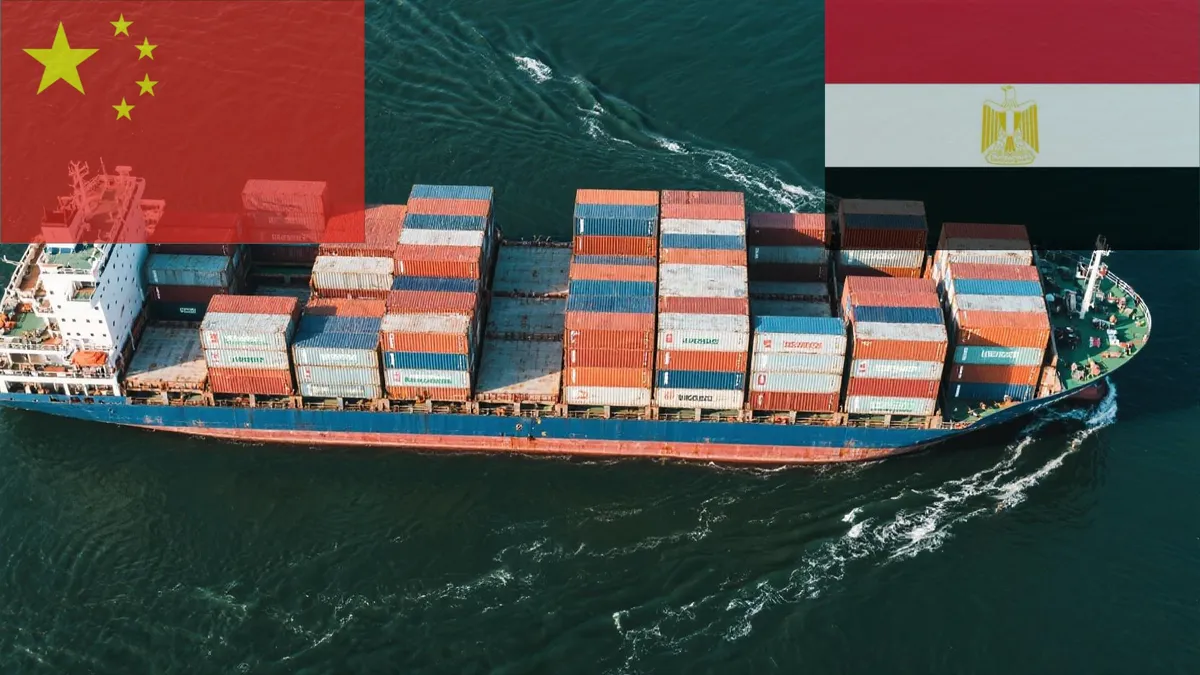
Door-to-door shipping is a specialized, all-encompassing logistics service that orchestrates the entire transportation journey of goods, from the moment they leave the seller's or manufacturer's facility in China until they arrive directly at the buyer's designated address in Egypt. This comprehensive approach simplifies international trade by consolidating numerous intermediary steps—such as those typically managed by multiple freight forwarders, customs brokers, and local delivery agents—under a single, unified provider.
This seamless, end-to-end service encompasses:
- Pickup from the origin warehouse or factory in China: Your goods are collected from their point of departure.
- Export customs clearance in China: All necessary documentation and procedures for exiting China are managed.
- Main transportation (by sea or air): Your cargo is moved via the most suitable shipping method.
- Import customs clearance in Egypt: All required customs procedures for entering Egypt are handled.
- Last-mile delivery to the final destination in Egypt: Whether it's a residential address, a commercial complex, or a storage facility, your goods reach their ultimate destination.
By centralizing these complex processes, door-to-door shipping significantly reduces administrative burdens, mitigates the risk of delays, and provides superior visibility throughout the entire shipment lifecycle.
The Step-by-Step Door to Door Process
Navigating international shipping can be intricate, but a door-to-door service simplifies each stage. Here’s a detailed breakdown of the process for your shipments from China to Egypt:
- Order Placement and Documentation: After confirming your shipment details with a trusted logistics provider like DTFU Logistics, you will be required to submit crucial documents. These typically include the commercial invoice, packing list, bill of lading (for sea freight) or air waybill (for air freight), certificate of origin, and any specific permits mandated by Chinese export or Egyptian import regulations (e.g., for food products, textiles, or electronics). Your provider will meticulously review these to ensure full compliance.
- Pickup from Origin: The logistics team will arrange for the collection of your goods from your specified location in China (e.g., Shanghai, Guangzhou, Shenzhen, Yiwu). They will conduct an initial quality check, verify packaging integrity, and affix unique tracking labels.
- Export Customs Clearance in China: Your provider handles all the necessary formalities with Chinese customs authorities. This involves submitting accurate declarations, processing any applicable export duties, and obtaining required export licenses. This phase typically takes 1–3 business days, though it can extend for specialized goods or during peak seasons.
- Main Transportation: The shipment is then transported to the appropriate port or airport in China for the main leg of its journey. For sea freight, this usually means moving goods to major hubs like Shanghai Port, Ningbo-Zhoushan Port, or Shenzhen Port. For air freight, common departure points include Shanghai Pudong International Airport (PVG) or Guangzhou Baiyun International Airport (CAN).
- Ocean or Air Transit: Your goods are loaded onto a container ship (sea freight) or cargo plane (air freight) heading for Egypt. Primary Egyptian ports that handle international cargo include Alexandria Port and Port Said East Port (strategically located at the Suez Canal entrance), while key airports are Cairo International Airport (CAI) and Borg El Arab Airport (HBE).
- Import Customs Clearance in Egypt: Upon arrival, your logistics provider manages the complex process of Egyptian customs clearance. This includes submitting all import documentation (e.g., customs declaration, invoice, packing list, certificate of origin), paying relevant import duties, VAT, and other taxes, and coordinating any necessary inspections by Egyptian authorities. This critical step usually takes 2–5 business days, but can be prolonged by incomplete paperwork or specific product inspections. (As of 2025, Egypt's average import duty on non-agricultural products is about 6.9%, with most goods ranging from 5-30% depending on the HS code, and a standard VAT rate of 14%).
- Last-Mile Delivery: Once cleared by customs, the goods are transported from the Egyptian port or airport directly to their final destination – be it a commercial warehouse in Cairo, a retail store in Alexandria, or a distribution center in Suez. The provider collaborates with local delivery partners to ensure timely and secure drop-off.
- Confirmation and Tracking: Throughout the entire process, you will have access to real-time tracking tools to monitor your shipment's progress. Upon successful delivery, you will receive confirmation, including proof of receipt from the consignee.
Sea Freight vs. Air Freight
| Feature | Sea Freight (LCL/FCL) | Air Freight |
|---|---|---|
| Best For | Heavy, bulky, or non-urgent shipments (machinery, furniture, textiles) | High-value, urgent, or small-volume cargo (electronics, samples) |
| Typical Transit Time | 25–40 days (current 2025, Red Sea delays +1-2 weeks on some routes) | 5–9 days (to/from major airports) |
| Cost (avg) | FCL: $1,700–$3,300 (20ft), $2,750–$4,200 (40ft); LCL: $85–$130/m³ | $4.8–$7.2/kg |
| Carbon Footprint | Lower per unit shipped | Higher |
| Volume Flexibility | High (LCL/FCL scaling options) | Best for up to 500kg |
| Security/Risk | Higher for sea re-routing (theft, delays in Suez region), Insurance recommended | Lower loss, but strict airline screening rules |
| Egypt Main Gateways | Alexandria (Container throughput 2.5M TEU 2024, up 5%), Port Said, Damietta | Cairo International, Alexandria Intl. |
Key Update: The Red Sea corridor saw periodic disruptions in H1 2025, especially for eastbound vessels avoiding conflict zones and port blockades, causing transit to lengthen by up to 14 days for some sea routes. Air freight, though costlier, saw spikes during these events due to rerouted cargo.
Door to Door Shipping Costs from China to Egypt
Door to door shipping costs from China to Egypt depend on your shipment size, freight mode, and any special requirements. Costs include all handling, customs, and last-mile delivery services. Here’s a simplified cost breakdown:
| Mode | Example Size | Core Shipping Cost | Estimated Add-Ons | Typical Total (USD) |
|---|---|---|---|---|
| Sea LCL | 10 CBM | $1,150 – $2,000 | $150 – $300 | $1,300 – $2,300 |
| Sea FCL 20′ | 1 x 20’ container | $2,290 – $4,030 | $310 – $470 | $2,600 – $4,500 |
| Sea FCL 40′ | 1 x 40’ container | $3,380 – $6,180 | $420 – $620 | $3,800 – $6,800 |
| Air Freight | 50 kg | $305 – $525 | $45 – $75 | $350 – $600 |
Add-ons include: Insurance (0.3–0.5% of value), Egyptian import duties and VAT (5–30% duty + 14% VAT), documentation fees, and local charges. Special cargo, peak season, or regulatory inspections (e.g., for electronics or textiles) will increase totals.
How Long Does Door to Door Shipping from China to Egypt Take?
Transit time for door to door shipping from China to Egypt is affected by transit method, origin/destination, customs clearance, and seasonal congestion.
| Mode | Door-to-Door Transit Time (Days) | Process Breakdown | Notes |
|---|---|---|---|
| Sea LCL | 35 – 50 | Pickup (2-4) → China Export (3-5) → Ocean (25-35) → Egypt Customs (5-8) → Delivery (2-3) | Longer time due to consolidation and Egypt customs. |
| Sea FCL | 30 – 45 | Pickup (1-2) → China Export (2-4) → Ocean (20-30) → Egypt Customs (4-7) → Delivery (1-2) | Generally faster, fewer handling steps. |
| Air Freight (standard) | 6 – 12 | Pickup (1-2) → China Export (1-2) → Flight (2-4) → Egypt Customs (1-3) → Delivery (1-2) | Limited by flight availability and customs processing. |
| Air Freight (express) | 4 – 8 | Pickup (1) → China Export (0.5-1) → Flight (1-2) → Egypt Customs (0.5-1.5) → Delivery (0.5-1) | Best for urgent/high-value goods. |
Factors that affect speed:
- Route efficiency (coastal China to Alexandria/Cairo is quickest)
- Customs paperwork accuracy (DTFU Logistics can expedite this)
- Seasonal demand (pre-Eid, Chinese New Year)
- Port/airport congestion (currently moderate as of August 2025)
Tip: Accurate paperwork and choosing experienced partners like DTFU Logistics can save several days!
DTFU Logistics: The Trusted Partner for Door to Door Shipping from China to Egypt
Why choose DTFU Logistics for your China–Egypt cross-border shipments? Here’s why clients entrust us with their most critical logistics projects in 2025:
- End-to-End Control: One-stop solution—from pickup in China to delivery in Egypt—eliminates third-party risks and miscommunications.
- Egypt Expertise: Mastery over Egypt’s evolving customs and Nafeza digital clearance; “green channel” relationships with major ports.
- Real-Time Updates: Digital dashboard for 24/7 location, milestone, and ETA tracking, with event alerts (e.g., Suez delays, port congestion).
- Competitive Pricing: Transparent quotes, no hidden surcharges—even in peak seasons or during ongoing Red Sea rerouting.
- Actual Client Success: July 2025, DTFU delivered a $600,000 medical devices FCL from Shenzhen to Cairo Hospital 100% on time, overcoming a Suez reroute by airlifting sensitive equipment during canal delays.
- Custom Solutions: FCL, LCL, air, multimodal, oversized, temperature-controlled—including all-risk insurance and local warehousing options.
DTFU Logistics actively monitors these factors and leverages its expertise to provide reliable timelines and proactive communication, minimizing delays for your door to door shipments from China to Egypt.