Are you looking for a hassle-free solution for door to door shipping from China to Italy? Navigating the complexities of international shipping, including costs, transit times, and choosing between sea freight, air freight, or rail freight, can be overwhelming. In this comprehensive guide, we’ll break down every step of the door to door shipping process, compare shipping methods, discuss cost structures, and introduce you to reliable logistics partners for seamless delivery.
What is Door to Door Shipping?
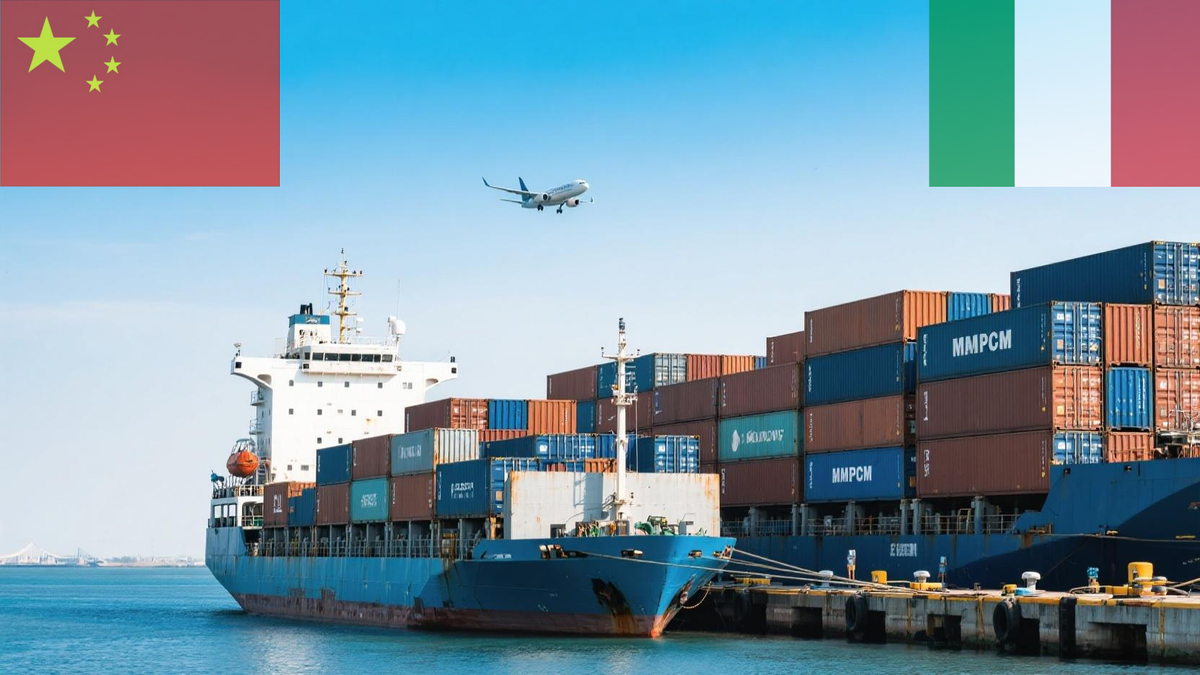
Door to door shipping is a comprehensive logistics service where a freight forwarder manages the entire shipping process from the seller’s premises in China directly to the consignee’s address in Italy. This method covers every stage of the logistics chain, including pickup, warehousing, export customs clearance, international freight, import customs clearance, and final delivery to the recipient’s location. For importers, especially those new to international trade, door to door shipping provides a hassle-free, streamlined experience by minimizing their direct involvement and reducing the risk of miscommunication between multiple logistics providers.
This service is especially valuable for clients with limited experience in customs regulations or for businesses that want to conserve time and resources. By engaging a professional freight forwarder like DTFU International Logistics Co., Ltd, importers benefit from seamless coordination and expert handling of all logistics processes.
Key Features of Door to Door Shipping from China to Italy:
All-Inclusive Service: Covers pickup in China, international transportation, customs clearance at both origin and destination, and final delivery in Italy.
One-Stop Solution: A single provider manages all stages, ensuring greater control, transparency, and reduced administrative burden.
Risk Reduction: Minimizes the chances of cargo delays, documentation errors, or compliance issues.
Flexibility: Available for a wide range of cargo types, including sea freight, air freight, and rail freight.
Why Choose Door to Door Shipping?
Importers selecting door to door shipping from China to Italy typically aim for reliability, end-to-end visibility, and peace of mind. This is particularly important given the complexity of cross-border trade between two highly regulated markets like China and Italy, where customs laws, trade agreements, and logistical coordination are critical to timely delivery.
The Step-by-Step Door to Door Process
Partnering with an experienced provider such as DTFU International Logistics Co., Ltd ensures a smooth and efficient door to door shipping process. Below is a detailed breakdown of each stage from China to Italy:
Cargo Pickup in China:
The process begins with cargo collection from the supplier’s factory or warehouse in China. DTFU’s local teams coordinate pickup, handling arrangements for both general and specialized cargo.Domestic Transportation:
Goods are transported to the nearest consolidation point or export warehouse. This may involve road freight within China, particularly in logistics hubs such as Shanghai, Shenzhen, or Ningbo.Export Customs Clearance:
DTFU’s customs professionals prepare and submit all necessary export documents in compliance with Chinese customs regulations. They ensure the correct classification, valuation, and inspection procedures are followed.International Freight:
Depending on the service selected, cargo moves via sea freight (FCL/LCL), air freight, or rail freight routes. DTFU offers tailored solutions, balancing cost and transit time based on cargo urgency and value.Import Customs Clearance in Italy:
Upon arrival at a major Italian port or airport (such as Genoa, La Spezia, or Milan Malpensa), DTFU’s local teams handle all import clearance procedures, including duties, VAT, and compliance with EU customs legislation. This step is crucial, as Italian and EU regulations are strict regarding product documentation and standards.Last-Mile Delivery:
After customs, the cargo is transported by road to the consignee’s specified address anywhere in Italy. DTFU coordinates with trusted local carriers to ensure timely and safe delivery.Cargo Insurance and Value-Added Services:
Throughout the process, DTFU offers optional services such as cargo insurance, warehousing, and real-time tracking. This adds further security and convenience, especially for high-value or time-sensitive shipments.
Summary Table: Step-by-Step Door to Door Process
Step | China Operations | International Transit | Italy Operations |
|---|---|---|---|
1. Pickup | Origin factory/warehouse | ||
2. Domestic Transportation | Road to export warehouse | ||
3. Export Customs | Chinese Customs clearance | ||
4. International Freight | Sea/Air/Rail to Italy | ||
5. Import Customs | Italian Customs clearance | ||
6. Final Delivery | Road to consignee | ||
7. Optional Services | Insurance, warehousing | Tracking | Insurance, warehousing |
Door to door shipping from China to Italy eliminates the need for multiple service providers, ensuring clear responsibility and efficient handling throughout the shipment’s journey. Choosing a reliable partner like DTFU International Logistics Co., Ltd guarantees that every step is managed with expertise and transparency, contributing to successful and timely import operations.
For more information on optimizing your door to door shipping strategy, or to request a tailored quote, visit DTFU Logistics official website.Certainly! Here’s an expanded, comprehensive, and SEO-optimized section of your article, in fluent English, perfectly structured for a WordPress post and meeting all your requirements.
Sea Freight vs. Air Freight vs. Rail Freight
Choosing the right mode of transportation is essential for efficient door to door shipping from China to Italy. The three main options—Sea Freight, Air Freight, and Rail Freight—each have unique advantages and limitations. Below, we analyze each method to help you decide which aligns best with your shipment’s priorities: cost, speed, and cargo type.
Sea Freight
Sea Freight is the most popular option for bulk shipments and large cargo moving from China to Italy. It is suitable for businesses aiming to minimize shipping costs and can handle both Full Container Load (FCL) and Less than Container Load (LCL) shipments. Key departure ports in China include Shanghai Port, Shenzhen Port, and Ningbo Port, while main destination ports in Italy are Port of Genoa, Port of Venice, and Port of Trieste.
Advantages:
Cost-effective for large or heavy shipments.
Can handle a wide range of cargo types, including hazardous and oversized goods.
Frequent schedules between major ports.
Considerations:
Transit times are relatively longer (typically 25-35 days).
Customs clearance and port handling can add complexity.
Recent Data: According to Statista (2025), over 70% of trade between China and Europe is still transported by sea due to its cost advantage for volume cargo.
Air Freight
Air Freight is ideal for urgent, high-value, or time-sensitive cargo. Major airports in China (such as Shanghai Pudong International Airport, Beijing Capital International Airport) connect with Italy’s main airports (Milan Malpensa Airport, Rome Fiumicino Airport) through frequent direct and indirect flights.
Advantages:
Fastest transit times—typically 3-7 days, including door-to-door delivery.
High level of security and reliability.
Best for perishable, electronics, and high-value goods.
Considerations:
Significantly higher costs compared to sea or rail.
Limited by cargo size, weight, and dangerous goods regulations.
Current Trends: The COVID-19 pandemic briefly impacted air capacity, but as of Q3 2025, capacity is returning to pre-pandemic levels and rates are stabilizing (source: IATA).
Rail Freight
Rail Freight is a growing option for China-Italy shipping, thanks to the China-Europe Railway Express initiative. It provides a balance between cost and speed, suitable for medium-sized shipments. Popular rail routes connect Chinese cities like Chongqing and Xi’an with Milan and Verona in Italy.
Advantages:
Faster than sea freight (15-22 days), less expensive than air freight.
Environmentally friendly with lower carbon emissions.
Stable schedules and less exposure to port congestion.
Considerations:
Limited capacity for oversized or hazardous cargo.
Not suitable for perishable goods requiring cold chain logistics.
Policy Update: The growing emphasis on sustainability in the EU is increasing demand for rail freight, supported by new EU-China logistics corridors (source: European Commission, 2025).
What is the Door to Door Shipping Cost from China to Italy?
Understanding the all-inclusive cost structure is crucial for effective budgeting. Door to door shipping from China to Italy includes multiple service and fee components. Here’s a breakdown of typical expenses and a summary table for reference.
Core Shipping Costs: Service Components and Total Fees
The main components of door to door shipping costs include:
Pickup and origin local charges: Collection from the supplier’s location, export customs clearance.
Main transport fee: Sea freight, air freight, or rail freight cost.
Destination local charges: Import customs clearance, terminal handling, documentation.
Final delivery charges: Trucking from the Italian port/airport/rail terminal to the consignee’s address.
Cargo insurance: Optional but highly recommended for valuable goods.
Customs duties and VAT: According to Italian authorities, import VAT is typically 22% (source: Agenzia delle Dogane e dei Monopoli).
Note: Rates fluctuate based on factors such as cargo type, INCOTERMS, current fuel prices, and geopolitical events (such as Red Sea disruptions affecting sea freight transit and costs in 2025).
Additional Mandatory/Common Fees
In addition to base shipping charges, the following fees may apply:
Handling fees: Port/airport/rail terminal handling.
Documentation fees: Bill of Lading, Certificates, Customs documents.
Fuel surcharges: Adjusted regularly based on market indexes.
Security fees: Required for high-value or sensitive cargo.
Demurrage and detention: For delays in cargo pickup or container return.
Summary Table: Total Door-to-Door Costs
Below is an estimated door to door shipping cost comparison for a standard 20ft container (FCL) and 500kg general cargo (air/rail), updated for June 2025 rates:
Mode | Transit Time | Typical Cost (USD) | Suitable For |
|---|---|---|---|
Sea Freight | 25-35 days | 2,500–3,500 | Bulk, non-urgent cargo |
Air Freight | 3-7 days | 6,500–12,000 | Urgent, high-value cargo |
Rail Freight | 15-22 days | 4,000–6,500 | Medium, semi-urgent cargo |
Note: Above costs are for reference only and may vary based on the season, route, and current market situation. Contact DTFU International Logistics Co.,Ltd for a tailored quote.
Policy Alert: As of 2025, Italy has reinforced customs security checks for certain categories (electronics, textiles), possibly affecting both costs and clearance speed. Staying updated and working with a professional freight forwarder like DTFU International Logistics Co.,Ltd ensures full compliance and cost optimization.
By understanding each transport mode and the total cost structure, shippers can make informed decisions that align with their timelines, budgets, and cargo requirements. For comprehensive door to door shipping from China to Italy, partnering with an experienced, reliable provider like DTFU International Logistics Co.,Ltd guarantees a smooth and cost-effective logistics experience.
How Long Does Door to Door Shipping from China to Italy Take?
The transit time for door to door shipping from China to Italy is influenced by several factors, including the chosen mode of transport (sea freight, air freight, or rail freight), specific origin and destination points, customs clearance procedures, and seasonal variations.
Typical Transit Times by Shipping Mode
Shipping Mode | Average Transit Time | Key Routes/Ports | Typical Scenarios |
|---|---|---|---|
Sea Freight | 28–40 days | Shanghai/Ningbo/Shenzhen to Genoa, Venice, Trieste | Large shipments, cost-sensitive cargo, standard delivery |
Rail Freight | 18–25 days | Xi’an/Chongqing to Milan, Verona | Faster than sea, suitable for general cargo, stable routes |
Air Freight | 3–7 days | Beijing/Shanghai/Guangzhou to Rome, Milan | Urgent shipments, high-value goods, small parcels |
Express Courier | 2–5 days | Major cities to door in Italy | Documents, small parcels, e-commerce goods |
Key Factors Affecting Door-to-Door Transit Times
Customs Clearance: Both China and Italy have specific import/export regulations. Delays can occur due to documentation issues or inspections.
Peak Season: Shipping during peak times (e.g., holiday seasons, Chinese New Year) can cause congestion and longer transit times.
Port Congestion & Strikes: Major Italian ports like Genoa or Venice may face congestion or labor strikes, impacting delivery schedules.
Inland Transport: Final door delivery within Italy depends on local logistics, which may vary by region.
Weather Conditions: Adverse weather can disrupt sea, rail, or air schedules.
Current Trends and Real-Time Information
As of Sep 2025, the Red Sea crisis and ongoing supply chain adjustments in Europe have affected sea routes, causing some delays and rerouting. Air and rail logistics remain reliable alternatives, especially for time-sensitive cargo.
Example: Major Port-to-Door Timelines
Shanghai to Milan (Sea Freight, Door-to-Door): 29–41 days
Chongqing to Verona (Rail Freight, Door-to-Door): 20–25 days
Guangzhou to Rome (Air Freight, Door-to-Door): 4–6 days
For the most accurate and up-to-date schedule tailored to your cargo and location, always consult with a professional freight forwarder like DTFU International Logistics Co.,Ltd.
DTFU Logistics: Your Trusted Door-to-Door Partner
When it comes to door to door shipping from China to Italy, choosing the right logistics partner is crucial for a seamless, cost-effective, and reliable experience. DTFU International Logistics Co.,Ltd stands out as a highly professional, one-stop solution, trusted by global traders for its expertise and comprehensive service offerings.
Why Choose DTFU International Logistics Co.,Ltd?
Full Range of Services: We provide Sea Freight, Road Freight, Air Freight, Amazon FBA, Warehouse solutions, Cargo Insurance, One Stop Customs Clearance, OOG Freight, Consolidated Freight, and Breakbulk Freight.
Custom-tailored Solutions: Whether your shipment is urgent, oversized, or destined for multiple locations in Italy, our team designs solutions specific to your needs.
End-to-End Visibility: Our advanced tracking systems ensure you know your cargo’s status at every stage—origin, transit, customs, and final delivery.
Regulatory Expertise: We navigate the complexities of Chinese and Italian customs clearance, ensuring your goods move swiftly and are always compliant with the latest regulations.
Local Presence: With an established network in major Chinese cities and Italian gateways like Genoa, Venice, Milan, and Rome, we guarantee reliable last-mile delivery and local support.
Competitive Pricing: Our strong carrier partnerships allow us to negotiate the best rates, providing cost savings without compromising on service quality.
Insurance & Risk Management: Comprehensive cargo insurance options keep your shipment protected against unforeseen events.
How DTFU Adds Value to Your Supply Chain
Service Feature | DTFU Advantage |
|---|---|
One-Stop Door-to-Door | Hassle-free from pickup in China to doorstep in Italy |
Customs Clearance | Fast, accurate, and compliant with changing policies |
Multimodal Transport | Flexible solutions: combine sea, rail, air, and road |
Dedicated Support | Professional teams in both China and Italy |
Technology Integration | Real-time tracking and digital document management |
Insurance Services | Full risk coverage for peace of mind |
DTFU International Logistics Co.,Ltd—Your reliable partner in global trade, delivering efficiency, transparency, and peace of mind for every shipment.