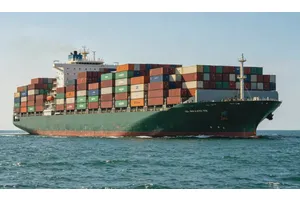
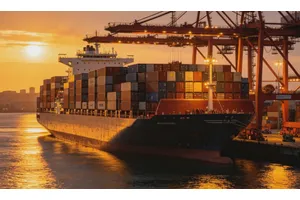
20ft and 40ft shipping from China to Qatar is not a size question — it is a density question. A 20ft container costs $1,700–$2,600 on the 2026 lane and carries 28 CBM; a 40ft costs $2,800–$4,100 and carries 56 CBM; a 40ft high cube adds another 12 CBM for a few hundred dollars more. The cargo that fills those boxes decides which one you should book: dense, heavy goods like tiles, stone, and machinery belong in a 20ft; voluminous, light goods like furniture, mattresses, and retail stock belong in a 40HQ. Getting the decision wrong either way costs money — too small and you pay LCL rates for the overflow, too large and you ship air.
This guide gives you the decision framework — the kg/CBM math, the per-cubic-meter economics, and the break-even points — with the 2026 port-by-port rates DTFU actually books from Shenzhen, Shanghai, and Ningbo to Hamad Port, and the customs reality (5% duty, no VAT yet, the Al-Nadeeb system) that applies to every container regardless of size. The route and gateway overview sits on our shipping from China to Qatar page; this guide is the container math behind it.
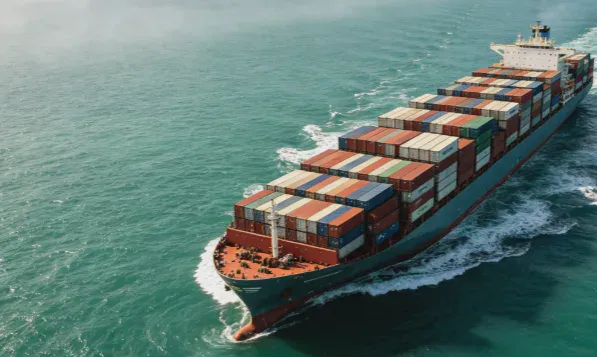
20ft and 40ft Shipping from China to Qatar: The Container Decision in One Table
| Container | Usable Capacity | 2026 Port-to-Port Rate | Best For |
|---|---|---|---|
| 20ft (20GP) | ~28 CBM, ~21–28t payload | $1,700–$2,600 | Dense cargo: tiles, stone, machinery, hardware, steel |
| 40ft (40GP) | ~56 CBM, ~26t payload | $2,800–$4,100 | Standard retail volume at the best per-CBM rate |
| 40ft High Cube (40HQ) | ~68 CBM | 40GP + $100–300 | Bulky light cargo: furniture, mattresses, packaging |
| 45ft High Cube (45HQ) | ~78 CBM | Premium over 40HQ | Oversized voluminous shipments on select services |
The 40ft costs roughly 1.5–1.8× the 20ft while carrying 2× the volume — which is why the per-CBM math, not the total price, is the number that should drive the decision. For most Qatar-bound cargo above 30 CBM, the 40ft wins on unit cost; below that, a 20ft is usually the disciplined choice, and below 15 CBM LCL becomes the leading option, covered in Section 4. Qatar's own import mix pulls in opposite density directions — dense construction materials on one side, voluminous retail and e-commerce goods on the other — which is exactly why the rule matters on this lane.
Cargo Density: The kg/CBM Framework That Picks Your Container
The rule that decides container size is simple: a 20ft is for cargo that is heavy for its volume; a 40ft is for cargo that is voluminous for its weight. The decision boundary sits in the 300–400 kg/CBM band — roughly 350 kg/CBM against a 40GP, and lower against a 40HQ:
| Cargo Type | Typical Density | Container Pick |
|---|---|---|
| Ceramic tiles, granite, stone | 800–1,500 kg/CBM | 20ft — you hit the weight limit long before the volume |
| Machinery, steel products, hardware | 500–1,200 kg/CBM | 20ft — dense and heavy |
| Furniture, home goods | 150–300 kg/CBM | 40ft or 40HQ — volume fills first |
| Mattresses, textiles, packaging | 80–200 kg/CBM | 40HQ — the extra 12 CBM is nearly free |
| Electronics, appliances | 200–400 kg/CBM | 20ft or 40ft — depends on total volume |
Work it with your actual numbers: divide total weight (kg) by total volume (CBM). Above roughly 400 kg/CBM, price the 20ft first — a 25 CBM shipment at 500 kg/CBM weighs 12.5t, which sits comfortably inside a 20ft's payload and would waste most of a 40ft's volume. Below 300 kg/CBM, price the 40HQ — a 40 CBM shipment at 200 kg/CBM weighs 8t, well under the 26t payload, and the 40HQ's extra height fits tall furniture without re-stacking. The middle band, 300–400 kg/CBM, is where the port-pair rates in Section 5 decide the answer.
Two real-style examples make it concrete. A Doha building-supplies importer moving 24 CBM of ceramic tiles at 1,100 kg/CBM (26.4t) has exactly one viable option: a 20ft, and even then the weight is at the limit — a 40ft would carry the same weight at double the price. A furniture importer moving 45 CBM of sofas and tables at 180 kg/CBM (8.1t) should book a 40HQ: the cargo fills 45 of the 68 CBM, the 40HQ premium over a 40GP is $100–300, and the alternative — a 40GP — would require breaking the load or paying for a second container. Same lane, same origin port, completely different containers, and the density math picked both. These are the two cases DTFU's booking desk runs the numbers on almost weekly — the tiles order and the furniture order are the two poles of the Qatar import market.
One caution on the 20ft for Qatar: the payload ceiling. Qatar-bound 20ft containers frequently carry dense construction cargo, and the 21–28t payload is reached quickly — a 20ft loaded to 26t of granite is at the limit, and overweight containers face origin rollovers, carrier surcharges, and terminal refusal at Hamad. If your cargo density is extreme (above ~900 kg/CBM), confirm the payload math with the forwarder before booking; the alternative is a 20ft that cannot legally sail. The same ceiling works in reverse for the 40HQ: its 26t payload is rarely the binding constraint, which is precisely why voluminous light cargo should never be squeezed into a heavier-rated smaller box out of habit.
Per-CBM Economics: What a 20ft and 40ft Actually Cost per Cubic Meter
Here is the math most rate tables skip — the cost per usable cubic meter on the 2026 Qatar lane:
| Container | Mid-Range Rate | Usable CBM | $ per CBM |
|---|---|---|---|
| 20ft | $2,150 | 28 | ~$77 |
| 40ft | $3,450 | 56 | ~$62 |
| 40HQ | $3,650 | 68 | ~$54 |
| LCL | — | — | $65–135 per CBM |
The 40HQ delivers the lowest per-CBM cost — roughly 30% below the 20ft — and the premium over a standard 40GP ($100–300 for 12 extra cubic meters) works out to about $8–25 per additional CBM gained. For furniture importers and e-commerce sellers whose cargo is measured in volume, that is the single best value on the lane. For tiles and machinery importers, the 20ft's per-CBM number is worse on paper but correct in practice, because the cargo would never fill the 40ft's volume anyway.
FCL vs LCL Shipping from China to Qatar
| Volume Band | Recommendation | 2026 Cost Logic |
|---|---|---|
| Under 8 CBM | LCL | $65–135/CBM; pay only for space used |
| 8–15 CBM | LCL, but price a 20ft | LCL at ~$100/CBM ≈ $800–1,500 vs 20ft $1,700+; compare actual quotes |
| 15–28 CBM | 20ft FCL | ~$1,700–2,600 flat; beats LCL per unit and removes deconsolidation wait |
| 28–40 CBM | 20ft (if dense) or 40ft | Density framework decides |
| 40+ CBM | 40ft / 40HQ | Best per-CBM economics on the lane |
The break-even against LCL lands around 15–18 CBM on current rates: above that, a 20ft costs less per unit and arrives faster, since LCL adds consolidation in China and deconsolidation at a Doha warehouse before clearance can start. Below 8 CBM, LCL is the rational choice for trial orders and e-commerce restocks — and the door to door shipping from China to Qatar service covers the small-volume segment with the same clearance handling as containers.
What a Container Quote Includes
The port-to-port rates in this guide are the headline number, but a container quote is a stack of line items, and the stack differs between forwarders. The base components: ocean freight, the bunker adjustment factor (BAF), origin terminal handling (THC), the export declaration fee, destination THC at Hamad, and the documentation fee. The variable components that move the total:
| Surcharge / Fee | Typical 2026 Level | When It Applies |
|---|---|---|
| Peak Season Surcharge (PSS) | $150–400 per container | Q4 peak and pre-Ramadan demand windows |
| BAF (fuel) | Moves quarterly | All bookings; watch it at quote time |
| Destination THC (Hamad Port) | $150–350 per container | Always, at discharge |
| War-risk / Red Sea adjustment | $100–300 | Transiting affected routings |
| Demurrage / detention | Escalates after 3–7 free days | Container sitting past free time |
The discipline that protects you: ask for the itemized quote, not the all-in one-liner, and ask which surcharges are "subject to change at destination." A forwarder quoting a low base rate with heavy destination-side variables is selling you a number that will grow — the same pattern the DDP vs FOB comparison exposes in Incoterms form. The all-in DDP numbers in this guide's rate section exist precisely because Qatar importers got tired of the line-item surprises.
2026 Container Rates from China to Qatar: Port-by-Port Table
| Origin Port | 20ft FCL | 40ft FCL | LCL (per CBM) | Transit (Direct) |
|---|---|---|---|---|
| Shenzhen | $1,700–$2,400 | $2,600–$3,800 | $65–$120 | 16–22 days |
| Shanghai | $1,800–$2,500 | $2,800–$4,000 | $70–$130 | 20–25 days |
| Ningbo | $1,900–$2,600 | $2,900–$4,100 | $75–$135 | 20–27 days |
These are port-to-port ocean rates to Hamad Port and exclude destination THC, clearance, duty, and delivery. All-in door-to-door DDP numbers run higher — 20ft from Shenzhen to Doha at $2,300–$3,800 (northern ports to $4,000), 40ft at $3,800–$5,800 (northern ports to $6,200), LCL at $120–220 per CBM (northern ports to $240) — with the full breakdown in our sea shipping cost from China to Qatar guide. Southern ports price slightly lower and sail faster because they sit closer to the main Asia–Middle East trunk routes; northern ports add feeder time and a bit of rate. The Q1 window is typically the cheapest booking period, and the Q4 peak plus the weeks around Chinese New Year push rates up 15–25%.
How Long Does Container Shipping from China to Qatar Take?
| Route | Port-to-Port | Door-to-Door |
|---|---|---|
| Direct (Shanghai/Shenzhen/Ningbo → Hamad Port) | 16–25 days | 25–38 days |
| Via Jebel Ali (UAE) transshipment | 22–35 days | 30–45 days |
| LCL (any routing) | +5–8 days | 30–45 days |
The direct service to Hamad Port is the default recommendation: 16–25 days on the water, and Hamad is one of the most modern terminals in the region — deep-water berths, automated handling, and short trucking to Doha's industrial zones. The Jebel Ali transshipment option exists when direct slots are full (common in the Q4 peak) or when a specific carrier's schedule works better, but the extra handling and the feeder wait add a week or more — and a missed feeder connection in the Q4 peak can stretch to a two-week wait for the next sailing. Air freight compresses the whole journey to 5–10 days door-to-door via Doha Hamad International — the air shipping from China to Qatar guide has the rate tiers — and express courier does it in 3–6 days for parcels.
For time-boxed shipments — a retail launch, a construction deadline, a restock ahead of Ramadan — the direct booking is the schedule, not a premium. The same logic applies to the 20ft vs 40ft choice: a single direct 40HQ moving the whole order beats two LCL consignments that each clear separately at Hamad, because the container clears once, devans once, and delivers once.
Hamad Port and the Doha Gateway: What Container Reality Looks Like
Hamad Port, south of Doha, handles over 90% of Qatar's trade, and container reality there is governed by a few practical numbers. The free-time window at the terminal is typically 3–7 days, after which demurrage escalates daily — and it runs whether the container is cleared or not, so the clearance clock and the storage clock are separate. Congestion builds in defined windows: the weeks around Ramadan (when importers stock up ahead of the holiday) and the Q4 peak, when vessel bunching adds berth delays. Containers for Doha's Industrial Area — where most wholesale and manufacturing businesses sit — move by truck in under an hour from the port; deliveries to the Pearl, Lusail, or the free zones add a little more road time.
The practical implication for container planning: build the free-time window into the schedule, not just the transit. A container that arrives in the pre-Ramadan rush and clears in the normal 2–3 day window is fine; one that arrives a week before the holiday, when terminal staffing thins and clearance slows, can burn its free time waiting for release. For 40HQ bookings carrying bulky retail stock, the same rule applies with an extra edge — the voluminous cargo takes longer to devan at the warehouse, and the container detention clock keeps running until the empty is returned to the depot. Negotiating 7–14 days of combined demurrage/detention free time at booking covers both scenarios, and most carriers grant it on the Gulf lanes without argument.
Operational insight: the demurrage stories we see on our Hamad Port container shipments are almost never about customs delay — they are about the free-time window. A container that sits two days waiting for a truck booking, three days in clearance, and two more in delivery has already burned its free time before anyone notices. We book the Doha truck at the same time as the vessel booking and file the Al-Nadeeb declaration while the ship is at sea, so the container moves the day it is released. The clearance workflow itself — including the 12-digit HS codes Qatar has used since the start of 2025 — is covered in our customs clearance from China guide.
Qatar Duty and VAT on Containers: The 5% GCC Tariff
| Cost Layer | Rate | Note |
|---|---|---|
| Import duty (GCC Common External Tariff) | 5% of CIF | Tobacco and alcohol much higher; some essentials exempt |
| VAT | 0% (not implemented) | GTA's Dhareeba portal is VAT-ready — implementation expected eventually; monitor announcements |
| QS Conformity Certificate | Conditional | Required for regulated consumer goods |
| Clearance (Al-Nadeeb system) | Brokerage fee | Filed via the integrated customs platform |
The duty math is the simplest on any lane we cover: 5% on the CIF value, flat, for most goods. A $20,000 CIF container pays $1,000 — no compounding, no state taxes, no VAT layer on top, which is a genuine cost advantage Qatar still holds over neighbors like Saudi Arabia and the UAE. The caveats are the QS conformity certificate for regulated consumer goods (arrange it before the vessel arrives; it gates clearance for electronics and appliances) and the 12-digit HS code requirement — make sure your supplier's classification is updated to the extended GCC tariff or the declaration will stall in Al-Nadeeb. When VAT does land, it will add a 10% (expected standard rate) layer to landed costs; until then, duty at 5% is the entire tax bill.
FAQs
1. How much does it cost to ship a 20ft container from China to Qatar?
$1,700–$2,600 port-to-port in 2026, depending on the origin port. All-in door-to-door runs $2,300–$4,000 once clearance, 5% duty, and delivery are included.
2. How much does a 40ft container cost from China to Qatar?
$2,800–$4,100 port-to-port; $3,800–$6,200 all-in door-to-door. The 40HQ adds $100–300 over the 40GP for 12 extra cubic meters.
3. Should I ship a 20ft or 40ft container to Qatar?
Compute your cargo density (kg ÷ CBM). Above ~400 kg/CBM, price the 20ft; below ~300 kg/CBM, price the 40HQ; in between, compare the per-CBM rates. Volume above 40 CBM always favors the 40ft.
4. What is the LCL rate from China to Qatar?
$65–135 per CBM port-to-port, or $120–240 per CBM all-in door-to-door. LCL makes sense below ~15 CBM; above that, a 20ft wins on cost per unit.
5. How long does container shipping from China to Qatar take?
16–25 days direct to Hamad Port; 22–35 days via Jebel Ali transshipment. Door-to-door totals run 25–38 days (FCL) and 30–45 days (LCL).
6. What is the import duty from China to Qatar?
5% of the CIF value under the GCC Common External Tariff for most goods. Tobacco and alcohol attract much higher rates; some essential goods are exempt.
7. What is the cheapest time to ship a container to Qatar?
The Q1 window offers the lowest rates and loosest capacity. Avoid booking in the Q4 peak and the weeks around Ramadan and Chinese New Year, when rates and congestion both climb.
8. What is the difference between 40GP and 40HQ for Qatar-bound cargo?
The 40HQ adds ~12 CBM (68 vs 56) for $100–300 more. Book it for voluminous cargo — furniture, mattresses, retail displays; for dense loads that never fill the extra height, the 40GP saves the premium.
9. Can I ship a 45ft container from China to Qatar?
Yes, on select services — the 45HQ carries ~78 CBM for oversized voluminous shipments. Availability is thinner than 40ft equipment and rates carry a premium, so it is worth pricing only when a 40HQ genuinely cannot hold the volume.
Get Your Container-Size Recommendation for Qatar
Send your cargo details — commodity, total weight, total volume, and origin city — and DTFU Logistics will come back with the container recommendation the density math dictates: 20ft, 40ft, or 40HQ, with the port-by-port rate, the direct-vs-Jebel Ali transit option, the 5% duty on your CIF value, and the Al-Nadeeb clearance handled before the vessel arrives. We book Hamad Port direct services weekly from Shenzhen, Shanghai, and Ningbo, and we track every container through discharge and Doha delivery with 24/7 visibility. Request your China–Qatar container quote here.